The Quiet Billionaire Blueprint: How Kawhi Leonard Built a Fortune While Barely Saying a Word
Entertainment

The Quiet Billionaire Blueprint: How Kawhi Leonard Built a Fortune While Barely Saying a Word

Tristan MeloTristan Melo··9 min read
Advertisement

Most superstars sell you the noise before they sell you the game. Loud tunnel fits, courtside cameras, a podcast, a fragrance line, a reality show orbiting the household. The modern athlete is trained to treat visibility as currency, and for good reason – attention converts to endorsement dollars, and endorsement dollars often dwarf the salary. Then there is the man who won two championships in two different conferences, banked a nine-figure fortune, and still walks off the court like he is late for a nap. His path is a study in a very different idea about wealth, one that trades charisma for consistency and hype for leverage.

There is a lesson buried in that silence, and it is worth digging out for anyone who assumes that building serious money requires building a serious brand. What the two-time Finals MVP has quietly assembled looks less like a celebrity empire and more like a well-run, low-drama business. The numbers back it up, and so does the philosophy stitched into a phrase that followed him from a junior college gym all the way to the top of the sport.

From a 15th Pick to the Sport’s Most Feared Two-Way Player
Kawhi Leonard - From a 15th Pick to the Sport's Most Feared Two-Way Player

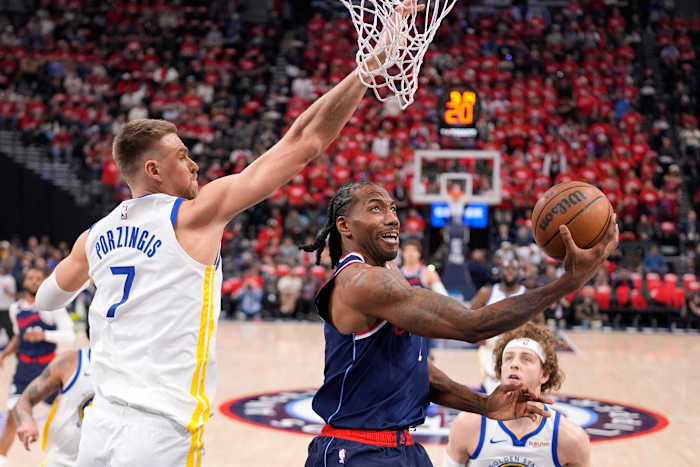
The origin story rarely gets told because the man at the center of it does not tell it. Selected 15th overall in the 2011 NBA Draft by the Indiana Pacers, he was traded to the San Antonio Spurs on draft night in a deal that sent guard George Hill to Indiana. At the time, it read as a modest swap. In hindsight, it stands among the most lopsided trades of the era, though nobody in the room could have known it.

San Antonio, under coach Gregg Popovich, did what San Antonio does. They developed him slowly, deliberately, without fanfare. He learned to defend the best perimeter scorer on the floor while quietly expanding an offensive game that started as a role and grew into a weapon. By 2014, still just 22 years old, he was named NBA Finals MVP after the Spurs dismantled the Miami Heat in five games for the franchise’s fifth title. He averaged 17.8 points on roughly 61 percent shooting in that series, and at the time he was among the youngest players ever to claim the award.

The defensive résumé filled in fast. He was named Defensive Player of the Year in both 2015 and 2016, a recognition that his value was never tied to scoring alone. Those enormous hands, the anticipation, the refusal to gamble unnecessarily – all of it made him the rare superstar whose floor was elite even on nights his shot went cold. That two-way completeness is the quiet engine behind his entire career, because it meant he was always worth a maximum contract regardless of how the offense was flowing.

The Toronto Gamble That Changed Everything
Kawhi Leonard - The Toronto Gamble That Changed Everything

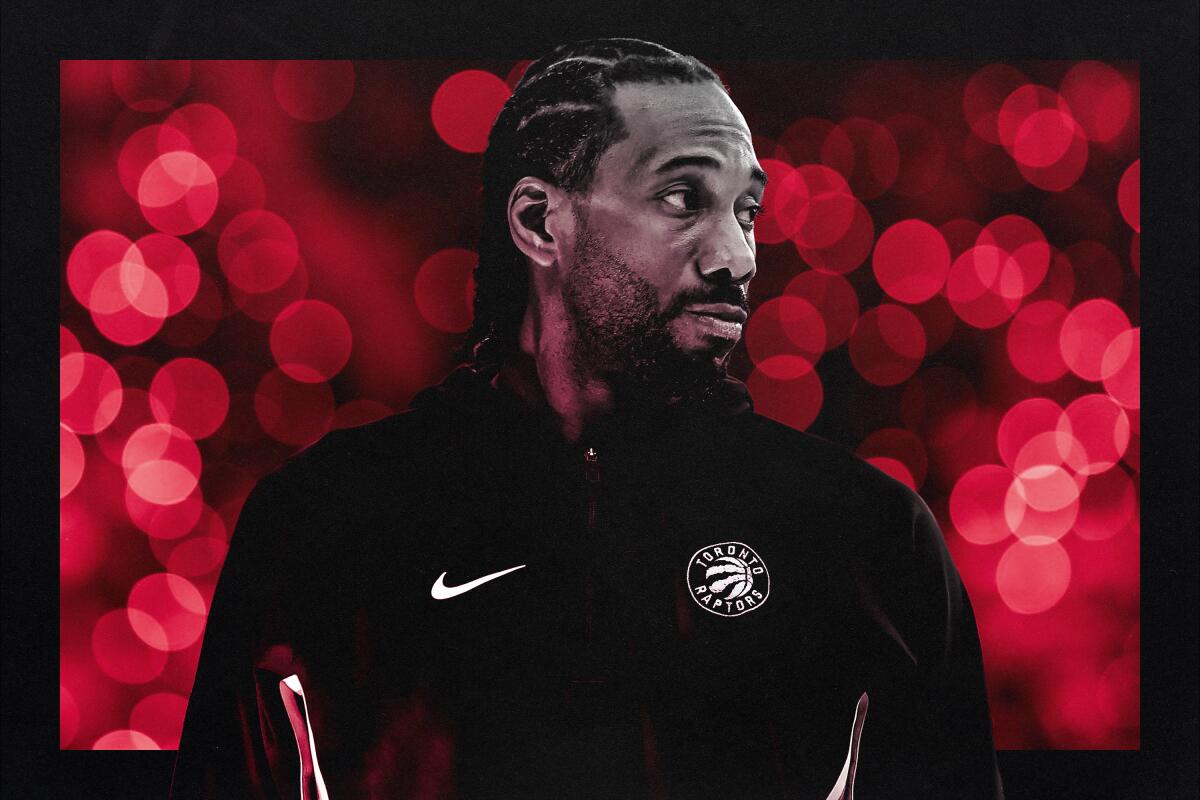
The move that turned a great career into a legendary one was also the least loud version of a blockbuster imaginable. Traded to the Toronto Raptors ahead of the 2018-19 season, he played a single year in Canada. That one season produced a championship, the first in Raptors history, and a second Finals MVP as the team beat the Golden State Warriors in six games. In that Finals run he averaged around 28.5 points, nearly 10 rebounds, and better than four assists a night, dragging a good team into greatness on both ends of the floor.

Winning Finals MVP with both the Spurs and the Raptors placed him in extraordinarily rare company, joining a short list of players to earn the honor with two different franchises and doing so in two different conferences. The playoff run also gave the sport one of its defining images, a corner buzzer-beater against the Philadelphia 76ers that bounced on the rim four times before falling, a moment so improbable it felt like the basketball gods signing off on the whole understated legend.

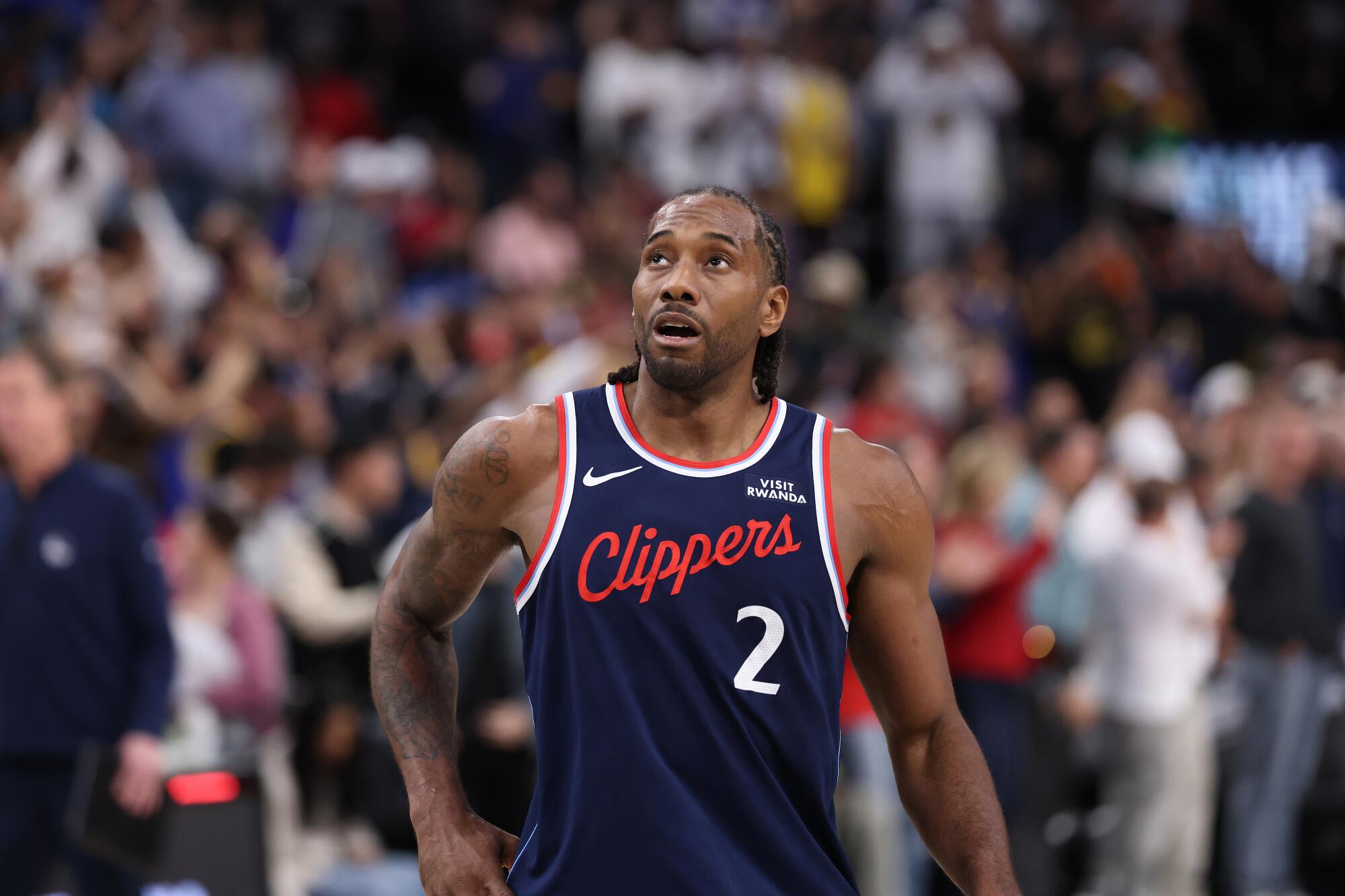
Then, in the summer of 2019, he did the thing that defines the blueprint. He signed with the Los Angeles Clippers as a free agent, going home to the region where he grew up. He did not chase the biggest market for the biggest spotlight. He did not orchestrate a televised decision special. He simply made the move that suited him, on his terms, and let the basketball world catch up to the news. The Clippers years since have been shadowed by injuries and playoff disappointments, but the financial and reputational foundation was already poured. He had become the kind of asset that franchises build around and pay handsomely, and no amount of postseason bad luck could undo the leverage he had already banked.

What “Board Man Gets Paid” Actually Means
Kawhi Leonard - What

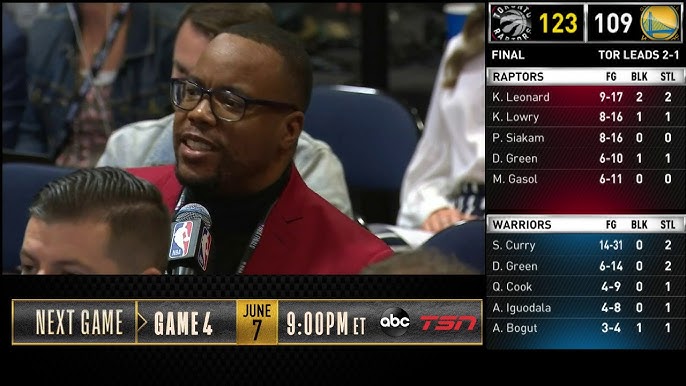
Every self-made fortune tends to have a founding phrase, and his is stranger and more revealing than most. “Board man gets paid” went viral in June 2019, during that Raptors title run, after an oral history of his junior college and college days resurfaced the saying. Asked about it after a Finals game, he explained that it dated back to his high school and college years, a motto about rebounds, about hustle, about the idea that the player willing to do the unglamorous work – crashing the boards, limiting the opponent to one shot – is the player who earns his way to the league and the paycheck that comes with it.

Read it as a wealth philosophy and it holds up remarkably well. The “board” is the boring, repeatable, high-value action that nobody celebrates. It is not the highlight dunk or the viral quote. It is the thing done correctly, over and over, until the results compound. In basketball terms, rebounds win games. In money terms, the equivalent is showing up, protecting your value, and refusing to trade long-term leverage for short-term noise. He built a career on doing the fundamentally sound thing when the flashier option was always available, and he has built his finances the same way.

The phrase also quietly reframes what “getting paid” even means. It is not a boast about a number. It is a statement that the work itself is the mechanism. Do the board, and the money follows. That is a very different mental model from the influencer-era idea that you must first manufacture fame and then monetize it. His order of operations runs the other direction – value first, and let the market reward it.
Advertisement

The Net Worth Estimate, and Where the Money Comes From

Kawhi Leonard - The Net Worth Estimate, and Where the Money Comes From

Now to the figures, all of which should be read as estimates. Public tallies place his net worth in the neighborhood of 160 million dollars as of recent reporting, a number that reflects both what he has earned and what he has managed to keep. That last part matters more than it sounds, because a low-profile lifestyle is itself a wealth strategy. Money not spent on maintaining a spectacle is money that stays invested and compounding.

The salary alone tells much of the story. Across roughly 14 NBA seasons, his career earnings from contracts are estimated to have crossed 325 million dollars, one of the higher salary totals in league history. His current deal with the Clippers is reported as a fully guaranteed three-year agreement worth around 149.5 million dollars, averaging close to 50 million a year, with a base salary in the region of 50 million dollars for the 2025-26 season. Those are figures that put him firmly among the sport’s top earners, and they were secured precisely because his two-way value made him worth a maximum salary even in seasons interrupted by injury.

Endorsements form the second, smaller pillar. His signature sneaker relationship, discussed below, is estimated to pay him somewhere in the range of five million-plus dollars a year, with some reporting placing it around 5.5 million annually. That is meaningful money, but notice the shape of it. For most maximum-level stars, off-court income is enormous and sprawling across dozens of partnerships. For him, the off-court number is deliberately narrow. He is not stacking a hundred small deals. He is holding a few big, aligned ones and letting the salary do the heavy lifting. If projections hold, his total career earnings across salary and endorsements could push past 400 million dollars over time, again as an estimate rather than a confirmed figure.

The New Balance Move: A Masterclass in Leverage

Kawhi Leonard - The New Balance Move: A Masterclass in Leverage

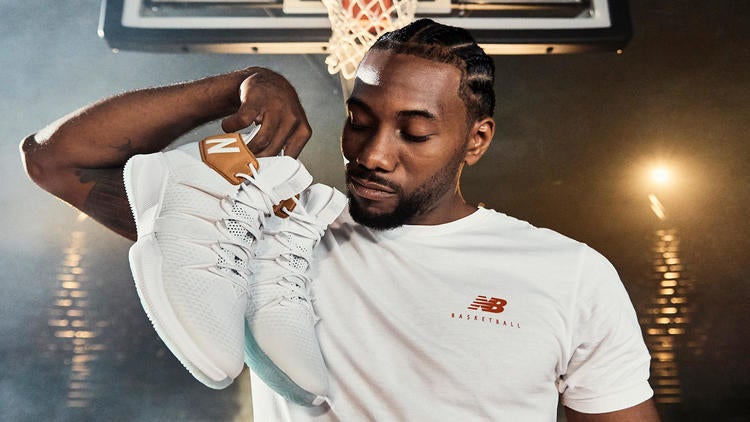
The single sharpest business decision of his career had nothing to do with basketball strategy. In 2018, coming off a stalemate with his previous sneaker sponsor, Jordan Brand, he did something almost unheard of for a player of his stature. He walked. Reporting at the time indicated he turned down a multi-year extension offer from Jordan Brand to sign a multi-year deal with New Balance, a company that had almost no presence in elite basketball at the time.

On paper, it looked like a risk. New Balance was known for running shoes and a certain unbothered dad-sneaker aesthetic, not for outfitting NBA superstars. But the logic was pure leverage. At an established brand, he would have been one more name in a crowded stable, a mid-tier priority behind bigger stars. At New Balance, he would be the face of an entire basketball launch, the anchor of a category the company was building around him. Being the biggest fish in a new pond gave him negotiating power, creative input, and a partnership genuinely shaped around him rather than around a marketing calendar he did not control.

The move paid off in exactly the way a patient bet is supposed to. His first signature shoe, the KAWHI, released in 2020 during the Clippers’ run in the Orlando restart, and the line has continued through multiple iterations, with his fifth signature model debuting around the 2026 NBA All-Star Game in Los Angeles. A signature line is a different kind of asset than a standard endorsement. It ties a slice of a product’s success directly to your name, and it deepens over years rather than expiring at the end of a season. He did not chase the shiniest logo. He chose the deal where he mattered most, and let that alignment compound.

Why the Quiet Strategy Beats the Loud One

Strip away the basketball and what remains is a template that translates cleanly to anyone building wealth without a marketing machine. The first principle is that leverage beats attention. A smaller number of well-chosen, aligned commitments, ones where you are the priority rather than an afterthought, will nearly always outperform a scattershot pile of deals that dilute your focus and your equity. He proved it by walking away from a bigger brand for a better position.

The second principle is that keeping is as important as earning. His relatively private life is not just a personality trait, it is a balance-sheet decision. Every dollar not burned maintaining an image is a dollar available to work quietly in the background. The flashiest earners are frequently not the wealthiest, because spectacle has running costs. His restraint reads as discipline, and discipline is what turns a big income into lasting net worth.

The third principle is the “board man” idea itself. Value first, reward second. He never manufactured a persona and then searched for ways to sell it. He did the fundamentally sound, repeatable, high-value work – defending, rebounding, winning – and let the market pay him for what was already real. That order matters. It is the difference between wealth that rests on hype, which can evaporate the moment attention moves on, and wealth that rests on demonstrated value, which holds regardless of who is watching.

There is a reason his name keeps surfacing in conversations about the smartest financial operators in the sport despite him almost never speaking publicly about money. The absence of noise is the point. He built a fortune by treating every decision, on the court and off it, like a rebound worth boxing out for – unglamorous, essential, and quietly, reliably paid. In an era that rewards the loudest voice in the room, the man who barely speaks may have written the most instructive playbook of all.

Advertisement
Share
Get the recap

Loved this story? Get more like it.

Join readers who get our weekly entertainment recap - the stories worth your time, delivered every Friday.

No spam. Unsubscribe anytime. By signing up you agree to our Privacy Policy.

The Quiet Billionaire Blueprint:... | Sidomex Entertainment