Joseph Momodu: Who Is the Nigerian Media Personality at the Centre of Every Conversation?
Miki Anderson··10 min read
Ad SpaceArticle Top - 728x90
Advertisement
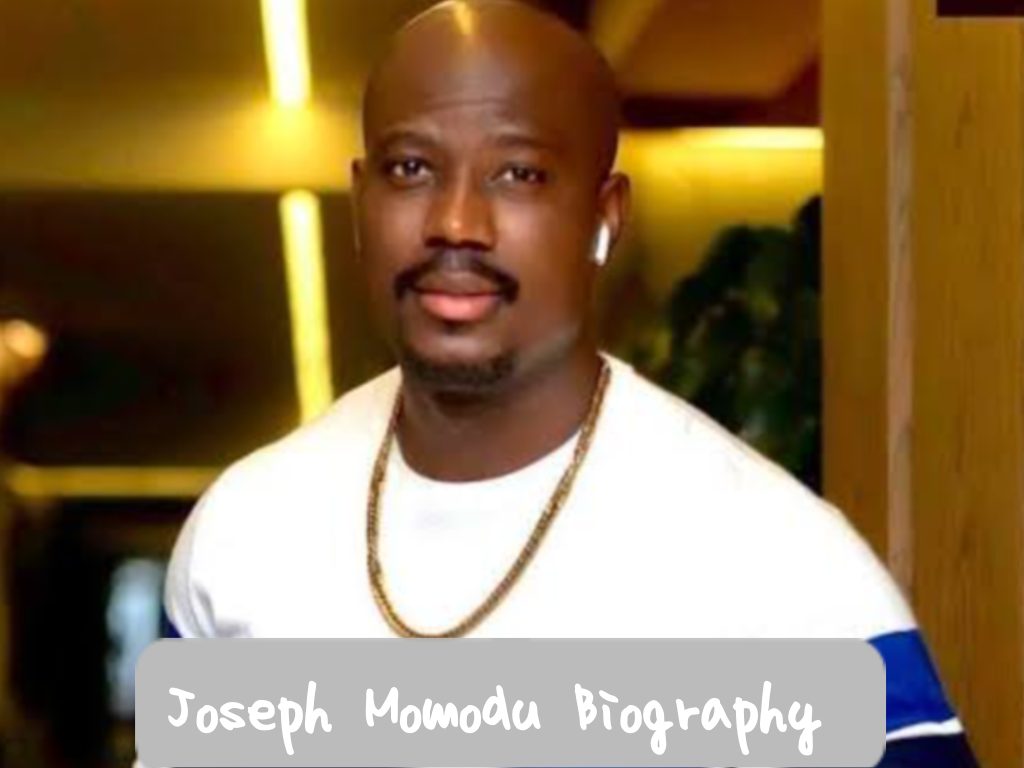
Few career moves rattle a film industry quite like a leading man walking away at the height of his recognisability. That is exactly the conversation rippling across Nigerian entertainment in 2026, after a familiar Nollywood face traded the camera for combat boots. The actor and model known to fans as Joseph Momodu has confirmed that he completed United States Army Basic Combat Training and now serves as a soldier, a turn that has pulled his name back into headlines and timelines that once knew him mostly for a music video and a string of screen credits.
What follows is a grounded look at who he actually is, why his name keeps coming up, and why so many people are talking past one another about him. Because here is the first thing worth clearing up: there is more than one prominent Nigerian who carries the Momodu surname, and the conversation has become easy to muddle.
Setting the Record Straight on the Name
Anyone searching the name in 2026 will quickly run into a knot of confusion, and it is worth untangling before going further. The most famous bearer of the surname in Nigerian media is Dele Momodu, the veteran journalist, publisher, and founder of Ovation International, a man whose given name at birth actually included “Joseph.” That overlap has led some readers to assume a direct family link between the publisher and the actor now making news.
The two are not the same person, and there is no verified evidence presented in the current reporting that the Nollywood actor is Dele Momodu’s son. Dele Momodu’s publicly known sons carry different names, and the actor at the centre of the present story comes from a separate background entirely, traced to Edo State rather than to the publisher’s household. So when the name trends, it is important to know which Momodu the headline is actually about. In this case, the man at the centre of the conversation is the actor and model, not the publisher.
That distinction matters because the actor’s story stands fully on its own, and it is a genuinely unusual one.
From Surulere to the Screen
The man Nigerians came to know as Joseph Momodu was born Abubakar Sadiq Momodu, into a background that connects to the royal family of Oba Momodu II in Agbede, Etsako West Local Government Area of Edo State. Though his roots trace to Edo, accounts of his early life place his upbringing largely in Surulere, the Lagos mainland district that has nurtured a remarkable number of Nigerian creatives over the decades. That blend of a royal lineage in the southern interior and a childhood in the thick of Lagos street culture is a fairly common starting point for performers who go on to straddle both the traditional and the cosmopolitan sides of Nigerian identity.
Profiles of the actor describe a faith journey in his background, with a shift from the name Abubakar Sadiq to Joseph following a change of faith within his family during his earlier years. Readers should treat the finer biographical details that circulate on celebrity blogs with appropriate caution, since much of that material is aggregated rather than independently confirmed, but the throughline is consistent across sources: a young man from a mixed cultural and religious background who found his footing in performance.
What is clear is that the pull toward acting and the camera came early, and that he built his reputation in the years that followed not as an overnight sensation but as a working performer who kept turning up in projects across film and television.
The Breakthrough Most People Remember
For a large slice of his audience, recognition of Joseph Momodu is tied to a single, unforgettable music video. He featured as the lead male presence in Simi’s “Joromi,” one of the most beloved Nigerian songs of its era. The video became a cultural moment, and his role in it earned him a nickname that followed him for years afterward, with fans and outlets sometimes referring to him in connection with that “Joromi” association.
There is a lesson buried in that breakthrough that says a lot about how fame works in the Afrobeats age. A music video can introduce a face to millions in a way that a steady acting career sometimes cannot. For Momodu, “Joromi” functioned as a national introduction, the kind of visibility that a hundred supporting film roles might not generate on their own. It is the reason that, even among people who could not name a single one of his movies, there is often a flicker of recognition when his image appears.
That visibility translated into a broader screen career rather than a one-off novelty, which is part of why his name carries weight in entertainment circles rather than being a passing curiosity.
A Body of Work Across Film and Television
Beyond the music video that made him a household face, Joseph Momodu accumulated a respectable filmography across more than a decade in Nollywood. Reporting on his career lists screen credits that include titles such as “Coming to Nigeria,” “Play 2 Kill,” and “A Fool for Trust,” among others that have circulated in coverage of his work. He also moved comfortably into long-running television drama, appearing in series that are staples of Nigerian living rooms, including “Tinsel,” “Soul Sisters,” and “The Johnsons.”
For Nigerian viewers, that television résumé is significant. Shows like “Tinsel” and “The Johnsons” are not fleeting projects; they are institutions that run for years and embed their cast members into the daily rhythm of Nigerian households. To have featured in them is to have been a recurring presence in the culture, not merely a guest at the edges of it. That is a meaningful distinction, and it explains why his pivot away from the industry registered as news rather than a footnote.
Ad SpaceIn-Article - 300x250
Advertisement
His standing was reinforced by recognition tied to his physical presence as well. He twice won the Best Body Male honour at the Africa Movie Academy Awards, in 2018 and in 2019, a back-to-back distinction that cemented his image as one of the more physically striking figures on the Nigerian screen. That award history, while specific to a particular category, speaks to a deliberately cultivated image, and it dovetails neatly with the discipline-heavy path he would later choose.
The Move That Put Him Back in the Headlines
The reason Joseph Momodu’s name is everywhere again has nothing to do with a new film or a red carpet. It has to do with a uniform. In an announcement shared in June 2026, he revealed that he had enlisted in the United States Army and completed Basic Combat Training, graduating into the role of a soldier. According to the details he shared and that Nigerian outlets reported, he now serves as Specialist J.A. Momodu, attached to the 1st Platoon, Charlie Company, within the 3rd Battalion, 10th Infantry Regiment, based at Fort Leonard Wood in Missouri.
He described the process in raw terms, framing the achievement as something earned rather than handed to him. In his own words, as carried by Nigerian press, the journey was “forged through tears, fear of failure, resilience, endless days, short nights, fatigue, rain, and the scorching sun.” He spoke of a stretch of ten weeks cut off from the outside world, of being “broken down and rebuilt,” and of going “to sleep a civilian” and waking “a soldier.” Even allowing for the natural drama of such a milestone, the language conveys a man who treated the training as a genuine test rather than a publicity exercise.
The timing carried personal weight, too. He said he chose the date of 12 April 2026 to enlist as a deliberate tribute to his late father, who had served in the Nigeria Police Force and who died roughly two decades earlier. Framing his enlistment as picking up a baton his father once carried, he tied a foreign military career to a thread of family service that began at home in Nigeria. He also dedicated the achievement to his faith and to the royal family connected to his Edo roots, a reminder that even a soldier in Missouri carries his origins with him.
Why a Single Enlistment Became a National Talking Point
On its face, one actor joining a foreign army might seem like a private decision. The reason it became a national conversation is that it sits inside a pattern that Nigerians have been watching with growing interest. Over the past couple of years, several figures from the Nigerian entertainment world have left the industry to serve in the US military, and Momodu’s case has been widely flagged as a notable one because it is described as among the first publicly confirmed instances involving a male Nollywood actor following that route, after a series of similar moves by Nigerian actresses.
Coverage of his story has placed him alongside other entertainers who made comparable jumps, including actresses reported to have joined the US Army and a former Nollywood actress who joined the US Navy and was granted citizenship after completing her training. Read together, these moves form a storyline larger than any one person: a quiet migration of recognisable creative talent from a celebrated but financially uneven industry toward the structure, stability, and citizenship pathways that military service abroad can offer.
That is the deeper nerve his announcement touched. For many young Nigerians weighing their own futures, the sight of a known, award-winning performer choosing a soldier’s life overseas is not just celebrity gossip. It reads as a comment on opportunity, on the limits some feel at home, and on the lengths people will go to in search of security and a new beginning. Whether one views it as inspiring or sobering, it is hard to look away from.
Reading the Reaction Without Overstating It
It is worth being honest about what is verified and what is noise. The core facts of Momodu’s career and his enlistment are well documented across multiple major Nigerian outlets, which lends them solid credibility. The granular biographical claims that float around entertainment blogs, including specific figures attached to personal wealth, are far less reliable. Any estimate of his net worth should be treated strictly as speculation rather than fact, since such numbers are routinely invented or recycled across aggregator sites without sourcing, and there is no authoritative basis for stating one here.
What can be said with confidence is that his decision struck a chord precisely because it scrambled expectations. Audiences are used to actors chasing the next role, the next endorsement, the next viral moment. They are far less used to one closing the chapter entirely and reappearing in fatigues. The surprise itself is part of why the conversation has been so loud, and why people who had not thought about him since “Joromi” suddenly had an opinion to share.
There is also a quieter dignity in how he framed it. Rather than positioning the move as a rejection of Nollywood or a complaint about the industry, he presented it as the fulfilment of a personal ambition and an act of devotion to a parent’s memory. That framing has shaped much of the warmer reaction, even among fans who would have preferred to see him stay in front of the camera.
What His Story Tells Us About Fame in 2026
The arc of Joseph Momodu is a useful mirror for the state of Nigerian entertainment right now. Here is a performer who rode a music video to national recognition, built a credible body of work in film and serialised television, collected industry honours for his on-screen presence, and then, at a point when many would have pressed for bigger roles, chose a path that almost no one in his position had publicly taken. Each stage of that journey reflects something true about the moment: the outsized power of Afrobeats visuals to make stars, the steady grind of a Nollywood career that rarely makes anyone rich, and the pull of life abroad as both an aspiration and an escape valve.
His name will keep surfacing for a while yet, partly because the story is still fresh and partly because it speaks to anxieties and ambitions that reach far beyond his own life. For now, the man once tied to a single iconic video has rewritten his own headline. The actor became a soldier, the entertainer became a serviceman, and a Nigerian audience that thought it knew his story found it had a final act it never saw coming.
For Sidomex readers tracking the figures who shape Nigerian and global entertainment, Joseph Momodu has become a case study in how quickly a public life can pivot, and in how a single, deeply personal choice can ripple outward into a conversation about identity, opportunity, and the meaning of legacy. That is why, right now, his is a name worth knowing, and worth getting right.
Ad SpaceIn-Article - 300x250
Advertisement
Share
Get the recap
Loved this story? Get more like it.
Join readers who get our weekly entertainment recap - the stories worth your time, delivered every Friday.
No spam. Unsubscribe anytime. By signing up you agree to our Privacy Policy.