Ileya Fashion and Entertainment - How Nigerian Muslims Celebrate Eid al-Adha
Lifestyle

Ileya Fashion and Entertainment - How Nigerian Muslims Celebrate Eid al-Adha

Tristan MeloTristan Melo··10 min read
Advertisement

There is a stretch of Lagos Island, somewhere between Balogun Market and the back streets that lead toward the Lagos lagoon, where the sound of sewing machines does not stop for a full week before Ileya. The tailors work in shifts. The fabric sellers behind them work in shifts. The dispatch riders who carry finished outfits to homes in Lekki, Surulere, Ikeja and Ikorodu work in shifts. By the time the actual day arrives, the entire production chain has run on coffee and prayer for seven straight nights, and the families they have dressed are stepping out in pieces that took five months to plan and one week to finish.

Ileya is the Yoruba name for Eid al-Adha, the Islamic Festival of Sacrifice, observed roughly seventy days after Eid el-Fitr each year. The holiday is rooted in the story of the prophet Ibrahim and the divine substitution of a ram for his son, but in southwestern Nigeria the religious origin sits inside a much larger cultural envelope. Ileya in Lagos, Ibadan, Ilorin, Abeokuta and Osogbo is a fashion event, an entertainment event, a family event, and a citywide economic moment that pulls Yoruba Muslims into a particular kind of public expression. The piece below is about that envelope. The religious centre matters, of course. But the way southwestern Nigeria wraps the day in cloth, music, food, and performance is its own subject worth examining on its own terms.

The story behind the day
Ileya Fashion and Entertainment - The story behind the day

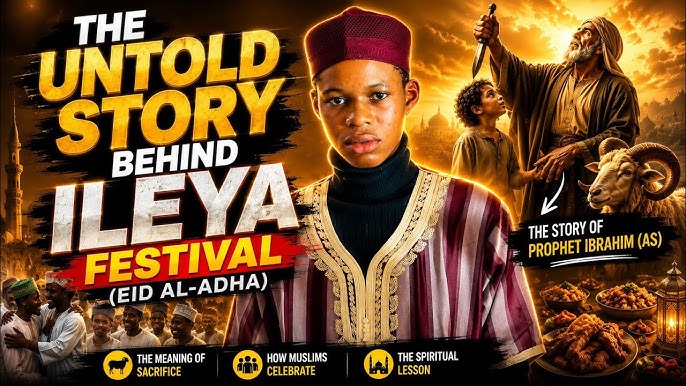
The theology can be summarised briefly because the cultural application is where the texture lives. Muslims observe Eid al-Adha to commemorate the prophet Ibrahim’s willingness to sacrifice his son Ismail in obedience to God, and the divine intervention that replaced the boy with a ram. The day’s central ritual is the slaughter of an animal, traditionally a ram, by every household with the means. The meat is divided in three portions – one for the immediate family, one for relatives and friends, one for the poor. This is the structure across the global Muslim world.

What happens in southwestern Nigeria around that ritual is shaped by Yoruba cultural codes that predate Islam’s arrival in the region. Yoruba Islam has been continuously present in the southwest since at least the eighteenth century, and the synthesis between Islamic observance and Yoruba social practice has had centuries to settle. The result is a holiday that observes the religious obligation precisely while expressing it in unmistakably Yoruba aesthetic and social terms.

The fashion of Ileya

Ileya Fashion and Entertainment - The fashion of Ileya

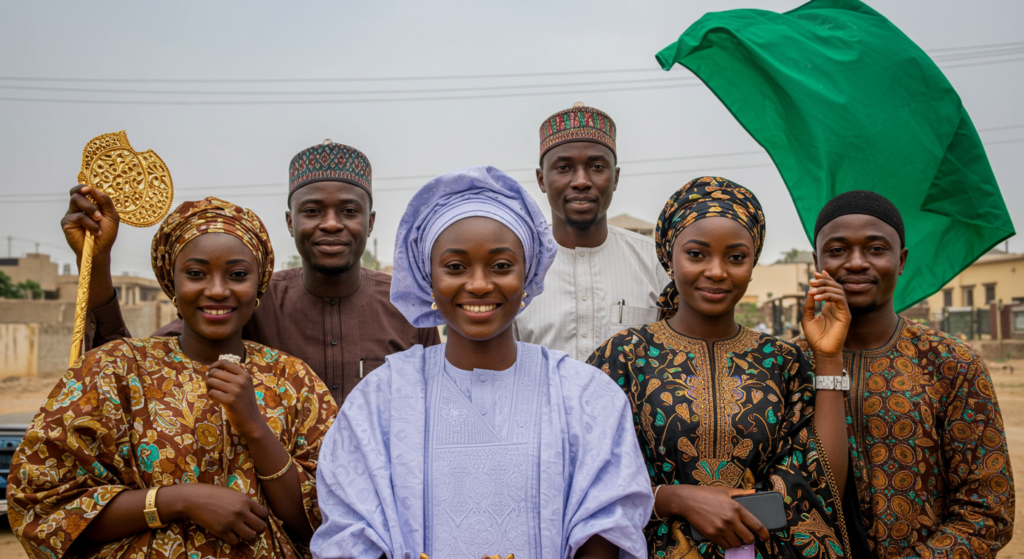
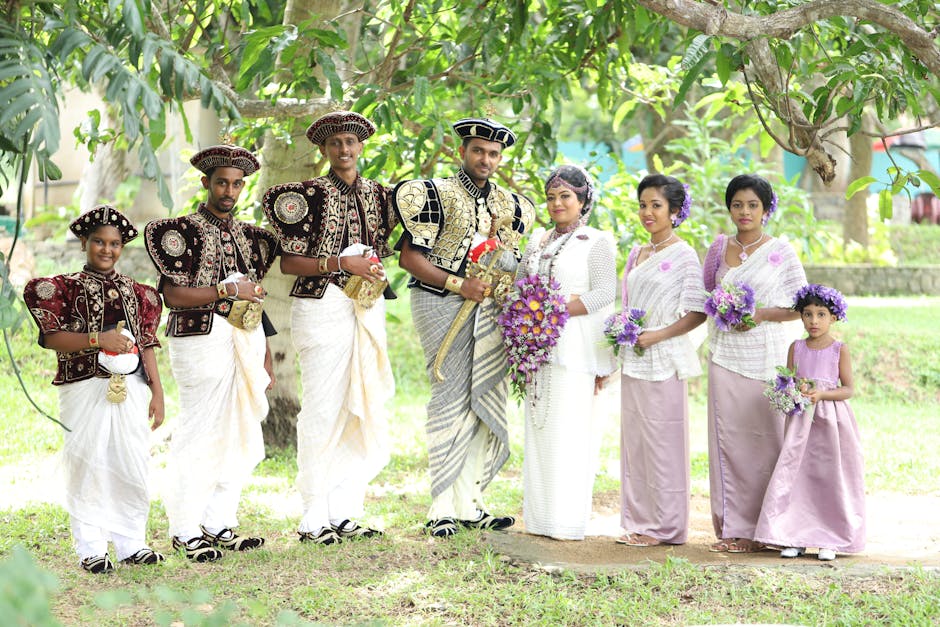
Begin with the cloth. The southwestern Ileya wardrobe centres on aso-ebi, the matching fabric chosen by a family or extended social group to wear on the same day. A household preparing for Ileya might commission three different aso-ebi sets – one for Ileya day itself, one for the family lunch that follows, and one for a third gathering later in the week. The fabric choices are debated for weeks in family group chats. The order goes to one or two tailors who handle the entire set. The bill, divided among the participants, can run into millions of naira for a large family.

The men’s Ileya silhouette is dominated by the agbada, the flowing three-piece outfit comprising a buba shirt, sokoto trousers, and an outer agbada robe. The agbada for Ileya is typically cut from damask, lace, or guinea brocade. Embroidery around the neckline and chest panel is custom-ordered. Senior men in the family will sometimes have agbada made in the same colour as the family aso-ebi to signal patriarchal unity within the broader matching set. A well-made Ileya agbada from a recognised Lagos tailor can cost anywhere from one hundred and fifty thousand naira at the entry end to several million for designer commissions.

The kaftan is the second-tier outfit, simpler and less voluminous, often worn for the family visits later in the day after the formal agbada has done its work at the prayer ground.

Women’s Ileya fashion runs across a wider stylistic range. The classic Yoruba Muslim look for the day combines a fitted top, a wrapper or skirt, and a gele head tie. Ankara prints have become increasingly central to this register, with custom-printed family aso-ebi a recurring feature. The gele is a craft of its own – a single tie can take twenty minutes and cost between five and fifty thousand naira at a professional gele tier. The veil, where worn, integrates with the gele in a way that reflects the wearer’s family’s tradition and the specific community within Yoruba Islam she belongs to.

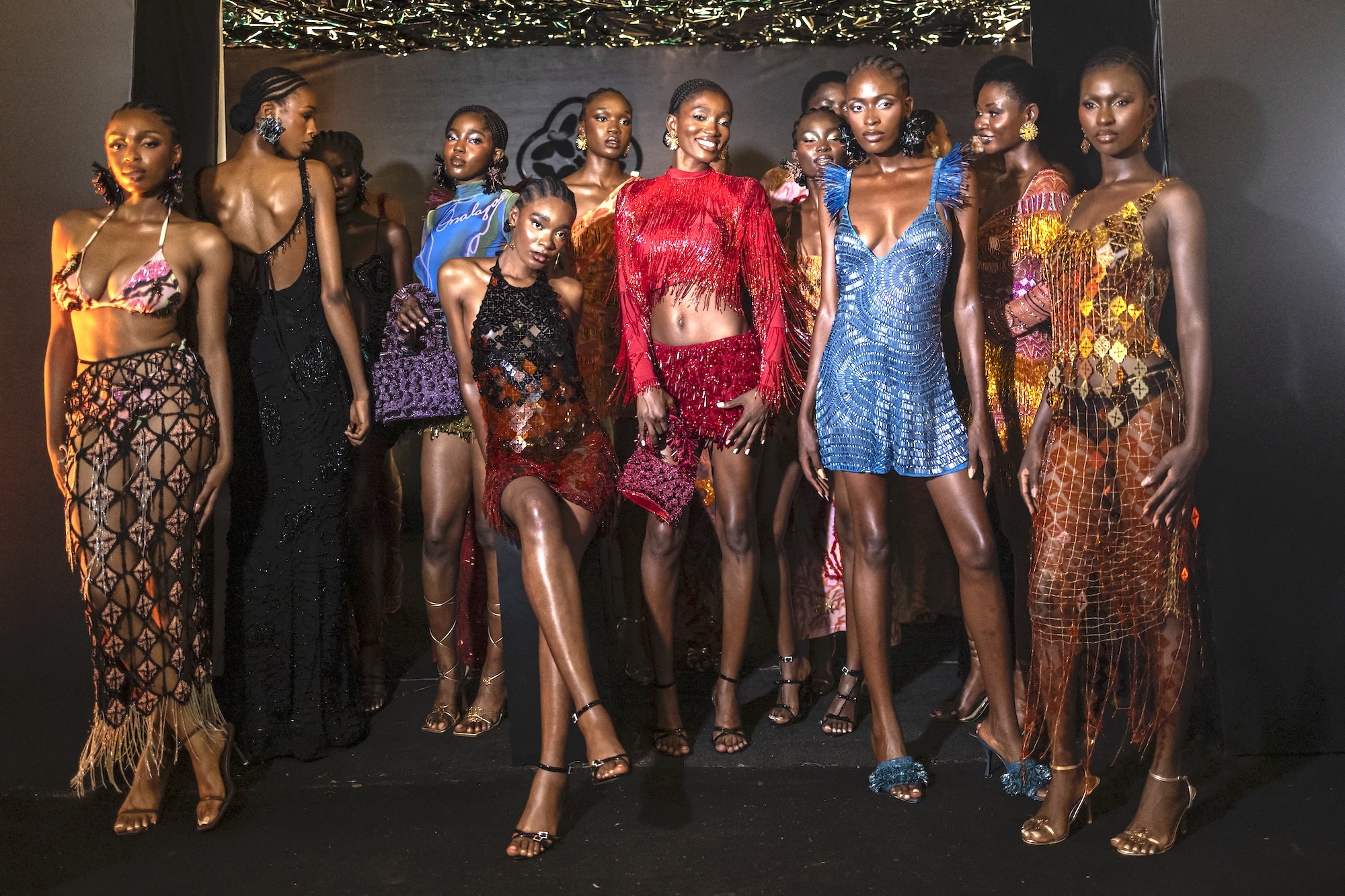
Designer engagement with the Ileya market has grown sharply over the last decade. Mai Atafo, whose menswear has dressed presidents and celebrities, runs effective Ileya capsule releases each year. Lisa Folawiyo’s Ankara work has appeared in southwestern Muslim households for years. Tubo, Ugo Monye, House of Deola, Lanre Da Silva Ajayi, Tongoro, and a growing cluster of Lagos-based designers produce Ileya-ready collections that show up on Instagram in the four weeks before the holiday. The booking calendar for these designers fills up by the end of Eid el-Fitr.

The gele has become an Instagram economy of its own. Professional gele tiers maintain client lists of hundreds of women who book appointments six weeks in advance. A celebrity gele – a particularly elaborate fold worn by a public figure for a Lagos society wedding – will routinely set a trend that the next Ileya season picks up.

The day itself
Ileya Fashion and Entertainment - The day itself

Ileya morning begins early. The men leave for the Eid prayer ground at dawn. The women in many southwestern households prepare the immediate post-prayer breakfast while the senior men of the family are still at the prayer venue. The ram, where the household has bought one, is tethered in the compound or at a neighbour’s place if space is tight. After prayer, the slaughter is conducted by a qualified butcher, traditionally by the household head or under his direction. The animal is processed across the morning. The cuts are organised. The first round of cooking begins.

By mid-morning, the household is full. Aunties arrive. Cousins arrive. The children’s outfits, which the parents have been protecting since dawn, finally come out for full display. Photos happen. The first round of family lunch begins around midday and runs into the early afternoon. The radio is on. The Bluetooth speaker in the courtyard plays Asake, Wizkid, Davido, Olamide, Pasuma, Saheed Osupa, sometimes the older fuji standards by the late Sikiru Ayinde Barrister. The mix is broad. The mood is high.

Late afternoon brings the social rounds. Family members move from the home compound to visits with other households. The aso-ebi outfits get a second outing at these visits. By dusk, the family is back home for the second meal of the day. Some households host an evening gathering that runs into the night.

The food on the table
Ileya Fashion and Entertainment - The food on the table

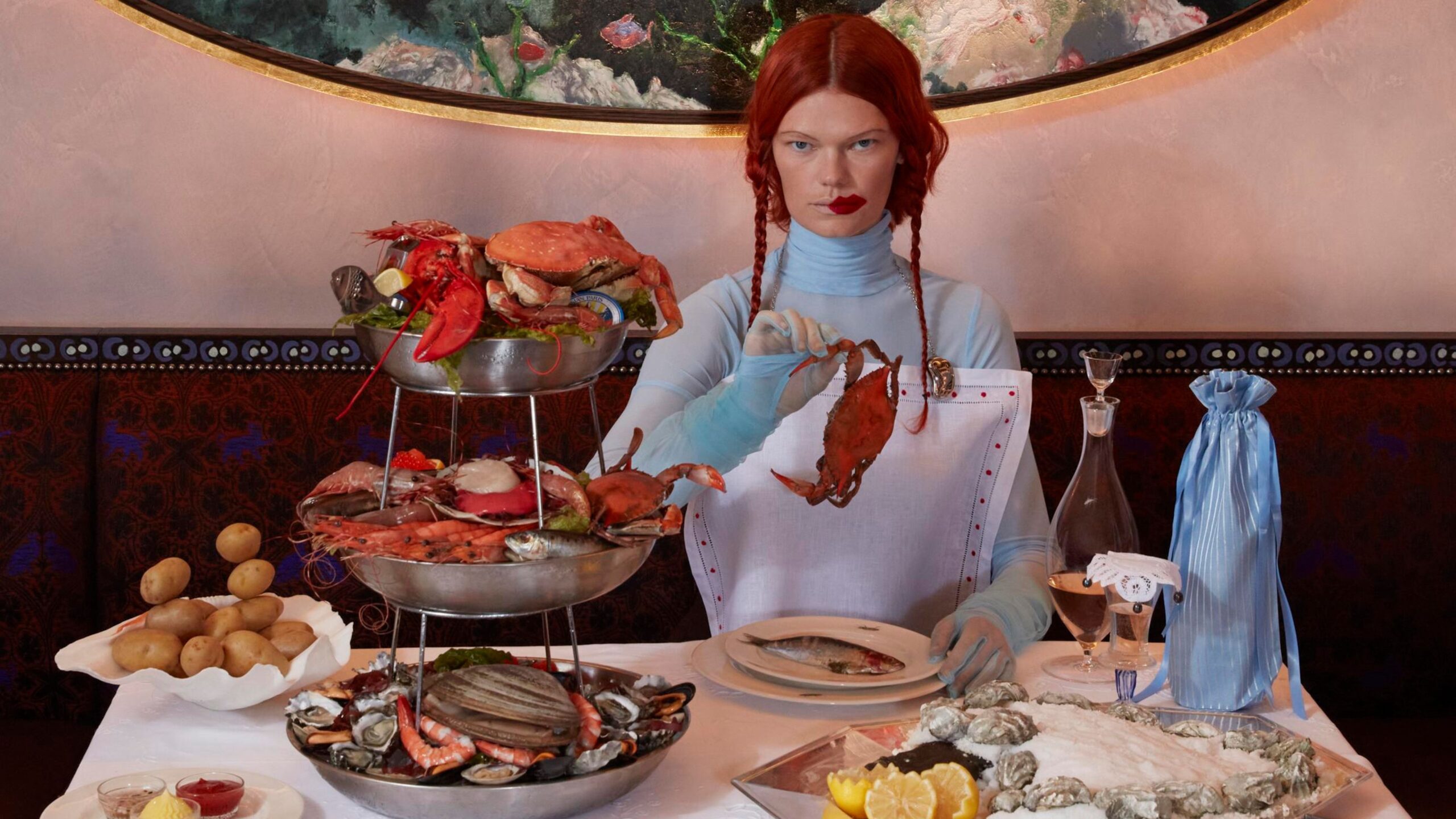
Ileya food in the southwest is heavy and meat-forward, in keeping with the day’s ritual centre. Asun, the spiced barbecued goat or ram meat, gets a particular Ileya treatment with the freshly slaughtered animal. The cuts are marinated in pepper, ginger, garlic, onions and seasoning, then grilled over charcoal until the edges are crisp and the centre stays tender. The first batch is often handed to the senior men with palm wine or zobo on the side.

Jollof rice anchors the lunch table. The Yoruba preparation, smoky and tomato-deep, runs in industrial quantities through southwestern Ileya kitchens. Moin moin, the steamed bean pudding, joins the spread. Fried plantain. Beef stew. Fried rice for the children who prefer it. A salad of lettuce, cucumber, tomato, baked beans and boiled egg appears on many tables in the southwest Christian-Muslim shared register.
Advertisement

The ram itself runs across multiple dishes. Pepper soup with ram chunks, slow-cooked until the meat falls off the bone. Stewed ram in tomato base. Suya-style skewers prepared late in the day for the evening visitors. Liver dishes prepared early and offered to the household elders. The economy of one ram across one Ileya day will feed forty people without strain in most southwestern households.

Drinks include zobo, kunu, palm wine in some households, soft drinks for the younger guests, and tea served late into the night.

The entertainment

Ileya Fashion and Entertainment - The entertainment

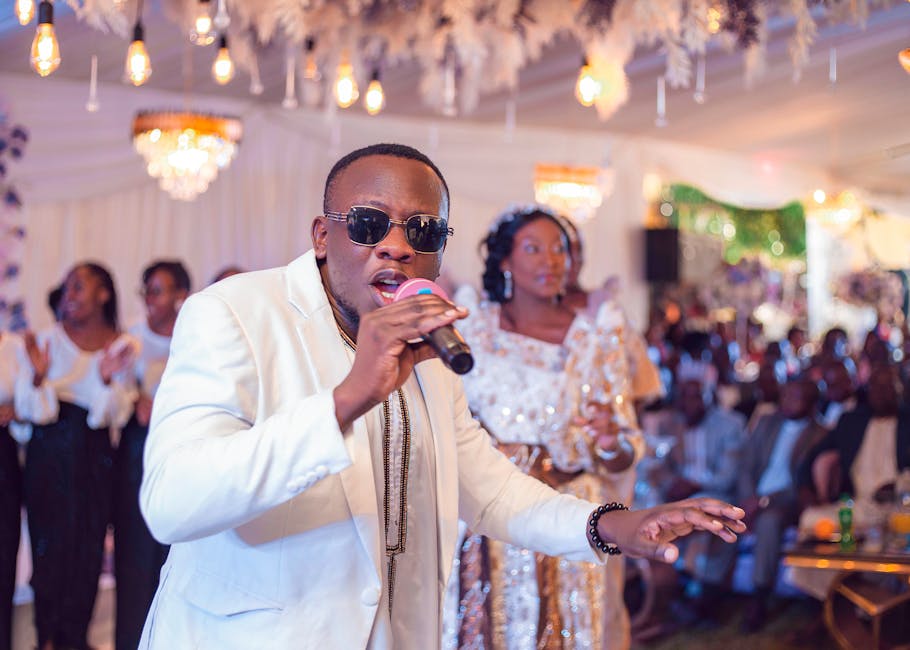
Ileya in the southwest has, over the last twenty years, become an entertainment-industry holiday in addition to a religious one. Nollywood films with Muslim themes time their releases around the holiday. Music releases land on the eve or the day itself. Concerts get booked across Lagos in the week of the holiday. The performance dimension of the day has grown alongside the social media culture that documents it.

Nollywood’s Muslim-themed productions in the southwest, often produced in Yoruba and centred on family compounds in Lagos, Ibadan and Ilorin, draw audiences who treat the Ileya film slate as a seasonal event. Directors such as Tunde Kelani and the younger generation of Yoruba-language filmmakers have made films that explicitly engage Yoruba Muslim life, and the streaming releases time their drops accordingly.

Music releases timed to Ileya have become a category of their own. Pasuma, the fuji star and a recognised public Muslim, has built a significant share of his catalogue around holiday singles. Olamide, who has acknowledged Muslim family ties in his music, marks the holiday across his social platforms. Younger stars such as Asake, Seyi Vibez, Bella Shmurda and Zinoleesky operate inside a Yoruba street-pop register that draws constantly on the cultural codes of southwestern Muslim life, and their holiday posts and singles read as part of the same cultural moment.

The Sallah picnic culture, a recent Lagos phenomenon in which young Muslim and mixed groups gather at the city’s beaches, parks and open venues on Ileya day for organised meet-ups, has added another layer to the entertainment calendar. The picnics are catered, soundtracked, photographed and shared. The aso-ebi from earlier in the day gets a third or fourth outing at these gatherings. The Lagos Ileya picnic, distinct from the family-compound observance, is the closest contemporary equivalent to the Yoruba seasonal festivals of the pre-colonial era – a public celebration in shared open space, organised by young adults, soundtracked by music of their own choosing.

Celebrity Ileya posts have become a fixture of the holiday’s media cycle. Tiwa Savage, Adekunle Gold, Simi, Davido, Wizkid, Ayra Starr, Tems and others mark the day with content scheduled for the late morning engagement window. The performance of devotion is sincere in most cases and brand-conscious in many cases at once. The two are not mutually exclusive in a media environment where holidays are also content opportunities.

The Lagos and Kano contrast

Ileya Fashion and Entertainment - The Lagos and Kano contrast

It is worth holding the Lagos Ileya in comparison with the Kano Ileya to see what each city does that the other does differently. Kano is the historical seat of northern Nigerian Muslim observance, and its Ileya is anchored by the emir’s Durbar, the horse-mounted royal parade that runs through the city in full ceremonial dress. The Kano Ileya is older in continuous form, more publicly ceremonial, and more directly tied to the emirate system that pre-dates the Nigerian state.

The Lagos Ileya, by contrast, is a city-of-strangers Ileya. Lagos is a megacity of more than twenty million people in which Muslim households exist alongside Christian and traditional neighbours, where the public observance of the holiday is less centralised around a royal figure and more distributed across thousands of family compounds, community mosques and entertainment venues. The Lagos Ileya is also more commercially media-saturated. The fashion economy. The picnic culture. The celebrity post cycle. The catering industry running at twenty-four-hour shifts in the week before.

Neither is more authentic than the other. They are two expressions of the same religious observance shaped by two different cultural and civic environments.

The ram-trading economy

Ileya Fashion and Entertainment - The ram-trading economy

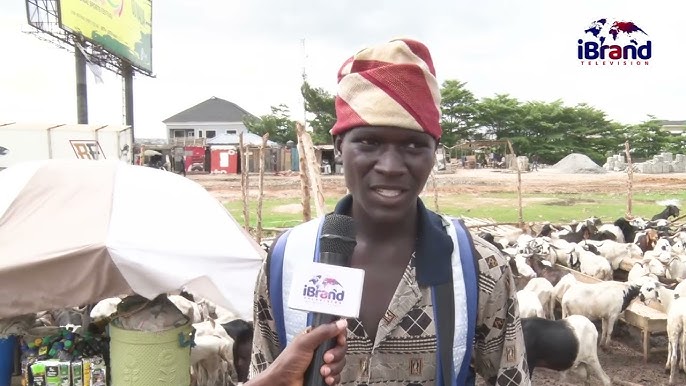
A piece on Ileya in Nigeria cannot avoid the ram. The animal is the day’s ritual centre and the season’s largest single line item for many households. Ram prices in major Nigerian cities typically rise sharply in the four to six weeks before Ileya. A ram that sold for a hundred thousand naira in March might be priced at two hundred and fifty thousand by the eve of Ileya. Premium animals – large, well-fed, with particular markings – can command well over a million naira.

The ram trade pulls trucks of animals from the middle-belt and northern Nigerian states down to the southwestern cities. Markets dedicated to Ileya livestock open in Lagos in the weeks before the holiday. The trade is informal, cash-heavy, and a major source of seasonal income for ranchers in the Federal Capital Territory, Niger, Kwara, Kaduna and beyond. The slaughter on Ileya morning, conducted across hundreds of thousands of southwestern households simultaneously, is the largest single-day informal protein distribution event in the regional calendar.

What the day leaves behind

Ileya Fashion and Entertainment - What the day leaves behind

The week after Ileya is its own register. The aso-ebi photos circulate. The video reels go up. The Sunday after the holiday is heavy with leftover stew. The tailors take their first full sleep in ten days. The fashion houses tally the season’s revenue. The ram markets close. The mosques resume their normal rhythm.

What lingers in the southwestern Muslim household is the same thing every major holiday leaves behind in any culture that takes its festivals seriously. Photographs in the family album. The cousin you saw for the first time in two years. The aunt who tied your gele for you on the morning of the day. The neighbour who got the third portion of your ram. The Asake song that played in the courtyard while the asun was being grilled. The agbada hanging in the wardrobe, waiting for next year.

The southwestern Nigerian Ileya, viewed across all its layers, sits at the intersection of religious devotion and Yoruba cultural performance, with an entertainment and fashion economy wrapped around the centre. To attend one Ileya in Lagos or Ibadan is to see all of those layers working at once, the prayer at dawn flowing into the meal at noon flowing into the picnic at dusk, the cloth, the music, the food, the family compound, the city street. That coordination is the work of centuries. The current season is just the latest verse of it.

Advertisement
Share
Get the recap

Loved this story? Get more like it.

Join readers who get our weekly entertainment recap - the stories worth your time, delivered every Friday.

No spam. Unsubscribe anytime. By signing up you agree to our Privacy Policy.

Ileya Fashion and Entertainment... | Sidomex Entertainment