Hilda Baci: How Nigeria's Celebrity Chef Conquered Global Food Culture and Social Media
Miki Anderson··9 min read
Ad SpaceArticle Top - 728x90
Advertisement
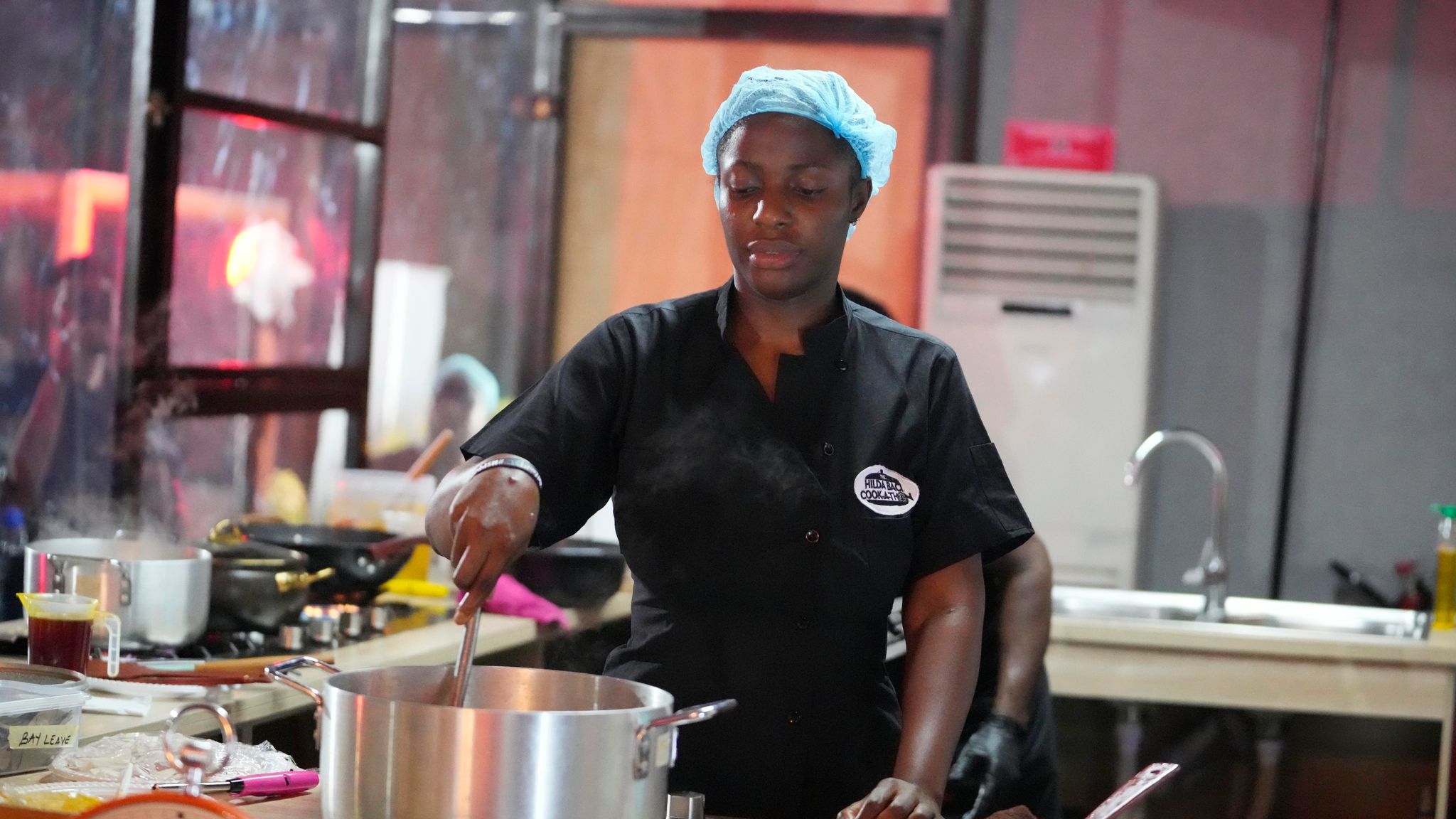
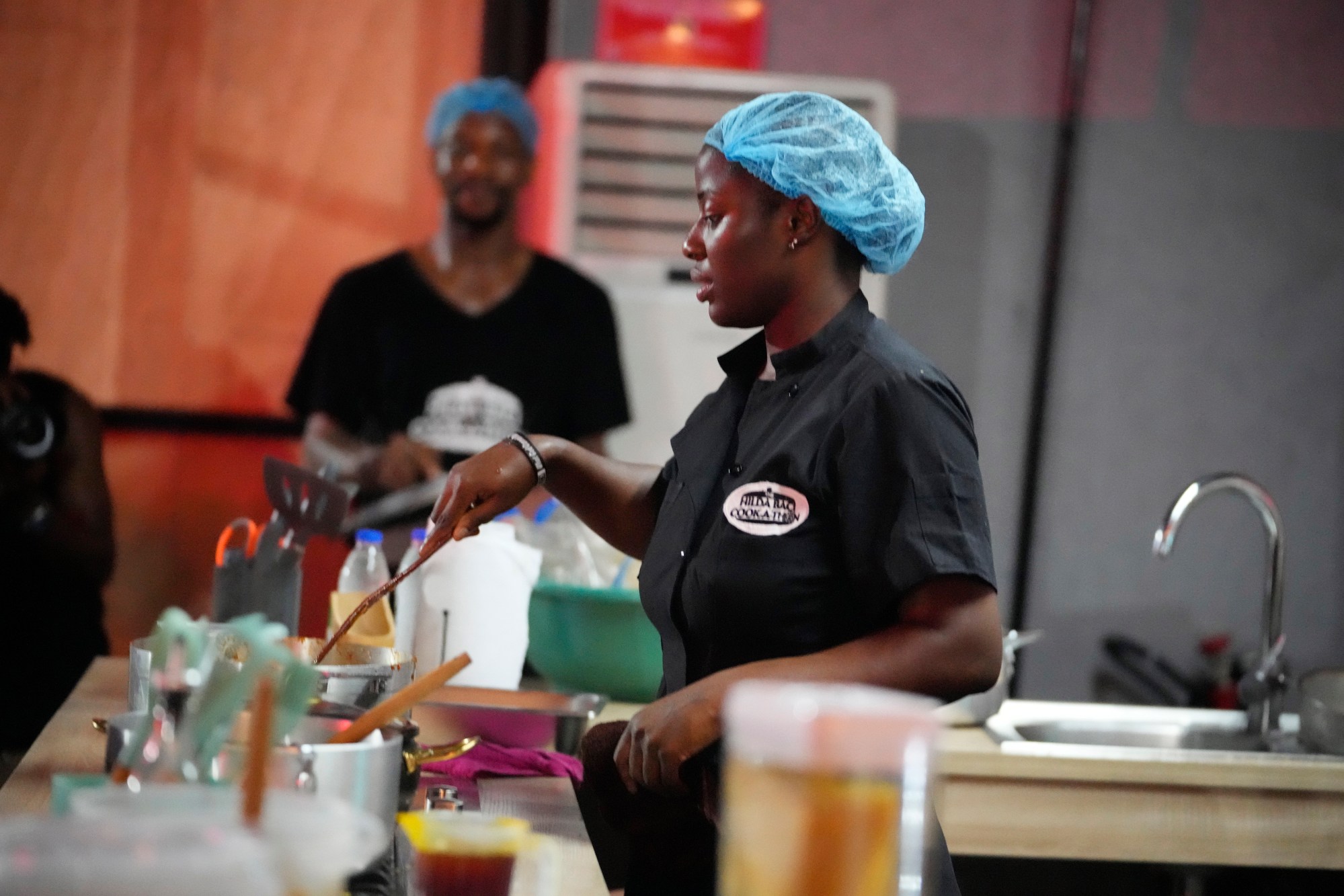
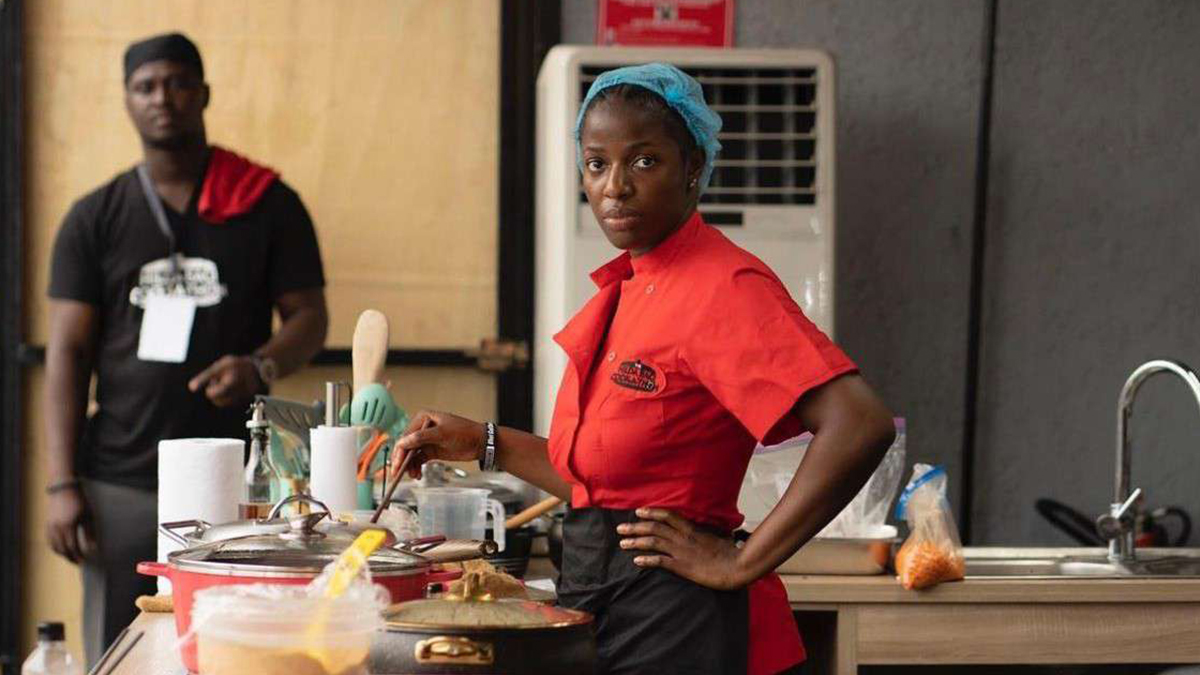
Somewhere past the ninety-hour mark, the smell of frying onions had soaked into everything inside the marquee on Lagos Island. The crowd outside had not thinned. If anything, it had swelled, packed shoulder to shoulder under the harsh tent lights, chanting a name and waving phones in the air like lighters at a concert. On a small raised platform, a young woman in a chef’s apron stood over a stove she had barely left for nearly four days, stirring another pot, swaying slightly on her feet, smiling through exhaustion that would have flattened most people. Outside, the traffic that normally rules everything in Lagos had bent around her. People skipped work to be there. Strangers brought groceries, sent generators, queued just to taste a plate. For a few days in May 2023, a kitchen became the most-watched spot in Nigeria, and the woman behind the stove became something the country had not had in a while: a homegrown phenomenon built entirely out of food.
Her name is Hilda Effiong Bassey, and most of Nigeria knows her as Hilda Baci.
The kitchen that stopped Lagos
What made the cook-a-thon strange was how little it resembled the usual machinery of fame. There was no chart-topping single, no viral dance, no movie premiere. There was a stove, a rotating cast of dishes, and a clock. Yet the spectacle of one person cooking continuously for days tapped into something larger than the act itself. Nigerians watched the live stream the way they watch a title fight, refreshing for updates, arguing in comment sections, treating each completed hour as a national milestone. Celebrities turned up. Politicians sent messages. Brands scrambled to attach their logos to the moment. The amount of food being produced - well over a hundred pots across the attempt - turned the kitchen into a kind of public feast, with the cooked meals handed out to the crowd.
By the time it was over, the event had done something rare. It had made a chef the main character of the national conversation, and it had done so without a single thing being sold, streamed, or screened. The only product was the cooking, and the cooking was enough.
Who Hilda Bassey is
Hilda Effiong Bassey was born on 20 September 1996 and raised in Akwa Ibom State, in Nigeria’s south-south region, an area whose cuisine - heavy on seafood, palm fruit, and dense soups like afang and edikang ikong - is widely considered some of the most labour-intensive and flavour-rich in the country. Food was not a hobby she discovered later. It was the family business. As a young girl she moved with her family to Abuja, where her mother ran a restaurant, and Hilda spent her afternoons helping out after school. Her mother, an accomplished cook in her own right, was the first teacher and the first standard she measured herself against.
She went on to higher education and then turned fully toward the kitchen, building a catering operation that grew from cooking for family and friends into a registered business. That venture eventually took the name My Food by Hilda, and it became the commercial base from which everything else would later grow. Long before the record attempt, she had already been working the unglamorous middle of the food industry: catering gigs, private orders, a restaurant presence, the slow accumulation of a reputation. The cook-a-thon did not create the chef. It introduced a chef who was already there to a country that had not yet been paying attention.
The cook-a-thon and what it really was
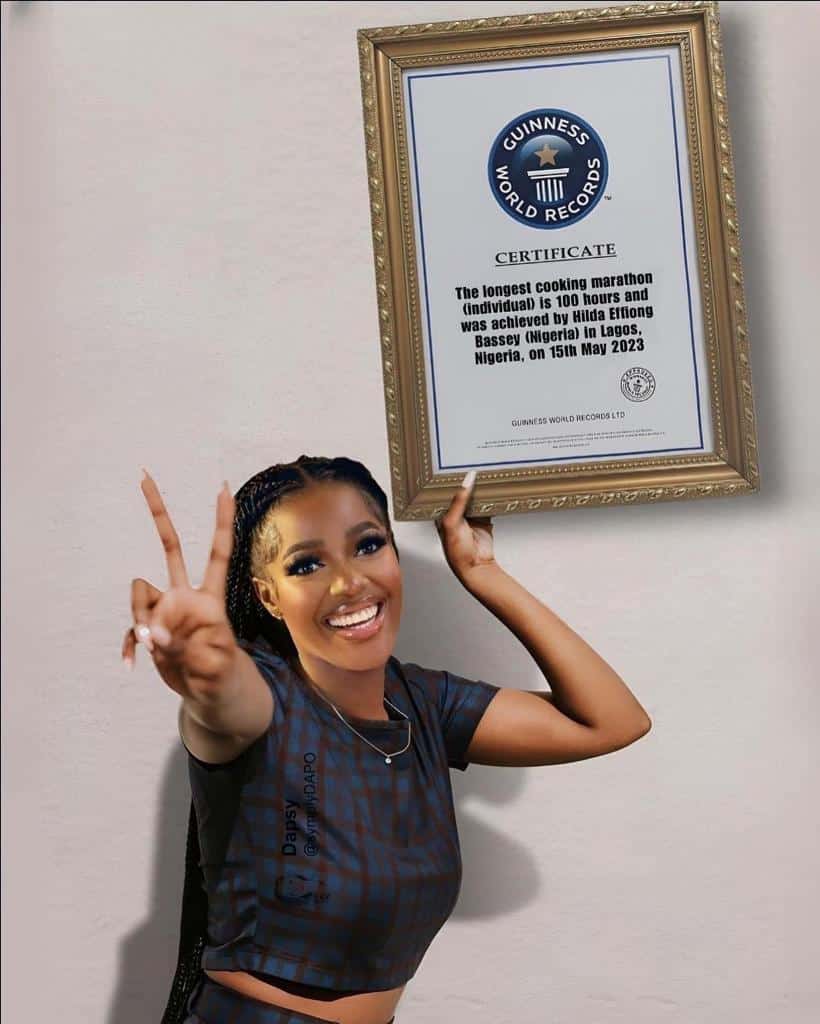
Here is where the facts matter, because the legend and the record are not the same number. Hilda Baci set out to cook for 100 hours. She wanted a round, headline-friendly figure. What she actually achieved, after Guinness World Records reviewed all the footage and evidence, was a ratified time of 93 hours and 11 minutes - the official mark for the longest cooking marathon by an individual.
The gap between the 100 hours she cooked and the 93 hours she was credited with comes down to the rules. Record attempts of this kind allow scheduled rest breaks, and early in the attempt she took more break time than the rules permitted on one occasion. Guinness deducted the overage. So the often-repeated “100 hours” describes her time at the stove, while the ratified record - the one that actually entered the books - is 93 hours 11 minutes. For a home-turf profile, that distinction is the whole point. The 93 hour 11 minute figure is the real one.
It was still a demolition of what came before. The previous benchmark for the category, set in 2019, stood at 87 hours and 45 minutes. Hilda cleared it comfortably. And she did it in front of a live, roaring Nigerian audience, which transformed a quiet endurance category into a stadium event. The record was officially confirmed by Guinness in 2023, sealing what the crowd already believed.
When the record changed hands
Records like this one are made to be chased, and this one was chased almost immediately. Later in 2023, Irish chef Alan Fisher cooked for 119 hours and 57 minutes, taking the title out of Nigeria. The crown kept moving. By 2024, the mark had climbed again, with the officially recognised longest cooking marathon by an individual reaching 140 hours and 11 minutes, set by Liberian-Australian chef Evette Quoibia. The category has only escalated since, with further attempts pushing well past the week mark and awaiting Guinness review.
So the honest position, stated plainly, is this: as of 2026 Hilda Baci no longer holds the longest cooking marathon record. It passed out of her hands within months of her setting it, and the bar has risen steeply in the years since. That is not a footnote to be buried. It is, in fact, central to understanding what she did next, because a lesser brand would have lived and died on a single record. Hers did not.
Ad SpaceIn-Article - 300x250
Advertisement
The jollof record and the reinvention
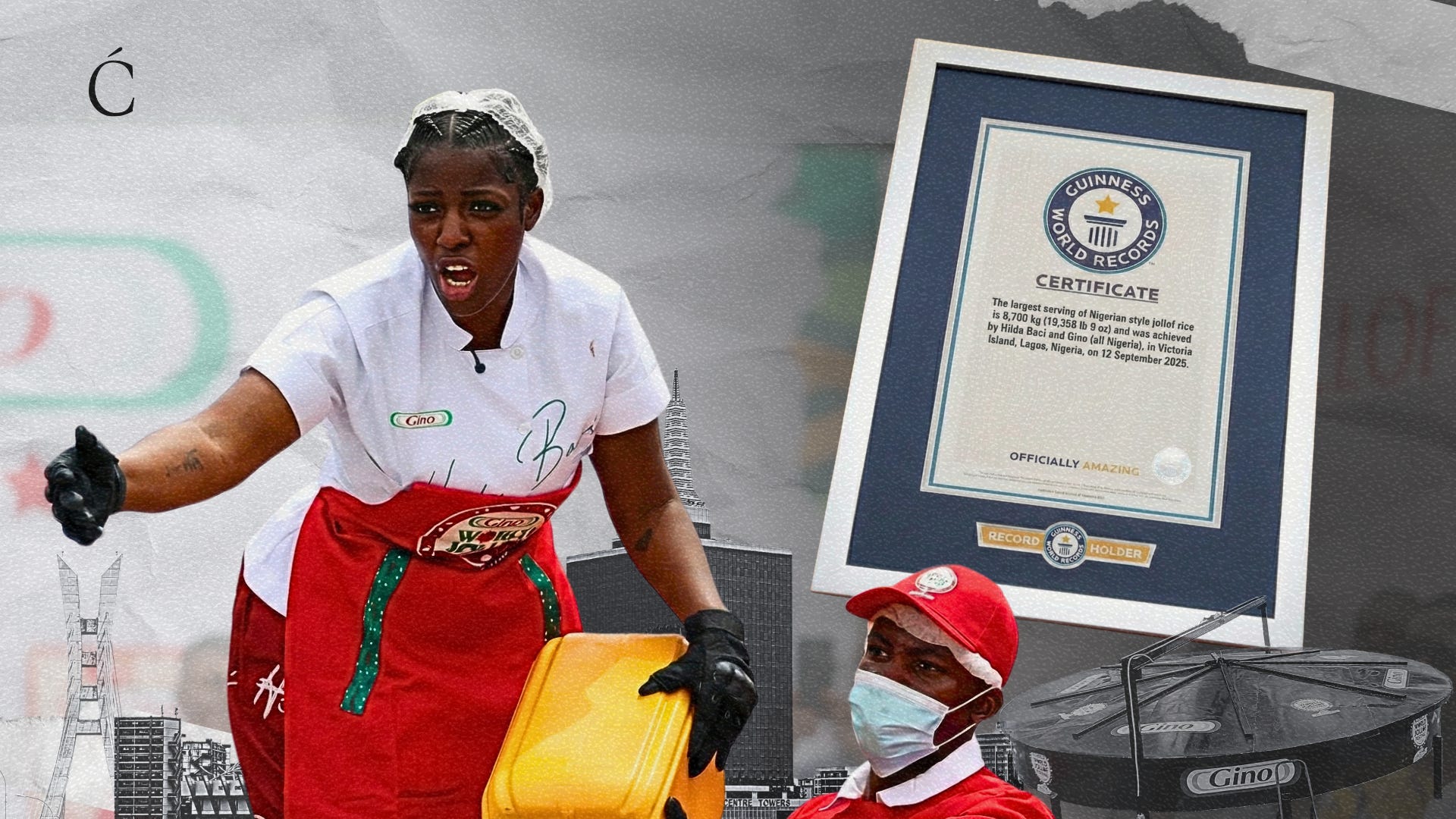
Rather than chase a number that had already left the country and kept climbing, Hilda Baci changed the game she was playing. In September 2025 she went after a different Guinness World Record entirely, one with far more cultural weight for a Nigerian: the largest pot of jollof rice.
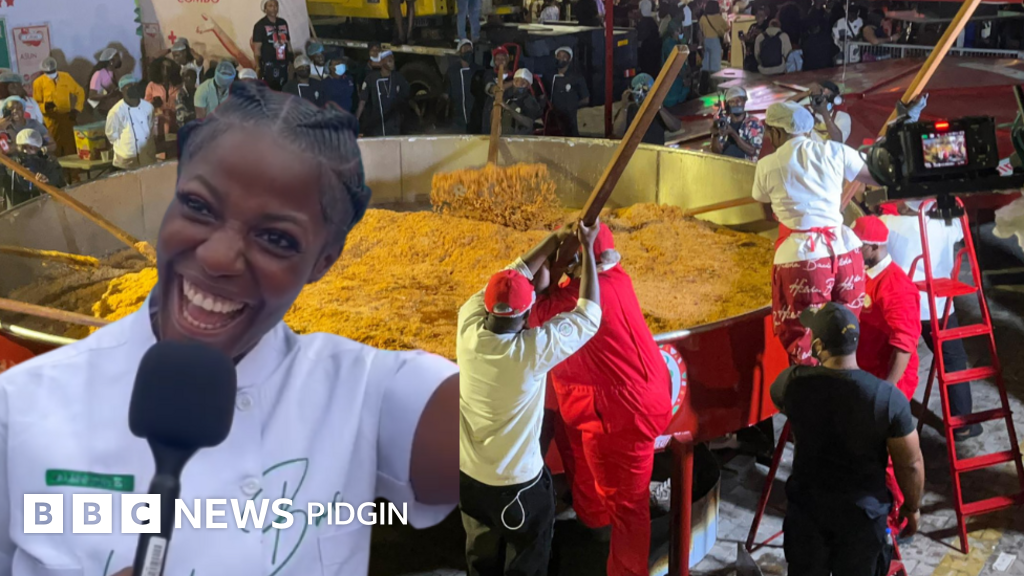
The attempt took place on 12 September 2025 at Eko Hotels and Suites on Victoria Island in Lagos, and it was every bit as theatrical as the cook-a-thon. The numbers were staggering. The finished dish weighed 8,780 kilograms - close to nine tonnes - comfortably clearing the minimum threshold the record required. The recipe read like an industrial-scale version of a Sunday pot: thousands of kilograms of rice, hundreds of kilograms of goat meat and chicken, and a vast quantity of her own pepper mix. Per the rules, rice had to make up the bulk of the weight. The cook ran for around nine hours and nearly ended in disaster when the enormous retrofitted pot buckled under a crane during weighing, a moment of genuine drama that only added to the spectacle. The mountain of finished rice was then served out to the crowd. Guinness World Records confirmed the feat that same month, handing Hilda a second record plaque.
The choice of dish was not an accident. The cook-a-thon had been a feat of endurance that could have been performed with any food. The jollof record was about a specific dish, one loaded with national meaning, and that shift tells you how deliberately she had begun to think about her brand.
Building a food brand beyond one stunt
The most underrated part of Hilda Baci’s story is what happened in the quiet stretches between the two records. This is where a viral moment usually evaporates. Instead, she spent it building.
The clearest signal was her move into mainstream consumer products. She became a brand ambassador for major food companies, and crucially she did not simply lend her face to existing products. She helped put new ones on shelves, including a peppered chicken seasoning cube and related cooking products developed in partnership with a major foods company, followed by further seasoning launches. That is a meaningful step. It took her from being a celebrity who cooks to being a name that lives inside other people’s kitchens, on the everyday shelf next to the staples, which is a far stickier kind of fame than a viral clip. By late 2025 she had also signed on as an ambassador for a home-appliances brand, extending her reach from the ingredients in the pot to the equipment around it.
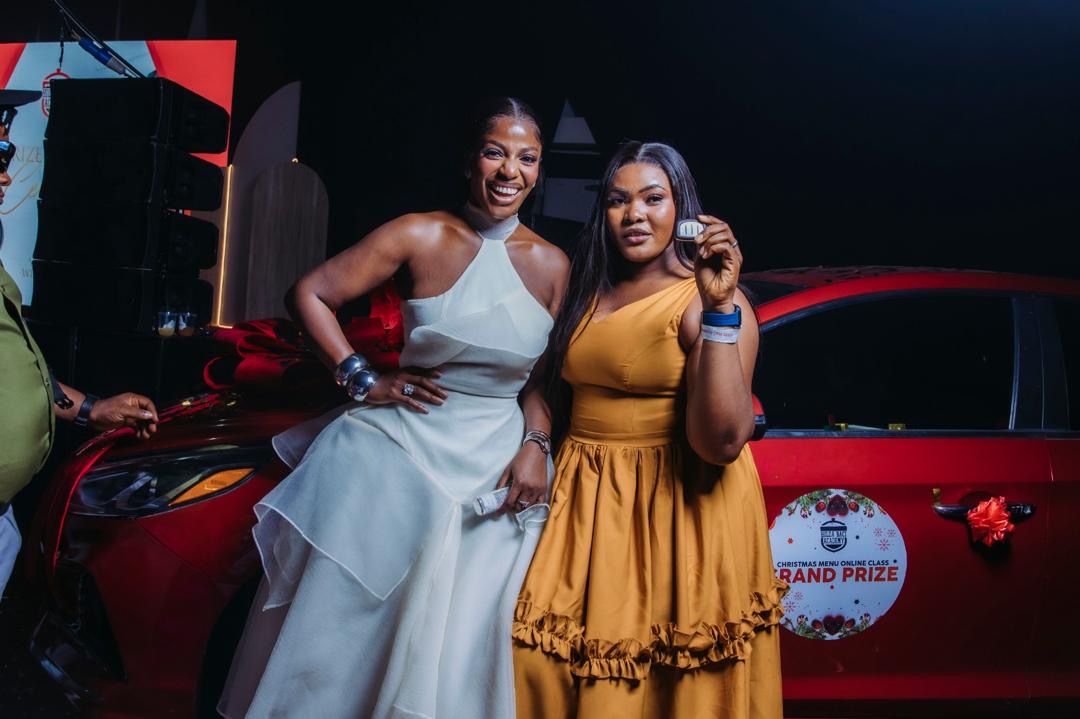
She paired the commercial deals with an education play, launching a cooking academy offering online classes built around Nigerian recipes and technique. That move matters because it converts her audience from spectators into students, and it positions her not just as someone who performs cooking but as someone who teaches it. Add the existing My Food by Hilda operation and the various communities she has cultivated around food, classes, and her restaurant presence, and a fuller picture emerges. This is not a one-record celebrity. It is a small food-media business with a recognisable face at the centre.
The engine under all of it is social media. Her rise was reported to be overwhelmingly driven by online platforms, where short recipe videos and food storytelling built her following well before the cook-a-thon. The records gave her enormous spikes of attention. The product lines, the academy, and the steady content gave her somewhere to put that attention once the cameras moved on. That combination - a viral peak followed by infrastructure to catch the audience - is exactly what most flash-in-the-pan internet stars never manage to build.
Jollof, identity and soft power
It is worth sitting with why a pot of rice could command a hotel ballroom, a crane, and national news coverage. Jollof rice is not just a dish in West Africa. It is a long-running, only-half-joking rivalry between Nigeria, Ghana, Senegal, and others over who makes it best, a debate that flares up at weddings, on social media, and in diaspora kitchens from London to Houston. To cook the largest pot of jollof ever recorded, on Nigerian soil, under the Guinness banner, was to plant a flag in that argument.
That is what lifts Hilda Baci’s second record above novelty. The cook-a-thon was a personal triumph of stamina. The jollof record was a national one, framed by Nigerian media as a win in the long-running jollof debate. Food, in this telling, becomes a form of soft power - a way for a country to project pride and identity outward without a single political speech. A young chef from Akwa Ibom became, briefly, an ambassador for an entire cuisine, and the dish she chose was the one most loaded with collective ownership.
What her rise says about Nigerian food going global
Step back, and the throughline is clear. Within a few short years, a working chef turned two cooking events into a durable brand, two Guinness records into a platform, and a regional cuisine into a global talking point. She did it during the same window in which Afrobeats conquered international charts and Nollywood pushed onto streaming platforms worldwide, and her story belongs in that same conversation about Nigerian culture finding a global stage. Hers just happens to be told through food.
She is not the record-holder for the cooking marathon any more, and pretending otherwise would miss the more interesting truth. What she holds instead is something the record-chasers further up the leaderboard mostly do not have: a name that means something, a product line, an academy, an audience, and a confirmed jollof record that speaks directly to national pride. The marathon made her famous. What she built afterward made her last. For a country whose food has long been beloved at home and overlooked abroad, a chef from Akwa Ibom turning a stove into a stage and a pot of jollof into a headline might be the most quietly powerful kind of export there is.
Ad SpaceIn-Article - 300x250
Advertisement
Share
Get the recap
Loved this story? Get more like it.
Join readers who get our weekly entertainment recap - the stories worth your time, delivered every Friday.
No spam. Unsubscribe anytime. By signing up you agree to our Privacy Policy.