Chet Holmgren: From Basketball Prodigy to Cultural Icon - The NBA Star's Rise and Influence
Miki Anderson··10 min read
Ad SpaceArticle Top - 728x90
Advertisement
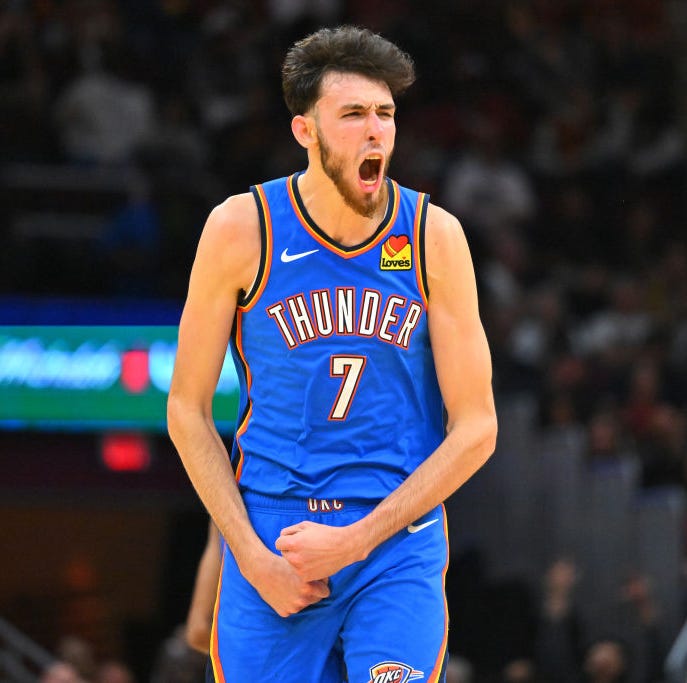
Five blocks in a Game 7. Not five blocks across a series, or five across a memorable week. Five swats in the single most pressure-soaked game a basketball player can be handed, the deciding game of the NBA Finals, with a championship hanging on every possession. When the Oklahoma City Thunder beat the Indiana Pacers 103-91 in June 2025 to win the franchise’s first title, a 7-foot-1 center with arms that seem borrowed from a different species sat near the centre of it all, calmly rewriting what a Game 7 defensive performance could look like. That player had not even appeared in an NBA game two and a half years earlier.
The path that carried him there is one of the strangest and most modern stories in basketball. It runs through a viral clip, a single college season, a draft-night gamble, a foot injury that erased an entire year, and a persona that landed him in front of millions of people who could not name a single other player on his team. To understand why a Nigerian entertainment reader who follows Afrobeats more than the Western Conference still recognises this slender, unibrowed figure, you have to start at the beginning, in a gym in Minneapolis.
The Viral Mixtape Kid
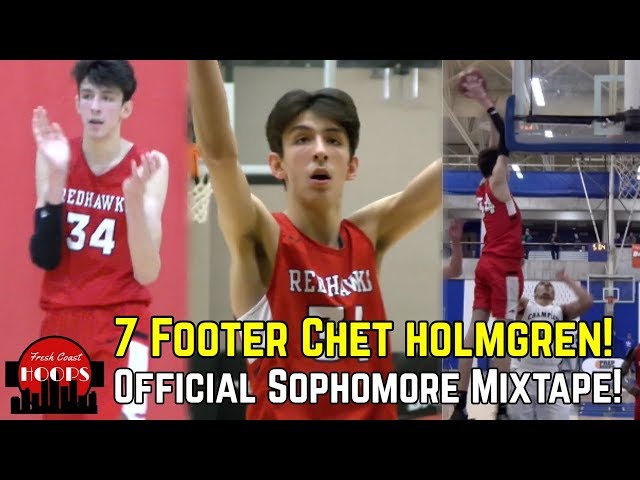
Long before the championship rings and the max contract, there was a phone video. Born on May 1, 2002, in Minneapolis, Minnesota, the young center played his high school basketball at Minnehaha Academy, a small private school that suddenly found itself at the centre of national recruiting attention. He was tall, impossibly thin, and could handle the ball like a guard while blocking shots like a rim protector. In an era where a teenager’s reputation can be built or buried by a single clip, he was tailor-made to go viral.
The moment that did it was not even a high school game. Invited to an exclusive camp in California hosted by Golden State Warriors superstar Stephen Curry, one of roughly 25 high schoolers selected, the gangly teen took the ball, dribbled past a two-time NBA MVP, and finished at the rim. Someone filmed it. The clip raced across social media and racked up hundreds of thousands of views. Here was a high school kid scoring on one of the best players alive, and the internet did what the internet does. Overnight, a name that meant nothing outside Minnesota was being typed into search bars across the country.
That clip matters because it tells you how this generation of stars is made. Reputation no longer waits for the slow machinery of scouting reports and recruiting rankings to catch up. A breathlessly edited highlight reel is the new currency, and few players have ever embodied that shift more cleanly. He became Exhibit A for the player whose legend exploded because of a video, the prototype of the social-media-era prospect.
The Gonzaga Year
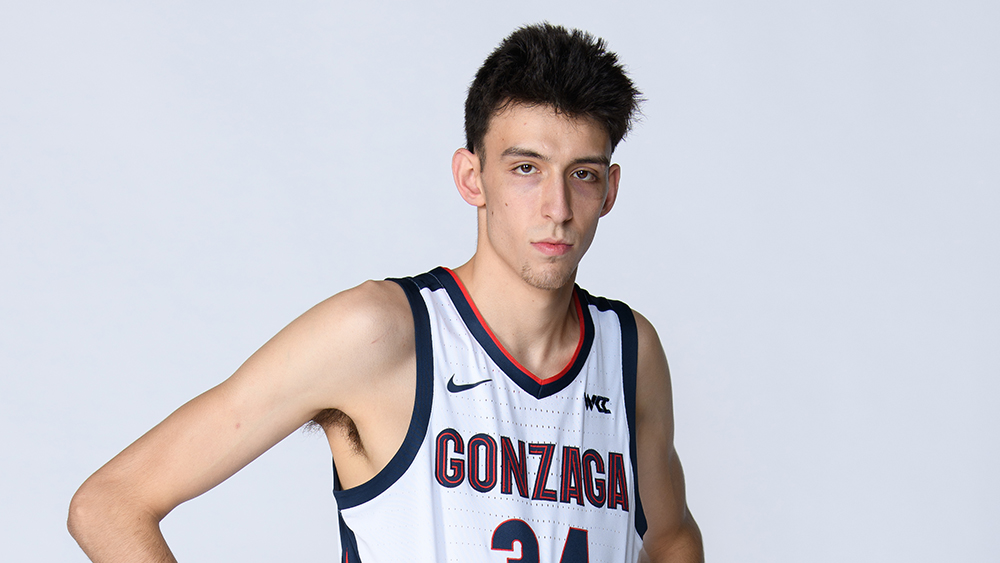
The hype demanded a stage, and he chose one of the best in college basketball. He committed to Gonzaga, the small Catholic university in Spokane, Washington, that had spent two decades turning itself into a national power. For one season, 2021-22, he was the centrepiece of a team built to win it all.
He did not disappoint. As a freshman he averaged 14.1 points, 9.9 rebounds, and 3.7 blocks per game while shooting an absurd 60.7 percent from the field and a genuinely unreasonable 39.0 percent from three-point range for a player his size. Those are not the numbers of a project. They are the numbers of someone who could already do everything a modern big man is asked to do, and several things big men are usually told they cannot.
The honours stacked up fast. He was named a Consensus All-American, earning third-team recognition from the Associated Press, the coaches, and the writers. He was the West Coast Conference Newcomer of the Year and, tellingly, its Defensive Player of the Year. That last award is the one that hinted at his ceiling. Plenty of tall players score. Far fewer change the geometry of the floor on defence, daring opponents to even attempt a shot in the paint. Gonzaga’s season ended short of the championship he had hoped for, but his individual case was made. He was going to be a top pick. The only question was how high, and how much a team would have to talk itself into.
The Draft and the Gamble on His Frame
In the 2022 NBA Draft, the Oklahoma City Thunder selected him second overall. On paper that seems uncomplicated. In reality it was a bet that divided basketball people, and the disagreement came down to one number on his body.
He stood 7-foot-1 and weighed, by widely reported figures heading into the draft, around 195 pounds. For context, that is a featherweight build hung on a skyscraper frame. Critics asked the obvious question over and over throughout his Gonzaga season and the weeks before the draft. Could a body that light survive the nightly collisions of professional basketball, where 250-pound men set screens like moving walls and bang for rebounds with their full weight? The doubt was not malicious. It was the most reasonable concern in the room. Every scout had seen slender bigs get bullied out of the league.
The Thunder, run by the famously patient executive Sam Presti, looked past the worry. Oklahoma City was in the middle of a long, deliberate rebuild, hoarding draft picks and young talent and refusing to rush. They had the time to let a unique player grow into his body. They believed the upside, a shot-blocking, three-point-shooting, ball-handling unicorn, was worth the risk. They took the gamble. And almost immediately, it looked like the gamble had gone wrong.
The Injury That Tested Him
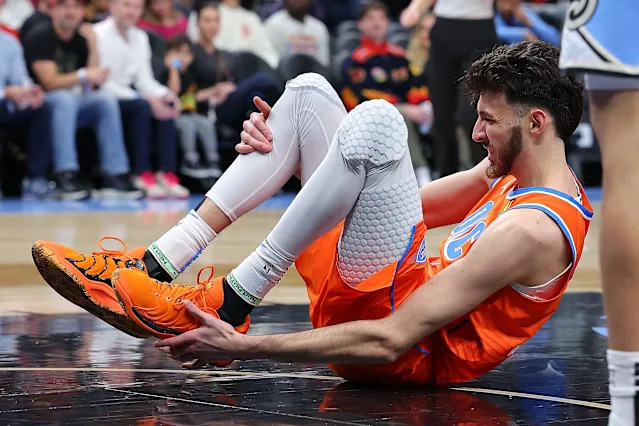
The summer before his first professional season, he was playing in a pro-am game, the kind of casual showcase event where NBA players run with anyone for the love of it. This one, The CrawsOver in Seattle, had drawn a crowd because LeBron James was playing. On a fast break, the young rookie moved to defend James and came down awkwardly. The diagnosis was a Lisfranc injury to his right foot, a serious mid-foot ligament problem that can derail careers. He would miss the entire 2022-23 season. He would not play a single NBA minute in his first year as a professional.
Ad SpaceIn-Article - 300x250
Advertisement
It would have been easy, in that moment, for the doubters to feel vindicated. The frail kid got hurt, exactly as predicted. But there was an important nuance the critics glossed over. This was a contact injury, the kind that can happen to any player of any size on any day. Presti pointed it out directly. It had nothing to do with the frame everyone had fixated on. Still, the timing was cruel. Here was a player whose biggest question was durability, sidelined for a full year before he could answer it.
What that lost season did, in hindsight, was reframe everything that came after. He spent the year rehabilitating, watching, learning the league from the bench, and adding strength to the body everyone doubted. When he finally debuted in the 2023-24 season, he did not look like someone returning from a long absence. He looked like someone who had been quietly preparing the whole time.
The Breakout and the Thunder’s Rise
His arrival coincided with the Thunder’s transformation from a patient rebuilding project into one of the most feared teams in basketball. Led by the silky scoring of Shai Gilgeous-Alexander and supported by a roster of young, switchable, relentless defenders, Oklahoma City rose fast. And the rookie-in-name-only big man was central to how they played, the towering eraser at the back of their defence and a floor-spacing threat at the other end.
The 2024-25 season delivered the payoff, though not without another scare. In November 2024, he suffered a right iliac wing fracture in his pelvis after a hard fall and missed a long stretch, returning in February 2025. Once again, his durability was in the headlines. Once again, he came back. He finished the season averaging roughly 15 points, eight rebounds, and 2.2 blocks per game, then elevated his game when it mattered most. Through the playoffs his presence warped opponents’ offences, and Oklahoma City marched through the Memphis Grizzlies, the Denver Nuggets, the Minnesota Timberwolves, and finally the Indiana Pacers.
In the deciding Game 7, he posted 18 points, eight rebounds, and those historic five blocks, the most ever recorded in a Game 7. The Thunder won the title, the first since the franchise relocated from Seattle. Gilgeous-Alexander, who had already claimed the regular-season MVP and the league scoring title, was named Finals MVP, capping a season for the ages. But anyone who watched the series understood that the championship was built as much on defence as on scoring, and the slender center was the spine of that defence.
The story did not stay perfect. In July 2025, fresh off the title, he signed a fully guaranteed five-year rookie maximum extension reported to be worth up to around 250 million dollars, securing his future in Oklahoma City. Then the 2025-26 season tested him again. He put together arguably his best statistical regular season, averaging about 17.1 points, 8.9 rebounds, and nearly two blocks across roughly 29 minutes a night, and he spoke openly about finally feeling healthy. But the Thunder’s title defence ended in heartbreak, eliminated by the San Antonio Spurs in Game 7 of the Western Conference Finals after leading the series. His own performance dipped sharply in that round, and the gap between his contract and his output became a talking point. It was a reminder that even champions get measured against a rising bar.
The Unibrow-Meets-Gen-Z Persona
Statistics and rings explain the basketball. They do not fully explain the fame. Part of what makes him a genuine cultural figure rather than just an excellent player is how he looks and carries himself. He is instantly recognisable, all length and angles, with a distinctive look topped by a prominent brow that the internet seized on immediately. In a sport full of interchangeable athletic frames, he is unmistakable from the first glance, the kind of silhouette a casual fan remembers without trying.
That visual distinctiveness pairs with a sensibility that fits his generation. Born in 2002, he is squarely Gen-Z, a member of the first cohort of NBA stars raised entirely inside the social-media age, the same machinery that made him famous in high school. He does not project the polished, corporate aloofness of an earlier era of superstar. He comes across as a little quirky, comfortable being odd, the type of figure memes are built around rather than press releases. For a generation that values authenticity and rewards the slightly strange over the slickly packaged, that is an asset, not a liability.
Why a Non-NBA Audience Knows His Name
This is the part that should interest anyone watching how sports stars become broader cultural property. You do not have to follow the NBA to know who he is. His name travels through channels that have little to do with basketball strategy. It moves through highlight clips that go viral on platforms where most viewers will never watch a full game. It moves through the meme economy, where his appearance and his frame have become a recurring visual shorthand. It moves through the simple, sticky story of an underdog body that everyone doubted and that kept proving people wrong.
For a global entertainment readership, including across Africa where the NBA’s reach grows every year through streaming, social media, and the steady stream of stars with continental roots, he registers less as a basketball statistic and more as a personality. He is the tall, skinny kid from the viral video who got hurt, came back, and won a championship. That is a narrative anyone can follow, no box score required. It is the same machinery that turns an Afrobeats single into a global moment, the same blend of a memorable face, a clean story, and a clip that refuses to stop circulating.
What’s Next
The trajectory from here is wide open, and that is precisely what makes him worth watching. He is still only in his early twenties, locked into a Thunder team built to contend for years, with a contract that signals the franchise sees him as a cornerstone rather than a complementary piece. The painful end to the 2025-26 season did not erase the championship the year before. If anything, it sharpened the questions that will define his next chapter. Can the body finally stay whole across a full grind? Can his game grow enough to justify the money and the expectations now stacked on those long shoulders?
What is no longer in doubt is the thing everyone questioned at the start. The frail kid survived. The viral clip became a career. The doubts became a ring. From a phone video in a California gym to a championship and a face the internet cannot stop drawing, his story has already outrun every projection scouts dared to put on it. The next swat, you sense, is already being teed up.
Ad SpaceIn-Article - 300x250
Advertisement
Share
Get the recap
Loved this story? Get more like it.
Join readers who get our weekly entertainment recap - the stories worth your time, delivered every Friday.
No spam. Unsubscribe anytime. By signing up you agree to our Privacy Policy.