
Truth has always made the most uncomfortable kind of cinema. When a Nigerian filmmaker decides to lift a story off the front page of a newspaper, or out of a dusty history textbook, or from the whispered testimony of a survivor, something shifts in the room where the film gets watched. The audience leans closer. The jokes land differently. The tragedy refuses to stay confined to the screen. Nollywood, an industry better known for its melodrama and its wedding films and its supernatural thrillers, has been quietly building a parallel canon of pictures rooted in real Nigerian history and real Nigerian lives. These films do not always announce themselves as biopics. Some borrow a kernel of fact and dramatise the rest. Some sit so close to the public record that the actors might as well be wearing the names of the dead. All of them complicate the lazy idea that Nollywood is only one thing.
What follows is a working list of the most accomplished Nollywood titles built on, or directly inspired by, real Nigerian events and figures. Some are festival darlings. Some quietly streamed on Netflix and changed minds in the dark. Each one earns its place on a shelf labelled Nigerian non-fiction in disguise.
October 1 (2014)
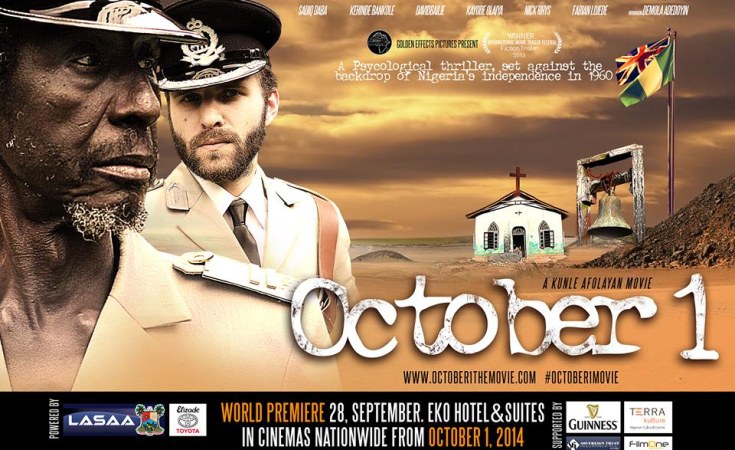
Kunle Afolayan’s mystery thriller arrives at a country on the eve of its independence. The date in the title is not poetic. It is the actual handover day in 1960 when Nigeria stopped being a British colony and became a nation responsible for its own contradictions. Afolayan uses that ticking calendar as scaffolding for a serial killer investigation set in the fictional town of Akote, but the film’s real subject is bigger than its plot. Inspector Danladi Waziri, a northern Nigerian officer handed the case by the colonial district officer, has days to solve a string of murders before the Union Jack comes down for good. The trauma he eventually uncovers is invented, and the film sets it against the broader documented record of mission schooling and colonial authority in West Africa rather than any single real case. Sadiq Daba’s lead performance gives the film its conscience. October 1 was the picture that announced, loudly, that Nollywood could make a period drama that worked at festival scale.
76 (2016)
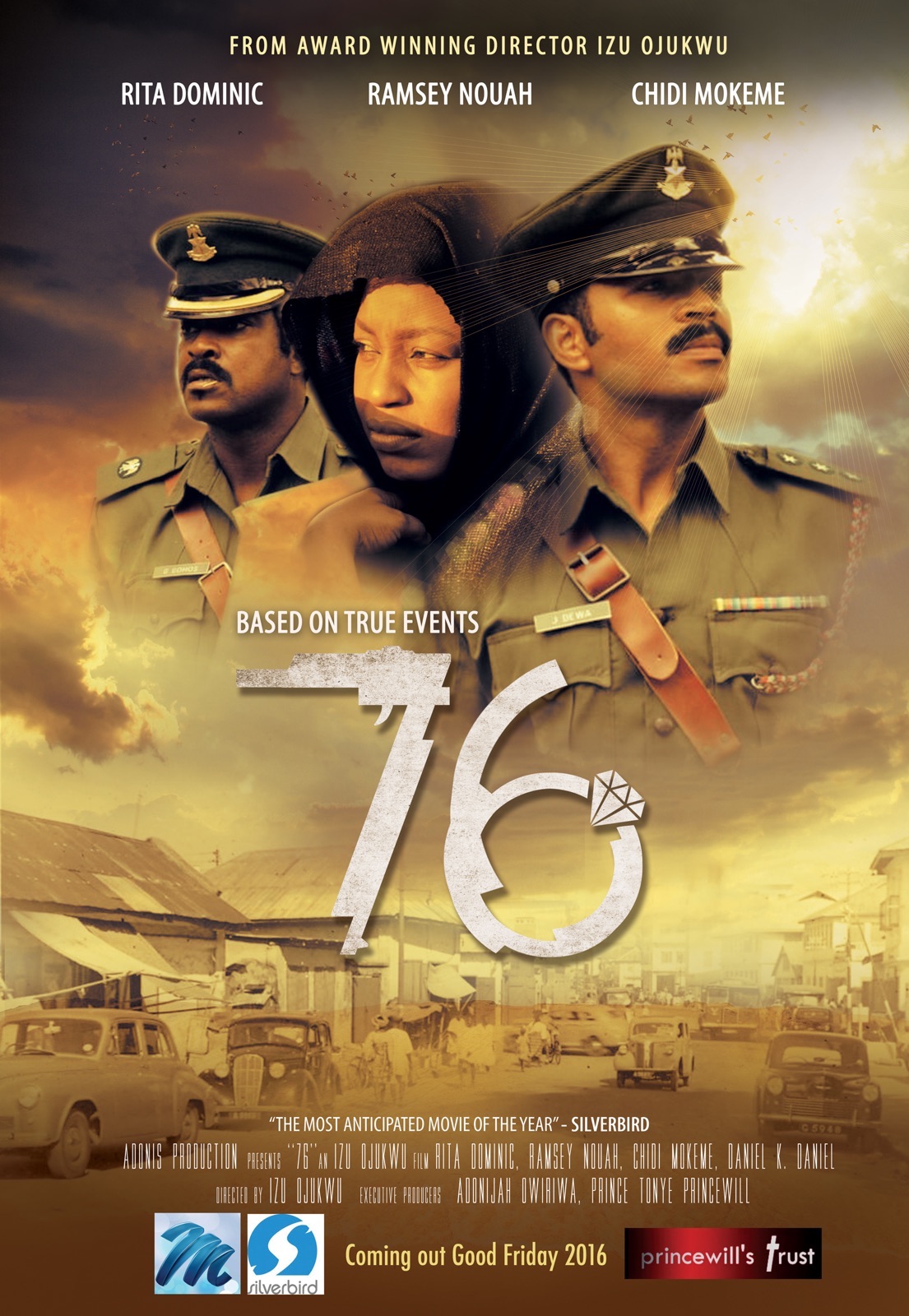
Izu Ojukwu spent close to a decade trying to get 76 finished, and the patience shows in every frame. The film is set against the failed February 1976 coup that ended with the assassination of head of state Murtala Muhammed on his way to work in Lagos. Rather than focus on the generals and the gunmen, Ojukwu tells the story through Captain Joseph Dewa, a young officer married to a pregnant Igbo wife played by Rita Dominic, and the impossible position military families found themselves in when accusations of disloyalty started flying. The Nigerian Army cooperated with the production, granting access to bases, uniforms and period equipment that gives the film an authenticity Nollywood rarely manages. The result is a procedural about marriage and surveillance and the cost of standing next to the wrong person at the wrong barracks, all of it built on the verifiable scaffolding of a date Nigerians of a certain age still remember without prompting.
Half of a Yellow Sun (2013)
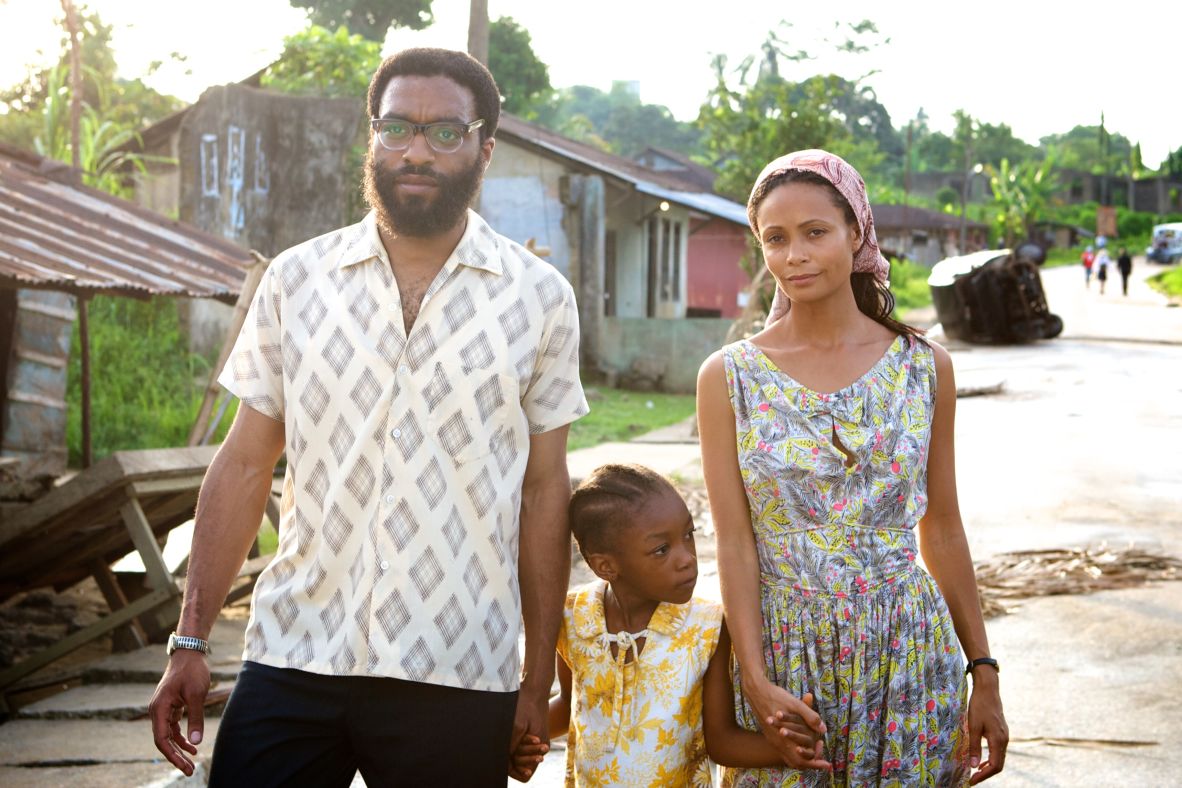
Biyi Bandele’s adaptation of Chimamanda Ngozi Adichie’s novel is set during the Nigerian Civil War, the 1967 to 1970 conflict that tore the Eastern region away as the short-lived Republic of Biafra and killed somewhere between one and three million people, mostly through starvation. The film follows twin sisters Olanna and Kainene, played by Thandiwe Newton and Anika Noni Rose, as their love lives and their loyalties get pulled apart by the war. The Biafran War is the most heavily fictionalised period in Nigerian literature, and Adichie’s novel was already a careful blend of family history and reportage. Bandele’s film inherits that ratio. The roadblocks, the air raids, the kwashiorkor-stricken children in the relief camps, all of these are not invented. Nigeria’s film censors withheld certification for months in 2014, delaying the domestic release amid stated concerns that the film could inflame ethnic tensions. That delay itself became part of the story the film was telling about how the war is still litigated.
Òlòturé (2019)
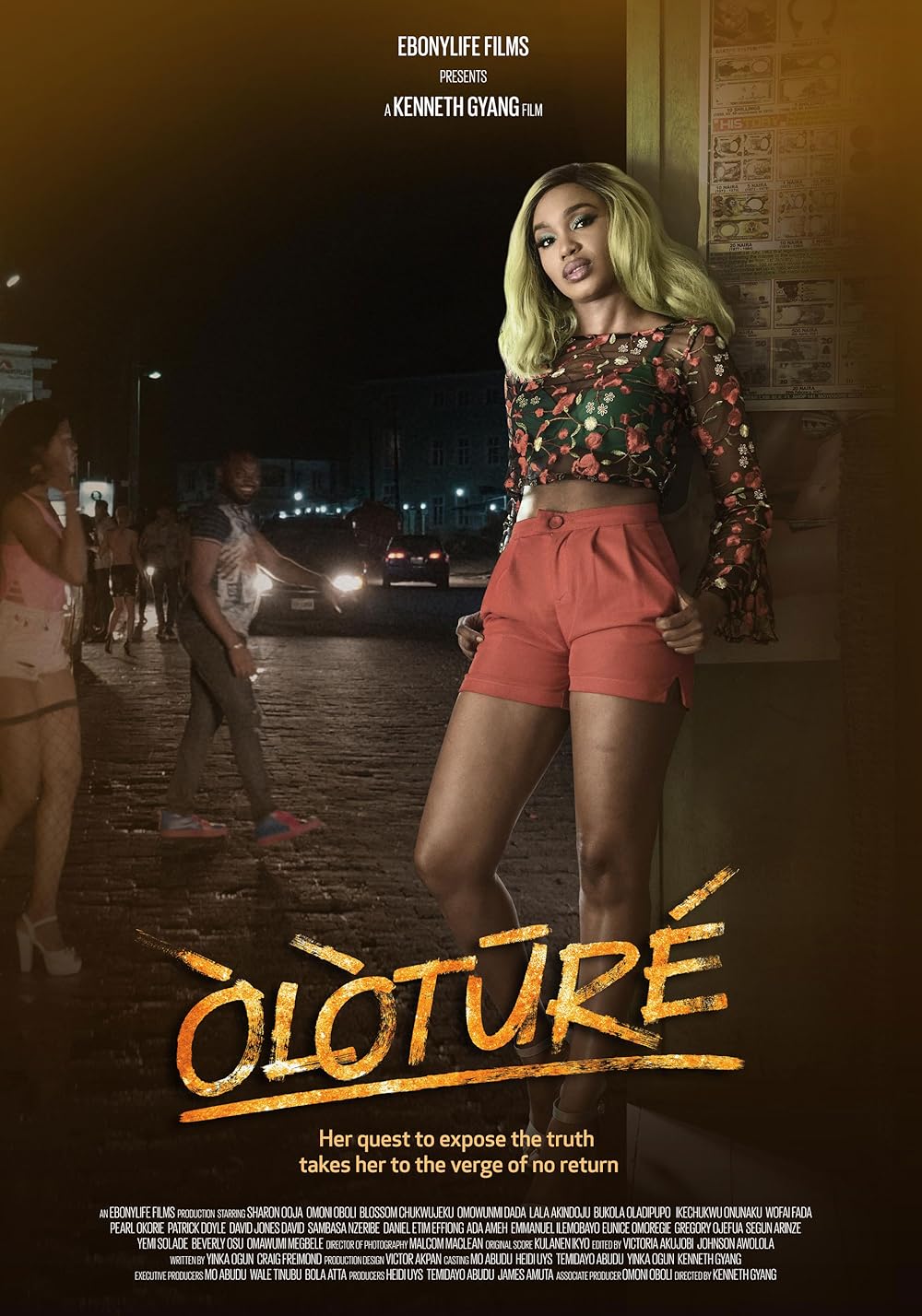
Few Nollywood films wear their journalism credentials as openly as Òlòturé. Kenneth Gyang’s drama follows a young Lagos reporter who goes undercover to investigate the human trafficking pipeline moving Nigerian women to Europe, often through Libya, often into sexual slavery. The character is loosely fictionalised, but the source material is not. The film is openly built on the real-life investigative work of Tobore Ovuorie, a Nigerian journalist who in 2014 published a harrowing first-person account of going undercover for months with a trafficking ring, escaping after witnessing extreme violence. Òlòturé borrows the architecture of Ovuorie’s reporting, including the spiritual coercion, the fake job offers, and the desert crossing, and stages it with the kind of unromantic realism Nollywood is sometimes accused of dodging. Ovuorie later raised a public dispute with the production over credit and compensation, a disagreement that itself became a case study in how Nigerian true stories get adapted without their original tellers always being seated at the table.
93 Days (2016)
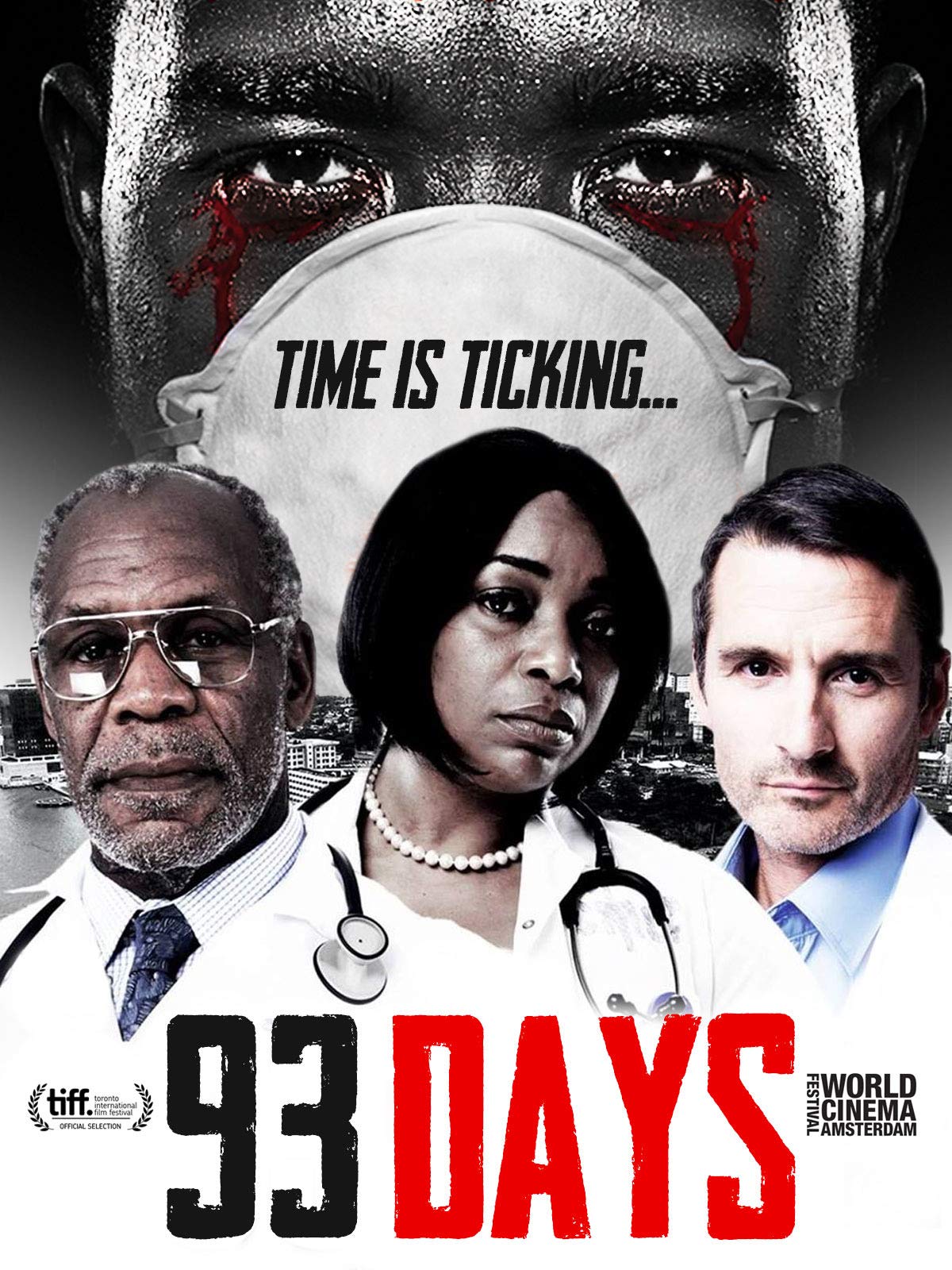
In July 2014, a Liberian government official named Patrick Sawyer arrived visibly ill at Murtala Muhammed International Airport in Lagos. He was carrying the Ebola virus into a city of roughly 20 million people with almost no isolation infrastructure. The fact that the outbreak did not detonate into something catastrophic is the central miracle behind Steve Gukas’s 93 Days. Bimbo Akintola plays Dr. Ameyo Stella Adadevoh, the consultant physician at First Consultants Medical Centre who refused to discharge Sawyer despite political pressure, kept him quarantined, and ultimately contracted the virus herself. She did not survive. Adadevoh’s clinical stubbornness saved an unknown number of lives, and the film treats her not as a martyr but as a working doctor doing her job inside a system that did not initially want her to. Danny Glover and Tim Reid show up in supporting roles, but the film’s centre of gravity is the recreation of First Consultants in those terrified weeks. Watching it now, after the world has lived through another viral outbreak, the procedural details land even harder.
The Milkmaid (2020)
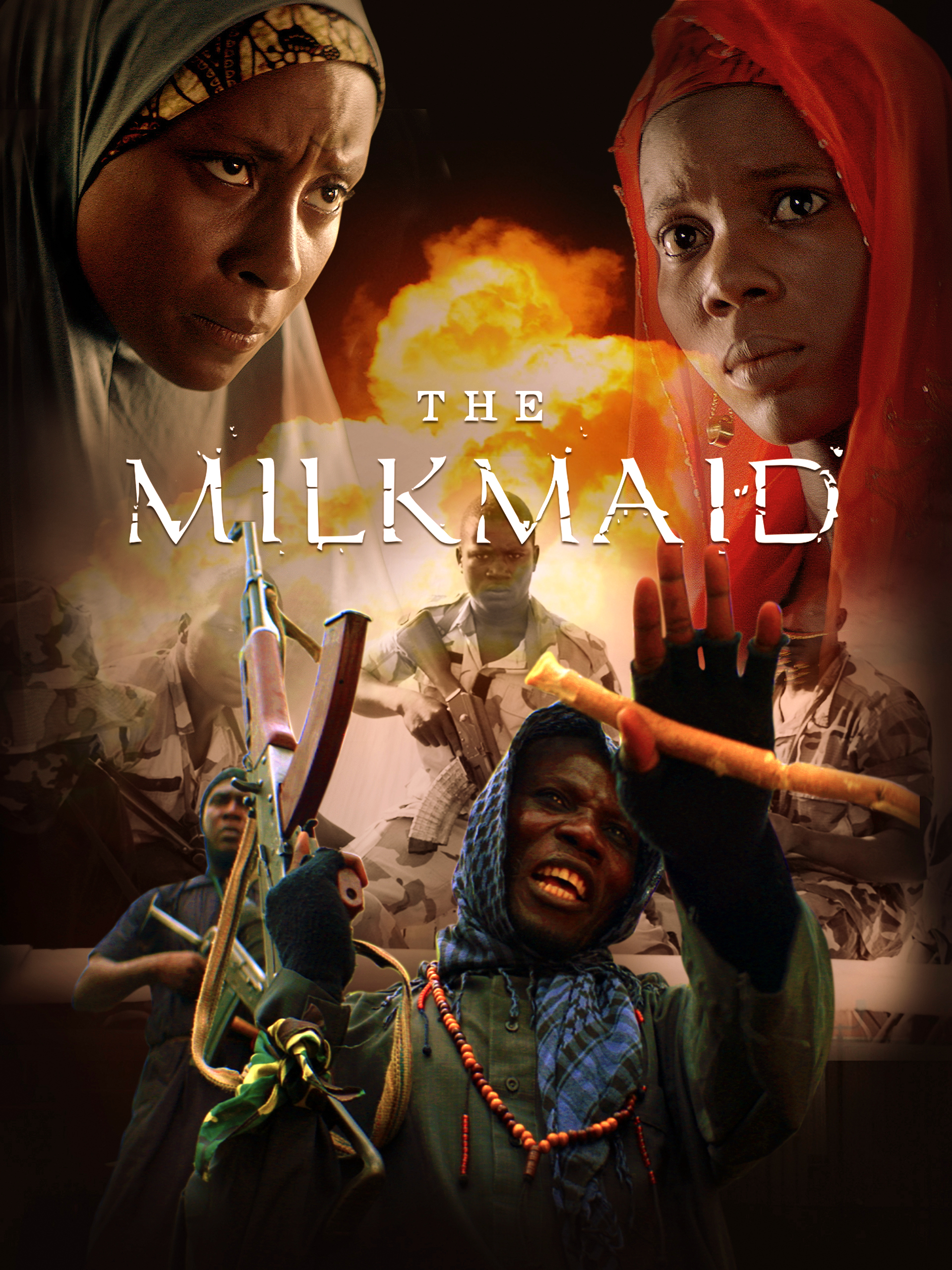
Desmond Ovbiagele’s quiet, devastating film is set in northeastern Nigeria in the long shadow of the Boko Haram insurgency. Two Fulani sisters, Aisha and Zainab, are abducted from a wedding by armed insurgents. The film follows Aisha’s search for Zainab through camps and forests, and it does not flinch from the radicalisation pipeline that pulls some abducted women toward becoming believers rather than escapees. The Milkmaid is not based on a single named incident, but it lives downstream of the Chibok kidnappings of 2014, the Dapchi abductions of 2018, and the broader catalogue of mass abductions in Borno, Yobe, and Adamawa states. The film was Nigeria’s official submission to the Academy Awards’ international feature category. The Nigerian Censors Board demanded heavy cuts before allowing local release, which is itself a kind of statement about how close the picture sits to ongoing security operations. Anthonieta Kalunta carries the film as Aisha with a stillness that resists the genre’s usual heroics.