Best Nollywood Romantic Movies That Will Make You Believe in Love Again
Nova Patricks··10 min read
Ad SpaceArticle Top - 728x90
Advertisement
Romance in Nollywood has grown up. The melodramatic village love triangles of the early 2000s gave way to something glossier, funnier, and more honest about what modern Nigerian love actually looks like. Today’s romantic films juggle in-law politics, religious differences, career ambitions, dating-app fatigue, diaspora distance, and the particular comedy of trying to plan a Lagos wedding without losing your mind or your inheritance. The result is a catalogue of films that range from grand wedding spectacle to quiet, character-driven tenderness.
What follows is a working canon of Nollywood romance worth your weekend. Some are pure rom-com sugar. Some are slow-burn dramas. A few sneak romance into heist plots or supernatural comedy. All of them have something to say about love, and most of them will leave you better company than you were before you pressed play.
The Wedding Party (2016)
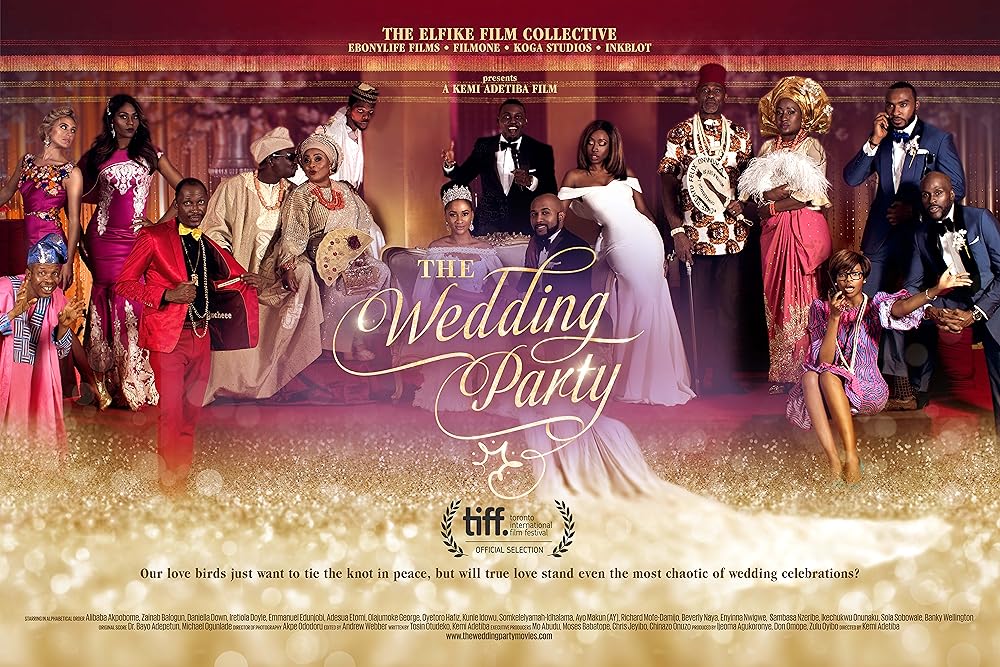
Kemi Adetiba’s blockbuster reset the conversation around what a Nigerian romantic comedy could be at the box office. The story is simple. Dunni Coker, a sheltered art gallery curator, is marrying Dozie Onwuka, a charming software developer whose family has plenty of opinions. The wedding day collapses into a series of escalating disasters: a missing groom’s ring, in-laws who do not approve of each other, an ex who shows up uninvited, and a venue that turns into a stage for every buried grudge between the Cokers and the Onwukas.
Adesua Etomi-Wellington and Banky Wellington play the central couple with such warmth that the chaos around them never tips into mean-spirited farce. The film became the highest-grossing Nollywood release of its time and gave the industry a new ceiling to aim at. It also did something quietly important. It proved Nigerian audiences would pack cinemas for stories where the romantic leads are not in physical danger and the central conflict is just two extended families trying to share a dance floor.
The Wedding Party 2: Destination Dubai (2017)
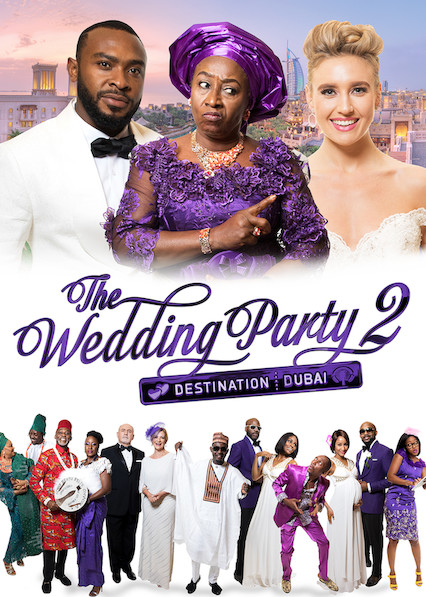
Niyi Akinmolayan took over the director’s chair for the sequel, which moves the action out of Lagos and drops Nonso Onwuka, Dozie’s brother, into a clumsy proposal in London that he is in no way ready to make. What follows is a high-altitude logistics nightmare in Dubai, where Nonso and Deirdre, the British-Nigerian sister of the bride, have to figure out whether the proposal was a mistake or a stroke of accidental clarity.
The energy is breezier than the first film. There is more travel, more wardrobe, more set-piece comedy. What holds it together is the same understanding the first film ran on: a Nigerian wedding is a public stage on which two families negotiate a private treaty. The romance only works if you believe both parties want the treaty. Enyinna Nwigwe and Daniella Down sell that belief.
Isoken (2017)
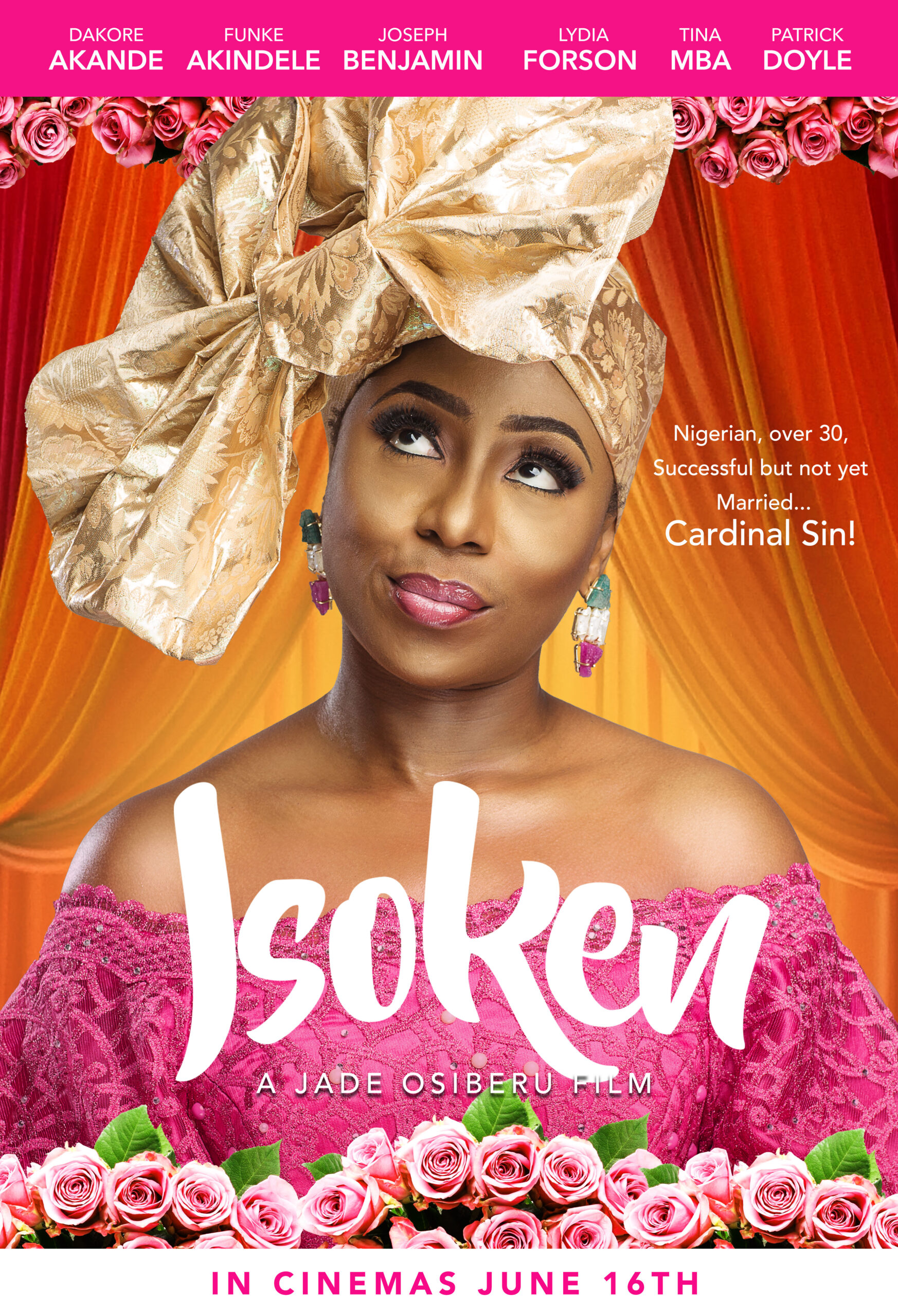
Jadesola Osiberu’s directorial debut is the rare Nollywood romance that treats its lead like a complete human being rather than a problem to be solved. Isoken Osayande, played by Dakore Akande, is thirty-four, accomplished, beautiful, and the subject of constant family pity because she is not yet married. Her mother is on a campaign. Her younger sister is about to walk down the aisle. The Edo aunties have entered the chat.
Two men appear. Osaze, played by Joseph Benjamin, is the perfect Nigerian son-in-law on paper. Kevin, played by Marc Rhys, is a white British photographer her family is not ready for. The film does not turn the choice into a culture-war shouting match. It just lets Isoken sit with what she actually wants versus what would make a Lagos Sunday lunch easier. Dakore’s performance, all small wry looks and held breath, is the spine of the film. The romance lands because Isoken is allowed to be picky, tired, hopeful, and funny all at once.
Phone Swap (2012)
Kunle Afolayan’s rom-com is the early modern Nollywood blueprint for how to do this genre with restraint and craft. Mary, an ambitious fashion designer, and Akin, a stressed corporate executive, collide at an airport and accidentally swap phones. Each ends up flying to the wrong city and having to live the other person’s life for a few days, including showing up to family functions, business meetings, and one extremely awkward family wedding.
Wale Ojo and Nse Ikpe-Etim are a masterclass in opposites-attract chemistry. The film is genuinely funny. It also has a sneaky tenderness about how much we hide from the people closest to us, and how strangers sometimes see us first. More than a decade later, Phone Swap still holds up as one of the best-built scripts in the Nollywood rom-com shelf.
Up North (2018)
Tope Oshin’s road movie sends Bassey, a privileged Lagos boy played by Banky Wellington, to Bauchi for the National Youth Service Corps program after his father gets fed up with his lack of direction. He arrives expecting a punishment. He finds Mariam, played by Rahama Sadau, a fierce, smart young woman from the north who is not interested in being any man’s redemption arc.
The romance unfolds against a Bauchi that Nollywood rarely shows with this much affection, most of the film having been shot there rather than faked in Lagos. The film treats northern Nigeria as a real place with real people rather than a backdrop. Sadau and Wellington share a quiet, careful chemistry. Their love story moves at the pace of getting to know somebody whose worldview is genuinely different from yours, which is exactly the pace it should move at.
Sugar Rush (2019)
Kayode Kasum’s caper is technically a crime comedy, but romance is threaded through it. Three sisters, Susie, Sola, and Bola, stumble onto eight hundred thousand dollars in laundered cash and immediately attract the attention of the EFCC, a vengeful kingpin, and several inconvenient love interests. Bisola Aiyeola, Adesua Etomi-Wellington, and Bimbo Ademoye are a sibling unit that crackles every minute they share the screen.
The romance is not the main course, but it is consistent seasoning, and the sisters’ competing entanglements give the caper its softer register. Sugar Rush is the kind of movie that proves Nollywood can do tonal mixing well, holding tenderness and chase scenes inside the same hour without dropping either one.
The Royal Hibiscus Hotel (2017)
Ishaya Bako’s film is a love letter to a fading family business and to the kind of romance that grows out of stubbornness. Ope, a struggling chef played by Zainab Balogun, returns from London to her parents’ boutique hotel in Lagos. The hotel is in trouble. A wealthy investor named Deji is sniffing around to buy it. Their first meetings are pure friction.
Ad SpaceIn-Article - 300x250
Advertisement
What follows is a classic enemies-to-lovers arc dressed in soft light, lush food cinematography, and one of the prettiest hotel sets Nollywood has put on screen. Kenneth Okolie’s Deji is allowed to be charming without being a cartoon. Balogun gives Ope the prickliness the role demands without losing her warmth. The film leans on its rom-com bones with confidence and does not apologise for being a pleasure to look at.
Fifty (2015)
Biyi Bandele’s Fifty is not a single love story but a quartet of them, all centered on women in their late forties navigating Lagos at a stage of life Nollywood almost never bothers with. Tola, Maria, Elizabeth, and Kate are friends, rivals, and witnesses to each other’s marriages, affairs, regrets, and second-act desires.
Nse Ikpe-Etim, Ireti Doyle, Dakore Akande, and Omoni Oboli anchor the film with performances that refuse to flatten middle-aged women into supporting players. The romance here is grown-up. It includes infidelity, reconciliation, the question of whether to start something new at fifty, and the question of whether to walk away from something old. Bandele’s eye for Lagos as a city of glass and water gives the whole film a polished, slightly melancholy beauty. Few Nollywood films take older women’s interior lives this seriously.
Lara and the Beat (2018)
Tosin Coker’s directorial debut is one of the most stylish entries in the Nollywood rom-com era. The Giwa sisters are heiresses to their late parents’ media company, and a financial scandal strips the family fortune away overnight. Lara, played by Seyi Shay in her screen debut, has to work out who she is without the money, the staff, and the apartment.
The romance with a music producer, played by the rapper Vector, develops at the speed of someone learning to be honest about their own life. The soundtrack is great. The Lagos that Coker shoots is bright, young, and full of music. Lara and the Beat is the rare Nigerian rom-com where the heroine’s career and the romance both feel equally weighted, and where falling in love means rebuilding rather than rescuing.
Banana Island Ghost (2017)
BB Sasore’s Banana Island Ghost is a left-field choice that belongs on any honest Nollywood romance list. A recently deceased man, played by Patrick Diabuah in his first lead role, is given a handful of days to find his soulmate before he can move on to the afterlife. The catch is that the woman in question, played by Chioma Omeruah, better known as Chigul, has no idea he exists and is dealing with her own mess of a life on Banana Island.
Chigul carries the comedy, and a supporting bench that includes Saidi Balogun and Ali Nuhu makes every scene weirder than it needs to be. The film blends supernatural comedy with a surprisingly sweet meditation on whether romantic love is fate or just the people who happen to be in your way at the right moment. It is silly and earnest in equal parts. The earnestness wins.
Falling (2015)
Niyi Akinmolayan’s romantic drama, written and produced by Uduak Isong Oguamanam, sits in a quieter register than the wedding comedies around it on this list. Adesua Etomi and Blossom Chukwujekwu lead, alongside Desmond Elliot and Kunle Remi, and the film arrived in the mid-2010s stretch when a new wave of Nigerian producers was proving that a modest, performance-led love story could still fill a cinema. It does not chase laughs, the conversations feel like real ones, and it is worth seeking out for anyone who wants Nollywood romance played straight.
Love is War (2019)
Omoni Oboli directed and stars opposite Richard Mofe-Damijo as a married couple who decide, fatally, to run against each other for the same governorship seat. The film is half political thriller, half marriage drama. The campaign trail becomes the battleground where every old wound, every compromise, and every silent resentment of their twenty-year marriage finally gets aired.
Oboli is at her sharpest here. The romance is not in the meet-cute. It is in watching two people who genuinely love each other figure out whether a marriage can survive ambition that runs in opposite directions. Love is War argues that the long marriages, not the new flames, are the real romantic territory worth covering.
Citation (2020)
Kunle Afolayan’s Citation is more justice drama than romance, but the romantic element is what gives the film its emotional sting. Moremi, a brilliant graduate student played by Temi Otedola, is preparing her thesis under a professor she once trusted. When that professor sexually assaults her, the film follows her fight to be believed inside the bureaucracy of a Nigerian university.
The romance threaded through Citation, between Moremi and a fellow student she meets during her exchange in Senegal, is sweet and gentle and exactly the contrast the film needs. It is a reminder that healthy love and predatory power can both exist in the same young woman’s life, and that recognising the difference is the work of growing up. Jimmy Jean-Louis as Professor Lucien is genuinely terrifying. Otedola, in her debut, is composed and credible.
Genevieve Nnaji’s Romantic Catalogue
No survey of Nollywood romance is complete without a nod to Genevieve Nnaji’s two-decade run. From early-2000s melodramas such as Sharon Stone through Ijé: The Journey, Road to Yesterday, and her direction of Lionheart, Nnaji has been one of the genre’s most reliable leads. Her romantic films share a particular sensibility: the woman is usually smarter than the men around her have noticed, the love is usually complicated by class or family, and the resolution is rarely tidy. Road to Yesterday in particular, a 2015 road movie where she and Oris Erhuero play a married couple driving to a funeral while their marriage falls apart in the car, is one of the most underrated Nigerian romantic dramas of the decade.
What the Good Ones Have in Common
The newer wave of Nollywood romance, much of it now living on streaming, keeps treating love as a real adult subject. Tola Odunsi’s From Lagos with Love, written by Dami Elebe, is a useful marker of that shift, a 2018 romantic drama built around a family reunion rather than a crisis, trading in the slicker visual grammar the genre now expects. The category is healthy. New filmmakers, new leads and new locations keep arriving.
What ties all these films together is a refusal to treat romance as a small subject. Nigerian audiences turned out for The Wedding Party because the film respected the seriousness of two families sharing a dance floor. They keep turning out for Isoken, Up North, and Fifty for the same reason. The good Nollywood romance is never just about who ends up with whom. It is about what a Nigerian household will negotiate, surrender, and protect to make that ending possible, and the best of these films are honest about the cost of each.
Ad SpaceIn-Article - 300x250
Advertisement
Share
Get the recap
Loved this story? Get more like it.
Join readers who get our weekly entertainment recap - the stories worth your time, delivered every Friday.
No spam. Unsubscribe anytime. By signing up you agree to our Privacy Policy.