Something that would have been unthinkable fifteen years ago is now routine on American productions: dialect coaches hired for Igbo and Yoruba inflections, costume departments pulling reference from Lagos fashion archives, music supervisors clearing Afrobeats through Nigerian publishers, and studio development slates built around partners based in Lagos rather than only in London or Los Angeles. The centre of gravity for African storytelling shifted while a lot of Hollywood was looking elsewhere, and the films that emerged from that shift carry the fingerprints of Nigerian, Senegalese, Ghanaian and South African industries that no longer wait politely for an invitation.
The shorthand for that shift is Nollywood, and the shorthand is both correct and incomplete. Nigeria’s industry, the second-largest film producer in the world by volume, became the cultural reference point that American studios could no longer route around. But the influence flows through specific rooms, specific deals, and specific names. Trace those names and a clearer picture emerges of how Black Panther, Coming 2 America, The Woman King, and a growing slate of African-set productions came to look, sound, and feel the way they do.
The Wakanda Pivot
Ryan Coogler’s research notebooks for Black Panther became something of an industry legend by the time the film opened in February 2018. The director and his team studied the Dogon of Mali, the Maasai of East Africa, the Tuareg of the Sahara, the Suri of southern Ethiopia, and the Basotho of southern Africa. They built a fictional country out of real material, and they did it in conversation with consultants and academics who specialize in the cultures being borrowed from. The film’s costume designer Ruth E. Carter traveled extensively and worked with African textile makers. The film’s production designer Hannah Beachler produced a 500-page document for Wakanda that read more like an anthropology dissertation than a studio bible.
What made Black Panther a turning point was not just the budget or the box office. It was the assumption baked into the production that African aesthetics deserved this level of rigor in the first place. Letitia Wright, the British-Guyanese actress who played Shuri, became the breakout. The role was written so that a Black woman in her twenties got to be the smartest person on a Marvel set, and the response from Lagos to Johannesburg to Accra was instant and obsessive. The film’s styling turned up in wedding photography and fashion editorials across the continent for years afterwards.
Hollywood noticed. The film grossed more than 1.3 billion dollars worldwide. The conversation in studio executive suites stopped being about whether African-rooted material could open and started being about who had relationships in Lagos.
By the time Black Panther: Wakanda Forever arrived in November 2022, Coogler had absorbed the lesson that the music had to be as serious as the visuals. Tems, the Nigerian singer who had spent the previous two years climbing through Wizkid’s “Essence” and her own “Free Mind,” contributed a reworking of Bob Marley’s “No Woman, No Cry” that carries the film’s opening tribute to Chadwick Boseman. Rema appeared on the soundtrack in the same stretch that his own single “Calm Down,” and its remix with Selena Gomez, was becoming one of the biggest Afrobeats records ever to cross over to American radio. The soundtrack treated the genre not as a flavour but as a load-bearing element of the emotional architecture.
Eddie Murphy Returns the Favor
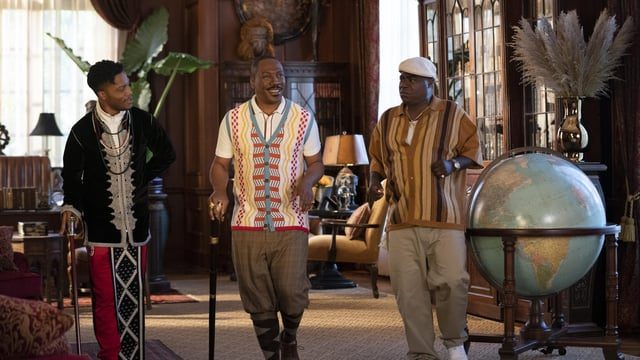
Coming 2 America landed on Amazon Prime in March 2021 with a casting strategy that doubled as a thesis statement. Eddie Murphy, returning to the role of Prince Akeem more than three decades after the original Coming to America, gave substantial screen time to African actors including the South African star Nomzamo Mbatha, and handed a featured musical moment to the Nigerian singer Davido, who performs in the film. The original 1988 film had been a confection assembled almost entirely from African American imagination of what an African kingdom might look like. The sequel acknowledged that the actual continent had a film industry, a pop industry, and a roster of working stars who deserved screen time.
The shift was symbolic, but symbols matter in Hollywood. A franchise that had once stood for the Western projection of Africa repositioned itself as a venue for African talent. The film’s reception in Nigeria was warm, even when the script wobbled, because the casting choices read as respect.
The Netflix Door Opens
Genevieve Nnaji’s Lionheart arrived on Netflix in January 2019 as the platform’s first Nigerian Original. The film, which Nnaji directed and starred in, told a Lagos-set succession story about a daughter taking over her father’s transport company. It was small in scope and conventional in structure, and it did exactly what a first deal needs to do. It proved that a Nollywood production could meet Netflix’s technical specifications, that subtitles could carry a Nigerian-English script to a global audience, and that the streaming infrastructure American studios had built could route African content with the same efficiency it routed Korean drama or Spanish crime thrillers.
Nnaji had spent two decades as one of Nollywood’s biggest stars before the Netflix deal, and her presence as a director-producer-actor mattered because it gave the streamer’s marketing team a face that was already iconic on the continent. Within two years, Netflix had built out a dedicated Nigerian content pipeline, signed multi-title deals with studios including Mo Abudu’s EbonyLife and Kunle Afolayan’s KAP Motion Pictures, and begun licensing older Nollywood catalogue titles in volume. The infrastructure for African-language and African-setting productions now exists at Netflix in a way that it did not before Lionheart.
The Woman King and the Lagos Pull
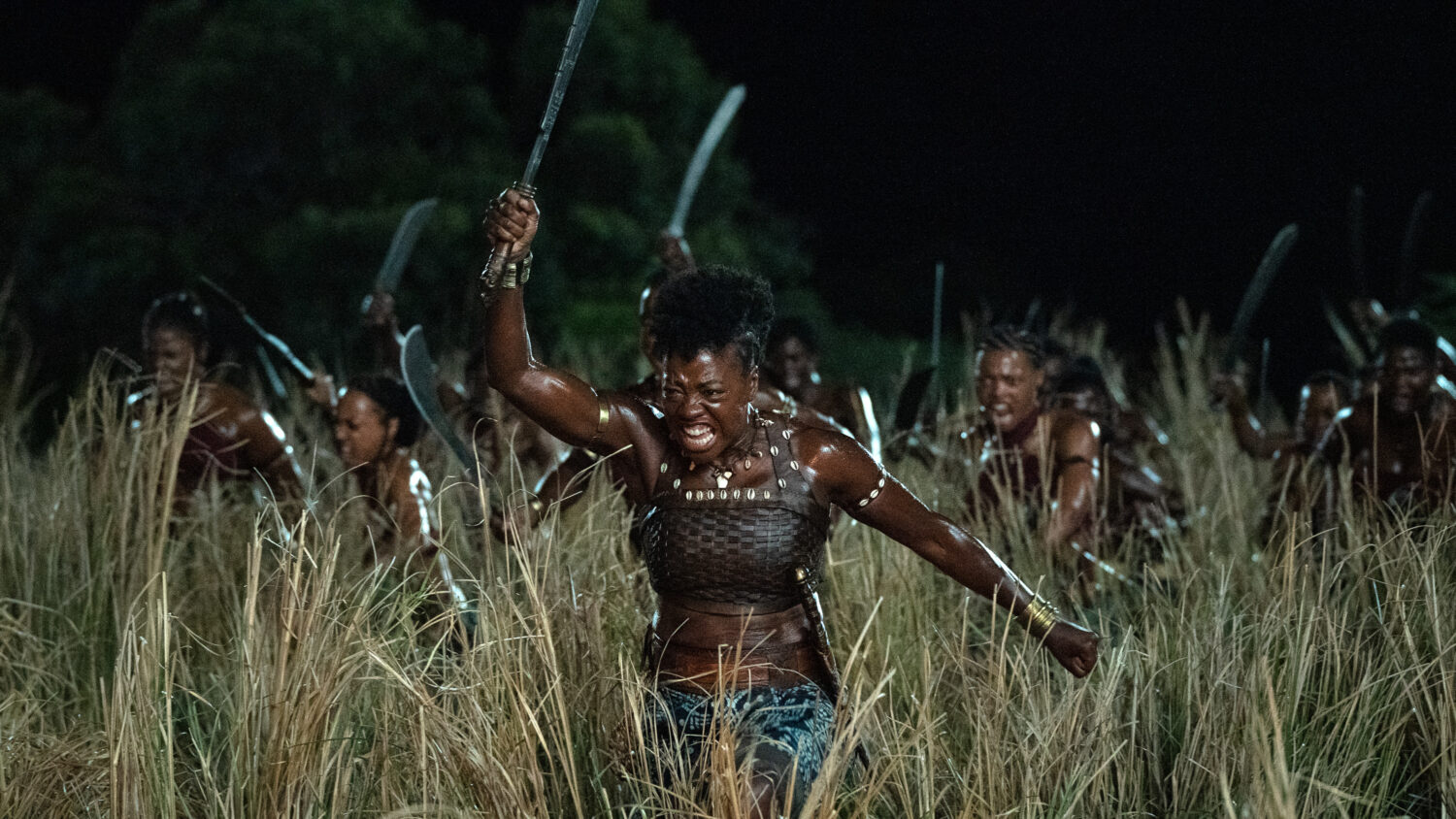
Gina Prince-Bythewood’s The Woman King opened in September 2022 and made roughly 100 million dollars worldwide on a 50 million dollar budget. Viola Davis led the cast as Nanisca, a general of the Agojie, the women warriors who served the Kingdom of Dahomey in what is now Benin. The film was shot in South Africa and drew its visual research from the same well that Black Panther had tapped, but with a documentary specificity that came from sustained collaboration with historians and Beninese cultural consultants.
John Boyega took a supporting role as King Ghezo. His casting was its own piece of the larger story. The British-Nigerian actor had spent the back half of the 2010s as a Star Wars lead, fronting a trilogy that did not always know what to do with him. After the press cycle for The Rise of Skywalker, during which Boyega spoke with unusual candor about the franchise’s treatment of his character, he reoriented his work toward African-set and African-diaspora material. He signed on for Juel Taylor’s “They Cloned Tyrone,” fronted “Breaking” and “The Woman King” in quick succession, and pushed his Upperroom Entertainment to develop Nigeria-rooted projects. His arc became one of the more legible signals of where the gravitational pull was moving.
Adesua Etomi-Wellington, the Nigerian actress whose breakthrough came in The Wedding Party (2016), began appearing on international press circuits with growing frequency through this period, and her interviews became reference points for journalists writing about Nollywood’s reach. Funke Akindele, whose A Tribe Called Judah became the highest-grossing Nollywood film of all time when it released in December 2023, started receiving sustained international press coverage that treated her not as a curiosity but as a major industry figure with a fanbase that any global studio would want to access.