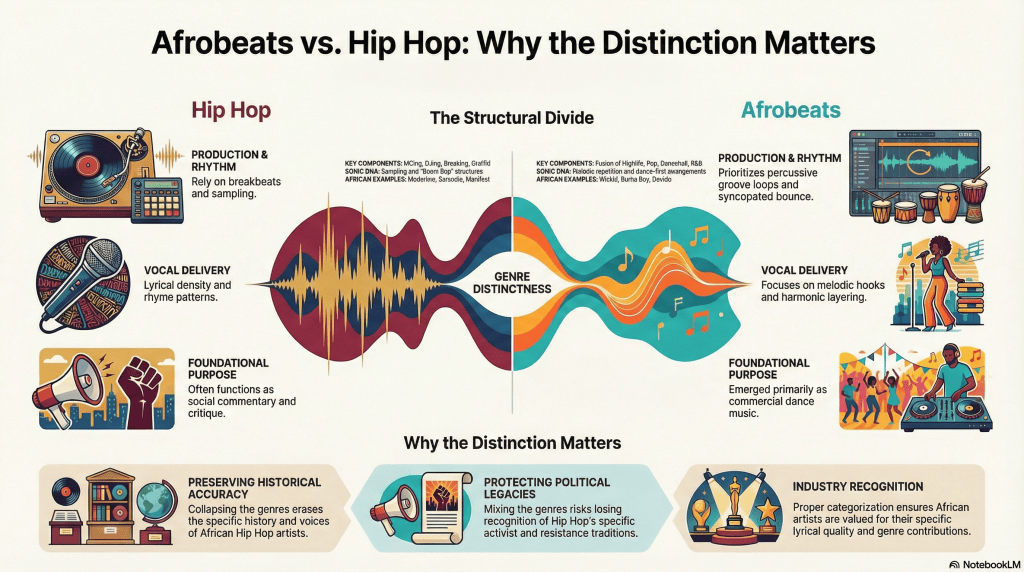

Somewhere between the first kick drum of Davido’s “Fall” and the chorus of Rema’s “Calm Down,” a listener in Berlin, Seoul, or Sao Paulo has the same realization: the song is not in English. Not exactly. Not entirely. The hook lands, the body moves, the words slip past comprehension and yet feel like they mean something specific. That something is Nigerian Pidgin English, and learning to hear it changes the way Afrobeats sounds forever. Pidgin is the secret architecture of modern Afrobeats. Strip it out and most of the genre’s biggest hits collapse into clinical English that no longer swings. Keep it in, and a four-minute pop song becomes a portable piece of West African street culture. For international fans who want to move past nodding politely at lyrics they cannot decode, a basic grasp of Pidgin is the single highest-leverage skill available.
What Nigerian Pidgin English Actually Is
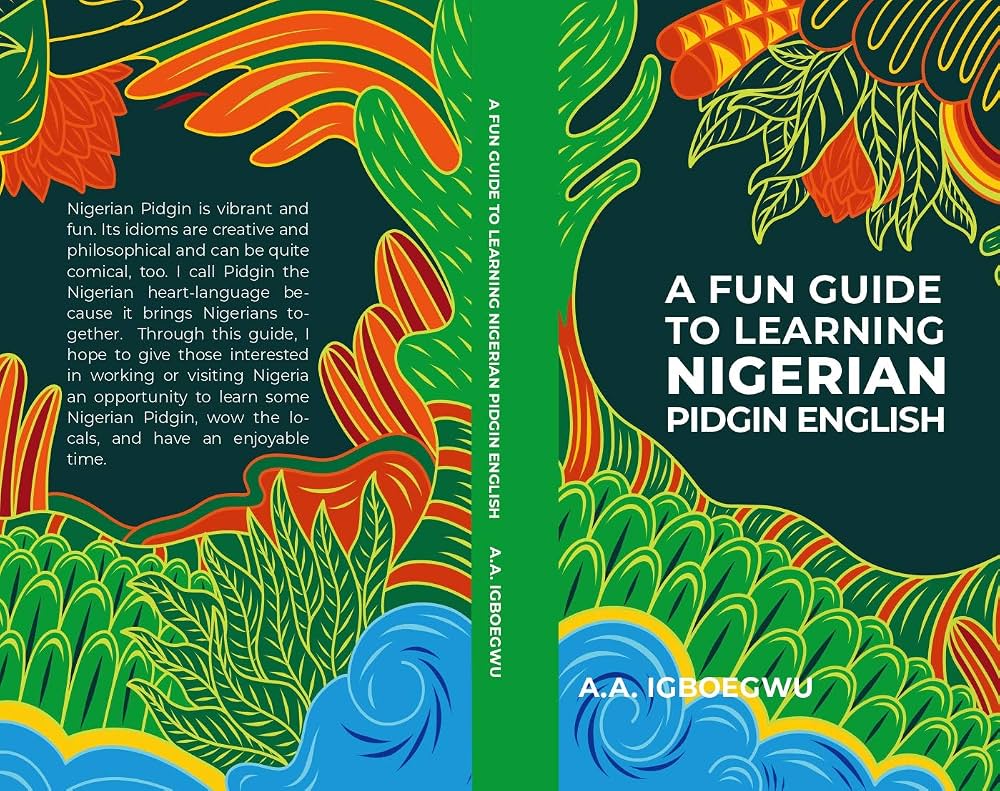
Nigerian Pidgin, also called Naija or Naija Pidgin, is an English-based contact language whose speaker estimates run from roughly 75 million upward, and it serves as a lingua franca across much of Nigeria and parts of West Africa. It is not broken English. It is not slang. Linguists treat it as a stable language with its own grammar, tense system, vocabulary, and pronunciation rules, fully creolised as a first language for some communities and used as a second language by most speakers. The language emerged during the colonial trade era, when British merchants, missionaries, and administrators needed a way to communicate with speakers of Hausa, Yoruba, Igbo, and dozens of smaller Nigerian languages. What started as a trade tongue evolved over generations into something far more sophisticated. Today it functions as the default informal language across Nigerian cities, bridging the country’s roughly 500 indigenous languages.
In 2017, the BBC formally validated Pidgin’s global status by launching BBC Pidgin, a full news service broadcasting in the language. Wikipedia runs an active Nigerian Pidgin edition. Universities study it. Novelists write in it. Pastors preach in it. And Afrobeats artists build their global crossover hits around it.
Why Afrobeats Leans on Pidgin
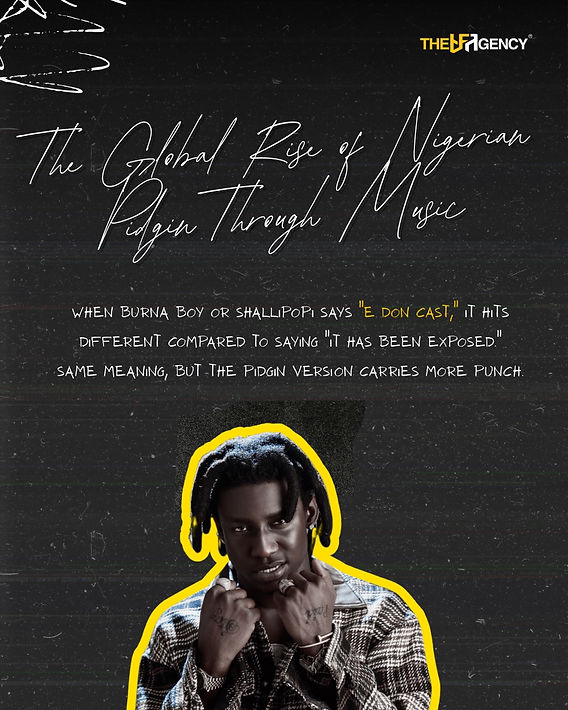
Pidgin is the language Lagos actually speaks when the cameras are off. It is what street vendors call out, what danfo bus conductors shout, what friends gist with at suya spots after midnight. For an Afrobeats artist trying to write a song that sounds like home, English feels stiff and Yoruba or Igbo limits the audience to a single ethnic group. Pidgin solves both problems at once. It is also musically superior for the genre. Pidgin compresses ideas. “It is not a lie” becomes “no be lie.” “I have eaten” becomes “I don chop.” The shorter syllable counts fit cleaner into Afrobeats’ percussive, syncopated phrasing. Lines bounce harder. Hooks stick faster. Producers love working with vocalists who write in Pidgin because the words groove without fighting the beat.
There is a cultural dimension too. The most quoted line on Burna Boy’s “Last Last” is a blunt Pidgin admission of what he intends to self-medicate heartbreak with, and it works because Pidgin makes the confession feel intimate and unguarded. The same sentiment in standard English would sound clinical, almost diagnostic. Pidgin carries the texture of the experience. That texture is what international listeners respond to even when they cannot define a single word.
The Core Glossary Every Afrobeats Fan Needs
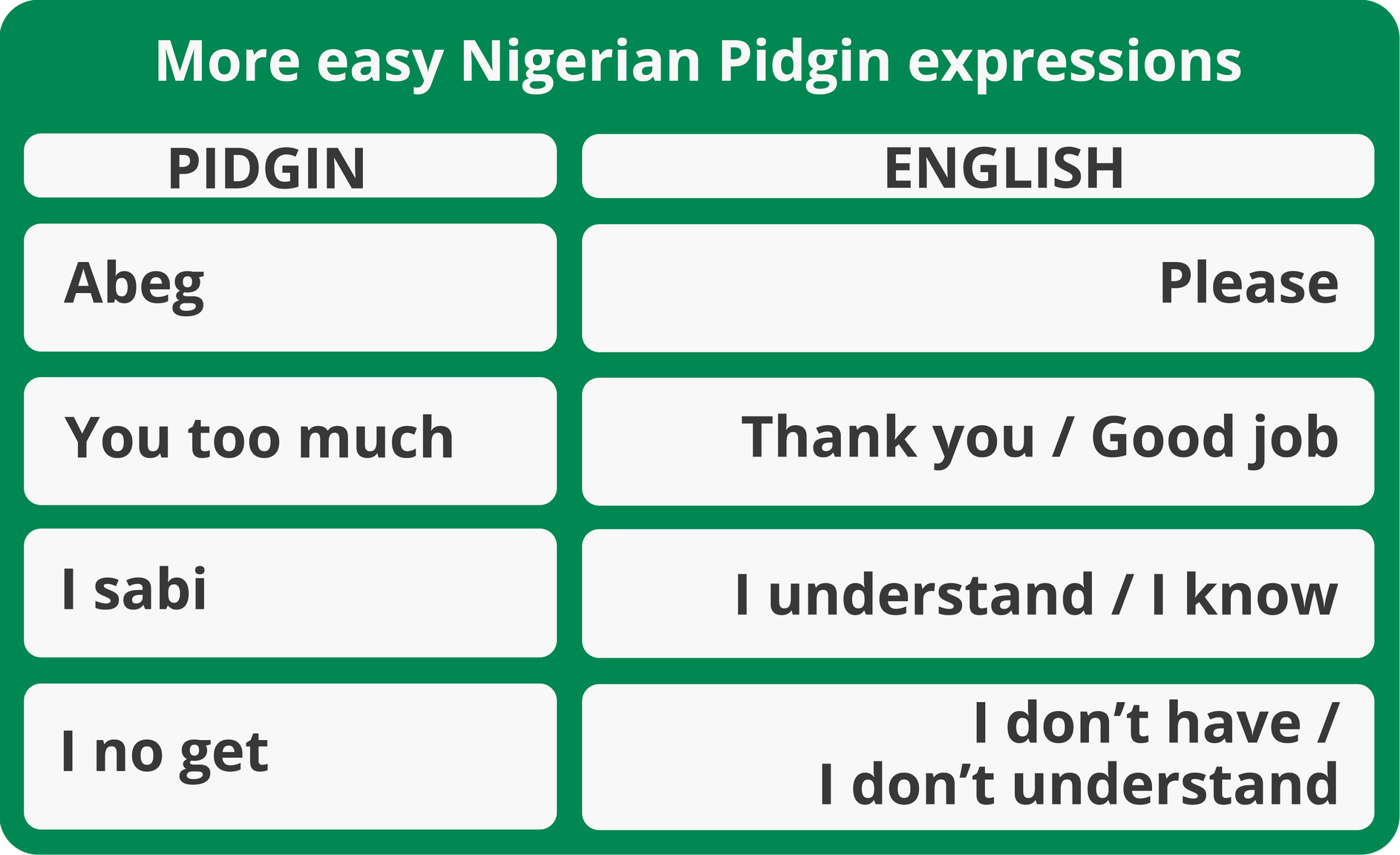
Below are the Pidgin and Pidgin-adjacent words that appear most often across modern Afrobeats lyrics. There is no magic threshold at which a song becomes fully legible, but this list covers the vocabulary that recurs across the genre, and knowing it changes how much of a hook lands on first listen.
| Word | Meaning | How it is used |
|---|---|---|
| Wahala | Trouble, drama, problem | Turns up constantly in hooks about avoiding stress |
| Bigman | Wealthy or influential person | Status flex, usually paired with money lyrics |
| Chop | To eat, enjoy, experience or consume | “Chop life” and “chop money” carry distinct meanings |
| Cruise | To chill, have casual fun, sometimes to joke around | “We dey cruise” means we are just having fun |
| Detty | Literally “dirty,” used to mean wild, fun, unrestrained | Detty December is the Lagos party season |
| Dey | Is, are, am; the continuous tense marker | “I dey come” means I am coming |
| Don | Have, has; the perfect tense marker | “I don chop” means I have eaten |
| E go better | It will get better | A hopeful refrain across countless songs about struggle |
| Gbedu | Beat, music, a banger | “Big gbedu” means a huge song |
| Gele | Traditional Yoruba head wrap | Appears in songs about weddings and owambe parties |
| Gist | Gossip, story, news | “Gimme the gist” means tell me what happened |
| Japa | To flee, emigrate, leave Nigeria | The defining word of a generation of Nigerian youth |
| Jollof | The rice, specifically Nigerian jollof | Cultural shorthand for Nigerian identity itself |
| K-leg | Off, wrong, suspicious | “The matter get k-leg” means something is not right |
| No be lie | It is not a lie; for real, truly | The universal Pidgin affirmation |
| Oga | Boss, sir, mister | Used for any male authority figure, or just any older man |
| Owambe | A big traditional party, usually a wedding | The cultural event Afrobeats often soundtracks |
| Padi | Friend, buddy | Casual, warm, slightly older slang |
| Sapa | Brokeness, financial hardship | A recurring antagonist in Afrobeats lyrics |
| Shey | Question particle, roughly “isn’t it?” | “Shey you dey come?” means you are coming, right? |
| Sote | Until, all the way to | Common in party songs about going all night |
| Wetin | What | “Wetin dey happen?” means what is happening? |
| Yawa | Trouble, scandal, mess | “Yawa don gas” means trouble has erupted |
| Igbo | Marijuana, in this slang sense | Distinct from the Igbo ethnic group; context makes it clear |
| Shayo | Alcohol, drinks | Usually paired with party imagery |
Pidgin Grammar in Three Minutes

Pidgin builds tense out of small marker words placed in front of the verb rather than by conjugating the verb itself, and there are only four markers a listener really needs. Once those four click, the grammar of almost every Afrobeats hook stops being a blur and starts being parseable in real time.
Dey and don, the ongoing and the finished
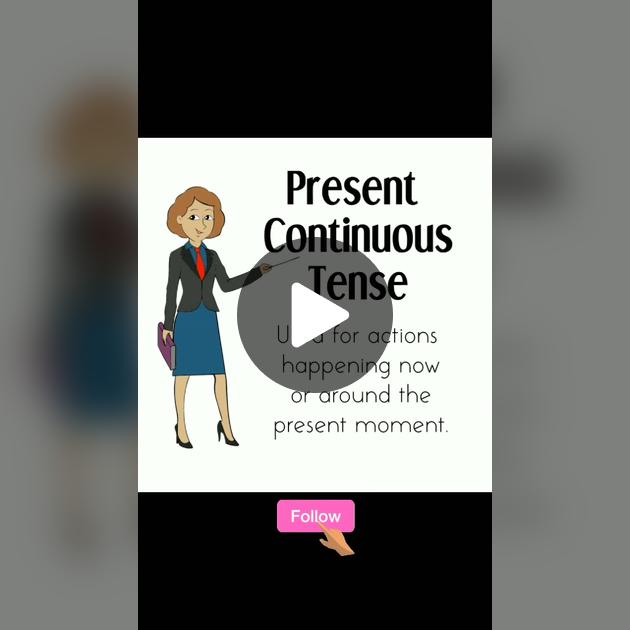
“Dey” placed before a verb means the action is happening now or happens regularly, so “I dey work” is I am working and “She dey sing” is she is singing. That marker is the reason so many Afrobeats love songs run on some variation of “I dey feel you” or “you dey on my mind.” “Don” is the mirror image, marking an action already completed: “I don tell you” is I have told you, and “Dem don come” is they have arrived. Burna Boy, Davido and Wizkid all build hooks around “don” constructions, partly because a finished action carries a note of finality and partly because the single syllable sits cleanly on a downbeat without crowding the line.
Go and no, the future and the negative
“Go” before a verb carries the future tense. “I go marry you” is I will marry you, “E go better” is it will get better, and the construction turns up constantly in songs about ambition, recovery and romantic promises. Negation works the same way, with “no” placed before the verb: “I no know” is I do not know, and “E no easy” is it is not easy. The markers also stack, which is where the economy of the language becomes obvious. Pair the negative with the continuous and “I no dey come” does in four short syllables what standard English needs five words and an auxiliary verb to manage, and that compression is exactly what makes Pidgin sit so well inside a tightly syncopated vocal line.
Hearing Pidgin in Actual Hits
Davido’s 2017 single “Fall” is one of the most widely streamed Pidgin-inflected Afrobeats songs there is. The hook moves between plain English and Pidgin phrasing about money, devotion and a woman worth spending on, and the lines that land hardest in Lagos are the ones a word-for-word translation flattens into nothing. Wizkid’s “Joro” works the same seam, mixing English with Pidgin phrasing about pursuit and devotion, while the word joro itself has no settled dictionary meaning and functions mainly as a hook sound. International audiences danced to both records long before most could parse the lyrics, which shows how much of Afrobeats’ appeal lives in cadence and texture rather than literal meaning.
Burna Boy’s “Last Last” turned a single Pidgin line about needing a smoke and a drink into a global meme. The Pidgin works because it is matter-of-fact. He is not romanticizing. He is stating, in the most direct possible terms, how he intends to get through the heartbreak. Standard English could not deliver that flatness. Rema’s “Calm Down” spent well over a year on the Billboard Hot 100, the longest run an African artist had managed on that chart at the time. Rema’s own lines sit in conversational Pidgin and Pidgin-inflected English, while Selena Gomez’s verse on the remix is in standard English, which is part of why the remix travelled as easily as it did.
Asake operates at the most aggressive end of the spectrum, blending heavy Yoruba with Pidgin and English in ratios that shift line by line. His 2022 and 2023 catalog functions almost as a Yoruba-Pidgin masterclass, demanding listeners meet him halfway. The fact that he still went global suggests audiences will work for the meaning when the music earns it.