FIFA World Cup 2026: Which African Nations Have the Best Chance of Making History
Tristan Melo··9 min read
Ad SpaceArticle Top - 728x90
Advertisement
Thirty-six years of near-misses sit between the African continent and a place in a World Cup semifinal, and for most of that stretch the wall felt permanent. Cameroon rattled it in 1990. Senegal shook it in 2002. Ghana came within a missed penalty of breaking through in 2010. Each time the ceiling held, and a continent that produces some of the finest footballers alive went home with the same story about coming close. Then Morocco changed the conversation in 2022, and now, with the tournament expanded and a record number of African flags planted across North America, the question is no longer whether the breakthrough is possible. It is which nation finishes the job.
The 2026 World Cup is the first edition built for 48 teams, and that single structural change has rewritten Africa’s place at the table. For decades the continent squeezed five representatives into the finals while regions with thinner footballing depth enjoyed more. That imbalance has finally narrowed, and the consequences are playing out in real time across stadiums in the United States, Canada and Mexico this June.
A Bigger Stage and More African Flags
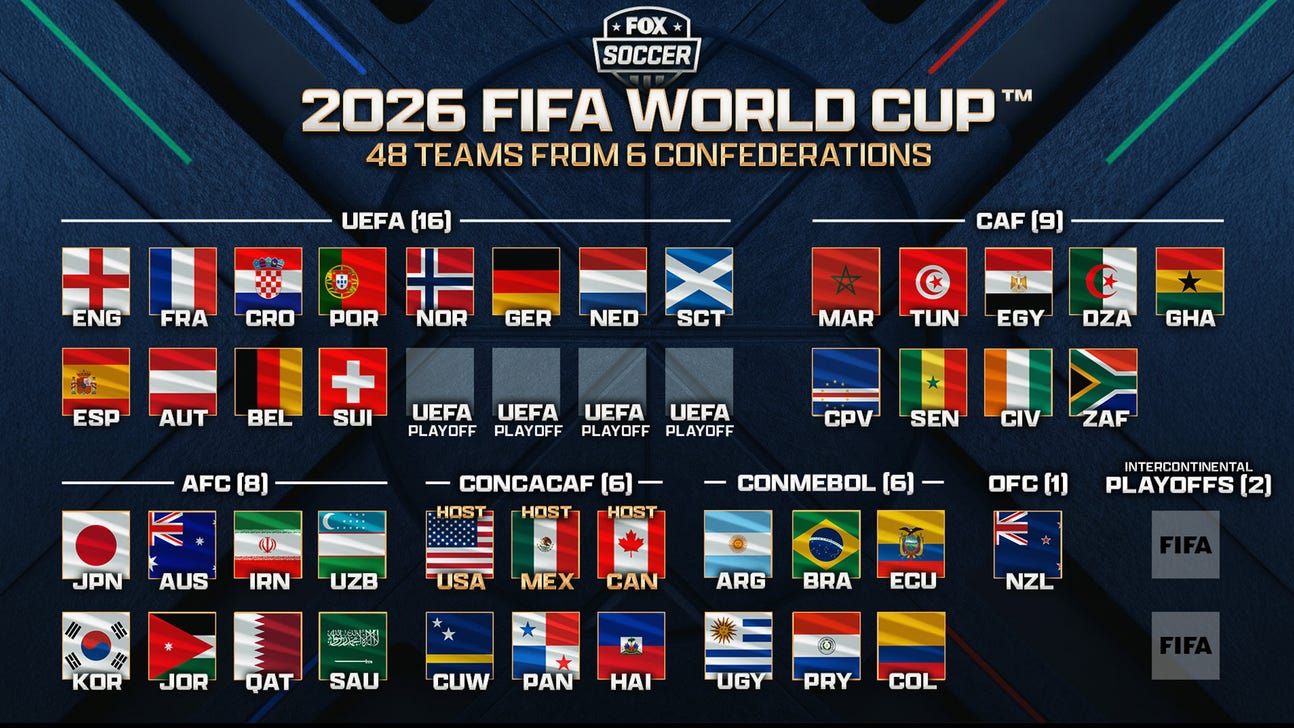
The expansion math is straightforward and overdue. FIFA lifted the field from 32 teams to 48, splitting them into 12 groups of four, with the top two from each group plus the eight best third-placed sides advancing into a 32-team knockout round. Africa’s share rose from five guaranteed places to nine, with an additional half-slot decided through an intercontinental playoff. In practice that produced ten African nations at a single World Cup, a figure that would have sounded fanciful a generation ago.
The qualification path itself was brutal. Fifty-four CAF member nations were split into nine groups of six, each side playing ten matches, with only the group winners booking automatic passage. The four best runners-up then fought through a continental playoff, and the survivor of that gauntlet went into the global intercontinental round for the final ticket. Nothing was handed out. Every nation that made it earned the journey across two years of football.
What matters beyond the raw count is the depth of the field. This is not a tournament where Africa sends a couple of heavyweights and a handful of makeweights. The continent has arrived with established quarterfinalists, a semifinalist, a clutch of dangerous mid-tier sides and a genuine fairytale debutant. That spread is what gives the “making history” question real weight in 2026.
Who Actually Qualified
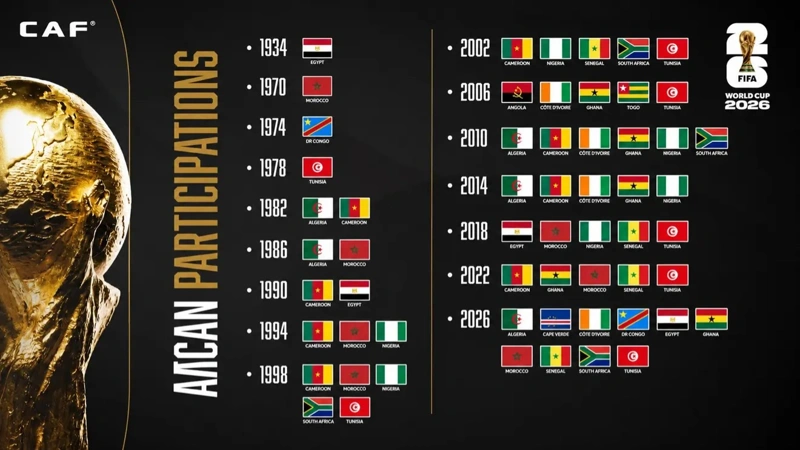
The verified list of African nations at the 2026 World Cup reads as follows: Morocco, Senegal, Ivory Coast, Egypt, Tunisia, Algeria, Ghana, Cape Verde, South Africa and DR Congo.
The first nine of those secured automatic places by topping their qualifying groups. DR Congo took the longer road, finishing as a strong runner-up, winning the CAF playoff, and then claiming Africa’s intercontinental slot in March 2026 to complete the set of ten.
That list carries a painful omission for Nigerian readers, and there is no softening it. Nigeria did not qualify. The Super Eagles stumbled through a difficult qualifying group, slipped into the CAF playoff route as a runner-up, and were knocked out by DR Congo in November 2025 before the global playoff stage. For a nation with three Africa Cup of Nations titles and a steady production line of Premier League and Serie A talent, missing a 48-team World Cup is a genuinely sobering result. Cameroon, another perennial presence, also fell short. Their absence stings precisely because the field grew. When the continent’s allocation nearly doubled and ten African nations made it through, the two countries that missed out included the most populous nation on the continent and a four-time World Cup participant. It is a reminder that the expanded field rewards consistency over reputation, and that qualifying campaigns are won across ten methodical matches, not on the strength of a famous shirt.
Morocco and the Weight of 2022
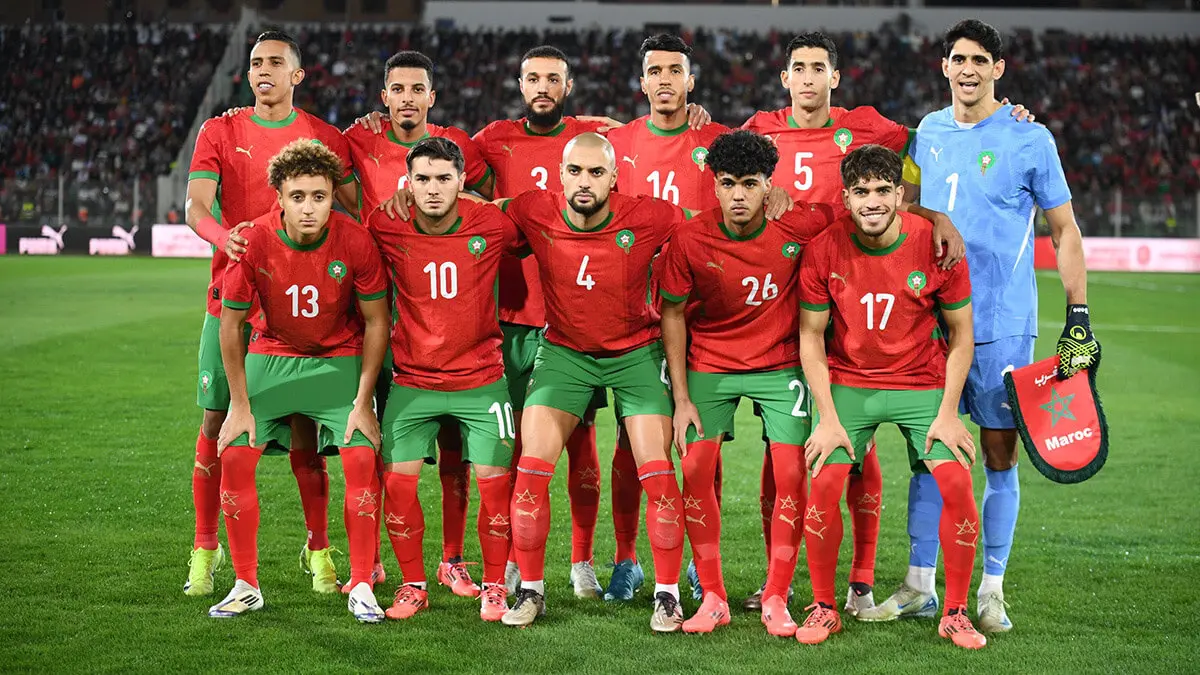
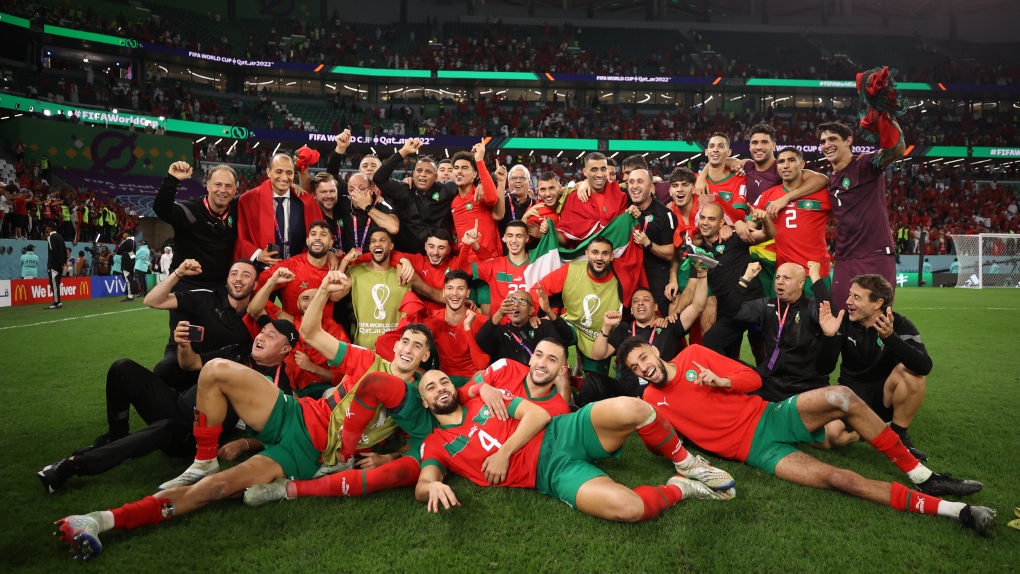
If one team carries the continent’s clearest shot at a deep run, it is Morocco. The reasoning is not sentimental. Morocco is the only African side that has already done it, reaching the semifinal in 2022 and finishing fourth after beating Belgium, Spain and Portugal on the way. That run was not a fluke of a hot goalkeeper and a generous draw. It was built on organisation, fearlessness and a squad whose core has stayed together and matured.
Much of that spine returns in 2026. Achraf Hakimi captains the side and arrives as one of the most complete full-backs on the planet, a player who defends like a specialist and attacks like a winger. He came into the tournament off a Champions League triumph with Paris Saint-Germain and recognition as one of Africa’s premier players, and he sets the tone for everything Morocco do. Around him sit familiar names from the 2022 campaign, including Sofyan Amrabat, Noussair Mazraoui and Nayef Aguerd, alongside the creative spark of Brahim Diaz, who has settled his international future with Morocco and provides the invention in the final third.
The early evidence in this tournament has been encouraging. Morocco opened with a 1-1 draw against Brazil on 13 June, a result that announced their seriousness against one of the favourites, then followed it with a disciplined 1-0 win over Scotland on 19 June. Two matches, four points, no sign of stage fright. Of all the African contenders, Morocco looks the likeliest to treat the knockout rounds as a destination rather than a hope.
The Dark Horses
Senegal sit just behind Morocco in the pecking order, and on talent alone some would argue they belong level with them. The 2002 quarterfinalists and 2022 Africa Cup of Nations champions carry one of the deepest squads on the continent, anchored by Kalidou Koulibaly and Idrissa Gana Gueye for experience, driven in midfield by Pape Matar Sarr, and led in attack by Nicolas Jackson. The pieces are there for a side that can trouble anyone on a good day.
Ad SpaceIn-Article - 300x250
Advertisement
The caution with Senegal is consistency. They opened their 2026 campaign with a chastening 3-1 defeat to France on 16 June, a result that exposed the gap that still exists against the very best when the finishing falters. The squad has the quality to recover and progress from its group, but the margin between a comfortable last-16 exit and a Morocco-style run will depend on whether Senegal can raise their level against elite opposition rather than fade in the moments that decide tournaments.
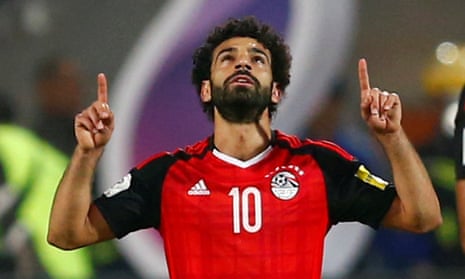
Ivory Coast belong in the conversation too. Champions of the most recent Africa Cup of Nations on home soil, the Elephants began their World Cup with a composed 1-0 win over Ecuador on 14 June, the kind of result that tournament football is built on. Egypt, with the gravitational pull of a generational forward in Mohamed Salah and a strong qualifying campaign behind them, carry the experience and the matchwinner to grind through a group and steal a knockout tie. Algeria, beaten 3-0 by Argentina on 16 June, have the individual quality to bounce back even after a heavy opening, though they now sit under real pressure.
Ghana and South Africa round out the field as sides with less expectation but real pedigree. The Black Stars were the continent’s heartbreak story in 2010 and have never stopped producing technical, fearless footballers, while South Africa, who began against Mexico, carry the energy of a generation that has rebuilt the national side from a lean spell. Neither is tipped to go deep, but in a 48-team bracket where eight third-placed teams survive the group stage, even a modest campaign can stretch into the knockouts. None of these sides is a favourite, yet the beauty of the expanded format is precisely that one inspired week can turn a dark horse into a story the whole continent rallies behind.
Cape Verde, the Fairytale on the Field
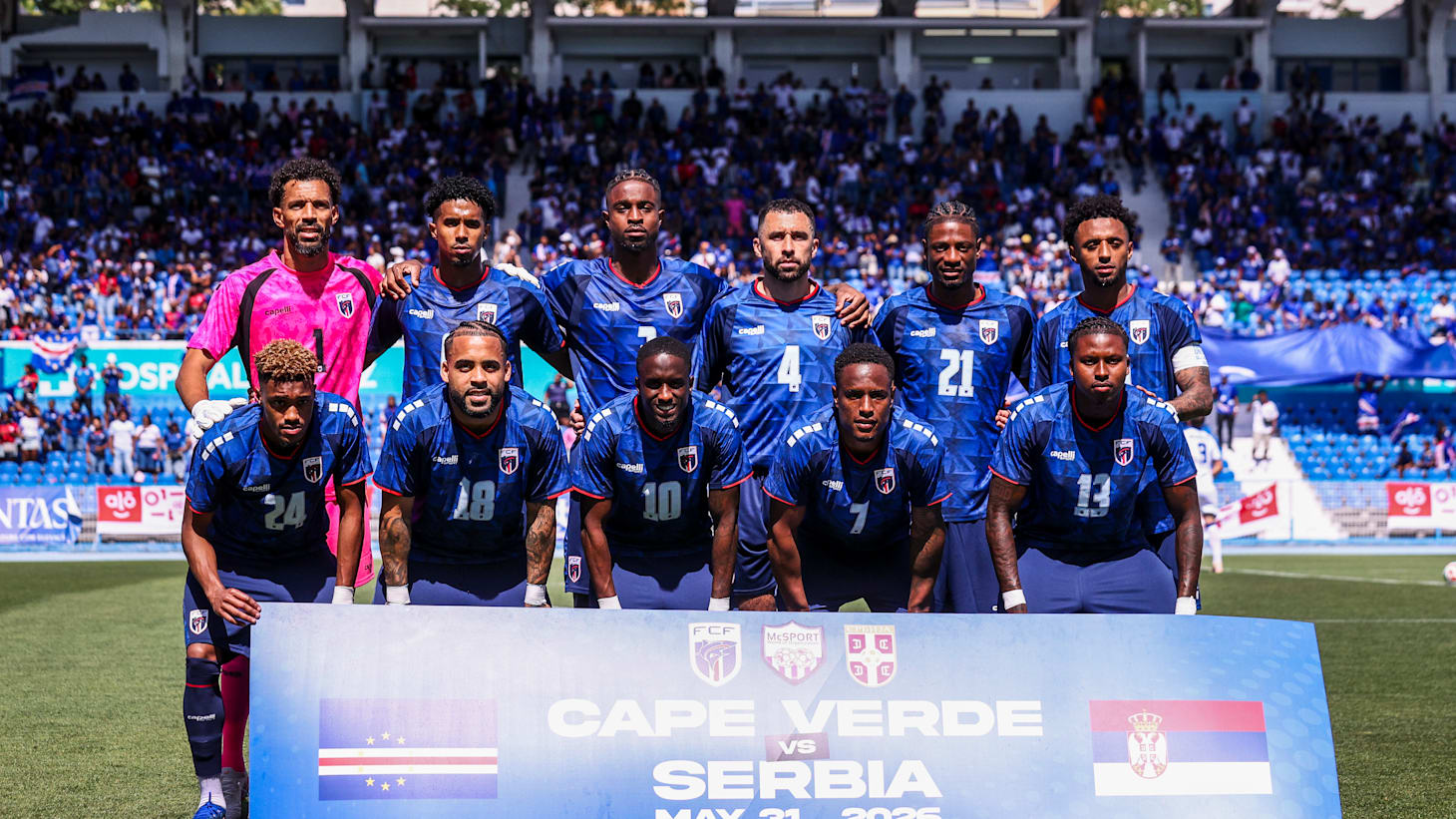
No African presence in 2026 is more romantic than Cape Verde. The Blue Sharks, representing an island nation of roughly half a million people, qualified for the first World Cup in their history, finishing ahead of Cameroon in their group to get there. They are the smallest country by land area ever to reach the finals and among the least populous nations the tournament has seen. For a country that size to share the same stage as Brazil, France and Argentina is the kind of underdog tale the World Cup exists to produce. Whatever Cape Verde achieve on the scoreboard, their qualification is already a piece of history, and they will travel without the burden of expectation that weighs on the continent’s giants.
The History of Near-Misses
To understand why “making history” still means so much, it helps to sit with the heartbreaks. Cameroon’s run in 1990 was the first time an African nation reached a World Cup quarterfinal, and the Indomitable Lions, inspired by an ageing Roger Milla, pushed England to extra time before bowing out. Senegal arrived in 2002 with a shock win over reigning champions France and surged to the last eight before falling to Turkey. Ghana, in 2010, stood one kick from becoming the first African semifinalist, only for a goal-line handball and a missed penalty in the dying seconds against Uruguay to end the dream in the cruellest fashion imaginable.
For thirty-two years, the quarterfinal was the ceiling. Three nations reached it, and three nations were turned back. Morocco’s 2022 semifinal finally pierced that barrier, but even that landmark stopped short of a final. No African nation has played in a World Cup final, and none has won one. That is the unbroken ceiling the class of 2026 is chasing.
What “Making History” Would Require
The bar shifts depending on how you define it. Matching Morocco’s 2022 run would mean a second African semifinal, proof that the breakthrough was a beginning rather than an outlier. Surpassing it would mean an African nation in a World Cup final for the first time, a result that would reshape how the global game thinks about the continent. Winning it would be the kind of seismic moment that arrives once in a sport’s lifetime.
The practical requirements are familiar to anyone who has watched deep tournament runs. A side needs a settled spine, a goalkeeper who steals at least one match, set-piece reliability at both ends, and the nerve to win a penalty shootout. It needs a kind draw and the health to keep its best players on the pitch. Morocco in 2022 had all of it. Whether any African side assembles that same combination in 2026 is the genuine open question of this tournament.
The Current State of Play
As of 19 June 2026, the group stage is well underway and the African picture is mixed but live. Morocco lead the continent’s charge with four points from two matches, including that statement draw against Brazil and a clean-sheet win over Scotland. Ivory Coast opened with a victory. Senegal and Algeria both suffered opening defeats to elite European and South American opposition, leaving them needing strong responses in their remaining group games. The full standings will continue to shift through the final round of group fixtures and into the round of 32, where the eight best third-placed sides earn a lifeline that the old 32-team format never offered.
These results are a snapshot, dated and certain to age. What they confirm is the shape of the contest rather than its conclusion. Morocco look the most assured, the rest of the continent’s contenders remain in the fight, and the expanded knockout structure means that even an imperfect group stage need not end an African campaign.
The Verdict
Strip away the romance and the smart money lands on Morocco. They have the squad, the experience of going deep, the early form and the psychological advantage of having already broken the ceiling once. A second semifinal feels within reach, and from there, in a single-match knockout, anything is possible. Senegal carry the talent to match them if they find consistency, Ivory Coast and Egypt have the experience to spring a surprise, and Cape Verde have already written their fairytale simply by arriving.
The unbroken record, the absence of an African finalist or champion, is the kind of statistic that exists right up until the moment it does not. Morocco proved in 2022 that the supposed limits were never real, only unbroken. With ten African nations on the biggest stage the continent has ever occupied at a World Cup, the odds of someone finishing what Casablanca started have never been better. The dream that ran through Italia 90, through Senegal in 2002, through that final minute in Soccer City, is still alive, and it is being carried by a stronger continent than ever before.
Ad SpaceIn-Article - 300x250
Advertisement
Share
Get the recap
Loved this story? Get more like it.
Join readers who get our weekly entertainment recap - the stories worth your time, delivered every Friday.
No spam. Unsubscribe anytime. By signing up you agree to our Privacy Policy.