
Step into any Lagos owambe at midnight and the sound carrying the dance floor is not Afrobeats. It is the rolling thunder of talking drums layered under a singer doing rapid-fire Yoruba praise poetry, calling out names of guests, throwing prayers across the hall, and pulling the crowd into a trance that can last six hours without a break. That sound is Fuji music. It is older than Afrobeats, bigger than most outsiders realise, and currently sitting underneath half the songs topping the global Nigerian charts without ever getting credited.
Where Fuji Music Actually Comes From

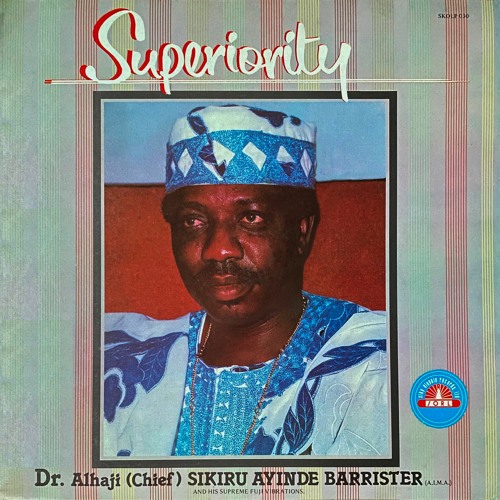
Fuji is a Yoruba popular music genre that took shape in Western Nigeria in the 1960s. The name itself was reportedly inspired by Japan’s Mount Fuji, a poetic choice rather than a literal connection, picked by a young singer named Sikiru Ayinde Barrister who wanted his new sound to feel both rooted and aspirational. Barrister is the founder. Almost every Fuji history written in Yoruba scholarship or Nigerian music journalism traces the genre back to him. He took two older traditions and welded them together into something new.
The Were and Apala Roots

The first root is were music, also rendered ajisari or ajiwere. Were was performed during the Muslim holy month of Ramadan, when groups of singers would walk through neighborhoods before dawn to wake fasting Muslims for the pre-dawn meal called Sahur. The young Sikiru Ayinde Barrister grew up performing Were as a teenager in Lagos, and the call-and-response structure of those Ramadan wake-up sessions became the spine of what he later called Fuji. The second root is Apala, a percussion-heavy Yoruba genre popularised by artists like Haruna Ishola. Apala used talking drums, hand percussion, and Yoruba praise lyrics, and Barrister borrowed its rhythmic vocabulary while pushing the tempo harder and adding more layers of drumming.
Sitting alongside Barrister in the foundational era was Ayinla Omowura, an Abeokuta-based Apala star whose work shaped what Fuji could sound like even though he himself stayed closer to Apala. Omowura died in 1980, killed in a dispute with a member of his own circle, and his short discography is still treated as sacred text by Yoruba music historians.
The Sound: What Makes Fuji Sound Like Fuji
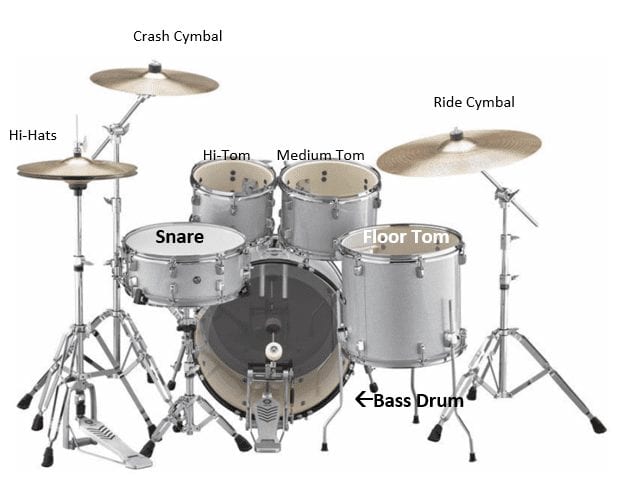
Strip a Fuji track down to its parts and you find very little that resembles Western pop. Classic Fuji carried no electric guitars and no Western drum kit driving the beat, and nothing resembling a chord progression in the way a pop song uses chords. What you get instead is a percussion orchestra. Later bandleaders did add keyboards, guitars and studio electronics from the 1980s onward, but the percussion section has stayed the engine of the sound.
The Drum Section
The heartbeat of Fuji is the talking drum family. The gangan is the small, armpit-squeezed talking drum that produces the genre’s most recognisable melodic pitches, the one that seems to actually speak Yoruba when a master plays it. Dundun is the broader name for the Yoruba talking drum family, within which the large iyaalu carries the lead voice and the deeper foundational phrases. The omele is a cluster of smaller drums tied together, played as a rhythmic carpet underneath everything else. Then come the sakara drums, Yoruba frame drums, flat and round like tambourines without the jingles, providing a different timbral layer. Add shekere shakers, agogo bells, and sometimes a bata drum ensemble for ceremonial moments, and a full Fuji band carries a percussion section large enough that the drummers outnumber every other instrument on the stand.
The vocals sit on top of all of this. A Fuji singer is not really singing in the European pop sense. The singer is doing oriki, the Yoruba tradition of praise poetry, switching between melodic phrases, rapid-fire spoken-word incantations, religious invocations, and direct shout-outs to specific people in the room or paying for the recording.
Islamic and Praise-Poetry DNA

Because the genre was born in the Muslim Yoruba community, Islamic phrasing is everywhere. Songs open with Bismillahi. Allah is invoked across choruses. Quranic Arabic phrases get woven into Yoruba verses. This Islamic identity is a core part of why Fuji feels distinct from juju music, which evolved in parallel from a more Christian Yoruba tradition and used guitars. The praise-poetry element is just as critical. A Fuji artist at a live show will name the wealthy patron who hired them, the patron’s parents, the patron’s business, the patron’s town of origin, and the names of every notable guest in attendance. This is not filler. This is the actual job. Fuji singers work inside the Yoruba oriki tradition of praise poetry, a lineage of professional praise-singers distinct from the Mande griot tradition further north, and the music is the vehicle.
The Generations of Fuji Royalty
Fuji has crowned a succession of kings, though never quite a queen, and the lineage matters because the current Afrobeats boom borrows directly from these names. Each generation inherited the form, stretched it, and then spent years defending its claim to it against the next arrival, which is why the genre’s history reads as much like a succession dispute as a discography.
Sikiru Ayinde Barrister, the Founder
Barrister, who died in 2010, recorded prolifically from the early 1970s onward. His album catalogue runs into dozens of releases, and his vocal phrasing set the template every Fuji artist who followed had to either copy or deliberately depart from. He performed for Nigerian heads of state, played weddings of the wealthiest families in Lagos, and remained the genre’s senior statesman until his death.
Wasiu Ayinde Marshal, Known as KWAM 1
If Barrister was the founder, Wasiu Ayinde Marshal, universally called KWAM 1 or K1 De Ultimate, is the megastar who took Fuji from local Lagos genre to nationwide phenomenon. He started as a Barrister protege and broke out in the 1980s. His album Talazo is considered a Fuji benchmark, the record that introduced a slicker, more melodic version of the genre and pulled in audiences who had previously dismissed Fuji as too rough for middle-class ears. KWAM 1 is still active today, still performs at the highest-paying owambes in Lagos, and operates as something between a musician and a cultural institution. Younger artists still pay him courtesy visits before major releases.
Pasuma Wonder
Wasiu Alabi, known as Pasuma and as Oganla, came up in the 1990s and pushed Fuji further into the mainstream by leaning into a younger, more streetwise persona. He has appeared in Nollywood films, collaborated with hip-hop artists, and become one of the most visible Fuji ambassadors of the social media era. His collaborations with Afrobeats stars are one of the main reasons Generation Z listeners in Lagos know what Fuji is.
Saheed Osupa, the Fuji King
Saheed Osupa is widely styled the King of Music and is considered by many Fuji loyalists the most lyrically gifted artist the genre has produced. His Yoruba vocabulary is dense and literary, packed with proverbs and references that reward listeners who grew up inside Yoruba culture. The Osupa versus Pasuma rivalry has run for over two decades, with public diss records, supporters in opposing camps, and occasional reconciliations that always seem to dissolve into fresh shots. These rivalries are not gimmicks. They are part of how Fuji has always worked, going back to Barrister’s own long-running feud with Kollington Ayinla in the 1980s. The competitive disrespect is the genre’s pressure valve and its marketing engine in equal measure.
Female Voices in a Male-Dominated Lane
Fuji has been overwhelmingly male for most of its history. The combination of late-night party gigs, Islamic patriarchal norms, and a praise-singing role traditionally held by men kept women out of the headline spots. A handful of women have built followings in and around the genre, and the adjacent waka tradition produced a genuine star in Salawa Abeni, but Fuji itself has never had a female headliner on the scale of its kings, and anyone writing a complete history has to acknowledge that gap as one of its defining features.