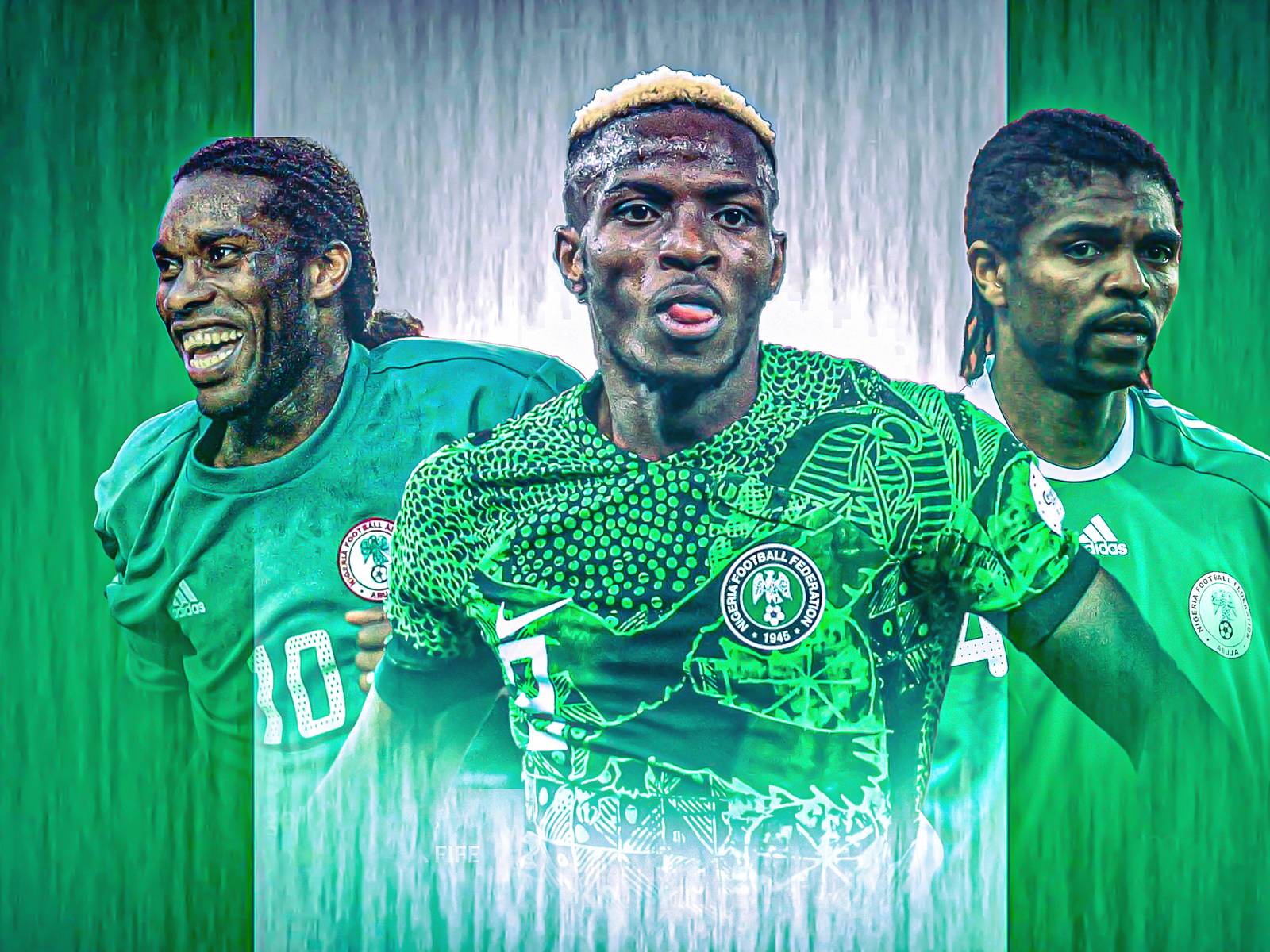

Dust rises off a bare patch of ground in a Lagos suburb, kicked up by a dozen pairs of bare feet chasing a ball stitched together from plastic bags and tape. There are no goalposts, just two stones at each end and a chorus of boys arguing over whether the last shot went in. A scout is not watching. No camera is rolling. And yet this exact scene, replayed across thousands of compounds, school yards and roadside clearings, is where nearly every Nigerian football icon learned the game. Long before the floodlights of San Siro, Stamford Bridge or the Parc des Princes, there was the street, the heat and the noise.
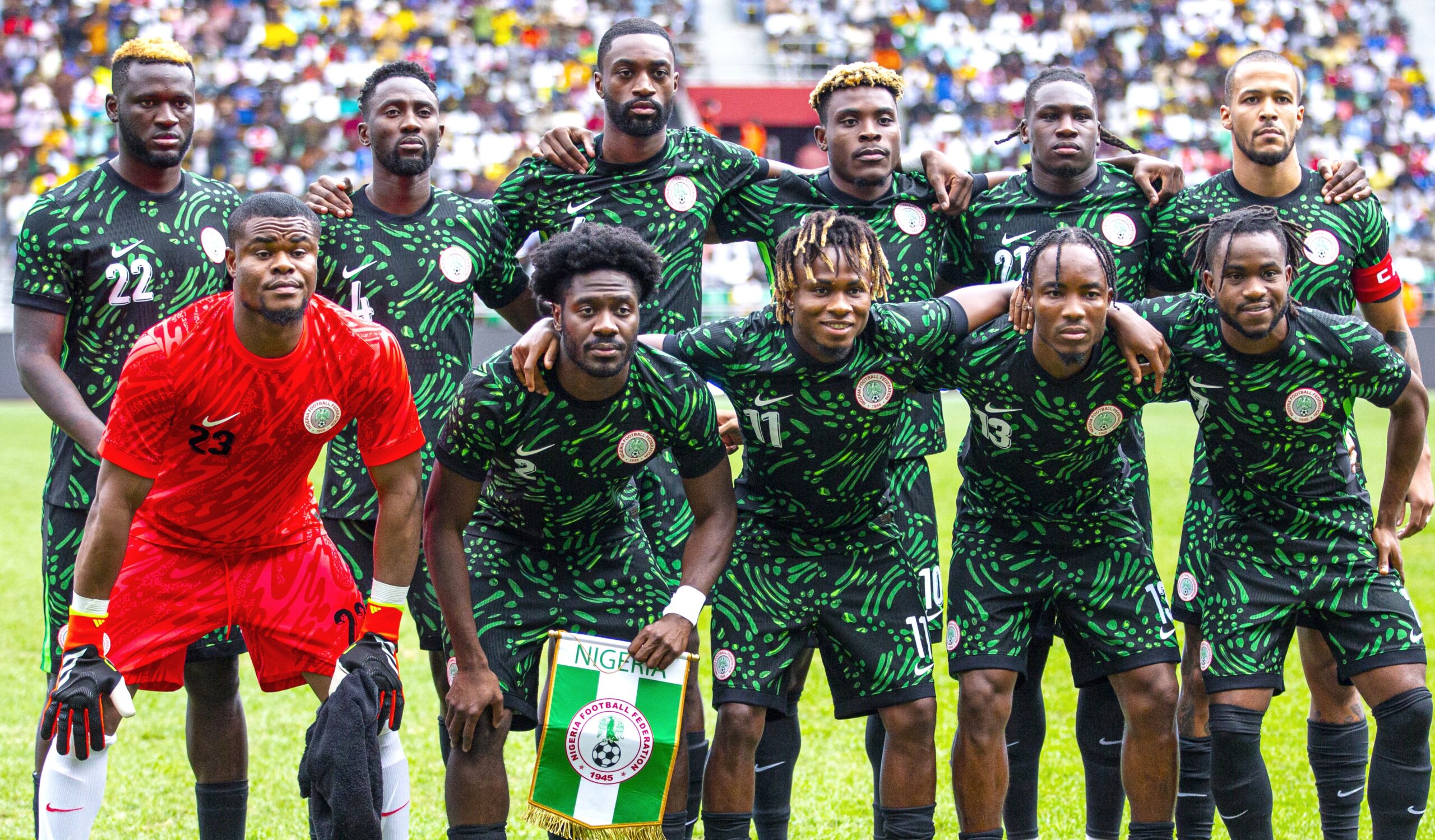
That pipeline runs deep, and it keeps producing stars. The most recent reminder came on June 10, 2026, when the Super Eagles travelled to Leiria for an international friendly against Portugal, the final tune-up before Portugal’s World Cup campaign. Nigeria lost 2-1, with Akor Adams scoring a fine equaliser before Francisco Conceicao struck a late winner past a busy Maduka Okoye. It was a single result against one of Europe’s heavyweights, but it carried the weight of a familiar story: Nigerian players, raised on rough ground, going toe to toe with the best on earth and refusing to be overawed.
Why Nigeria keeps producing stars
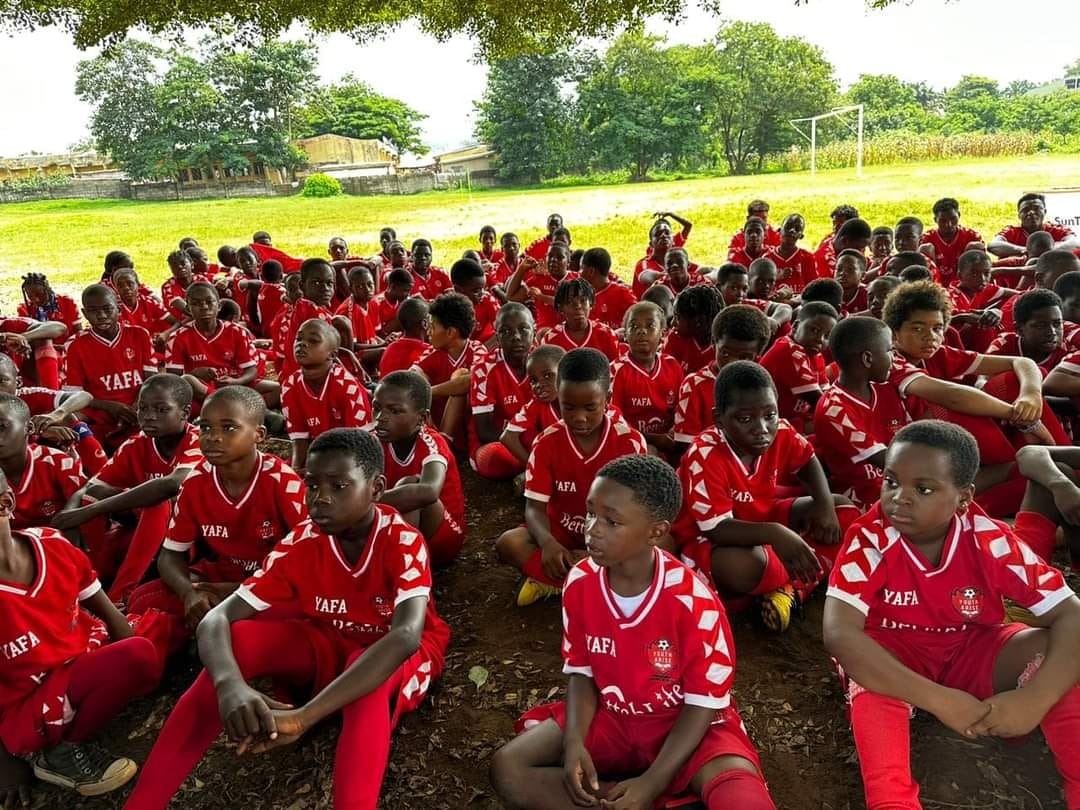
Population is the obvious starting point. With well over 200 million people and a median age in the teens, Nigeria has more young footballers than most countries have citizens. But size alone does not explain the artistry, the swagger and the sheer volume of elite talent. The street game does.
Nigerian street football rewards improvisation over instruction. On uneven surfaces, against bigger boys and with no referee, a kid learns to shield the ball, to dribble out of trouble, to think two moves ahead. The flair that European crowds later marvel at is not coached into Nigerian players so much as survived into them. Add a national obsession with the English and Italian leagues, a culture that treats footballers as folk heroes, and a steady export route through European academies, and you have an engine that has been turning out world-class names for three decades.
There is also the matter of belief. Nigerian boys grow up watching Nigerians win. The 1994 World Cup run, the 1996 Olympic gold, the African Cup of Nations triumphs of 1980, 1994 and 2013, each one told a kid on a dirt pitch that the path from his street to a major final was not a fantasy but a route others had already walked. That self-belief, bordering on swagger, is part of the national footballing character, and it travels with the players when they leave. Scouts and academies in Europe have long known to look to Nigeria for raw, fearless attacking talent, and the trickle of the 1990s has become a steady stream of names dotted across the Premier League, Serie A, La Liga and beyond.
The founding icons: Yekini, Amokachi and the class of ’94
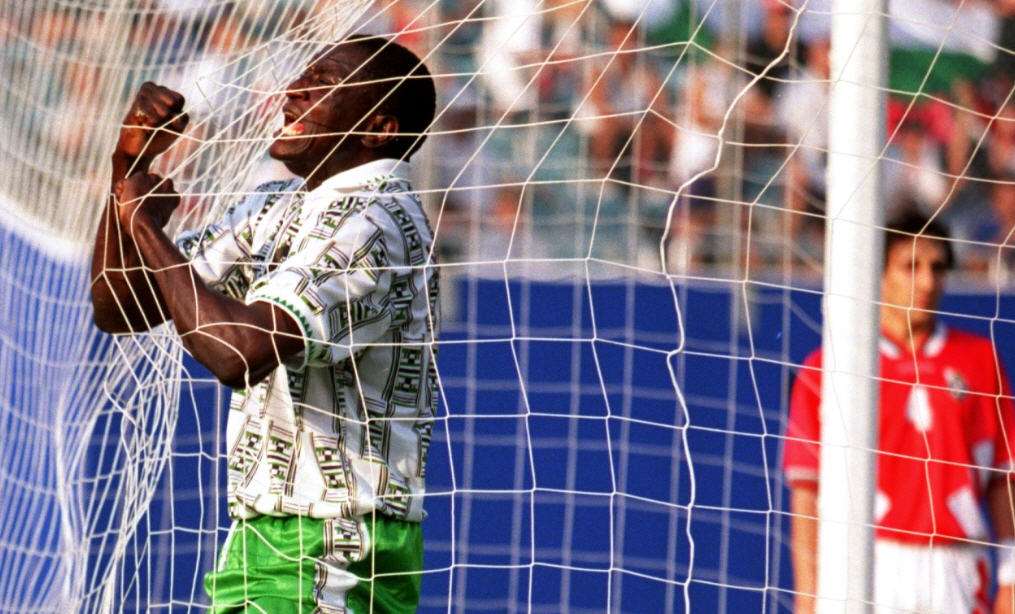
The modern story begins with a cry into the back of a net. On June 21, 1994, in the heat of a USA World Cup group match against Bulgaria, Rashidi Yekini latched onto a cross from Finidi George and buried Nigeria’s first ever goal at a World Cup finals. What followed became one of the tournament’s defining images: Yekini gripping the netting, screaming with his whole body, a man who had carried a nation’s hopes finally letting them out. Nigeria won that match 3-0 and announced themselves as one of the most exciting teams in the world.
That squad was stacked. Daniel Amokachi, all power and bravado, terrorised defences and would later become a cult hero. Finidi George worked the right flank with grace. Sunday Oliseh anchored the midfield with a passing range that drew admirers across Europe. The 1994 Super Eagles topped a group containing Argentina and came within minutes of knocking Italy out in the second round before losing in extra time. They left America beaten but adored, and they set the template for everything that came after.
Okocha and the artistry era
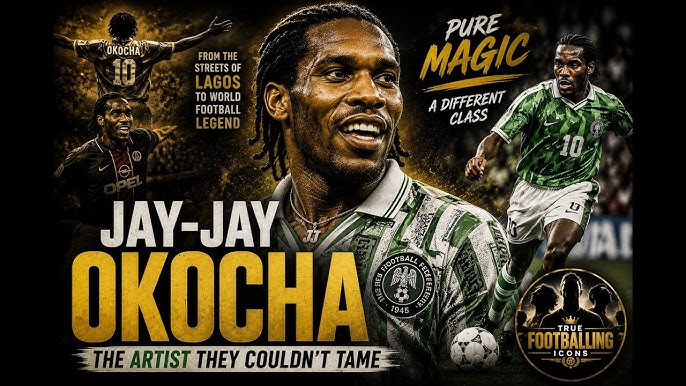
If Yekini gave Nigeria its World Cup heartbeat, Augustine “Jay-Jay” Okocha gave it its soul. So good they named him twice, as Bolton fans famously chanted, Okocha was the showman who turned football into theatre. The step-overs, the no-look passes, the audacity to humiliate a defender and then do it again for fun, all of it made him one of the most beloved entertainers the game has known.
His journey traced the classic arc. From Enugu Rangers at home he moved to Eintracht Frankfurt in Germany, then to Fenerbahce in Turkey, before Paris Saint-Germain paid around 14 million pounds in 1998 to make him, at the time, the most expensive African footballer ever. At PSG he shared a dressing room with a young Ronaldinho, who has openly credited Okocha as an influence. His final great act came at Bolton Wanderers in the Premier League, where he dragged an unfashionable club to a League Cup final and Europe, and where his name still rings out. Okocha never won a major international trophy with Nigeria, but ask a generation of fans who they fell in love with, and the answer is almost always him.
Kanu and the silverware
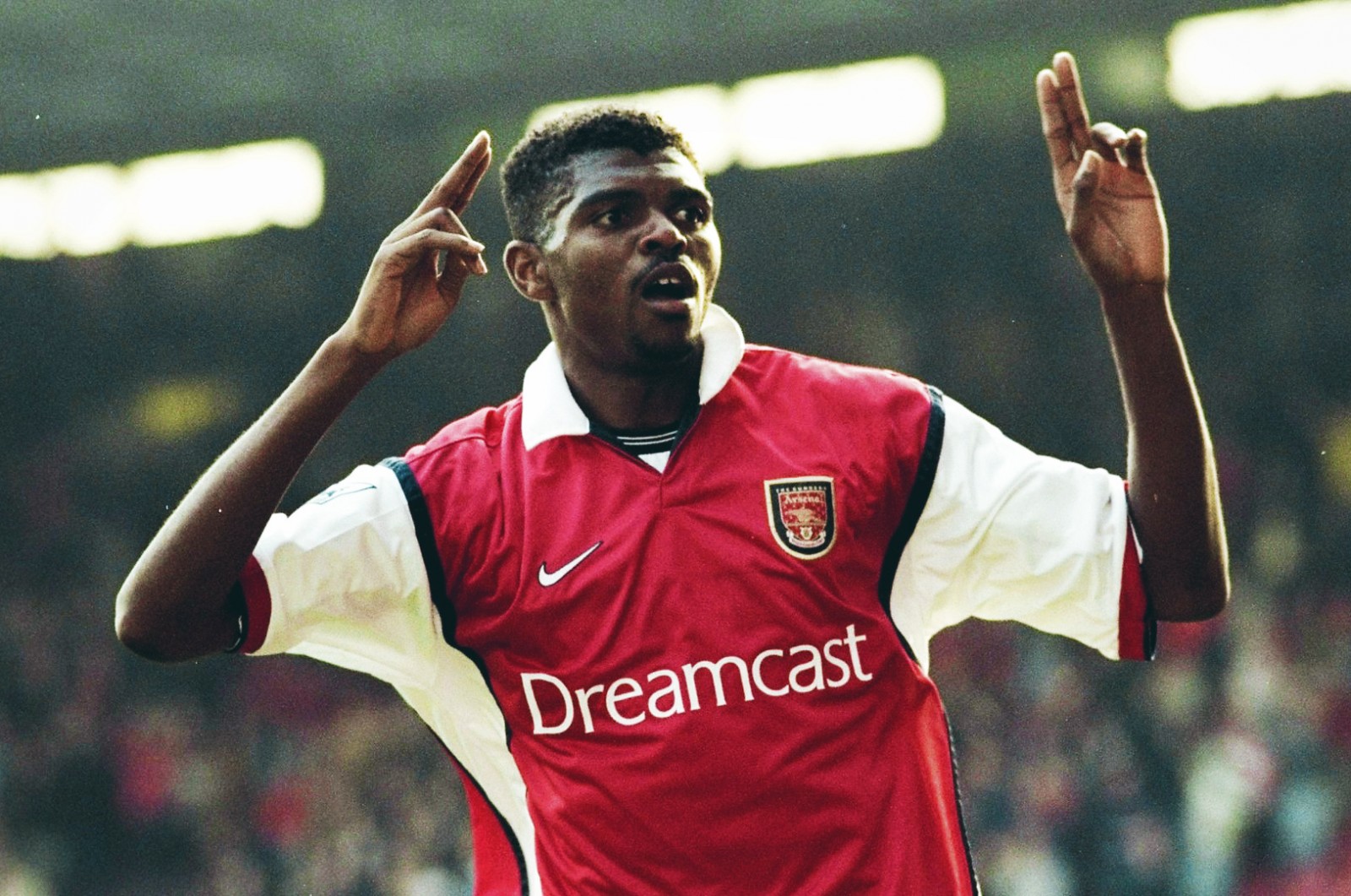
While Okocha dazzled, Nwankwo Kanu collected medals. Tall, languid and impossibly clever in tight spaces, Kanu built one of the most decorated careers in African football history. He came through Ajax’s famed academy, winning the Champions League there as a teenager, before moving to Inter Milan and then to Arsenal, where he became a key figure in Arsene Wenger’s swashbuckling sides and won Premier League and FA Cup titles. He was twice named African Footballer of the Year.
His defining moment in Nigerian colours came at the 1996 Atlanta Olympics. Nigeria’s “Dream Team,” featuring Kanu, Okocha, Amokachi and more, became the first African nation to win Olympic football gold. In the semi-final they trailed Brazil, a side containing Ronaldo, Rivaldo, Bebeto and Roberto Carlos, before Kanu inspired a stunning comeback and scored the golden goal winner. In the final against Argentina, Amokachi and then Emmanuel Amunike struck late to seal a 3-2 victory. For a country going through a bleak stretch, that gold medal was more than sport. It was proof, on the biggest stage, that Nigeria belonged at the very top.
The Mikel bridge years
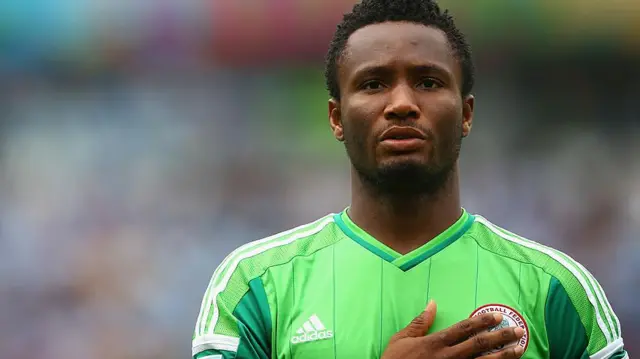
Between the golden generation and today’s stars sits John Obi Mikel, the player who connected the eras. A teenager out of Jos, Mikel arrived at Chelsea in 2006 amid one of the most contested transfer sagas of its time, and stayed for eleven years. He reinvented himself from attacking prospect into one of Europe’s most reliable holding midfielders, and his finest hour came on Chelsea’s greatest night, the 2012 Champions League final, where his composed display helped deliver the trophy. Across his Chelsea career he won two Premier League titles, four FA Cups, the League Cup, the Europa League and that Champions League crown.