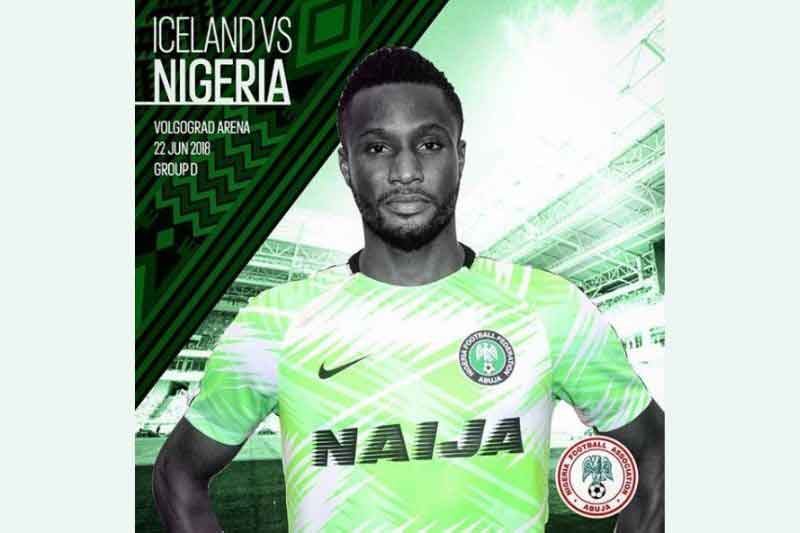
John Obi Mikel is a Nigerian professional footballer born on 22nd April 1987. Mikel Obi, as he is popularly called, until recently was a defensive midfielder at the Turkish club Trabzonspor.
Mikel began his professional career with a Jos-based local football club, Plateau United, that plays in the Nigerian Professional League. He later joined the Norwegian club Lyn, at the age of 17 before making his name at Chelsea Football Club, London, UK.
He played for Chelsea for over a decade before he moved to China, returned to England before he went to Turkey.
John Obi Mikel also played for his home country, Nigeria, in several major competitions that we will look into as part of his biography.
However, let us first consider 10 key facts you should know about the Nigerian international footballer Mikel Obi.
10 facts about Mikel Obi that everyone should know
- Mikel Obi’s full name is John Michael Nchekwube Obinna. He got his football name after the Nigerian Football Association misspelt his name at his first outing with the Under-17 squad. He decided to keep the name.
- Mikel Obi was discovered by Alhaji Babawo Mohammed Adamu while playing street football in Jos, Plateau State. Adamu got him into Pepsi Football Academy from where he was signed by Plateau United Football Club.
- Mikel Obi has played all age-category football for Nigeria including Under-17, Under-20, Under-23 (although as one of the over-aged players) and the Super Eagles.
- At an early age of 18, Mikel had Manchester United FC and Chelsea FC fought over his signature. He ultimately joined Chelsea in 2006 after the parties arrived at a resolution.
- He is the only footballer to have his father kidnapped twice. Each time, he found out just hours before a professional match and had the mental toughness to continue with the match.
- Mikel was an integral part of the Chelsea team that won the club’s first-ever Champions League title in 2012.
- Mikel Obi has a Russian partner named Olga Dyachenko and they have twin daughters together. He recently parted ways with his Turkish club to be with his family over concerns of Coronavirus pandemic.
- He was briefly suspended on two occasions by the Nigerian Football Association for refusing to play for the U23 squad, the Olympics’ team. Ironically, he played for the squad as one of the three over-aged players at the 2016 Rio Olympics. He was the captain of the team.
- Mikel Obi has played football in five clubs so far including Lyn (Norway), Chelsea (England), Tianjin TEDA (China), Middlesbrough (England) and Trabzonspor (Turkey).
- Mikel Obi is the most decorated Nigerian player having been in teams that won Premier League (twice with Chelsea), League Cup, FA Cup, UEFA Champions League, Europa Cup, and African Nations Cup.
You may also like: Alex Iwobi Biography: Early life, Jay-Jay Okocha, net worth, club and country career & more
Mikel Obi Biography: early life
Mikel Obi was born on 22nd April 1987 to Igbo parents. His full name is John Michael Nchekwube Obinna. He was named after his father, Michael Obi. He grew up mostly in Jos, Plateau State. His father was a civil servant, now retired, while his mother, Irosu Obi, was a businesswoman.
While growing up, his peers shortened his name to Mikey and he was popular locally because he showed great talent while playing football.
A certain Alhaji Babawo Mohammed Adamu spotted him while playing football with his friends at the Jos Metropolis Township Primary school.
Adamu, who was said to be a rich man and also a football agent, took Mikel under his wing and nurtured his talent. He is also credited as the man who got Mikel into the Pepsi Football Academy.
Mikel has two brothers and no sisters. Mikel’s elder brother is called Ebele Obi. Ebele is a goalkeeper at Heartland FC, a football club based in Owerri, Imo State that also plays in the Nigerian Professional League. Meanwhile, his younger brother is Edgar Obi and he is a Nigerian singer still struggling to make a name in the music industry.
Mikel Obi: Early career
As we stated, John Mikel Obi started playing professionally at a very young age. According to his Wikipedia page, he entered the Pepsi Football Academy at the age of 12. The Pepsi Football Academy is a very popular breeding ground for Nigerian football talents.
Mikel’s talent was top of the shelf stuff and it did not take long for scouts from the Nigerian Football League to notice him. They signed him to play for Plateau United when he was yet to turn 17 paving the way for his professional club. Plateau United is one of Nigeria’s top clubs and several Nigerian international stars started their career there. The likes of Celestine Babayaro, Victor Obinna and Chris Obodo passed through this club.
After the 2003 FIFA Under-17 World Championships ended, Mikel Obi went to club trials, first at Ajax Football Club, Cape Town, South Africa. However, in the end, he joined an Oslo-based club, Lyn Fotball FC in Norway.
Mikel Obi: Professional club career
2005 Transfer scandal
Just after turning 18, Mikel became involved in a transfer deal scandal involving two giant English clubs, Manchester United and Chelsea.
On 29 April 2005, Premier League club Manchester United announced that it had struck a deal with Lyn to sign the Nigerian star. United’s website also claimed that they had done a deal directly with the teenager and that he had signed a contract to join them. In other words, his agents were not consulted when he allegedly signed the four-year contract.
In fact, Lyn allegedly sent a fax to his agents abroad, telling them that Mikel didn’t require their services anymore. According to reports, he would be going to the Old Trafford club in January 2006.
At the same time, Chelsea, Manchester United’s English rivals, also claimed that they already had an agreement with Mikel and his agents. Lyn initially denied this claim.
However, there were reports that Chelsea had, in fact, been behind his European move with the aim of signing him later. There was also the story that Chelsea’s then-manager, José Mourinho, had also taken an interest in Mikel while he was training with the club’s first-team squad during the summer of 2004.
To further complicate things, Mikel was seen holding up a Manchester United shirt bearing the squad number 21. This was at a press conference that was organised to give the deal credence.
This controversy sparked angry reactions. Reports claimed that there were even death threats issued at Mikel. He had to move around with a security guard during this period because of that.
On 11th May 2005, Mikel was unaccounted for during a Norwegian Cup game against Klemetsrud. He had not been part of the squad.
Lyn’s then-director, Morgan Andersen, allegedly told reporters that Mikel had been “kidnapped“. Also, Manchester United’s assistant manager Carlos Queiroz accused Chelsea of being involved in the alleged “kidnapping“.
Later, it was revealed that Mikel had travelled to London with John Shittu, who was his agent at the time.
Then-Manchester United manager, Alex Ferguson, was also reported to had wanted to travel to Oslo to visit Mikel but decided against that after he learnt that Mikel had left the country.
Mikel revealed on Sky Sports News, while in London, that he had been pressured into signing the contract with United and without his agents present. Manchester United and Lyn refuted those claims publicly. Further, he told the British media that all he wanted was to join Chelsea.
Meanwhile, Manchester United officially submitted claims against Chelsea and John Shittu. FIFA dismissed those claims in August 2005 stating that there was insufficient evidence to bring a case against Chelsea.
Initially, after the 2005 FIFA World Youth Championships, Mikel didn’t return to Lyn. But after the club complained to FIFA, the body mandated the footballer to return and to fulfil the remainder of his contract with the club. Mikel complied with the FIFA decision and returned to Lyn in early September 2005 after a three-month absence.
Chelsea settled the scandal by negotiating with Lyn and Manchester United. On 2nd June 2006, Chelsea, Manchester United and Lyn reached a settlement to resolve the problem. Mikel’s registration was to be transferred from Lyn to Chelsea and Man United agreed to cancel their agreement with Mikel.
Under the terms of this new agreement, Chelsea agreed to pay United £12 million, half upon finalising the contract and the other half in June 2007. They would also pay Lyn £4 million, half immediately and the other half in June 2007. On 19 July 2006, Chelsea got a work permit for the midfielder after they completed the £16 million agreement in June 2006.
Chelsea career
Mikel made his first start for Chelsea in a UEFA Champions League match against Bulgarian club Levski Sofia on 12th September 2006. He was instrumental in Didier Drogba’s goal following a rebound from his shot. Fans immediately praised him.
However, he was sent off in a match against Reading on 14the October 2006. Later, Chelsea allegedly fined him three different times for showing up late to training.
Chelsea’s manager at the time, José Mourinho, was revered for his strict regime. Reports emerged that he was losing patience with Mikel. Subsequently, Mikel did not play for the club for more than a month. It even got so bad that his father commented publicly about his son’s behaviour.
https://www.instagram.com/p/BijmW6ajMNG/
Mikel later returned to Chelsea’s squad for their Champions League group stage away match against Werder Bremen on 23rd November 2006.
He scored his first Chelsea goal in their 6-1 FA Cup victory against Macclesfield Town on 6th January 2007.
During Chelsea’s triumph in the League Cup final in 2007, Mikel was involved in an incident on the pitch. It resulted in him being sent off in injury time along with Touré and Emmanuel Adebayor of Arsenal.
During the 2007/2008 season, Mikel was sent off twice, once during a Premier League match and another time during a League Cup match.
Mourinho played Mikel as a holding midfielder in key games. His height and great strength were his key qualities in those early stages. He filled a role left vacant when French midfielder Claude Makélélé moved to Paris Saint-Germain in 2008.
Throughout the 2008/2009 season, Mikel got lots of playing time as Michael Essien was injured at the time. Chelsea’s then-new manager, Luiz Felipe Scolari, praised him as an important member of the team.
https://www.instagram.com/p/BgQscoilimN/
Mikel was nominated for the club player and young player of the season that year. However, on 24th January 2009, Mikel was involved with the authorities after he was charged with drunk driving.
Under a new manager, Carlo Ancelotti, Mikel continued to play very well in the 2009/2010 season. In May 2010, he was an instrumental member of the first Chelsea team to win a League Cup double. He won the Premier League and FA Cup in that season.
After the appointment of Roberto Di Matteo as interim head coach, Mikel returned to playing first-team football regularly. His place had been shaky under the previous boss, Andre Villas-Boas, who was appointed by Chelsea management to replace Ancelotti.
https://www.instagram.com/p/BjMoR9Ajymb/
Mikel played the full 120 minutes in the 2012 UEFA Champions League final against Bayern Munich. Sky Sports pundit Jamie Redknapp hailed the Nigerian footballer. He and his Chelsea teammates later won what was Chelsea’s only UEFA Champions title so far.
On 22nd November 2012, the Football Association (FA) charged him with misconduct. Mikel got a three-match ban and a fine of £60,000 for threatening referee Mark Clattenburg.
Mikel was also an integral part of the Chelsea team that won the club’s first-ever EUROPA club in May 2013. The team joined the competition after they were knocked out of the UEFA Champions League after the group stages. Chelsea beat Benfica in Amsterdam in the final under the temporary manager Rafael Benitez to clinch the title.
On 21st September 2013, Mikel scored his first-ever Premier League goal for Chelsea in a 2-0 win against Fulham.
In November, Mikel was shortlisted for the African Footballer of the Year along with former Chelsea teammate Didier Drogba in 2013. They both lost to the eventual winner, Ivorian Yaya Toure.
Mikel also scored his second Premier League goal against Derby County on 5th January 2014.
During the 2015/2016 season, Mikel partnered with John Terry and Gary Cahill as a centre-back in many games because of the club’s many injuries.
On 4th November 2016, Chelsea announced that it would not be renewing his contract when it expired at the end of the season. Thus, after 11 years at Stamford Bridge, Mikel left in 2017.
Tianjin TEDA
On 6th January 2017, Mikel joined Chinese club Tianjin TEDA as a free agent. He scored his first goal of the season against Guangzhou R&F On 14th April 2018.
He did not stay long in China and left the club at the end of his second season in 2018.
Middlesbrough
After about two years in China, Mikel joined English Championship side Middlesbrough in January 2019. He joined on a short-term deal and was released by Middlesbrough at the end of the 2018/2019 season.
Trabzonspor
John Obi Mikel joined Turkish side Trabzonspor on a two-year contract in 2019 with the option of a further year. However, the footballer and the club agreed to part ways over Coronavirus Pandemic in March 2020.
A statement released by the Super Lig club on 17th March 2020 said that the decision to terminate the contract was mutual.