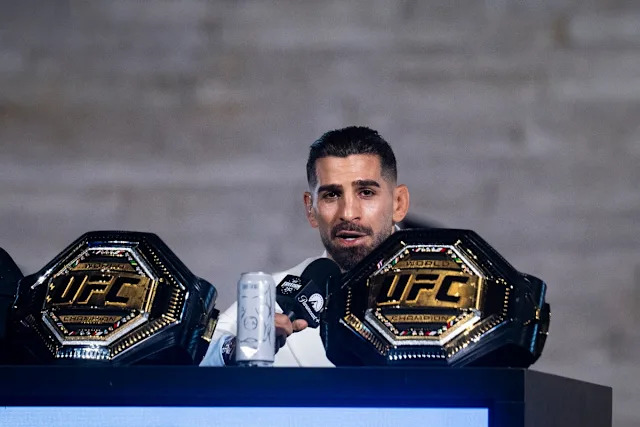
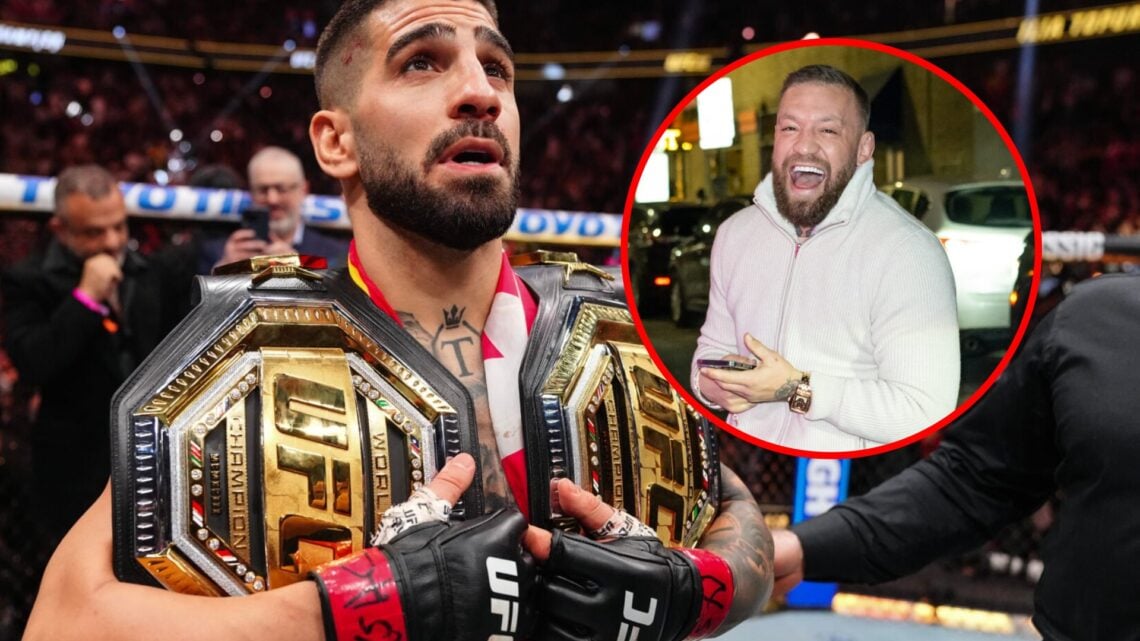
Ilia Topuria: The Georgian-Spanish Fighter Redefining Modern UFC Stardom
Miki Anderson··9 min read
Ad SpaceArticle Top - 728x90
Advertisement
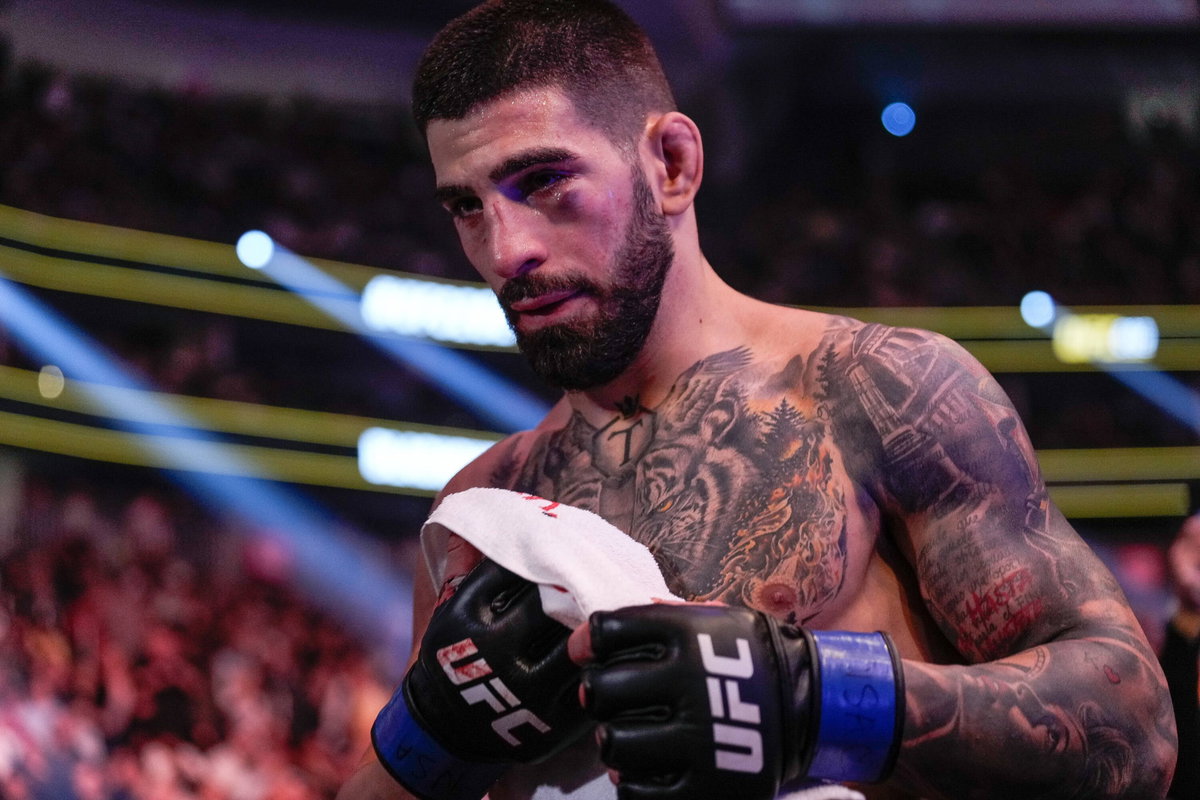
Floodlights washed over the South Lawn of the White House, and for three rounds the man in the red corner looked exactly like the fighter the world had come to expect. Then the blood started. By the end of the fourth, his face was a swollen mask, one eye barely opening, and his own corner had seen enough. They waved it off before the fifth round could begin. Justin Gaethje raised his arms. Ilia Topuria, undefeated through seventeen professional fights, sank against the cage as the most surreal night in UFC history reached its cruel ending. The date was June 14, 2026, and the aura of invincibility that had carried “El Matador” to the top of two divisions had finally cracked in front of more than four thousand spectators, a sitting president, and a global pay-per-view audience.
That single night did not erase what came before it. If anything, the loss only sharpened how rare the run that preceded it had been. To understand why a corner stoppage on a Sunday night sent the name “Topuria” rocketing across the world’s screens, you have to rewind through one of the most remarkable rises modern combat sports has produced.
A knockout artist announces himself
For years, the highlight reel told the story better than any introduction could. There was the right hook that folded Alexander Volkanovski in February 2024, a punch so clean that one of the greatest featherweights of all time was unconscious before he hit the canvas. There was the calculated demolition of Max Holloway later that year, a man famous for never being finished, dropped and stopped inside the distance. And there was the first-round flatlining of Charles Oliveira in the summer of 2025, a single sequence that turned a former lightweight king into another name on the list.
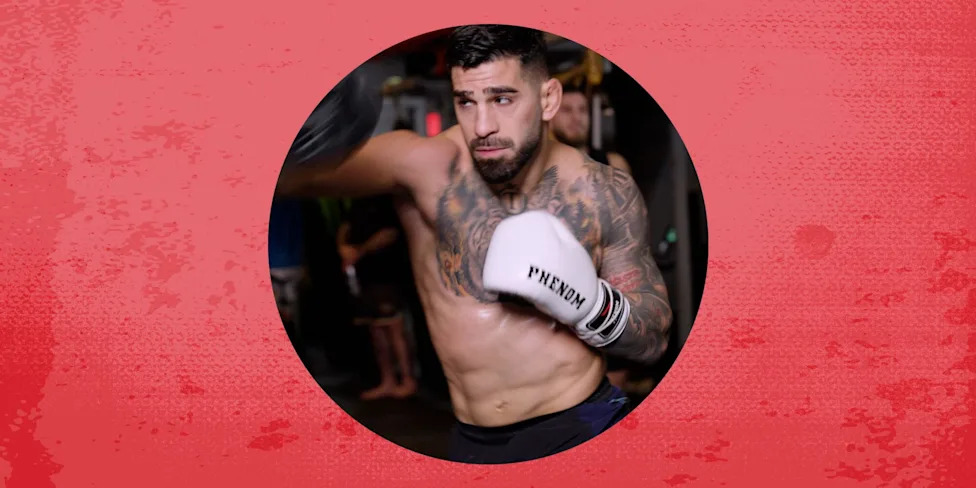
Three consecutive knockouts over three former or reigning champions. Many longtime observers of the sport called it the finest trio of victories any fighter had ever strung together. Each one ended with Topuria standing calmly over a fallen opponent, arms wide, soaking in the noise. The nickname fit. A matador does not just win. He performs, he provokes, and he finishes with a flourish.
From Halle to Tbilisi to Alicante
The origin story is as international as modern sport gets. Ilia Topuria was born on January 21, 1997, in Halle, Germany, to Georgian parents who had relocated for work. He was not a German child who discovered Georgia, nor a Georgian child who discovered Spain. He was all three threaded together from the start.
At around seven years old, the family moved back to Georgia, the country that shaped his identity and his wrestling instincts. Georgia carries a deep grappling tradition, and the young Topuria absorbed it. Then, at fifteen, in the unsettled period that followed the Russo-Georgian War, the family resettled again, this time in Spain. It was in Alicante, on the country’s southeastern coast, that he found mixed martial arts and the gym that would become his second home.
That layered upbringing is not just biographical color. It became the foundation of his entire public appeal. He could speak to a Georgian audience as a national hero, to a Spanish audience as the man who put their flag on the global combat map, and to a German birthplace as a curious footnote. Few athletes in any sport carry three flags this comfortably, and Topuria learned early how to wear all of them at once.
The family was a fighting family before Ilia ever became famous. His older brother, Aleksandre Topuria, born in January 1996 in the same German city, trained alongside him and eventually reached the UFC himself as a bantamweight. The two grew up sparring, pushing, and chasing the same dream out of the same gyms, and that shared journey gave Ilia a built-in support system that most rising fighters never have. When people talk about the Topuria phenomenon, they are increasingly talking about a brand carried by two brothers rather than one man.
The undefeated climb
Long before the championship belts, there was simply a young fighter who refused to lose. Topuria turned professional and began assembling a record that drew attention not for its length but for how the fights ended. Submissions early in his career, knockouts as his striking sharpened, and a confidence that bordered on arrogance to anyone who had not yet seen him back it up.
What separated him from the typical knockout merchant was the completeness underneath the highlights. His professional record was built almost evenly on submissions and strikes, the mark of a fighter dangerous in every phase rather than a one-dimensional puncher hunting for a single big shot. The Georgian wrestling base anchored his grappling, the Spanish striking refinement sharpened his hands, and the combination meant opponents could never load up to defend just one threat.
He arrived in the UFC and kept the streak intact. Opponents who were supposed to test him were dispatched. The hype built quietly at first, then loudly, until the promotion could no longer pretend he was anything other than a future champion in waiting. By the time he was matched against the featherweight king, his professional record stood at fifteen wins and zero losses, and the only question left was whether the biggest stage would expose him or confirm him.
Dethroning Volkanovski
UFC 298 in Anaheim, California, was supposed to be a measuring stick. Alexander Volkanovski had ruled the featherweight division for years, turning back five title challenges across four years of dominance. He was the safe bet, the proven champion, the man who had beaten everyone the division could offer.
Ad SpaceIn-Article - 300x250
Advertisement
Topuria spent the entire week telling anyone who would listen that he would knock Volkanovski out in the second round. It sounded like the bravado of a challenger trying to manufacture belief. Then he did exactly that. Early in the second round, a short right hook landed flush and the champion crumpled. The finish came at three minutes and thirty-two seconds, and with it the featherweight crown changed hands. Spain had its first UFC champion, Georgia had a new national obsession, and the sport had a genuine new star.
The defenses and the move up
A title means nothing without a defense, and Topuria chose the hardest possible name to validate his. Max Holloway, one of the most durable and respected fighters in the division’s history, met him at UFC 308 in October 2024. The result followed the now-familiar script. Topuria found the finish, stopping a man who had built a reputation on being impossible to stop.
Rather than settle into a long featherweight reign, he made a bold call. In early 2025 he vacated the featherweight title entirely, walking away from the belt he had fought so hard to win in order to chase something bigger at lightweight. The gamble paid off. When the lightweight title came open, Topuria faced Charles Oliveira for the vacant championship at UFC 317 during International Fight Week in the summer of 2025. He needed less than one round. A first-round knockout made him a two-weight world champion and, crucially, the first fighter in UFC history to capture titles in two divisions while still undefeated.
The two-division question
That distinction mattered. Plenty of great fighters have held belts in two weight classes. Almost all of them lost somewhere along the way. To do it without a single defeat on the record placed Topuria in conversation with the very best the sport had produced, and he was barely into his prime.
The debate that followed was inevitable. Was he the most complete fighter of his generation, or had he simply timed his run perfectly, catching aging champions and favorable matchups? His supporters pointed to the names on his ledger. His doubters pointed out that the deeper waters of the lightweight division, historically the UFC’s most brutal weight class, had a way of humbling even the most gifted. Both arguments would be tested on the largest stage anyone had ever built for a fight.
The night at the White House
The setting alone made UFC Freedom 250 unlike anything the sport had staged. Held on the South Lawn of the White House on June 14, 2026, as part of celebrations leading into the United States’ 250th anniversary, the event drew a crowd of more than four thousand, a sitting president cageside, and an estimated eighty thousand fans watching from a viewing party nearby. Every fight on the card ended by knockout. It was spectacle as policy, combat sport elevated to a piece of national theater.
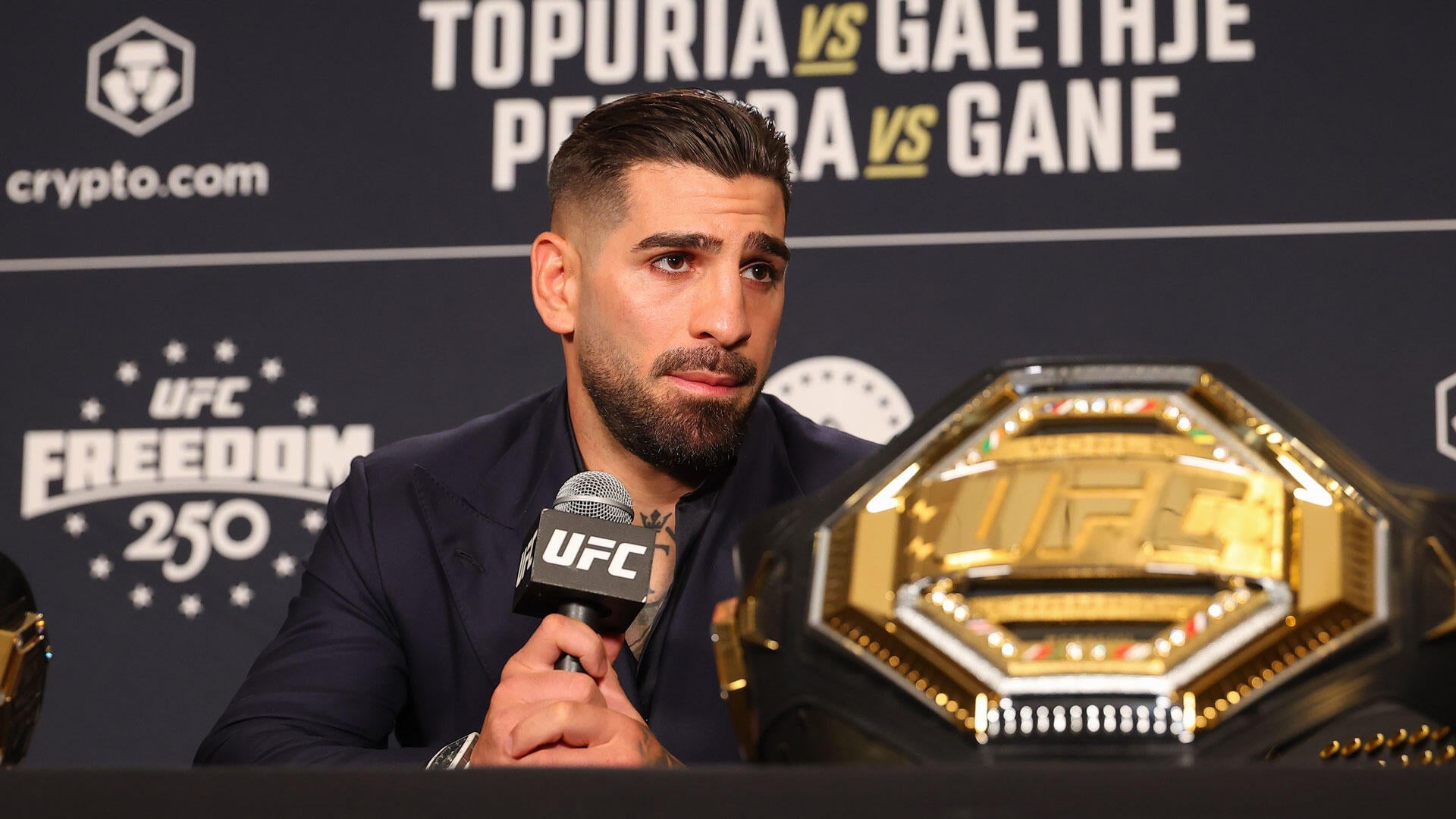
Topuria entered as a heavy favorite, listed at better than six-to-one over Justin Gaethje, a two-time interim lightweight champion who had spent years chasing the undisputed belt. The matchup carried an obvious risk that few wanted to dwell on. Gaethje is at his most dangerous in exactly the kind of fight nobody had ever dragged Topuria into: a grinding, bloody war of attrition. For three rounds the champion competed. Then the fight turned ugly in the way only Gaethje can make it, and between the third and fourth rounds Topuria reportedly told the cageside doctor he could no longer see out of one eye. The bout continued, the punishment mounted, and his corner made the decision for him. The official result was a fourth-round TKO by corner stoppage, with all three judges scoring it for Gaethje at the moment it ended.
The undefeated record was gone. Ilia Topuria left Washington at seventeen wins and one loss, a former two-division champion rather than a reigning one.
Where he ranks among the new UFC stars
A single defeat does not undo a legacy, and Topuria’s place among the sport’s new generation of draws is secure regardless of what happened on the South Lawn. The crossover appeal he built is the rarest thing in combat sports. In Spain, he turned a country with little UFC history into a passionate fight nation, packing arenas and pulling political and celebrity attention toward a sport that had barely registered there a decade earlier. In Georgia, he became a source of genuine national pride. The Spanish MMA boom that followed his rise is, in large part, his creation, and it has a built-in second act in his brother Aleksandre Topuria, a bantamweight who carries the family name into the same octagon.
His persona did the rest. The walkouts, the predictions delivered with a smirk, the willingness to call his shot and then land it, the unapologetic showmanship in three languages and three flags. He understood that modern stardom in the UFC is not built on winning alone. It is built on giving an audience a reason to care whether you win, and Topuria gave them plenty.
Set against the other new faces the UFC is leaning on to carry its next decade, his profile is unusually broad. Plenty of young champions are dominant inside the cage. Far fewer move the needle in entire countries the way Topuria moves Spain and Georgia, dragging non-fight fans into the sport simply because he carries their flag. That cultural reach is the asset that does not vanish with a single result, and it is the reason the promotion will keep building events around him whether he is wearing a belt or chasing one. A draw of his size does not get less valuable after a loss. If anything, a first defeat hands him the one storyline he never had before, the comeback.
The loss reframes the story without ending it. What had been a tale of flawless ascent is now something more human and, in its own way, more compelling: a gifted champion who reached an extraordinary peak, ran into a violent ceiling at the exact moment the whole world was watching, and now has to answer the only question every great fighter eventually faces. The first chapter, the one that ran from a German birth certificate to a White House lawn, was about how high a fighter can climb when nothing has ever knocked him down. The next chapter, the one that begins now, will be about what he does the morning after it finally did.
Ad SpaceIn-Article - 300x250
Advertisement
Share
Get the recap
Loved this story? Get more like it.
Join readers who get our weekly entertainment recap - the stories worth your time, delivered every Friday.
No spam. Unsubscribe anytime. By signing up you agree to our Privacy Policy.