

How to Adapt a Novel Into a Screenplay: A Writer's Step-by-Step Guide
Writing

How to Adapt a Novel Into a Screenplay: A Writer's Step-by-Step Guide

David Jituboh|
Ad SpaceArticle Top - 728x90
Advertisement

Why Adaptations Dominate Hollywood

If you have ever finished a novel and thought, “This would make an incredible movie,” you are thinking exactly like a Hollywood executive. Adapted screenplays account for roughly 53% of all films produced by major studios, and they consistently outperform original screenplays at the box office. The reason is straightforward – novels come with built-in audiences, proven stories, and characters that readers already love.

Films like “The Shawshank Redemption” (adapted from a Stephen King novella), “No Country for Old Men” (Cormac McCarthy’s novel), “Gone Girl” (Gillian Flynn’s thriller), and “Dune” (Frank Herbert’s science fiction classic) demonstrate that learning how to adapt a novel into a screenplay is one of the most valuable skills a screenwriter can develop. The Academy Awards even have a separate category for Best Adapted Screenplay, recognizing the unique craft involved.

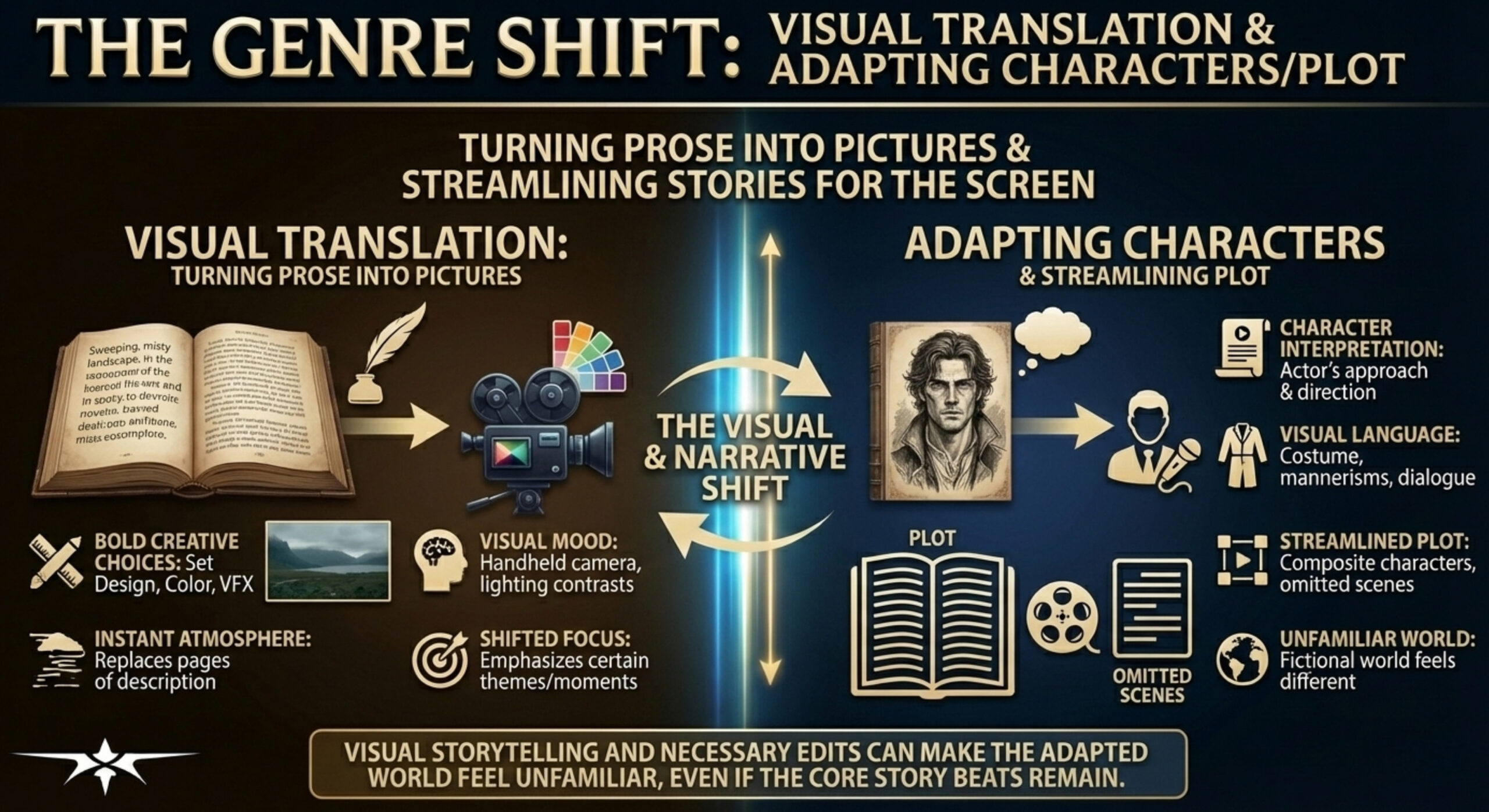
But adaptation is not simply transcribing a book into script format. It is a complete reimagining of the story for a different medium – one that relies on visual imagery, dialogue, and time constraints rather than internal monologue, prose style, and unlimited page counts. A 400-page novel might contain 120,000 words. A two-hour screenplay contains roughly 12,000. That means approximately 90% of the novel’s content must be left on the cutting room floor – and deciding what stays and what goes is where the real art lies.
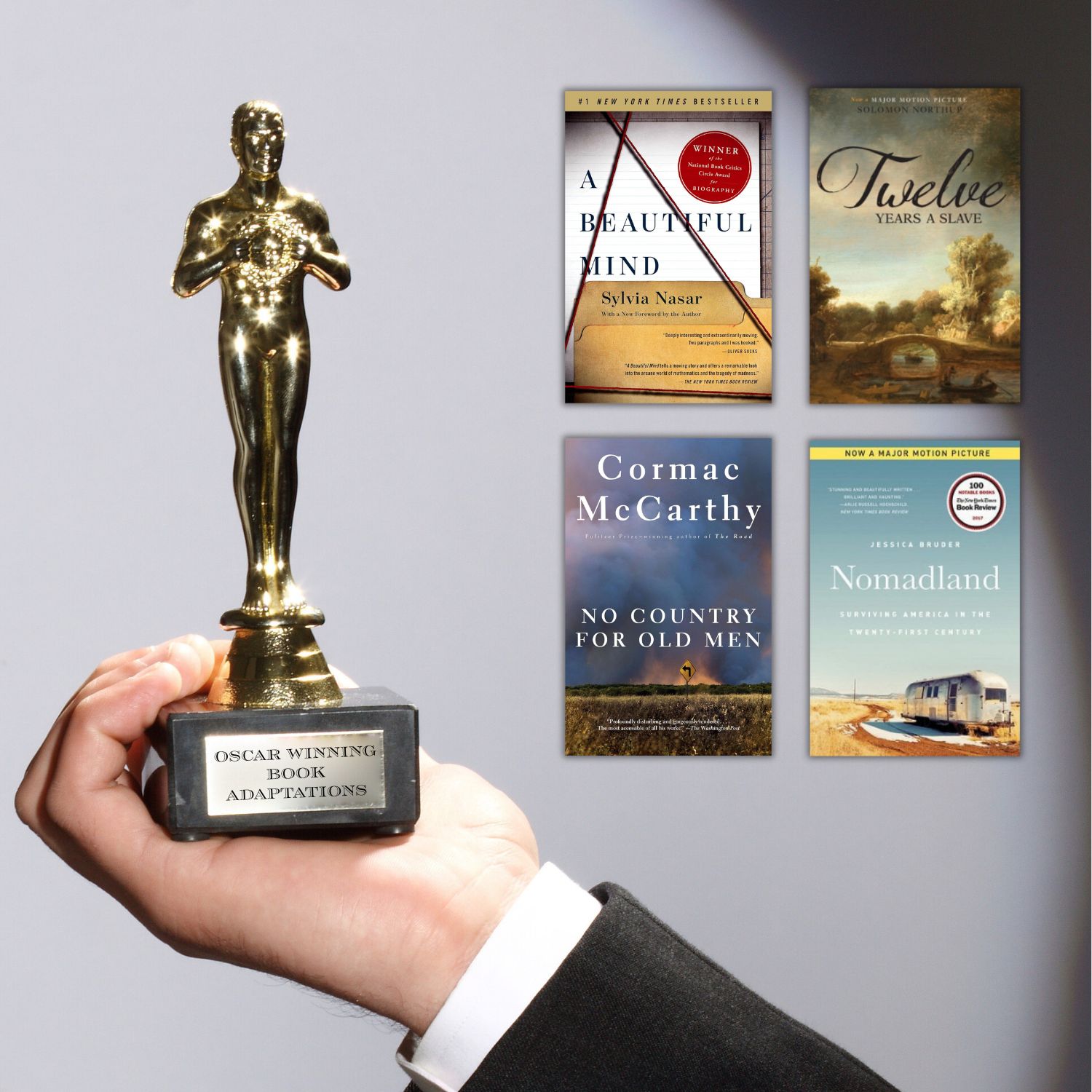
Stack of bestselling novels next to an Oscar statuette with film reels
Image: Book Girls’ Guide

Securing the Rights to Adapt

Before you write a single line of screenplay, you need the legal right to adapt the novel. This is a non-negotiable step that many aspiring screenwriters skip, only to face legal consequences later.

Option agreements are the standard mechanism. An option gives you the exclusive right to develop a screenplay based on the novel for a defined period – typically 12 to 18 months – in exchange for a fee. Option fees for unpublished or little-known novels can be as low as $1 (a “dollar option”) for emerging writers working with cooperative authors. For published novels, option fees typically range from $5,000 to $50,000, representing 5% to 10% of the eventual purchase price if the screenplay gets produced.

Public domain works are free to adapt. Any novel published before 1929 in the United States is in the public domain, which is why you see frequent adaptations of Jane Austen, Charles Dickens, the Bronte sisters, and other classic authors. Works published between 1929 and 1978 may be in the public domain depending on whether copyright was renewed. Check the U.S. Copyright Office records to verify status.

If you are adapting your own novel, you obviously hold the rights, but be aware that if you previously sold film rights to a publisher or producer through your book deal, those rights may not be yours to exercise. Review your publishing contract carefully.

For practice and learning purposes, you can write a “spec adaptation” of any novel, understanding that you cannot sell it or have it produced without securing rights. This is a common exercise in screenwriting programs and can serve as a writing sample to demonstrate your adaptation skills.

Analyzing the Source Material
Once you have the rights (or are writing a spec), the real work of figuring out how to adapt a novel into a screenplay begins with a deep analysis of the source material. Do not start writing the screenplay immediately after finishing the novel. Instead, take time to dissect it.

Read the novel at least twice. The first read is for enjoyment and emotional response. What scenes gave you chills? Which characters grabbed you? What moments made you think “I need to see this on screen”? These gut reactions are your compass. The second read is analytical. Take notes on structure, character arcs, themes, and scenes that are inherently visual.

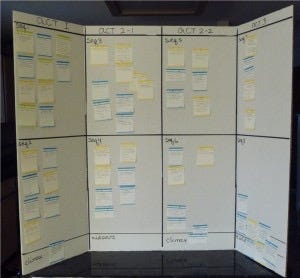
Create a scene-by-scene outline. Break the novel down into every distinct scene – every change of location, time, or perspective. A typical novel might have 60 to 150 scenes. Write a one-sentence summary of each, noting which characters appear and what purpose the scene serves (advances plot, develops character, establishes theme, provides exposition).

Identify the core emotional journey. Every novel, no matter how complex, has a central emotional arc – a character who wants something, faces obstacles, and is transformed by the experience. In “The Shawshank Redemption,” it is Andy Dufresne’s refusal to let prison destroy his hope. In “Gone Girl,” it is Nick Dunne’s discovery of who his wife really is. This emotional core is what your screenplay must preserve above all else.

Note what is inherently cinematic. Some scenes in novels translate naturally to screen – action sequences, dramatic confrontations, visual set pieces. Others are inherently literary – long passages of internal reflection, philosophical digressions, detailed descriptions of settings. Flag both types, because your screenplay will lean heavily on the cinematic scenes while finding creative ways to translate or eliminate the literary ones.

Identifying the Narrative Spine

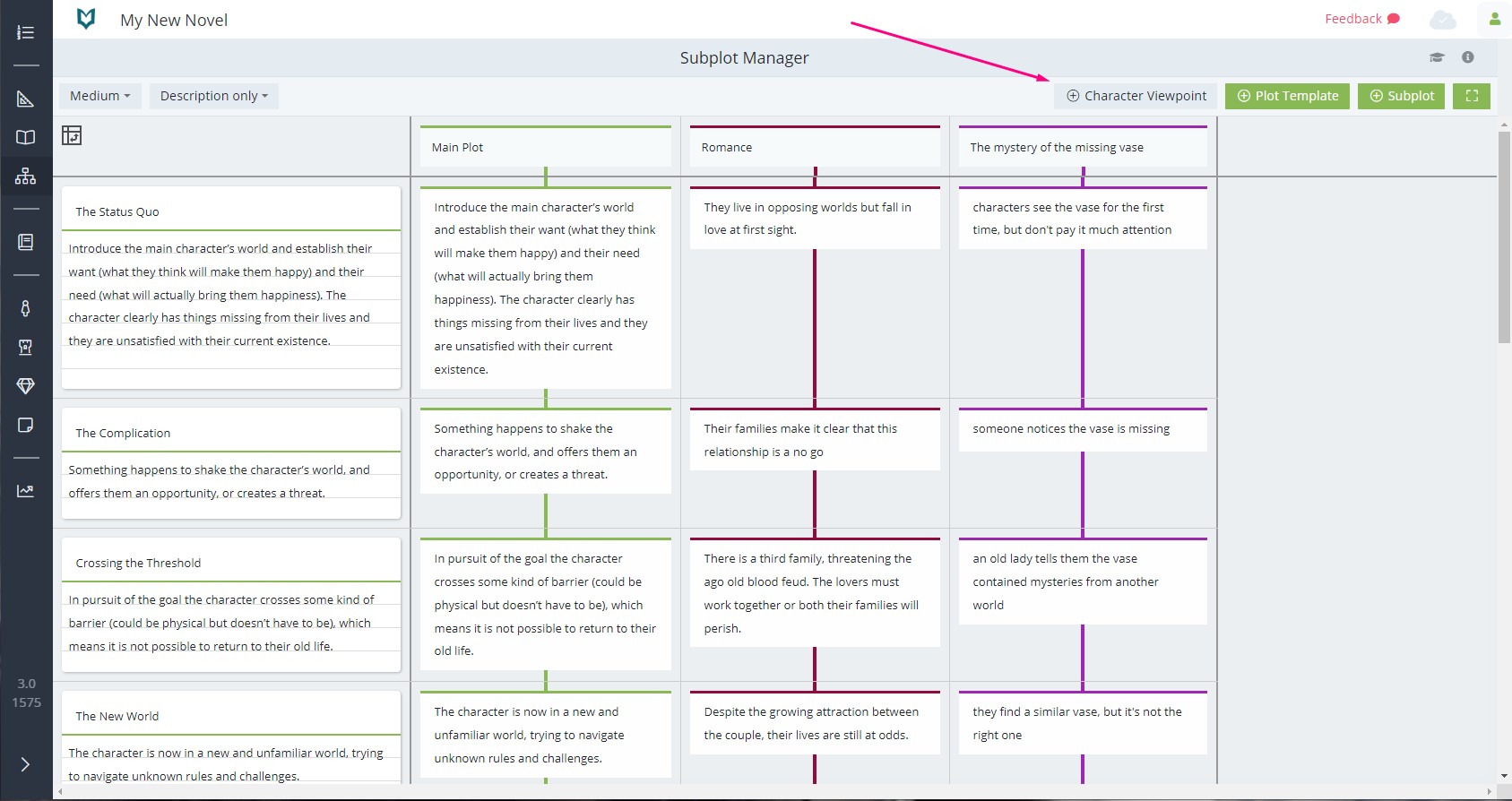
The narrative spine is the single throughline that holds your screenplay together. In a novel, an author can sustain multiple parallel storylines, extensive backstories, and thematic explorations that span hundreds of pages. In a screenplay, you need one dominant story that drives every scene forward.

To find the spine, ask yourself: “If I could only keep one storyline from this novel, which one would it be?” The answer is almost always the protagonist’s central conflict. Everything else – subplots, secondary characters, backstory, thematic tangents – either supports this spine or gets cut.

Consider how Aaron Sorkin adapted “Moneyball” by Michael Lewis. The book is a detailed examination of baseball economics with dozens of characters, statistical analysis, and multiple seasons of games. Sorkin identified the spine: Billy Beane’s personal quest to prove that his unconventional approach to baseball could work, set against the resistance of traditional baseball insiders. Every scene in the screenplay serves that spine. The statistical analysis becomes background texture. The multiple seasons compress into one. A dozen characters become five or six.

Similarly, when adapting a novel like “The Lord of the Rings,” Peter Jackson and his writing partners identified Frodo’s journey to destroy the ring as the spine, even though Tolkien’s novels contain elaborate world-building, songs, poems, and extended sequences (like Tom Bombadil) that, while beloved by readers, would have derailed the film’s momentum.
Story outline corkboard with index cards and strings showing adaptation process
Image: Screenwriting Tricks for Authors – Substack

Condensing Characters and Subplots

Novels can support 20, 30, or even 50 named characters. Screenplays rarely support more than 8 to 12. Learning how to adapt a novel into a screenplay means becoming ruthless about character consolidation.

Composite characters are the adapter’s best friend. If the novel has three mentors who each provide different guidance to the protagonist, combine them into one character who delivers all the essential wisdom. If there are two best friends who serve similar emotional functions, merge them. The audience will not miss characters they never met – they will only notice a streamlined story that moves with purpose.

In the adaptation of “The Godfather,” Mario Puzo’s novel features numerous minor characters and subplots – including an extended storyline about Johnny Fontane’s Hollywood career and a subplot about a woman seeking reconstructive surgery. Francis Ford Coppola and Puzo cut both, among others, to focus on the Corleone family’s power dynamics. The result was tighter, more focused, and more powerful than a faithful page-by-page adaptation could have been.

Subplots should be evaluated by a simple test: Does this subplot directly affect the protagonist’s central journey? If yes, keep it (though probably condensed). If no, cut it – no matter how interesting it is in the novel. A subplot that enriches a 500-page novel can destroy a 120-page screenplay’s pacing.

When cutting subplots, check for any essential plot information they carry. Sometimes a minor subplot is the vehicle for a critical piece of information the audience needs. In those cases, find another way to deliver that information – through a different character, a visual clue, or a brief line of dialogue – rather than keeping an entire subplot alive for one piece of data.

Translating Internal Monologue to Visual Storytelling

This is the single most challenging aspect of novel adaptation and the skill that separates great adaptations from mediocre ones. Novels live inside characters’ heads. Screenplays live outside them.

When a novel tells you that a character feels betrayed, the screenwriter must find a visual way to show that betrayal. When a novel spends three pages on a character’s memories of childhood, the screenwriter needs to convey the same emotional information in 30 seconds of screen time – or find a way to make the information unnecessary.

Techniques for externalizing internal states:

Behavior and action: Instead of writing “She felt trapped,” show her trying the door and finding it locked, or pacing a small room, or staring out a window at a distant horizon. The audience reads emotions through what characters do.

Dialogue with subtext: Characters rarely say exactly what they feel in great screenplays. A character who is jealous does not say “I’m jealous.” They make a cutting comment about the person they envy, or they overpraise in a way that feels forced, or they change the subject when that person is mentioned.

Visual metaphor: The environment can reflect internal states. A character going through emotional turmoil walks through a storm. A character experiencing clarity looks out at a sunrise. These are not subtle techniques, but they are effective when used with restraint.

Voiceover narration: This is the most controversial tool. Used well (as in “Shawshank Redemption” or “Goodfellas”), voiceover can preserve a novel’s literary voice and provide internal context without sacrificing pacing. Used poorly, it becomes a crutch that tells the audience what they should be seeing instead. If you use voiceover, it should reveal what cannot be shown and should have its own narrative voice – not simply repeat what is happening on screen.

Director coaching actress on emotional scene during film production
Image: Backstage

Restructuring for Three-Act Screenplay Format

Novels follow their own structural rhythms – some are chronological, others jump between timelines, many have slow buildups that pay off over hundreds of pages. Screenplays follow a more rigid structure, and understanding how to adapt a novel into a screenplay means learning to reshape the story to fit this framework.

Act One (pages 1-30): Establishes the world, introduces the protagonist, and presents the inciting incident that launches the central conflict. In a novel, this setup might take 100 pages. You have roughly 25 to 30 screenplay pages – about 25 to 30 minutes of screen time.

Act Two (pages 30-90): The protagonist pursues their goal, encounters escalating obstacles, forms alliances, faces setbacks, and reaches a crisis point. This is the longest act and where most adaptation challenges live, because novels often have rich, meandering middle sections that need to be compressed into a relentless cause-and-effect chain.

Act Three (pages 90-120): The climax and resolution. The protagonist faces the ultimate test, the central conflict is resolved, and the story reaches its emotional conclusion.

Novels often have endings that are ambiguous, open-ended, or bittersweet in ways that work beautifully on the page but feel unsatisfying on screen. Consider whether the novel’s ending translates cinematically or whether you need to adjust it. “No Country for Old Men” preserved the novel’s ambiguous ending and was praised for it. Other adaptations, like “The Notebook” by Nicholas Sparks, altered the novel’s ending significantly for emotional impact on screen.

Adapting Dialogue for the Screen

A common mistake in novel-to-screenplay adaptations is lifting dialogue directly from the book. While some novel dialogue works on screen, much of it does not. Novel dialogue serves different functions – it can be expository, philosophical, or deliberately unnatural in ways that enhance the prose.

Screen dialogue must sound like how people actually talk – fragmented, interrupted, layered with subtext. It must also serve multiple functions simultaneously: advance the plot, reveal character, and entertain the audience. A two-page dialogue scene in a novel might become four lines in a screenplay, because the camera and performances carry the rest of the information.

Tips for adapting dialogue: Cut any dialogue that simply states information the audience can see. Shorten speeches – few screen characters deliver uninterrupted monologues. Add conflict to conversations – screen dialogue crackles when characters have opposing agendas. Preserve the character’s distinctive voice, even if you rewrite their actual words. If the novel’s protagonist speaks in short, blunt sentences, keep that rhythm even in new dialogue you create.

Common Mistakes in Novel-to-Screenplay Adaptations

Being too faithful. The greatest sin of adaptation is trying to include everything. This produces bloated, unfocused screenplays that are faithful to the letter of the novel but betray its spirit. Your loyalty should be to the story’s emotional truth, not to individual scenes or lines.

Not committing to cuts. If a subplot is cut, cut it completely. Half-measures – including brief references to storylines that are never developed – confuse audiences and create dangling threads.

Neglecting visual storytelling. If your screenplay reads like a novel with margins, you have not actually adapted – you have reformatted. Every scene should be conceived as something you can see and hear, not something you read.

Changing the emotional core. You can change plot details, combine characters, rearrange timelines, and rewrite dialogue, but if you change the fundamental emotional experience the story creates, fans of the novel will feel betrayed and new audiences will sense something hollow at the center.

Ignoring the author’s intent. Understanding why the author wrote the novel – what they were exploring thematically – helps you make adaptation decisions. When you understand the intent, you can find new ways to fulfill it on screen even when specific scenes or characters are altered.

Selling Your Adaptation

Once your adapted screenplay is polished, the path to selling it depends on whether you hold the underlying rights. If you optioned the novel, you can submit the screenplay to producers, agents, and production companies through standard industry channels. Include a clear statement in your query that you hold the option and specify its terms.

If you wrote a spec adaptation as a writing sample, you cannot sell it without securing rights, but you can use it to demonstrate your adaptation skills to agents and managers. Many screenwriters break into the industry by writing spec adaptations that showcase their talent, even if those specific scripts never get produced.

Competitions like the Nicholl Fellowship, Austin Film Festival, and PAGE International Screenwriting Awards all accept adapted screenplays. A strong placement in these competitions, combined with a spec adaptation that demonstrates skill in how to adapt a novel into a screenplay, can attract representation.

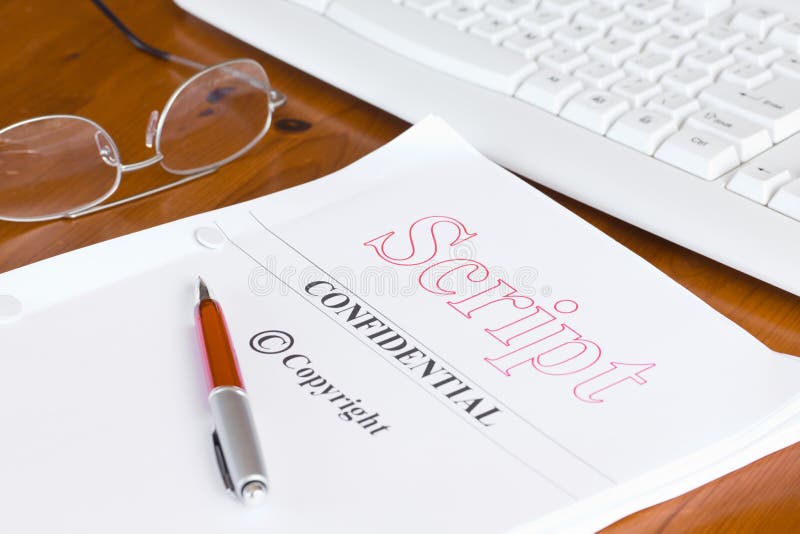
Screenplay manuscript title page on a clean desk with reading glasses and pen
Image: Dreamstime.com

Key Takeaways

  • Secure the legal rights before writing – option agreements, public domain status, or ownership of the source material are the only legitimate paths.
  • Identify the narrative spine – the single central conflict – and make every scene in your screenplay serve it.
  • Condense characters ruthlessly using composite characters, and cut subplots that do not directly affect the protagonist’s journey.
  • Translate internal monologue into visual storytelling through behavior, subtext-rich dialogue, and visual metaphor rather than relying on voiceover.
  • Be loyal to the novel’s emotional truth, not to its specific scenes – great adaptations capture the spirit while reinventing the details for a visual medium.

Frequently Asked Questions

Can I adapt a novel into a screenplay without the author’s permission?

Only if the novel is in the public domain (generally published before 1929 in the U.S.). For copyrighted works, you must secure adaptation rights through an option or purchase agreement. You can write a spec adaptation for practice or as a writing sample, but you cannot sell, produce, or publicly distribute it without the rights holder’s permission.

How long should an adapted screenplay be?

Standard feature-length screenplays run 90 to 120 pages, with the general rule that one page equals roughly one minute of screen time. Most adaptations aim for 100 to 115 pages. Going over 120 pages is a red flag for producers and readers, regardless of how long the source novel is.

Should I use the same dialogue from the novel?

Use novel dialogue when it works on screen – when it sounds natural, is concise, and serves the scene’s dramatic purpose. But do not feel obligated to preserve every line. Much novel dialogue needs to be shortened, sharpened, or completely rewritten for the screen because it was designed for reading, not for actors to perform.

How do I handle a novel with multiple POV characters?

Choose one POV as your primary lens and restructure events around that character’s experience. Supporting POV characters become exactly that – supporting characters whose scenes are included only when they intersect with or affect the protagonist’s story. If the novel genuinely has two equally important POVs (like “Gone Girl”), you can maintain both, but your screenplay needs a clear structural framework for alternating between them.

What are the best screenwriting software options for writing an adaptation?

Final Draft ($199.99) is the industry standard and what most production companies expect. WriterSolo (free) and Highland 2 ($49.99 for Mac) are solid alternatives. Arc Studio Pro offers a free tier that is fully featured. Any of these handle proper screenplay formatting automatically, allowing you to focus on the creative work of adaptation rather than margin widths and font choices.

Ad SpaceIn-Article - 300x250
Advertisement
Share