How Afrobeats Record Labels Actually Work: Deals, Splits and Who Really Owns the Masters
Tristan Melo··12 min read
Ad SpaceArticle Top - 728x90
Advertisement
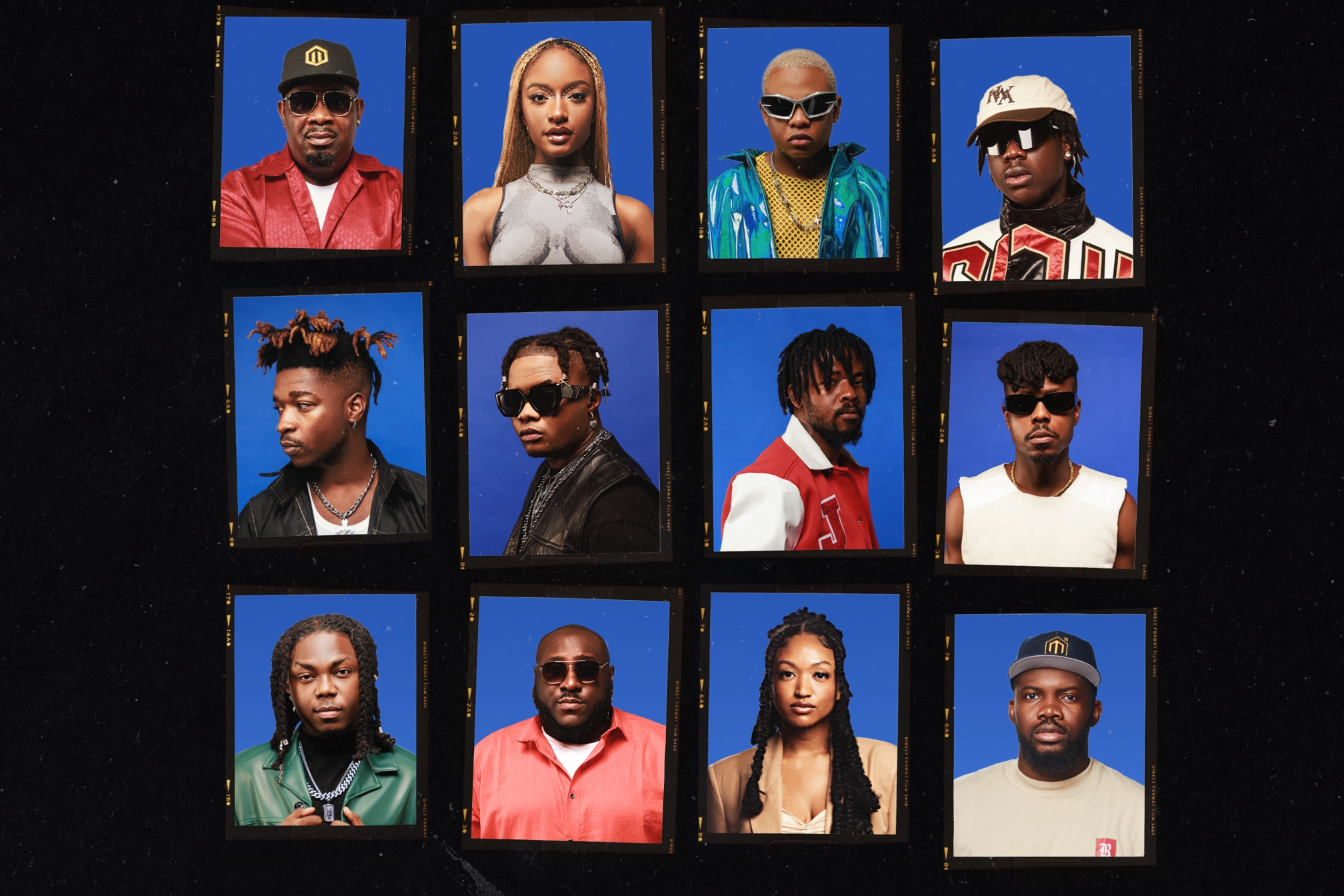
When a Rema song crosses a billion streams or an Ayra Starr single goes platinum in three countries, the celebration looks the same on Instagram. Champagne, congratulatory captions, label execs in matching white tees. What almost nobody outside the industry sees is the spreadsheet behind the post. The advance that has not been recouped. The producer points that still need clearing. The publishing split that gets paid out months after the song peaks. The 360 clause that decides who actually owns the brand deal that paid for the new house.
Most Afrobeats fans, and even a fair number of artists signing their first deals, do not really know how the money flows from a stream on a phone in Lagos to a wire in someone’s account. The fan math is simple: the song hit a billion plays, so the artist is rich. The actual math is closer to a layered cake of percentages, with the bottom layer being the only one the artist tastes, and only after the upper layers have been eaten.
The figures that follow are industry ranges, drawn from public reporting and what people in the business have said on the record. No specific artist’s exact contract is claimed here unless they have spoken about it in public.
The Recording Deal Basics
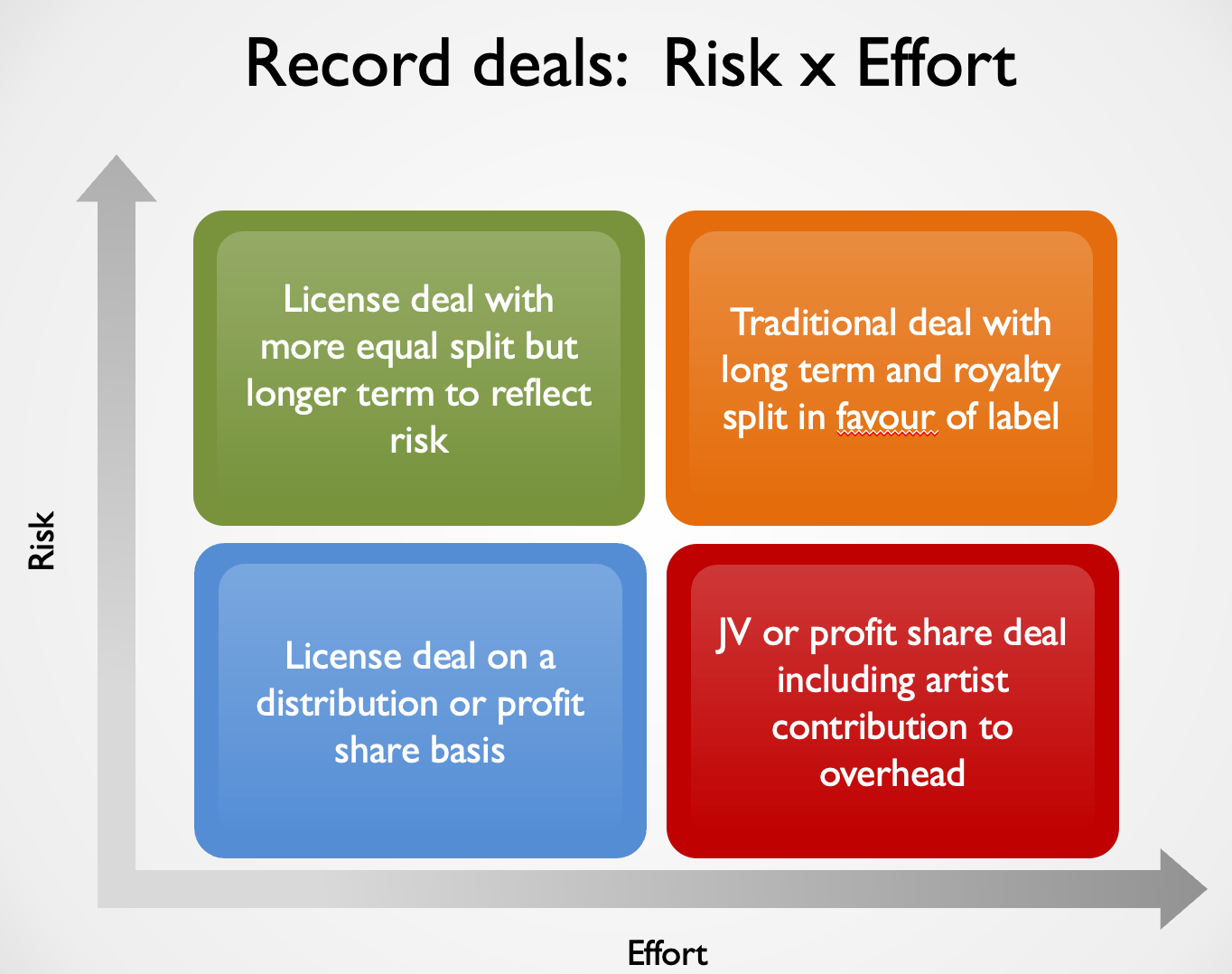
A traditional recording deal has four moving parts: the advance, the recoupment, the royalty rate and the term. The advance is the upfront money the label pays on signing. It is not free money. It is a loan against future royalties. For a developing Afrobeats act with buzz, advances reportedly range from the low five figures in US dollars to the mid six figures. A genuine star can negotiate seven figures, more if a bidding war breaks out.
Recoupment is the part most new artists misunderstand. The label fronts money for the advance, recording costs, music videos, marketing, promo runs, radio, playlisting, and travel. Every dollar of that becomes a debt the artist has to pay back through their royalty share before they see a check. Royalties earned from streaming and sales come in, the label keeps them, and applies them against the debt. When the debt hits zero, the artist is recouped. Until then, the artist lives on the advance and whatever side income they have.
The royalty rate is the percentage of net revenue the artist receives once they recoup. On a typical major-label deal, the artist’s share of net revenue is commonly reported in the region of 12 to 20 percent, with the label keeping the rest. Newer artists sit at the low end. Established acts negotiate upward. Actual rates are contractual and almost never published.
The term is how long the deal lasts and how many albums the artist owes. Nigerian deals from the mid-2010s were widely described by lawyers working in the market as running several years across a multi-album commitment, frequently with option years that the label, not the artist, controls. Specific terms vary by contract and are rarely disclosed.
The 360 Deal Explained
Around the mid-2010s, as streaming changed how labels made money, the 360 deal became common across Nigerian Afrobeats contracts. The name comes from the idea that the label takes a cut of everything the artist earns, not just records.
In a traditional deal, the label earns from recorded music. Touring, merch, brand endorsements and publishing belonged to the artist. In a 360, the label takes a percentage, often reported in the 10 to 30 percent range, of touring revenue, merchandise sales, brand partnerships, and sometimes acting or appearance fees. In exchange, the label commits to a larger promotional spend and treats the artist as a full business, not just a music product. For a developing artist with no leverage, a 360 can feel like the only way to get signed at all, and that asymmetry is exactly why the clause spread so fast.
Master Ownership Is the Whole Game
A master recording is the actual recorded version of a song. Not the composition, which is a separate thing, but the audio file itself. Whoever owns the master controls how that recording is used, licensed, sold, streamed, sampled, or placed in a film. The master is the asset that keeps earning long after the song stops trending.
Traditionally, when a label pays for the recording, the label owns the master. Many Nigerian deals signed in the late 2000s and early 2010s gave masters to the label for the life of copyright, which under Nigerian and most international law runs for the author’s lifetime plus 70 years. Effectively forever, from the artist’s point of view.
Modern major-label deals have moved toward master reversion clauses, where ownership of the masters returns to the artist after a defined period. The length of that period is negotiated deal by deal and is almost never made public, and plenty of contracts still carry no reversion at all. This is the single biggest negotiating point in modern artist contracts. Owning masters means owning the catalogue. Not owning them means renting your own work back from a label for the rest of your career.
Burna Boy has spoken publicly about owning his masters through Spaceship Entertainment, which operates as an independent label and distributes through major-label partnerships rather than signing his catalogue away. That structure, where the artist is the label, is increasingly the model established Afrobeats stars push for.
Publishing Rights versus Master Rights
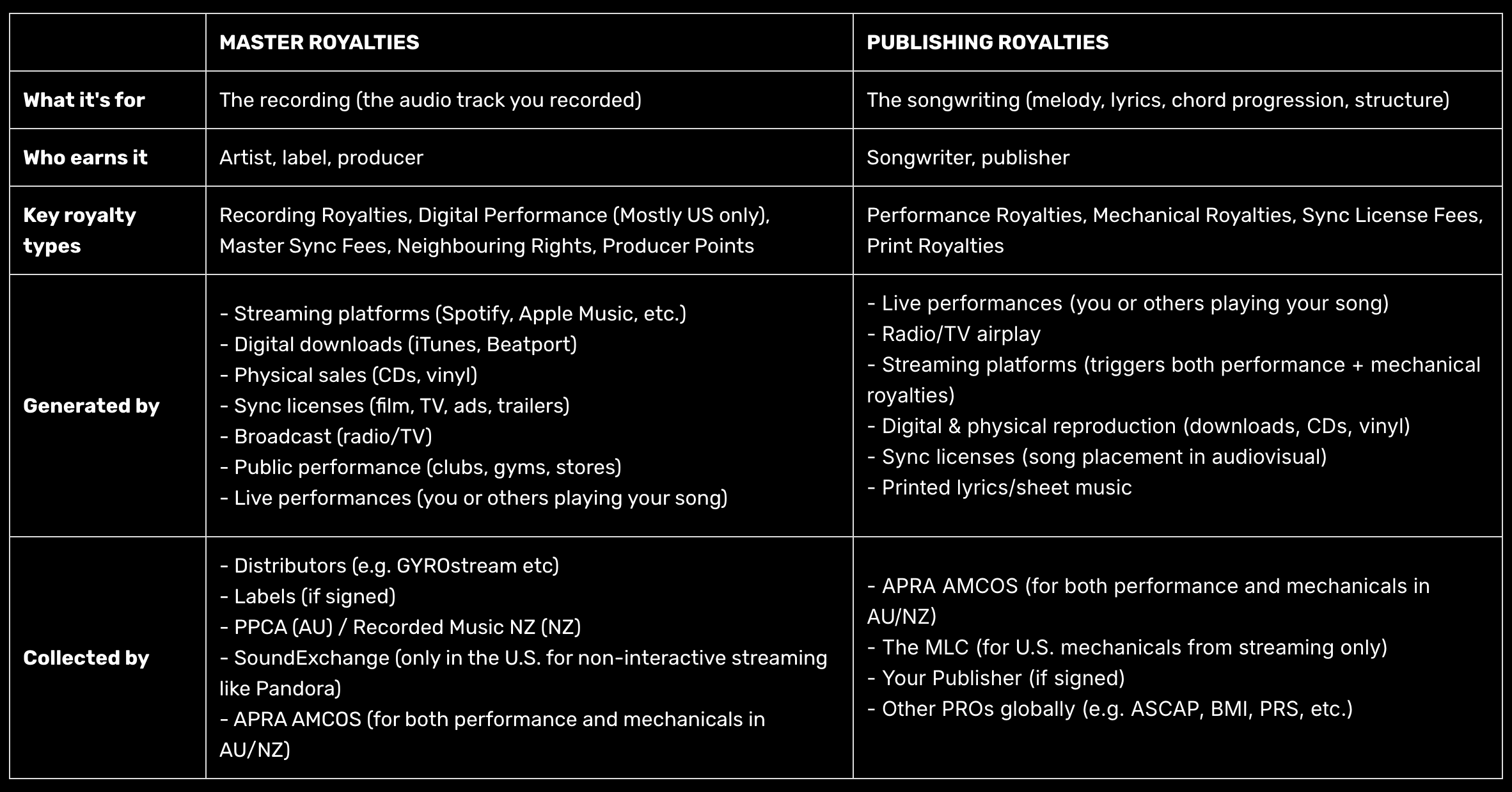
This is the part most fans do not realise exists. There are two separate revenue streams from a single song. The master right covers the recording. The publishing right covers the underlying composition, the melody, the chord progression and the lyrics. Two different copyrights, two different cheques, two different sets of owners.
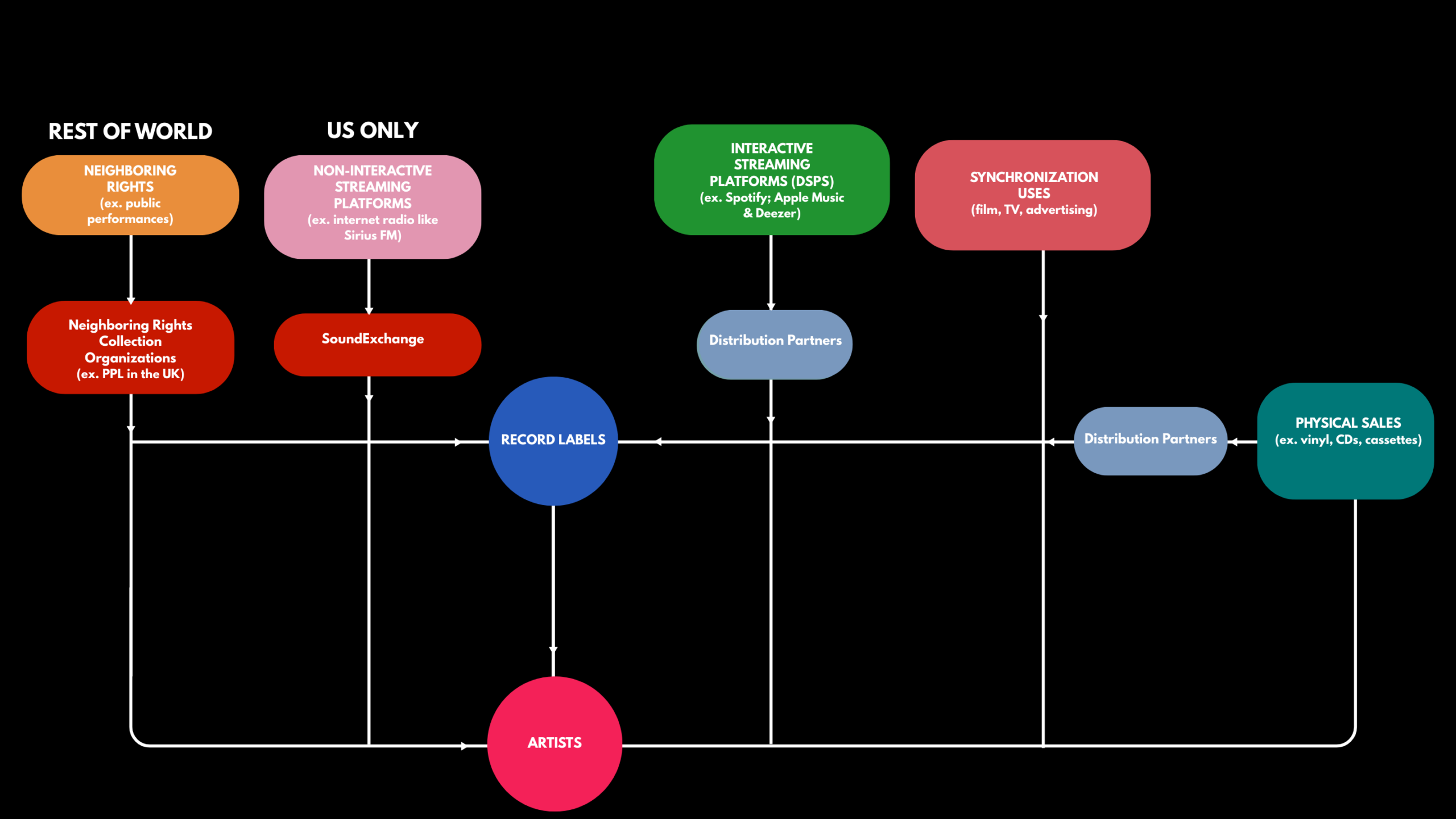
When a song is streamed, played on radio, performed live or used in a film, both rights generate income. The master royalty goes to whoever owns the recording, usually the label. The publishing royalty goes to whoever owns the composition, which is the songwriter and their publisher.
Many Afrobeats artists either keep their publishing, set up their own publishing company, or split it with a major publisher like Sony Music Publishing or Warner Chappell in exchange for an advance. Publishing deals run separately from recording deals. An artist can be locked into a tough record contract but still own all their publishing. For songwriters who do not perform, publishing is the entire business.
Recoupment in Practice
The clearest way to see how recoupment works is to run an illustration. The figures below are a worked example rather than any real artist’s contract, but the shape of the ledger is what matters.
Recoupable line
Illustrative amount
Advance on signing
$100,000
Recording the debut project
$50,000
Marketing, videos, radio promo, media tour
$200,000
Total recoupable spend
$350,000
If the artist’s royalty rate in that illustration is 15 percent, every dollar earned puts 15 cents toward erasing the debt, so the project has to generate somewhere north of $2 million in net label-side revenue before the artist sees a first royalty cheque. Change the royalty rate or the marketing spend and the break-even point moves, but it never moves to somewhere comfortable.
That is why so many Afrobeats artists with hit songs are still living off the advance two years in. The streams look enormous, the artist looks rich on Instagram, but the recoupment ledger says otherwise. Touring, brand deals and live fees are what actually pays the bills, which is exactly what the 360 clause was designed to capture.
Ad SpaceIn-Article - 300x250
Advertisement
Streaming Royalty Math
Streaming payouts vary wildly by platform, and the variation matters more than the headline rate. None of the platforms publish a contractual per-stream rate, because there is no such thing: payouts are a share of a revenue pool divided by streams, and they move every month. Spotify payouts, as reconstructed from label and distributor statements, are usually reported somewhere between a third of a cent and half a cent per stream. Apple told labels in 2021 that its average payout works out at roughly one cent per stream. Boomplay, which carries enormous volume across Africa, pays materially less and has not published a rate. Subscription prices in African markets are lower and the advertising pool is smaller, so the per-stream economics follow.
Run the math on those reported rates. A million Spotify streams produces a few thousand dollars in gross revenue paid to whoever owns the master, usually the label. After the label keeps its share and applies the rest to recoupment, an unrecouped artist sees nothing. A recouped artist on the illustrative 15 percent rate above sees a few hundred dollars from that million streams. Publishing pays out separately, often months later.
Scale it up and the same arithmetic holds. On those reported rates, a track that crosses a billion streams across platforms generates gross recorded-music revenue in the low single-digit millions of dollars, not tens of millions. The label keeps its share. The producer takes their points. Publishing flows separately. Features get their cut. Once those layers are paid, the lead artist’s share of the master side is a fraction of the headline number, plus whatever publishing they kept. A billion-stream song is not the eight-figure payday fans picture. It is a good year, assuming the deal is reasonable and the artist has already recouped.
The Mavin and UMG Story
Mavin Records, founded by Don Jazzy in 2012, became the most-watched Afrobeats label deal of the decade when Universal Music Group announced a majority investment in parent company Mavin Global in February 2024, subject to regulatory approval. It was a majority stake rather than an outright purchase, and neither side disclosed the price, so any figure attached to it in circulation is unverified. What the deal did do is put Mavin’s roster inside the largest music corporation in the world.
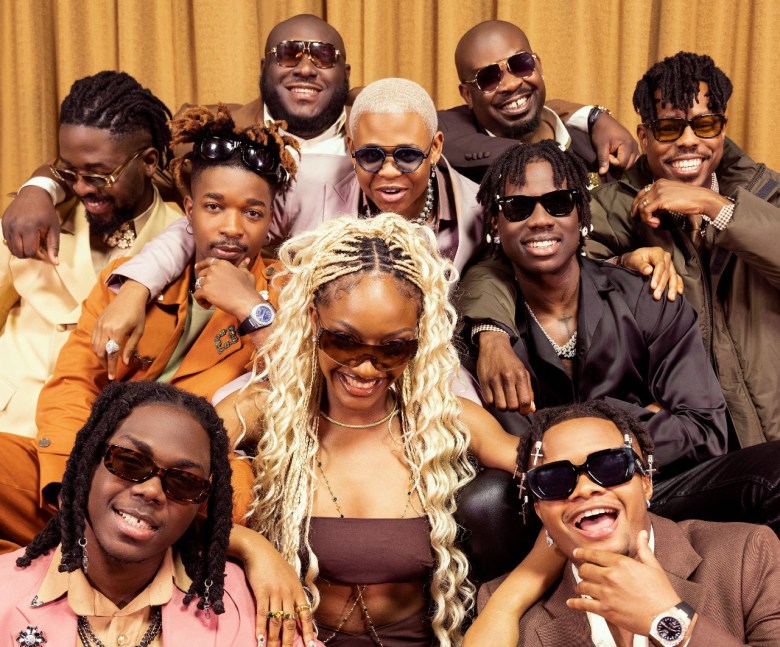
What changes for artists is the distribution muscle, global marketing budget, and catalogue valuation. What gets negotiated in this kind of restructure is master ownership going forward, royalty splits, and existing recoupment balances. Public reporting has not disclosed individual terms for Rema, Ayra Starr, Crayon or Magixx, so claims about their specific contracts would be guesswork. What is clear is that being a UMG artist through Mavin is a different commercial reality than being on an independent Lagos label.
Burna Boy, Wizkid, Davido: Three Independent Paths
Burna Boy’s Spaceship Entertainment operates as an independent label that distributes through major-label partnerships rather than signing into a traditional artist-label deal. Burna Boy has said publicly that he retains ownership of his recordings under that structure. The model gives the artist master ownership and a higher royalty rate while still accessing global distribution. The trade-off is that the artist funds their own recordings, videos and tours, taking financial risk a label would normally absorb. For a developing artist with no capital, it is not an option.
Wizkid signed a multi-album deal with RCA Records and Sony Music International in March 2017, and his albums since have been credited to Starboy Entertainment alongside the Sony labels rather than to the major alone. That structure gives Starboy the resources of a major while keeping more of the artist-side apparatus in his own company than a straight artist signing would. Davido’s DMW, founded in 2016, operates similarly: an independent label that uses major-label partners for distribution, giving Davido and his signed artists global infrastructure without giving up label-level control. The pattern across all three is the same. The most successful Afrobeats artists have moved away from being signed acts and toward being label principals with major distribution behind them.
The Fully Independent Route
For artists who do not want a label deal at all, the modern stack makes it possible to put music on Spotify, Apple Music, Boomplay and Audiomack with just a distribution agreement.
Empire Distribution, AWAL, DistroKid, TuneCore and others offer distribution-only deals. The artist keeps anywhere from 80 to 90 percent of net revenue, with the distributor taking a fee or small percentage. The artist also pays for everything: recording, marketing, videos, PR and touring. YBNL Nation, founded by Olamide in 2012, has worked with Empire on distribution arrangements that give the label global reach without selling itself to a major. Chocolate City, founded in 2005, signed a worldwide distribution deal with Warner Music Group in March 2019, serviced through Warner’s ADA independent-label division, with Warner also taking an investment position in the company. That is a distribution and investment arrangement, not an acquisition: the Nigerian label kept its own A&R and operations.
Producer Points and Songwriter Splits
Producers do not just take a flat fee for a beat. On a major-label deal, the producer typically gets 3 to 5 producer points, which are 3 to 5 percent of the artist’s royalty share, paid out of the artist’s pocket after recoupment. If the artist’s royalty rate is 15 percent and the producer has 4 points, the artist effectively keeps 11 percent on that track.
Songwriters get paid through publishing. On a song with multiple writers, the publishing split is divided based on contribution. A topline writer who brought the hook might take 25 to 50 percent of the publishing. A co-writer who polished verses might take 10 to 20 percent. These splits should be agreed in writing before release, though many Afrobeats songs have had post-release publishing disputes because the splits were never documented properly. The ghostwriting and co-writing economy, where one writer is responsible for hooks across several major artists’ records, depends entirely on those splits being documented and paid out cleanly.
The First 90 Days and the Dropped Artists
When a label signs a new artist, the first 90 days after the debut single usually decide whether the artist gets the full promotional machine or quietly gets shelved. If the song catches, marketing budgets unlock, radio campaigns scale up, sync placements get pitched, and the artist becomes a priority. If the song does not catch, the label still owns the contract but stops spending. The artist is technically signed but functionally invisible.
A multi-album deal can keep an artist tied to a label that no longer believes in them, unable to release music freely, watching their window close in real time. Older Nigerian contracts, particularly those signed in the late 2000s and early 2010s, often had no master reversion, no audit rights, no key-person clauses, and album commitments the label could extend at will. Several Afrobeats artists from that era have spoken publicly about losing their catalogues and being stuck with unrecouped balances that follow them across label changes.
The New Generation’s Leverage
TikTok virality has changed the power dynamic. An unsigned artist with a song that explodes on social media can negotiate from a position of strength that did not exist ten years ago. Direct fan revenue through Patreon, Twitch and Bandcamp gives artists income streams that bypass labels entirely.
Distribution and marketing deals, often called M&D deals, sit in the middle. The artist keeps masters and ownership, the partner funds marketing and a global rollout, and splits are negotiated case by case. This is increasingly the model for established acts who do not want a traditional label deal but also do not want to fund their own global campaign.
What Artists Should Actually Look For
If a deal is on the table, the four clauses that matter most are master reversion, key-person, audit rights and marketing commitment. Master reversion sets a timeline for when ownership of the recordings returns to the artist. Without it, the label owns the catalogue effectively forever. A key-person clause ties the deal to a specific executive at the label, usually the A&R who signed the artist. If that person leaves, the artist can renegotiate or exit. Without it, an artist can find themselves signed to a label run by people who have no relationship to them.
Audit rights let the artist or their accountant inspect the label’s books to verify royalty statements. Without them, the artist takes the label’s word for the math. A marketing commitment puts a minimum spend in writing, so the artist is not just signed and shelved.
These four clauses do not guarantee a fair deal, but their absence almost guarantees an unfair one. The Afrobeats business is bigger, more global, and more lucrative than it has ever been. The fundamentals have not changed. The label fronts the money, the artist pays it back through royalties, and whoever owns the masters owns the long-term value. That is the difference between an artist who builds a career and an artist who has a moment.
Ad SpaceIn-Article - 300x250
Advertisement
Share
Get the recap
Loved this story? Get more like it.
Join readers who get our weekly entertainment recap - the stories worth your time, delivered every Friday.
No spam. Unsubscribe anytime. By signing up you agree to our Privacy Policy.