
The contemporary African literary canon reaches African readers in a strange double exposure. Chimamanda Ngozi Adichie’s Purple Hibiscus is sold in Lagos in the Farafina paperback, but the book had already lived a full life under the Algonquin imprint in North Carolina before Muhtar Bakare’s Lagos house ever set type. Half of a Yellow Sun came home wearing a Fourth Estate jacket first. Teju Cole’s Open City reached Nigerian readers after American reviewers had decided what the book meant. Imbolo Mbue, Yaa Gyasi, Tomi Adeyemi, Akwaeke Emezi: much of the contemporary roster broke through in London or New York before an African publisher could put the work in front of an African reader. The pattern is not a quirk. It is the architecture of how African literature travels into the world, and it is worth understanding mechanically rather than resenting vaguely.
The Pattern Is Older Than the Boom
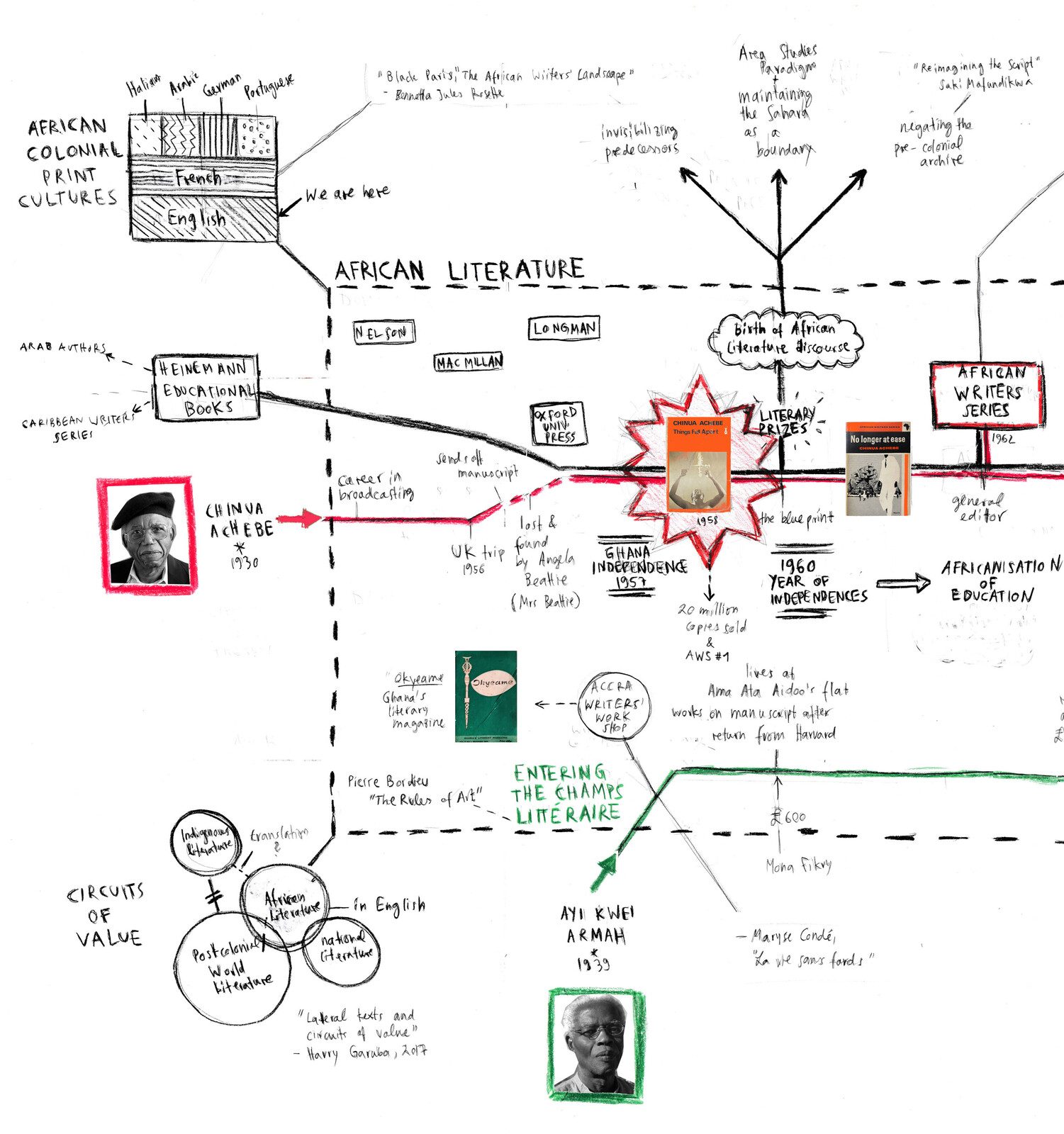
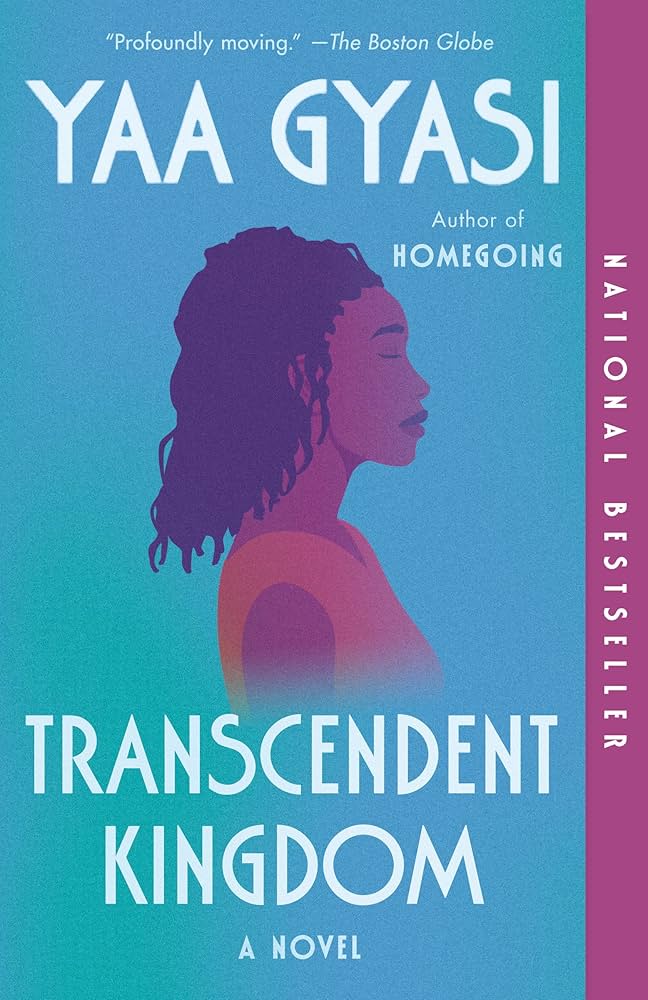
The current generation likes to date the shift to Purple Hibiscus in 2003, but the route through London existed long before it. Chinua Achebe published Things Fall Apart with Heinemann in 1958, and the African Writers Series that followed, carrying Ngugi wa Thiong’o, Ayi Kwei Armah and Buchi Emecheta, was a London editorial project with London editors deciding what belonged in it. What changed in the 2000s was the velocity. By the time NoViolet Bulawayo’s We Need New Names appeared from Reagan Arthur Books in 2013, the assumption was settled: a serious African manuscript belonged in a Western catalogue first. Mbue with Behold the Dreamers at Random House, Gyasi with Homegoing at Knopf, Adeyemi with Children of Blood and Bone at Henry Holt. The path was the path.
It has never been the only path, and the exceptions are instructive. Helon Habila self-published his first collection, Prison Stories, in Lagos in 2000 through the small local imprint Epik Books. The title story won him the Caine Prize in 2001, and only then did the material reach London, reworked into Waiting for an Angel for Hamish Hamilton. The sequence ran Lagos, then prize, then London, which is exactly the reverse of the standard route and demonstrates that the standard route is a function of infrastructure rather than of talent. Mbue, for her part, grew up in Limbe in Cameroon, not in Nigeria, and the publishing scene she left behind as a young woman could not have absorbed a debut on the scale she was writing toward. The question is not whether writers chose London. The question is what made London the nearest available door.
Agents, Or the Absence of Them
The first answer lives in Manhattan and Bloomsbury. The Wylie Agency, which Andrew Wylie built into one of the most consequential literary operations in the business, represents Adichie along with a roster of major international names and literary estates. The other large London agencies, Aitken Alexander, Curtis Brown, RCW, PFD, hold most of the rest. The agent layer deciding which African manuscripts reach a Western editor’s desk is overwhelmingly a London-and-New-York phenomenon.
Lagos has no equivalent. A few individual figures work the territory, including the Cape Town-based Lennon-Ritchie Agency, which represents African writers from the continent itself. But there is no Nigerian Wylie. A debut novelist in Ibadan who finishes a manuscript on Tuesday has no functioning local infrastructure to query on Wednesday. She queries London because there is nowhere closer to query.
This matters because the major Western commercial imprints have not accepted unagented submissions for decades. The gatekeeping happens before the editor. An aspiring African writer is not negotiating with London publishers. She is negotiating with the question of whether anyone in London will open her email.
The Math of the Advance
Even when a writer finds her way to a Lagos publisher first, the economics tend to push the second book back across the Atlantic. The gap is not a matter of goodwill. A London or New York advance is set against a projected print run and a distribution network spanning multiple national markets, while a Nigerian advance is set against a domestic market whose volumes are a fraction of that and whose currency has moved sharply against the dollar and the pound in recent years. Published figures for either side are scarce and mostly unverifiable, so the honest way to state it is structural: the foreign deal buys the writer time to write the next book, and the domestic deal usually cannot.
Cassava Republic, among the most ambitious African publishers operating today, has been candid about the limit. Bibi Bakare-Yusuf, who co-founded the press with Jeremy Weate in 2006, has spoken publicly about the impossibility of competing on advances at scale while the domestic market does not generate the unit volumes that would fund them. That is the constraint that sends the second novel to London, and no amount of cultural commitment on a publisher’s part dissolves it.
Prizes Made in London
The third gravitational pull is the prize circuit. The Booker, the Women’s Prize for Fiction, the International Booker and the Caine Prize for African Writing, the awards that legitimise a contemporary African literary career, are juried in Britain. The Caine, launched in 2000, was conceived as a prize for African short fiction but has been administered from London and adjudicated largely by panels drawn from the British literary establishment. When Bernardine Evaristo won the Booker in 2019 for Girl, Woman, Other, in a decision the judges controversially split with Margaret Atwood, the news travelled back to Lagos through London channels.
The strange consequence is that an African writer’s standing inside Africa is often set by jurors who have never worked in Lagos. Adichie returned to Nigeria a national figure in part because the Orange Prize in 2007 had told Nigerians she was worth claiming. Habila’s standing at home was reinforced by the Caine in 2001. The validation loop runs outward to London and only then loops home, and writers who have not made the loop tend to remain invisible to the very readers their work is about.
Distribution, or Why a Penguin Paperback Goes Everywhere
A book published by one of the large London or New York houses enters a distribution system that moves paperbacks into dozens of national markets as a matter of routine. The same machinery that puts a bestseller into a Dublin airport puts it into a Dubai duty-free, a Singapore bookshop and a Mumbai chain store. African writers acquired by that machinery inherit that reach, along with the translation sales that follow it.
The same novel published by Cassava Republic or Farafina or Parrésia reaches Lagos, Ibadan, Port Harcourt, and Accra if a distributor on the other side takes the inventory. Intra-African shipping is the hidden tax here: freight, customs and documentation between African countries are expensive and slow enough that moving a modest quantity of books from Lagos to Johannesburg can cost more per copy than the trade margin will ever return. The continent is, in publishing terms, more fragmented than the world is, and that fragmentation is a logistics problem long before it is a cultural one.
Marketing Reach That Does Not Compare
Behind the distribution sits the publicity apparatus. A lead literary launch in London or New York comes with a publicist, a tour, advance reader copies sent months early, festival bookings and a review-coverage campaign aimed at a dozen outlets. A Nigerian publisher running a debut is typically doing all of that in-house, for an entire list, with a team that can be counted on one hand. The disparity is not primarily about money; it is about how many people are available to make calls.
This is why African novels acquired in London arrive in Lagos already famous. The London apparatus has done the work the Lagos apparatus does not have the headcount to do. A reader choosing between two Adichie titles in a Lagos bookshop is very often acting on a British or American review rather than a Nigerian one.
The Reverse-Licensing Model
What has emerged in response is a reverse-licensing arrangement that has quietly become standard. A Nigerian writer signs with a London or New York agent. The agent sells world or Commonwealth rights to a Western publisher. African rights are then sublicensed back to a local publisher, as Narrative Landscape did with Oyinkan Braithwaite’s My Sister, the Serial Killer and Ouida Books did with Ayobami Adebayo’s Stay With Me. Cassava Republic and Farafina have both built significant parts of their lists this way.