

Frank Lampard: From Chelsea Legend to Managerial Journey and Celebrity Status
Entertainment

Frank Lampard: From Chelsea Legend to Managerial Journey and Celebrity Status

Miki AndersonMiki Anderson··9 min read
Advertisement

The cruelest twist in a great footballer’s life is that the loudest applause arrives before the hardest work begins. A career built on talent, on instinct sharpened over twenty years, ends somewhere in a player’s mid-thirties, and what follows is a second life that almost nobody is trained for. The trophies do not transfer. The reputation, it turns out, can be a weight as much as a gift. For every legend who steps into management and thrives, several more discover that being brilliant at a thing is not the same as teaching it, organising it, or surviving the politics around it. Frank Lampard knows both sides of that line better than most, and in the spring of 2026, after years of being told his managerial story might never match his playing one, he finally rewrote the ending.

The Romford kid and the famous family
Frank Lampard - The Romford kid and the famous family

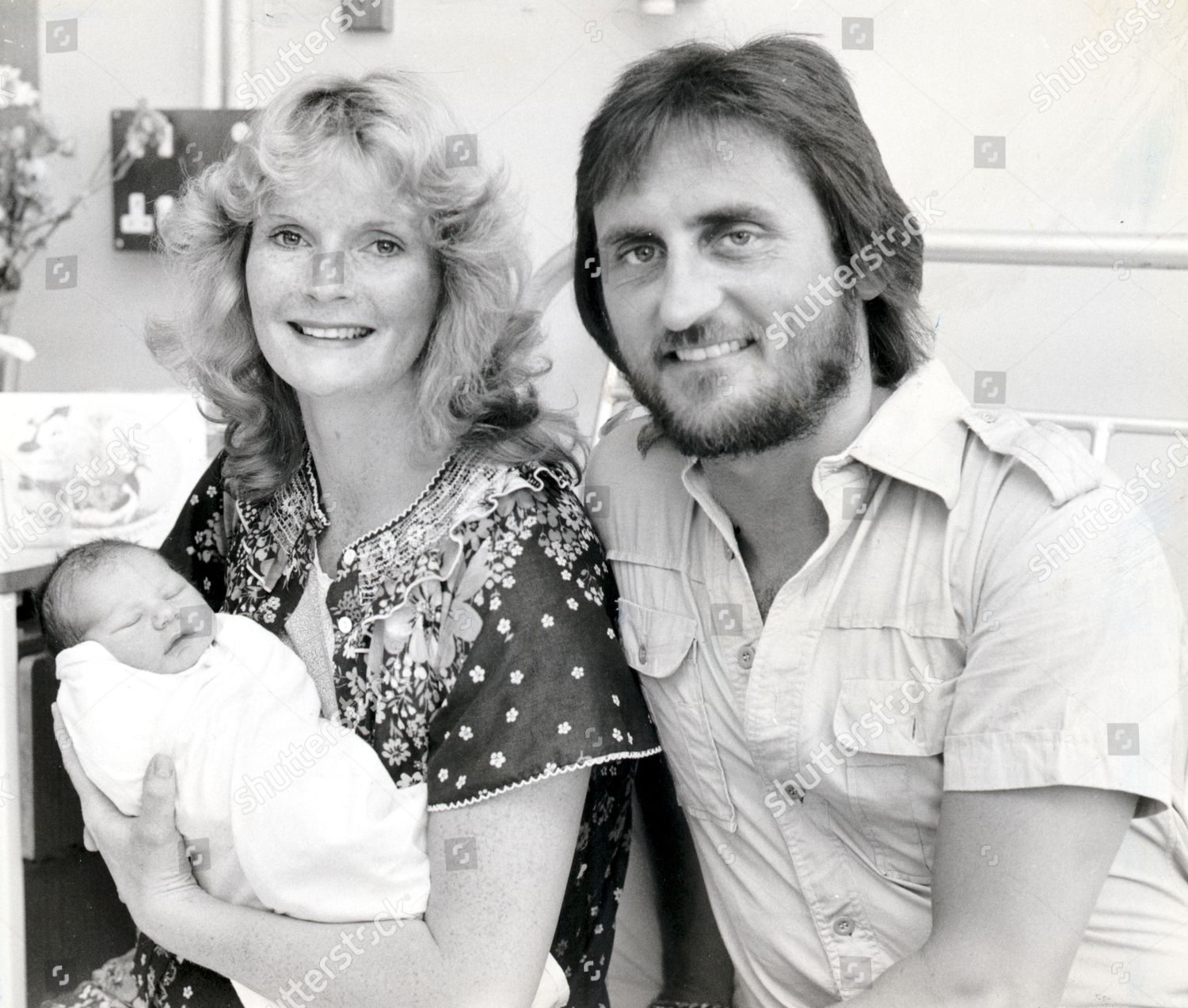
Frank James Lampard was born on June 20, 1978, in Romford, on the eastern edge of London, into a household where football was the family trade rather than a hobby. His father, Frank Lampard Sr., was a hard-running full-back who made hundreds of appearances for West Ham United and earned two England caps. That lineage gave the younger Lampard an early, unsentimental education in the professional game. He grew up around dressing rooms, around the discipline and the disappointment that the sport hands out in equal measure, and he absorbed the idea that ability alone was never going to be enough.

The family tree stretched further into the heart of English football. His uncle, by marriage, was Harry Redknapp, one of the most recognisable managers of the modern era, a man who built and rebuilt clubs across the south of England for decades. Redknapp’s son, Jamie, was Lampard’s cousin, a stylish midfielder for Liverpool and England who later became one of the country’s most familiar television pundits. Growing up inside that web meant Lampard was never short of examples of what a life in football could look like, both on the pitch and in the broadcast studio he would eventually occupy himself.

West Ham and the move that defined him
Frank Lampard - West Ham and the move that defined him

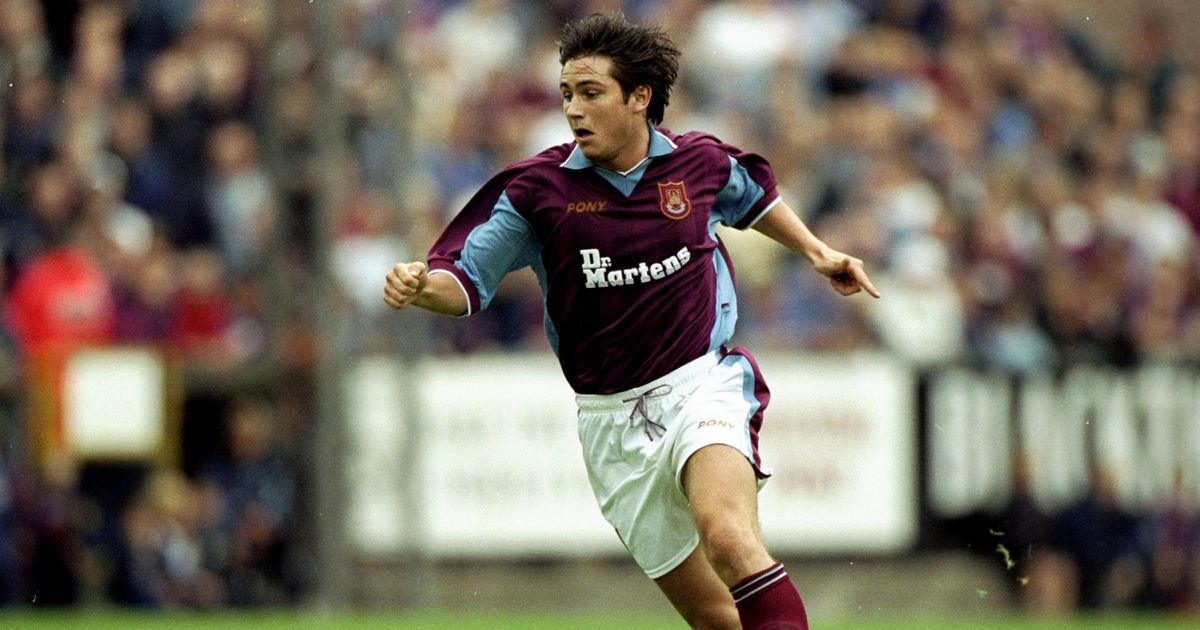
Lampard’s professional path began at West Ham United, the club his father had served and where Redknapp was manager during his early years. Breaking through at a club where your surname already carries weight is its own particular pressure, and there were sections of the support who assumed the young midfielder was being favoured rather than earning his place. He answered the doubt the only way that ever silences it, by playing well and by training harder than nearly anyone around him. That reputation for relentless work, for being the last man off the practice pitch, would follow him throughout his career.

In 2001, Chelsea paid roughly eleven million pounds to bring him across London, a substantial fee at the time for a player still establishing himself. For a section of West Ham supporters it felt like a betrayal. With the benefit of hindsight, it became the move that defined two clubs and one of the great careers of the Premier League era. Lampard arrived at Stamford Bridge as a promising young midfielder and left, thirteen years later, as the most prolific goalscorer in the club’s entire history.

The Chelsea years and the records
Frank Lampard - The Chelsea years and the records

What Lampard built at Chelsea is the foundation of everything that came after, the reason his name still carries across continents to readers who never saw him play live. Between 2001 and 2014, he scored 211 goals for the club in all competitions, an astonishing total for a midfielder and a Chelsea record that has stood since. He did it not through one or two purple patches but through a decade of relentless arrivals into the penalty area, late runs timed to perfection, and penalties dispatched with a calm that bordered on cold.

The medals followed the goals. According to club and league records, Lampard won three Premier League titles with Chelsea, in 2005, 2006 and 2010, the first two arriving under Jose Mourinho during a period when Chelsea became the dominant force in English football. He added four FA Cups, won in 2007, 2009, 2010 and 2012, along with domestic League Cups. The crowning nights, though, came in Europe. In 2012 he captained Chelsea to the UEFA Champions League, the trophy the club had chased for years, lifted in Munich after a penalty shootout against Bayern. A year later he helped them win the UEFA Europa League, a sequence that made Chelsea the only club to hold Europe’s top two trophies in reverse order. For a player so often defined by his consistency, it was a body of work that bordered on the relentless.

England and the Lampard-Gerrard debate
Frank Lampard - England and the Lampard-Gerrard debate

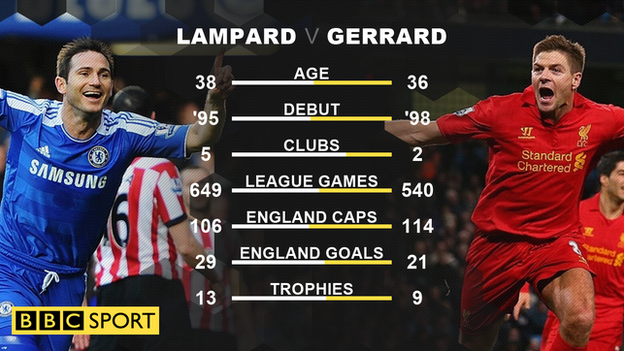
For all that he won at club level, Lampard’s England career sat at the centre of one of the longest-running arguments in English football. He earned 106 caps for the national team, scoring 29 goals from midfield, a haul that places him among the most decorated England players of his generation. He played at major tournaments, carried real responsibility, and was for years one of the first names on the team sheet.

And yet the conversation always circled back to the same question. Lampard and Steven Gerrard, Liverpool’s captain and another goalscoring central midfielder, were the two finest English players in their positions at the same moment in history, and for a decade managers struggled to fit both into one functioning team. The debate over which was better, and whether the pair could ever truly play together for the national side, became a defining frustration of the so-called Golden Generation. England never quite found the answer, and a tournament breakthrough never came. For neutral observers it remains one of football’s great what-ifs, two exceptional players whose rivalry may have cost the team the very thing their talent promised.

The punditry and the celebrity life with Christine

Frank Lampard - The punditry and the celebrity life with Christine

When the playing wound down, Lampard followed the well-trodden path of the modern former great into the television studio. His later playing years took him beyond England, first to Manchester City for the 2014-15 season and then across the Atlantic to New York City FC, where he played through 2016 in Major League Soccer. By the time he hung up his boots, he had already begun the move into punditry and broadcasting, where his measured analysis and obvious intelligence made him a natural fit.

Advertisement

Off the pitch, his profile was amplified by his marriage to Christine Lampard, born Christine Bleakley, a Northern Irish television presenter widely known to British audiences for her work on daytime and magazine programmes. The couple married in December 2015 at a church in Knightsbridge, London, and became one of the more recognisable pairings in British public life, a footballer and a broadcaster whose combined fame extended well beyond sport. That visibility, the studio appearances, the family profile, the steady presence in British media, meant Lampard never really left the public eye even in the years when he was between jobs. It is part of why he remains a household name far past the final whistle of his playing days.

Into the dugout: Derby, Chelsea, Everton

Frank Lampard - Into the dugout: Derby, Chelsea, Everton

The move into management began in 2018 at Derby County in the Championship, English football’s second tier. It was a bold first appointment, and Lampard repaid the faith by guiding Derby to the playoff final in his single season in charge, falling just short of promotion. The work was promising enough that Chelsea, his old club, came calling in 2019.

His first spell at Stamford Bridge as manager was shaped by unusual circumstances. Operating under a transfer ban that prevented Chelsea from signing players, Lampard leaned on the club’s young academy graduates, giving real opportunities to a generation of homegrown talent and securing a top-four finish. He was dismissed in early 2021 with the team’s form having dipped, a reminder that even a legend’s standing offers little protection at a club of Chelsea’s expectations. He took over at Everton in 2022, steering the club through a relegation fight, before parting ways in 2023. Later that year he returned to Chelsea briefly as a caretaker manager during a difficult period, a short and largely unhappy stint that ended with a string of defeats. By the close of 2023, the narrative around Lampard the manager had hardened into something unflattering. The talent was never doubted, but the results had not matched the reputation, and for a stretch he was out of work, his coaching future genuinely uncertain.

The Coventry chapter

The turn came in the most unglamorous setting imaginable. On November 28, 2024, Coventry City, a club outside the Premier League for more than two decades and sitting in the lower half of the Championship, appointed Lampard as head coach. It was not the marquee return many had expected for a man of his stature. It was, in the end, exactly the right job.

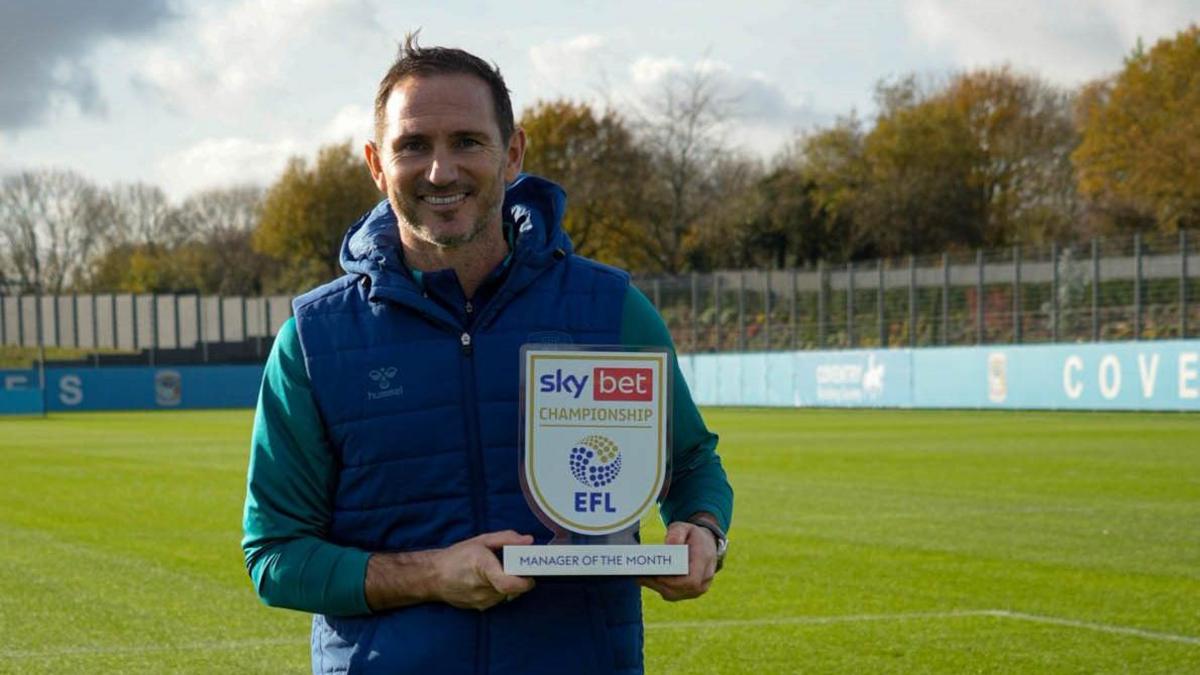
In his first half-season he lifted Coventry into the playoff places, only to lose in the semi-finals to Sunderland, a near miss that might once have read as another chapter of frustration. Instead it was the prelude. The 2025-26 campaign became the defining season of his managerial life. According to the English Football League and multiple match reports, Coventry sat top of the Championship for long stretches, scored more goals than any other side in the division, and turned promotion from a hope into a procession. Lampard collected Championship Manager of the Month awards during a run of dominant autumn form.

Promotion was confirmed on April 17, 2026, with a 1-1 draw away at Blackburn Rovers, ending Coventry’s 25-year absence from the top flight. Days later the club sealed the Championship title outright, finishing the season as champions on 95 points with a goal difference of plus 52, having scored 97 times across 46 league matches, per league records. In April 2026 the EFL named Lampard its Championship Manager of the Season. For a manager who had spent the previous two years being written off, it was vindication delivered in the most emphatic terms available.

What kind of manager he is becoming

The Coventry story matters beyond the bare fact of promotion because of what it suggests about the man behind it. The early version of Lampard the manager was handed enormous jobs, Chelsea twice, on the strength of his name and his obvious football intelligence. The reinvention came when he accepted a club that asked nothing of his fame and everything of his coaching, and then built something there over eighteen patient months rather than chasing a quick result.

What he appears to be becoming is a manager defined by structure and by attacking football, a coach who took a side that had drifted for a generation and made it the most prolific team in its division. Coventry’s promotion also reframed an old comparison. Among England’s Golden Generation, the players who moved into management have had wildly different fortunes, and for a long while Lampard’s record sat in the awkward middle. Winning a Championship title and a manager of the season award pushed him to the front of that particular field, ahead of contemporaries who arrived in the dugout with similar fanfare.

The harder test now waits. The Premier League is a different and more punishing world than the Championship, and keeping a newly promoted Coventry in it will demand everything he learned across his stops at Derby, Chelsea and Everton. Whether he succeeds there is a question that belongs to the seasons ahead. What is settled is the shape of the journey so far: a Romford kid from a football family who became Chelsea’s greatest goalscorer, an England midfielder caught in his era’s biggest debate, a familiar face in British living rooms, and finally a manager who answered every doubt by building a champion from a club that had forgotten how to win. The applause that once came easily, before the hard part, has been earned all over again.

Advertisement
Share
Get the recap

Loved this story? Get more like it.

Join readers who get our weekly entertainment recap - the stories worth your time, delivered every Friday.

No spam. Unsubscribe anytime. By signing up you agree to our Privacy Policy.

Frank Lampard: From Chelsea Lege... | Sidomex Entertainment