The Cultural Meaning of Ankara and Kente in Afrobeats Music Videos
Miki Anderson··10 min read
Ad SpaceArticle Top - 728x90
Advertisement
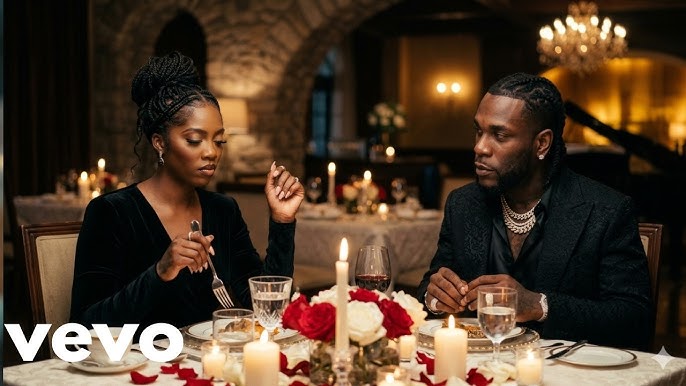
Watch any major Afrobeats music video released after 2018, and somewhere between the dance sequences and the drone shots, a length of brightly patterned fabric will appear. It might drape across Burna Boy’s shoulders as an agbada, wrap around Tiwa Savage’s waist at a traditional ceremony, or flash across the screen as a backdrop while Asake croons over log drums. These textiles are not styling accidents. Ankara and Kente have become two of the most loaded visual signifiers in contemporary African pop, carrying centuries of meaning into three-minute video edits.
The fabrics communicate something words cannot. When a Nigerian artist appears in head-to-toe Ankara at the Grammys, or when a Ghanaian-American rapper drapes Kente across a London stage, the cloth is doing political and spiritual work. It is asserting belonging, signaling royalty, performing pride, and sometimes, depending on who is watching, raising questions about authenticity and ownership.
Two Fabrics, Two Origin Stories
Understanding what these textiles mean on screen requires knowing what they mean off screen.
Ankara and the Vlisco Question
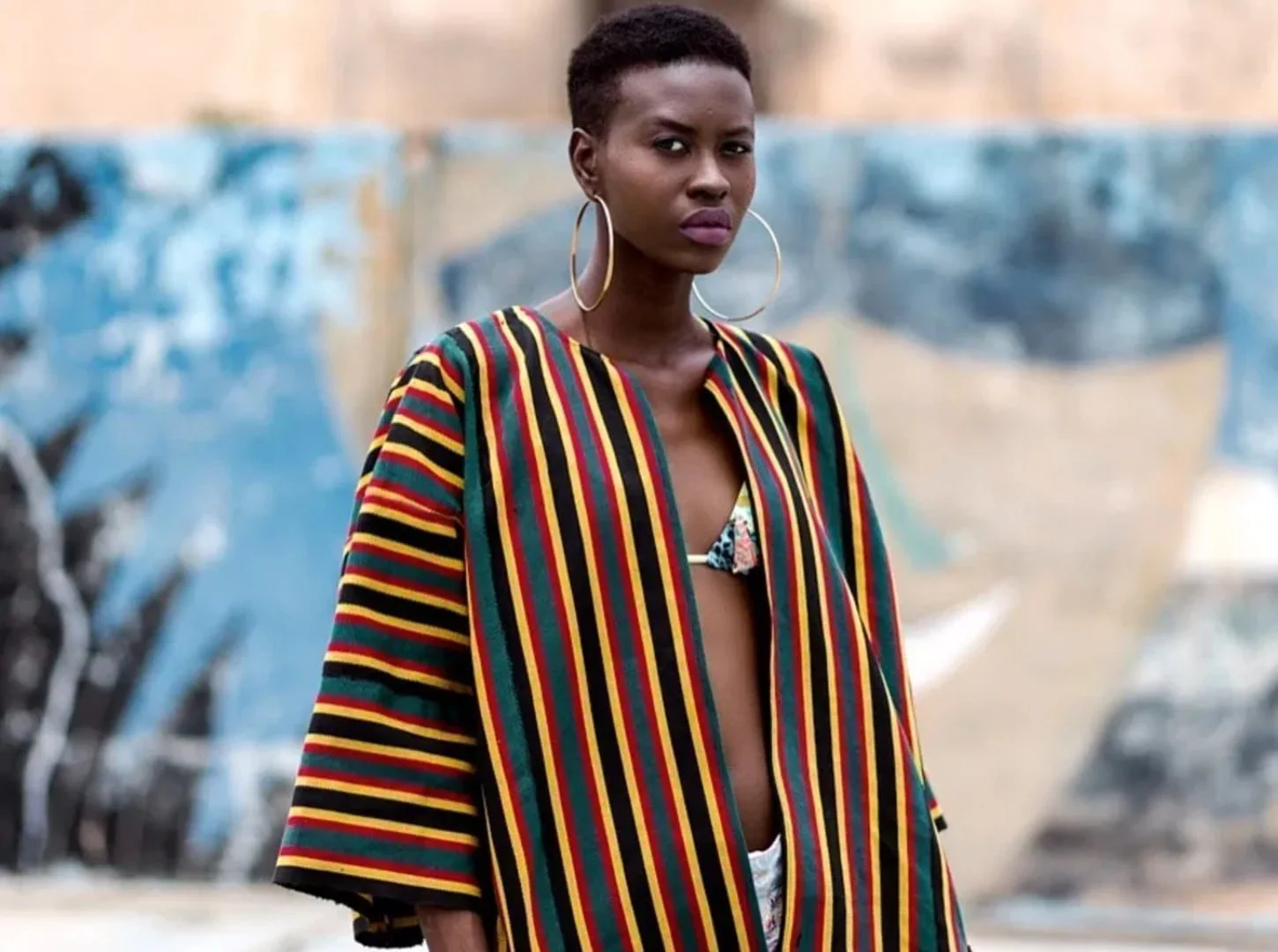
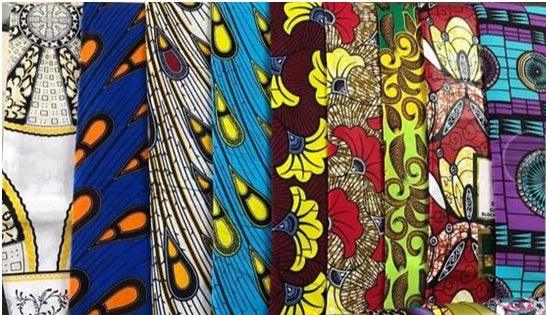
Ankara, the colourful wax print most commonly associated with Nigerian dress, has a complicated genealogy. The technique is rooted in Indonesian batik. The industrial production was perfected by Dutch manufacturer Vlisco in the 1840s. The cloth was originally intended for the Indonesian market but found its enduring home in West and Central Africa, where it was adopted, named, customised, and made culturally indispensable.
By the time Vlisco celebrated its 175th anniversary, Ankara had been thoroughly indigenised. Designs reference Yoruba proverbs, Igbo motifs, and Hausa colour traditions. Lagos tailors transform meters of cloth into peplum tops, gele headwraps, and structured agbada. The “Vlisco controversy” persists in academic circles and on Twitter, with critics asking whether a Dutch-manufactured cloth can truly be African. The lived answer from Lagos to Kinshasa is yes. A textile becomes yours through use, not through factory location.
This is the Ankara that shows up in music videos. Pattern-rich, saturated in fuchsia and cobalt and ochre, it reads instantly as “Naija” to anyone who has spent time in a Nigerian living room or attended an owambe.
Kente and the Ashanti Kingdom
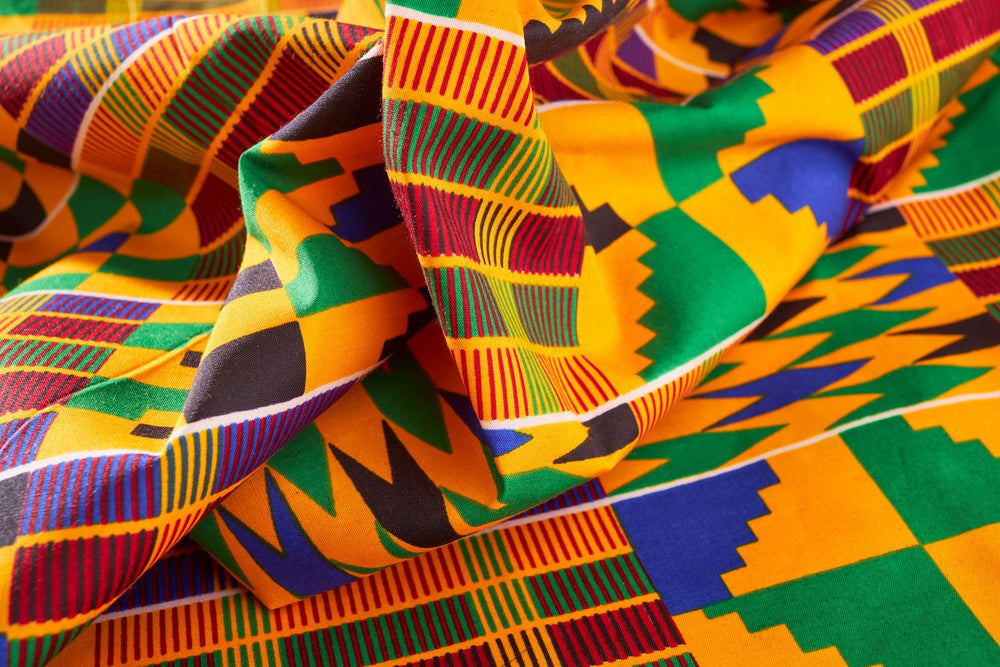
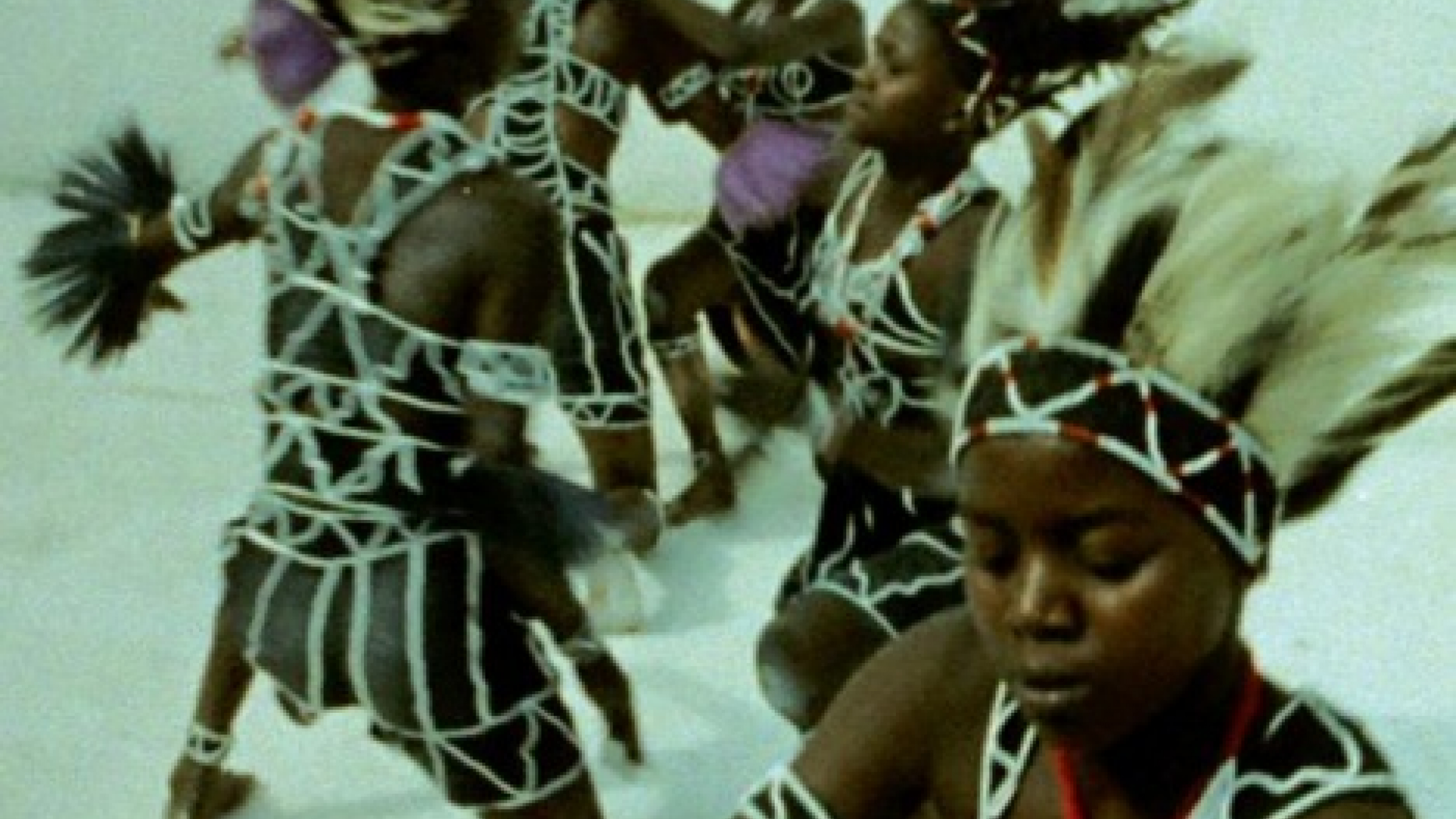
Kente has a different lineage entirely. It is a handwoven cloth produced by the Asante and Ewe peoples of present-day Ghana and Togo, with documented origins going back at least to the 17th century. Traditional Kente is woven on narrow strip looms and then sewn together, with each colour and geometric pattern carrying named symbolic meaning. Gold represents royalty and wealth. Green represents growth and renewal. Black represents spiritual maturity.
Most critically, Kente was historically restricted. It was the cloth of the Ashanti kings, the Asantehene’s court, and ceremonial occasions. Wearing it casually was a transgression. The cloth was sacred, political, and reserved. Modern Ghanaian society has loosened those restrictions, but the residue of that exclusivity remains. When Kente appears, it brings royalty with it.
That residue travels with the cloth. When Beyoncé layers Kente strips into the visuals for “Spirit,” she is not reaching for a pretty pattern. The cloth is not neutral. It is enthronement fabric, and it carries a court with it wherever it lands.
The Music Video as Pan-African Stage
Afrobeats videos are not just promotional material. They are some of the most widely distributed images of contemporary African life, watched hundreds of millions of times across continents. Stylists know this. Directors know this. The fabric choices are deliberate.
Burna Boy and the Agbada Moment
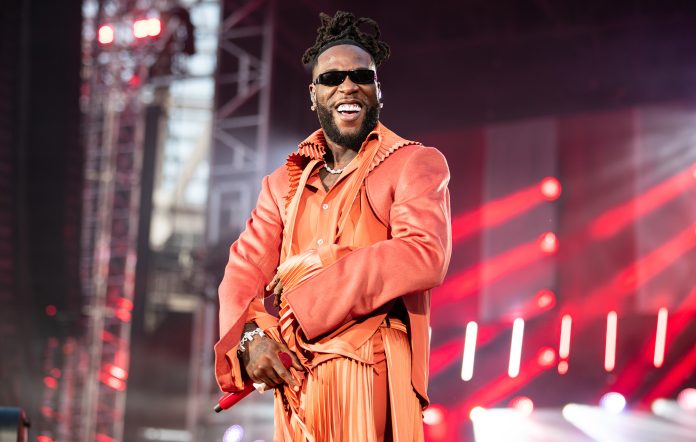
Burna Boy has built much of his visual identity around the idea of African royalty reclaimed. The “Anybody” video features Ankara prominently across his ensemble and the dancers around him, framing the song’s celebration of indifference toward critics as a kind of cultural sovereignty. The agbada, the flowing wide-sleeved robe worn over trousers, appears repeatedly across his catalogue.
The “agbada moment” has become a Twitter shorthand for any music video sequence where an artist appears in full traditional regalia, often shot in slow motion against a sunset or a rural Nigerian backdrop. It signals arrival, ancestry, and the kind of confidence that does not need translation. Davido leaned into this aesthetic across the “If” era, when his styling pivoted toward Ankara-rich, gold-accented looks that read as both celebration and assertion.
When Burna Boy’s mother Bose Ogulu, who also manages him, appeared at the Grammys in regal Ankara, the moment trended globally. She was not performing Africanness for an American audience. She was dressing the way a Nigerian matriarch dresses for a major occasion, and the world simply happened to be watching.
Wizkid and the Quiet Ankara
Wizkid’s visual approach is more restrained, but Ankara still appears throughout the “Made in Lagos” album visuals. The fabric tends to show up in supporting roles, on dancers, on background characters at compound parties, on aunties at the gele table. The styling reads as ambient rather than declarative. This is what life looks like, not what we are doing for the camera. That choice is itself meaningful. By treating Ankara as the natural texture of the world rather than a costume, Wizkid frames Lagos as a place where this cloth simply is, no commentary required.
Asake and the Spiritual Drape
Asake’s “Mr Money With The Vibe” era introduced a different register. Traditional fabrics appear alongside Fuji-inflected production and choreography that nods to Yoruba spiritual traditions. The Ankara is loosened, draped, sometimes layered with white garments that suggest celestial church aesthetics. The cloth becomes part of a broader argument the music is making about Lagos street life as continuous with deep spiritual histories. Adekunle Gold’s “Sade” video uses Ankara to similar effect, situating a love story inside an unmistakably Yoruba visual world. The fabric is shorthand for “this happens here, in our language, on our terms.”
The Royal Body and the Kente Drape
Kente travels differently. Because of its historical restriction to royalty, it rarely appears as casual streetwear in videos. When it shows up, it shows up as crown.
Beyoncé, Jidenna, and the Diaspora
Beyoncé’s “Spirit” video and the broader “Black Is King” visual album made Kente central to a particular vision of African royalty refracted through the Black American gaze. The cloth was used in regal compositions, layered with gold and beadwork, draped on bodies positioned as queens and ancestors. For many viewers, this was the first time Kente entered their visual vocabulary at scale.
Jidenna has built much of his aesthetic around Kente-rich tailoring, often working with Ghanaian designers to produce three-piece suits in handwoven strips. His public looks function as ongoing argument for African dandyism, the idea that elegance and Africa are not strangers.
Stormzy’s “Crown” places a young Black British man inside a coronation frame, reaching toward an inheritance that crosses the Atlantic. When African cloth turns up in that register, it works as bridge rather than costume, a way of claiming a lineage no passport records.
Ad SpaceIn-Article - 300x250
Advertisement
The Graduation Stole
In the United States, Kente cloth has become standard regalia at Black graduations, draped across academic robes as a stole. The practice began in earnest in the 1990s and has become institutionalised at HBCUs and increasingly at predominantly white institutions. The stole signals achievement, ancestry, and a refusal to walk across the stage looking exactly like everyone else. That tradition feeds back into how Kente reads in music videos. When a diaspora artist wears Kente, they are also wearing graduation day, ancestor day, the cloth your auntie pinned on your gown.
Tems and the Strategic Absence
Not every choice about African fabric involves wearing it. Tems has built a distinct visual identity around tailored Western silhouettes, oversized blazers, leather, sharp suits. The intentional non-Ankara of her presentation is itself a statement. It pushes back against the expectation that female African artists must perform their Africanness through traditional dress. Her styling argues that an Afrobeats artist can read as fully African while wearing none of the visual cues a Western audience might expect. The music does the cultural work. The clothes are free to do something else.
That contrast actually sharpens what Ankara and Kente are doing elsewhere. When Tiwa Savage appears in head-to-toe aso ebi for a traditional wedding video, the choice reads as celebratory immersion in a particular ritual. When Tems wears a black suit, the choice reads as refusal of a particular costume. Both are valid. Both are Afrobeats.
Aso Ebi, Owambe, and the Celebration Aesthetic
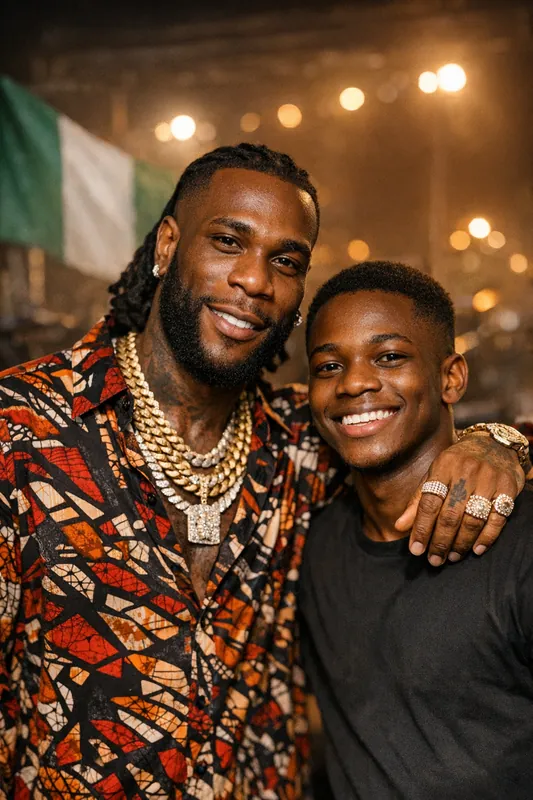
Aso ebi is the practice of family members and friends wearing matching or coordinated outfits to a wedding, naming ceremony, or funeral. In Nigerian culture, the choice of aso ebi cloth is itself a meaningful decision, often debated in WhatsApp groups for weeks before the event. The owambe, the lavish party that follows, becomes a parade of coordinated Ankara.
Music videos featuring traditional ceremonies, of which there are many in Afrobeats, draw heavily on this visual vocabulary. The shot of dozens of guests in matching cloth, swaying in unison, is a visual reference any Nigerian viewer reads instantly. It signals abundance, community, and the kind of celebration that requires planning and pooled resources.
Tiwa Savage’s content around her own traditional wedding ceremonies, and the visual work in songs like “Somebody’s Son,” lean into this aesthetic. The Ankara here means “we belong to each other, and today we are showing it.”
The Wakanda Wave and the Met Gala Moment
The 2018 release of “Black Panther” recalibrated global appetite for African textile imagery. The film’s costume design drew on Maasai, Tuareg, Zulu, Suri, and other source cultures, but in the popular imagination it created a wave of cultural pride that found expression in Ankara and Kente wearing across the diaspora. The 2022 sequel “Wakanda Forever” extended that wave.
That cultural moment fed directly into how music videos were styled in the years that followed. Directors and stylists who had previously been cautious about Ankara as “too costume-y” found permission to lean in. The fabric was suddenly legible to global audiences as cool, modern, and aspirational.
The 2024 Met Gala, themed “Sleeping Beauties: Reawakening Fashion,” put African design and African textile references across the carpet and the parties that orbit it, with Nigerian and Senegalese houses dressing guests who would once have defaulted to Paris. African cloth crossed a threshold in that cycle, entering the working vocabulary of global red carpet styling rather than surfacing once a year as a themed gesture.
When the Cloth Becomes Costume
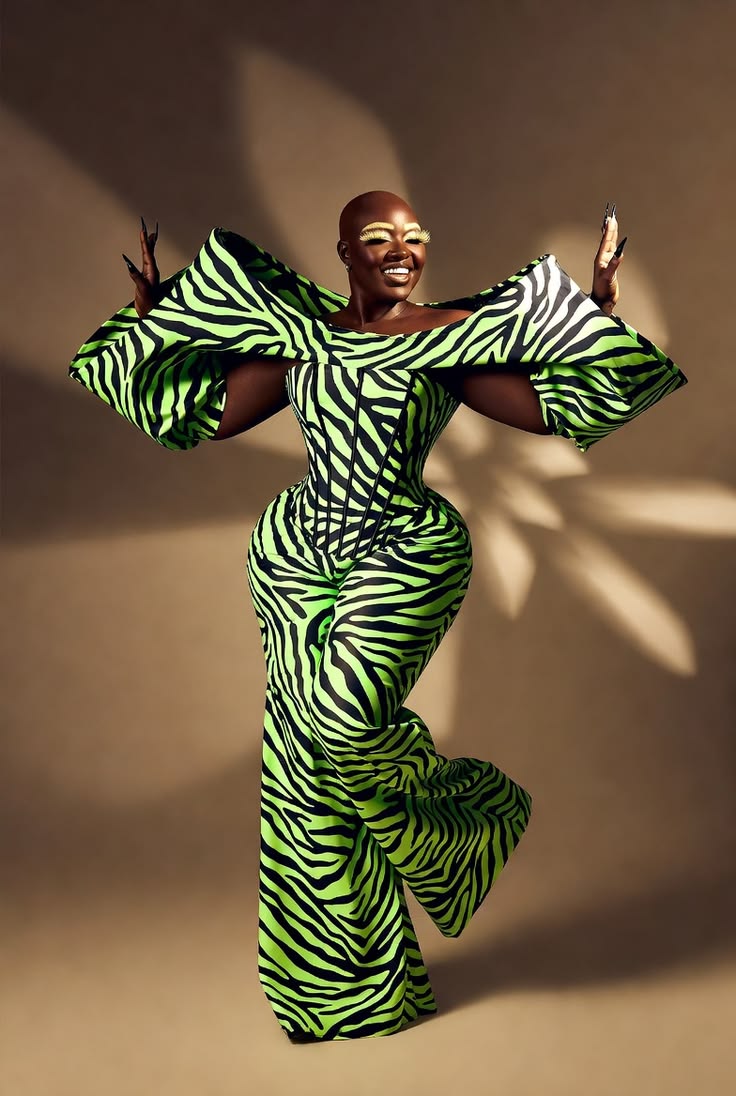
The risk is real. There is a thin line between Ankara as fashion and Ankara as “African costume,” where the fabric is reduced to a visual shorthand for exotic, primitive, or generically tropical. Western fashion’s history of borrowing “tropical prints” without credit, while West African designers struggle for shelf space, is a sore subject in African fashion criticism.
Music videos can fall into this trap when Ankara appears only on background dancers in scenes coded as “village,” while the star artist wears Western tailoring in scenes coded as “city” or “success.” The implicit hierarchy treats traditional cloth as backdrop and Western dress as aspiration. The most thoughtful Afrobeats videos refuse this hierarchy, placing Ankara at the centre of the success aesthetic itself.
Kente faces a related but distinct risk. When the cloth is used decoratively by people with no relationship to Ashanti culture, it can read as appropriation, especially given the fabric’s historical restriction. Ghanaian commentators have been vocal about Kente being draped across products and bodies that treat it as generic African pattern rather than specific royal textile.
Ghanaian Film, Nollywood, and the Fabric Divide
The two fabrics carry slightly different weight in their respective film industries. Ghanaian cinema treats Kente as ceremonial cloth, often reserved for chieftaincy scenes, funerals of important elders, and royal weddings. Wearing Kente in a Ghanaian film signals that the scene is consequential.
Nollywood treats Ankara as everyday dress, market fashion, and party wear. It appears in scenes ranging from petty quarrels in compound houses to society galas. The fabric is not reserved. It is woven into the texture of ordinary Nigerian life on screen. That difference travels into music videos. Ghanaian artists tend to deploy Kente with ceremony, as accent and emphasis. Nigerian artists tend to deploy Ankara as default, as the natural cloth of the world the video lives in.
Mr Eazi and the Pan-African Wardrobe
Mr Eazi, who has built his career around a deliberately Pan-African brand, mixes Ankara and Kente in his visual work alongside fabrics from Cote d’Ivoire, Cameroon, and beyond. His styling argues that the borders between West African dress traditions are porous, that an Accra-born artist can wear Lagos cloth and a Lagos-born artist can wear Accra cloth without anyone losing their identity.
That gesture matters because Afrobeats itself is increasingly a continental and diasporic project. Ghanaian, Nigerian, South African, British, and American artists collaborate across the genre constantly. The fabrics in their videos perform the same crossing. A Kente strip across a Naija outfit, an Ankara pocket square on a Ghanaian suit, the cloth tells the story the credits already imply.
The Cloth in the Frame
What both fabrics ultimately do in Afrobeats videos is refuse erasure. They place specific, named cultural traditions inside a global pop format that could easily have dressed its stars in nothing but Gucci and Balenciaga. The choice to wear Ankara and Kente is a choice to bring particular histories into the camera, particular weavers and tailors and grandmothers and chiefs.
Burna Boy’s mother in Ankara at the Grammys, her gele perfectly tied, posing next to her son as he held the trophy. Beyoncé in a Kente-inspired headpiece, framed by gold light, declaring herself part of a lineage she had only recently traced. Asake in a draped white garment with Ankara accents, performing in front of a crowd that knew every Yoruba phrase. Tems in a sharp black suit, refusing the expected costume, daring you to call her anything but African anyway.
The cloth keeps showing up because the cloth keeps meaning something. Three minutes is not very long. Patterned cotton and handwoven strips do more work in those minutes than any verse could.
Ad SpaceIn-Article - 300x250
Advertisement
Share
Get the recap
Loved this story? Get more like it.
Join readers who get our weekly entertainment recap - the stories worth your time, delivered every Friday.
No spam. Unsubscribe anytime. By signing up you agree to our Privacy Policy.