How African Stories Are Breaking Into Broadway: The New Generation of Black Theatre Makers
Movies

How African Stories Are Breaking Into Broadway: The New Generation of Black Theatre Makers

Arianne ColeArianne Cole··9 min read
Advertisement

Walk down West 45th Street on any given evening and the marquees tell a different story than they did a generation ago. Where the bright lights once advertised almost exclusively the work of white American and British writers, the names now lit up above the theatre doors increasingly belong to writers whose family lines run through Lagos, Accra, Harare and Monrovia. The shift is not loud, and it is far from complete, but it is real, and the people driving it are no longer asking permission to be there.

That change has been building for years, and it reached one of its clearest markers on June 7, 2026, when the 79th Tony Awards took over Radio City Music Hall. The ceremony itself crowned a feminist reading-group drama called “Liberation” as Best Play and the fizzy “Schmigadoon!” as Best Musical, with Arthur Miller’s “Death of a Salesman” revival sweeping six awards on the night. None of those headline winners told an African story directly. But the wider season around them, and the conversation that has surrounded the Tonys for the better part of a decade, kept circling back to a question that would have sounded strange to Broadway in the 1980s: whose stories get to stand on the biggest stage in American theatre, and who gets to tell them?

Broadway’s long, uneven relationship with African stories
How African Stories Are Breaking - Broadway's long, uneven relationship with African stories

For most of its history, Broadway treated the African continent as scenery rather than subject. When African settings appeared at all, they tended to arrive filtered through a Western lens, a backdrop for someone else’s adventure or a source of exotic spectacle. The voices of African writers themselves were rarely the ones being amplified.

The most important early exception came from Wole Soyinka, the Nigerian playwright, poet and essayist whose “Death and the King’s Horseman” remains one of the towering works of modern African drama. Written in 1975 and rooted in real events in the Yoruba city of Oyo in 1946, the play wrestles with colonialism, duty and the collision of Yoruba cosmology with British rule. Soyinka directed an American staging of it at Lincoln Center in 1987. A year earlier, in 1986, he had become the first African writer to win the Nobel Prize for Literature, with the Swedish Academy singling out the play for praise. It is worth stating plainly, because the honour is so often muddled: Soyinka holds the Nobel, not a Tony or a Booker. His achievement opened a door, but it did not, on its own, turn into a steady procession of African work through the commercial heart of Broadway. For years afterward, the door stayed mostly ajar rather than open.

Fela! and the breakthrough template
How African Stories Are Breaking - Fela! and the breakthrough template

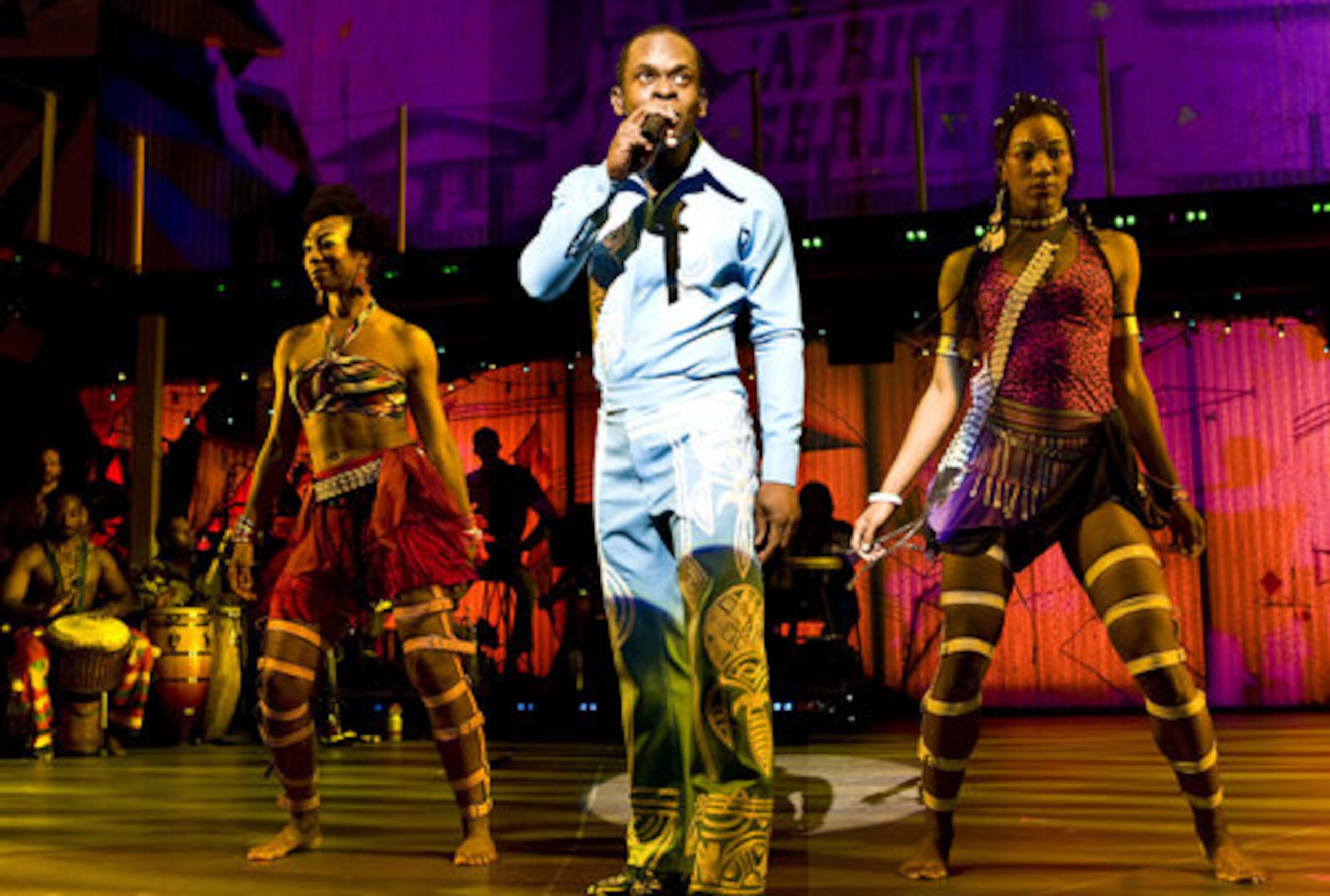
The production that genuinely cracked the mainstream did not arrive until 2009, and it did so by turning a Nigerian life into a full-throated Broadway spectacle. “Fela!”, which opened at the Eugene O’Neill Theatre in November 2009, built its book around the life and music of the Afrobeat pioneer Fela Kuti, with a book by choreographer Bill T. Jones and Jim Lewis set to Kuti’s own songs.

The numbers tell you how seriously the industry took it. “Fela!” earned eleven Tony Award nominations for the 2010 ceremony, an enormous haul for any show, and converted three of them into wins: Best Choreography, which went to Jones, plus Best Costume Design and Best Sound Design of a Musical. It did not win the top prize of Best Musical, and accuracy matters here, but the show proved something the industry had been slow to grasp. A story built entirely around a Nigerian artist, his politics, his Kalakuta Republic and his music, could fill a Broadway house and command the respect of the Tony voters. The template “Fela!” established was potent: take an African subject of genuine cultural weight, refuse to dilute it for a Western audience, and let the staging carry the energy of the source. Producers who had assumed such a show was too niche were handed evidence to the contrary.

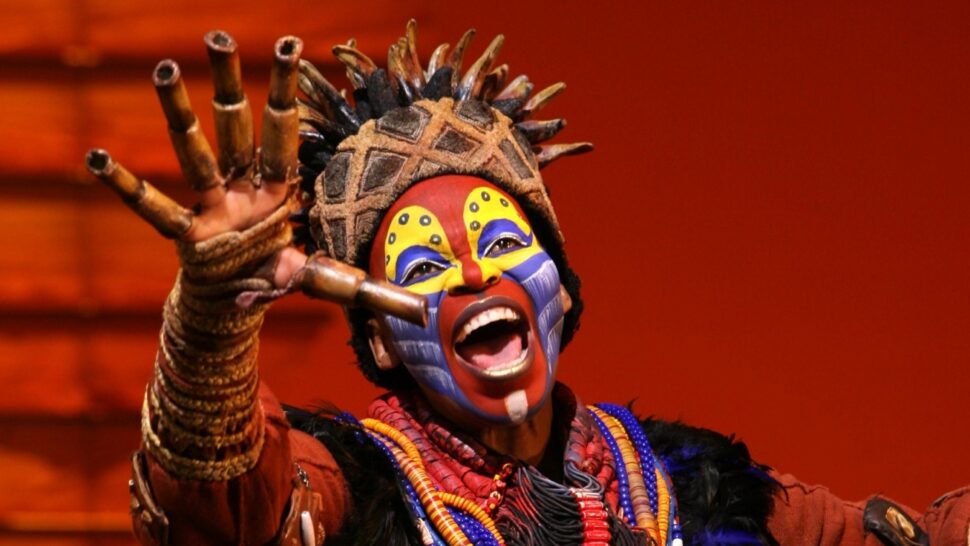
Around the same commercial ecosystem, Disney’s “The Lion King” had already demonstrated the box-office power of African-inspired imagery on a colossal scale. Directed by Julie Taymor, it opened in late 1997 and won six Tony Awards in 1998, including Best Musical, with Taymor becoming the first woman to win Best Direction of a Musical. Its puppetry and design drew openly on African and Asian visual traditions, and it has since become one of the longest-running shows in Broadway history. The distinction is important, though. “The Lion King” is an African-inflected fable created largely by non-African artists, while “Fela!” was the life of a real Nigerian icon. Both mattered. They simply mattered in different ways.

The new wave: Eclipsed, and Jaja’s African Hair Braiding
How African Stories Are Breaking - The new wave: Eclipsed, and Jaja's African Hair Braiding

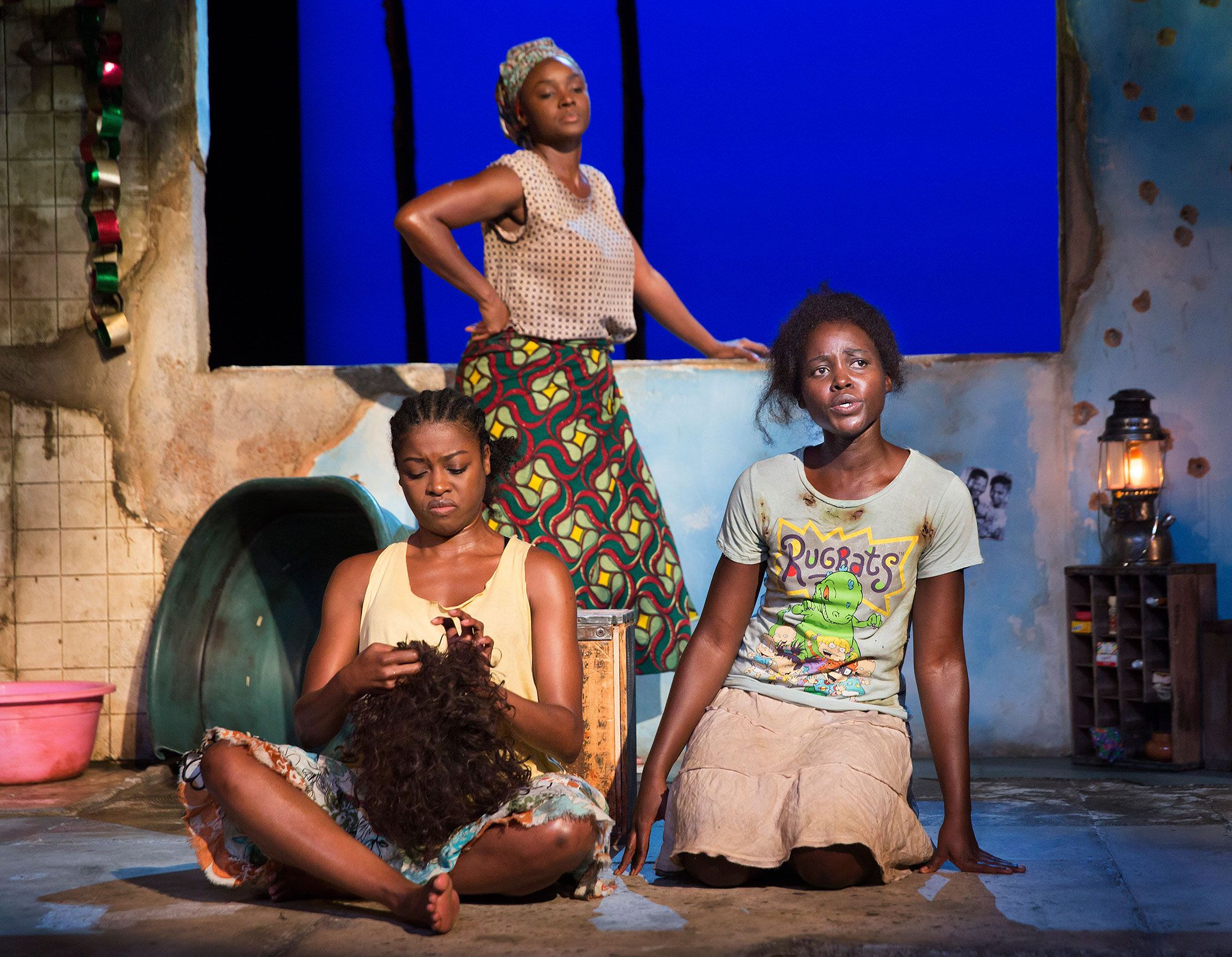
If “Fela!” was the proof of concept, the years that followed brought the writers. In 2016, Danai Gurira’s “Eclipsed” opened at the Golden Theatre and made history as the first Broadway play with an all-Black, all-female cast and creative team. Gurira, who grew up in Zimbabwe, set the play among five women caught up in the Second Liberian Civil War, and the production, led by Lupita Nyong’o, earned six Tony nominations, including Best Play for Gurira and Best Direction for Liesl Tommy. Here was a continental African story, written by a woman with African roots, directed by a woman, performed by Black women, standing in the full glare of Broadway. The significance was hard to overstate.

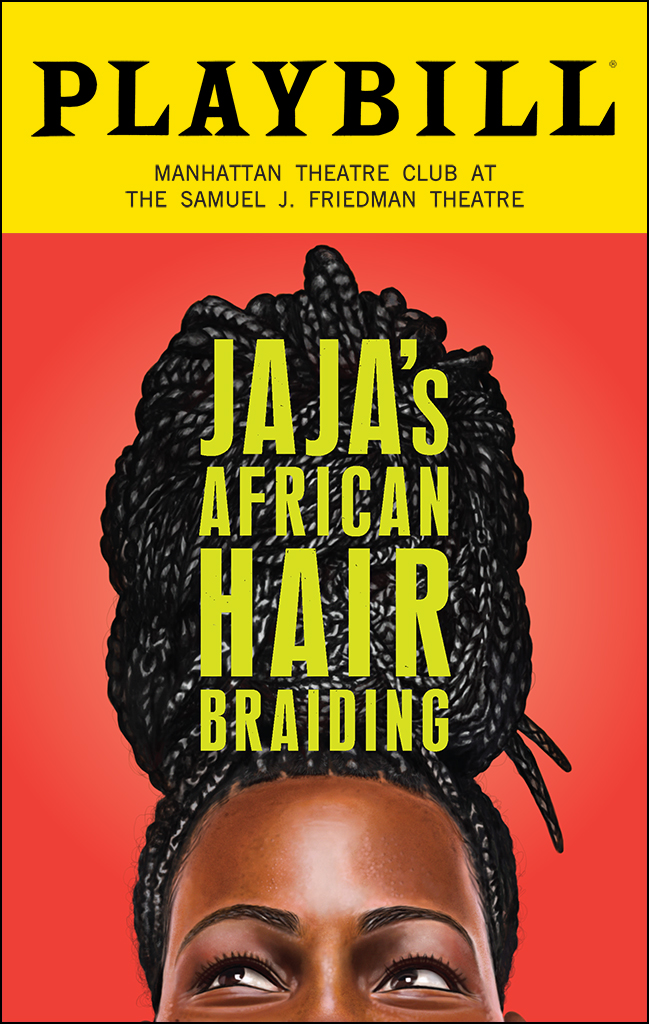
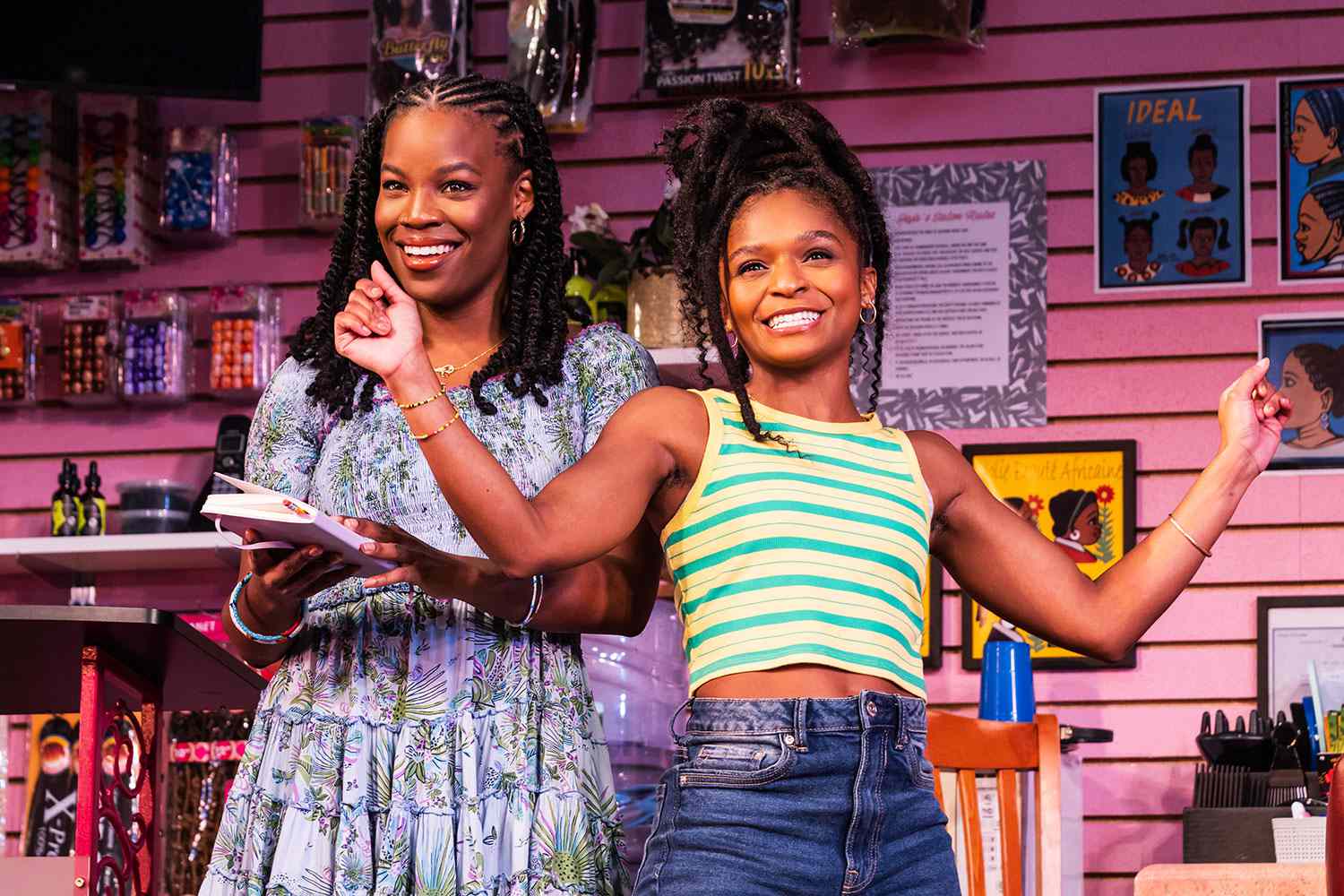
The momentum carried into the next decade through Jocelyn Bioh, who has become one of the most visible figures in this movement. Bioh is Ghanaian-American, and that hyphen is the point: her work sits precisely at the meeting place of continental African experience and the African diaspora in the United States. Her play “Jaja’s African Hair Braiding” opened at the Samuel J. Friedman Theatre in October 2023 and went on to collect five Tony nominations in 2024, including Best Play. The piece unfolds over a single day in a West African hair-braiding salon in Harlem, its characters drawn from Senegal, Nigeria, Ghana, Sierra Leone and beyond, each chasing a version of the American dream while navigating immigration, ambition and the small daily indignities of being newly arrived. The show won the Tony for Best Costume Design, and an honorary Tony went to wig and hair designer Nikiya Mathis for her work, a recognition of craft that is itself rooted in the culture the play depicts.

Bioh’s reach extends past her own original plays. Her 2021 adaptation of Shakespeare’s “Merry Wives of Windsor”, staged for free at Central Park’s Delacorte Theatre as “Merry Wives”, relocated the comedy to South Harlem’s heavily West African 116th Street, weaving Nigerian, Ghanaian, Senegalese and Black American voices through the Elizabethan text. It was a statement of intent: the classics could be claimed and reshaped by the diaspora, not just imitated.
Advertisement

The diaspora playwrights changing the canon

How African Stories Are Breaking - The diaspora playwrights changing the canon

There is a through-line connecting all of these artists, and it runs through the broader rise of Black playwrights who have forced American theatre to widen its definition of whose stories count. Jeremy O. Harris, an African-American playwright, made the loudest statement of the lot with “Slave Play”, which ran on Broadway in 2019 and went on to earn a record-breaking twelve Tony nominations in 2021, the most ever for a play. Harris is not telling continental African stories, and the distinction between African and African-American narratives is one this movement takes seriously. But his success reshaped the commercial logic of Broadway, proving that work centring Black experience and confronting race head-on could dominate the awards conversation. That shift in what producers believed audiences would buy made room for the writers around him.

What unites Soyinka, Gurira, Bioh and Harris is not a single nationality or even a single subject. It is a refusal to translate Blackness into something palatable for a default white audience. Gurira writes Liberian women in their own context. Bioh lets her braiders speak in the cadences of Accra and Dakar without footnotes. Harris stages the discomfort directly. The canon they are building is one in which African and African-diaspora life is the centre of the frame, not the margin, and the precision matters: a Ghanaian-American salon comedy and a Zimbabwean writer’s war drama are not interchangeable, even as they pull in the same direction.

The economics of getting an African story to Broadway

How African Stories Are Breaking - The economics of getting an African story to Broadway

None of this is cheap, and the financial reality is the quiet obstacle that shapes which African stories make it and which do not. Mounting a play on Broadway routinely runs into the millions of dollars, and a musical can cost far more, with the bulk of that money needing to be raised before a single ticket is sold. Producers calculate risk against projected runs, tourist appeal and the likelihood of awards attention that can extend a show’s life. For decades, that calculus worked against stories perceived as unfamiliar to the predominantly white, often out-of-town audiences who fill Broadway houses.

The breakthroughs of the past fifteen years have chipped away at that assumption without erasing it. A “Fela!” or a “Jaja’s African Hair Braiding” demonstrates demand, which makes the next pitch easier, but the path still depends heavily on a handful of nonprofit theatres, the Public Theater and Manhattan Theatre Club among them, that develop and de-risk new work before a commercial transfer. Many African and diaspora stories reach New York through these institutions rather than going straight to a Broadway house. The structure rewards writers who can find an institutional champion, and it quietly disadvantages those without access to that ecosystem. Money, in other words, remains a gatekeeper even as the gate opens wider.

Authenticity versus spectacle: the staging debate

How African Stories Are Breaking - Authenticity versus spectacle: the staging debate

As more African stories reach the stage, a sharper argument has surfaced about how they should be told. Broadway loves spectacle, and African settings have historically been an invitation to lavish design, drumming, dance and colour. The puppetry of “The Lion King” and the kinetic ensembles of “Fela!” both thrilled audiences and made money. But the same instinct can flatten a culture into a backdrop, reducing a continent of distinct nations and histories into a single decorative idea.

The newer generation pushes back against that flattening. Bioh’s salon is specific down to the brand of products on the shelves and the particular tensions between West African nationalities. Gurira’s Liberia is rendered with the weight of real history rather than a generic notion of African suffering. The debate is not spectacle versus substance as a strict either-or; the best work uses spectacle in service of specificity. What these artists resist is spectacle that stands in for understanding, the kind of staging that asks an audience to admire the costumes while learning nothing about the people wearing them. Getting that balance right is one of the central craft questions facing anyone bringing an African story to a Broadway-scale stage.

What it means for the next generation, including Nigerian theatre makers

For young Nigerian and African theatre makers watching from Lagos, Accra or the diaspora, the lesson of the past decade is double-edged but mostly hopeful. The hopeful half is that the ceiling has visibly cracked. A generation ago, the idea of a Nigerian life filling a Broadway house, or a Ghanaian-American writer earning a Best Play nomination, would have read as fantasy. Now there is a lineage to point to, a set of names and shows that prove the work can travel and the awards bodies will take notice.

The harder half is that representation on the biggest stage still flows mostly through American and diaspora artists rather than through writers working on the continent itself. Soyinka’s plays remain more studied than staged in New York. The pipeline that carries a Nigerian story to Broadway usually runs through an American institution and an American-based writer, which is a kind of progress and a kind of limit at the same time. The next frontier is not just more African stories on Broadway, but more of them shaped and controlled by African theatre makers on their own terms, with the economic infrastructure to back it.

That frontier is closer than it has ever been. Nigeria’s own creative industries are booming, its film and music exports reshaping global culture, and its theatre tradition runs deep and old. The talent has never been in question. What the recent Broadway story shows is that the appetite exists too, on both sides of the Atlantic, for narratives that put African life at the centre and trust audiences to meet them there. The marquees on West 45th Street are still mostly lit with other names. But the ones that read differently are no longer the exception they once were, and the writers coming up behind them have a map their predecessors never had.

Advertisement
Share
Get the recap

Loved this story? Get more like it.

Join readers who get our weekly entertainment recap - the stories worth your time, delivered every Friday.

No spam. Unsubscribe anytime. By signing up you agree to our Privacy Policy.

How African Stories Are Breaking... | Sidomex Entertainment