
Few mainstream British pop stars have leaned into Afrobeats with the persistence of Ed Sheeran. The Suffolk songwriter who built a career on acoustic loop pedals and stadium-sized choruses has spent years orbiting the Lagos scene, jumping on remixes, sitting in on sessions and turning up in places that most of his Wembley-headlining peers would never think to visit. The full extent of that traffic is not all publicly documented, but the released work is. That orbit has produced one of the most quietly important cross-cultural exchanges in modern pop, and it has visibly changed the way Sheeran himself writes, sings, and frames his own music.
This is not a one-off PR exercise. The pattern stretches back years, and every return trip seems to deepen the relationship rather than wrap it up.
The Fireboy DML Moment That Started It All
Before the Lagos visits, before the Burna Boy sessions, before the Spotify playlists, there was “Peru.”
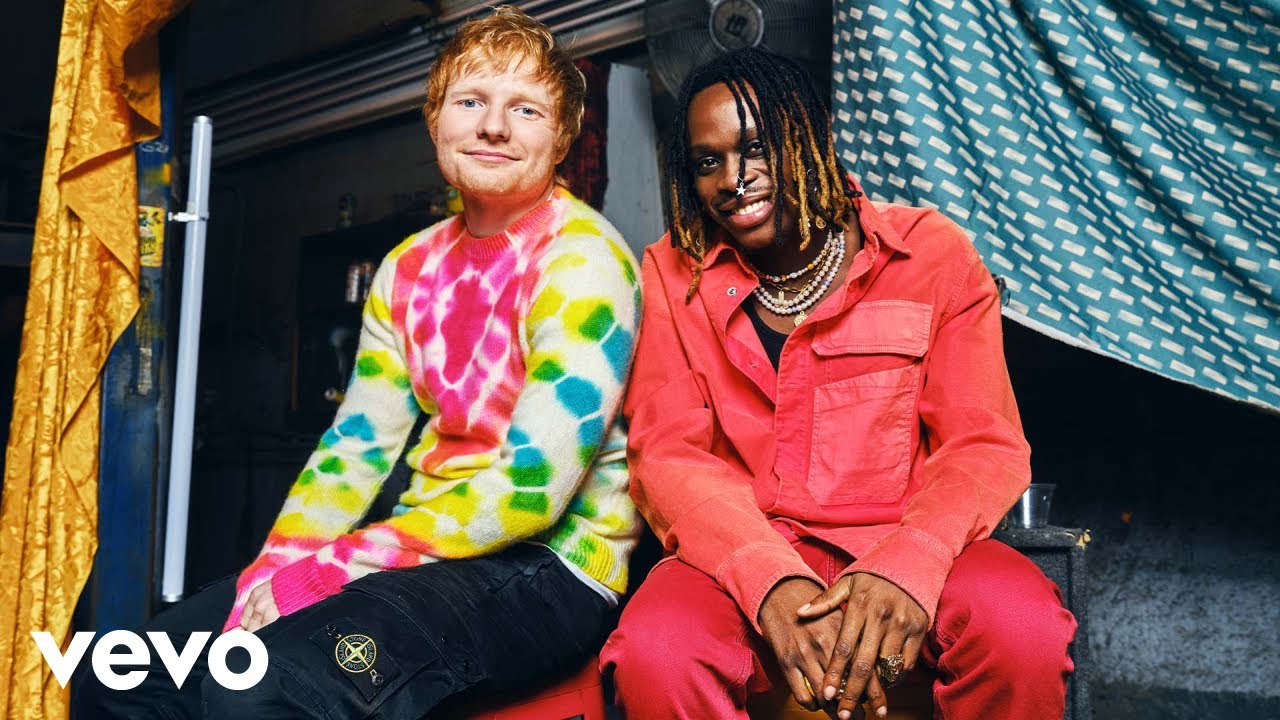
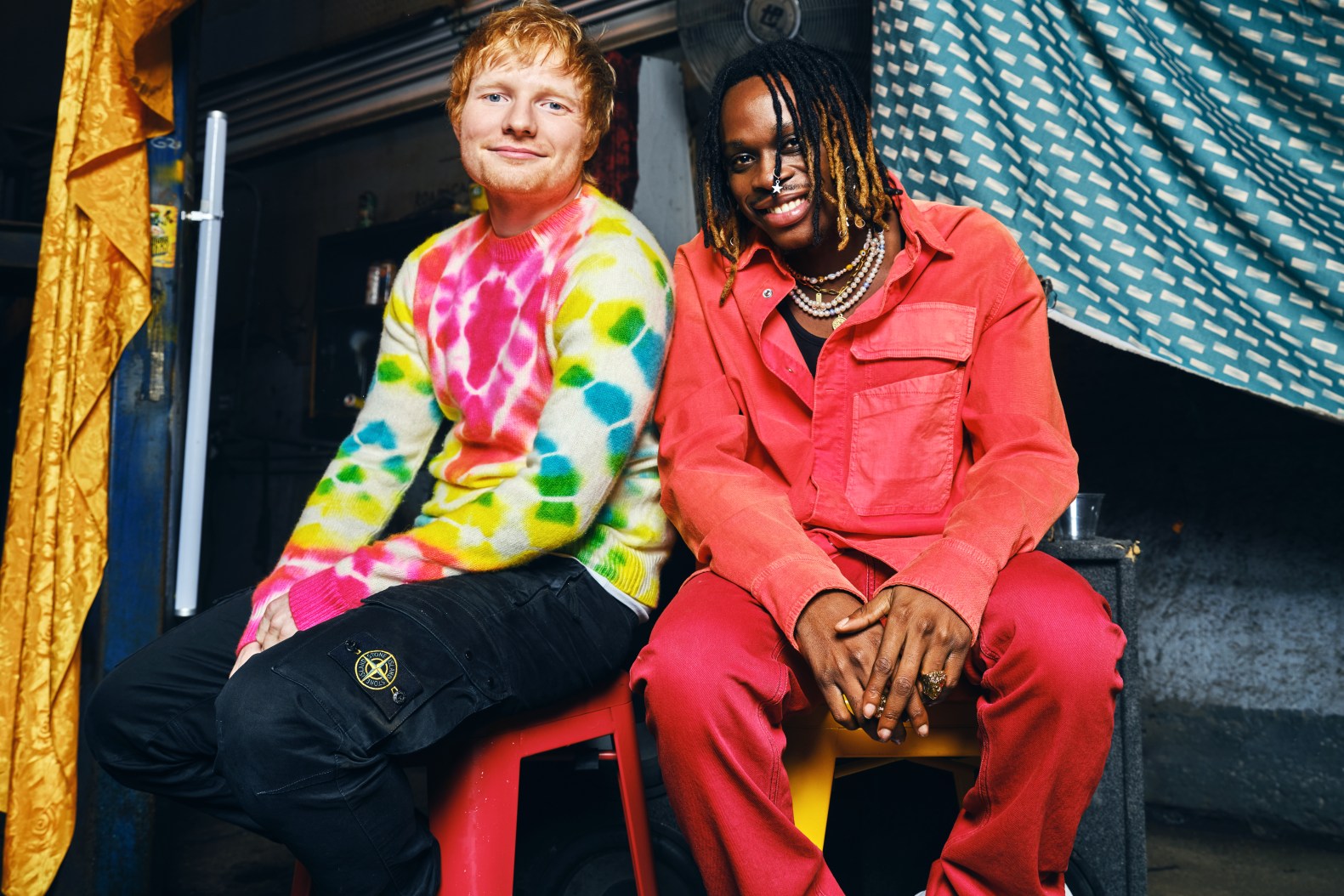
Fireboy DML released “Peru” in 2021 as a midtempo, almost throwaway club record built on a sticky log-drum bounce. It was already a hit across West Africa when Ed Sheeran got to it. By the account Fireboy has repeated in interviews, the approach came from Sheeran’s side rather than the other way round. The remix dropped in December 2021. Within weeks it had cracked the UK Top 10 and pushed Fireboy onto playlists that had previously been near-impossible for a Nigerian artist without diaspora packaging.
Fireboy has said he barely believed the initial message. Sheeran was, at that point, among the biggest-selling artists of the streaming era in the United Kingdom. For him to volunteer himself onto a Nigerian record, rather than the more common arrangement of an Afrobeats artist begging a Western feature, flipped the usual dynamic. Sheeran was the one showing up.
Why the Remix Mattered More Than the Numbers

The chart performance was impressive, but the cultural signal was bigger. By that point, Afrobeats already had its English-language ambassadors: Wizkid had charted globally with “Essence,” Burna Boy was a Grammy winner, and Tems had a Billboard Hot 100 number one through her feature on Future and Drake’s “Wait for U.” What “Peru” added was the validation that a fundamentally Nigerian record, sung partly in Pidgin, structured around West African rhythms rather than diluted to fit a four-on-the-floor template, could pull a global pop star into its orbit on its own terms.
Sheeran did not ask Fireboy to change the beat. He fitted himself into it.
The Burna Boy Sessions and Love, Damini

The “Peru” remix opened doors quickly. By the middle of 2022, Sheeran had appeared on Burna Boy’s “For My Hand” from the Grammy-nominated “Love, Damini” album. The song is a slow, almost yearning record, closer to a love ballad than a club cut, and Sheeran’s voice slots into the second verse with a tenderness that surprised a lot of listeners who only knew him from “Shape of You.”
Burna Boy has spoken about Sheeran with genuine warmth in multiple interviews, describing him as one of the few Western artists who actually engages with the music rather than treating a feature as a transactional favour.
A Quiet Mutual Influence
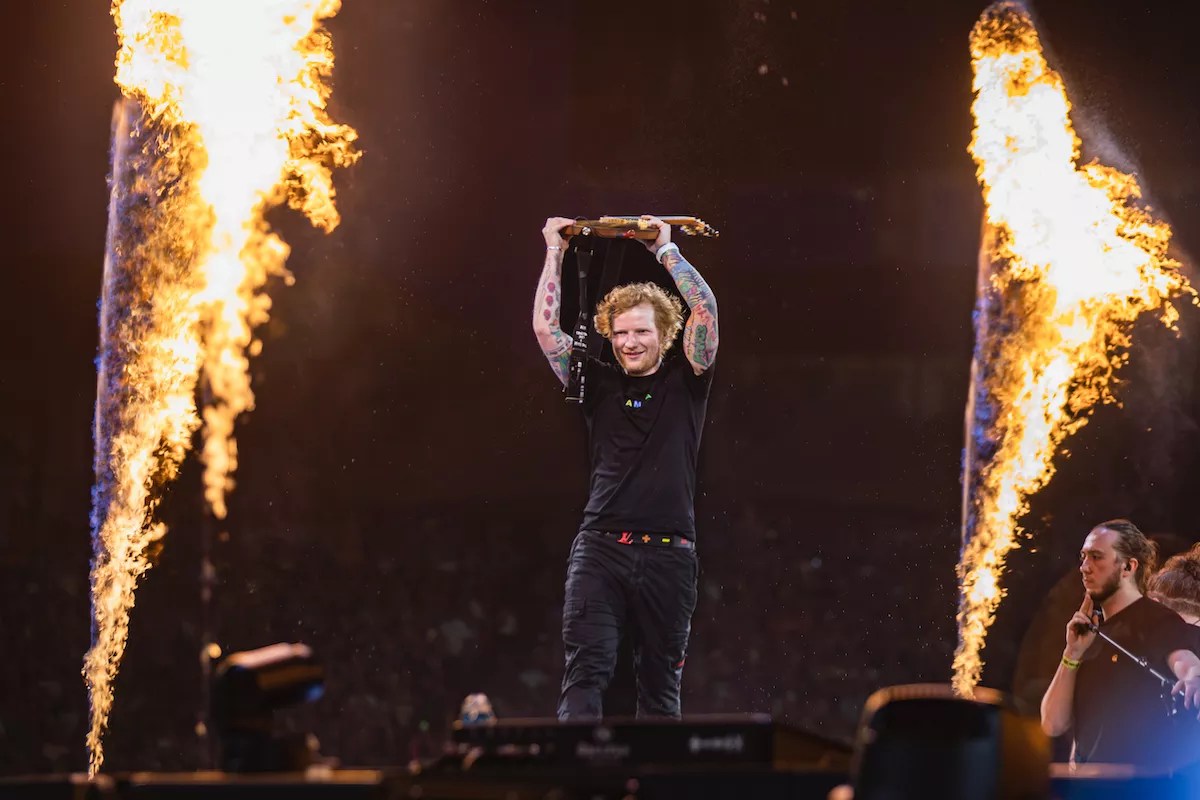
The influence has not run the way a lot of headlines assumed it would. “Subtract,” his 2023 album, went in the opposite direction entirely, a spare acoustic record with almost no rhythmic connection to Lagos. Sheeran has not made an Afrobeats album and shows no sign of wanting to. Where the exchange actually shows up is in the records he makes with Nigerian artists rather than the ones he makes alone. On “Peru” and “For My Hand” he adapts to the groove instead of bending it toward a British pop template, which is a different and arguably harder skill than absorbing a genre wholesale. Listeners looking for Afrobeats fingerprints across his solo catalogue will find far less than the collaboration count suggests, and that gap is itself the more interesting story.
Why Lagos Specifically

Sheeran could have built a global pop relationship with almost any music scene. He chose Nigeria, and within Nigeria, he chose Lagos. The reasons he has offered in interviews are practical rather than romantic.
The first is density. Lagos carries one of the most concentrated pools of songwriting and production talent anywhere outside Los Angeles, London and Nashville. The density of producers, engineers, and topliners working in a relatively small geographic area means that a single afternoon in a Victoria Island studio can yield more usable ideas than a week elsewhere. Sheeran is famously prolific. The Lagos pace suits him.
The second is community. Nigerian artists tend to work in clusters rather than the more isolated, one-producer-per-room model common in the West. Sessions are loud, social, and often involve six or seven people contributing to a single record. For a songwriter who built his early career writing for other people before becoming a solo star, that environment is more familiar than alien.
The London Club Connection

Sheeran is from Suffolk, but he cut his teeth on the London circuit in the late 2000s, playing the same small rooms as the grime and UK rap acts of that period and appearing on their records. That scene was already deeply influenced by Black British music, which itself drew heavily from West African and Caribbean diaspora sounds. By the time he started working with Nigerian artists, he was not approaching the music cold. The bounce of Afrobeats shares structural DNA with the UK garage and grime he had been adjacent to since his teens.
That history matters. It is the difference between an outsider trying on a sound and a songwriter recognising echoes of music he already loved.
The Platform Push
Beyond the features and the studio sessions, Sheeran has used his platform to push African music to audiences that would not otherwise find it. When an artist at his level posts about a song, the discovery effect is real, and Nigerian acts he has publicly co-signed have seen the benefit.
This advocacy work is not always credited because it is quiet. He does not announce himself as an ambassador. He simply posts, recommends, shows up at album launches, and tags artists in his stories. The effect compounds.
Validating Non-English Hooks
One of the most important things Sheeran has done, perhaps without consciously trying, is help normalise non-English-language hooks for British and American pop audiences. By singing comfortably alongside Pidgin and Yoruba phrases on tracks like “Peru” and “For My Hand,” he models that Western listeners do not need every word translated to enjoy a song.
This is the same shift that “Despacito” forced for Spanish-language pop in 2017, and that Rema and Selena Gomez’s “Calm Down” extended for Afrobeats in 2022. Sheeran is part of a broader pattern of pop stars who treat language as texture rather than barrier, and his early adoption of that posture in the Afrobeats context gave it cover among a more conservative segment of his fan base.
The Tems Question
Speculation about a Sheeran and Tems collaboration has been circulating in Nigerian music press for at least two years. The two have been photographed at the same events, follow each other publicly, and have mutual collaborators. Nothing has been officially released.