What Is Highlife Music? The West African Genre That Gave Birth to Modern Afrobeats
Jalen Ross··10 min read
Ad SpaceArticle Top - 728x90
Advertisement
Before Wizkid topped Billboard, before Burna Boy collected a Grammy, before Davido sold out the O2, a different sound ruled West African dance floors. Brass horns floated over a clean guitar lick, a shaker kept time with a talking drum, and couples in suits and lace gowns moved across polished floors in colonial-era Accra. That sound has a name, and almost every modern Afrobeats hit carries a piece of it in its DNA. Highlife is the grandparent genre that quietly shaped the chord changes, melodic phrasing, and rhythm patterns powering the global Afrobeats movement. Understanding it explains a great deal about why Afrobeats sounds the way it does, why a Phyno verse hits the way it hits, and why your aunties spring up the moment the DJ at a Nigerian wedding switches sets.
The Origin Story: Ghana in the 1920s
Highlife was born in the Gold Coast, the territory known today as Ghana, in the early 1920s. Accra was its cradle. Coastal cities along West Africa had become trade and cultural crossroads, and the music that emerged reflected that collision of influences. Three streams fed the new sound. The first was indigenous Akan and Ga musical traditions, particularly the palm-wine guitar style played in informal settings along the coast. The second was Western military and church brass instrumentation introduced through colonial bands and missionary schools. The third was Caribbean calypso and Trinidadian rhythms that arrived through sailors, traders, and returning West Indians of African descent.
Local musicians began blending these elements into something fresh. Acoustic guitars picked patterns that mirrored traditional thumb-piano melodies. Trumpets and saxophones layered horn lines borrowed from American jazz and military marches. Percussion kept the African pulse intact through congas, shakers, and the talking drum.
How the Genre Got Its Name
The name “Highlife” did not come from the musicians themselves. It came from the audience, or more precisely, from the people who could not afford to be in the audience. In 1920s Accra, the music was performed at exclusive dance halls catering to the colonial elite, wealthy traders, and educated African professionals. Entry required formal dress and ticket prices that priced out most of the public. Crowds gathered outside the halls to listen, and locals began referring to the people inside as living “the high life.” The label stuck to the music itself.
By the 1930s and 1940s, the sound had spread beyond the upper-class halls into open-air clubs, palm-wine bars, and eventually radio. What started as a soundtrack for the privileged became a populist genre across the entire West African coast.
E.T. Mensah and the Golden Age
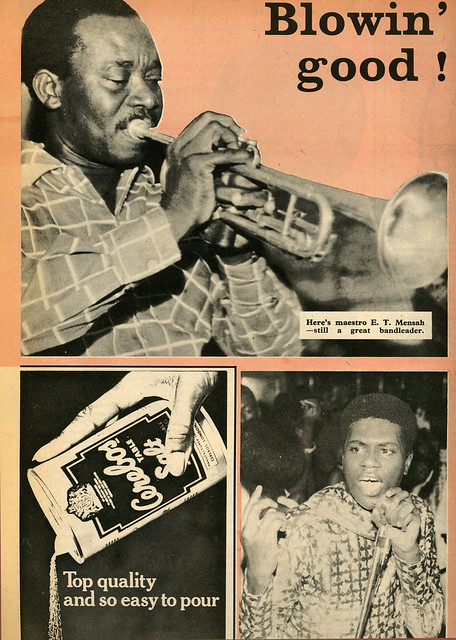
If highlife has a founding father in the popular imagination, his name is Emmanuel Tettey Mensah. Known across the continent as E.T. Mensah, the Ghanaian trumpeter and bandleader earned the title “King of Highlife” through the 1940s and 1950s. Mensah led the Tempos Band, which became the template for what a touring highlife outfit should look like. The Tempos packed horn sections, multiple guitars, percussion, and lead vocals into a tight ensemble that could shift from a slow waltz to an uptempo dance number without losing the audience. His tours through Nigeria, Liberia, Sierra Leone, and Cote d’Ivoire seeded the genre across the region. Local musicians in each country watched the Tempos play and went home to build their own versions. By the time Ghana gained independence in 1957, highlife had become a pan-West African cultural force, and Mensah’s band was a fixture at the celebrations of the new nation.
Osibisa Takes the Sound Global
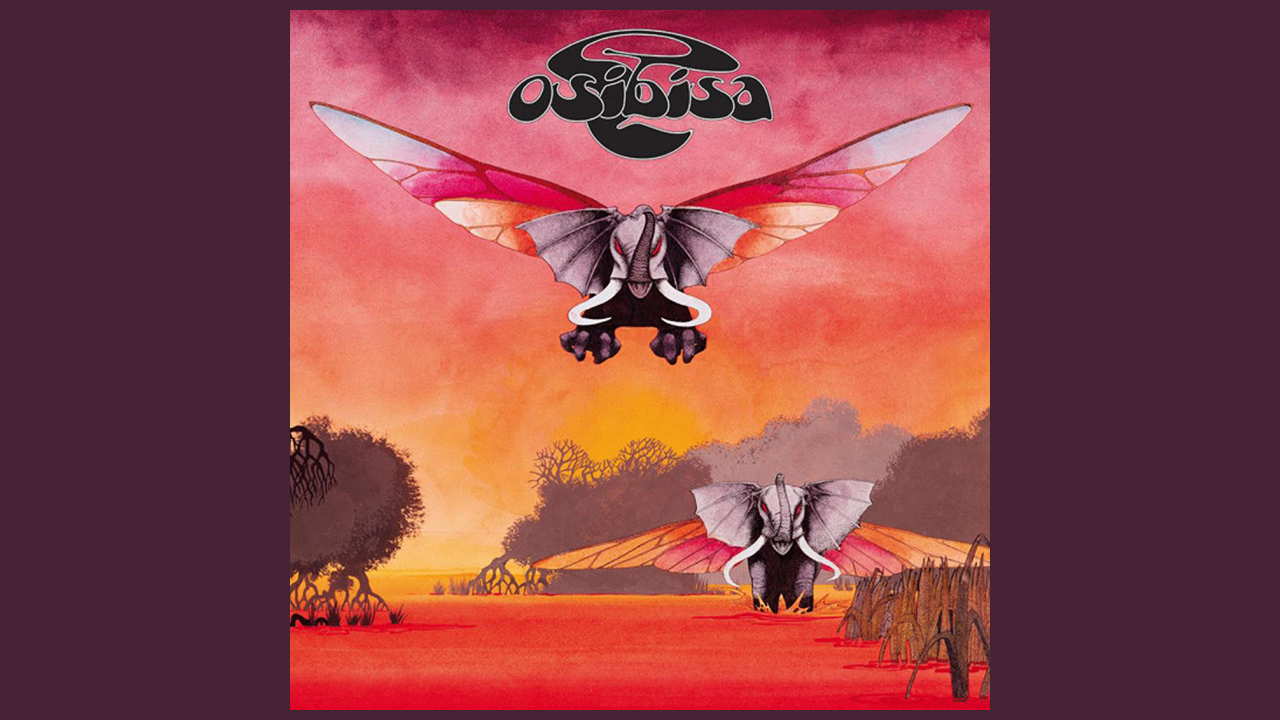
The international leap came through Osibisa, a Ghanaian-British band that formed in London in 1969. Founded by Ghanaian musicians Teddy Osei, Mac Tontoh, and Sol Amarfio alongside Caribbean and Nigerian collaborators, Osibisa fused highlife with rock, funk, and Latin influences into something they called “criss-cross rhythms that explode with happiness.” Their self-titled 1971 debut album cracked the UK charts. Songs like “Sunshine Day” and “Woyaya” reached audiences across Europe, North America, and Japan. For a stretch of the 1970s, Osibisa was one of the most recognizable African bands on the planet, sharing stages with the biggest rock acts of the era and proving that the highlife template could travel.
Highlife Crosses Into Nigeria
The sound did not stay in Ghana. As Mensah and his peers toured, Nigerian musicians absorbed the form and made it their own. By the late 1940s, a distinctly Nigerian highlife scene had taken root, eventually splitting into regional flavors that reflected the country’s ethnic diversity. Bobby Benson is widely credited as the pioneer who brought highlife into Lagos. A bandleader and instrumentalist, Benson ran the Caban Bamboo nightclub in Lagos and trained a generation of musicians who would carry the genre forward. Victor Olaiya followed, leading the Cool Cats and later the All Stars Band, earning the nickname “Evil Genius of Highlife” for his complex arrangements and prolific output. Roy Chicago, Rex Lawson, and Celestine Ukwu built their own followings through the 1960s, each adding personal flourishes to the highlife framework.
Eastern Nigeria Becomes the Heartland
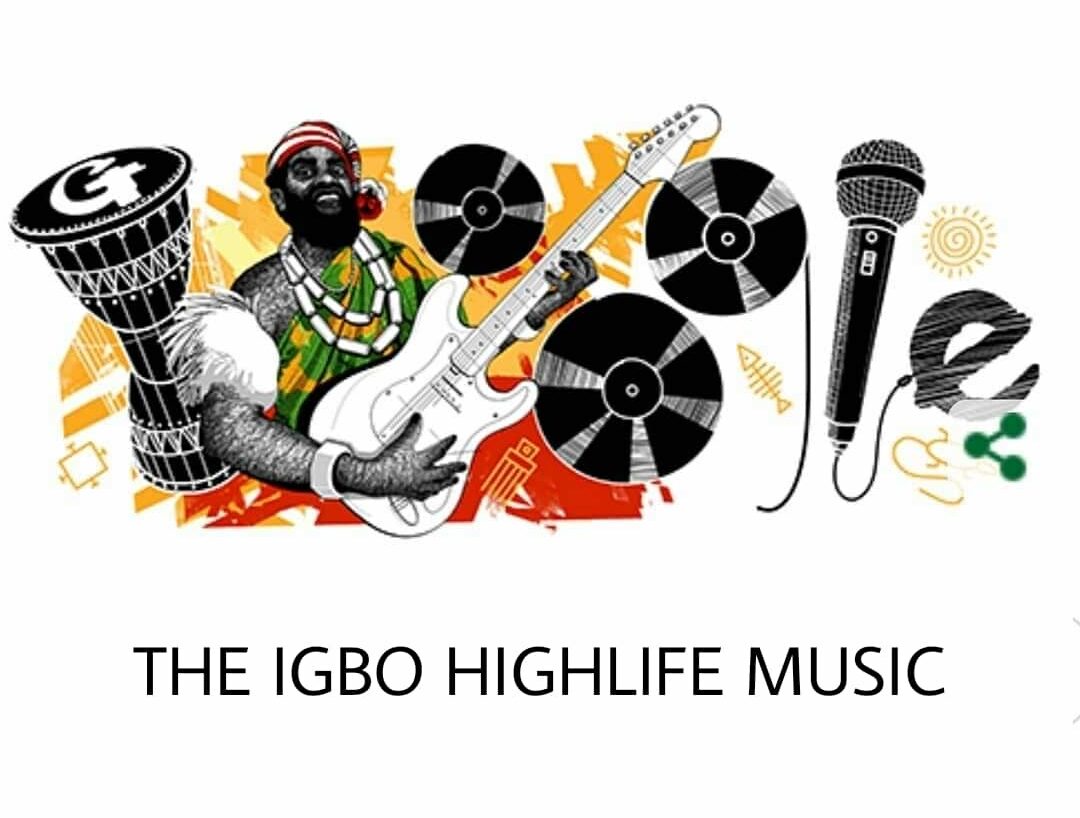
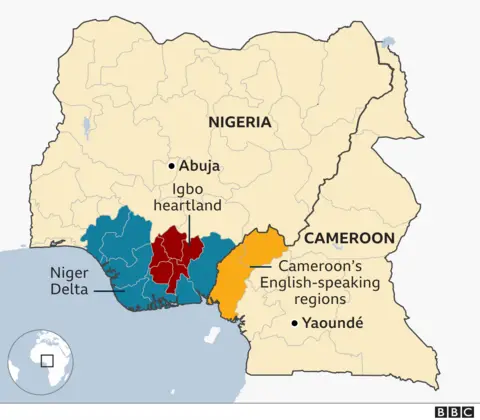
Highlife found its deepest Nigerian home in the Igbo-speaking east. The region embraced the genre with such intensity that “Igbo highlife” became its own recognized subgenre, distinct in feel from the Lagos and Ghanaian versions. Oliver De Coque, born in Anambra State, built a career that stretched across decades and produced more than 70 albums. His “Ogene Sound” incorporated the traditional Igbo gong instrument into the highlife arrangement, creating a hybrid that felt simultaneously ancient and modern. Stephen Osita Osadebe, often simply called Osadebe, became the dean of Igbo highlife through patient, philosophical songs that ran ten or fifteen minutes long. His 1984 release “Osondi Owendi” remains one of the most beloved highlife records ever made, a song still played at Igbo gatherings four decades after its release. Bright Chimezie took a different path with his “Zigima Sound,” a more uptempo, percussive variant aimed squarely at the dance floor. Together, these artists established eastern Nigeria as the spiritual home of the genre.
The Biafran War and Its Aftermath
The Nigerian civil war of 1967 to 1970 reshaped Igbo highlife in painful ways. Many musicians fled the violence, recording studios were destroyed, and the cultural infrastructure that had supported the genre took years to rebuild. What emerged after the war carried the weight of that experience. Highlife in the 1970s and 1980s often turned reflective, philosophical, and lyrically dense. Songs explored themes of survival, reconciliation, faith, and the rebuilding of community. The genre became a vehicle for processing collective grief, and the storytelling tradition deepened as a result.
Ad SpaceIn-Article - 300x250
Advertisement
Western Nigeria and the Juju Spinoff
In the Yoruba-speaking west, highlife had a presence but never dominated. The region’s musical energy poured instead into Juju, a guitar-driven, percussion-heavy genre that drew on similar roots but moved in its own direction. King Sunny Ade became the global face of Juju in the 1980s, signed to Island Records and touring internationally. While Juju and highlife share ancestors, the two genres developed separate identities through the second half of the twentieth century, with Juju leaning more heavily on traditional Yoruba drumming and call-and-response vocals.
The Fela Connection
No conversation about highlife and Afrobeats is complete without Fela Anikulapo-Kuti. Before Fela invented Afrobeat, the politically charged fusion that would define his legacy, he played highlife. Fela cut his teeth in the early 1960s as a member of various Lagos highlife outfits, including a stint with Victor Olaiya’s Cool Cats. His own band, Koola Lobitos, played highlife-jazz fusion through the mid 1960s before his trip to Los Angeles in 1969 exposed him to Black Power politics, James Brown’s funk, and the radicalized soul scene. When Fela returned to Nigeria, he rebuilt Koola Lobitos into the band that became Nigeria 70 and then Africa 70, and birthed Afrobeat as a distinct genre. The horn arrangements, the long-form song structures, and the rhythmic foundations all carried highlife fingerprints, even as the lyrical content and tempo shifted toward something more confrontational. The lineage matters because Afrobeat in the singular became the conceptual ancestor of the plural Afrobeats that dominates streaming today. The chord progressions and melodic instincts that Fela carried over from his highlife years are still audible in the productions Wizkid and Burna Boy release today.
How Highlife Shaped Modern Afrobeats
Listen closely to a contemporary Afrobeats hit and the highlife DNA reveals itself in three specific places. The first is the chord progression. Highlife relies heavily on bright, major-key cycles that move predictably between the tonic, the subdominant, and the dominant, often with added sixths and ninths that give the music its sunny, optimistic feel. Modern Afrobeats producers reach for these same progressions constantly, even when the drums underneath have shifted to a programmed log-drum pattern.
The second is the guitar work. The clean, slightly compressed lead guitar tone that punctuates so many Afrobeats records traces directly to the palm-wine and highlife traditions. Compare the lead lines in Oliver De Coque’s catalog to the guitar accents in a Mr Eazi or Adekunle Gold record, and the family resemblance is unmistakable. The third is the melodic phrasing. Highlife vocal melodies tend to be sung high and bright, with long sustained notes and an emphasis on storytelling over rhythmic chopping. That phrasing approach lives on in singers like Simi and Johnny Drille, whose deliveries owe more to highlife crooning than to American rap cadence.
The Modern Highlife Revival
The genre never disappeared, but a younger generation of Nigerian artists has actively brought it back into the mainstream over the past fifteen years. Flavour N’abania built his entire career on a contemporary Igbo highlife foundation, scoring hits like “Ada Ada” and “Nwa Baby” that respected the genre’s traditions while updating the production. His shows at Eastern Nigerian events draw multi-generational crowds who recognize the form their grandparents danced to. Phyno, the Enugu rapper, weaves highlife guitar lines and chord progressions into his hip-hop productions, creating a hybrid that feels rooted in place. Adekunle Gold’s breakout single “Sade” rode an arrangement that pulled directly from the highlife playbook, complete with horn stabs and a swinging guitar pattern. Across the border in Ghana, Daddy Lumba was a highlife institution for over three decades until his death in 2025, and his catalogue remains a fixture of Ghanaian popular music. Archival work around Pat Thomas, the “Golden Voice of Africa,” has reintroduced classic recordings to global audiences through reissue labels and streaming platforms.
Where Highlife Lives Today
The most reliable place to hear highlife in its natural habitat remains the Nigerian wedding. The structure of a contemporary Igbo wedding reception typically runs in two stages. The first stage belongs to the Afrobeats DJ, who keeps the under-thirty-fives moving through the latest hits from the Lagos scene. The second stage, often arriving an hour or two later when the elders take over the dance floor, belongs to highlife. The DJ switches to Osadebe, Oliver De Coque, Flavour, and Bright Chimezie. The energy shifts. Grandmothers who had been seated all evening rise and dance with the confidence of people who know exactly what they are doing.
The Diaspora Scene
London and Manchester have built their own Afro Highlife circuits. Nights at venues across north and east London draw crowds of West African diaspora and curious locals to hear DJs spin classic highlife alongside contemporary cuts. The scene has grown enough to support its own micro-economy of promoters, vinyl dealers, and revival bands. The archival side of the revival has been driven largely by specialist reissue labels and private collectors working from original pressings, since a great deal of West African master-tape material was lost to poor storage, studio closures, and the collapse of the labels that owned it. Imprints such as Soundway and Analog Africa have built catalogues out of that salvage work, licensing and remastering recordings that had been out of circulation for decades and putting them where a listener with a streaming subscription can actually find them. It is unglamorous work, and it is the main reason a 1960s Lagos or Accra session is available at all.
The Instrumentation That Defines the Sound
Strip a highlife song down to its components and the toolkit is fairly consistent across decades and regions. A clean electric guitar carries the melodic lead, played fingerstyle or with a thumb-pick, often in patterns that mirror the rhythms of traditional thumb pianos. A second guitar provides chord stabs and counter-melodies. Bass guitar walks in repeating patterns that lock with the percussion.
The horn section, when present, includes trumpets, saxophones, and sometimes trombones. The arrangements borrow from jazz and big band traditions but stay disciplined, with horns punching in for accents rather than soloing over the entire track. Percussion forms the spine. Congas keep the main pulse, a shaker fills the upper register, and a talking drum adds melodic and rhythmic conversation throughout the song. In Igbo highlife, the ogene gong frequently joins the mix, providing a metallic ping that anchors the rhythm. Vocals tend to be group affairs, with a lead singer carrying the verses and a chorus answering on the hook. Lyrics in Twi, Igbo, Yoruba, Pidgin, and English all coexist within the broader genre, often within the same song.
A Genre That Refuses to Fade
Walk into a record shop in Lagos, a vinyl bar in Berlin, or a wedding hall in Houston, and the music spinning at some point in the night will be highlife. The genre that started in 1920s Accra dance halls has outlived empires, civil wars, format changes, and a dozen pop trends that swore they would replace it. The guitar line on Flavour’s “Ada Ada” loops out of a speaker at a Lekki beach bar, the older couples on the deck sway in unison, and somewhere inside that guitar line a Tempos horn arrangement from the 1950s is still playing.
Ad SpaceIn-Article - 300x250
Advertisement
Share
Get the recap
Loved this story? Get more like it.
Join readers who get our weekly entertainment recap - the stories worth your time, delivered every Friday.
No spam. Unsubscribe anytime. By signing up you agree to our Privacy Policy.