What Is the "Burna Boy Effect"? How One Artist's Global Success Changed Nigerian Music Forever
Jalen Ross··10 min read
Ad SpaceArticle Top - 728x90
Advertisement
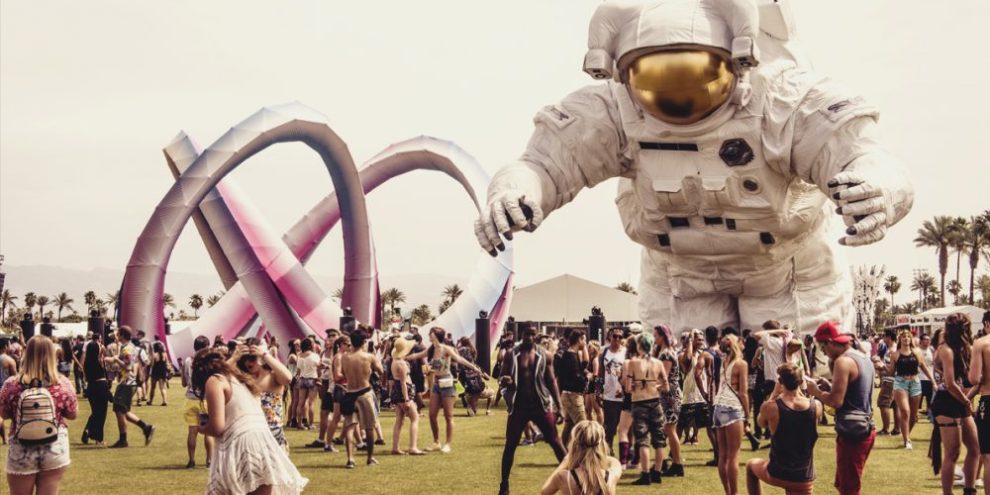
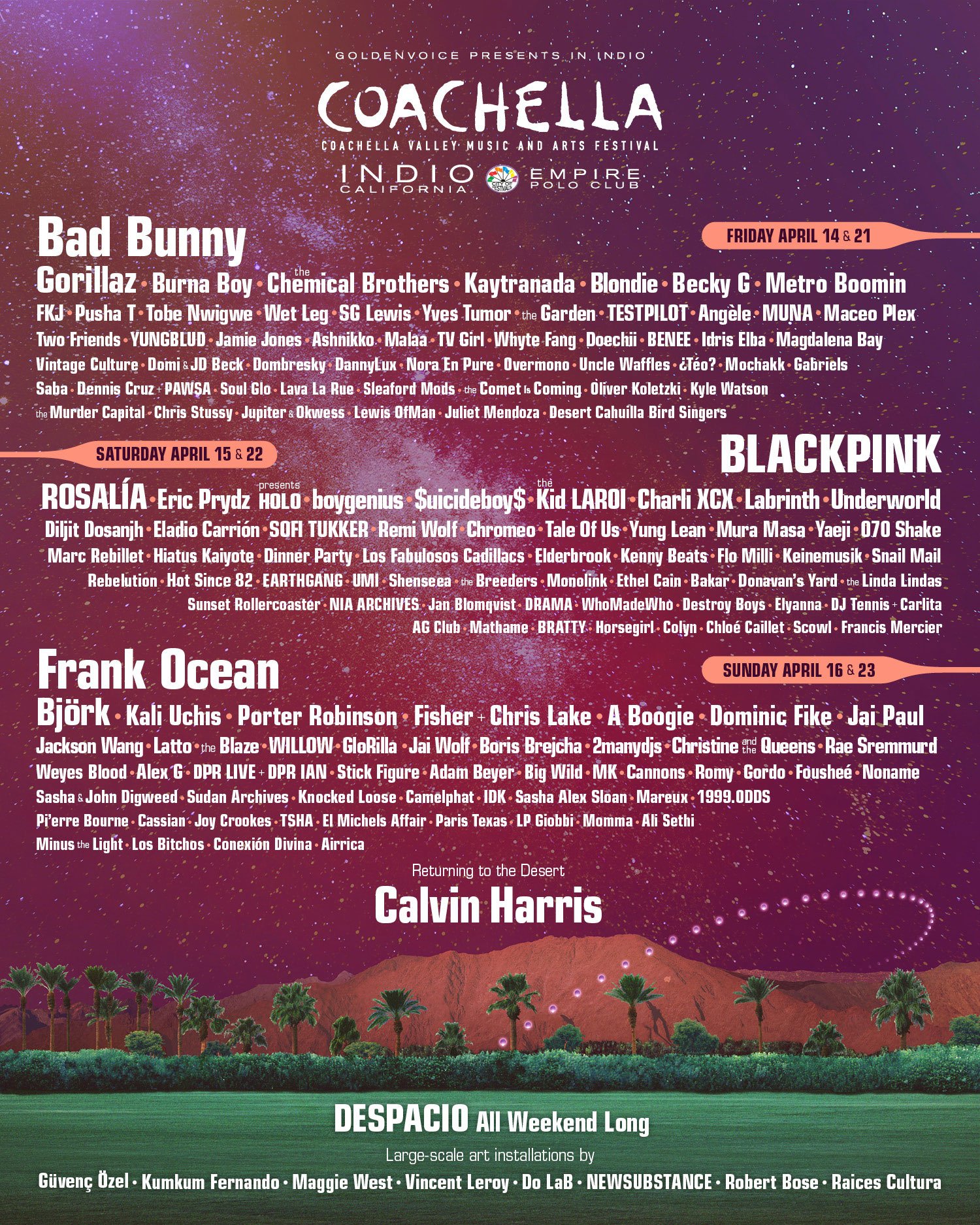
Somewhere between a half-empty afternoon slot at Coachella 2019 and a sold-out London Stadium in June 2023, the math of Nigerian music quietly broke. The old ceiling capped African artists at “respected guest feature” or “world music curiosity.” It cracked open, and what poured through has a name on it: Damini Ebunoluwa Ogulu, the Port Harcourt-born singer who insists, with a straight face and a deep voice, that he is the African Giant.
Industry insiders, A&R executives, festival bookers, and Nigerian artists themselves now talk about a before and an after. They call it the Burna Boy Effect. It is part business case, part attitude shift, part stubborn one-man rebrand of an entire continent’s commercial possibilities. And understanding it requires going back further than the Grammy, further than the stadium nights, all the way to a sulking Instagram post and a mother with a microphone.
The Coachella Moment That Started a Movement
April 2019. Burna Boy is announced for Coachella as a small-print act, his name sitting somewhere below headliners in a font size that, depending on how you squint, is either polite or insulting. He sees it, and instead of doing the industry-polite thing, he posts. Loudly. The “I am an African Giant, and will not be reduced to whatever that tiny writing means” energy of that post lit a fuse that has not stopped burning.
Most artists would have apologized, deleted, walked it back. Burna doubled down. He named his next album “African Giant” and released it in July 2019, a 19-track manifesto that did something Nigerian albums had rarely done at scale: it refused to soften itself for Western ears. The drums were heavy. The Pidgin was thick. The features were carefully chosen, with YG, Future, Damian Marley, and Angelique Kidjo widening the audience without diluting the sound.
The album got Burna his first Grammy nomination for Best World Music Album. He lost. The narrative could have ended there as a noble defeat.
It did not.
Bose Ogulu and the Speech That Reframed Everything
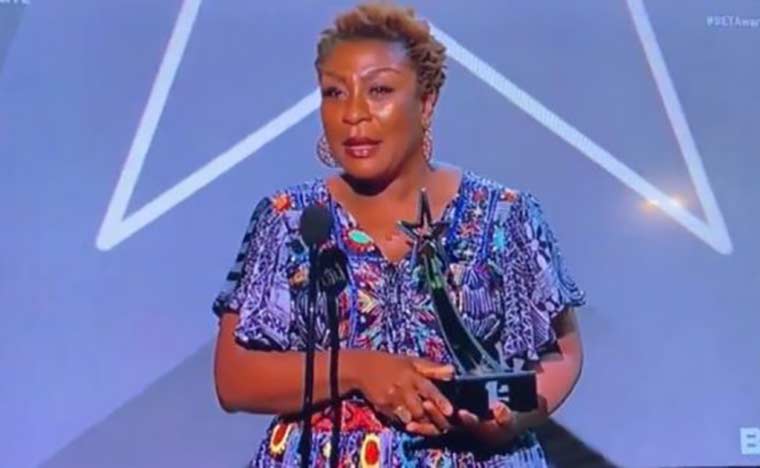
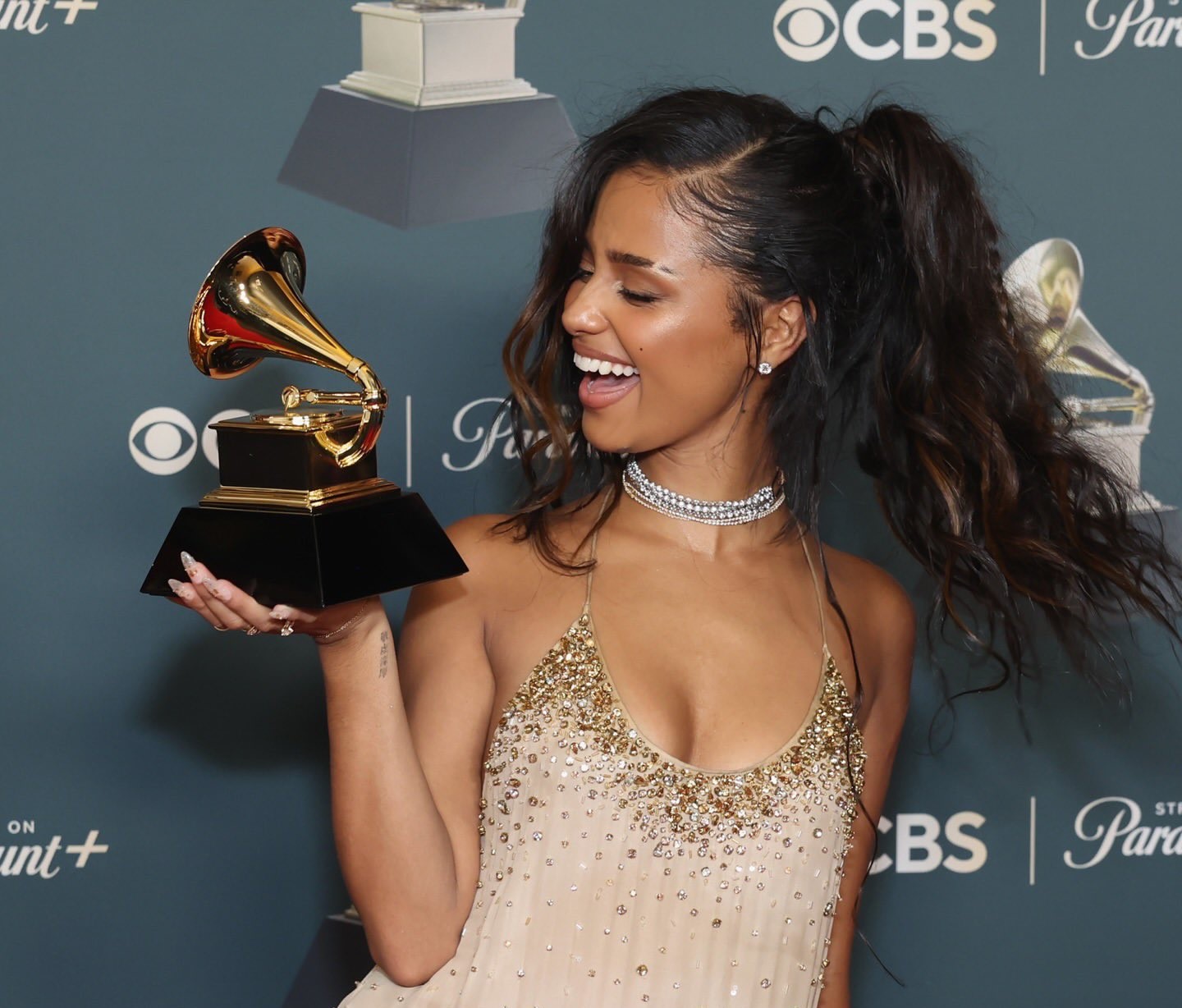
When “Twice as Tall” won Best Global Music Album at the 2021 Grammys, it was Burna’s mother and manager, Bose Ogulu, who stepped to the microphone and delivered what is now one of the most-quoted acceptance speeches in modern African music history. She framed her son not as a lucky Nigerian who broke through, but as proof that Africans should “believe in themselves, that everything is possible.” She thanked Africa. She made eye contact with the world.
That moment matters because Bose Ogulu is not incidental to the Burna Boy story. She is the strategist behind it. Long before the Grammy, she had crystallized the central insight that powers everything her son does: do not chase the West, make the West come to you, and never apologize for being African while doing it. The “African Giant” branding, the refusal to call his music Afrobeats, the deliberate use of Pidgin in choruses meant for stadiums, none of it is accidental. They are the product of a management philosophy that treated Burna’s African-ness as a competitive advantage rather than a liability to be managed.
Why He Refused the “Afrobeats” Label
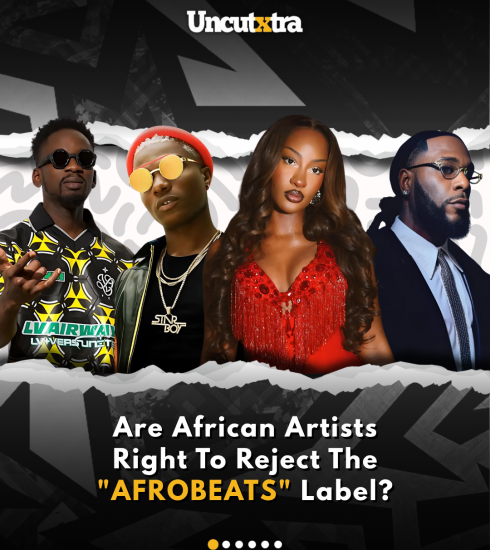
This is one of the most misunderstood parts of the Burna Boy story, and one of the most consequential. Burna does not call his music Afrobeats. He calls it Afrofusion, and he has been almost stubbornly consistent about it for the better part of a decade.
The decision has caused friction with Nigerian peers who have benefited from Afrobeats becoming a globally legible export label. Wizkid, Davido, Tiwa Savage, and now Asake, Rema, Tems, and Ayra Starr have all ridden the Afrobeats wave to international rooms. Burna sat that wave out on purpose.
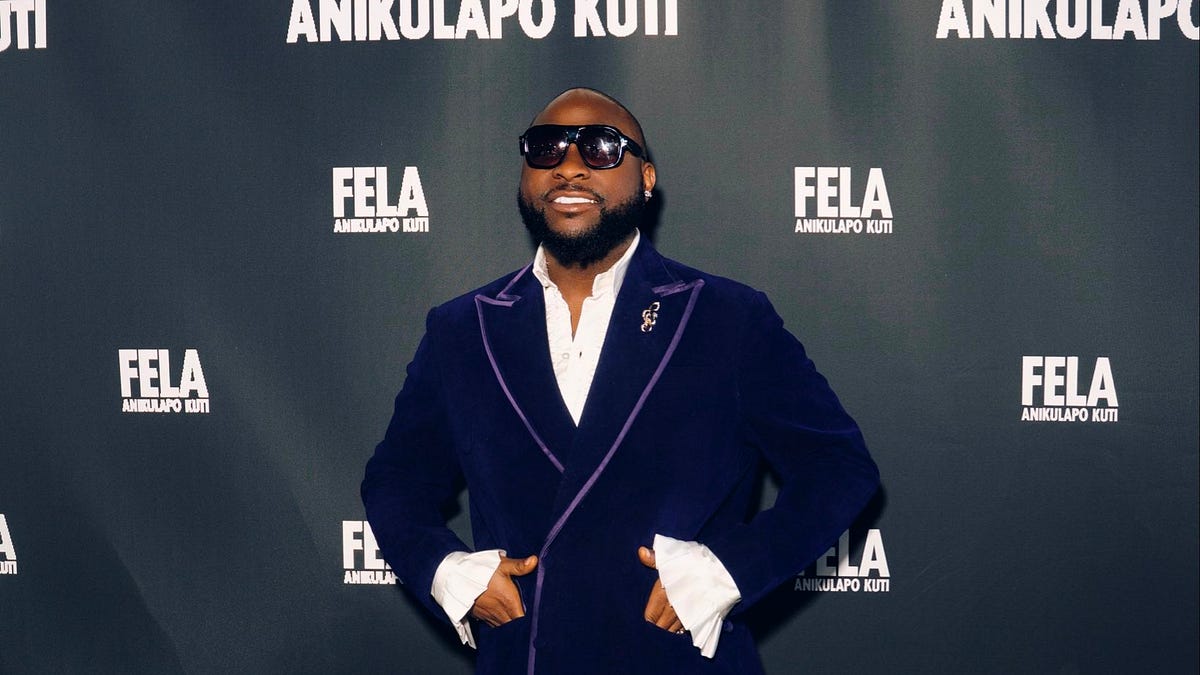
His reasoning, repeated in interview after interview, is that “Afrobeats” is a marketing term invented in London to bundle Nigerian, Ghanaian, and broader West African pop into something digestible for Western playlists. Afrofusion, by contrast, gestures at his actual musical DNA: Fela Kuti’s Afrobeat (no “s”), dancehall, hip-hop, reggae, R&B, and the highlife guitar lines of his maternal grandfather, who once managed Fela himself.
The Afrofusion stance gave Burna two things at once. It gave him a genre of his own that critics had to engage with on his terms rather than slot him into a crowded field. And it laid the groundwork, alongside the Recording Academy’s broader 2020 rebrand from “World Music” to “Global Music,” for the conversation about an actual Afrobeats or African music Grammy category that has been gathering steam ever since.
The Stadium Tour That Changed What “African Crossover” Means
Numbers do a lot of the heavy lifting when people argue about Burna’s impact, so let’s lay them out.
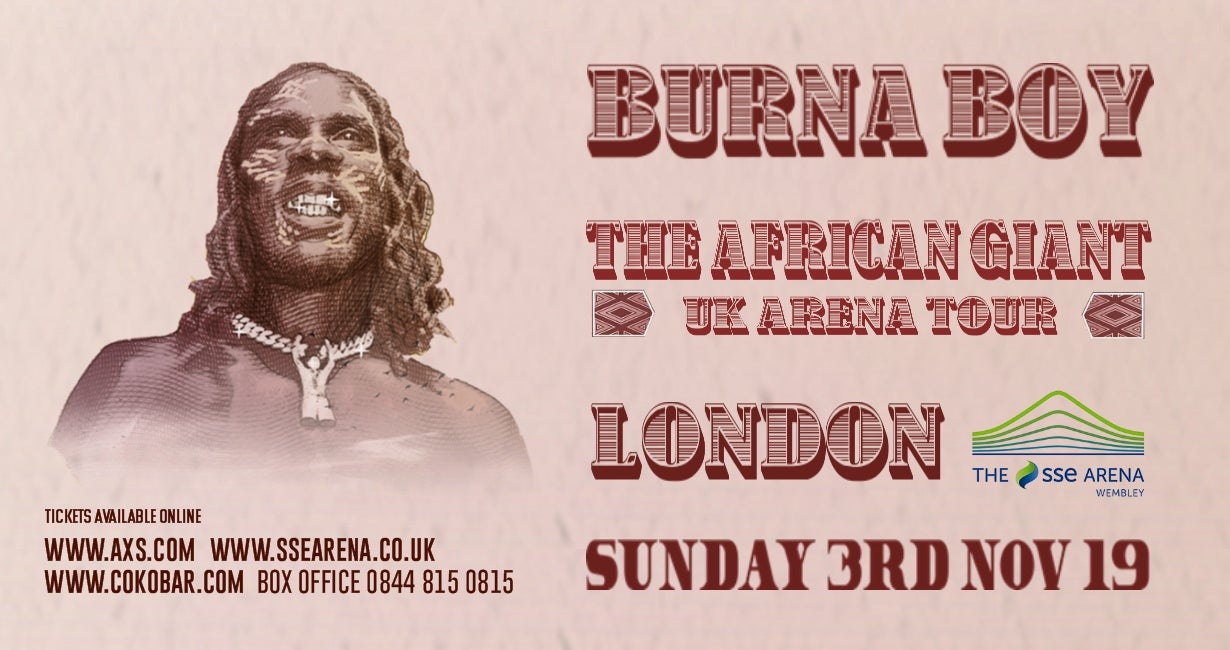
June 2023, London Stadium. Burna became the first African artist to headline a UK stadium, and the visuals from that night, Burna in white with the African Giant logo behind him and a crowd singing “Last Last” back at him in Pidgin, went around the world within hours.
April 2022, Madison Square Garden. Sold out, and the first African artist to headline the room.
April 2025, Stade de France. Around 80,000 people, and the first African artist ever to fill it.
These are not festival slots or co-headlines or “special guest” appearances. These are full nights, full tickets, full revenue, full creative control. And the rooms are not majority African diaspora, though the diaspora is there in force. They are mixed, international, paying full ticket prices to hear Nigerian songs in Nigerian languages.
The pre-Burna ceiling for an African artist on a global stage was roughly: a hot feature on an American song, maybe an arena tour in a few major Black diaspora cities, a respected but limited “world music” career. The post-Burna ceiling is stadiums. That gap is the Burna Boy Effect in its most measurable form.
The Streaming and Influence Numbers
The on-paper case is just as striking. Burna has crossed several billion streams on Spotify and sits, by monthly listener count, inside the global top tier of working pop artists rather than in any regional bracket. He has collected multiple Grammy nominations across his career, and the “Twice as Tall” win at the 2021 ceremony was the structural breakthrough rather than a ceremonial pat on the head. The nomination that preceded it, for “African Giant” in the old Best World Music Album category, is arguably the more revealing data point, because losing that one is what made the follow-up feel like a correction rather than a courtesy.
Ad SpaceIn-Article - 300x250
Advertisement
“Love, Damini” in 2022 charted at the top end of the UK albums chart, territory no Nigeria-based artist had previously occupied. “I Told Them” in 2023 cemented his ability to debut high on the Billboard 200 while remaining tonally Nigerian. Look at the Cardi B verse on the “Last Last” remix, the Drake friendship, the Diddy executive production credit on “Twice as Tall,” and the J Hus collaborations. The US and UK hip-hop and R&B establishments did not co-sign Burna out of charity. They co-signed him because his catalog made them more interesting by association.
The Coachella 2023 Reframe
If 2019’s tiny-print billing was the spark, Coachella 2023 was the answering punch. Burna returned as a Saturday-night main-stage act, performing in front of a crowd that included a meaningful slice of people who first heard his name via that 2019 Instagram post. The visuals leaned hard into West African iconography. The setlist refused to over-translate itself for the American audience. It was a closing argument to the festival that had once underestimated him, and it did not need to say a word about the original slight to land.
That same year, Burna’s catalog continued to seed collaborations that compounded the effect. Tems, whose “Higher” had already become a streaming juggernaut, was openly crediting Burna and Wizkid as the artists who pushed the door wider. Rema’s “Calm Down” remix with Selena Gomez was breaking Billboard records. Asake was selling out the O2 in London less than two years into his solo career. None of this happened in a vacuum.
The Contemporaries: Wizkid, Davido, and a New Ambition
It is impossible to talk about the Burna Boy Effect without addressing his most direct peers. Wizkid (the “Star Boy”) and Davido (DMW founder) were both internationally larger than Burna for most of the 2010s. Wizkid had the Drake co-sign on “One Dance.” Davido had the relentless hit machine and the diaspora love. Burna was, for a stretch, the third name in that conversation.
Three things shifted after 2019.
First, the international ambition of Wizkid and Davido visibly leveled up. Wizkid’s “Made in Lagos” (2020) became a transcontinental album rather than a regional one, with “Essence” featuring Tems eventually becoming the first Nigerian song to reach the Billboard Hot 100 top 10. Davido pursued bigger Western collaborations and tour rooms. Both responded, in their own ways, to the fact that the new ceiling Burna had punched through was now visible to everyone.
Second, the “Star Boy vs African Giant” framing began to dominate international coverage of Nigerian music. Whether Burna and Wizkid actually have the rumored beef people love to discuss is beside the point. The framing itself signals that the international press now treats Nigerian pop as having internal heavyweight rivalries worth covering, the way it covers US hip-hop. That is a status upgrade for the genre as a whole.
Third, the younger generation of Rema, Asake, Tems, Ayra Starr, Ckay, and Fireboy DML inherited a music industry where the question was no longer “can an African artist headline arenas in the West” but “which African artist will headline which arena next.” They have all, at one point or another, named Burna as one of the door-openers. The door was already cracked. He kicked it off the hinges.
Music Videos, Aesthetics, and the Cinematic Standard
The Burna Boy Effect is also visual. His music videos pulled the production quality bar of Nigerian visuals up sharply during the “African Giant” and “Twice as Tall” cycles. The cinematography on videos like “Anybody,” “Wonderful,” “Onyeka,” and later “Last Last” treats Nigerian and African settings with the same prestige-film grammar that a Beyonce or Kendrick Lamar video would.
That mattered because for years the global perception of Nigerian music visuals was either “fun party in a club” or “low-budget local production.” Burna’s catalog made it normal to see Lagos, Port Harcourt, and broader West African landscapes shot with cinematic lenses, expensive color grading, and serious narrative ambition. Today, that is the default expectation for any A-list Nigerian release. It was not in 2018.
Politics, Distance, and the African Giant Brand
One quieter part of the Burna story is his relationship with the Nigerian establishment. Davido is famously connected, his uncle a sitting governor, his comfort with political proximity well documented. Wizkid plays the diplomatic game lightly. Burna keeps a deliberate distance, and he has been openly critical of Nigerian leadership on multiple occasions, most notably during the 2020 EndSARS protests against police brutality.
This is part of why the African Giant brand reads as authentic rather than corporate. Burna’s pan-African messaging is not a State House photo-op. It is rooted in a clear, repeatedly stated frustration with Nigerian political dysfunction and a broader argument that African self-belief has to come from outside the political class. The fact that the Nigerian government has come to display a kind of grudging respect for him without ever fully embracing him is part of the brand’s currency. He is unbought, and people can hear it.
The Mother-Manager Model
The Bose Ogulu factor deserves one more mention because it has quietly influenced how Nigerian artists structure their teams. The success of having a sharp, business-fluent, internationally credible family member as manager, rather than a music industry hired gun, has become a template younger acts study. The trust, the long-term thinking, the willingness to say no to short-term cash for long-term brand building, all of it is harder to execute when the manager is on a percentage and a flight risk.
The Bose Ogulu speech at the 2021 Grammys did more than thank Africa. It modeled, in one televised minute, what a serious African creative business can sound like when it is run by people who refuse to be in awe of the room.
What the Effect Actually Changed
Strip the romance away and the Burna Boy Effect comes down to a handful of structural shifts that are now baked into how Nigerian music does business globally.
The ceiling for African artists is now stadium-headliner level, not arena-level. Major Western labels now treat Nigerian acts as priority signings rather than novelty bets. Streaming playlists categorize African music with more granularity, not less, with Afrobeats, Afrofusion, Amapiano, and Alte all carving distinct shelves. Festival programmers compete to book the top African names rather than slotting them as cultural seasoning. And the conversation about a dedicated Afrobeats or African music Grammy category, which would have sounded fanciful in 2018, is a live debate the Recording Academy now has to engage with seriously.
None of that happens through one person alone. Wizkid, Davido, Tems, Rema, Asake, the producers like P. Priime, Sarz, and London, the songwriters, the choreographers, and the diaspora audiences who kept buying tickets all built this. But there is a reason that when industry executives talk about the “moment everything changed,” the example they reach for is almost always Burna’s name on a stadium poster in a Western capital.
The Coachella 2019 sulk is now a tour anecdote. The poster Burna once complained about hangs, in spirit, in every Nigerian artist’s rider negotiation. And on a summer night at the London Stadium, tens of thousands of people in East London sing along to a Pidgin chorus loud enough that the chant carries across the parking lots and onto the Tube platforms outside.
Ad SpaceIn-Article - 300x250
Advertisement
Share
Get the recap
Loved this story? Get more like it.
Join readers who get our weekly entertainment recap - the stories worth your time, delivered every Friday.
No spam. Unsubscribe anytime. By signing up you agree to our Privacy Policy.