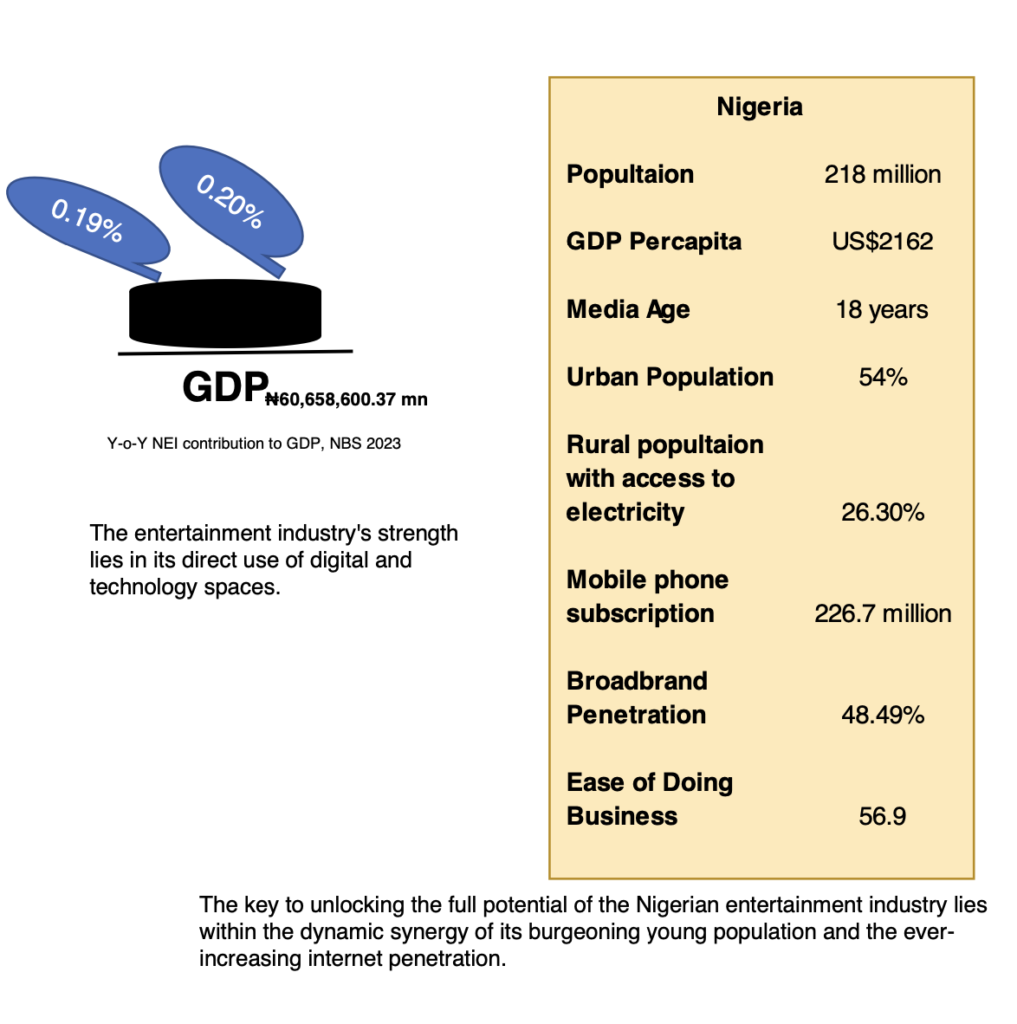

Nigeria’s creative and entertainment sector has moved from being treated as a cultural curiosity to being measured as a line item in the national accounts. The measurement itself is the first surprise. In the National Bureau of Statistics quarterly GDP reports, the subsector formally labelled “Arts, Entertainment and Recreation” contributes a fraction of one percent of total output. In the second quarter of 2026 it accounted for roughly 0.31 percent of GDP, after growing 11.93 percent in real terms year on year. Earlier quarters sit in a similar band, between about 0.18 and 0.31 percent depending on whether the figure is measured at nominal or real prices.
That number is the single most misquoted statistic in Nigerian entertainment commentary. Figures of two, three or five percent circulate widely, usually because a writer has silently swapped the narrow NBS subsector for a far broader definition of the creative economy that folds in telecoms, advertising, fashion, software and tourism. Both numbers can be defensible. They are not the same number, and the NBS line is the one with an official publisher behind it.
What the Official Numbers Actually Say
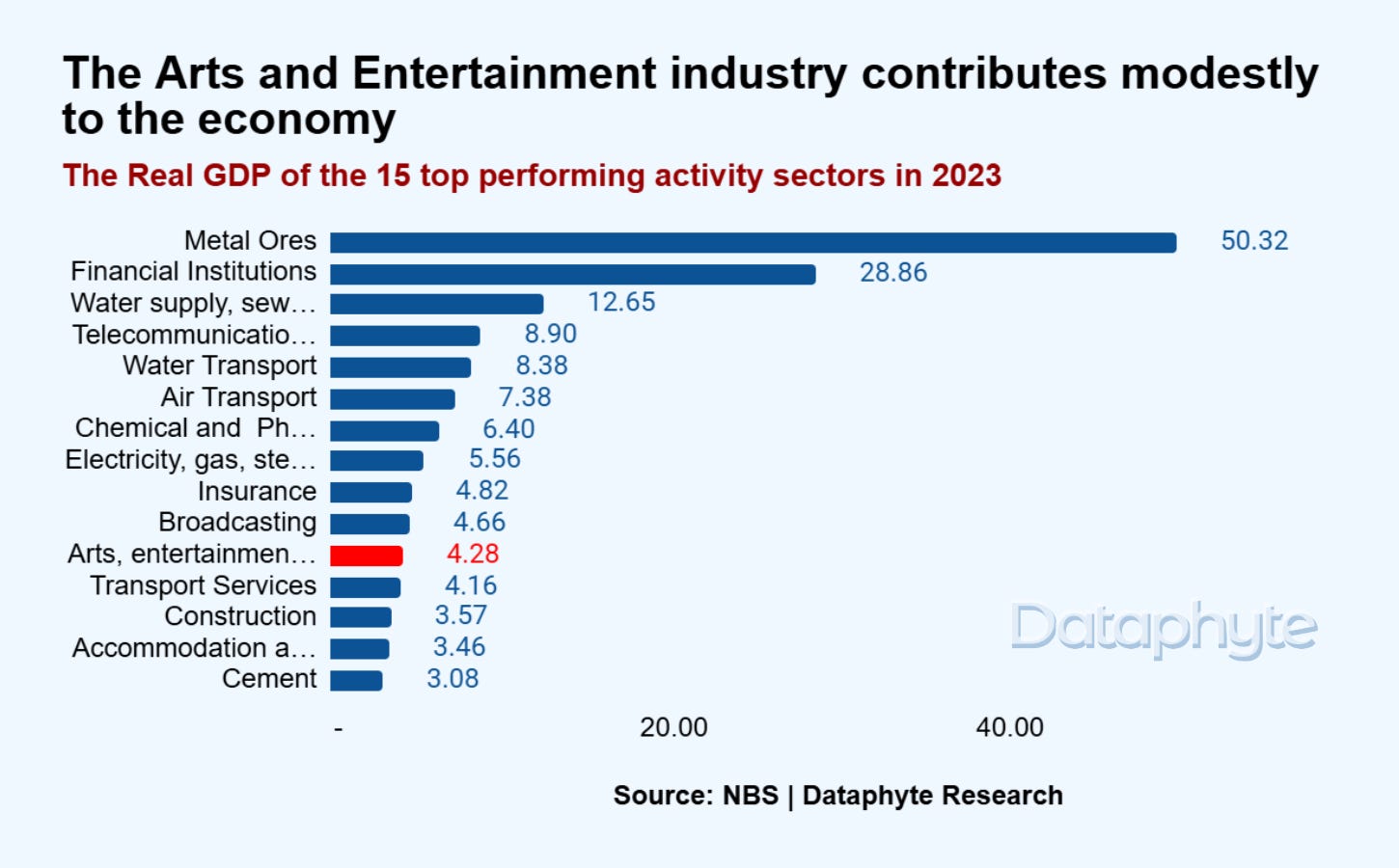
GDP in Nigeria is compiled and published by the National Bureau of Statistics, with the Central Bank of Nigeria republishing the sector series in its data and statistics pages. Arts, Entertainment and Recreation sits inside the services block. Across recent quarters the line has shown strong percentage growth from a small base, which is exactly what a young, fast-formalising sector looks like in national accounts.
| Measure | Figure | Source |
|---|---|---|
| Arts, Entertainment and Recreation share of GDP, Q2 2026 | About 0.31 percent | NBS quarterly GDP report |
| Real growth of the subsector, Q2 2026 | 11.93 percent year on year | NBS quarterly GDP report |
| Film and music contribution to GDP, 2023 | About ₦1.97 trillion (around US$1.4 billion) | US International Trade Administration country commercial guide |
| Three-year change in that contribution to 2023 | Up 27.5 percent | US International Trade Administration |
| Netflix investment in Nigerian content to date | More than US$23 million | US International Trade Administration |
The broader framings land higher. The US International Trade Administration, drawing on Nigerian and industry data, put the combined film and music contribution at about ₦1.97 trillion for 2023, equivalent to roughly US$1.4 billion at the time, and 27.5 percent above the level of three years earlier. Note the year attached to that naira figure. The currency has moved sharply since, so a naira total from 2023 cannot be compared with a 2026 one without converting both.
Why Measurement Lags Reality
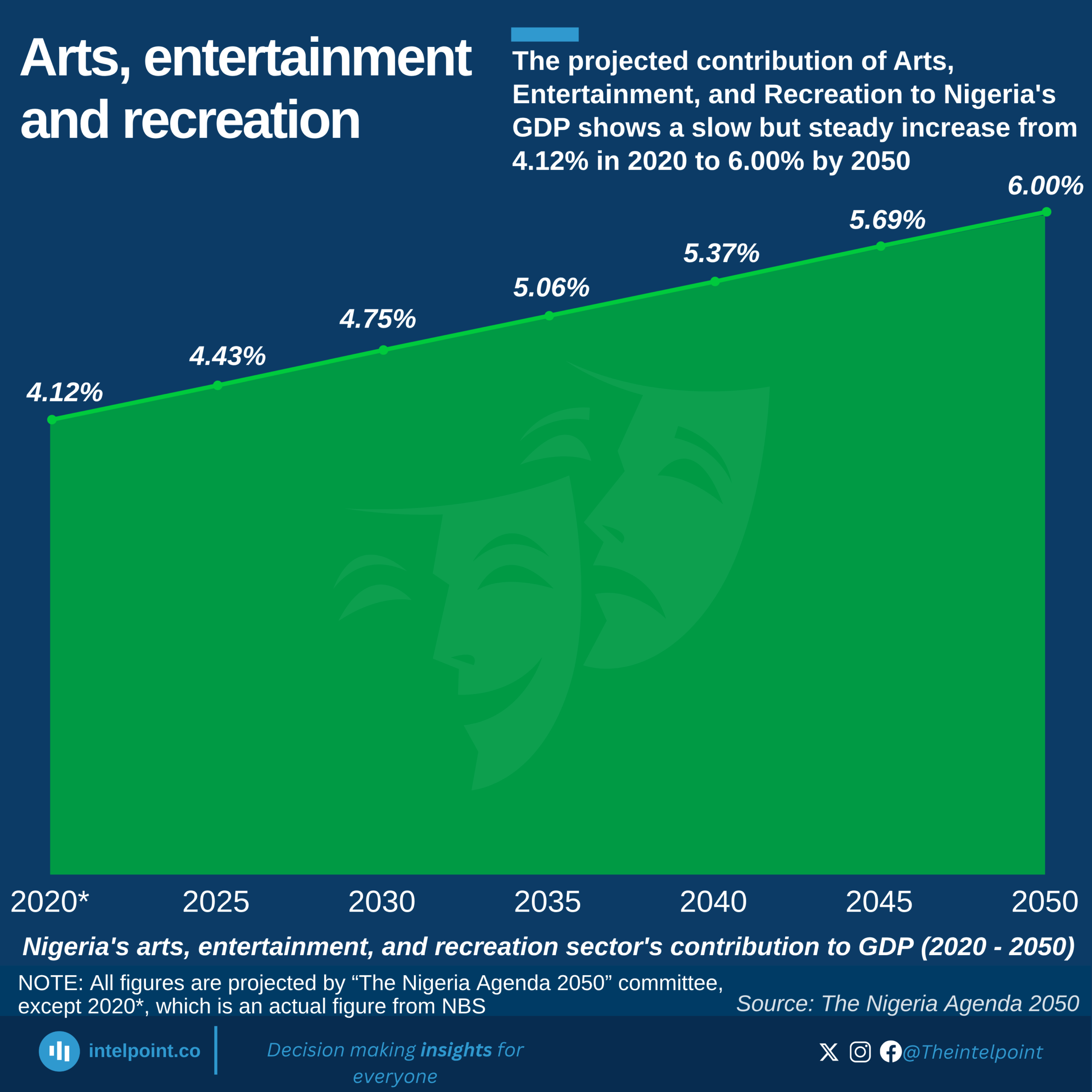
Nigeria’s data infrastructure for creative industries is thin compared with mature markets. The United States has the Bureau of Economic Analysis publishing an annual Arts and Cultural Production Satellite Account. The United Kingdom has DCMS releasing detailed creative-industry breakdowns. Nigeria does not yet have an equivalent satellite account, which means analysts piece a picture together from NBS quarterly reports, collection-society data, telco content disclosures and private forecasts such as PwC’s Africa Entertainment and Media Outlook.
The gap is structural rather than negligent. A street DJ playing at a Lagos owambe, a freelance editor cutting a YouTube video from a bedroom in Enugu, a costume designer building outfits for a shoot in Asaba: most of that activity sits in the informal economy, where revenue is paid in cash, contracts are verbal and tax filings are optional. Statisticians reach it only by extrapolation from samples and registered filings, which is why the official share should be read as a conservative floor rather than a measured ceiling.
Nollywood as the Anchor Tenant

No conversation about creative output in Nigeria starts anywhere other than film. Nollywood produces around 2,500 films a year and is widely described as the second-largest film industry in the world by volume of titles. That ranking is volume-based, not revenue-based, and the distinction matters. Hollywood still dwarfs it in dollar terms. Nollywood’s historic strength has been throughput, distributed first through home video and now increasingly through streaming.
The streaming era restructured the industry’s economics. Netflix opened a Lagos office and began commissioning Nigerian originals, and the International Trade Administration records more than US$23 million of Netflix investment in Nigerian content. Prime Video and Showmax followed with their own licensing and originals slates. EbonyLife, Anthill Studios, Inkblot Productions and FilmOne have all signed multi-title arrangements with international platforms. A licensing agreement over a back catalogue is a hard-currency export: it shows up in producer revenue, talent fees, post-production work for sound and colour houses, and eventually in tax receipts.
The Box Office Still Matters
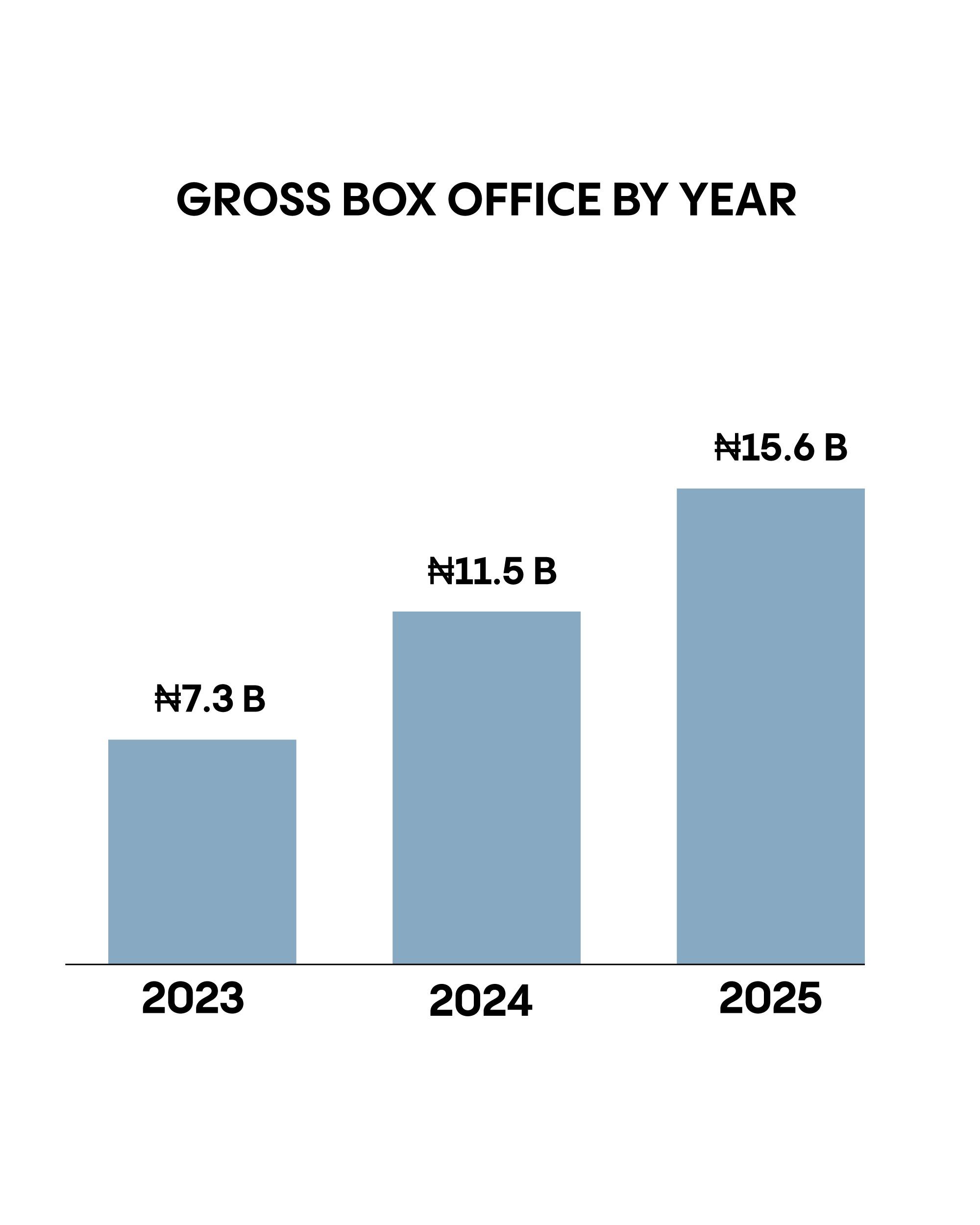
Cinema exhibition recovered after the pandemic with notable speed. Filmhouse and Genesis cinemas continued expanding into secondary cities, and local titles have held their own against international releases. In the first half of 2024, Nollywood films earned more than ₦5 billion at the Nigerian box office and accounted for about 56 percent of total cinema revenue, according to figures compiled in the US International Trade Administration’s market guide. Funke Akindele’s titles have been repeat standouts at the top of the all-time domestic gross charts. Each ticket sold runs through a value chain that pays distributors, exhibitors, marketers, security staff and talent, and each of those payments is a small contribution to the national accounts.
Music’s Export Economy
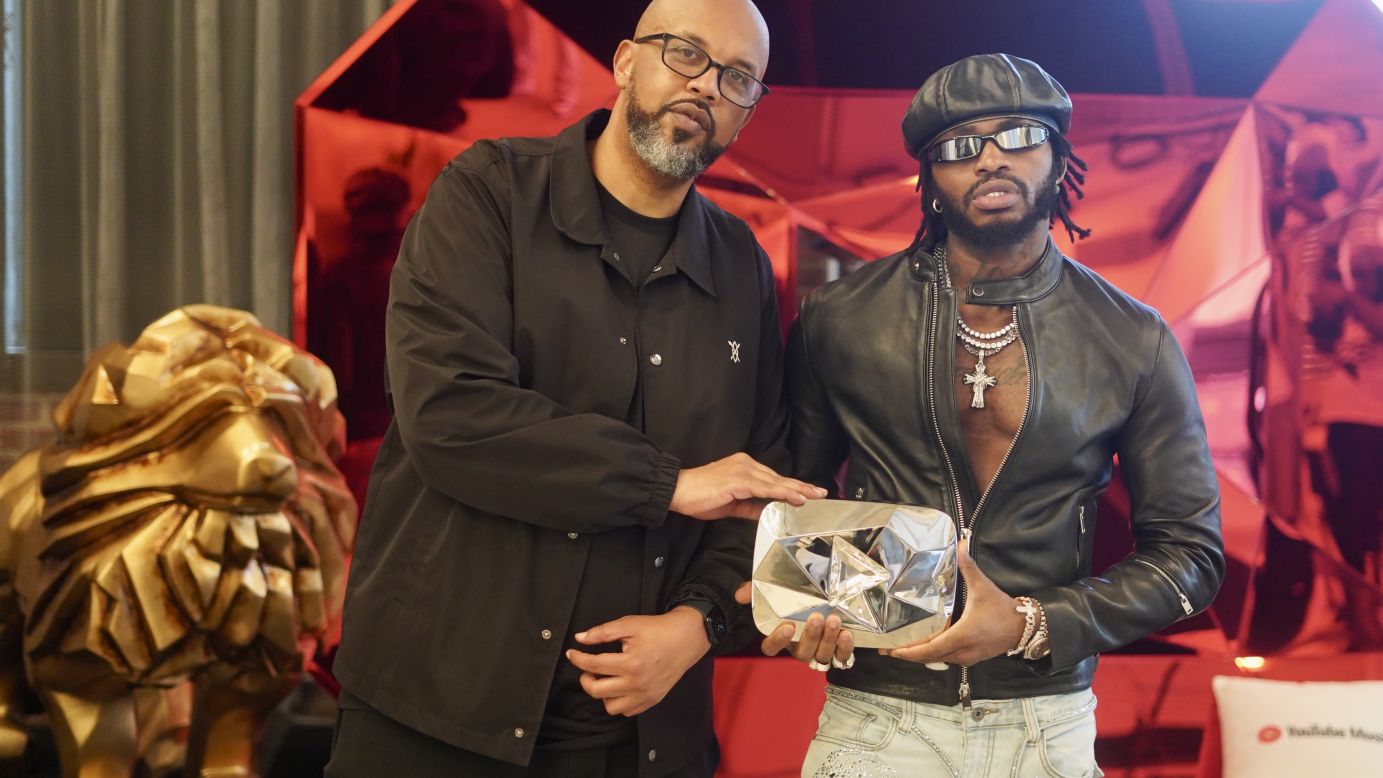
Nigeria’s recorded-music revenue is harder to pin down than film, because so much of it is earned offshore and paid through international rights intermediaries. The clearest published marker is the digital segment: the International Trade Administration cites a Nigerian digital music market of roughly US$122 million for 2024, growing at a compound rate of about 6.9 percent. Anything beyond that, including live, sync and brand income, is estimate territory and should be labelled as such.
What is not estimated is the global footprint. Burna Boy, Wizkid, Davido, Rema, Asake, Tems and Ayra Starr have all logged very large international streaming audiences, and Spotify’s own market reporting has repeatedly flagged Afrobeats as one of the fastest-growing genre exports on the platform. Royalties from those streams flow back to publishers, labels and artists, converting into naira inflows when artists repatriate earnings, sign local deals or pay Lagos-based teams.
The Mavin Transaction as a Reference Point
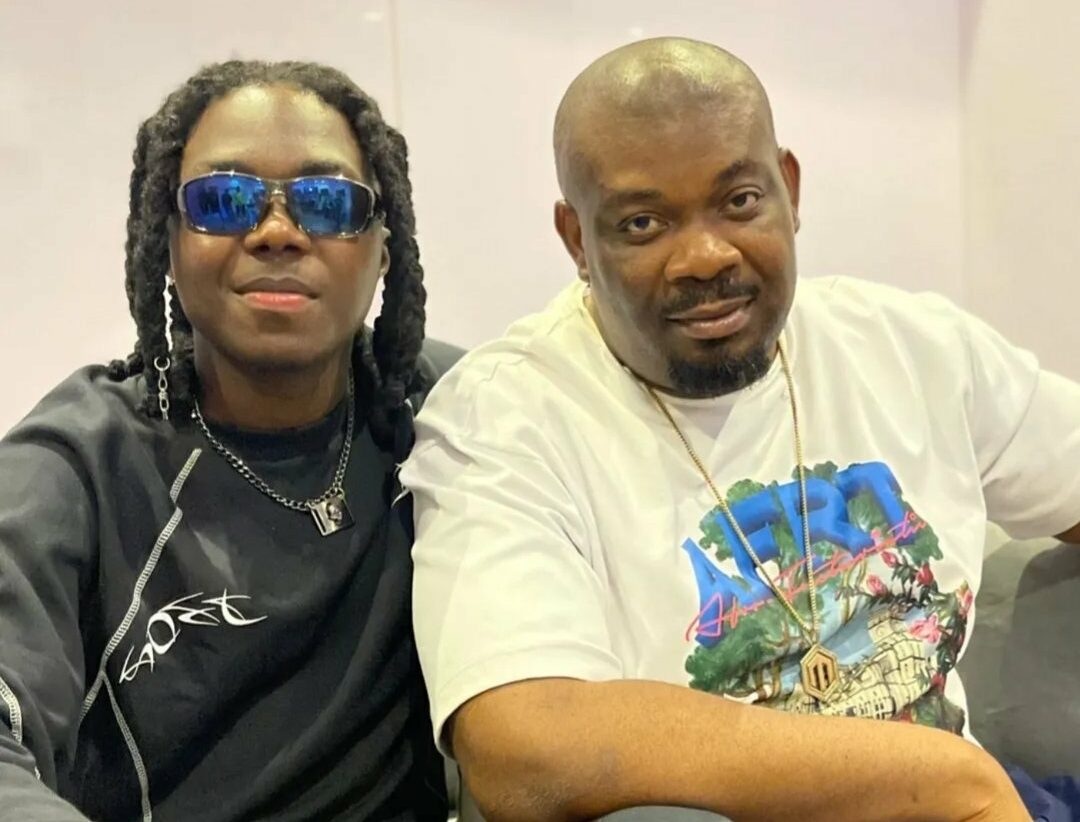
In February 2024 Universal Music Group announced a majority investment in Don Jazzy’s Mavin Global, with the transaction expected to close by the end of the third quarter of that year. UMG did not disclose the price. Billboard reported that Mavin had been shopped at a valuation north of US$125 million, with trade estimates ranging up to around US$200 million, and the private-equity holder TPG exited through the deal. It was a majority investment with an undisclosed consideration, not a disclosed acquisition at a headline figure, and that distinction matters when the number is repeated.
Earlier, in March 2019, Warner Music Group announced a partnership with Chocolate City: distribution and artist services through its ADA division, alongside an investment in the label’s talent development. That was a distribution and investment arrangement, not a takeover. Together the two deals show global capital pricing Nigerian catalogues rather than simply licensing them, and that repricing cascades into studio investment, headcount, office leases, professional fees and new signings, all of which are measurable economic activity inside Nigeria.
Telco Money as the Quiet Engine
MTN, Glo, Airtel and 9mobile have spent over a decade pouring marketing budgets into entertainment. MTN’s sponsorship of the Headies, Glo’s long-running ambassador roster and Airtel’s concert and reality-show backing add up to a substantial annual transfer of capital from telecommunications into the creative economy. Telco-backed concerts and talent shows employ producers, set builders, lighting crews, security firms, hospitality vendors and broadcast teams, and the operators also earn direct entertainment revenue through ring-back tones, mobile music platforms and content bundles, which feed royalty pools that pay artists and rights holders.