
The “record label” framing stopped being accurate for the biggest names in Nigerian entertainment some years ago. What has been happening instead is the slow, mostly unannounced construction of vertically integrated media companies that reach from the studio session to the consumer touchpoint: distribution arms, publishing arms, training academies, cinema chains, festival businesses, newsrooms. A handful of these companies have become genuine empires. A larger handful are PR-led pretenders. Sorting one from the other is the actual story, and the sorting turns almost entirely on corporate structure, which is where most coverage of this sector gets things wrong.
Mavin Global
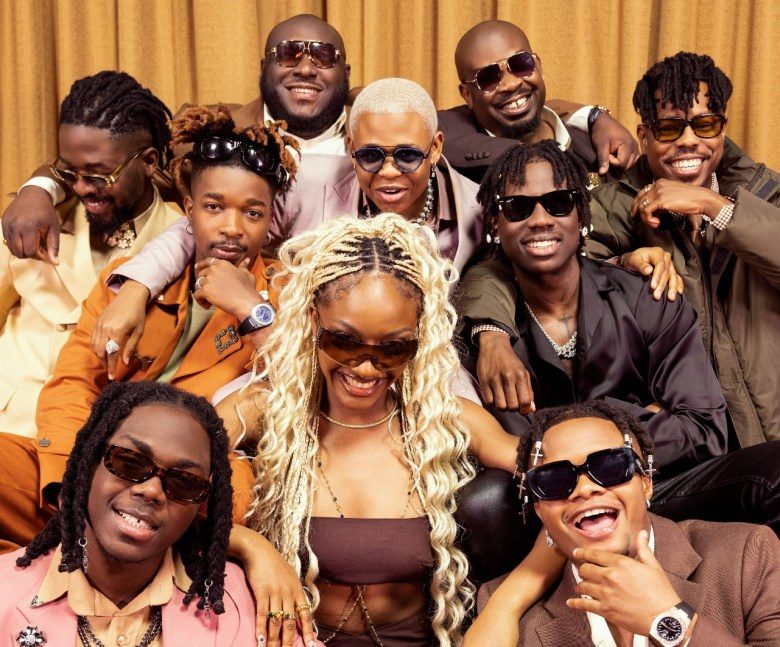
Don Jazzy’s outfit is the cleanest case study of the shift. In February 2024, Universal Music Group announced that it had acquired a majority stake in Mavin Global. It was an investment, not an outright acquisition, and the price was not disclosed. That distinction is not pedantry. A majority investment leaves the founding management in operational control, which is precisely the arrangement Mavin has: Universal provides capital and global plumbing, while Mavin keeps creative and day-to-day direction.
What made the company worth that structure was the work done before the deal. Mavin had already spent years building out beyond the label: a distribution operation servicing independent African artists across streaming platforms, an in-house data and A&R function, a publishing arm, and management infrastructure run separately from the label roster. The Mavin All Stars project, which on the surface looked like a marketing exercise, was in practice a stress test of whether the company could coordinate artist services, video production and a multi-market rollout under one roof. The operating model now resembles a holding company more than a record label. That is what an empire looks like when it is built in the right order.
EbonyLife Media
Mo Abudu’s company gets called an empire so often that the word has lost weight, but the underlying business has changed enough to deserve a fresh look. EbonyLife is no longer primarily a television operation. Its Netflix relationship, which produced the series “Blood Sisters,” matured into a development engine, and the company has announced scripted development deals with Netflix and a number of US studios and production companies. Rather than list partners that cannot all be confirmed, the safer summary is that EbonyLife moved from making shows to developing slates.
The lifestyle arm, EbonyLife Place in Victoria Island, functions as both a hospitality business and a production location, hosting premieres, brand activations and an in-house cinema. The training arm, EbonyLife Creative Academy, is producing the writers and producers who will staff the next generation of Nigerian shows, which means Abudu is building both the supply chain and the talent pipeline.
The honest weakness is that the company remains heavily founder-dependent. Pull Mo Abudu out of the equation and it is not clear who runs the place. Empires that cannot survive the departure of the founder are not really empires, and this is the single biggest open question in Nigerian screen business right now.
Inkblot Productions
The Inkblot team, led by Naz Onuzo and Chinaza Onuzo, built the company the slow way, one script at a time, and the result is one of the most consistent production houses in Nollywood. “The Wedding Party,” co-produced with EbonyLife, turned them into a household name. “Citation” proved they could handle heavier material. The slate since has shown a discipline most of their peers lack, moving between theatrical releases and streaming originals without obvious drops in craft.
What pushes Inkblot toward empire territory is less visible than the films: a genuine owned-IP library and a repeatable development process, which together are what make a production company an asset rather than a series of one-off projects. They are not loud about it. The constraint is scale. A company this dependent on the quality of individual screenplays cannot grow by simply spending more, which is both the reason the output stays good and the reason the ceiling is where it is.
FilmOne Entertainment and the Filmhouse Group
If Inkblot is the cleanest production story, the Filmhouse Group is the cleanest distribution story, and distribution in a market this fragmented is where real leverage lives. Here the corporate structure is routinely misreported, so it is worth setting out exactly: Filmhouse Group is the parent, and it houses Filmhouse Cinemas, FilmOne Entertainment and FilmOne Studios as sister entities. FilmOne does not own the cinema chain. They sit alongside each other under the same group.
The group was co-founded in 2012 by Kene Mkparu, who opened the first three-screen cinema in Surulere, Lagos, using an initial loan of ₦200 million drawn from the creative-industry intervention funds established under President Goodluck Jonathan. That figure is a 2012 number. Mkparu left in 2018, and Kene Okwuosa, who became managing director of Filmhouse Cinemas on his exit, is now group chief executive. Attributing current leadership to Mkparu, as several profiles do, is out of date by the better part of a decade.
Filmhouse accounts for roughly half of cinema tickets sold in Nigeria, and FilmOne handles theatrical release for most major Nollywood titles plus the Nigerian rollout for a good deal of Hollywood and Bollywood content. The vertical integration across the group is the moat. A producer who wants the widest possible Nigerian theatrical run is in a conversation with FilmOne whether they want to be or not, and the group has used that position to move into production itself, co-financing and acquiring slates in exchange for distribution rights. Producers complain about the terms. Those complaints are also, structurally, what people complain about when they are dealing with an empire.
Anthill Studios
Niyi Akinmolayan’s Anthill is the most interesting outlier here because the company built its position through technique rather than capital. Anthill produced “The Set Up” and “Prophetess,” among a run of titles that made it a reference point for visual effects work in Nollywood. The studio also services other production companies, doing post and VFX across the African market, which means the same crew and infrastructure get monetised two or three times over.
Akinmolayan has been candid in interviews about the model. He treats the studio as a craft business first, deliberately staying smaller than competitors who chase volume. The result is a company that punches well above its capitalisation. Whether that scales into empire territory depends on whether Anthill can replicate its leadership bench, and so far that question is unresolved.
MultiChoice, Canal+ and the Africa Magic Ecosystem
Any honest map of Nigerian entertainment empires has to include MultiChoice, even though the parent has never been Nigerian. The Africa Magic channels, DStv’s Nigerian content commissioning, SuperSport’s Nigerian football coverage and the Showmax originals slate together form the single largest commissioning entity in the Nigerian content market. Showmax relaunched in 2024 on new technology with NBCUniversal, part of Comcast, holding a minority stake, which pulled it into closer competition with Netflix and Prime Video.
The ownership question is no longer pending, and this is where most writing on the subject is now simply out of date. Canal+ closed its acquisition of MultiChoice in September 2025, a deal worth 35 billion rand, roughly two billion US dollars at the time. The French group completed the compulsory acquisition of the remaining MultiChoice shares with effect from 5 December 2025, MultiChoice delisted from the Johannesburg Stock Exchange and A2X shortly afterwards, and Canal+ took a secondary JSE listing in its place. The combined business serves more than 40 million subscribers across close to 70 countries.
For Nigerian producers, the consequence is structural rather than immediate: the largest buyer in their market is now part of a Pan-African group answering to a French parent, and commissioning logic follows ownership sooner or later. Empires of this size do not move quietly, but they do reshape the smaller empires around them.