African Short Story Collections That Shaped Modern African Literature
Arianne Cole··11 min read
Ad SpaceArticle Top - 728x90
Advertisement
The Caine Prize for African Writing was founded in the United Kingdom in 2000, named in memory of Sir Michael Harris Caine, the businessman and philanthropist who chaired Booker plc and, for close to twenty-five years, the Booker Prize management committee. It was built around a single short story rather than a book, and its annual anthologies of shortlisted and workshop stories have published a great many writers who had no other book publication at the time. Over the quarter century since, the short story has become the most common on-ramp for a new voice from the continent, for reasons partly economic and partly formal. Stories travel faster than novels, the magazine economy in New York and London still pays for them, and a writer can place a Lagos-set story in a literary magazine long before landing a book deal. The form also suits what this generation does well, which is to compress into twenty pages what an earlier generation needed two hundred to stage.
This is a selection rather than a ranking. The order is not a hierarchy of quality; it runs from the single-author collections that set the terms of the contemporary conversation, through the anthologies that organised it, and back to one older and one quieter book that deserve more readers than they have. The inclusion test is narrow: each entry is a genuine short story collection or a short story anthology, and each has demonstrable reach, meaning it is taught, anthologised, kept in print or routinely handed to new readers. Novels, novels-in-stories, essay collections and single novellas are excluded even where publishers have marketed them as collections, and that exclusion has done real work in building the list.
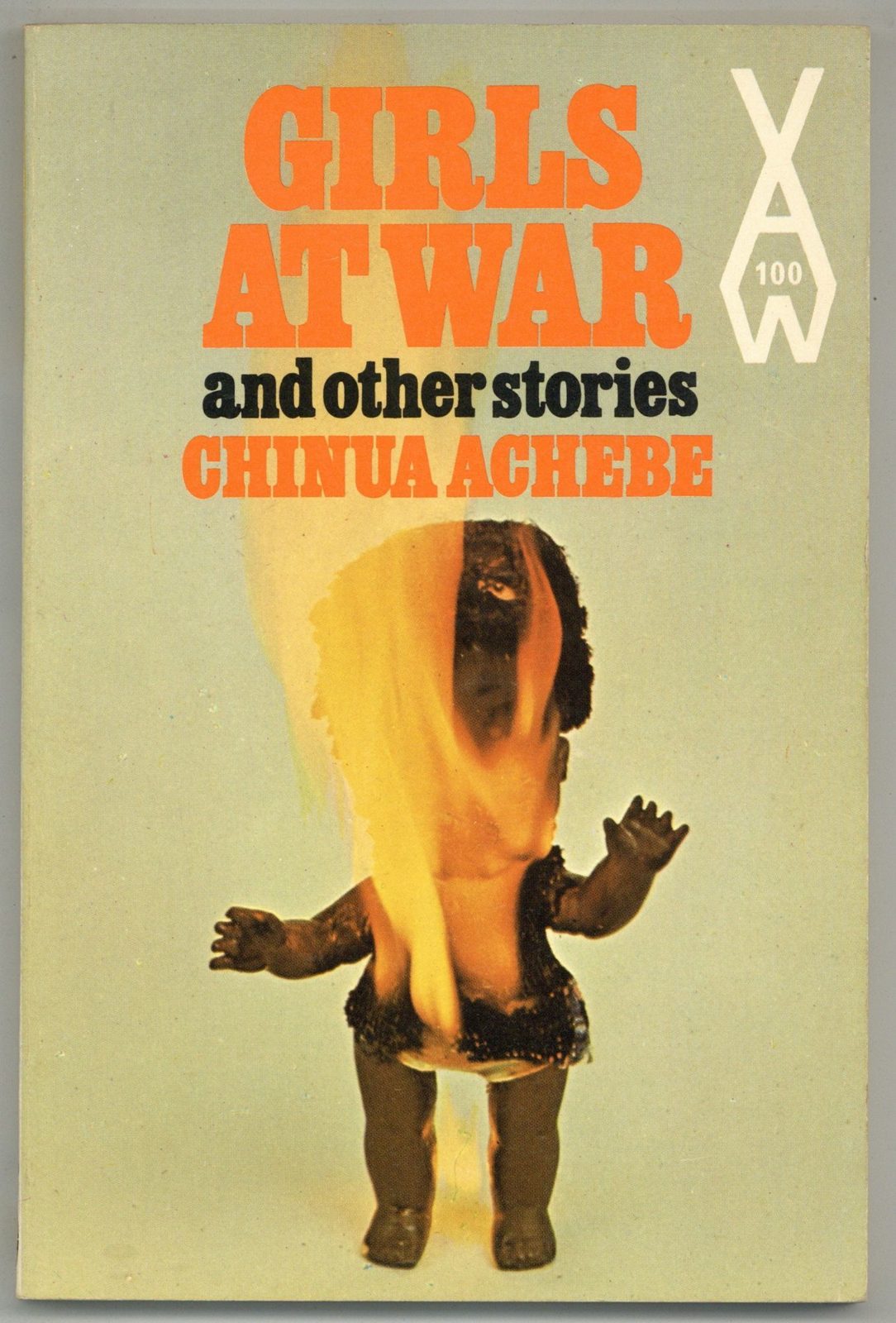
1. Girls at War and Other Stories by Chinua Achebe (1972)
Image: Biblio
Any account of the African short story in English that begins after 2000 is missing its foundation. Achebe’s only story collection gathers stories written across roughly two decades, including “The Madman,” “Vengeful Creditor,” “Civil Peace” and the title story, which turns on a Biafran militiawoman and the official who meets her again at three different stages of the war. The stories are not offcuts from the novels. They do something the novels structurally cannot, which is to land a whole social arrangement in a dozen pages and leave before the explanation arrives. “Civil Peace” in particular, with its mild narrator negotiating calmly with armed thieves, is a fixture on school and university syllabi, and the collection remains the template against which the writers below are measured, whether or not they choose to work in Achebe’s register.
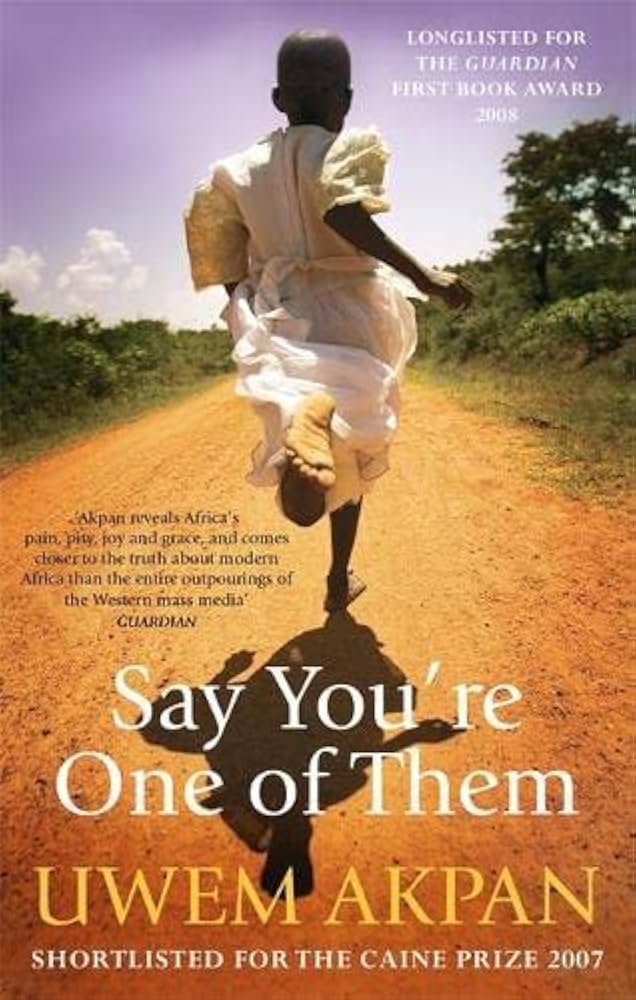
2. Say You’re One of Them by Uwem Akpan (2008)
Image: Hachette Australia
Akpan, a Nigerian writer and Jesuit, wrote five long stories from the viewpoints of African children caught in conflict, trafficking and religious violence, set in Kenya, on the Nigeria and Benin border, in Rwanda, in Nigeria and in Ethiopia. The book won the 2009 Commonwealth Writers’ Prize for Best First Book in the Africa region, the PEN/Beyond Margins Award and the Hurston/Wright Legacy Award for fiction, and Oprah Winfrey selected it for her book club in 2009, a choice that drew criticism in some African literary circles for its concentration on suffering. What the attention partly obscured is how technically strange the stories are. Akpan writes a code-switched English that absorbs Pidgin and other registers, and “My Parents’ Bedroom,” the Rwanda story, is one of the most controlled compressions of genocide in the form. Winfrey, announcing the pick, said that in more than sixty books she had never before chosen a story collection.
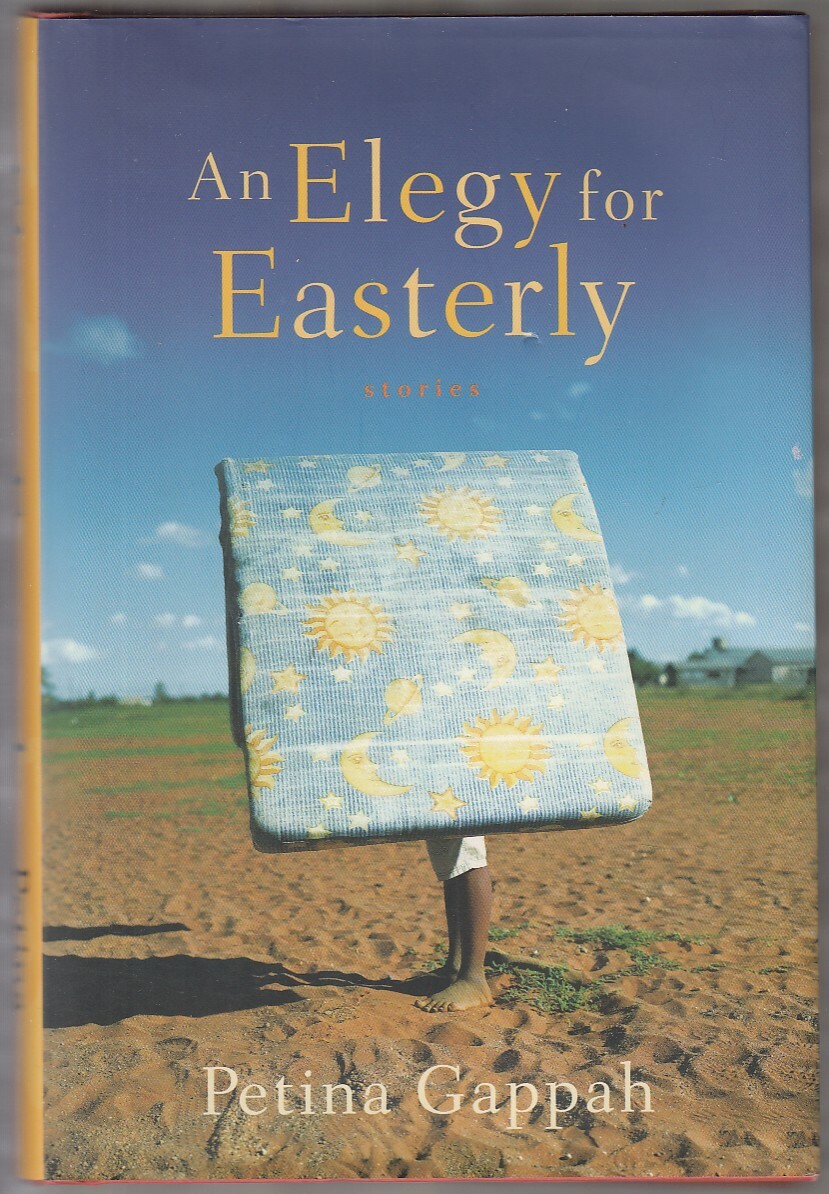
3. An Elegy for Easterly by Petina Gappah (2009)
Image: Open Library
Gappah’s debut collection won the Guardian First Book Award in 2009. The stories range across Harare’s wealthy suburbs, a shantytown, and the Zimbabwean diaspora in Geneva and London, where Gappah had spent years working as an international trade lawyer. The collection is funny in the way only a satirist who has watched a state fail from the inside can be, and the comic surface is load-bearing rather than decorative: the jokes are how the characters survive their circumstances, and Gappah withdraws them at exactly the moments she wants the reader undefended. She has since published novels and a book built around the African attendants who carried David Livingstone’s body to the coast, but the short story is where her voice arrived fully formed, and her second collection, Rotten Row (2016), confirms it was not beginner’s luck.
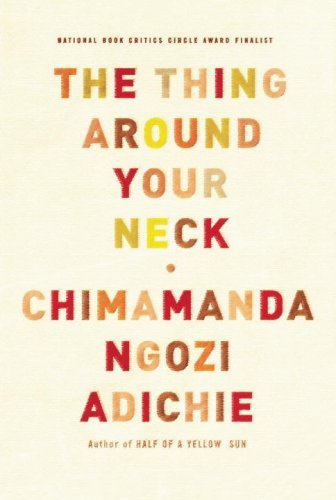
4. The Thing Around Your Neck by Chimamanda Ngozi Adichie (2009)
Image: Publishers Weekly
Adichie’s only story collection to date, and the book to read to understand the formal range she set aside when she committed to the novel. Twelve stories move between Nigeria and the United States. “Cell One” is a hard portrait of campus cultism in 1990s Nigeria. “The American Embassy” compresses a single visa queue interview into a few pages. “Imitation” is a quiet, devastating account of a marriage conducted across two continents. Critics divided at the time over whether the collection matched Half of a Yellow Sun or read as sketches toward it, and the verdict has since tilted toward the stories. They are the most teachable Adichie there is, which is why a creative writing class on point of view will often have one of them on the reading list.
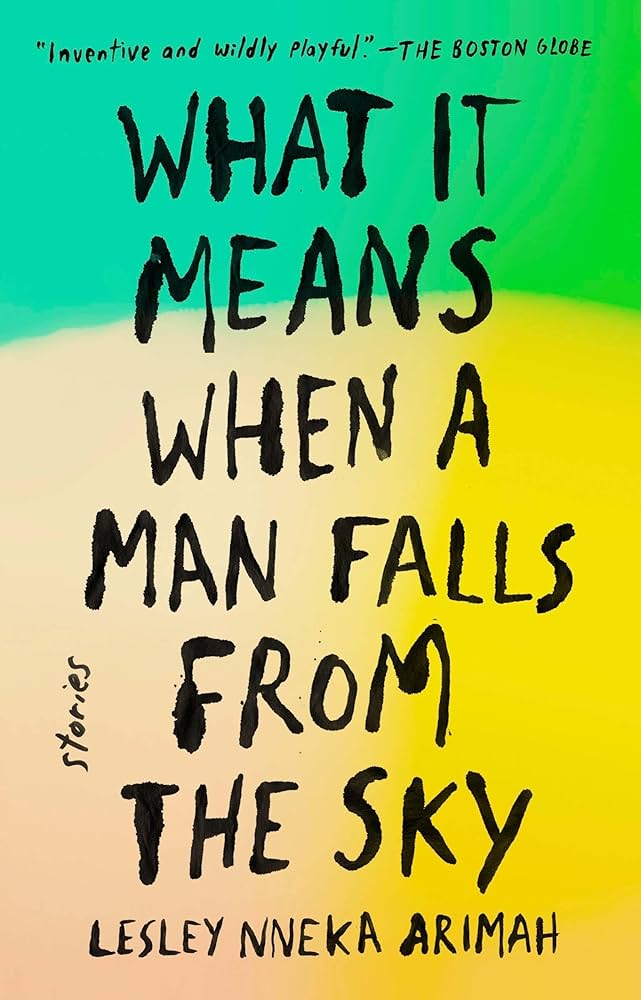
5. What It Means When a Man Falls From the Sky by Lesley Nneka Arimah (2017)
Image: Penguin Random House
Arimah’s debut won the Kirkus Prize and the New York Public Library’s Young Lions Fiction Award. The collection moves between Lagos, Minneapolis and speculative geographies with no maps. “Who Will Greet You at Home” imagines a Nigeria in which women weave their children out of hair, cloth and clay, and was shortlisted for the Caine Prize in 2016; the title story imagines a world where mathematicians have learned to extract grief from the brain. Arimah is the writer of her generation most willing to break the realist contract, and the book argues page by page that African short fiction carries no obligation to stay inside the documentary tradition. It also contains sharp realist work on Nigerian American mother and daughter relationships, including “Light,” which won the Commonwealth Short Story Prize for the Africa region in 2015.
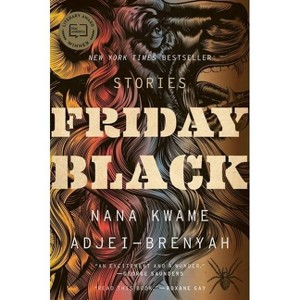
6. Friday Black by Nana Kwame Adjei-Brenyah (2018)
Image: Target
Adjei-Brenyah is American-born to Ghanaian parents, and his debut was the loudest entrance any first-generation writer made that decade. Twelve stories are set in dystopian retail environments, in a theme park where paying customers act out vigilante killings against employees hired to play the victims, and in an America where violence against Black people has been effectively licensed. The title story, in which Black Friday shoppers trample each other to death, was read as parable and reads more like reportage every year. The prose is brittle and fast, with a clear debt to George Saunders, with whom he studied at Syracuse, though the weight of the work sits in an African and African American Atlantic inheritance rather than in American satire. His subsequent novel Chain-Gang All-Stars (2023) confirmed the announcement made here.
Ad SpaceIn-Article - 300x250
Advertisement
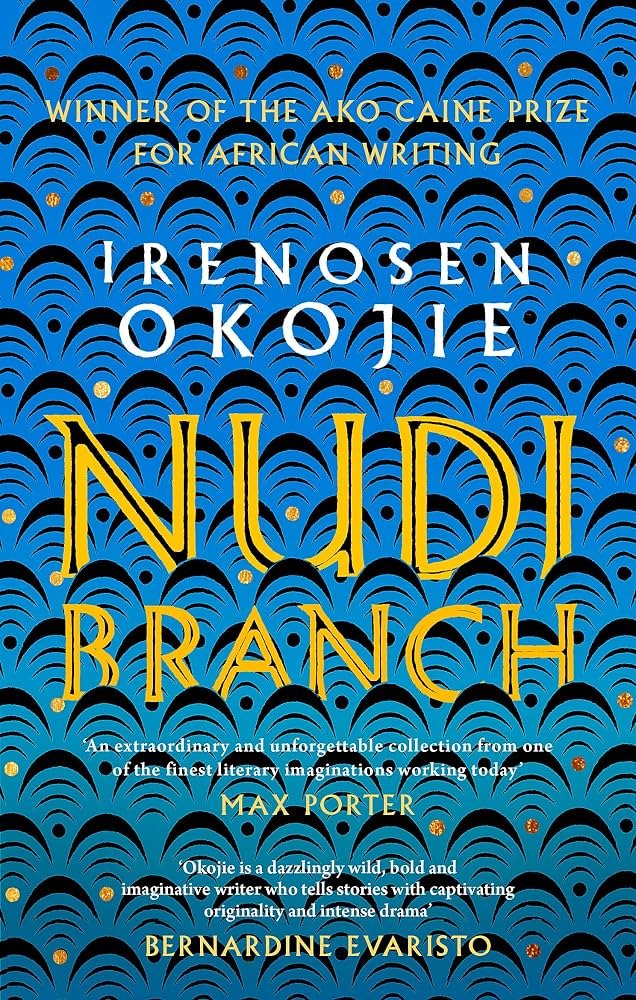
7. Nudibranch by Irenosen Okojie (2019)
Image: Amazon.com
Okojie, a Nigerian British writer, won the 2020 AKO Caine Prize for “Grace Jones,” the standout story in this collection, which follows an impersonator of the singer hired for a corporate booking who comes apart in performance. The prize is awarded to a single story rather than to a book, so the collection did not win it; it contains the story that did. Okojie was not the first Nigerian British writer to win, either: Segun Afolabi took the 2005 prize for “Monday Morning.” Nudibranch is the most formally avant-garde book on this list, dense and image-heavy, and not every story lands, as Okojie has said herself in interviews. The ones that land do so because she is doing something nobody else in the form is attempting. Read it after you have read the realists.
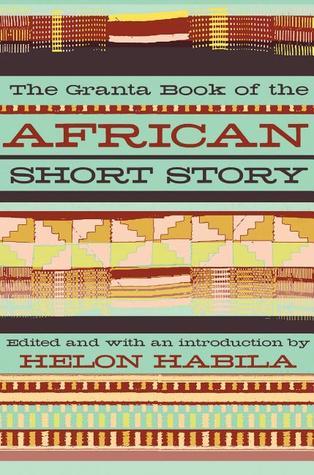
8. The Granta Book of the African Short Story, edited by Helon Habila (2011)
Image: arablit & arablit quarterly
Habila assembled this anthology at a hinge moment, when the post-2000 generation had produced enough work for an editor to argue that something new was happening. It gathers twenty-nine writers from twenty African countries and opens with Adichie’s “The Arrangers of Marriage.” Habila’s introduction is one of the most useful short essays in print on what African writing means after Achebe: he describes the contributors as a post-nationalist generation and argues, against the older postcolonial framing, that they write about specific places and specific economies rather than about the colonial wound, and that the wound is not the only subject available. Whether or not you accept the argument, this is the cleanest single-volume survey course on offer, and the one most likely to send you looking for a writer’s own collection.
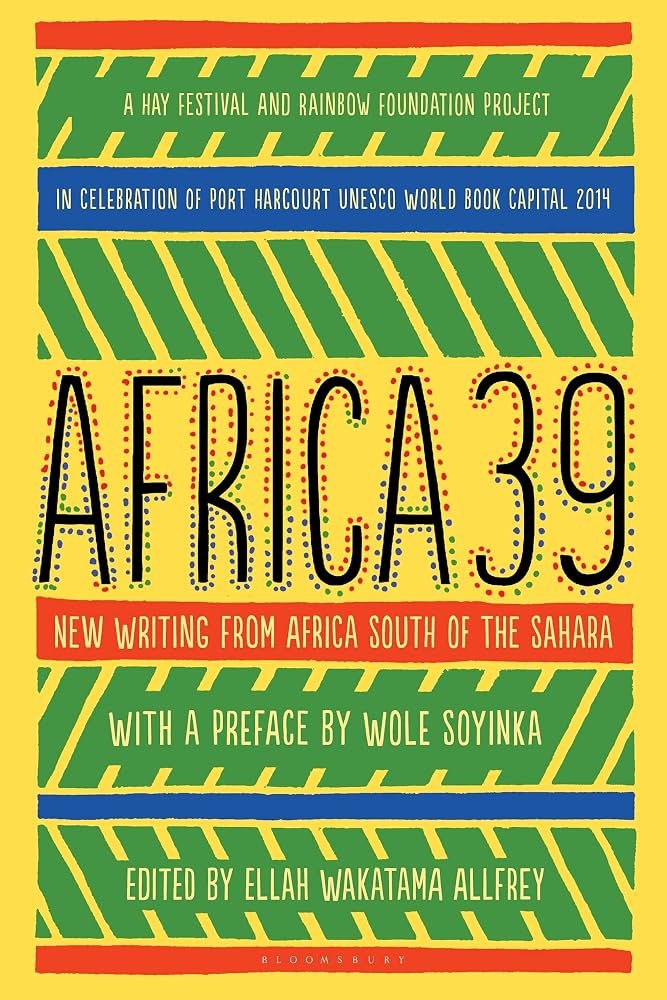
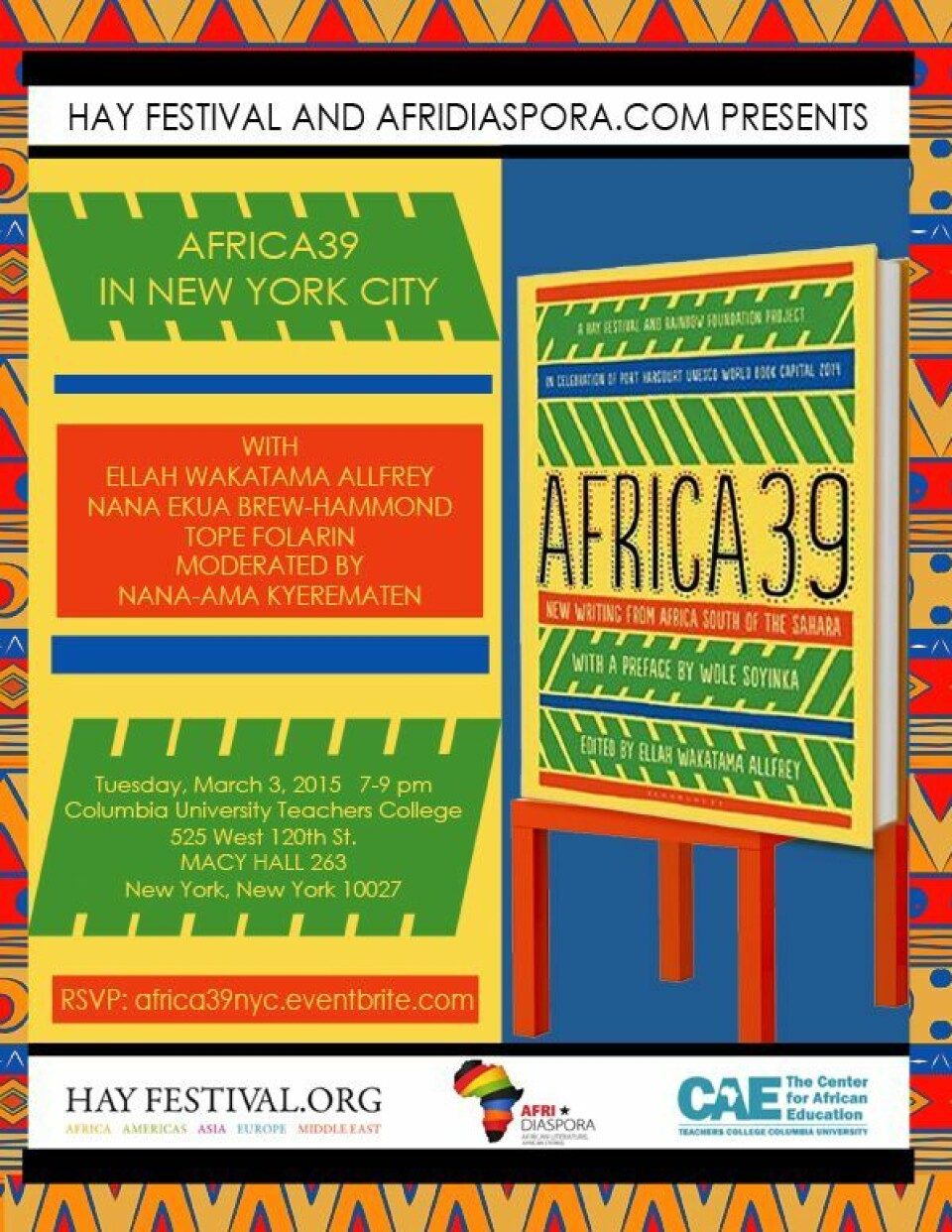
9. Africa39: New Writing from Africa South of the Sahara, edited by Ellah Wakatama Allfrey (2014)
Image: OkayAfrica
A Hay Festival project, run with the Rainbow Book Club to mark Port Harcourt’s year as UNESCO World Book Capital, which set out to identify thirty-nine writers under forty from Africa south of the Sahara whose work suggested they would shape the decades ahead. The judges were Margaret Busby, Osonye Tess Onwueme and Elechi Amadi, working from research by Binyavanga Wainaina, and Wole Soyinka wrote the preface. Contributions run from complete short stories to excerpts from novels and works in progress, so the book is uneven by design. The names have held up: Chimamanda Ngozi Adichie, Dinaw Mengestu, Taiye Selasi, Nadifa Mohamed, Namwali Serpell, Okwiri Oduor, Chibundu Onuzo, Lola Shoneyin, Ondjaki, Mehul Gohil and Glaydah Namukasa among them. It is also the easiest place to find short prose by writers who have since become novelists.
10. Lagos Noir, edited by Chris Abani (2018)
Akashic Books has run its city noir series since Brooklyn Noir in 2004, and Lagos Noir is the standout African volume. Thirteen stories are set in specific Lagos neighbourhoods, and the contributors include Chris Abani, Nnedi Okorafor, E. C. Osondu, Leye Adenle and A. Igoni Barrett. The crime frame turned out to be a productive constraint: every writer had to put violence at the centre, and the result is a portrait of the city’s economy of risk that the literary establishment had been slower to produce. The anthology also did the practical work of putting Lagos crime writers and Lagos literary writers between the same covers, a distinction that has always been more porous on the continent than the New York and London markets pretend.
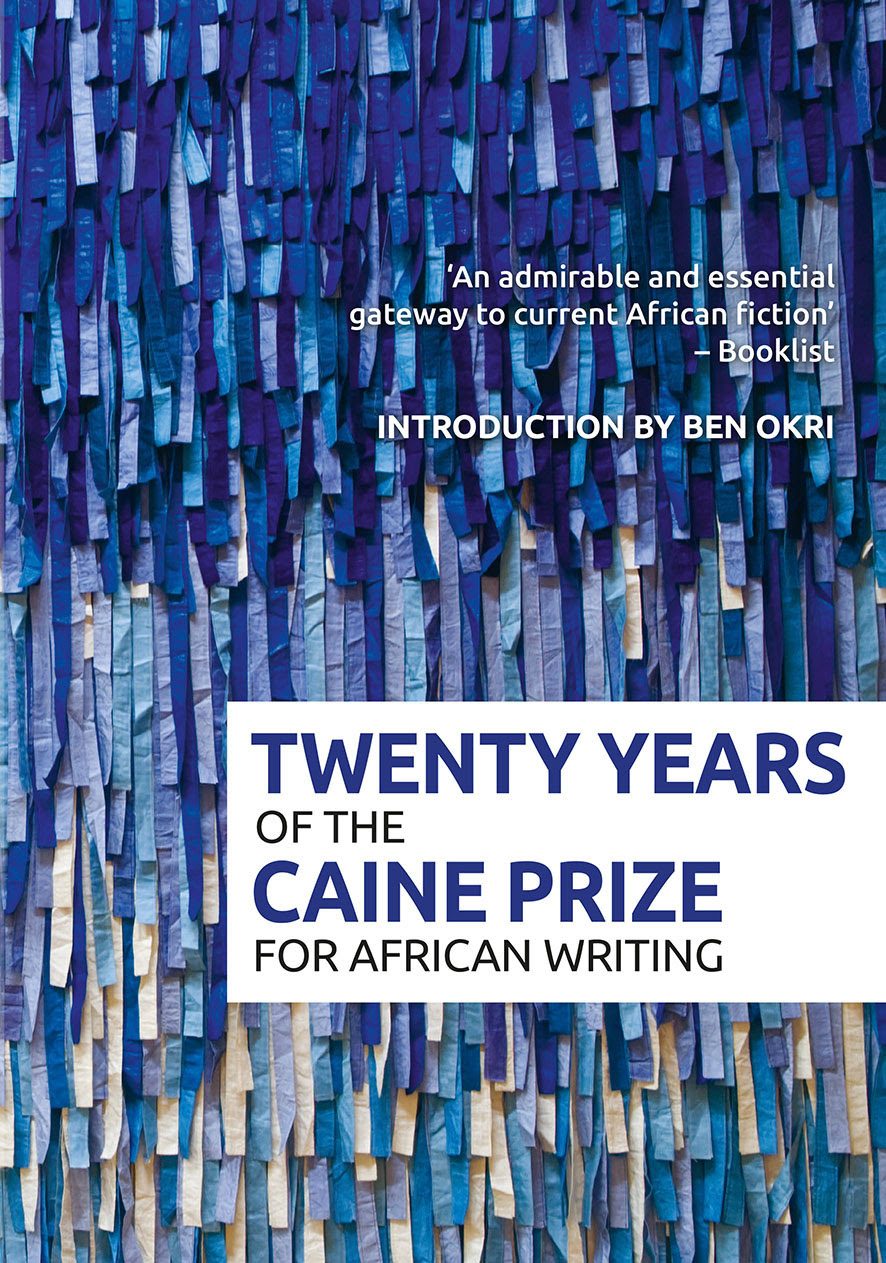
11. The Caine Prize anthologies (2000 onwards)
Image: Writing Africa
Not one book but an ongoing series, and the most efficient route into where the form has been since 2000. Each year’s shortlisted stories are published alongside stories written at the prize’s workshops, in recent years by Cassava Republic Press with partner publishers across the continent; the 2025 volume was Midnight in the Morgue and Other Stories. Reading the anthologies rather than only the famous winners is the point, because the shortlists are where you find writers who did not win in their year and built careers anyway. Winners you can trace through the run include Helon Habila (2001), Segun Afolabi (2005), Henrietta Rose-Innes (2008), E. C. Osondu (2009), Olufemi Terry (2010), NoViolet Bulawayo (2011), Tope Folarin (2013) and Irenosen Okojie (2020). The prize marked its twenty-fifth anniversary in 2025 with a Best of Caine Award, which went to Bulawayo.
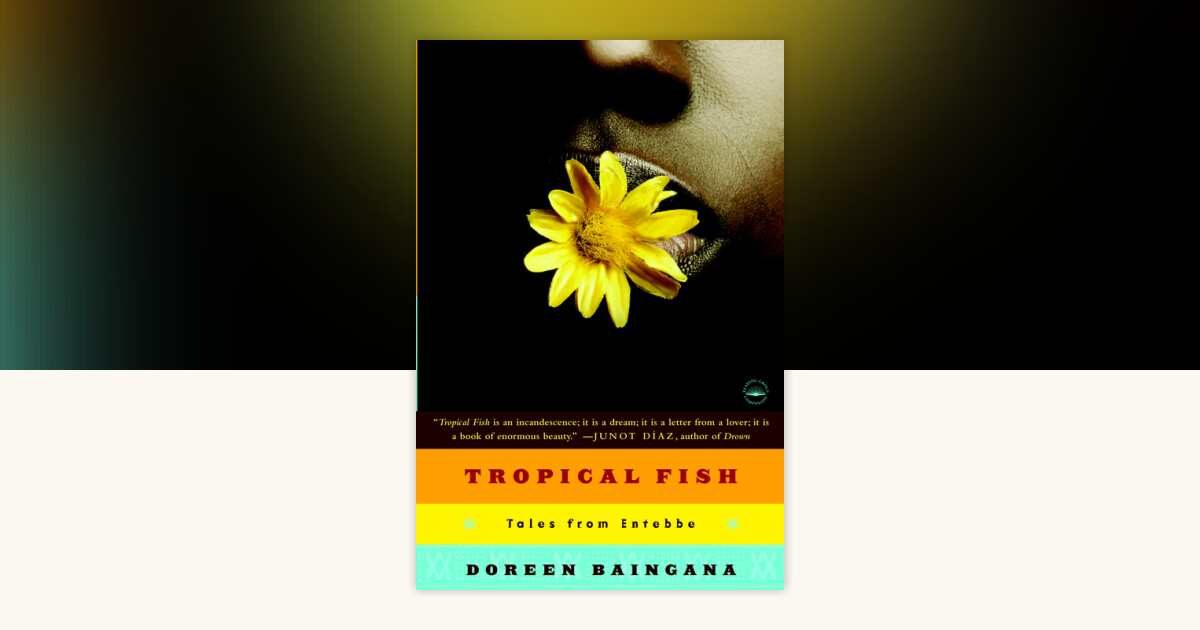
12. Tropical Fish: Stories Out of Entebbe by Doreen Baingana (2005)
Image: Penguin Random House
A Ugandan collection that has been in print for two decades and still deserves a wider readership. Baingana’s linked stories follow the three Mugisha sisters in Entebbe and Kampala across the years after Idi Amin’s fall, and the book won the AWP Award Series Grace Paley Prize for Short Fiction and the Commonwealth Writers’ Prize for Best First Book in the Africa region. It does what the best linked collections do, which is to build a novelistic accumulation across discrete pieces while refusing the unities a novel would demand: each sister gets her own reckoning, and the family resemblance between those reckonings is left for the reader to assemble. Baingana writes about the female body, about illness and about Christian girlhood in Buganda with an intimacy that Ugandan fiction has continued to draw from.
The list at a glance
Title
Author or editor
First published
Country
Form
Girls at War and Other Stories
Chinua Achebe
1972
Nigeria
Single-author collection
Say You’re One of Them
Uwem Akpan
2008
Nigeria
Single-author collection (five long stories and novellas)
An Elegy for Easterly
Petina Gappah
2009
Zimbabwe
Single-author collection
The Thing Around Your Neck
Chimamanda Ngozi Adichie
2009
Nigeria
Single-author collection (twelve stories)
What It Means When a Man Falls From the Sky
Lesley Nneka Arimah
2017
Nigeria / United States
Single-author collection
Friday Black
Nana Kwame Adjei-Brenyah
2018
United States (Ghanaian parentage)
Single-author collection (twelve stories)
Nudibranch
Irenosen Okojie
2019
Nigeria / United Kingdom
Single-author collection
The Granta Book of the African Short Story
Edited by Helon Habila
2011
Pan-African (29 writers, 20 countries)
Anthology
Africa39
Edited by Ellah Wakatama Allfrey
2014
Africa south of the Sahara (39 writers)
Anthology (stories and excerpts)
Lagos Noir
Edited by Chris Abani
2018
Nigeria
Anthology (thirteen stories)
Caine Prize anthologies
Various editors
2000 onwards
Pan-African
Annual anthology series
Tropical Fish: Stories Out of Entebbe
Doreen Baingana
2005
Uganda
Linked single-author collection
Where the gaps still are
The collections above are the spine of the form in English, and the shape of what is missing is as instructive as what is here. Francophone Africa is underrepresented in English-language short fiction anthologies, and a reader who wants to follow the form out of English should look to Birago Diop’s reworked Wolof tales and to the Cameroonian and Togolese writers working now. Lusophone Africa is almost absent, which is a distribution failure rather than a literary one: Mia Couto and Ondjaki have novels in English translation while their stories remain hard to find. North African short fiction in translation is a separate conversation that needs its own list. Southern Africa is thinner here than it should be, and Bessie Head’s The Collector of Treasures (1977) is the obvious correction to make first.
For a path through, start with Girls at War and The Thing Around Your Neck for the two poles of the realist tradition, then read the Granta anthology for the historical map, then pick whichever of Arimah, Okojie or Adjei-Brenyah looks most likely to break your sense of what a story can do. After that you are following the form on your own, which is the only way anybody ever reads it properly.
Ad SpaceIn-Article - 300x250
Advertisement
Share
Get the recap
Loved this story? Get more like it.
Join readers who get our weekly entertainment recap - the stories worth your time, delivered every Friday.
No spam. Unsubscribe anytime. By signing up you agree to our Privacy Policy.