The Nigerian Music Collaborations That Should Exist But Never Happened
Music

The Nigerian Music Collaborations That Should Exist But Never Happened

Jalen RossJalen Ross··8 min read
Ad SpaceArticle Top - 728x90
Advertisement

Table of Contents

When Generations Never Met in the Studio

The Nigerian Music Collaborations That - When Generations Never Met in the Studio

Nigerian music is one of the few entertainment industries on the planet where you can trace a near-unbroken line of creative evolution, from the highlife orchestras of the 1950s, through the Afrobeat revolution of the 1970s, into the jùjú dominance of the 1980s, and all the way to the global Afrobeats takeover of the 2020s. Each era produced artists who were not just talented but historically significant. And yet, for all its richness, Nigerian music history is full of doors that were never opened, collaborations that should have happened but didn’t, due to timing, geography, ego, industry politics, or simply the indifference that comes with not yet knowing how important someone will become. These are not fantasy pairings invented for sport. They are serious, artistically logical combinations that, had they materialized, could have genuinely altered the course of the music.

What makes dreaming about these collaborations more than idle nostalgia is what they reveal about how Nigerian music actually works. The industry has always had a complicated relationship with cross-generational respect. Younger artists often prefer to create distance from their predecessors to establish identity, while legends sometimes resist engaging with newer sounds they view as too commercial or too shallow. The result is a long list of near-misses, moments where two brilliant artists orbited each other without ever truly colliding. Some of these pairings are now permanently impossible. Others remain technically feasible, which makes them even more frustrating to think about.

Fela Kuti and Burna Boy: The Political Fire That Could Have Been
The Nigerian Music Collaborations That - Fela Kuti and Burna Boy: The Political Fire That Could Have Been

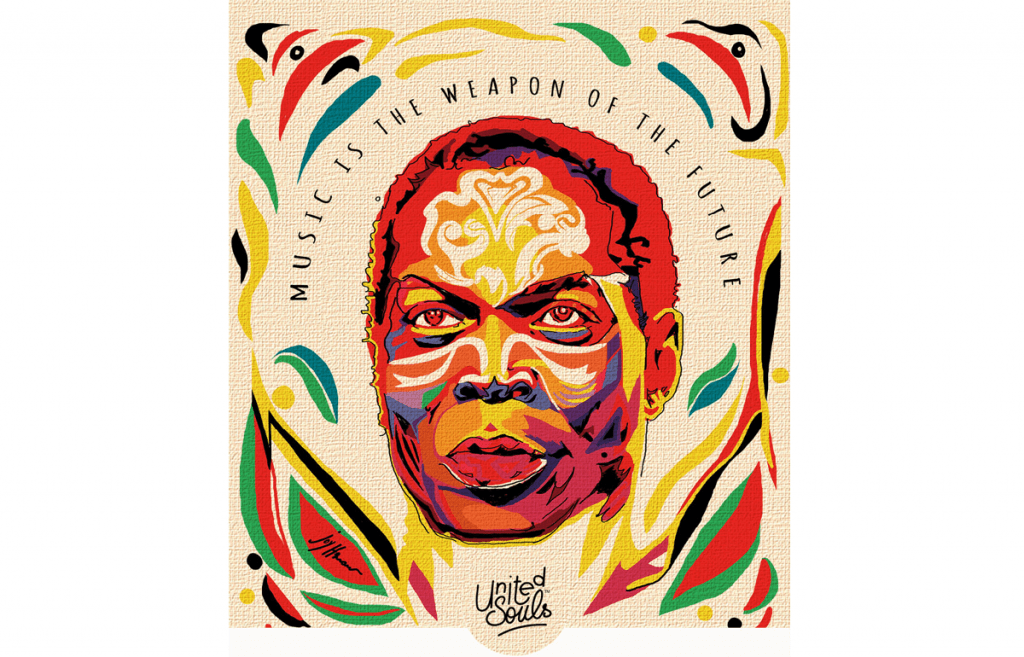
This is the one that aches the most. Fela Anikulapo-Kuti died in August 1997, and Burna Boy, born Damini Ogulu in Port Harcourt in 1991, was only six years old at the time. The overlap in their lives was real but obviously too early for any musical meeting. What makes this pairing so haunting is not just that both artists share radical political energy and a refusal to compromise for mainstream approval. It is that Burna Boy has explicitly and repeatedly cited Fela as a foundational influence, naming his 2020 album Twice as Tall, which went on to win a Grammy, as a spiritual continuation of Afrobeat’s confrontational tradition. He also runs his own Spaceship operation, whose stated philosophy of creative sovereignty echoes what Fela built at Kalakuta Republic.
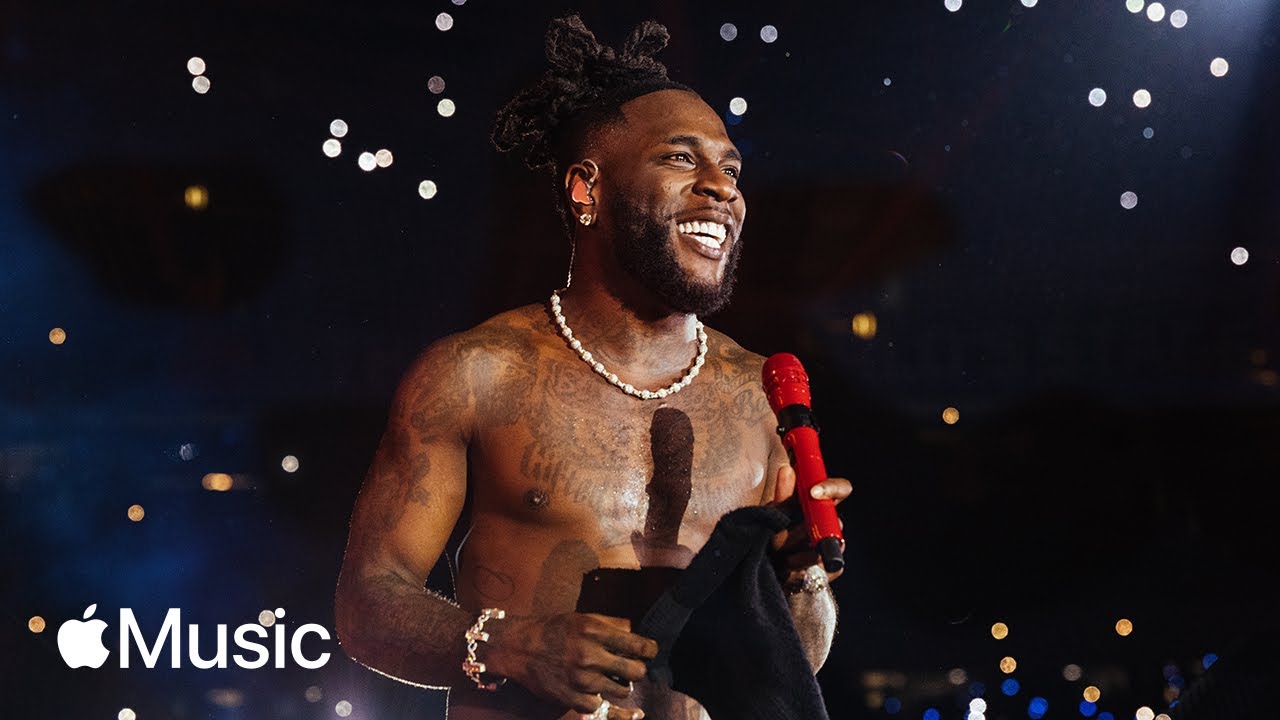
Burna Boy performing live at a major concert
Image: YouTube

Imagine a track where Fela’s sprawling, horn-driven compositions met Burna’s melodic Afrofusion production style, with the saxophone lines of “Zombie” bleeding into the layered percussion of “Ye.” The conversation between them would not have been smooth or flattering. Fela was notoriously critical of younger artists he felt were compromised by Western commercial interests, and Burna’s early career was commercially oriented enough that it might have drawn Fela’s sharp tongue. But that tension is exactly what would have made the music electric. The best collaborations in history have often come from artists who disagree as much as they agree. Fela and Burna Boy would have argued on record, and it would have been genius.

2face Idibia and Wizkid: The Crossover That Almost Made Sense

The Nigerian Music Collaborations That - 2face Idibia and Wizkid: The Crossover That Almost Made Sense

Unlike the Fela-Burna pairing, this one is not about impossibility. It is about inexplicable absence. Both artists are alive, both are active, and both have been at the top of Nigerian music for substantial stretches of their careers. 2face Idibia’s “African Queen” (2004) remains one of the most commercially successful Nigerian songs ever released, a record that crossed over into international markets long before the word “Afrobeats” became a global industry keyword. Wizkid’s “Essence” (2020) did something similar nearly two decades later, and is widely reported as the first Nigerian-led record to reach the top 10 of the Billboard Hot 100. These are two men who have each, independently, cracked the code of taking Nigerian music to the world, and they have never recorded a proper studio collaboration.
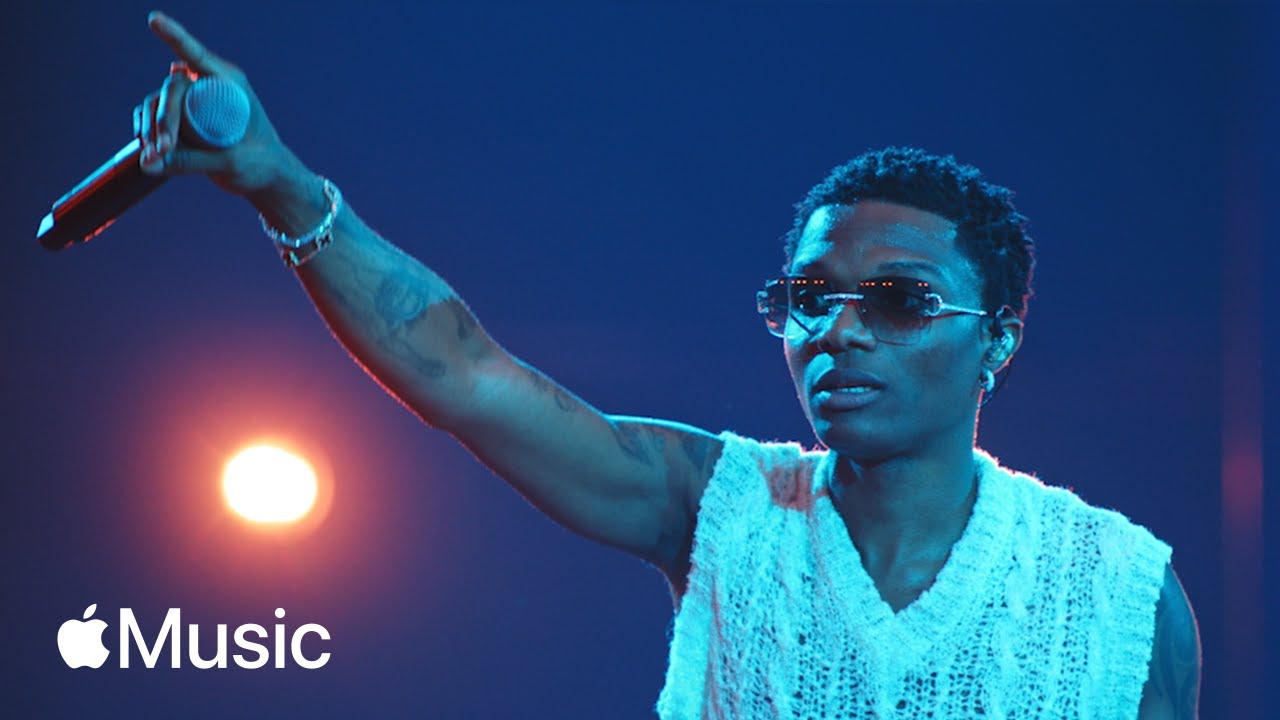
Wizkid performing on stage at a major music event
Image: YouTube

There have been friendly interactions and mutual respect expressed in interviews, but nothing has materialized in the studio. The musical logic is undeniable. 2face’s smooth, R&B-influenced vocal style and his natural gift for melody would layer beautifully against Wizkid’s breathy, atmospheric approach to Afrofusion. A joint record from the two biggest crossover success stories in Nigerian music history would not just be a hit. It would be a document. It would be the kind of track that gets played at every Nigerian party for the next thirty years, the way “African Queen” still gets played today. The fact that it has not happened yet is one of the genuine mysteries of the Nigerian music industry.

Tiwa Savage and Yemi Alade: The Queens’ Collab Nigerian Music Deserved
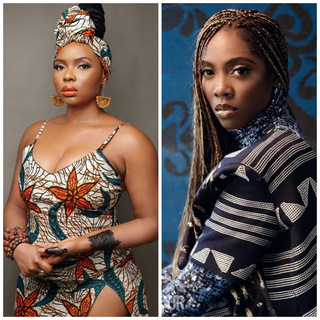
The Nigerian Music Collaborations That - Tiwa Savage and Yemi Alade: The Queens' Collab Nigerian Music Deserved

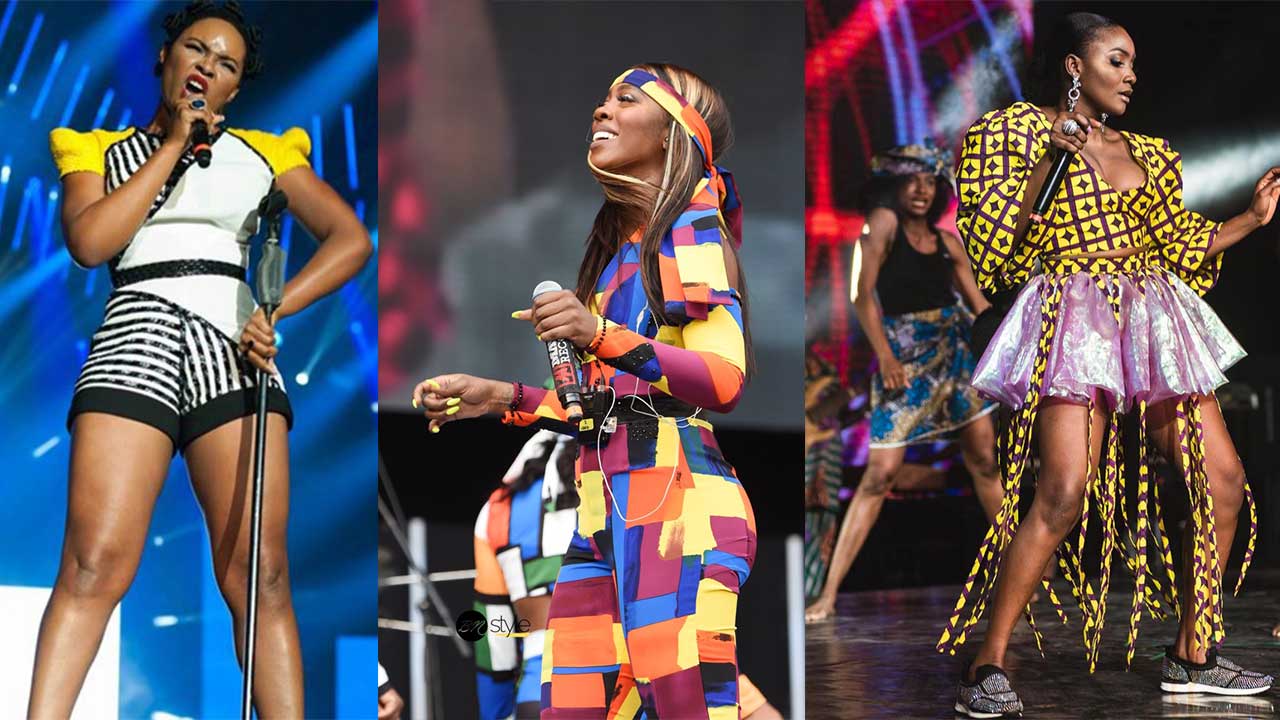
For most of the 2010s, Nigerian music conversations about its two biggest female artists were framed as rivalry rather than collaboration, a dynamic neither Tiwa Savage nor Yemi Alade created but both were forced to navigate. Tiwa, signed to Mavin Records before her eventual move to Universal Music, built her brand on polished, R&B-influenced Afropop with productions from Don Jazzy. Yemi Alade, signed to Effyzzie Music Group, took a different route that was louder and more theatrical, drawing from pan-African influences that gave her massive traction across Francophone Africa in a way that Tiwa’s music did not initially replicate. Both women have achieved remarkable things independently: Tiwa was widely reported as the first female African artist signed to Jay-Z’s Roc Nation management, while Yemi Alade has sold out concerts across Africa and Europe and collaborated with Beyoncé on the The Lion King: The Gift album in 2019.
Ad SpaceIn-Article - 300x250
Advertisement
Tiwa Savage and Yemi Alade at a Nigerian music event
Image: The Guardian Nigeria News

A proper studio collaboration between them would have done something important beyond just producing a great record. It would have actively dismantled the narrative of female rivalry that the Nigerian music press spent years amplifying. The musical contrast between their styles is actually a strength here, not a weakness. Tiwa’s slick production sensibility combined with Yemi’s raw, expressive delivery would create genuine sonic tension, the kind that makes a record interesting to listen to more than once. The closest we got was the cultural moment when they both appeared at various industry events in the same era, but the collab track never came. Nigerian music fans deserved better on this one.

D’banj and Davido: Kokomaster Meets OBO

The Nigerian Music Collaborations That - D'banj and Davido: Kokomaster Meets OBO

D’banj’s peak years (2005-2012) produced a body of work built around “Tongolo,” “Fall in Love” and “Oliver Twist” that defined a specific brand of high-energy Nigerian party music. His signing to Kanye West’s GOOD Music label in 2011 was a watershed moment, the first time a Nigerian artist had been fully absorbed into the American major label system at that level. Davido, who launched his career around the same time with “Back When” (2011) and then “Dami Duro,” represented a new generation that was equally comfortable with big-budget productions but was building for a different, longer-term global vision. Both men are showmen. Both have a gift for hooks that feel inevitable the moment you hear them. And both have massive fan bases that overlap more than either camp might admit.

The production chemistry here would have been fierce. D’banj at his peak was working with Don Jazzy, one of the most instinctive hit-makers Nigerian music has ever produced, while Davido built his career with producers like Shizzi and others who understood how to build global crossover appeal from Lagos. A D’banj-Davido track from, say, 2013 to 2015, when both were operating at high velocity simultaneously, would have been one of the defining records of that era. Instead, what we got were two artists who largely existed in parallel rather than together, each building impressive individual discographies without ever combining their considerable star power on a proper record.

King Sunny Ade and the Afrobeats Generation: Juju Meets Street Pop

King Sunny Ade is one of the most decorated musicians Nigeria has ever produced. He picked up Grammy nominations in the 1980s and took jùjú music to international audiences through his Island Records deal and his work with Western producers in that period. He has remained musically active and performing across the decades since, still representing one of the most sophisticated musical traditions in West Africa. The question that haunts the imagination is what would have happened if any of the major Afrobeats producers of the 2010s had seriously engaged with him, not for a novelty feature, but for a genuine creative dialogue where jùjú’s complex rhythmic structures, its talking drum conversations, and its twelve-string guitar textures were woven into the modern Afrobeats production palette.

The closest the genre came to this kind of conversation was Burna Boy’s consistent sonic referencing of older Nigerian musical traditions, and Wizkid’s guitar-forward production choices that nod to highlife and jùjú without fully committing to either. But a formal collaboration between King Sunny Ade and a current-generation producer would be something genuinely new. Imagine what Sarz, Guilty Beatz or P2J would do with KSA’s guitar vocabulary. It would also be culturally significant in a way that goes beyond streaming numbers: it would be a formal acknowledgment that Afrobeats did not emerge from nowhere, that it has roots deep in the soil of Nigerian musical history, and that those roots are still alive and generative.

The Collabs That Never Were Are Nigerian Music’s Loudest Silence

There is something revealing about the collaborations a music industry does not produce. Nigerian music has been extraordinarily generous with intra-generational features. The number of Afrobeats tracks that stack two or three current artists on a single record is enormous, and the feature economy is one of the healthiest in any music market globally. But the cross-generational and cross-era collaborations, the ones that would require artists to step outside their commercial lane and engage with something older or structurally different, remain stubbornly rare. Part of this is business logic: labels want contemporary sounds, not history projects. Part of it is ego and the complicated nature of artistic status in Nigeria, where being seen as too connected to an older generation can signal that your moment has passed.

But the deeper truth is that each of the pairings discussed here represents not just a missed musical moment but a missed cultural argument, a conversation about what Nigerian music is, where it came from, and what it owes to the generations that built the foundation. Fela and Burna Boy would have argued about compromise and revolution. 2face and Wizkid would have mapped the entire arc of Nigerian music’s global ambition. Tiwa and Yemi would have dismantled a fake rivalry and replaced it with evidence of abundance. D’banj and Davido would have produced a record that a generation would remember at their weddings. And King Sunny Ade working with any serious Afrobeats producer would have produced something that reminded the world where all of this actually started. The silence where these records should exist is not empty. It is full of everything Nigerian music has not yet said to itself.

Ad SpaceIn-Article - 300x250
Advertisement
Share
Get the recap

Loved this story? Get more like it.

Join readers who get our weekly entertainment recap - the stories worth your time, delivered every Friday.

No spam. Unsubscribe anytime. By signing up you agree to our Privacy Policy.

The Nigerian Music Collaboration... | Sidomex Entertainment