
How Nigerian and African Fathers Are Celebrated: Traditions, Gifts and Cultural Meaning
Lifestyle

How Nigerian and African Fathers Are Celebrated: Traditions, Gifts and Cultural Meaning

Arianne ColeArianne Cole··10 min read
Advertisement

Walk into almost any Nigerian living room on a Sunday afternoon and the geography of the space tells a story. There is usually one chair that nobody else sits in without permission, angled toward the television, worn smooth by years of the same body settling into it. That chair belongs to the father. It is not just furniture. It is a small monument to a role that runs deep through African family life, where the father has long stood as the anchor point around which the rest of the household arranges itself. To understand how African fathers are celebrated, you have to first understand how much weight that single figure carries, and how that weight is shifting in 2026 as a new generation of dads rewrites what the role can look like.

This is a celebration that happens loudly once a year and quietly every other day. There is the mid-June Father’s Day, imported and adapted, with its cards and gifts and church announcements. And then there is the older, deeper celebration woven into language, lineage and everyday respect, the kind that needs no calendar at all.

When Father’s Day Lands
How Nigerian and African Fathers - When Father's Day Lands

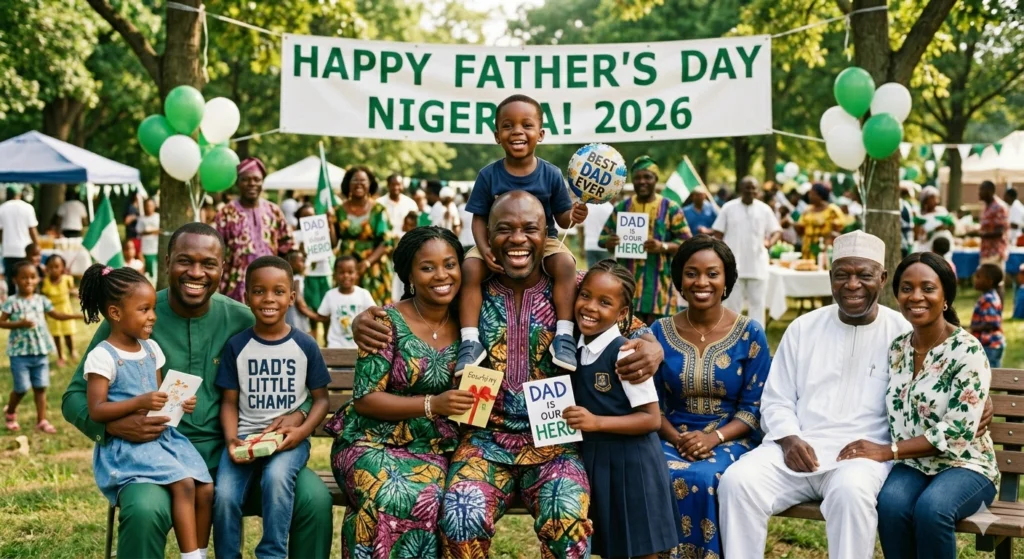
In Nigeria and across much of Africa, Father’s Day is observed on the third Sunday of June, the same date used in the United States and the United Kingdom. In 2026 that falls on Sunday, 21 June. The date itself is borrowed, a Western fixture that travelled south and settled comfortably into the Nigerian social calendar alongside Mother’s Day in May.

What is striking is how thoroughly the day has been claimed and reshaped. It arrived as a Hallmark occasion and became something warmer and more communal. Churches across Lagos, Abuja, Accra, Nairobi and Johannesburg dedicate services to fathers, calling them to the front to be prayed over. Families gather for elaborate meals. Social media fills with tributes, throwback photographs and captions that range from tender to teasing. The third Sunday in June has become a fixed point of affection in a culture that does not always make space for openly praising the man of the house.

The Traditional Role and the Customs of Respect
How Nigerian and African Fathers - The Traditional Role and the Customs of Respect

To grasp why Father’s Day resonates so strongly, you have to look at the role the father has historically held. In traditional Nigerian and broader African family structures, the father is the head of the home, the provider, the one who carries the name forward and represents the family to the wider community. He is often the bridge between the household and the extended family, the village, the clan. Decisions of consequence pass through him, and his blessing on a marriage, a journey or a venture has long been treated as something to be sought rather than assumed.

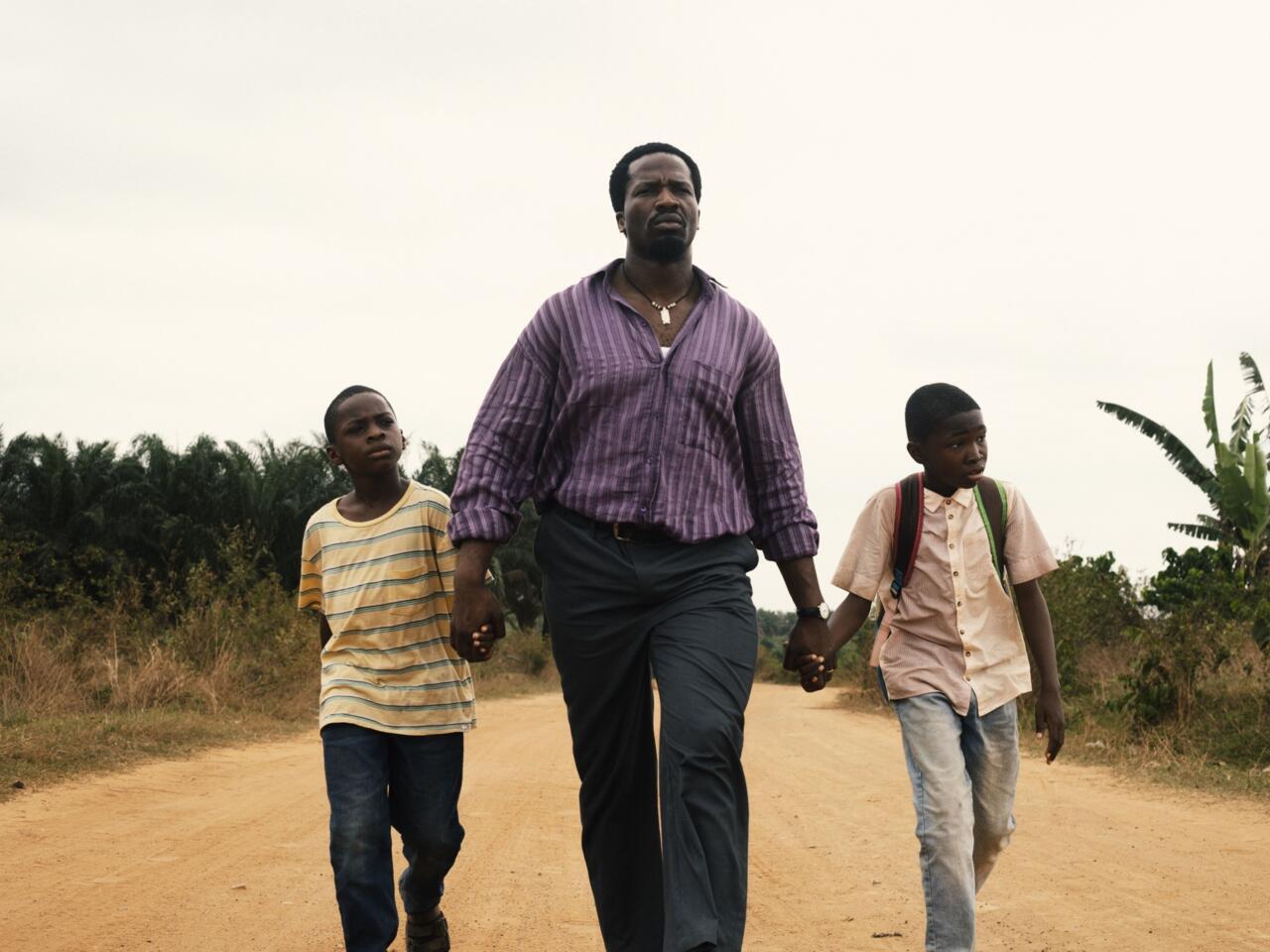
That status is reinforced through a thick layer of everyday respect customs. In many cultures across the continent, you do not greet a father the way you greet a peer. Among the Yoruba, a son may prostrate fully and a daughter may kneel. Among the Igbo, Hausa and countless other groups, there are specific postures, tones and forms of address reserved for elders and especially for one’s father. Children are taught early not to call him by his first name, not to interrupt him, not to sit while he stands in greeting.

This respect extends outward to the extended family and the elder dimension that is so central to African life. A father is rarely just a father. He is also a son to someone, a brother, an uncle who functions as a second father to his nieces and nephews, a community elder whose word carries weight at gatherings. Fatherhood in this setting is less a private relationship between one man and his children and more a public role that ripples through an entire network of kin.

Naming and lineage sit at the heart of it. In much of the continent, a child carries the father’s name and, through it, a line of ancestry that can be recited generations back. Naming ceremonies, held days after a birth, often center on the father’s family and the names they choose, names that frequently carry meaning, prayer or the memory of an ancestor. To honour a father, in this sense, is to honour the whole chain of people he represents.

The Names We Call Them
How Nigerian and African Fathers - The Names We Call Them

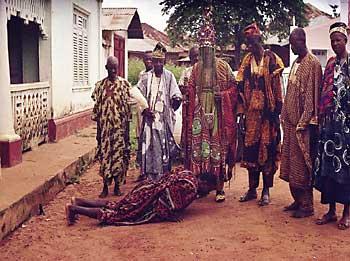
Few things capture the texture of African fatherhood better than the names children use. There is rarely just one. A single man might answer to “Baba” from his children and his community, “Papa” from a grandchild, and “Daddy” from a teenager who picked up the more modern, affectionate term somewhere along the way.

“Baba” is the deepest and most rooted of these. Across Yoruba and many other Nigerian cultures, it means father but stretches far beyond the literal, used as a title of respect for any older, senior man. To call someone “Baba” is to acknowledge seniority and command. “Papa” carries warmth and a slightly more tender, sometimes Pentecostal-inflected register, common in homes and churches alike. “Daddy” is the cosmopolitan choice, the one that travelled in with English-language schooling and urban life, softer and more intimate, the word a child uses when curling up beside him.

These names are not interchangeable. Each one signals a slightly different emotional distance, a different blend of awe and affection. Together they map the full range of how a father is held in the Nigerian imagination, somewhere between an authority to be revered and a parent to be loved.

The Evolving Modern Dad
How Nigerian and African Fathers - The Evolving Modern Dad

The image of the African father is changing, and 2026 finds it mid-transformation. The classic archetype was the stern provider, present but emotionally reserved, the disciplinarian who showed love through sacrifice rather than softness. He paid the school fees, kept the roof overhead and expected respect, but he was not the one who knew which child was afraid of the dark.

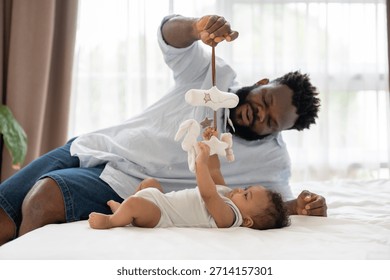
A younger generation of fathers is rewriting that. Across cities and increasingly beyond them, more dads are hands-on in ways their own fathers rarely were. They change nappies, attend school runs, plait hair, cook, and talk openly about wanting to be present rather than just providing. The shift is partly generational and partly the product of women working outside the home in greater numbers, which has rebalanced domestic life and pulled fathers into daily caregiving.

Social media has amplified the change. Nigerian and African fathers now show up online as proud, playful figures, posting dance videos with their daughters, documenting first steps, narrating the small comedies of raising children. Where an older generation kept fatherhood private and undemonstrative, this one performs its affection in public, and audiences love it. The hands-on dad has become something of a cultural hero, celebrated precisely because he breaks from the reserved mould without abandoning the respect and responsibility that defined it.

Importantly, this is an evolution, not a rejection. The modern African dad still values being the head of the home, still wants his children grounded in respect and tradition. He has simply added warmth, presence and emotional openness to a role that once made do without them.

Advertisement

How Families Celebrate and What They Gift

How Nigerian and African Fathers - How Families Celebrate and What They Gift

When the third Sunday of June arrives, the celebration takes recognisable shapes. The day often begins at church, where fathers are called forward, prayed over and sometimes asked to stand for applause. From there it usually moves to the table, because in Nigerian and African families, love is reliably expressed through food. Special meals are cooked, favourite dishes prepared, and the father is, for once, encouraged to do nothing but eat and be celebrated.

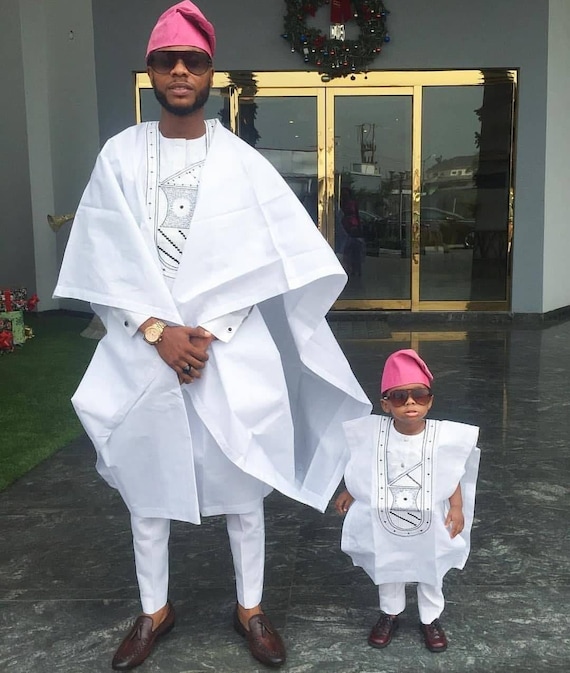
Many families coordinate their dress through aso-ebi, the matching fabric worn to mark occasions, turning the celebration into a visible, photographed display of unity. Tribute posts flood timelines. Children call home from the diaspora. Grandfathers are folded into the festivities, because the day honours the whole line of fatherhood, not just one man.

Gifts carry their own cultural logic. Traditional menswear is a perennial favourite, an agbada or a kaftan in rich fabric, both practical and a nod to dignity and status. Watches remain a classic, a symbol of achievement and timekeeping authority. Gadgets and phones land well with younger and tech-curious dads. Perfume, fine footwear, a good pen, a bottle of something he likes, all feature. And the commercial machinery has noticed: in the weeks before mid-June, Nigerian retailers, fashion brands and online stores run Father’s Day promotions, with sales of menswear, accessories and electronics climbing as families shop for the man who rarely asks for anything.

Yet the most prized gift is often the least expensive. For many fathers, the children simply showing up, gathering under one roof, sharing a meal and offering genuine words of appreciation, outweighs anything wrapped in paper.

Fathers in Nollywood

How Nigerian and African Fathers - Fathers in Nollywood

Nollywood has spent decades putting the African father on screen, and few figures are as instantly recognisable as the stern Nigerian patriarch. No one embodies it more completely than Pete Edochie, whose deep voice, Igbo proverbs and unbending authority have made him the definitive screen father. His turn as the village figure Okonkwo in the 1987 adaptation of Things Fall Apart set the template, and decades later he played Chief Ernest Obiagu in Lionheart (2018), Genevieve Nnaji’s directorial debut and the first Netflix original film made in Nigeria, where he is the ageing patriarch whose business and legacy his daughter must protect.

The patriarch trope runs through Nollywood like a spine. It is the father who disowns a child for marrying against his wishes, who sets the rules everyone must bend to, who softens only in the final act. But the screen father is not only stern. Veteran actor Jide Kosoko has built a parallel image of the charismatic, dramatic, comic dad, blending discipline with humour, as in the family comedy Happy Birthday, Dad, where a chief gathers his scattered children for his seventieth birthday.

More recent cinema has begun handling fatherhood with greater tenderness and complexity. My Father’s Shadow, a Nigerian drama centred on a father and his sons set against the backdrop of the 1993 election, drew international attention for the quiet, reflective way it treated paternal love and loss. From the thundering patriarch to the grieving, gentle dad, Nollywood has charted the same evolution playing out in real Nigerian homes.

Fathers in Afrobeats and Music

Afrobeats and African popular music have given fathers some of their warmest tributes. One of the best known is “Daddy,” released in 2013 by rapper Reminisce alongside Davido, an upbeat track in which both artists channel their hustle into the desire to make their fathers proud and provide for them, Davido opening with warmth and Reminisce delivering his signature Yoruba-laced verses.

The tributes span moods and generations. Johnny Drille’s “Papa” is a tender reflection on a father’s wisdom, carried by gentle vocals and strings. Singer Teni released “Dad’s Song” in 2021, a moving piece that opens with the milestones she reached in her father’s absence and the wish that he could have seen them. The thread reaches back further too, into highlife and the long tradition of songs that salute hard-working dads as companions to the classic celebrations of motherhood.

What these songs share is a refusal to keep gratitude private. In a culture where fathers were often thanked through deeds rather than words, music has become the place where Nigerian and African artists say out loud what many sons and daughters feel but rarely voice.

The Diaspora Dimension

For the millions of Africans living abroad, Father’s Day carries a particular ache and a particular logic. Distance reshapes the celebration. The phone call becomes the centrepiece, the video chat across time zones, the money sent home so the man who sacrificed for an education or a passage overseas can be honoured even from afar.

Many diaspora fathers are themselves the ones who left, raising children in London, Houston, Toronto or Johannesburg while trying to transmit “Baba” and “Papa” and the customs behind them to kids growing up in a different world. The day becomes a moment to reconnect those children to a lineage they may only half know, to insist that respect for fathers travels even when the family does. And for adult children abroad, mid-June is a season of homesickness, of remembering a chair in a living room far away and the man who still sits in it.

Why the Celebration Matters

Strip away the gifts and the promotions and what remains is something older and steadier: an acknowledgement that the father has held a load, often silently, and deserves to feel it seen. African societies have long understood the family as the basic unit of everything, and the father as one of its load-bearing walls. To celebrate him, whether on the third Sunday of June or through the daily grammar of greetings and names, is to keep that structure honoured and intact.

The beauty of the moment in 2026 is that the celebration has room to grow. The stern provider is still cherished, but so now is the hands-on dad dancing in a phone video, the father who shows up at school, the man who says he loves his children and is praised rather than mocked for it. The role is widening, and the affection is widening with it. Across Nigeria and the continent, families will keep finding ways to say the same simple thing in a hundred dialects and gestures: thank you, Baba. We see you. We are proud to carry your name.

Advertisement
Share
Get the recap

Loved this story? Get more like it.

Join readers who get our weekly entertainment recap - the stories worth your time, delivered every Friday.

No spam. Unsubscribe anytime. By signing up you agree to our Privacy Policy.

How Nigerian and African Fathers... | Sidomex Entertainment