

Nigerian Queens: How Miss World Has Shaped Beauty Standards and Celebrity Culture in Nigeria
Entertainment

Nigerian Queens: How Miss World Has Shaped Beauty Standards and Celebrity Culture in Nigeria

Miki AndersonMiki Anderson··10 min read
Advertisement

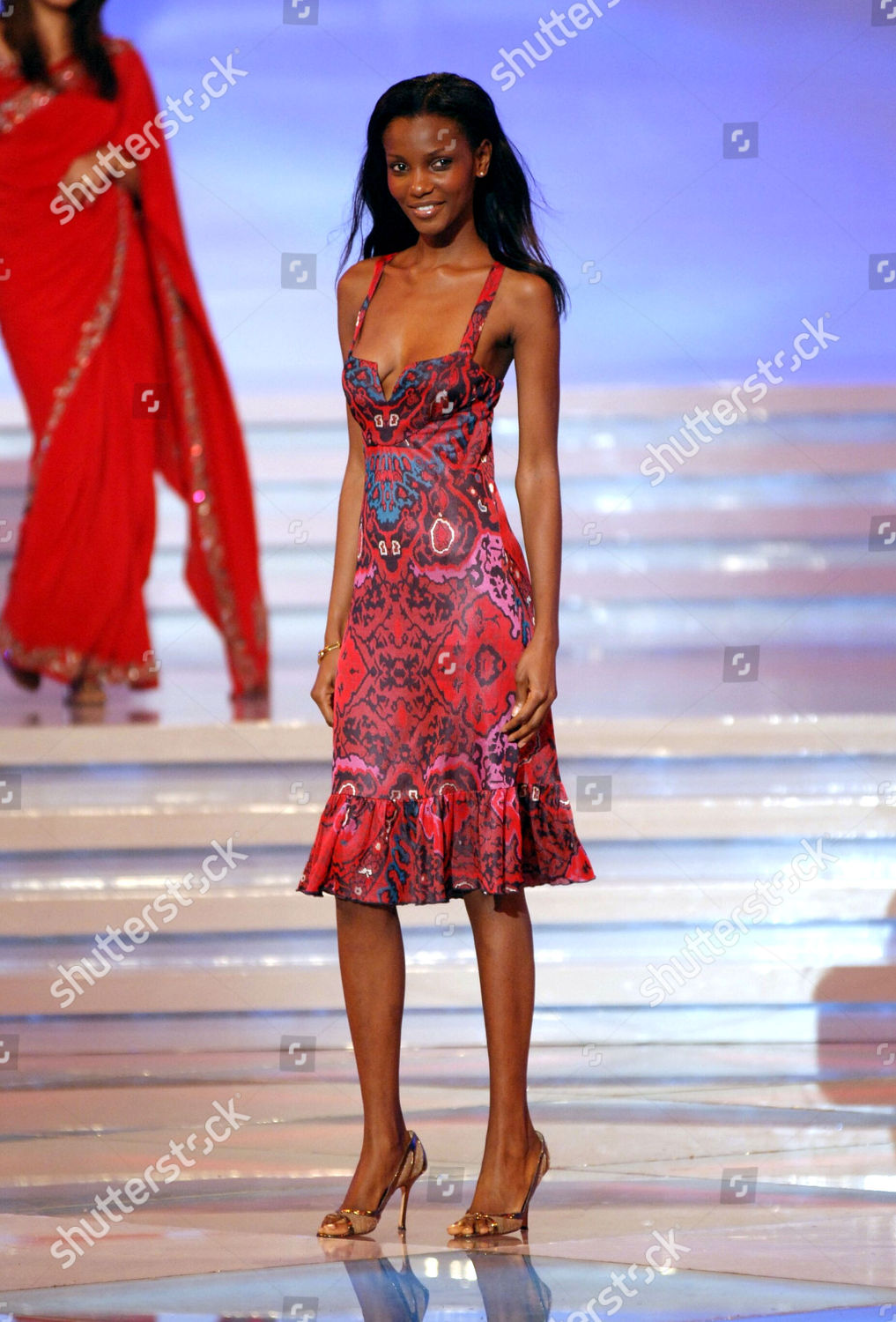
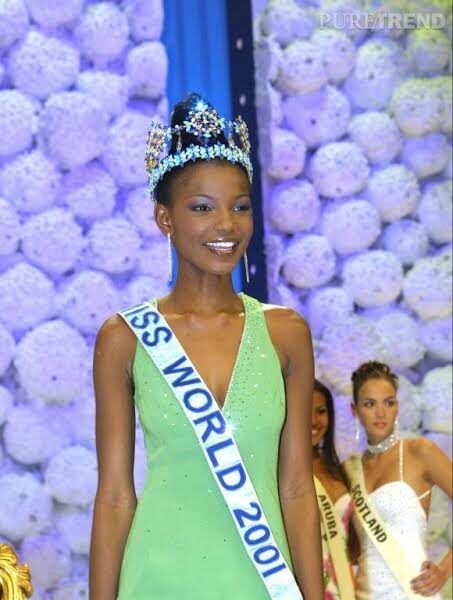
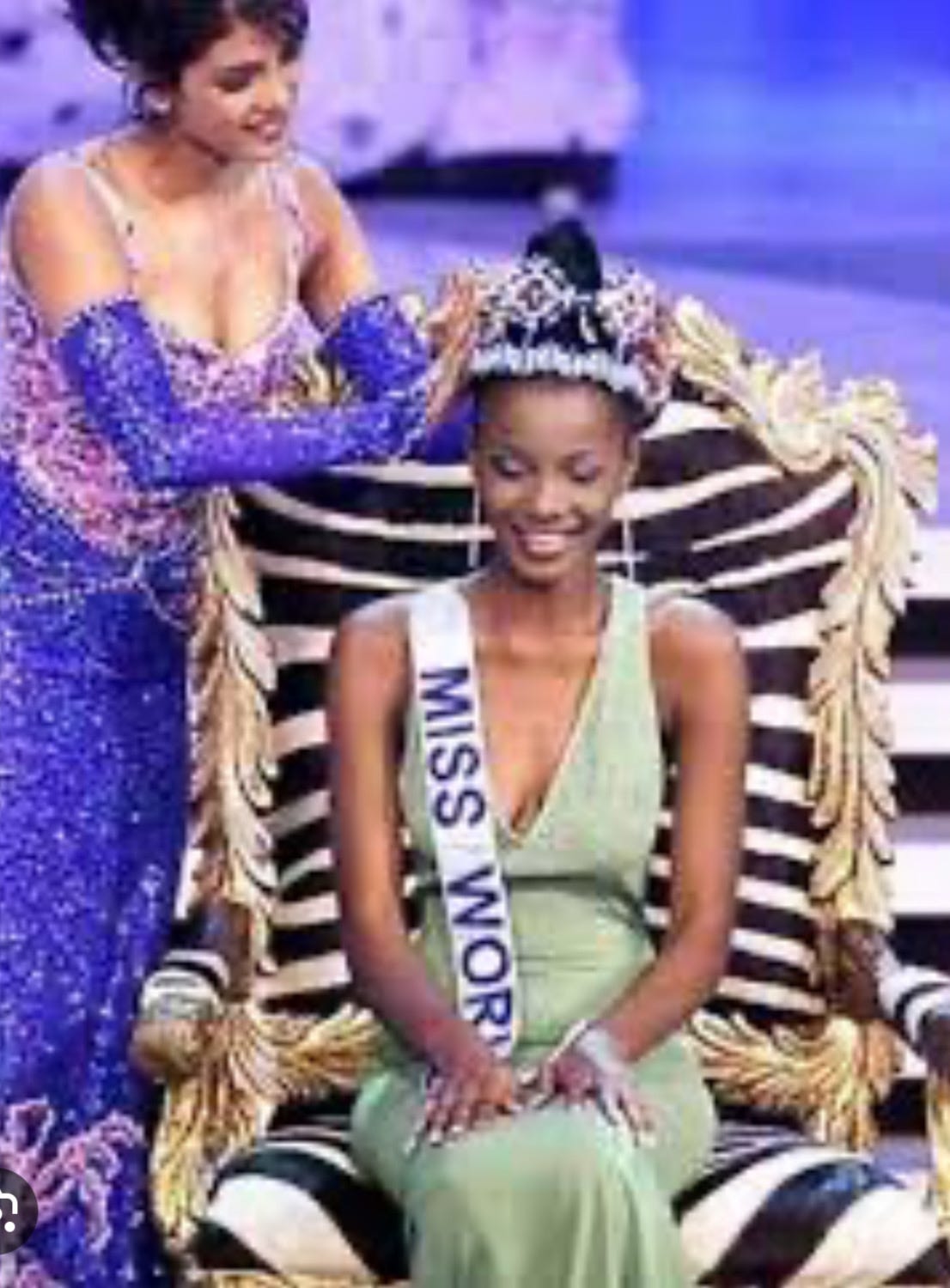
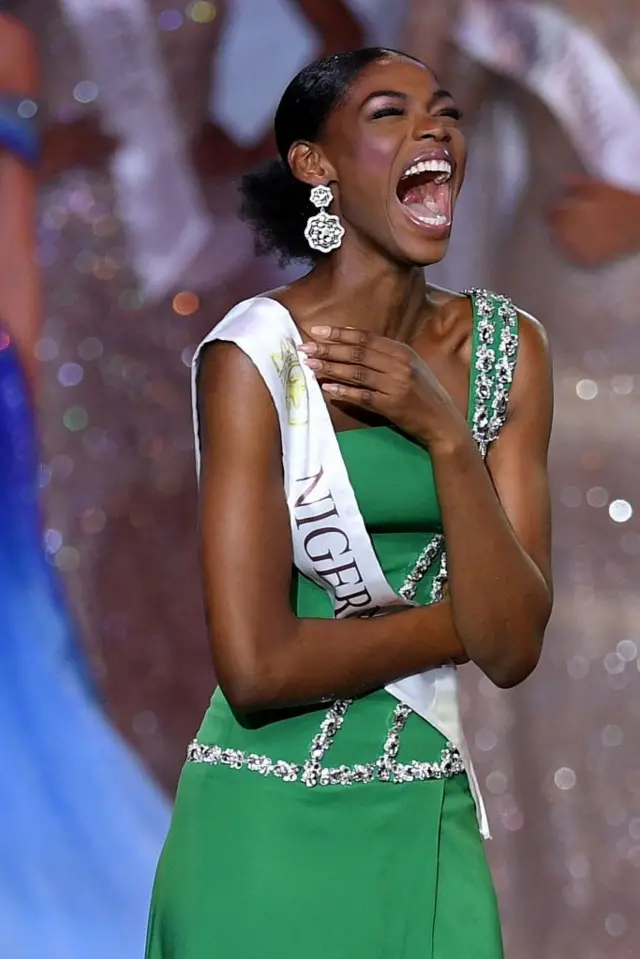
Stage lights swept across the arena in Sun City, South Africa, on a November night in 2001, and ninety-three young women stood waiting for a name. When it came, it belonged to a nineteen-year-old computer science student from a small fishing town in the Niger Delta. Agbani Darego lifted her hands to her face, the crown settled into her hair, and a continent that had never once owned this particular title suddenly did. She was the first Black African woman to win Miss World outright, and in that single moment the conversation about who counts as beautiful in Nigeria, and what that beauty could be worth, changed for good.

More than two decades later, that night still works like a hinge. Everything in Nigerian pageantry has a before and an after attached to it, and the dividing line is a girl from Abonnema in Rivers State who walked into Sun City as a long-shot delegate and walked out as a symbol. To understand why beauty queens occupy the strange, glamorous, sometimes contested place they hold in Nigerian celebrity culture today, you have to go back to what her win actually set in motion.

The Night Sun City Crowned a Nigerian
Nigerian Queens - The Night Sun City Crowned a Nigerian

Darego arrived at Miss World 2001 having already cleared one enormous hurdle at home. Earlier that year she had won the Most Beautiful Girl in Nigeria title, the contest that funnels the country’s delegates onto the global stage. That made her eligible, but eligibility and victory are very different things. Africa had produced Miss World winners before, yet every previous one from the continent had been of European descent or had inherited the title through a resignation higher up the chain. No Indigenous African woman had ever simply won it on the night.

The 2001 edition introduced something new: viewers around the world could phone in votes for their favourite contestant, folding a layer of public participation into a process that had always lived behind closed judging panels. American television personality Jerry Springer hosted. When the final tally landed on Nigeria, it was not a technicality or a footnote. Darego had beaten the field, and she had done it as a teenager still enrolled at the University of Port Harcourt.

The reaction at home was immediate and enormous. For a country accustomed to seeing its name attached to grimmer headlines, here was a homegrown girl on the cover of the world’s glossiest magazines. Government figures spoke about the win as though it were a diplomatic event, a sign that Nigeria could compete and win on a global field. That framing would prove double-edged, but in the first flush of celebration it felt uncomplicated. A Nigerian had conquered the world, and she had done it with poise.

What Agbani’s Win Actually Changed

Nigerian Queens - What Agbani's Win Actually Changed

The crown was the headline, but the career that followed it was the real revolution. Darego did not return home to fade into ceremonial appearances. Within months she was represented by the London and Paris branches of Next Model Management, and she signed a three-year contract with L’Oreal, becoming only the second Black model to do so after Vanessa Williams. The legendary photographer Annie Leibovitz shot her. She walked and appeared for Christian Dior, Avon, Oscar de la Renta, Ralph Lauren, Tommy Hilfiger and others, and she landed in the pages of Elle, Marie Claire, Cosmopolitan and Essence.

For young Nigerian women watching, the message was unmistakable. A title was not a finish line. It was a passport. Darego turned a pageant sash into an international modelling career and then into a business, launching the style reality show Stylogenic in 2010 and her own denim and ready-to-wear label, AD by Agbani Darego, in 2013, built deliberately around clothing cut for the African woman’s body. She married into wealth, raised a family, and stayed visible as an entrepreneur rather than a relic of one good night.

That arc rewired expectations. Before her, the Nigerian beauty queen was largely a local figure, admired at home and rarely heard from again. After her, the queen became a brand-in-waiting, a young woman whose crown was understood as seed capital for whatever came next. The aspiration she modelled was not simply to be looked at. It was to convert being looked at into work, money and influence.

MBGN and the Pageant Pipeline
Nigerian Queens - MBGN and the Pageant Pipeline

None of this would have had a structure to flow through without the machinery that produced Darego in the first place. The Most Beautiful Girl in Nigeria pageant was founded in 1986 by the Silverbird Group, the media empire built by Ben Murray-Bruce, with one core purpose: to select and groom the women who would carry Nigeria’s flag into international competitions. The inaugural winner, Lynda Chuba-Ikpeazu, marked the country’s return to major pageantry after a long absence.

For nearly four decades MBGN functioned as the national gateway. Win it, and you earned the right to represent Nigeria abroad. Over time the organisers expanded the format so a single contest could send delegates to several international pageants at once, crowning winners for different global competitions on the same night. The pipeline became more elaborate, the stakes higher, the production glossier. MBGN was where the Darego story began, and for years it was the only door into the kind of platform she used to reach the world.

That era closed recently. In 2024, Miss World Nigeria split off and became a standalone pageant in its own right, ending the long MBGN run that had defined the country’s pageant ecosystem. The change matters less for the trophies than for what it signals: pageantry in Nigeria has grown large and lucrative enough that a single feeder contest can no longer hold all of it, and individual franchises now want their own dedicated stage. The pipeline did not shrink. It multiplied.

The Beauty-Standard Debate Her Win Started
Nigerian Queens - The Beauty-Standard Debate Her Win Started

Not everyone read Darego’s victory the same way, and the disagreement was about her body. She is tall and notably slender, and her frame fit the proportions the international fashion industry rewarded. Inside Nigeria, that put her at odds with a longstanding ideal that had prized fuller, more rounded figures as the marker of health, prosperity and desirability. For generations, a curvier body had carried positive cultural weight. Darego’s silhouette did not match it.

The designer who dressed her for the final understood exactly what he was working with. He kept her gown simple and uncluttered, leaving her arms bare and drawing the eye to her neck and face rather than competing with her physique. It was a deliberate choice to present, not disguise, the slimness that the global judges prized and that some at home found unfamiliar. The contrast became a genuine national conversation: had a foreign standard of beauty just been stamped onto Nigeria’s most celebrated woman, or had the country simply produced someone who could win on those terms?
Advertisement

The honest answer is that her win accelerated a shift that was already underway. In the years since, writers revisiting her crowning, including a notable reflection by OkayAfrica on its twentieth anniversary, have traced how Nigerian ideas of beauty have moved and fractured rather than settled. Darego’s slender look influenced a generation, even as a countervailing celebration of fuller figures held its own ground, and newer pressures around skin tone and cosmetic enhancement entered the picture. Her body did not end the debate. It made the debate impossible to ignore.

Pageantry as a Launchpad

Nigerian Queens - Pageantry as a Launchpad

What Darego proved on the grandest scale, dozens of Nigerian queens have since chased on their own terms. The crown, in the Nigerian celebrity economy, functions as an audition for everything else. Winners and finalists have moved into modelling contracts, Nollywood roles, television hosting, fashion design, beauty entrepreneurship and advocacy work. The sash is rarely the destination. It is the introduction.

Part of the appeal is structural. A pageant delivers something most aspiring public figures spend years trying to build on their own: a night of concentrated national attention, a title that signals achievement, and a ready-made platform from which to pivot. A young woman who wins a major Nigerian pageant arrives in the public eye pre-vetted and pre-promoted. What she does with that head start is up to her, but the head start is real, and Darego is the proof of concept that everyone who follows is implicitly measured against.

That is also why the advocacy dimension has grown. Many titleholders now attach a cause to their reign, building campaigns around education, health or women’s empowerment that outlast the crown and give the platform a purpose beyond glamour. It is a savvier model than the purely decorative one of earlier decades, and it reflects an audience that increasingly wants its queens to stand for something, not merely to stand and wave.

The Celebrity Economy Around Nigerian Queens

Nigerian Queens - The Celebrity Economy Around Nigerian Queens

A Nigerian beauty queen today operates inside a celebrity economy that barely existed when Darego won. Social media has collapsed the distance between a titleholder and her audience, turning followers into a measurable asset that brands pay to reach. Endorsement deals, ambassador roles, sponsored content and event appearances now form a revenue stream that a winner can begin monetising the moment the crown lands. The reign itself has become a business, with the woman at its centre running something closer to a personal brand than a ceremonial post.

This has raised the financial ceiling considerably. Darego’s own trajectory, from L’Oreal contracts to a fashion label and a reported net worth in the millions of dollars, sketched the upper bound of what was possible. The queens who came after operate in an environment with even more channels to convert fame into income, and the most strategic among them treat the title as the launch of a long commercial career rather than a one-year appointment. Pageantry, in this sense, has been absorbed into the wider machinery of Nigerian celebrity, where attention is the currency and a crown is one of the fastest ways to mint it.

Criticisms of Pageant Culture, Handled Fairly

It would be dishonest to tell this story as pure triumph. Pageantry attracts sharp criticism, and much of it is fair. Critics argue that the entire apparatus reduces women to appearance, ranks them by physical standards set largely from outside the continent, and rewards conformity to a narrow template. The body debate that surrounded Darego is one face of that critique: the worry that international success requires Nigerian women to bend toward a foreign mould rather than their own.

The pageant world has also collided with the wider society around it. When Miss World was set to be held in Nigeria in 2002 on the strength of Darego’s win, the plan unravelled amid unrest, and the final was relocated to London. That episode is a permanent reminder that a beauty contest does not exist in a vacuum, and that an event meant to celebrate a country can become a flashpoint within it. The tension between pageantry as harmless spectacle and pageantry as something with real-world weight has never fully resolved.

Defenders counter that the platform, whatever its flaws, has delivered tangible opportunity to women who used it to build careers, fund causes and reach rooms they would otherwise never have entered. Both things are true at once. The crown can be a cage of expectations and a ladder out of obscurity, sometimes for the same woman in the same year. A fair accounting holds both in view rather than pretending either one cancels the other.

The Diaspora and Global Nigerian Beauty Influence Today

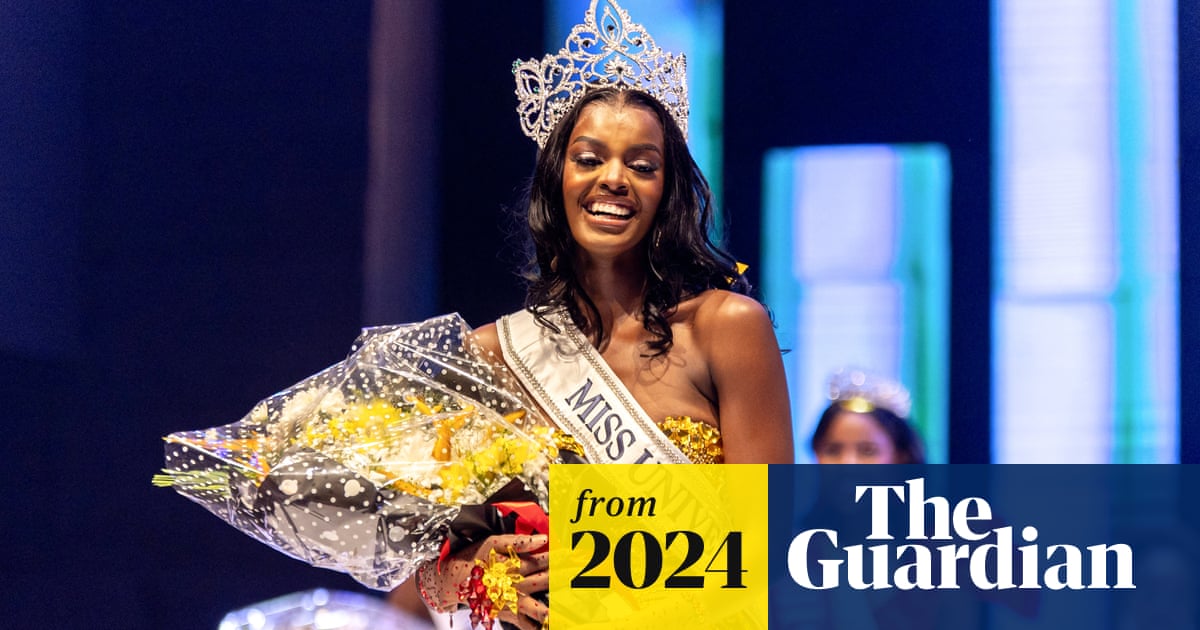
The most striking development since Darego is how far the Nigerian beauty story now reaches beyond Nigeria itself. The diaspora has become a stage of its own. The clearest recent illustration sits at a different pageant entirely, and the distinction matters: Miss World and Miss Universe are separate competitions with separate organisations, and Nigeria’s records in each are not the same. Only one Nigerian, Agbani Darego, has ever won Miss World. At Miss Universe, Nigeria’s high-water mark came in 2024, when Chidimma Adetshina finished as first runner-up, the country’s best result at that contest, after a path that ran through her upbringing in South Africa and a wrenching public dispute over her heritage before she ultimately competed for Nigeria.

Adetshina’s story, complicated and at times painful, is a sign of how Nigerian beauty influence has gone transnational. Identity, belonging and nationhood now play out across borders on the pageant stage, and a woman raised in one country can carry another’s flag to within a hair of the biggest crown in the field. It is a long way from a single delegate in Sun City, and yet it traces directly back to the door Darego opened.

At home, the line continues unbroken. On 7 June 2026, Tamunosoye Karibi-George, a twenty-six-year-old from Port Harcourt in Rivers State, was crowned Miss World Nigeria 2026, edging out twenty finalists in Lagos to earn the right to represent Nigeria at the 73rd Miss World festival in Ho Chi Minh City, Vietnam. The geography is hard to miss. A new queen from the same state that produced Agbani Darego now carries the country’s hopes back to the same global stage where it all began. Whether she brings home a crown or not, she steps into a tradition that one nineteen-year-old rewrote on a November night a quarter of a century ago, and that no Nigerian beauty queen has been able to step around since.

Advertisement
Share
Get the recap

Loved this story? Get more like it.

Join readers who get our weekly entertainment recap - the stories worth your time, delivered every Friday.

No spam. Unsubscribe anytime. By signing up you agree to our Privacy Policy.

Nigerian Queens: How Miss World... | Sidomex Entertainment