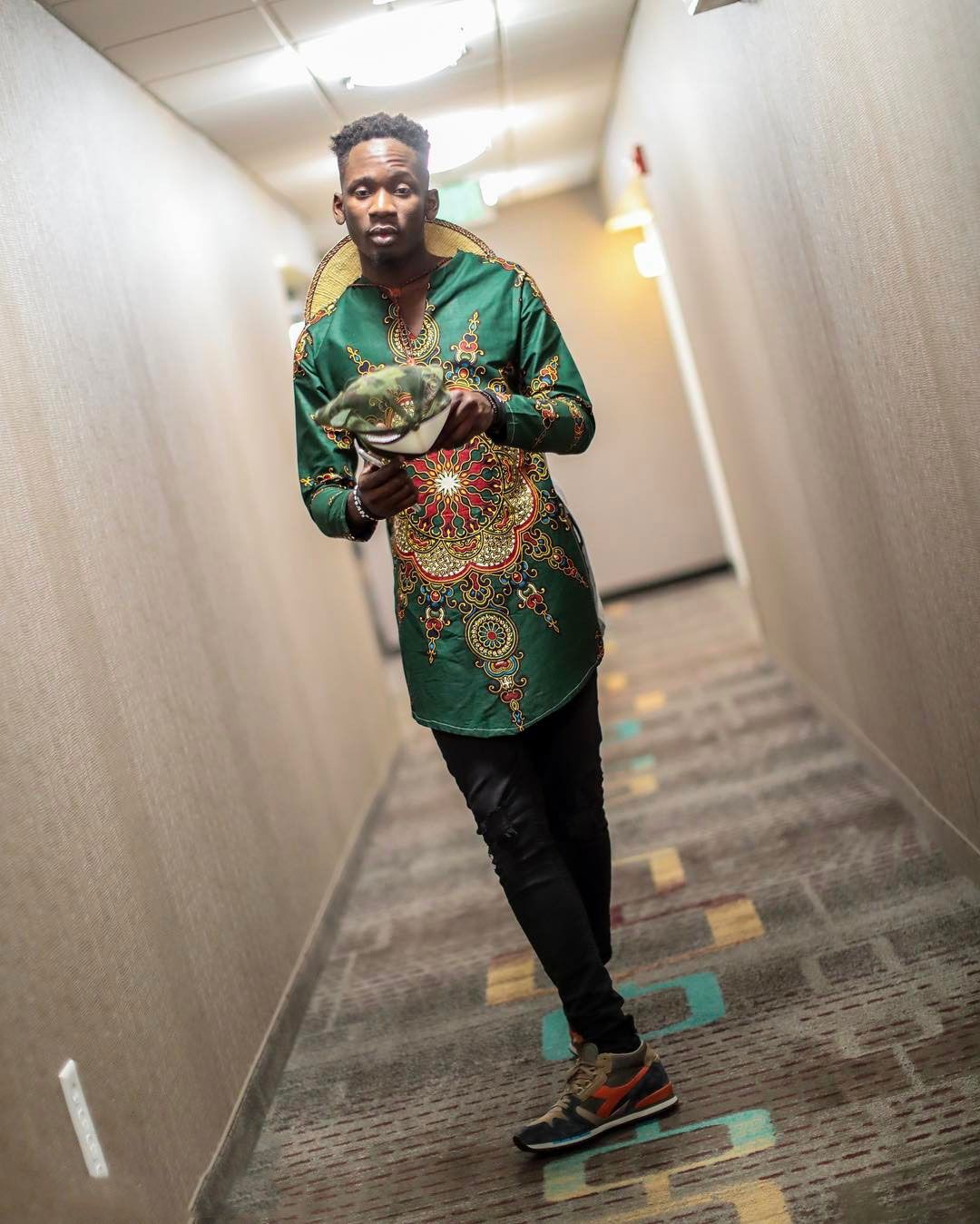
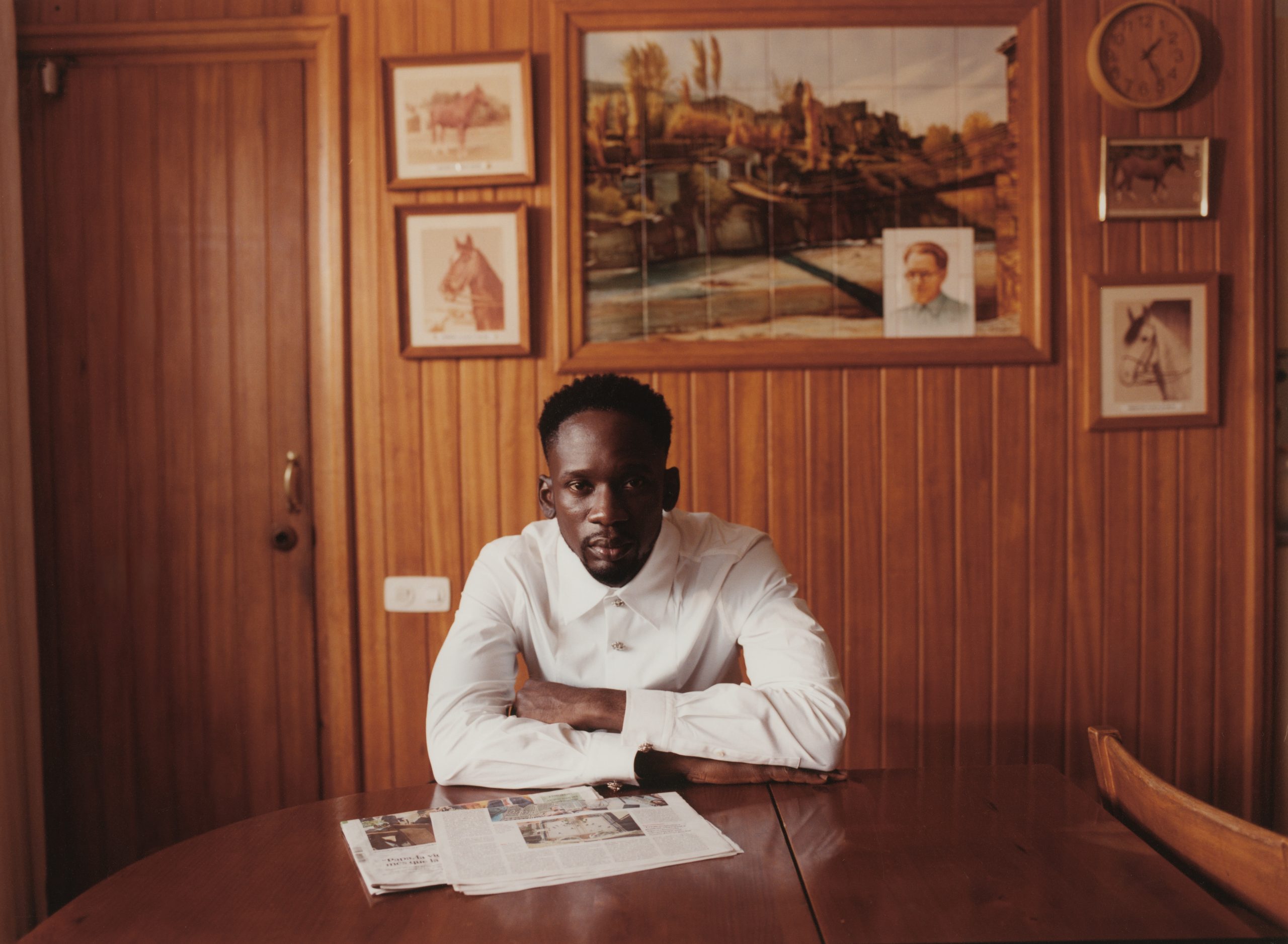
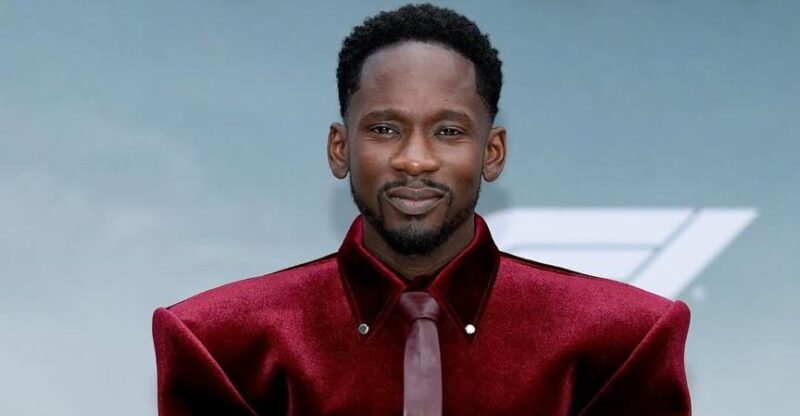
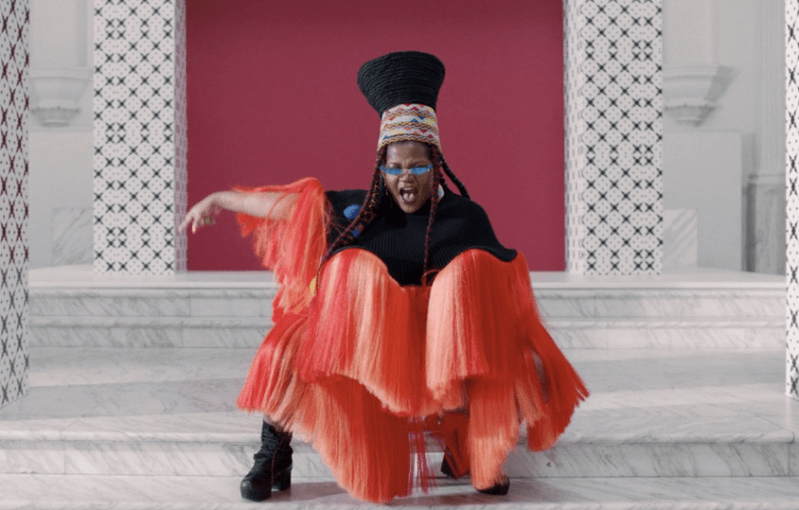
Mr Eazi - From Accra to the World: How Africa's Most Unconventional Pop Star Built an Empire Beyond Music
Jalen Ross··10 min read
Ad SpaceArticle Top - 728x90
Advertisement
Picture a young engineering graduate in Kumasi, Ghana, selling phones and laptops to fellow students to fund his weekends, then noticing that the parties he threw to move that stock drew bigger crowds than the merchandise itself. That observation - that the gathering was worth more than the goods - is the seed of everything Oluwatosin Oluwole Ajibade would later become. Most artists discover they can sing and then look for a way to monetise it. He worked the equation backwards. He understood audiences, cash flow and platforms first, and only afterward realised that a microphone was the most efficient tool he owned for building all three. By the time the world learned his stage name, the business instinct was already fully formed.
That sequence is the key to reading Mr Eazi. Strip away the gold chains and the festival headline slots and what remains is a builder who happened to make hit records. He has spent the better part of a decade insisting, through both interviews and actions, that the most valuable thing an African artist can own is not a song but the infrastructure that carries songs to listeners and money back to creators. He built that infrastructure for himself, then turned around and started building it for everyone else.
The boy who left Nigeria to find his sound in Ghana
Ajibade was born on 19 July 1991 in Port Harcourt, the oil city in Nigeria’s Rivers State. His upbringing was comfortable rather than hardscrabble, a point he has been candid about in later years, growing up in a household where enterprise was normal. At sixteen he relocated to Ghana to study, enrolling in mechanical engineering at the Kwame Nkrumah University of Science and Technology, the country’s most prestigious technical school, known universally as KNUST. He later added a master’s degree in engineering and management from Coventry University in the United Kingdom, a credential that says a great deal about the methodical mind underneath the easy-going stage persona.
Ghana did something to him that Nigeria alone could not have. The KNUST campus scene in Kumasi, soaked in Ghanaian highlife, hiplife and the slower rhythms of the coast, rewired his ear. When he eventually started making music seriously, what came out was neither purely Nigerian nor purely Ghanaian. It was a hybrid, a mellow, unhurried groove that married Nigerian chord progressions and pidgin slang to the relaxed swing of Ghanaian highlife. He gave it a name borrowed from the kitchen: Banku music, after the fermented corn-and-cassava staple eaten across Ghana and Togo. The label was half a joke and half a thesis. It announced, before he had even broken through, that his identity was deliberately cross-border. He was the Nigerian who became a star in Accra, the artist who refused to pick a flag.
His first steps in music were almost accidental. A guest verse on a track called “My Life” caught fire around the KNUST campus, and the response was loud enough to make him reconsider the corporate engineering path he had briefly walked back in Nigeria. He released a mixtape, “About to Blow,” in 2013. The title was aspirational. The blowing up came shortly after.
The records that carried Banku across borders
In 2015 came the song that changed the trajectory. “Skin Tight,” featuring the Ghanaian vocalist Efya and produced by DJ Juls, was funded on a shoestring. The story he tells is that friends chipped in roughly a thousand dollars to pay for the video, a sum that now looks like one of the better-returning investments in modern Afrobeats. The track was a slow-burning declaration of devotion, understated where his peers were maximal, and it spread across West Africa and into the diaspora. It made him a name on two coasts at once and gave the Banku idea a flagship.
Then came “Leg Over” in late 2016, produced by E-Kelly, the song that turned a regional favourite into a continental phenomenon. “Leg Over” is a study in restraint, built on a sparse, almost lazy arrangement that leaves space around every line. That minimalism became his signature. While much of Afrobeats raced toward bigger drums and busier production, Mr Eazi went the other way, trusting silence and groove to do the work. The approach travelled. The song racked up tens of millions of streams, earned him slots on international stages, and drew the attention of Western tastemakers years before Afrobeats became the global commodity it is today. Major-label interest followed, festival bookings followed, and a partnership orbit that briefly included Diplo’s Major Lazer camp helped push him further into the Western consciousness.
What is striking, looking back, is how early he stopped chasing the next hit as an end in itself. Many artists with two songs as big as “Skin Tight” and “Leg Over” would have spent the following five years trying to manufacture a third. He spent them building a company.
The emPawa bet: backing other artists before backing more of himself
In 2018 he launched emPawa Africa, and it is the single decision that separates him from almost every contemporary. The premise was simple and, for a working musician, faintly self-sacrificing. Rather than pour all his momentum into his own catalogue, he would use it to find, fund and develop the next generation of African talent. He put out an open call across the continent under the hashtag #empawa100, asking unsigned artists to submit demos, and selected one hundred of them to receive grants and mentorship. Reports at the time put the initial commitment around three hundred thousand dollars, with individual artists receiving seed money to shoot a video and record professionally, in exchange for a stake in their early upside.
The model was part talent incubator, part record label, part venture fund, and it produced the proof point that silenced the sceptics almost immediately. A Lagos singer named Joeboy had posted a cover of Ed Sheeran’s “Shape of You” online. A friend tagged Mr Eazi in the video. Joeboy became one of the first emPawa beneficiaries, and within months he had “Baby” and “Beginning,” two of the biggest Afropop songs of their moment, and a career that has since made him a headline act in his own right. Joeboy is the emPawa story in one name. He is the evidence that the accelerator was not a vanity exercise but a functioning machine for converting raw talent into commercial artists.
Ad SpaceIn-Article - 300x250
Advertisement
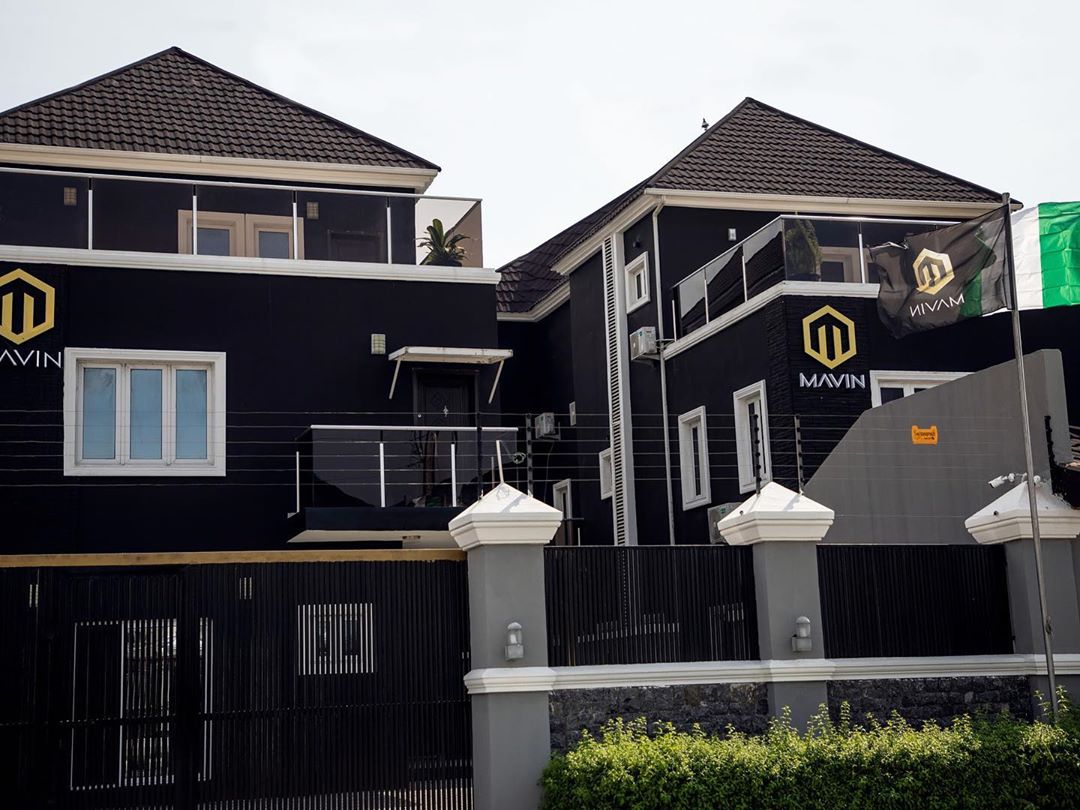
emPawa grew from there into a fuller operation, taking on distribution, services and label functions, and continuing to run yearly cohorts that hand grants and guidance to emerging acts across the continent. The philosophy underneath it is the thread that runs through his whole career. Africa, in his telling, has never lacked talent. What it has lacked is infrastructure, the unglamorous plumbing of distribution deals, royalty accounting, marketing budgets and global pipelines. He decided to build the plumbing.
The investor who treats music like a portfolio
If emPawa was the artist behaving like a label, what came next was the artist behaving like a fund manager. In 2022 he launched Zagadat Capital, a vehicle to back African-founded, category-defining companies. The portfolio reads like a map of where the continent’s young economy is heading: betPawa in sports betting, Eden Life in home services, Ruka Hair in beauty, PawaPay in cross-border payments, alongside a roster of other startups stretching across roughly eighteen African countries by various counts. emPawa itself sits inside that portfolio as the cultural anchor.
His name also became attached, in widely circulated reports, to Vydia, a music technology and distribution company acquired by the firm Gamma. Many Nigerian outlets ran with a headline that Mr Eazi had “sold Vydia for one billion dollars,” and it is worth being careful here, because the claim does not survive scrutiny. The billion-dollar figure appears to refer to the capital Gamma raised for its broader ambitions, not the price paid for Vydia, whose deal terms were never disclosed. emPawa Africa’s Ghana arm is reported to have taken a stake in Vydia around 2021, and the two collaborated on distribution, so there is a real connection and a real return story. But the tidy “billionaire from one sale” narrative is a misreading that has hardened into folklore. The honest version is less cinematic and more interesting: a musician who spotted that the boring back end of the music business, distribution and rights management, was where durable value lived, and positioned himself accordingly.
He has kept building cultural assets too. ChopLife SoundSystem, the pan-African collective he fronts alongside the DJ Edu, takes its name from the West African pidgin for enjoying life and functions as both a recording project and a touring live experience, releasing regional volumes that fold in artists from South Africa and beyond. His Detty Rave and Detty December events have become fixtures of the Accra festival calendar, drawing acts like Davido and turning the holiday season into a recurring revenue engine and a showcase for the network he has spent years assembling. Each piece reinforces the others. The festival promotes the artists, the artists feed the label, the label feeds the fund.
Temi Otedola and a love story that became a national event
For years his personal life ran quietly alongside the business. His long relationship with Temi Otedola, the actress, fashion influencer and daughter of the Nigerian billionaire Femi Otedola, was an open secret in entertainment circles, conducted with notably more discretion than most celebrity romances of its scale. The two had been together since the mid-2010s, and his fans tracked their relationship through the occasional soft-launch on social media and the song “Supernova,” which he confirmed was a proposal recorded into music.
In 2025 the discretion gave way to spectacle. The couple married in a sequence of three ceremonies that turned their union into one of the most talked-about weddings the continent has produced. A civil ceremony in Monaco in May, a traditional Yoruba ceremony at the Otedola family residence in Dubai in July, and a white wedding in Iceland in August. The events drew coverage from international fashion press, comparisons to the most lavish weddings of the year, and cost estimates ranging into the tens of millions of dollars, figures that should be read as press speculation rather than confirmed accounting. Temi Otedola has since spoken publicly about the marriage in warm terms, describing him as the person she could not imagine life without. The pairing carries an obvious symbolic weight: the self-made artist-entrepreneur marrying into one of Nigeria’s most established business dynasties, two versions of African ambition meeting at the altar. He has handled that optic the way he handles most things, by staying largely understated and letting the work speak.
His place in the Afrobeats story
Mr Eazi will probably never top the streaming charts the way Burna Boy, Wizkid, Davido or Rema do, and he seems entirely at peace with that. His significance is different and, in some respects, more structural. He was among the artists who proved, early, that Afrobeats had a Western audience hungry for it, and he did it with a sound built on restraint rather than crossover compromise. More lastingly, he reframed what an African pop star could be. The template before him was the artist as performer, dependent on labels and gatekeepers. He offered an alternative: the artist as owner, as investor, as institution-builder, someone who treats a catalogue as the first asset in a portfolio rather than the only one.
That is why the “Africa’s Jay-Z” comparison gets attached to him so often, and while the label is lazy, the instinct behind it is right. Like Jay-Z, his cultural value increasingly flows from the businesses he controls and the careers he has lifted as much as from the records he releases. His debut studio album, “The Evil Genius,” arrived only in 2023, sixteen tracks that doubled as an art exhibition, each song paired with a commissioned visual piece from artists across the continent and featuring collaborators from Angélique Kidjo to Joeboy. For a man who had been famous for nearly a decade, releasing a first album that late was itself a statement: the music was never the whole point. In late 2025 he followed it with “Maison Rouge,” a more reflective project that signalled an artist creating, in his own words, without pressure, secure enough in everything else he has built to make music purely on his own terms.
What the empire actually proves
The estimates of his wealth swing wildly, from roughly eight million dollars to figures north of thirty million, and the truth is that nobody outside his accountants knows, because so much of his value sits in private equity stakes that do not show up in a streaming dashboard. Treat any single number as a guess. The more telling measure is the one that does not fit on a net-worth list: the artists who have careers because emPawa funded their first video, the startups operating across eighteen countries that took his cheque, the festival economy he has helped anchor in Accra, the distribution rails he bet on before they were obvious.
Stand in the crowd at a Detty Rave show in Accra in December and the whole thesis is visible at once. On stage is a Nigerian who became a star in Ghana, fronting a pan-African collective, performing songs he funded for artists he discovered, in a venue running on infrastructure he invested in, in a season he helped turn into an institution. The boy who noticed that the party was worth more than the merchandise grew up and built the party, the venue, the label and the fund. Mr Eazi spent his career answering a question most musicians never think to ask, which is not how to make a hit, but who should own the machine that carries it. He answered it by owning as much of the machine as he could, and handing the rest to the people coming up behind him.
Ad SpaceIn-Article - 300x250
Advertisement
Share
Get the recap
Loved this story? Get more like it.
Join readers who get our weekly entertainment recap - the stories worth your time, delivered every Friday.
No spam. Unsubscribe anytime. By signing up you agree to our Privacy Policy.