Where Is Ycee Now? The Full Story of One of Nigeria's Most Gifted Rappers and His Place in Afrobeats History
Arianne Cole··9 min read
Ad SpaceArticle Top - 728x90
Advertisement
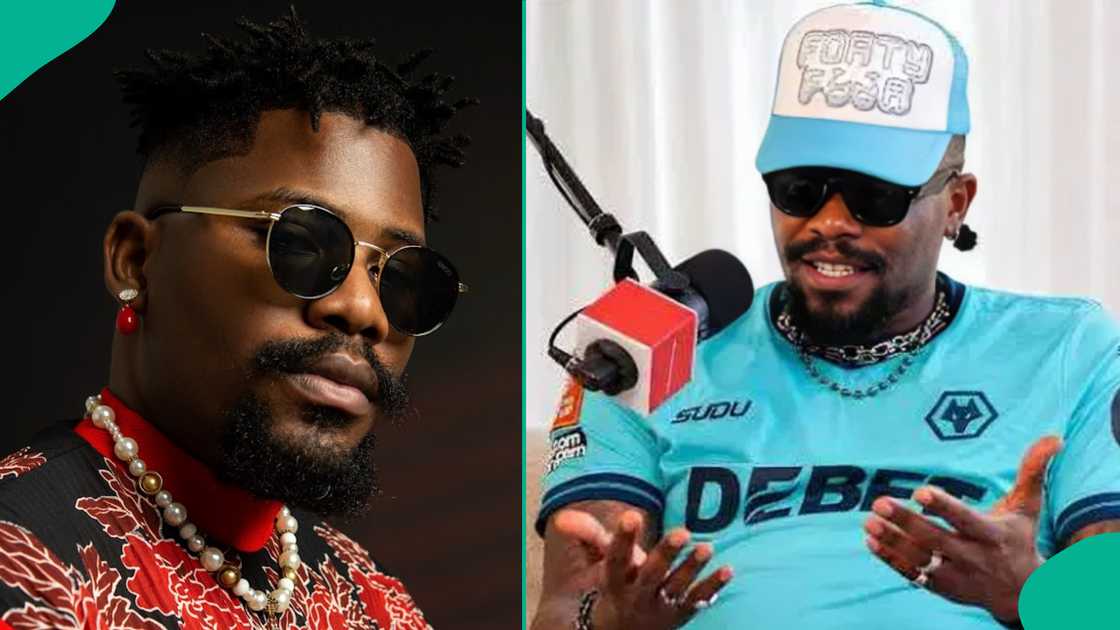
The bassline drops, a snare kicks in, and a voice that sounds like it is grinning through every syllable announces itself: “Jagaban, omo Jagaban.” For a stretch of 2015 and 2016, that hook was unavoidable in Lagos - blasting from danfo speakers, looping in club corners, scrawled across timelines. It belonged to a young rapper out of Festac Town who seemed to have cracked the code that so many Nigerian lyricists could not. He could rap, properly rap, and still make something people wanted to dance to. A decade on, the speakers have moved on to other names, and the question that follows him into 2026 is a simple one with a complicated answer: where exactly is Ycee, and what happened to the talent that once felt destined to redraw the map of Nigerian hip-hop?
From Festac Classrooms to the Underground
Oludemilade Martin Alejo was born on 29 January 1993 in Festac Town, the sprawling Lagos housing estate built for FESTAC ’77 that has since produced its own quiet roll call of artists and hustlers. He came up through ordinary Lagos schooling, finishing his secondary education at the Nigerian Navy Secondary School in Ojo before heading to the University of Lagos, where he studied marine biology. That detail tends to draw a smile from fans, because there is almost nothing about Ycee’s eventual public image that suggests lab coats and tidal charts. Yet it fits a pattern common to his generation of Nigerian creatives: the degree as insurance, the music as the actual ambition.
He started making music in 2012 as an underground rapper, releasing early singles like “Smile On Me” and “Pass Me” that found small audiences and signalled a writer who took bars seriously. University briefly pulled him away, as admission and coursework do for a lot of young Nigerian acts who cannot yet justify dropping everything for a craft that pays nothing. The interruption matters, because it frames what came next. When Ycee returned to music with real intent, he did not arrive as a wide-eyed beginner. He came back sharper, with a clearer sense of the lane he wanted to occupy, and that lane sat right at the friction point between rap and pop that has defined his entire career.
The Year Everything Changed
In May 2015, Ycee released “Condo,” a collaboration with Patoranking that put his name in rooms it had not reached before. The song earned him two nominations at the 2015 Nigeria Entertainment Awards, including Best Collaboration of the Year, and it announced that this was a rapper who understood melody as well as rhyme. Then, on 20 July 2015, came “Jagaban.” If “Condo” opened the door, “Jagaban” kicked it off the hinges. The track was brash, confident, and impossibly catchy, built around a chant that practically demanded to be repeated. It became the kind of record that defines a calendar year in Lagos.
The seal of approval that followed told the whole story. Olamide, then operating at the absolute peak of his powers as the gatekeeper of Nigerian street-rap relevance, asked to jump on the remix. For a newcomer, getting Olamide on your record in 2015 was not just a feature. It was a coronation. The remix amplified everything, and the nominations piled up across the major platforms of the day. He picked up a Revelation of the Year nod at the MTV Africa Music Awards and a Best Artist in African Pop nomination at the All Africa Music Awards, and he would go on to win Rookie of the Year at The Headies. By the close of 2015, Ycee was no longer a promising underground name. He was one of the most talked-about new artists in the country, and he carried the additional weight of being a rapper in an industry that increasingly preferred its stars to sing.
The Tinny Years and the Sony Deal That Should Have Been a Coronation
All of this happened under the banner of Tinny Entertainment, the label Ycee had signed with on his way up. For a moment, the partnership looked like a model of how a Nigerian act could go from local breakout to international footing. In October 2016, Ycee signed a record deal with Sony Music, the sort of arrangement that, on paper, places a Lagos rapper inside one of the biggest machines in global music. The momentum carried into 2017, the year of “Juice.”
“Juice,” featuring Maleek Berry, is arguably the cleanest distillation of what made Ycee special. It paired his rap instincts with a glossy, radio-ready sheen, and by late June 2017 it had climbed to number one on the Playdata charts as the most popular new music on Nigerian radio. He followed it with “First Wave,” an eight-track EP that gave fans a fuller picture of his range, and in January 2018 he sold out a headline show at the O2 Academy Islington in London, sharing the stage with label mates including Bella Alubo and Eugy. From the outside, the trajectory looked like a straight line up and to the right.
The reality underneath was messier. In February 2018, Tinny Entertainment announced the termination of Ycee’s deal with Sony Music, ending a partnership that had lasted roughly sixteen months. The exact mechanics of that collapse have never been laid out cleanly in public, but the broad picture is one of a young artist whose commercial breakthrough did not translate into the kind of control, or compensation, that the numbers seemed to promise. That gap between visibility and reward would become the defining tension of his career, and it is one he has only recently been willing to name out loud.
Ad SpaceIn-Article - 300x250
Advertisement
Independence, the Album, and What Came Loose
On 15 January 2019, Ycee announced on Instagram that he had parted ways with Tinny Entertainment. In the same breath, he launched his own label, ANBT, short for Ain’t Nobody Badder Than. The move read as a declaration of independence from an artist who had concluded, in his own telling, that he had been operating inside a bad business relationship and losing opportunities he never even got to weigh. Later, he would put figures to the frustration. Ycee has said publicly that he worked under a 70/30 split with the label and that, despite his songs accumulating well over 100 million streams across his catalogue, he never received a royalty cheque, with the label maintaining it had not recouped its investment. He has framed this not as a single villain story but as a window into how easily early-career Nigerian talent can sign away leverage before anyone understands what a hit is actually worth.
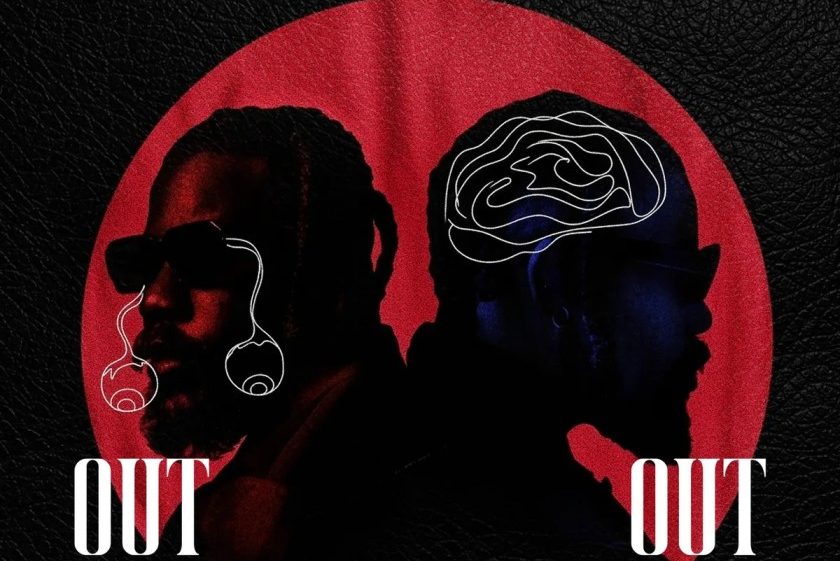
Free of the old arrangement, he delivered what remains his most ambitious statement: the studio album “Ycee vs Zaheer,” released on 8 November 2019. Named for the dual identity he had cultivated, the rapper Ycee and the singer-leaning alter ego Zaheer, the project deliberately refused to pick a side. It moved across hip-hop, trap, Afrobeats, Afro-house, R&B and alté, and pulled in collaborators including Davido, Niniola and Phyno. It was the sound of an artist trying to prove he could be everything at once, the technical rapper and the pop melodist, the street voice and the radio name. As a creative argument it was bold. As a commercial reset for a newly independent act with no major-label engine behind him, it was a heavier lift, and it landed into an industry that was already tilting hard toward a different sound.
The Disappearance, and the Reason Behind It
After “Ycee vs Zaheer,” the output thinned. He released the EP “Love Drunk” in 2021 and a single in 2022, and then the steady presence that fans had come to expect simply faded. For years, the silence invited the usual speculation that trails any artist who slows down: label trouble, lost relevance, the industry moving on. The truth, which he finally shared in June 2026, was far more serious and far more human than any of that.
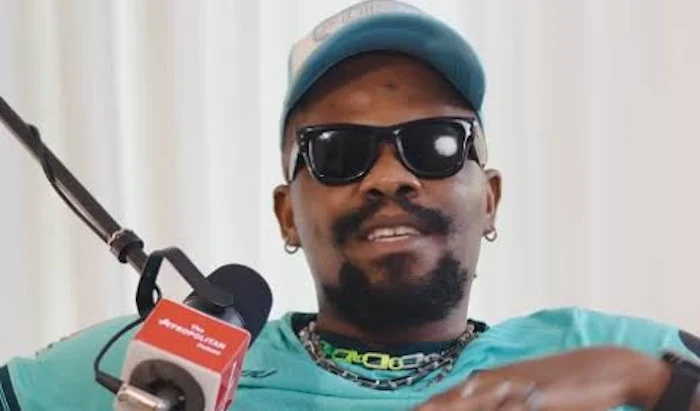
In a series of appearances, including a livestream with creator Carter Efe and an interview on the Afropolitan Podcast, Ycee revealed that he had been diagnosed with bipolar disorder in 2020, during the COVID-19 lockdown, while he was living in London. He described being in and out of hospital for roughly three months there before visa restrictions forced him to return to Lagos, where he continued treatment. What followed, by his own account, was a long and often dark six years of medication, therapy and repeated hospitalisations. He has been candid that the condition struck at the very thing that had always come easiest to him. Making music, he said, was something he had always found natural, and the cruelest part of the illness was the fog it laid over his creativity, the sessions where his brain simply would not connect. He has also acknowledged that “Love Drunk” never got the push he would normally have given a project, because of the state he was in when it came out. By his telling, things began to lift around the end of 2024, when he started to feel like himself again, and his 2026 return to the public eye is framed not as a comeback gimmick but as the other side of a genuine recovery.
What Ycee’s Story Says About Rap in an Afrobeats World
There is a temptation to read Ycee’s arc purely as a personal tragedy interrupted by illness, and the health chapter is real and deserves to be taken on its own terms. But his career also maps onto a larger pattern that anyone watching Nigerian music closely will recognise. The industry that crowned him in 2015 was already in the middle of a long tilt away from rap and toward melodic Afrobeats and Afropop. The acts who scaled into global arenas over the following decade were, overwhelmingly, singers and hybrid pop stars. Pure rappers, even brilliant ones, found the commercial ceiling lower and the path to international rooms narrower. Ycee felt this earlier than most, and his “Ycee vs Zaheer” experiment, the deliberate splitting of himself into a rapper and a singer, can be read as one gifted artist trying to solve in real time the problem the whole rap scene was facing.
That context does not diminish him. If anything it sharpens the appreciation. The Nigerian rappers of his cohort who stayed visible largely did so by leaning into pop, securing major structural backing, or both. Ycee had the talent and, for a window, the hits, but the business around him fractured at the exact moment it should have compounded, and then his health took the years he might have used to adapt. His candour about the royalty arrangement and the streams that never paid out is its own kind of contribution, a rare on-the-record account of how the economics can quietly fail even an artist with the receipts. For younger Nigerian acts negotiating their first deals, that testimony may end up mattering as much as any single record.
So where is Ycee in 2026? He is 33, he is based in Lagos, and after the most difficult stretch of his life he has told the public he is stable and ready to make music again. He has not announced a specific new project or release date, and it would be dishonest to dress up an intention as a discography. What is concrete is this: the artist who gave Nigerian rap one of its defining chants of the 2010s has come through a bipolar diagnosis, three months hospitalised in London, years of treatment in Lagos, and a creative fog he openly feared he would never escape, and he has walked back into public view on his own terms, talking plainly about all of it. The “Jagaban” hook still echoes whenever the old playlists resurface. The man who made it is no longer disappearing behind it.
Ad SpaceIn-Article - 300x250
Advertisement
Share
Get the recap
Loved this story? Get more like it.
Join readers who get our weekly entertainment recap - the stories worth your time, delivered every Friday.
No spam. Unsubscribe anytime. By signing up you agree to our Privacy Policy.