From Lagos to Los Angeles: How Afrobeats Conquered the BET Awards Stage
Jalen Ross··9 min read
Ad SpaceArticle Top - 728x90
Advertisement
Cut to a stage in Los Angeles, the lights low and the crowd loud, and a Nigerian artist clutching a golden statue with a hometown accent still thick in their thank-you speech. A decade ago that picture would have read as a novelty, a feel-good footnote in an American ceremony built around hip-hop and R&B. Now it reads as routine. The BET Awards, the most visible annual celebration of Black entertainment in the United States, has become one of the clearest barometers of how far African music has traveled, and the trophy that tracks that journey most directly is the Best International Act category.
The story of Afrobeats at the BET Awards is not just a list of winners. It is a map of a genre forcing its way into rooms that once treated it as background music, then taking those rooms over. To follow the arc from the first African winners to the present day is to watch a regional sound become a global currency, one acceptance speech at a time.
The Category That Cracked the Door Open
Black Entertainment Television did not always have a tidy slot for the rest of the world. For years, the BET Awards were a domestic affair, and international artists watched from the outside. That changed when the network introduced a Best International Act category, and crucially, a version of it built specifically for Africa.
The Best International Act: Africa award ran from 2011 through 2017, and its roll call doubles as an early history of modern African pop crossing borders. The inaugural 2011 honor was shared by Nigerian heavyweights 2Face Idibia and D’banj, two artists who had already turned Afro-pop into a continental phenomenon. The following year, in 2012, a young Wizkid took the prize alongside Ghana’s Sarkodie, a pairing that signaled how quickly the next generation was arriving. Ice Prince followed in 2013, Davido in 2014, Ghana’s Stonebwoy in 2015, South African house pioneer Black Coffee in 2016, and Wizkid again in 2017, making him the most decorated artist of that particular era of the award.
That Africa-specific category mattered because it gave the continent its own lane rather than asking African stars to fight for scraps against established Western names. It was a deliberate spotlight, and the artists who stood in it used it to build profiles that reached well beyond their home markets. The award was a door, slightly ajar, and a wave of musicians was about to push it wide open.
When Best International Act Went Global
In 2018, BET restructured the honor into a single Best International Act category, throwing artists from Africa, the United Kingdom, France, Brazil and beyond into the same race. On paper, that consolidation could have buried African acts in a deeper, more competitive field. Instead, it did the opposite. It handed Afrobeats a stage to prove it could win outright, against the world, with no continental safety net.
Davido won that first reimagined award in 2018, beating a field that included British grime star Stormzy, fellow Nigerian Tiwa Savage, and a roster of South African and French acts. It was a statement: an Afrobeats artist could take the biggest version of the international prize on the genre’s own terms. The result quietly reframed what the category meant. This was no longer a polite nod to the continent. It was a competition African artists were built to win.
The shift was not symbolic alone. It tracked a real movement in how American audiences and tastemakers were starting to consume African sound. Playlists were filling with Lagos and Accra. Collaborations between US and African artists were multiplying. The BET stage, attuned as it is to where Black culture is heading, registered the change early. The category became a leaderboard for a genre on the rise, and one name was about to dominate it like no one before.
The Burna Boy Run
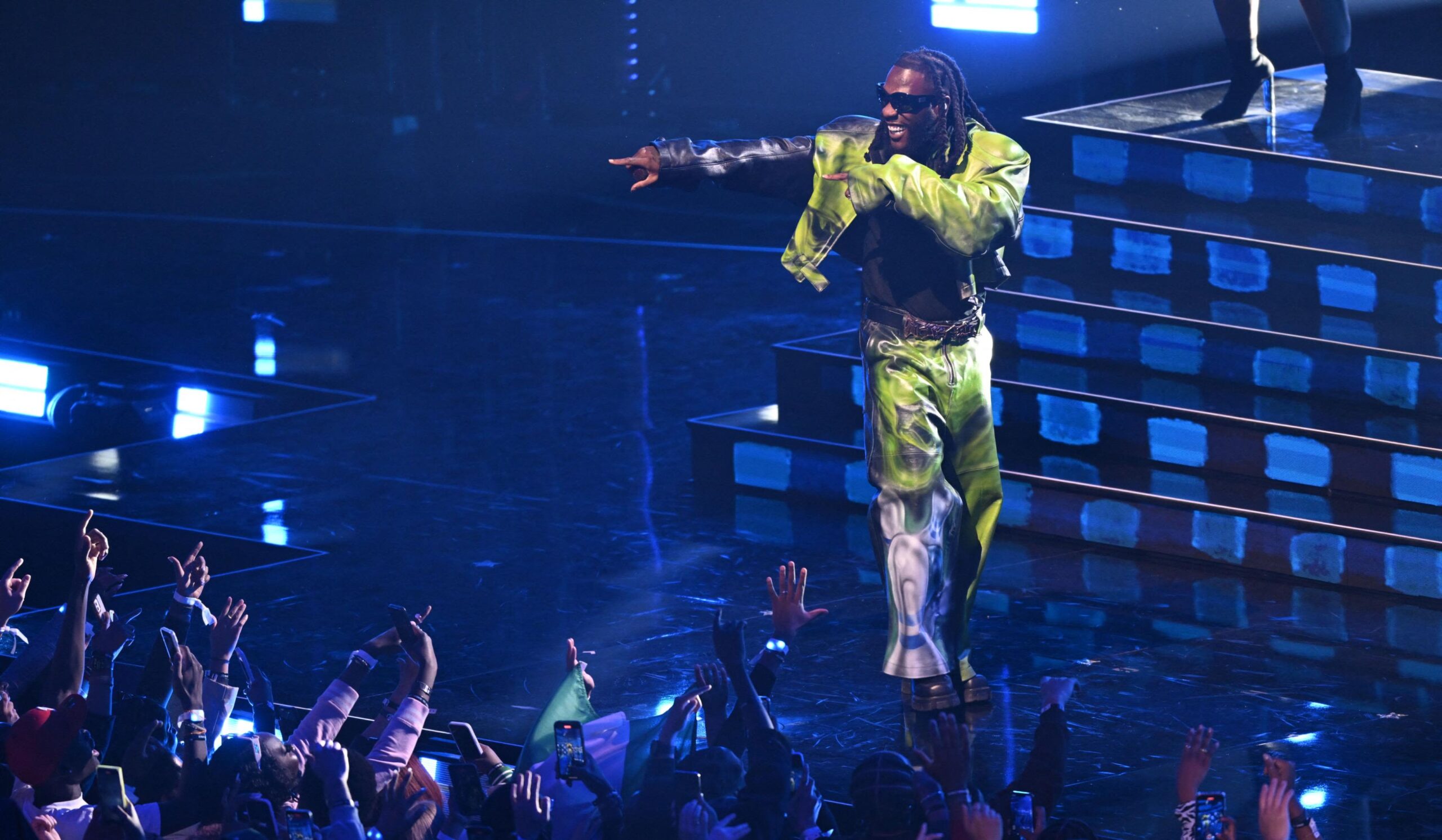
If you want a single thread that ties the modern Best International Act category together, it is Burna Boy. After Davido’s 2018 win, the Port Harcourt-born self-styled African Giant won the award in 2019, then again in 2020, then again in 2021, an unbroken three-year run that turned a competitive global category into something close to his personal property. He would return to claim it once more in 2023, giving him four wins overall and a place in the record books as the most successful artist in the category’s modern history.
What made the run resonate beyond the trophy count was the timing. Burna Boy’s BET dominance coincided with his ascent into rooms African artists had rarely entered. His album work was earning international critical praise, his concerts were filling larger and larger venues abroad, and his name was becoming shorthand for Afrofusion’s arrival on the global main stage. Each BET win arrived as both a cause and a consequence of that momentum, a recurring reminder that the most prestigious annual celebration of Black American entertainment kept choosing a Nigerian as its window onto the wider world.
There is a particular weight to winning the same award four times across five years. It removes the question of luck. It tells everyone watching that the genre behind the artist is not a passing trend but a permanent fixture. Burna Boy’s repeated trips to the BET podium did more than decorate his shelf. They normalized the sight of an Afrobeats star at the center of the American industry’s biggest night, and they set the stage for the moment the category would finally crown a woman.
The dominance also reset expectations for everyone who shared the ballot with him. In year after year, the Best International Act field included formidable names from the United Kingdom, France, South Africa and Brazil, artists with their own large followings and chart histories, and still the trophy went to Nigeria. That consistency taught audiences in the United States to associate the category itself with Afrobeats, the way certain genres become synonymous with the awards built to honor them. By the time the run ended, the question was no longer whether an African act could win the global prize. It was which African act would win it next, and that subtle reframing did more for the genre than any single ceremony ever could.
Ad SpaceIn-Article - 300x250
Advertisement
Tems, Ayra Starr and the Women Rewriting the Script
In 2022, Tems became the first woman to win the Best International Act category. The milestone landed with real significance, because it broke a pattern in a genre too often narrated through its male superstars. Tems arrived at that moment carrying a voice that American listeners already knew, even if some did not yet know her name, thanks to her feature on “Essence,” the Wizkid collaboration that became the first Nigerian song to chart on the Billboard Hot 100. Her win confirmed that the global appetite for Afrobeats was not limited to its headline men.
The significance of that breakthrough is easier to appreciate against the genre.s history at the ceremony, where the early African winners had been overwhelmingly male. A woman winning the most competitive version of the award sent a message to a generation of younger singers and songwriters that the international stage was theirs to claim too. It also reflected how the sound itself had broadened, with the soulful, R&B-tinged corners of the Afrobeats world earning the same recognition as its more uptempo, dancefloor-driven hits.
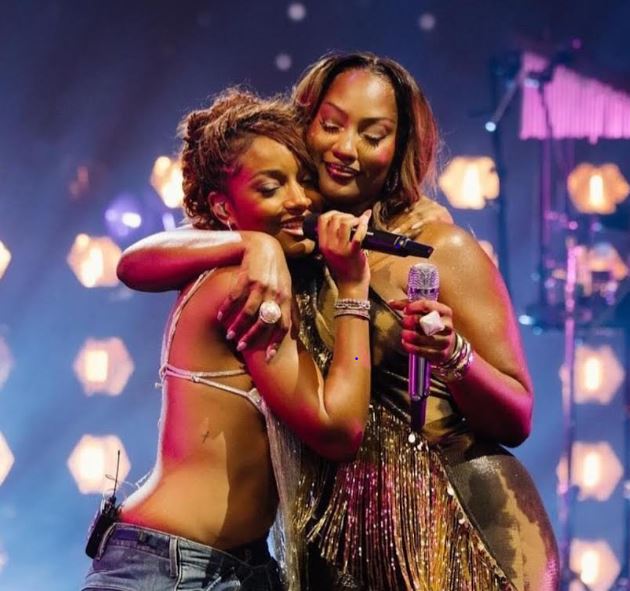
The category’s reach widened again in 2024, when South Africa’s Tyla won, carrying the amapiano-laced sound of her viral breakout into the BET winners’ circle and reminding everyone that African pop is bigger than any one country or scene. Then in 2025, Ayra Starr took the award, a victory that felt like a passing of the torch to a younger generation of Nigerian artists who grew up watching the likes of Wizkid and Davido kick the door down and walked through it as if it had always been open.
Taken together, the run from Tems to Tyla to Ayra Starr reshaped the story. The category that once read as a showcase for established male stars became a space where women, and a broader spread of nations, claimed the spotlight. It signaled a genre maturing past its first wave, deep enough in talent to keep producing winners from new corners and new voices. That depth is exactly what separates a moment from a movement, and the BET stage kept providing the receipts.
More Than a Trophy, a Performance Platform
The category wins tell one half of the story. The other half plays out in the performance slots, the segments where the BET Awards decide whose sound deserves the live treatment in front of a primetime American audience. A nomination puts your name on a list. A performance puts your music in the room, in motion, in the cultural bloodstream of the night.
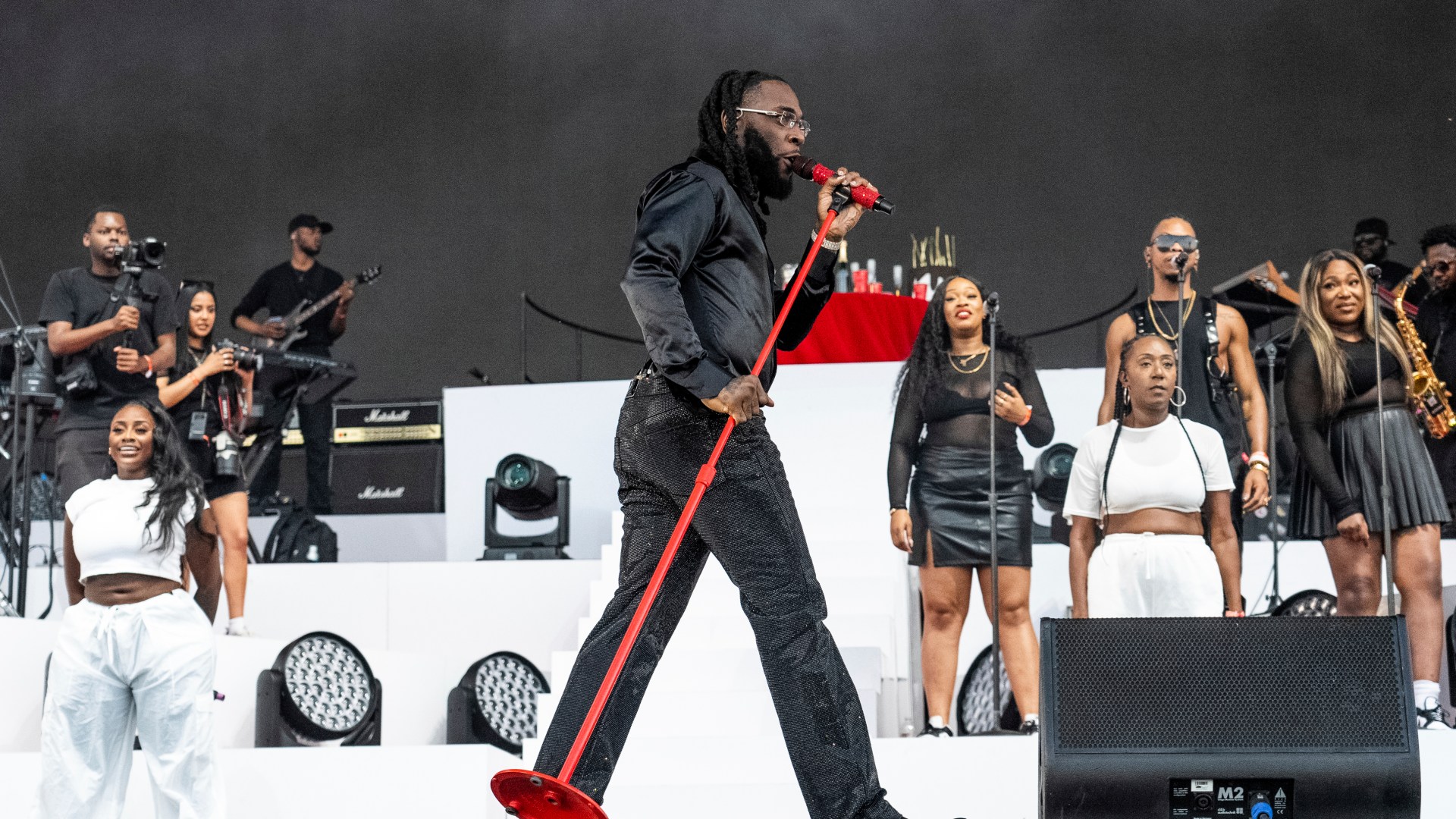
African and Afrobeats artists have increasingly earned those slots, and the 2026 ceremony at the Peacock Theatre in Los Angeles offered a vivid example. Tems took the stage with a performance of “What You Need,” a song from her 2025 project, delivering it in a stripped, atmospheric staging that built from a single piano into a full band and choir. The performance shared a bill that included a sweep of established American stars, and Tems held her own among them, which is precisely the point. To be handed a marquee performance slot at the BET Awards is to be told that your music is not a curiosity to be slotted in but a draw the broadcast wants its viewers to see.
That same 2026 ceremony also illustrated the maturing complexity of the relationship. Wizkid, Burna Boy, Tems and Asake all entered the night with major nominations, a density of African names on the ballot that would have been unthinkable a decade earlier. Wizkid and Asake even earned a nomination in the Best Group category for their collaborative project, a category that has nothing to do with geography and everything to do with competing head-to-head with American acts. They did not win that night, with the group prize going to the hip-hop duo Clipse, and the Nigerian contingent left without the headline trophies. That outcome carries its own lesson worth sitting with.
What the Losses and the Long Game Reveal
A night without a win is not a setback when measured against where the genre started. The fact that the 2026 conversation centered on which African superstars were snubbed, rather than whether any were invited at all, is the clearest evidence of how thoroughly the ground has shifted. Being expected to win, and being disappointed when you do not, is the posture of an establishment act, not an outsider hoping to be noticed. Afrobeats has graduated from gratitude to expectation.
That graduation is the real headline buried inside the BET Awards story. The Best International Act category began as a special carve-out, a place to acknowledge a continent the ceremony had historically overlooked. It evolved into a global contest African artists routinely win. And the genre’s biggest names are now competing in categories with no international label attached at all, lining up beside American R&B and hip-hop acts as peers rather than guests. The progression from a protected African lane to open competition is the whole arc compressed into one awards franchise.
There is a reason the BET Awards make such a useful lens for this. The ceremony is not a neutral observer. It is a curator of where Black culture is moving, and its choices about who gets nominated, who wins, and who performs function as a yearly reading of the cultural temperature. When that reading consistently returns Lagos, Accra and Johannesburg, it is telling us something about the center of gravity in popular music, not just about one network’s taste.
The artists themselves understand the stakes. A BET nomination opens American doors, a win amplifies a catalog into new markets, and a performance slot puts a sound in front of millions who might never have searched for it. For a generation of African musicians, the path to global scale has run straight through this stage, and they have walked it from shared inaugural prizes to record-breaking streaks to primetime performances. The trophies on the shelf are real, but the deeper victory is the change in expectation, the quiet certainty that when the most important night in Black American entertainment scans the world for excellence, it keeps landing on Africa.
Ad SpaceIn-Article - 300x250
Advertisement
Share
Get the recap
Loved this story? Get more like it.
Join readers who get our weekly entertainment recap - the stories worth your time, delivered every Friday.
No spam. Unsubscribe anytime. By signing up you agree to our Privacy Policy.