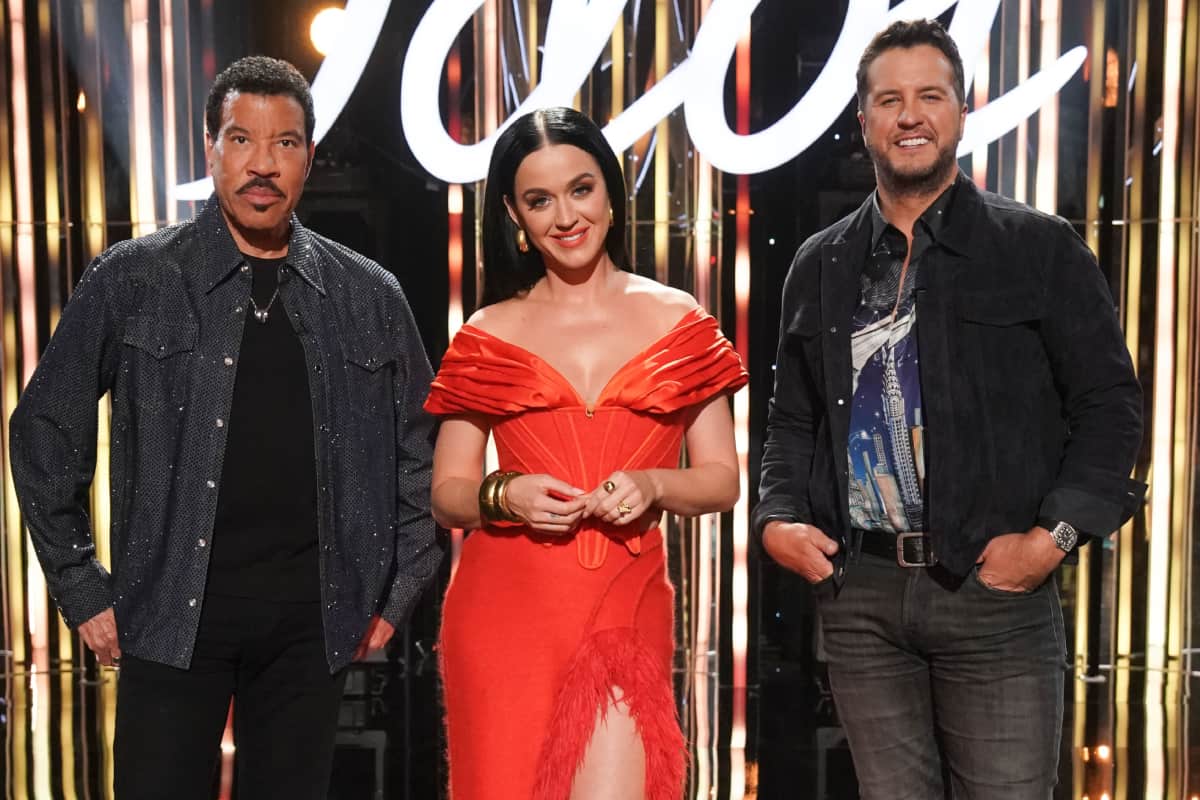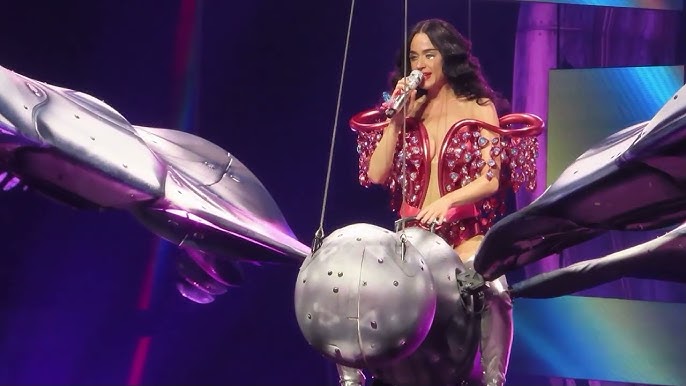

Silver sequins catching the stadium lights, a ten-year-old held aloft in her arms, and the flags of dozens of nations spinning in a circle around her. That was the image broadcast to a global audience on 12 June 2026, when Katy Perry took the stage at SoFi Stadium in Los Angeles for the opening ceremony of the FIFA World Cup, ahead of the United States facing Paraguay. She wore a Stella McCartney gown and sang “Wonder” as a duet with a young performer named Tius, lifting the child up as the crowd roared. It was the kind of moment Perry has built a career on, equal parts spectacle, sentiment, and unmistakable star power, and it is a large part of why her name surged across search and social feeds in the middle of June.
The performance also captured something larger about where Perry sits in 2026. She is no longer simply the pop singer who once owned the radio. She is an institution, the sort of name organisers reach for when they need a face the entire planet recognises. The arc that carried her from a gospel-singing teenager in Santa Barbara to the centre of a World Cup ceremony is one of the most instructive careers in modern pop, full of record-breaking peaks, sharp commercial declines, business pivots, and reinventions that not all of her peers managed to survive.
The Gospel Kid From Santa Barbara
Long before the wigs and the candy-coloured stage sets, there was Katheryn Elizabeth Hudson, born on 25 October 1984 in Santa Barbara, California. Her parents were both Pentecostal pastors, and her upbringing was strict and devout. Secular music was largely off-limits in the Hudson household. The records she was allowed to hear leaned gospel, and her first real public singing was done in church.
Her debut release reflected that world entirely. In 2001, as a teenager, she put out a Christian album under her birth name, Katy Hudson. It sold poorly and the label folded soon after, leaving her without a deal. What followed was a long stretch in the music-industry wilderness, years of being signed and dropped, of projects that stalled before release, of nearly making it and then not. She eventually adopted the stage name Katy Perry, taking her mother’s maiden name to avoid confusion with the actress Kate Hudson. That period of repeated near-misses is easy to skip past now, but it shaped the relentless work ethic and reinvention instinct that would define everything afterward.
Those lean years also taught her how to read a room and a market. She bounced between labels, wrote with a rotating cast of producers, and absorbed the mechanics of how pop songs are built and sold. By the time success arrived, she was not a naive newcomer handed a hit. She was a veteran of the grind who had spent the better part of a decade watching the industry from the inside, which is part of why she has been able to keep adapting long after the initial wave crested.
The Breakthrough and the Teenage Dream Juggernaut
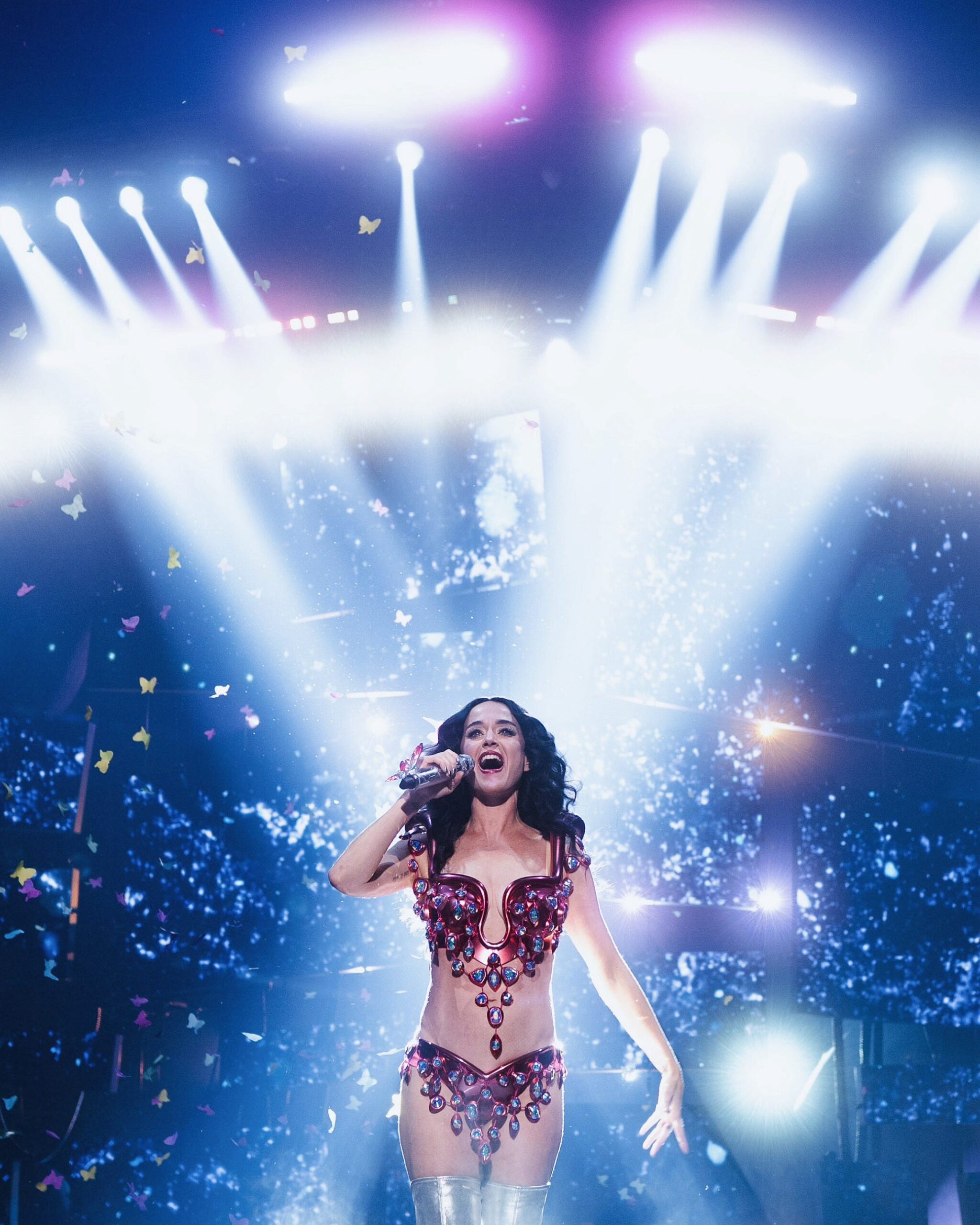
The door finally opened in 2008. “I Kissed a Girl” became an inescapable summer single, topping the US Billboard Hot 100 and announcing Perry as a provocateur with a pop instinct. The parent album, “One of the Boys,” gave her a foothold. What came next made her a phenomenon.
In 2010 she released “Teenage Dream,” and the album did something almost no record had ever done. According to Billboard, it produced five number-one singles on the Hot 100, “California Gurls” featuring Snoop Dogg, the title track, “Firework,” “E.T.,” and “Last Friday Night (T.G.I.F.).” That total tied a record set by Michael Jackson, whose 1987 album “Bad” had also sent five songs to the top of the chart. As reported by Billboard, the achievement made Perry the first female artist in history to pull five number ones from a single album. For a stretch of roughly two years, she was arguably the most ubiquitous pop star on the planet, the sound coming out of every car window and every shopping centre speaker.
The catalogue from that imperial run still anchors her live shows. “Firework” became a graduation and stadium anthem. “Roar,” from the 2013 follow-up “Prism,” gave her another global number one and one of the defining empowerment singles of the decade. “Dark Horse,” featuring Juicy J, became one of the best-selling digital singles of all time per Recording Industry Association of America certifications. These were not just hits. They were the songs that defined a particular era of mainstream pop, glossy, maximalist, and built for the widest possible audience.
The scale of that catalogue is worth pausing on for readers outside the United States, where her ubiquity was just as real. “Roar,” “Firework,” and “Dark Horse” charted across Europe, Africa, and Asia, and her music videos racked up billions of views on YouTube, making her for a time one of the most-followed and most-watched musicians on the platform. That global footprint is exactly what made her a natural choice years later for a stage as international as a World Cup opening ceremony. Her songs had already done the work of crossing borders.
The Super Bowl and Peak Ubiquity
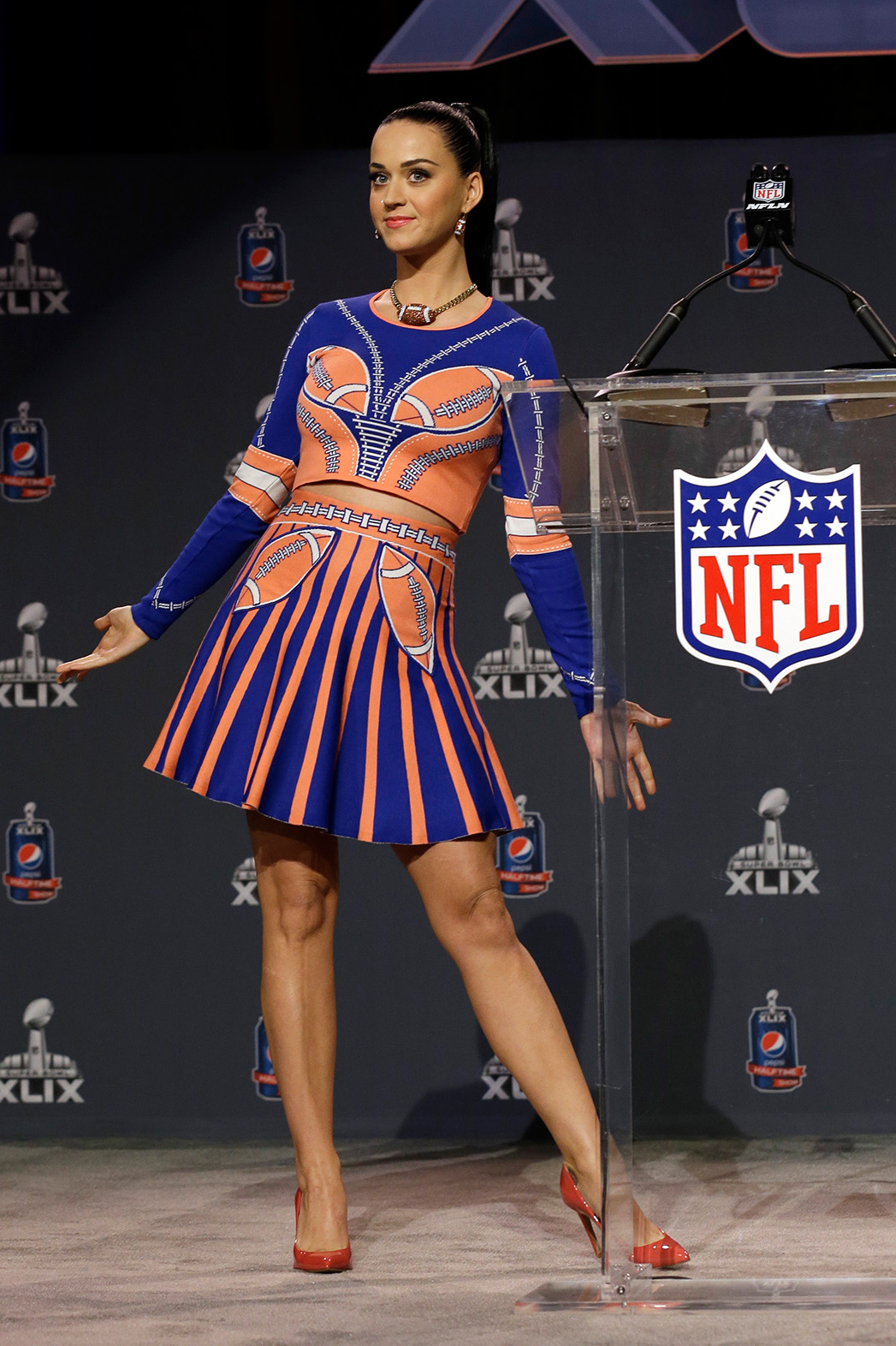
If there is a single moment that marks the absolute summit of Perry’s cultural reach, it is the Super Bowl XLIX halftime show in February 2015. She entered on a giant mechanical lion, soared above the field on a shooting-star rig during “Firework,” and delivered a set that drew, by Nielsen’s count, one of the largest audiences in the history of the broadcast. It was the kind of performance that confirms an artist has crossed from pop star into something closer to national fixture.
The show is also remembered for a happy accident. During “Teenage Dream,” one of two dancers dressed as sharks fell out of step with the choreography, and “Left Shark,” as the internet immediately christened it, became a viral sensation that outlived the performance itself. That a wardrobe-and-choreography mishap became one of the most talked-about parts of the night says a great deal about how thoroughly Perry had saturated the culture by then. She was big enough that even her backing dancers became memes.
The Harder Middle Act: Witness, 143, and the Critics
Few careers stay at that altitude, and Perry’s did not. The 2017 album “Witness” arrived with an ambitious “purposeful pop” framing and a much-publicised promotional livestream, but it landed softly with critics and failed to produce a hit on the scale of her earlier work. The 2020 album “Smile,” released around the birth of her daughter, was a gentler effort that again struggled to recapture the commercial dominance of the “Teenage Dream” years.