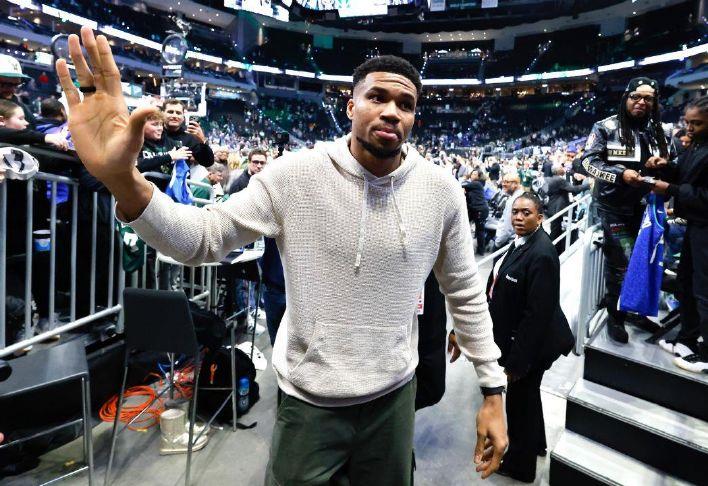
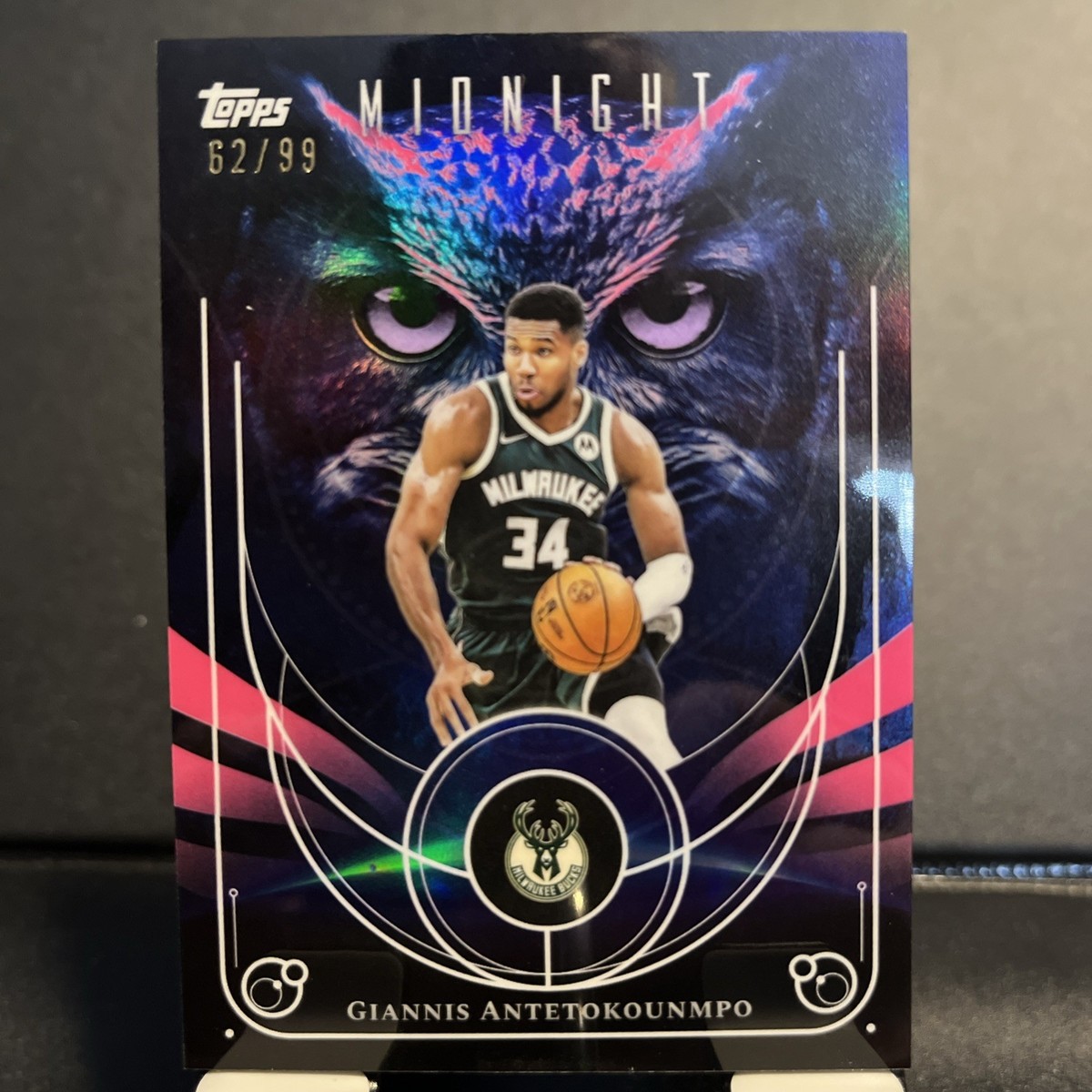
Giannis Antetokounmpo - The African Immigrant Who Became the NBA's Greatest Story
Tristan Melo··10 min read
Ad SpaceArticle Top - 728x90
Advertisement
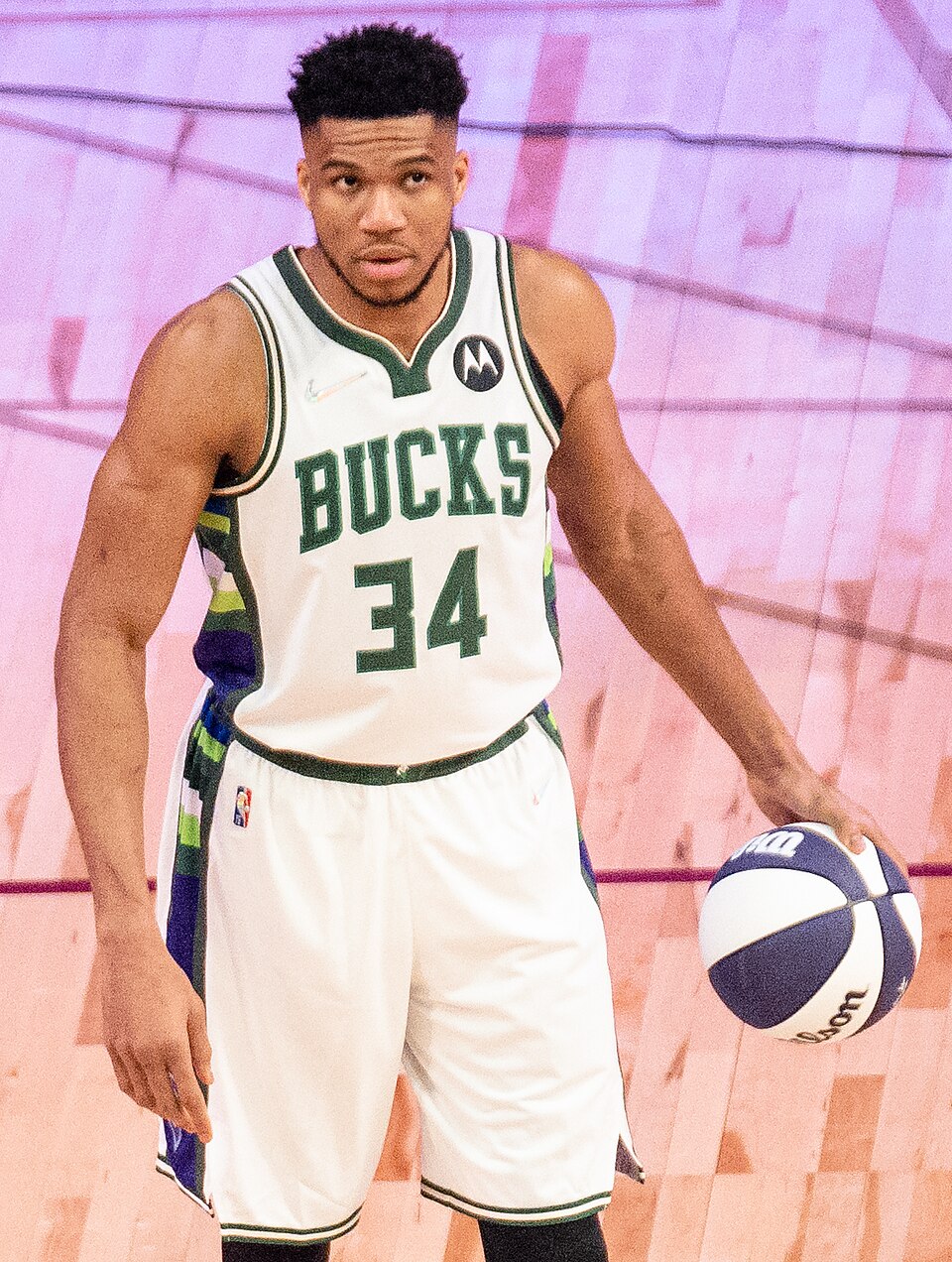
Fifty points. Fourteen rebounds. Five blocks. And, almost cruelly for a man who had spent years being mocked for his free-throw shooting, seventeen made out of nineteen attempts from the line. That was the stat line Giannis Antetokounmpo produced on the night of July 20, 2021, when he carried the Milwaukee Bucks to a 105-98 win over the Phoenix Suns in Game 6 of the NBA Finals and ended a 50-year title drought for a small-market franchise. The 50 points tied a Finals record for the most ever scored in a series-clinching game, a mark set by Bob Pettit of the St. Louis Hawks all the way back in 1958. When the final buzzer sounded, the man whose surname half of America still could not spell stood at the center of the basketball world holding the Larry O’Brien Trophy.
What made the moment land harder than any highlight reel could capture was where it started. Less than a decade earlier, the same player had been an undocumented teenager hawking sunglasses and DVDs to tourists on the streets of Athens, unable to leave the only country he had ever known because no government would give him papers. The journey between those two points is one of the most improbable stories modern sport has produced, and at its heart sits a question that two continents still argue over: is Giannis Greek, or is he Nigerian? The honest answer is that he is both, and that the answer is the entire point.
The boy from Sepolia
Giannis Sina Ugo Antetokounmpo was born in Athens on December 6, 1994. His parents, Charles and Veronica, had left Lagos, Nigeria, in 1991, chasing the same thing every economic migrant chases: a future that looked better than the one they were leaving. Charles was Yoruba, Veronica is Igbo, and the family that grew up in Greece carried both of those Nigerian inheritances even as it learned to live in a strange new place.
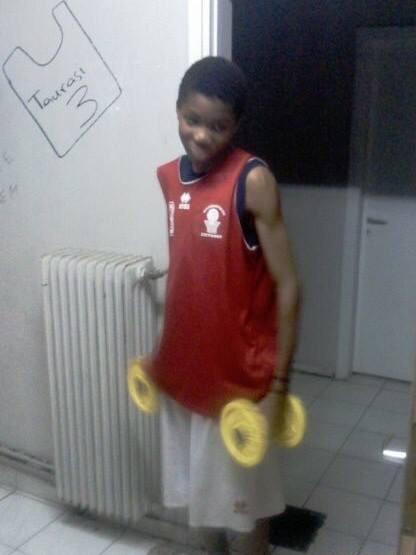
They settled in Sepolia, a working-class, heavily immigrant neighborhood in the heart of Athens. The Antetokounmpos were poor in the way that leaves marks. Giannis and his brothers were selling on the streets almost as soon as they could carry a bag, peddling watches, sunglasses, handbags, CDs and DVDs to tourists in the city center and at the beach resorts on the outskirts. There were days the family did not know whether there would be food at night. Giannis has spoken openly about going to bed hungry and about the shame of being a child who already understood that the household survival depended partly on what he could sell that afternoon.
Underneath the daily scramble sat a colder, structural problem. Greek nationality law follows jus sanguinis, citizenship by blood, not by birthplace. So even though Giannis and three of his four brothers were born on Greek soil, none of them was automatically Greek. And because their parents had entered the country without securing status, the boys had no Nigerian documentation either. For the first eighteen years of his life, Giannis Antetokounmpo was effectively stateless. He could not legally leave Greece. He held no passport from anywhere on Earth. He existed, in the eyes of paperwork, almost nowhere.
A childhood with no country
Statelessness is an abstraction until you try to live inside it. For the Antetokounmpo brothers it meant a life lived in the gaps. They were Greek enough to grow up speaking the language as natives, to fall in love with the local football and then basketball clubs, to feel the city as home in every way that mattered emotionally. And they were foreign enough that the state could, at any moment, treat them as illegal residents to be removed. The constant low-grade fear of deportation followed the family for years.
Basketball entered Giannis’s life almost by accident. He started with the youth teams of Filathlitikos, a small club in Athens, growing into his frame late and fast. By his mid-teens scouts had begun to notice the unusual combination of a guard’s coordination on a body that kept stretching toward seven feet. But scouting reports could not solve the paperwork. As Giannis began drawing genuine NBA interest in early 2013, the absurdity of the situation became impossible to ignore: here was a young man whose name was circulating among the most powerful franchises in American sport, and he could not so much as board a plane.
The resolution came down to the wire. Giannis was finally granted Greek citizenship on May 9, 2013, less than two months before the NBA draft. The timing was no accident. The looming reality that one of the most promising basketball talents Greece had produced in a generation was about to be claimed by the United States concentrated minds in Athens. He received his Greek passport, and with it the surname Antetokounmpo, a phonetic Greek rendering of his family’s Yoruba name, Adetokunbo. The original means, roughly, “the crown that came from across the sea,” a name traditionally given to Yoruba children born abroad. It is hard to imagine a more fitting label for a stateless boy in Sepolia who would carry that crown back across the Atlantic.
The improbable draft
On June 27, 2013, the Milwaukee Bucks selected Giannis Antetokounmpo with the 15th overall pick of the NBA draft. He was eighteen, raw, almost unknown to the American public, and so unfamiliar that the broadcast struggled with his name. He arrived in Wisconsin a teenager who had never lived outside Athens, sending much of his early salary home and famously being filmed running through traffic in the Milwaukee cold because he was trying to save money rather than catch a ride to the arena.
Nobody drafted at 15 is supposed to become a franchise cornerstone, let alone a two-time MVP. The history of the draft is littered with players taken in that range who settle into useful, forgettable careers. What the Bucks had, though they could not have known the scale of it, was a project with no ceiling because nobody had yet figured out where his ceiling was. Giannis kept growing physically into his early twenties, his wingspan and hand size turning him into a defensive nightmare and his ball-handling, retained from his guard days, making him a positional impossibility. The nickname arrived to fill the gap left by a surname nobody could pronounce: the Greek Freak, a tag built equally on his nationality and on the freakish blend of size, speed and skill that did not seem to belong to one human body.
The leap to MVP
The development curve was steep and relentless. Within a few seasons Giannis went from intriguing prospect to All-Star to the best player on a contending team, and then to the best player in the sport. In 2019 he was named the NBA’s Most Valuable Player. In 2020 he won it again, becoming, alongside Kareem Abdul-Jabbar and LeBron James, one of only a handful of players to capture two MVP awards before turning 26.
Ad SpaceIn-Article - 300x250
Advertisement
The 2020 season produced an even rarer distinction. That same year Giannis was named Defensive Player of the Year, making him only the third player in league history, after Michael Jordan in 1988 and Hakeem Olajuwon in 1994, to win both the MVP and the Defensive Player of the Year award in a single season. It is worth pausing on that company. The list of athletes who have been simultaneously the most dangerous offensive force and the most disruptive defensive one in their sport is short enough to fit on a postcard, and a stateless street vendor from Athens had written his name on it.
Yet for all the individual hardware, the criticism persisted. The knock on Giannis was that his game had a ceiling in the playoffs, that opponents could wall off the paint and dare him to shoot, that his free-throw struggles would cost him when it mattered most. The 2021 postseason was built to answer those doubts or confirm them for good.
The night in Milwaukee
The Bucks reached the 2021 Finals against the Phoenix Suns, and the series ran straight at every weakness anyone had ever flagged. Phoenix went up 2-0. Giannis had hyperextended his knee badly enough in the previous round that many assumed he would miss the Finals entirely. He did not. He came back, and over the next four games he produced one of the great Finals runs of the modern era, the Bucks taking four straight to win the title.
Game 6 was the exclamation point. The 50-point, 14-rebound, 5-block performance was a complete repudiation of the narrative. He scored 20 points in the third quarter alone. And the free throws, the supposed fatal flaw, fell one after another, 17 of 19 on the biggest stage the sport offers. He was named the Bill Russell NBA Finals MVP, the youngest player to claim that award since Kawhi Leonard in 2014. Milwaukee, a franchise that had not won a championship since 1971, was champion again, and it had happened because a Nigerian-Greek immigrant decided he would not let the story end any other way.
Blood, brothers and two homelands
Giannis has never been a solo act. Basketball runs through the entire Antetokounmpo family, and the brothers turned a Sepolia apartment into one of the most remarkable athletic dynasties in any sport. Thanasis, the elder brother, played alongside Giannis in Milwaukee and shared in the 2021 championship. Kostas, the younger one, had already made history of his own: he won an NBA title with the Los Angeles Lakers in 2020, becoming the first Greek-born player to win a championship, a full season before Giannis and Thanasis won theirs. Alex, the youngest, has chased his own professional basketball path. Four brothers, raised stateless and hungry, multiple NBA champions among them.
The identity question sits underneath all of it, and Giannis refuses to resolve it in anyone’s favor. He is unmistakably Greek: he plays for the Greek national team, he carries the country’s flag, he speaks of Greece as home. He is also unmistakably Nigerian. Ugo is the name his closest family and friends use in private. He obtained a Nigerian passport in 2015 and holds dual citizenship. He has spoken about wanting to reconnect with his Nigerian roots, to visit Lagos, to understand the country his parents left. The Yoruba meaning of Adetokunbo, the crown returning from across the sea, frames a man who belongs fully to two places at once and apologizes to neither for it.
What he means for African basketball
To Nigerians and to Africans across the continent and the diaspora, Giannis is more than a great player. He is proof of concept. His parents made the wager that millions of African families have made, that leaving home might give the next generation a chance the current one never had, and in his case the wager paid off at a scale almost nobody dares to imagine. For a global audience watching from Lagos or Accra or Nairobi, the Antetokounmpo story is the clearest possible evidence that African heritage and world-conquering athletic greatness are not separate categories.
He arrived as part of a broader wave reshaping the NBA. Africa-born and African-descended players have moved from curiosity to cornerstone, from Hakeem Olajuwon’s pioneering generation to a present in which players of Nigerian, Cameroonian, Senegalese and Congolese descent occupy the league’s highest tiers and headline its biggest games. The NBA itself has invested heavily in the continent, building academies and helping launch a professional league there, betting that the next Giannis is already dribbling on a court in West Africa. Within that movement Giannis is the most luminous example, the one whose face sits on billboards and whose signature shoe, the Zoom Freak line through his Nike deal, sells in markets his parents could never have afforded to shop in.
The money tracks the stature. By 2026 his net worth is estimated in the neighborhood of 90 to 100 million dollars, built on enormous NBA contracts, including a supermax extension reported at roughly 228 million dollars signed in 2020, and a later deal estimated at around 175 million, layered on top of an endorsement portfolio anchored by Nike and stretching across brands from Google to Breitling. Those figures are estimates assembled from public reporting rather than audited statements, but the direction is not in dispute. The boy who sold watches on the street is now the brand.
A new chapter, a settled fact
The 2026 offseason rewrote part of the story. After years of trade speculation that the Milwaukee Bucks had repeatedly batted down, the franchise moved its franchise player. On the eve of the 2026 NBA Draft, Milwaukee traded Antetokounmpo to the Miami Heat in a blockbuster that, according to reporting from ESPN and others, sent a package built around Tyler Herro, young pieces and multiple first-round picks back to the Bucks. After more than a decade in the only American city he had ever called home, the man who delivered Milwaukee its first title in half a century was headed to South Florida. His contract, reported to run through the 2026-27 season, made the timing logical for both sides even as it closed an era.
It is a strange thing to watch a city say goodbye to the player who defined it, and Bucks supporters will spend a long time processing it. But the trade does not touch what was already built. The banner from 2021 still hangs. The two MVP trophies and the Defensive Player of the Year award are already engraved. And the arc that runs from a Sepolia sidewalk, where a stateless child sold sunglasses to tourists who never learned his name, to the center of an NBA Finals stage in front of the entire planet, is finished and permanent. Whatever uniform he wears next, Ugo Antetokounmpo already carried the crown back across the sea.
Ad SpaceIn-Article - 300x250
Advertisement
Share
Get the recap
Loved this story? Get more like it.
Join readers who get our weekly entertainment recap - the stories worth your time, delivered every Friday.
No spam. Unsubscribe anytime. By signing up you agree to our Privacy Policy.