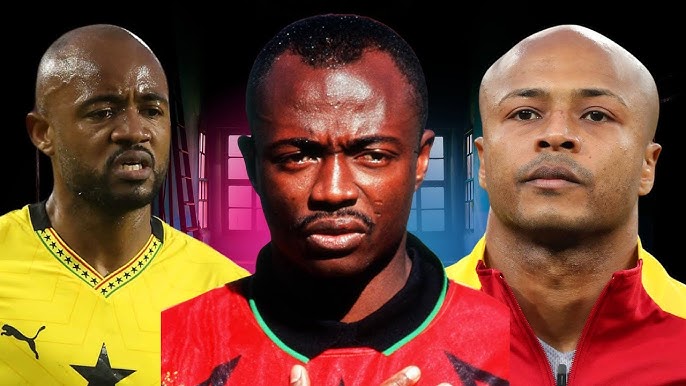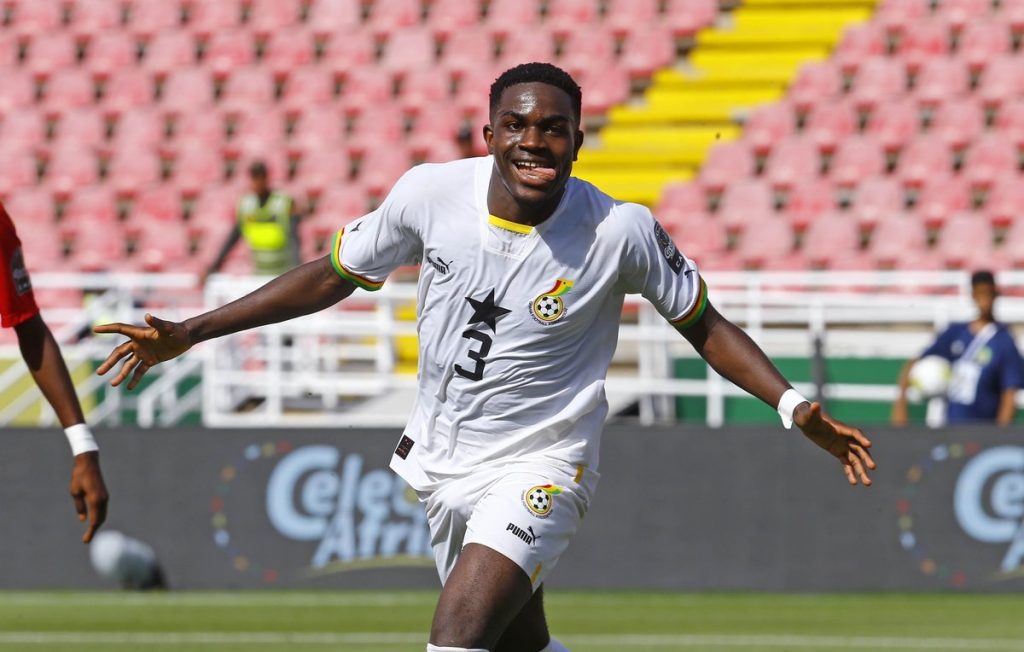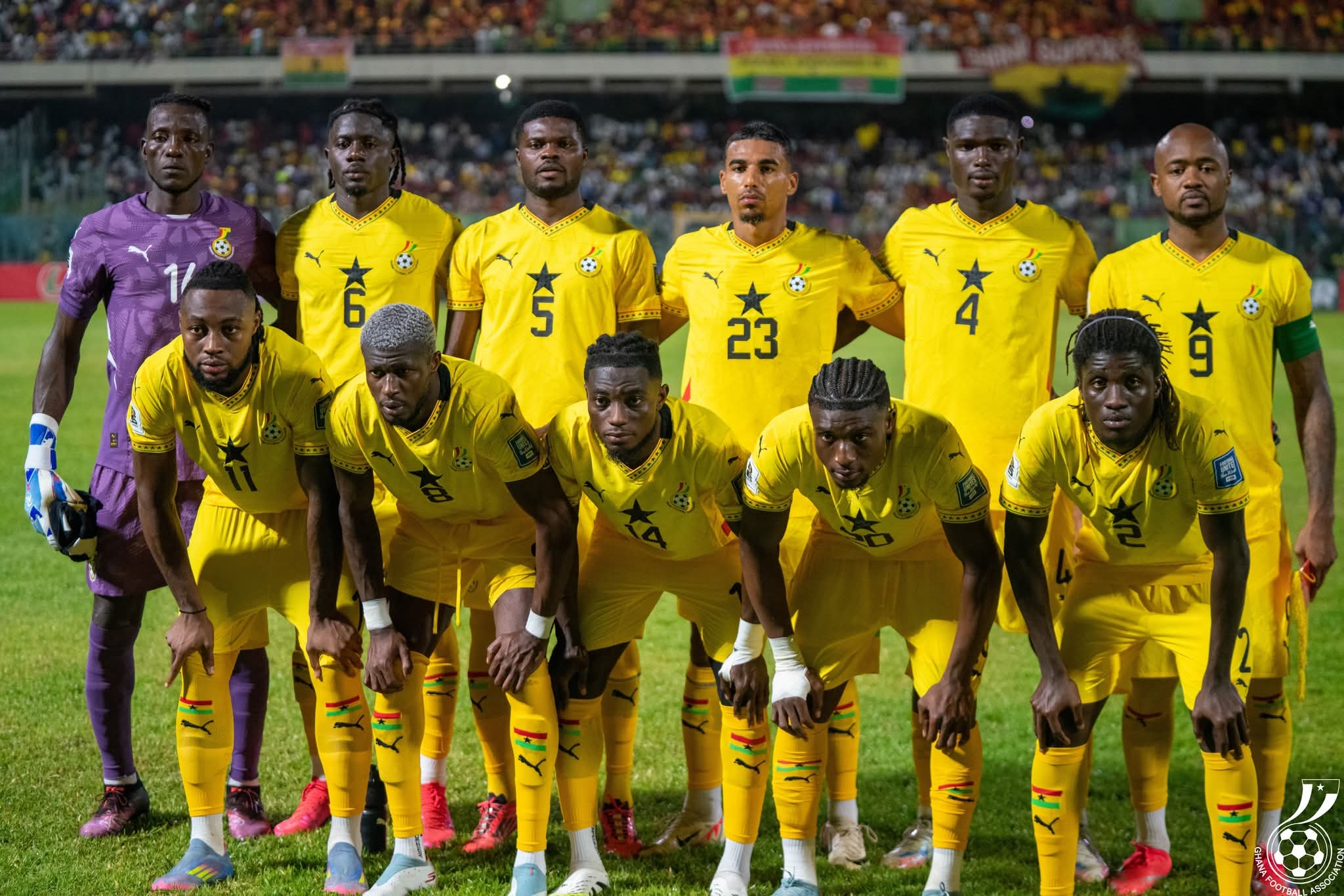

Munich’s Olympiastadion fell silent for a second before it erupted. On the night of 26 May 1993, a corner swung in, Basile Boli rose, and Olympique de Marseille beat AC Milan 1-0 to win the European Cup. The man who delivered that corner, who orchestrated Marseille’s rhythm all season, was a slight playmaker from Kibi in eastern Ghana named Abedi Ayew, known to the world as Abedi Pele. With that goal he became the first Ghanaian to lift the trophy and the first African to win the rebranded Champions League. A boy who had kicked plastic balls on dusty streets stood at the summit of European club football, and a whole generation back home decided that the journey was possible.
That single image opens a story that runs across four decades. Ghana has sent a steady stream of footballers to the biggest leagues in England, Italy, Spain, France and Germany, and the best of them did far more than collect wages. They won trophies, broke transfer records, broke hearts at World Cups, and quietly rewired what a young African player believed he could become.
Abedi Pele and the pioneers
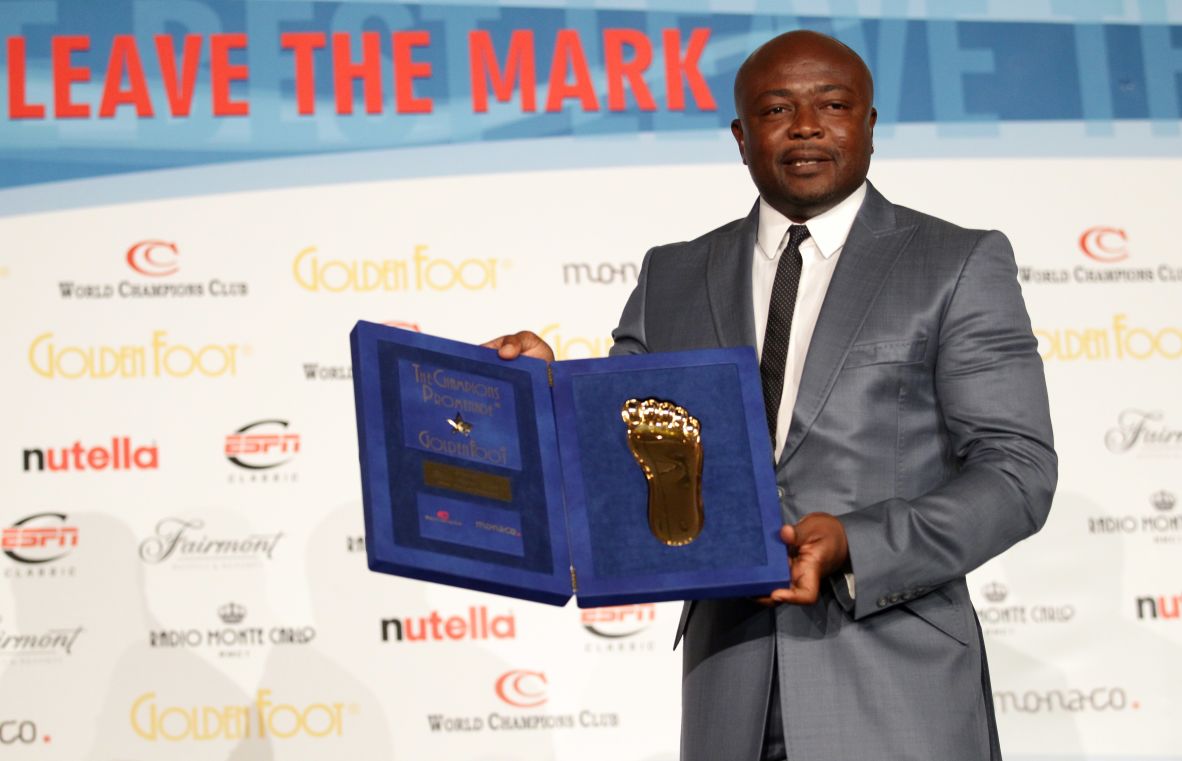
Long before academies and scouting databases, Abedi Pele built his reputation the hard way. He moved through clubs in Switzerland, France and beyond, sharpening his game in the lower leagues before Lille and then Marseille gave him the stage he deserved. At Marseille he formed part of a feared front line, won the French league title in 1989, 1991, 1992 and 1993, and capped the run with the 1993 European Cup. France Football named him African Footballer of the Year three years running, in 1991, 1992 and 1993, a feat that placed him among the very best players on the continent.
What made Abedi a pioneer was not only the silverware. He proved that an African creative player could be the heartbeat of a European super club rather than a squad option. His left foot, his vision and his calm under pressure forced managers and supporters across the continent to take Ghanaian talent seriously. His estimated net worth today sits around 15 million dollars, built across his playing years and later investments, including the Nania club he founded in Ghana to develop young players. For a man who came up before the era of mega television deals, that figure tells its own story about how far the journey carried him.
Abedi did not travel that road alone for long. Tony Yeboah became a goal machine in Germany, first at Eintracht Frankfurt and then at Leeds United, where his thunderous volleys in the mid-1990s are still replayed. Players like Sammy Kuffour went on to win the Champions League with Bayern Munich in 2001. Each one widened the door a little further, so that by the turn of the century, a Ghanaian heading to Europe was no longer a novelty but an expectation.
The golden generation
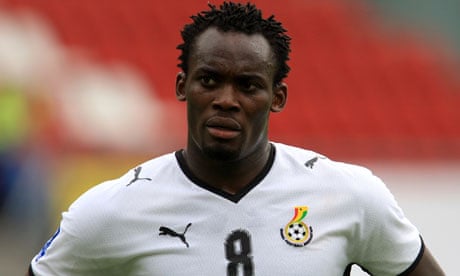
If Abedi opened the door, the players born in the early 1980s kicked it off its hinges. Michael Essien sits at the centre of that wave. The midfielder from Accra made his name at Lyon, winning back-to-back French titles and the Ligue 1 Player of the Year award in 2005. That summer Chelsea paid Lyon a fee reported at 24.4 million pounds, a figure that made Essien the most expensive signing in the club’s history at the time, surpassing what they had paid for Didier Drogba a year earlier.
At Stamford Bridge, Essien became a fan favourite nicknamed “the Bison” for his power and stamina. He helped Chelsea win the Premier League in 2006 and 2010, lifted three FA Cups and a League Cup, and was part of the squad that finally captured the Champions League in 2012. His box-to-box engine and his habit of scoring spectacular long-range goals made him one of the finest midfielders of his era. The money matched the level, with peak wages and transfer value that placed him among the better-paid Africans in world football during his prime.
Asamoah Gyan took the striker’s path. After a productive spell at Rennes in France, he joined Sunderland in 2010 in a deal that broke the English club’s transfer record. He then made a move that puzzled European observers but reshaped his finances, joining Al Ain in the United Arab Emirates, where he scored at a staggering rate and won league titles, before a later stint at Shanghai SIPG in China. The Gulf and Chinese moves are estimated to have made Gyan one of the wealthiest African footballers of his generation. For Ghana, his numbers are untouchable. He retired as the country’s all-time leading scorer with 51 goals in 109 appearances and holds the record for the most World Cup goals by an African player, with six.
Sulley Muntari completed the golden trio’s European story in Italy. After developing at Udinese, the powerful left-footed midfielder joined Portsmouth and won the 2008 FA Cup, scoring a famous penalty at Old Trafford on the way to Wembley. His displays earned a transfer to Inter Milan, where in 2010 he was part of the squad that won the first treble in Italian football history, the Serie A title, the Coppa Italia and the Champions League under Jose Mourinho. He later crossed the city to AC Milan, cementing a career spent at the top of Italian football. Across all of it, Muntari was a tackler, a runner and a man who scored from distance when it mattered most.
The 2010 World Cup heartbreak
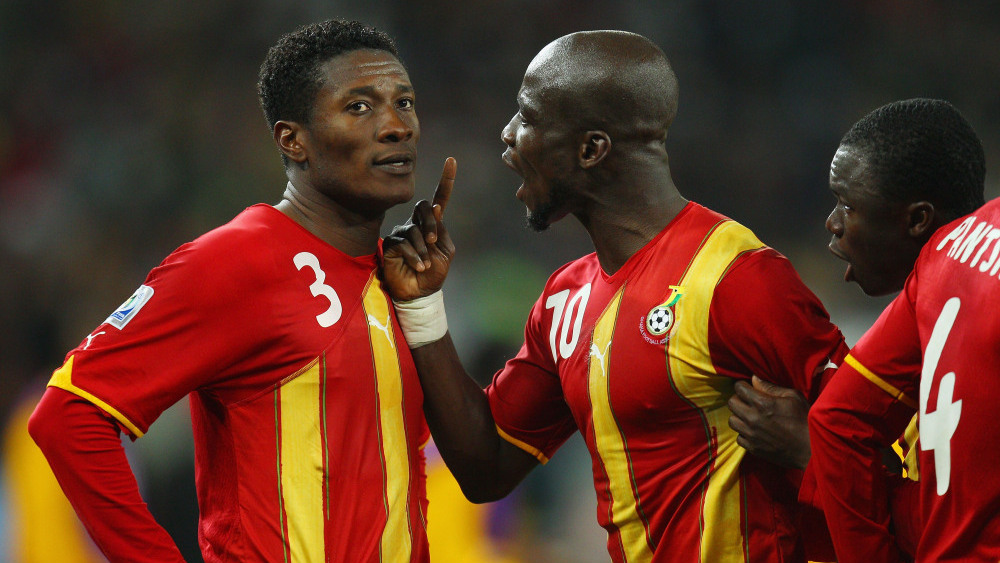
No telling of this story can skip the night of 2 July 2010 in Johannesburg. Ghana, the last African team standing at the first World Cup held on African soil, faced Uruguay in the quarter-final at Soccer City. A win would have made the Black Stars the first African nation ever to reach a World Cup semi-final, and the whole continent had adopted them.
Sulley Muntari opened the scoring on the stroke of half-time with a 40-yard rocket that flew into the top corner. Diego Forlan equalised from a free-kick after the break, and the match stretched into extra time at 1-1. In the final seconds, with the score level, Ghana surged forward. A goalmouth scramble ended with Dominic Adiyiah’s header bound for the net, until Luis Suarez of Uruguay flung up both hands on the line and palmed it away. The referee sent Suarez off and awarded a penalty. Asamoah Gyan, ice-cold all tournament from the spot, stepped up with the semi-final waiting. The ball cannoned off the crossbar. Suarez, watching from the tunnel, celebrated.
Uruguay won the shoot-out that followed, and Sebastian Abreu sealed it with an audacious chipped penalty. Suarez has never apologised, calling it the “hand of God.” For Ghanaians and millions of neutral Africans, it remains one of the cruelest moments in World Cup memory. It also confirmed something else. This was a Ghana side built almost entirely on players forged in Europe, good enough to stand 120 minutes plus a missed penalty away from history.