Gaming in Nigeria and Africa - How New Hardware Like the Steam Machine Could Change the Continent's Game
Tristan Melo··10 min read
Ad SpaceArticle Top - 728x90
Advertisement
Somewhere in Surulere, a 24-year-old named Tobe finishes his shift, plugs his phone into a power bank because the light has gone again, and opens a ranked match. His “console” is a mid-range Android handset he bought on installment. His controller is his thumbs. When the data runs low near month-end, he switches to an offline racing game that does not eat megabytes. He has never owned a PlayStation. Nobody he games with regularly owns one either. This is not a sad story about deprivation. It is the actual centre of gravity of Nigerian gaming, and it explains why every conversation about expensive new hardware has to start with a reality check before it gets to the excitement.
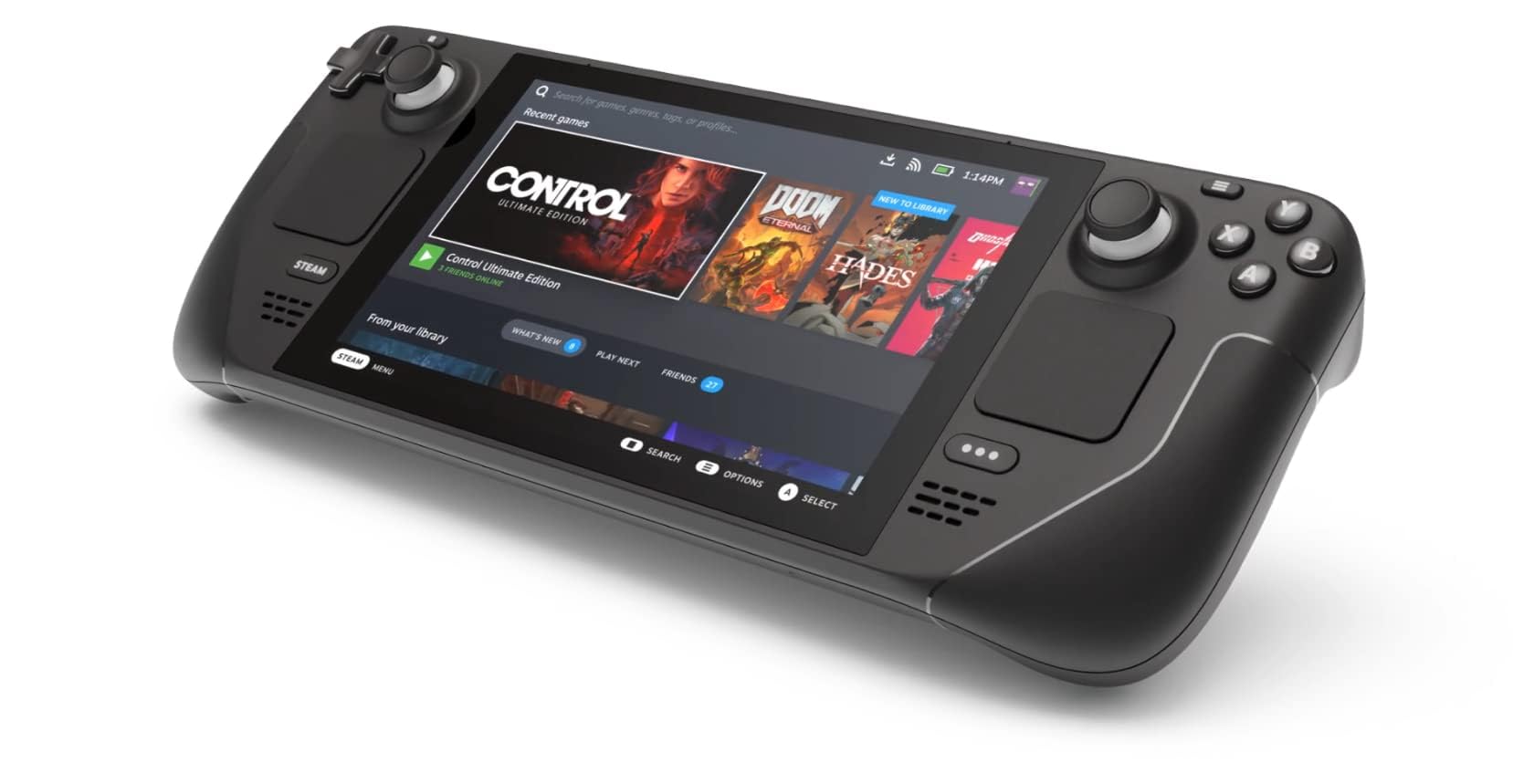
That reality matters right now because Valve, the company behind Steam, has finally put real numbers on its new Steam Machine - a compact living-room gaming PC. The hype machine has been loud. The question worth asking on a Lagos budget is plainer: does any of it actually move the needle for players here, or is it another shiny box most people will only ever see on YouTube.
The mobile-first reality is not a phase, it is the market
The numbers are not subtle. Africa’s gaming market crossed 1.8 billion dollars in 2024, growing 12.4 percent year on year, which is roughly six times faster than the global average. Nearly 90 percent of that revenue, about 1.6 billion dollars, came from mobile. According to analysis by Carry1st and Newzoo, the continent had an estimated 349 million gamers, of whom 304 million played on mobile. That is 87 percent of the entire player base on phones.
Nigeria sits near the front of that wave. The country counted roughly 46.5 million gamers in 2024, generating around 300 million dollars in revenue, up from 249 million dollars in 2022. About 90 percent of Nigerian players game on smartphones. When people in Abuja or Port Harcourt say they game, they overwhelmingly mean a phone in hand, not a tower under a desk or a console under a TV.
This is not a stepping stone to “real” gaming on consoles. It is the destination for most people, shaped by the cheapest viable hardware, prepaid data, and games designed to be light. Free-to-play titles dominate because the entry cost is zero and the spending happens in small, optional bites. Fintech penetration helps here. The same payment rails that made Nigeria a mobile-money story also make in-game micro-transactions frictionless, which is part of why studios keep targeting the region. Any hardware that wants to matter in this market is walking into a room where the phone already won.
The console-import problem is a wall, not a speed bump
To understand why consoles never took over, look at how one actually reaches a living room in Lagos. There is no official Sony or Microsoft distribution channel in Nigeria. No local warranty network, no official pricing, no subsidised launch. Every PlayStation 5 and Xbox in the country arrived as a personal import or through a reseller who imported it, marked it up, and listed it on Jumia, Jiji, Konga, or a physical shop in Computer Village.
The price tells the story. A PS5 that retails for 400 to 500 dollars in the United States commonly sells in Nigeria for somewhere between roughly 750,000 and 900,000 naira for current models, with used units and digital editions scattered across that range and beyond depending on the seller. At a naira hovering around 1,400 to the dollar through 2026, that is the rough equivalent of 600 to 650 dollars or more before you have bought a single extra game. The gap between the global sticker and the Lagos sticker is not greed alone. It is forex, freight, insurance, and customs stacked on top of each other.
Nigeria values imports on a Cost, Insurance and Freight basis, then layers charges on top: import duty, a surcharge on that duty, levies calculated on the freight-on-board value, and 7.5 percent VAT on the cumulative total. A 2026 policy change introduced a 300-dollar de minimis threshold that lets genuinely personal, low-value imports through duty-free, but a console comfortably exceeds that line, and the rule does not cover commercial bulk shipments at all. So the reseller who brings in a pallet of consoles pays the full stack and passes it on. The buyer absorbs the forex risk twice, once on the device and again every time the naira slips before the next shipment lands.
Then come the games. A new AAA title at 60 to 70 dollars is, at current exchange rates, north of 90,000 naira for a single game. That is why physical disc swapping, second-hand titles, and account sharing are survival tactics, not piracy for its own sake. The console is not just expensive to buy. It is expensive to feed.
What the Steam Machine actually is, verified
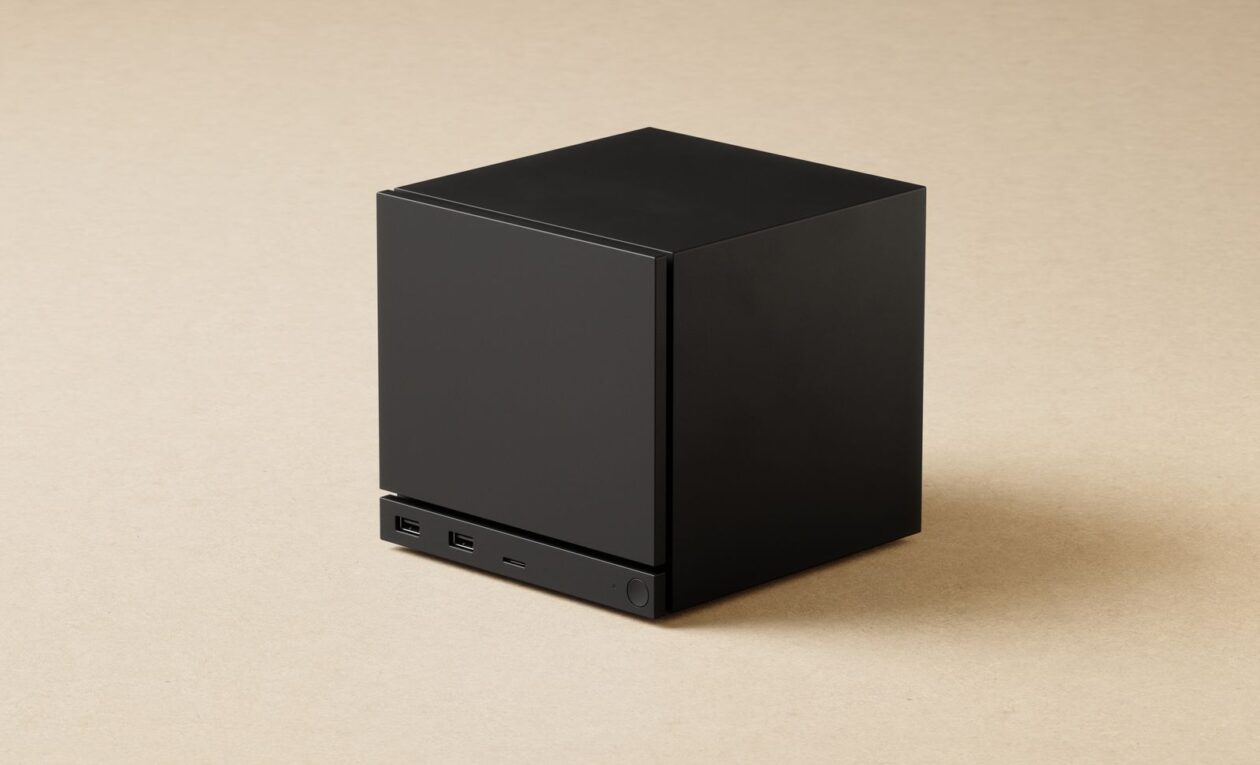
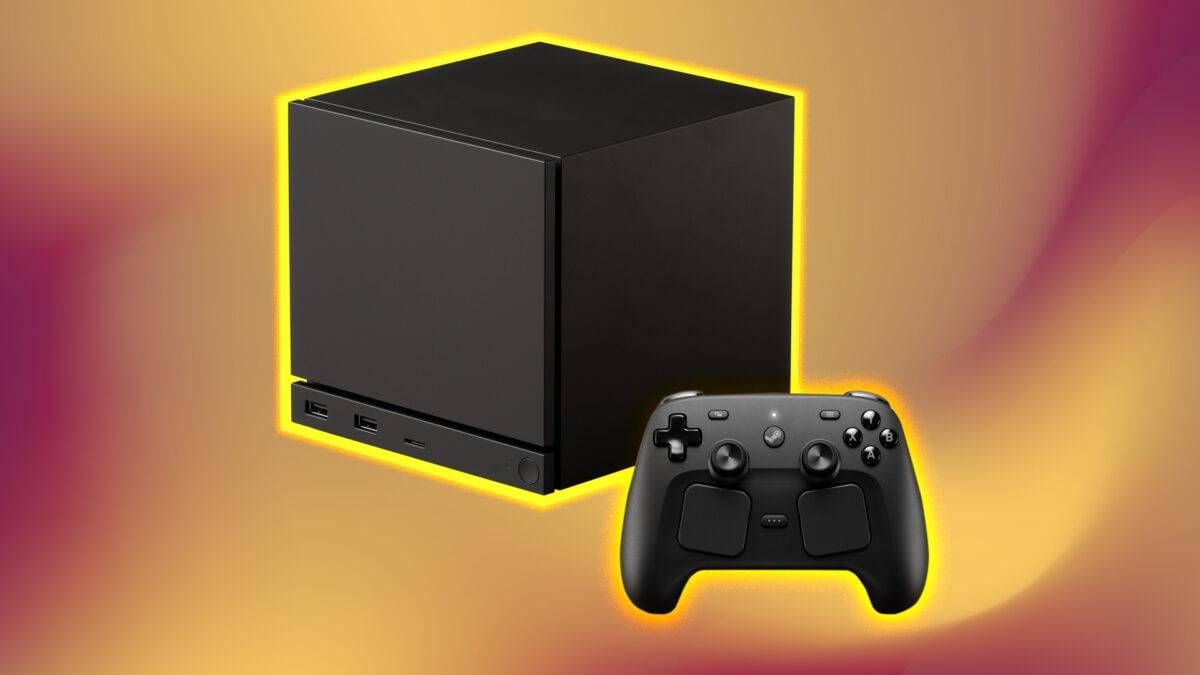
Set the hype aside and look at what Valve has confirmed. The new Steam Machine is a small cube-shaped gaming PC built to sit by a television and run SteamOS, the same Linux-based system that powers the Steam Deck handheld. Valve says it delivers more than six times the graphics performance of the Steam Deck.
The confirmed internals: a semi-custom AMD processor with a six-core, twelve-thread Zen 4 CPU clocking up to 4.8 GHz, paired with a semi-custom RDNA 3 graphics chip carrying 28 compute units and 8GB of GDDR6 video memory, plus 16GB of system RAM. Storage comes in two flavours, a 512GB model and a 2TB model, with microSD expansion. Valve is targeting 4K gameplay at 60 frames per second with the help of AMD’s FSR upscaling, though independent early testing suggests 4K is not guaranteed across every demanding title.
On price, Valve has confirmed real figures. The 512GB model is listed at 1,049 dollars (around 879 pounds) without a controller. A 2TB bundle that adds the new Steam Controller and extra faceplates is listed at 1,428 dollars (around 1,208 pounds).
On timing, here is the careful version. Valve has confirmed a 2026 launch and opened a reservation system rather than a traditional first-come preorder. Reservation sign-ups run until 25 June 2026, with the first purchase wave tied to that date, and multiple outlets report a public launch landing on or around 30 June 2026. To reserve, a buyer needs a Steam account in good standing that made at least one purchase before 27 April 2026, with one reservation per household. Valve had earlier signalled a spring 2026 target and pushed it into the first half of the year, citing a global shortage of memory components. So: the year and the reservation window are firm, and the late-June launch is strongly reported, but treat the exact public on-sale day as the last detail to confirm rather than gospel.
Ad SpaceIn-Article - 300x250
Advertisement
One more verified point that matters for Africa: SteamOS runs Windows games through a compatibility layer called Proton, and a buyer can wipe SteamOS and install Windows 11 on the machine if they prefer. It is a real PC, not a locked appliance.
Could it work in Africa - the honest case, and the obstacles
Here is the genuinely interesting part. The Steam Machine sidesteps the single biggest structural problem with PlayStation and Xbox in this market: there has always been a thriving, unofficial PC gaming culture in Nigeria precisely because PC is the platform you can assemble, upgrade, repair, and import in parts rather than as one sealed unit. Steam already works here. People already buy games on it. A device that plugs into that existing habit starts from a warmer position than a console that needs a distribution network nobody has built.
The case for it is real. It is a fixed-price PC that does not require you to know how to build one. It runs an enormous existing Steam library, including the free-to-play and lower-spec titles that dominate African play, not just 70-dollar blockbusters. Because it is a PC, a single unit in a home, a hostel, or a games cafe can serve schoolwork, streaming, and gaming, which spreads the cost across more than one use. For a games cafe operator or an esports trainer, one box that runs the full Steam catalogue on a TV is a more flexible asset than a console.
Now the obstacles, because pretending they are small would be dishonest. The naira maths is brutal. At 1,049 dollars and an exchange rate near 1,400 naira to the dollar, the cheapest Steam Machine lands somewhere around 1.4 to 1.5 million naira before a single import charge. Add CIF-based duty, the surcharge, levies and 7.5 percent VAT, and a reseller margin, and the realistic shelf price in Lagos could push well past 1.7 million naira. That is firmly above the imported PS5 it would compete with, and astronomically above the phone most players already own. There is no official Valve distribution in Nigeria either, which means the Steam Machine inherits the exact reseller-markup problem that already inflates consoles.
Then there is the infrastructure the box plugs into. Nigeria’s national grid supplies only around 5,800 megawatts against an installed capacity of roughly 13,000, and it collapsed multiple times in 2025 alone. A living-room PC that wants steady power is fighting the same outages that send Tobe reaching for a power bank. Connectivity is the other ceiling. Ookla’s 2025 median fixed broadband speed in Nigeria was about 28 megabits per second down, and data is not cheap and getting cheaper. The country’s monthly data spend jumped more than 300 percent to over 721 billion naira by mid-2025, and 1GB still cost between roughly 500 and 800 naira on the major networks. A 60GB game download is a serious financial decision on metered data, and digital-first hardware assumes downloads the way a fish assumes water.
So the honest verdict is split. The Steam Machine fits the culture better than a console ever did, and worse than the phone ever will. It could carve out a real niche among committed PC gamers, cafes, esports setups, and the diaspora, without ever becoming a mass-market device at this price on this grid.
The local esports and dev scene is where the real momentum is
While everyone watches imported hardware, the more durable story is being built by Africans making games and competing in them. Maliyo Games, a Lagos-founded, pan-African mobile studio started in 2012, has spent over a decade building culturally rooted titles, and its work has been spotlighted by both Apple and Google. Its flagship Safari City was recognised as Most Impactful Mobile Game at the 2025 Games Industry Africa Awards. Its GameUp Africa training programme has reached more than 6,000 aspiring developers across over 20 countries, and in December 2025 it convened MaliyoCON, billed as Africa’s first developer-led mobile games conference, in Lagos. It also co-published a 2025 Africa Games Industry Report with KPMG Nigeria, which is the kind of infrastructure a maturing industry builds.
Kucheza Gaming is another homegrown studio, behind Wild Kingdoms: Itan Orisha, a 2022 mobile title built on Yoruba mythology that tells the story of King Alantako. The point of these games is not just revenue. It is representation, players seeing their own cities, languages and folklore reflected back instead of importing someone else’s.
On the competitive side, events like the GamrX tournament and the African Esports Championship pull in hundreds of players and thousands of online viewers, with FIFA, Call of Duty, PUBG and League of Legends leading the card. In May 2025, Carry1st ran African qualifiers for the Call of Duty: Mobile World Championship with a 15,000-dollar prize pool. And in 2025 the University of Lagos opened the Gamr Lab, described as Nigeria’s first dedicated game-development laboratory, equipped for prototyping and esports training. Esports in Nigeria is projected to grow at roughly 25 percent a year toward a 20-million-dollar market. Notice the pattern: almost all of this is mobile-first and locally produced, which is exactly where the audience already is.
The lessons, plainly
A few things come into focus when you line up the facts. First, hardware does not change a market by existing. It changes a market by being affordable, available, and matched to the infrastructure around it. The Steam Machine passes the first test partially, fails the availability test for now, and runs into the power and data tests hard. Second, the African gaming story has never really been a console story, and a 1,000-dollar living-room PC, however clever, does not rewrite that. The phone is not the cheap option people will abandon once they can afford “better.” For most players it is the platform, full stop.
Third, and most important, the momentum that will actually shape the next decade of African gaming is being generated locally and on mobile by studios like Maliyo and Kucheza, by training pipelines like GameUp Africa and the Gamr Lab, and by tournaments that give players a reason to compete rather than just consume. Imported hardware is a supporting character in that story, not the lead.
Where this lands
The Steam Machine will arrive in 2026 as a confirmed, well-specified, fairly priced piece of kit by global standards, and for a slice of Nigerian and African gamers, the PC builders, the cafe owners, the esports crowd, the diaspora sending devices home, it will be a welcome option that fits the PC habit they already have. For the 46 million Nigerians gaming on their phones, it will change very little, because the wall was never the lack of a good console. The wall was forex, duty, power, and data, and a clever cube does not climb it.
Back in Surulere, Tobe will not be reserving a Steam Machine before the 25 June window closes. He will charge the power bank, watch the light, and queue up another ranked match on the device he already owns, in the market that already chose him. That is where the game is actually being played.
Ad SpaceIn-Article - 300x250
Advertisement
Share
Get the recap
Loved this story? Get more like it.
Join readers who get our weekly entertainment recap - the stories worth your time, delivered every Friday.
No spam. Unsubscribe anytime. By signing up you agree to our Privacy Policy.