
How BTS and K-Pop Inspired a New Generation of African Pop Acts to Think Globally
Afrobeats

How BTS and K-Pop Inspired a New Generation of African Pop Acts to Think Globally

Jalen RossJalen Ross··10 min read
Ad SpaceArticle Top - 728x90
Advertisement

Somewhere between BTS hitting Billboard #1 with “Dynamite” in August 2020 and Asake selling out The O2 Arena in 2023, a quiet blueprint passed hands. A boy group from Seoul had outsold every Anglo-American act on the chart that week, and three months later the same group did it again with “Life Goes On,” a song sung almost entirely in Korean. The barrier the industry had called impassable turned out not to be one. Watching from Lagos, Lekki, and Accra, Afrobeats executives saw the same thing American label heads saw: the language gatekeeping was a myth. What worked was structure, fandom, and patience.

That recognition has reshaped how a generation of African pop acts plan their releases, build their teams, and talk to their audiences. The shift is not always obvious. Nobody on Lagos Island is dressing like Stray Kids or running a four-year trainee program. But the strategic DNA, the way albums are teased, the way fans are organized, the way global tours are mapped before the music even drops, owes a real debt to what Seoul figured out a decade earlier.

The Blueprint That Crossed Oceans

How BTS and K-Pop Inspired - The Blueprint That Crossed Oceans

For most of the 2010s, K-pop operated on a model that the rest of the industry dismissed as too rigid, too expensive, and too culturally local to export at scale. SM Entertainment, JYP, YG, and later HYBE built training academies where teenagers spent years learning vocals, choreography, languages, and media training before they ever recorded a song. Once a group debuted, the company controlled the rollout with military precision. Concept teasers came months before the single. Music videos arrived with synchronized merch drops. Lightsticks tied fans to a specific group, not just an artist. Tour routings were drawn up across Asia, North America, and Europe before the album was even mastered.

For years, Western critics framed this as cold and corporate. Then BTS broke. Then BLACKPINK headlined Coachella. Then NewJeans travelled across TikTok in dozens of markets without translating a single lyric. The “corporate” model turned out to be a globalization machine that the major labels could not match.

Don Jazzy was watching. So was Olamide. So was Banky W back when Mavin Records and Empire Mates Entertainment were still figuring out what an African pop empire could look like.

The training pipeline gets a Lagos remix
How BTS and K-Pop Inspired - The training pipeline gets a Lagos remix

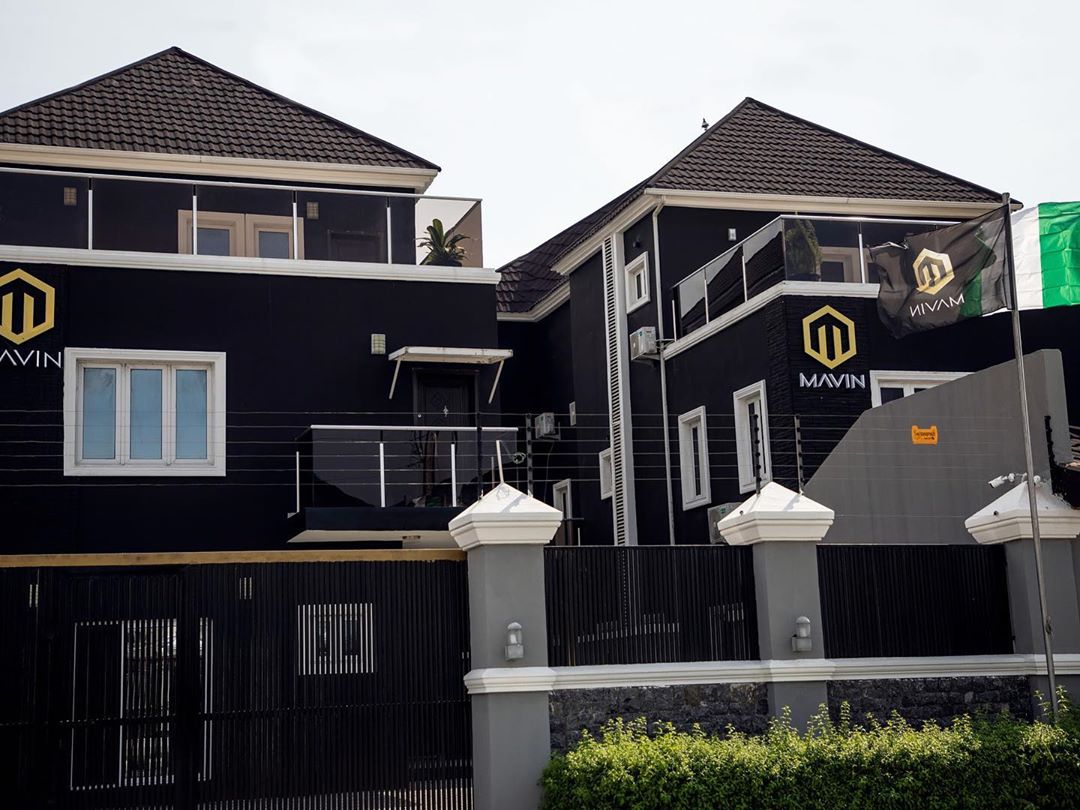
Mavin’s structure today is the closest thing Afrobeats has to a K-pop big-three label. Don Jazzy does not run a literal trainee dorm in Ikeja, but the developmental philosophy is recognizable. Rema, Ayra Starr, Magixx, Bayanni, Boy Spyce, and Crayon all came up through a system where they were signed young, paired with in-house producers like Andre Vibez and London, and given a multi-year arc rather than a single hit attempt. Ayra Starr was still a teenager when “Away” dropped, and by then her image, sound and visual language had already been shaped inside the label for a long stretch before the single arrived.

YBNL Nation under Olamide operates on a similar slow-build philosophy, just with a different aesthetic. Fireboy DML sat on the YBNL roster for a spell before “Jealous” turned him into a household name. Asake came up as a dancer and street performer, and by widely repeated accounts Olamide had been watching him for a long time before the signing and the “Sungba” rollout. Adekunle Gold’s entire transformation from quirky highlife revivalist into the polished AG Baby persona happened on a YBNL-adjacent timeline that mirrors how JYP rebrands acts between eras.

DMW under Davido has been less systematic but follows the same instinct. Mayorkun, Peruzzi, and Logos Olori were brought in young and shaped inside a label ecosystem that handles songwriting, production, and image as one package.

Rollouts That Look a Lot Like Comebacks
How BTS and K-Pop Inspired - Rollouts That Look a Lot Like Comebacks

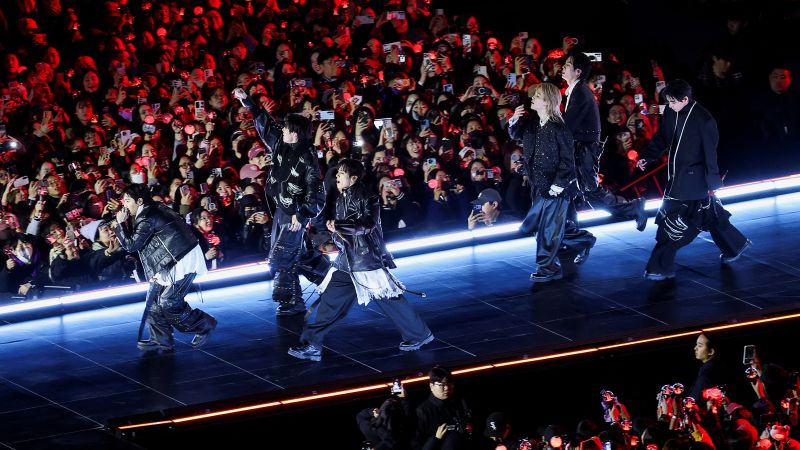
K-pop fans know the rhythm of a comeback by heart. A teaser image drops on Monday. A second concept photo on Wednesday. A short trailer on Friday. The tracklist reveals the following week. A music video teaser. Then the full release, almost always on a Friday at 6 PM Korea Standard Time, with the album, the merch, the photobook, and the dance practice video arriving in coordinated waves.

Asake’s “Mr Money With The Vibe” rollout in September 2022 followed almost the same beat sheet. The lead singles came spaced apart, each with its own visual identity. The album cover teased itself across his Instagram for weeks. The merch line, including those instantly recognizable hoodies, dropped in coordination with the album, not weeks after. Even the tour announcement was sequenced to land when the album buzz was at its peak. YBNL was not pretending to be Seoul. But the choreography of the rollout was learned somewhere.

The Mavin All Stars releases have leaned into the same playbook. Group photos drop in coordinated styling. Each artist gets a moment in the campaign rather than disappearing into a label compilation. The visuals carry a consistent palette across the rollout window.

The album-as-event mentality
How BTS and K-Pop Inspired - The album-as-event mentality

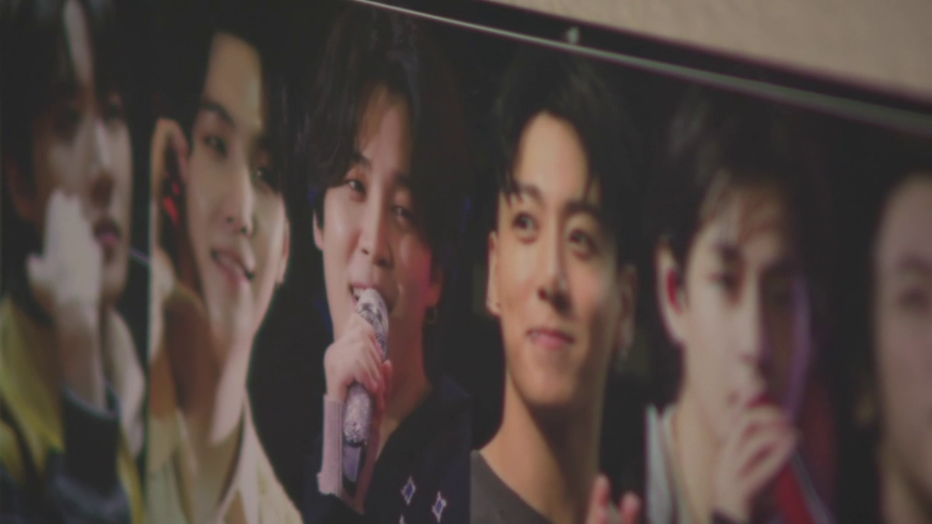
One of the deeper K-pop lessons that Afrobeats has absorbed is treating an album as an event rather than a content drop. For years, African artists released singles and stitched them into a project at the end. The album was almost an afterthought, a way to package what had already been working.

BTS treated every album like a chapter in a larger story. Map of the Soul. Love Yourself. Persona. Each era had a thesis. Burna Boy noticed. “African Giant,” “Twice as Tall,” and “Love, Damini” each came with their own thematic and visual identity. Wizkid’s “Made in Lagos” was rolled out with the patience of a K-pop comeback, with the title track arriving months after the album and then refusing to die for two more years.

Tems went the same way with her debut album, “Born in the Wild,” in 2024. The rollout ran on chapter-by-chapter logic, with the visual identity of the record managed as carefully as the audio.

Fandom Goes Stan
How BTS and K-Pop Inspired - Fandom Goes Stan

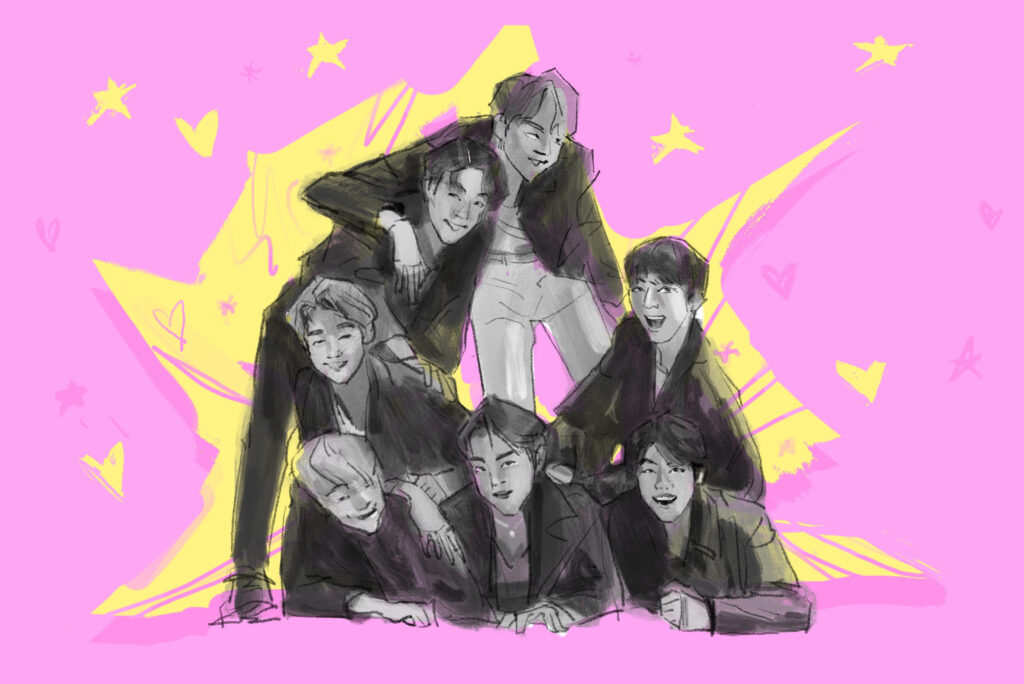
Possibly the most visible K-pop import into African pop culture has nothing to do with the music itself. It is the fan account.

Naija Twitter, before it became X, watched K-pop stans operate for years. The coordinated streaming parties. The trending hashtags planned days in advance. The defense brigades. The data accounts that tracked every chart movement to three decimal places. By 2020, the same infrastructure was being built around Afrobeats acts. Wizkid FC, 30 BG, Outsiders, Ravers, and the Rema-affiliated stan accounts all borrow heavily from the K-pop fan-account template.

The mechanics are nearly identical. There are update accounts that exist only to post photos and tour dates. There are streaming captains who organize listening parties on release day. There are sales-tracking accounts that update first-week numbers. There are defense accounts that mobilize whenever a critic posts something the fandom dislikes. The vocabulary has crossed over too. “Bias.” “Stan.” “Comeback.” “Visual.” These are K-pop words that now appear unchallenged in Afrobeats fan discourse.
Ad SpaceIn-Article - 300x250
Advertisement

Lightsticks, merch, and the parasocial economy

How BTS and K-Pop Inspired - Lightsticks, merch, and the parasocial economy

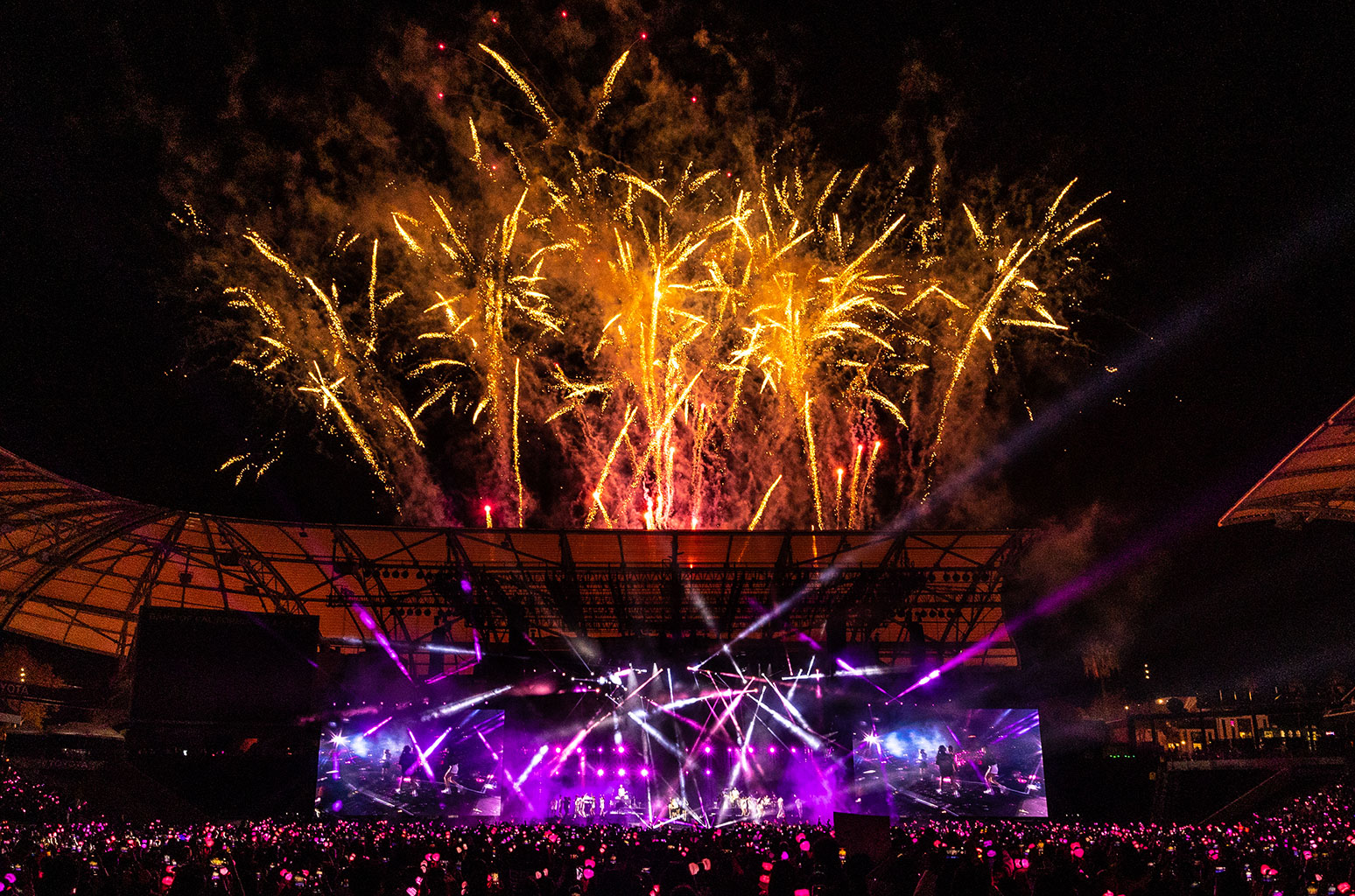
K-pop monetized the parasocial bond more efficiently than any other genre in modern pop history. The lightstick is the perfect example. Every major K-pop group has a branded lightstick that fans bring to concerts. It is a premium-priced accessory with a fat margin, and it has become a non-negotiable part of the live experience. ARMY Bombs, Carat Bongs, ReVeluvs sticks, each one is a small piece of identity.

Burna Boy’s merch ecosystem and Wizkid’s expanding apparel line are moving in this direction. The “Outside” merch from Burna’s 2018 era and the “Made in Lagos” capsule from Wizkid’s 2020 era were early steps. By the time Burna Boy was filling the London Stadium and a run of North American arenas in 2023, the merch booth at his shows looked closer to a BLACKPINK stop than a traditional African live show.

Rema’s “Calm Down” era leaned even harder into this. The horns, the masks, the specific red-and-black color palette became fan signifiers in the same way that BLACKPINK’s pink-and-black is instantly recognizable across global pop culture.

The Global Tour Blueprint

Before BTS, the idea that a non-English-language pop act could headline arenas across North America, Europe, Latin America, and Southeast Asia was treated as fantasy. BTS proved it could be done by routing a world tour with the same care that a Beyonce or a Taylor Swift would. The Love Yourself: Speak Yourself tour in 2019 hit Pasadena, Sao Paulo, London, Riyadh, and Osaka in the same calendar year. The infrastructure to support that, the logistics, the production, the band setup, the local promo machines, was built piece by piece.

Burna Boy’s 2023 stadium run followed an almost identical map. Citi Field in New York. The London Stadium. Accor Arena in Paris. The State Farm Arena in Atlanta. The tour was not just a series of shows. It was a coordinated global rollout that mirrored what BTS and BLACKPINK had built. Davido’s “Timeless” tour and Wizkid’s “More Love, Less Ego” tour followed the same logic. The era of one-off African festival appearances in Europe was over. A real arena circuit had been mapped.

The valuation question

HYBE, the parent company of BTS, has at points carried a market capitalisation reported in the billions of dollars on the Korean stock exchange. Mavin Records sold a majority stake to Universal Music Group in February 2024 in a deal reportedly valuing the label in the $150 to $200 million range. The numbers are not comparable in scale, but the structural logic is the same. Both deals priced a label not just on its current roster but on its ability to manufacture future hits at a predictable rate. That predictability, the systematized A&R pipeline, is the K-pop legacy that finally arrived on Lagos balance sheets.

The Boy Group, Girl Group Question

One area where Afrobeats has not fully cracked the K-pop code is the group format. K-pop is built on groups. Solo artists exist, but the genre’s identity is wrapped up in BTS, BLACKPINK, TWICE, EXO, NewJeans, Stray Kids, SEVENTEEN, and ATEEZ. The Naija pop scene, by contrast, has historically run on solo acts.

There have been attempts. DRB Lasgidi, the trio of BOJ, Teezee, and Fresh L, brought a group aesthetic into the alte scene in the mid-2010s. Show Dem Camp, the duo of Ghost and Tec, have built a cult following with their Palmwine Music tape series. Mavin All Stars functions as something between a group and a compilation, with Don Jazzy assembling his roster for ensemble singles like “Won da Mo” and “Overdose.”

None have hit at the scale of a BTS or a BLACKPINK. The closest analog might be the way Mavin coordinates its roster, which feels less like a group and more like a stable. Whether a true Afrobeats boy group or girl group emerges in this decade remains an open question. The closest current contenders, the rotating young women on Mavin and the Native Records crew, are testing the model in real time.

Choreography crosses borders

The K-pop dance practice video, the simple studio recording of a group running through the full choreography in matching outfits, became a global format in the 2010s. African artists adopted the same format, often pairing it with TikTok dance challenges that mirror the structured choreo of K-pop title tracks. Rema’s “Calm Down” dance, Ckay’s “Love Nwantiti” routines, and the wave of Afrobeats challenges that flooded TikTok in 2021 and 2022 borrow from the same playbook that “Gangnam Style” wrote for Korean pop a decade earlier.

Pidgin Vindicated

There is a quieter cultural lesson buried in all of this. For decades, the West African music industry was told that to go global, you had to sing in English. Not Pidgin. Not Yoruba. Not Igbo. Standard, palatable English.

BTS singing in Korean at the top of the Billboard Hot 100 dismantled that argument. Bad Bunny doing the same in Spanish reinforced it. By the time Asake was selling out arenas with hooks in Yoruba and Pidgin, the conversation had already shifted. The premium African pop song no longer needed to soften its language for export. The lesson from Seoul had landed.

The argument that local language locks an artist out of global markets has been emptied of its authority, and the current generation of Nigerian stars has largely stopped bothering to answer it.

What Seoul Actually Taught Lagos

The deepest lesson is not about choreography or lightsticks or fan accounts. It is about taking your own audience seriously enough to build for them first.

K-pop labels did not build their empires by chasing Western validation. They built them by serving Korean and East Asian fans with extreme care, then letting that care speak for itself once the music traveled. By the time BTS was on Jimmy Fallon, the structural foundation had already been in place for years. The global breakthrough was a byproduct of doing the local work properly.

Mavin under Don Jazzy. YBNL under Olamide. DMW under Davido. Chocolate City in its prime. Each of these labels has spent the last decade learning the same lesson. Build the system. Develop the artists. Treat the rollout as architecture, not improvisation. Let the audience grow into the work.

That is the part of the Seoul lesson that does not photograph well. There is no lightstick for it, no dance practice video, no teaser image. It shows up instead in the boring artefacts of a functioning label: a rollout calendar with merch drops and tour holds plotted against single releases, a developmental arc that runs years rather than weeks, an A&R department that treats a debut as the start of a plan rather than a lottery ticket. Lagos did not copy the choreography. It copied the filing system.

Ad SpaceIn-Article - 300x250
Advertisement
Share
Get the recap

Loved this story? Get more like it.

Join readers who get our weekly entertainment recap - the stories worth your time, delivered every Friday.

No spam. Unsubscribe anytime. By signing up you agree to our Privacy Policy.

How BTS and K-Pop Inspired a New... | Sidomex Entertainment