
Angelina Jolie stands as one of the most captivating and complex figures in modern entertainment, a woman whose life has unfolded like a epic screenplay filled with triumph, controversy, and unwavering dedication to humanitarian causes. Born into Hollywood royalty as the daughter of Academy Award-winning actors Jon Voight and Marcheline Bertrand, Jolie has carved out her own legendary status through a combination of fearless acting choices, directorial ambitions, and tireless advocacy for refugees and human rights around the globe. Her journey from a rebellious teenager struggling with personal demons to an internationally recognized actress and philanthropist represents one of the most remarkable transformations in celebrity culture.
The Oscar-winning actress continues to make headlines in 2024 as her ongoing legal battle with ex-husband Brad Pitt takes another dramatic turn, with reports that their eldest son Maddox has filed to legally drop “Pitt” from his surname. This latest development in their highly publicized divorce proceedings has reignited public fascination with Jolie’s personal life, reminding the world why she remains one of the most scrutinized and discussed figures in entertainment. Beyond the tabloid headlines, however, lies a deeply committed artist and activist whose influence extends far beyond the silver screen, making her story one of the most compelling celebrity biographies of our time.
Quick Facts / At a Glance

| Full Name | Angelina Jolie Voight |
| Date of Birth | June 4, 1975 |
| Place of Birth | Los Angeles, California, USA |
| Nationality | American |
| Profession | Actress, Filmmaker, Humanitarian |
| Known For | Girl, Interrupted; Tomb Raider franchise; Mr. & Mrs. Smith; UN humanitarian work |
| Net Worth | Estimated at $120-160 million |
Early Life and Background

Angelina Jolie Voight was born on June 4, 1975, in Los Angeles, California, into a family where the spotlight was never far away. Her father, Jon Voight, had already established himself as a formidable presence in Hollywood with his Academy Award-winning performance in “Coming Home” (1978), while her mother, Marcheline Bertrand, was a former actress who had stepped back from her career to focus on raising her children. The couple’s relationship was tumultuous from the start, marked by Voight’s alleged infidelity and his struggles with the pressures of fame. When Jolie was just one year old, her parents separated, and by the time she was three, they had divorced, leaving Bertrand to raise Angelina and her older brother, James Haven, largely as a single mother.
Growing up in the shadow of her father’s fame while being primarily raised by her mother created a complex dynamic that would shape Jolie’s worldview for years to come. Bertrand, who was of French-Canadian, Dutch, and German descent, instilled in her children a deep appreciation for different cultures and a sense of social responsibility that would later manifest in Jolie’s humanitarian work. The family moved frequently during Jolie’s childhood, living in various locations including New York and California, which contributed to a sense of rootlessness that Jolie has often cited as influential in her later wanderlust and international focus. Despite the financial support from Voight, Bertrand often struggled to make ends meet, and these early experiences of instability would profoundly impact Jolie’s understanding of vulnerability and resilience.
As a teenager, Jolie attended Beverly Hills High School, where she felt like an outsider among her wealthy classmates despite her famous surname. Her unconventional appearance - she was tall, thin, and preferred dark, gothic clothing - set her apart from the typical California blonde stereotype, and she often felt isolated and misunderstood. During this period, she began experimenting with self-harm as a way to cope with her emotional pain, a struggle she would later speak about openly in interviews. Her relationship with her father became increasingly strained during her adolescence, particularly after Voight’s controversial comments about her mother and his apparent absence from much of her upbringing. This tension would eventually lead to a very public estrangement that lasted several years.
Despite these challenges, Jolie showed early promise as a performer, participating in theater productions at her school and later studying at the Lee Strasberg Theatre Institute. Her mother encouraged her artistic pursuits while also exposing her to different cultures and social causes, taking her on trips to various countries where they would volunteer with charitable organizations. These experiences sparked Jolie’s interest in global issues and planted the seeds for her later humanitarian work. Her education was somewhat unconventional - she briefly attended New York University but dropped out to pursue acting full-time, a decision that reflected both her determination to succeed in the entertainment industry and her desire to escape the constraints of traditional academic life.
Career Beginnings
Jolie’s entry into the entertainment industry began in the early 1990s when she started working as a professional model while still a teenager. Her striking features and tall, lean frame made her a natural fit for fashion photography, and she appeared in various modeling campaigns and music videos. Her first significant screen appearance came in 1993 with the low-budget science fiction film “Cyborg 2,” where she played Casella Reese, a near-human robot designed to seduce and assassinate. While the film was largely forgettable and went straight to video, it provided Jolie with her first taste of professional acting and demonstrated her willingness to take on unconventional roles that showcased her physical presence and intensity.
Following “Cyborg 2,” Jolie continued to work in B-movies and independent films, gradually building her resume and honing her craft. Her next notable role came in 1995 with “Hackers,” a cyberpunk thriller where she played Kate “Acid Burn” Libby, a skilled computer hacker. While the film was not a commercial success, it gained a cult following and proved to be significant for Jolie personally - it was on this set that she met her first husband, British actor Jonny Lee Miller. The role allowed her to showcase a more rebellious and technically savvy character, and her chemistry with Miller both on and off screen generated some of her first mainstream media attention. The film also marked the beginning of Jolie’s association with action-oriented roles that would later become a hallmark of her career.
Throughout the mid-1990s, Jolie continued to seek out challenging and diverse roles that would allow her to demonstrate her range as an actress. She appeared in several made-for-television movies, including “True Women” (1997) and “George Wallace” (1997), the latter earning her a Golden Globe Award for Best Supporting Actress in a Series, Miniseries or Television Film. These television projects provided her with valuable experience working with established actors and directors while also giving her the opportunity to portray complex, historically-based characters. Her performance in “George Wallace,” where she played Cornelia Wallace, the controversial governor’s second wife, particularly showcased her ability to bring nuance and humanity to potentially unlikable characters.
By the late 1990s, Jolie had established herself as a serious actress willing to take risks and tackle difficult material. Her commitment to her craft was evident in the intensity she brought to each role, often immersing herself completely in her characters’ worlds. Industry professionals began to take notice of her unique combination of classical beauty and raw emotional power, qualities that set her apart from many of her contemporaries. This period of steady work and gradual recognition set the stage for the breakthrough role that would transform her from a working actress into a major Hollywood star, demonstrating that her early willingness to take on challenging and sometimes unglamorous roles had been building toward something much larger.
Rise to Fame

Angelina Jolie’s transformation from promising character actress to A-list Hollywood star came with her powerhouse performance in “Girl, Interrupted” (1999), a role that would earn her an Academy Award and establish her as one of the most compelling actresses of her generation. Based on Susanna Kaysen’s memoir about her time in a psychiatric hospital, the film starred Winona Ryder as the protagonist, but it was Jolie’s explosive portrayal of Lisa Rowe, a charismatic sociopathic patient, that completely dominated the screen. Her preparation for the role was characteristically intense - she spent time researching mental health facilities and drew upon her own experiences with emotional turmoil to create a character that was both terrifying and oddly sympathetic. The performance was so raw and authentic that it left audiences and critics stunned, with many noting that Jolie seemed to disappear entirely into the role.
The critical acclaim for “Girl, Interrupted” was immediate and overwhelming, with reviewers praising Jolie’s fearless commitment to such a challenging character. Her portrayal of Lisa earned her the Academy Award for Best Supporting Actress, a Golden Globe, and a Screen Actors Guild Award, marking her arrival as a serious dramatic talent. What made the performance particularly memorable was Jolie’s ability to make Lisa simultaneously repulsive and magnetic - she was clearly the antagonist of the piece, yet viewers found themselves drawn to her anarchic energy and brutal honesty. The role showcased Jolie’s willingness to explore the darker aspects of human nature, a quality that would become a defining characteristic of her career choices and public persona.
Following her Oscar win, Hollywood immediately took notice, and Jolie found herself being offered a wider variety of high-profile projects. Her next major role came with “Gone in 60 Seconds” (2000), where she starred alongside Nicolas Cage in a big-budget action thriller about car thieves. While the film was primarily a commercial vehicle, it demonstrated Jolie’s ability to transition from intense dramatic roles to mainstream entertainment while maintaining her edge and authenticity. Her character, Sara “Sway” Wayland, was a skilled mechanic and getaway driver who could hold her own in the male-dominated world of professional car theft. The role highlighted her natural athleticism and comfort with physical action sequences, qualities that would soon make her one of the most sought-after action stars in Hollywood.
The defining moment of Jolie’s rise to global superstardom came with her casting as Lara Croft in “Lara Croft: Tomb Raider” (2001), a role that would transform her into an international icon and action hero. Based on the popular video game series, the film required Jolie to undergo extensive physical training to convincingly portray the athletic and fearless archaeologist-adventurer. Her preparation included weapons training, martial arts, and various extreme sports, demonstrating the same intense commitment to character preparation that had marked her earlier dramatic work. The film’s massive commercial success - it grossed over $274 million worldwide - established Jolie as a bankable leading lady capable of carrying major studio tentpole releases.
What set Jolie apart from other action stars was her combination of physical prowess and emotional intelligence, bringing a complexity to Lara Croft that elevated the character beyond typical video game adaptations. Her portrayal balanced the character’s physical capabilities with vulnerability and intelligence, creating a fully realized female action hero at a time when such roles were relatively rare in Hollywood. The success of “Tomb Raider” led to a sequel, “Lara Croft Tomb Raider: The Cradle of Life” (2003), and firmly established Jolie’s reputation as one of the few actresses who could successfully anchor major action franchises. By this point, she had achieved the rare feat of being both a critically respected dramatic actress and a commercially viable action star, a combination that would define her career for the next two decades.
Major Career Achievements
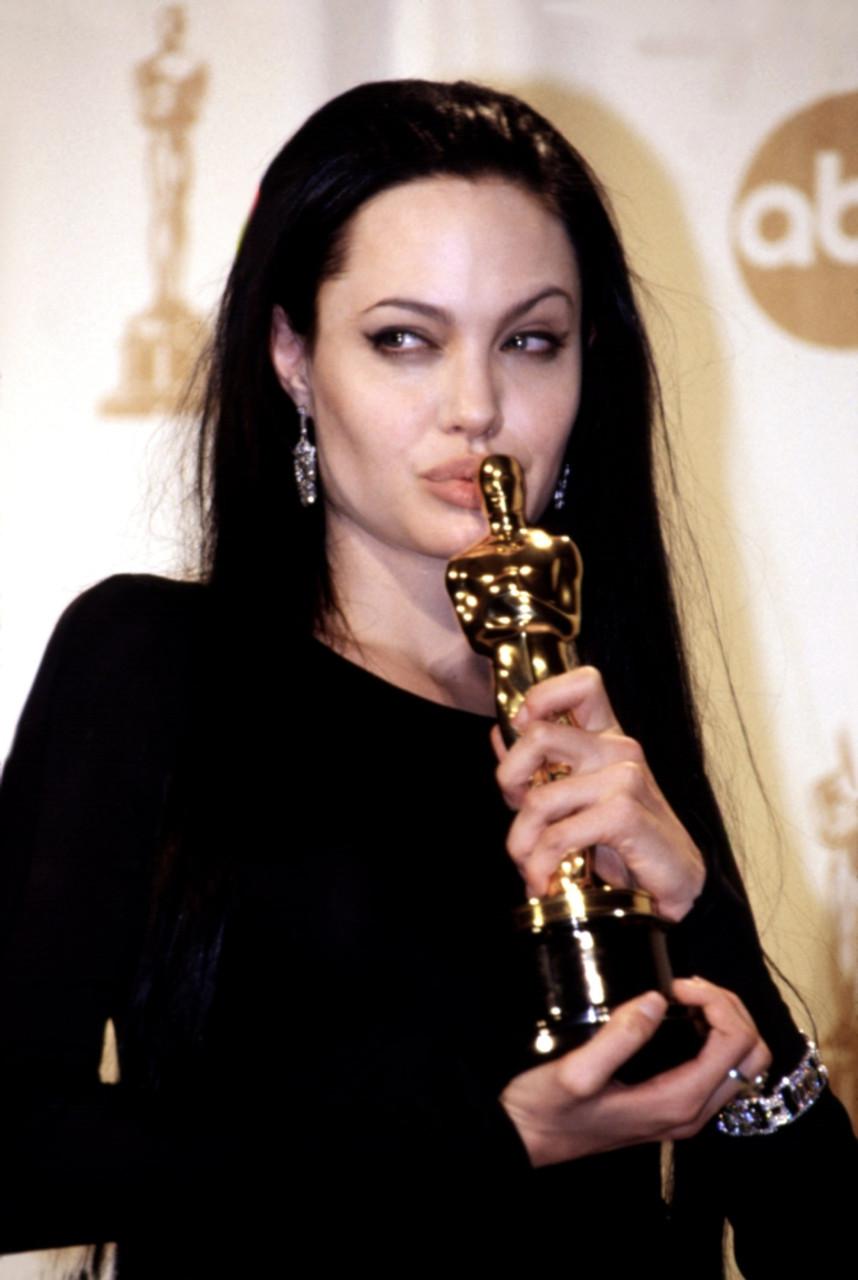
Angelina Jolie career achievements span multiple decades and showcase her versatility as both an actress and filmmaker. Her breakthrough role in “Girl, Interrupted” (1999) earned her the Academy Award for Best Supporting Actress, establishing her as a serious dramatic talent. The film, which dealt with mental health issues in a psychiatric facility, allowed Jolie to demonstrate her ability to portray complex, troubled characters with depth and authenticity. This Oscar win came early in her career and validated her transition from model and minor television roles to A-list Hollywood stardom.