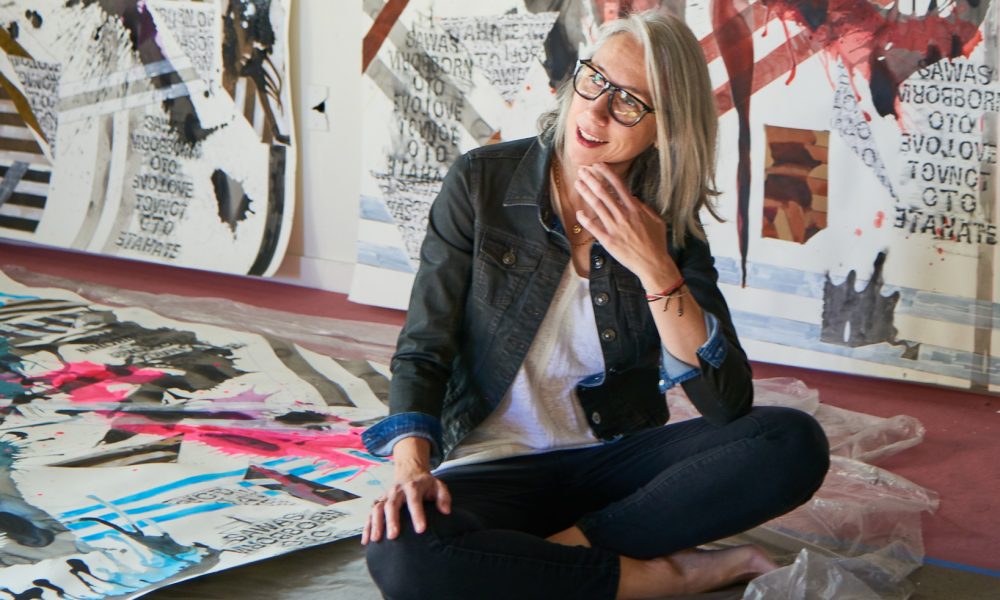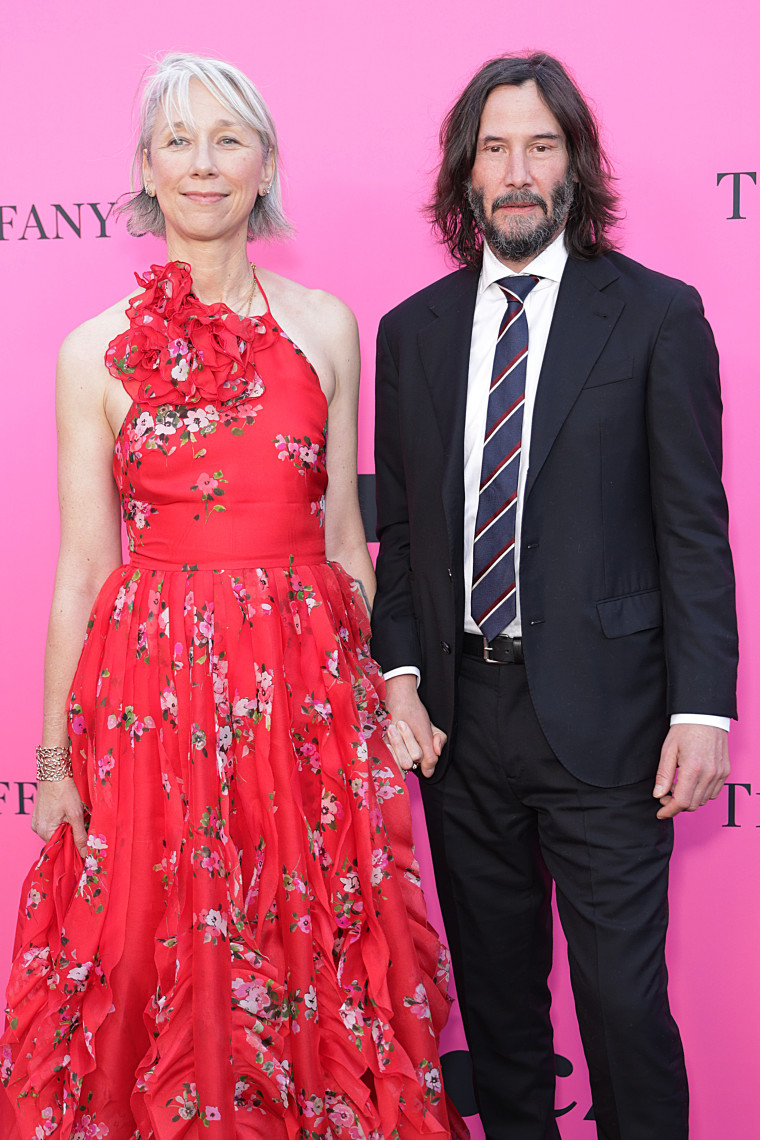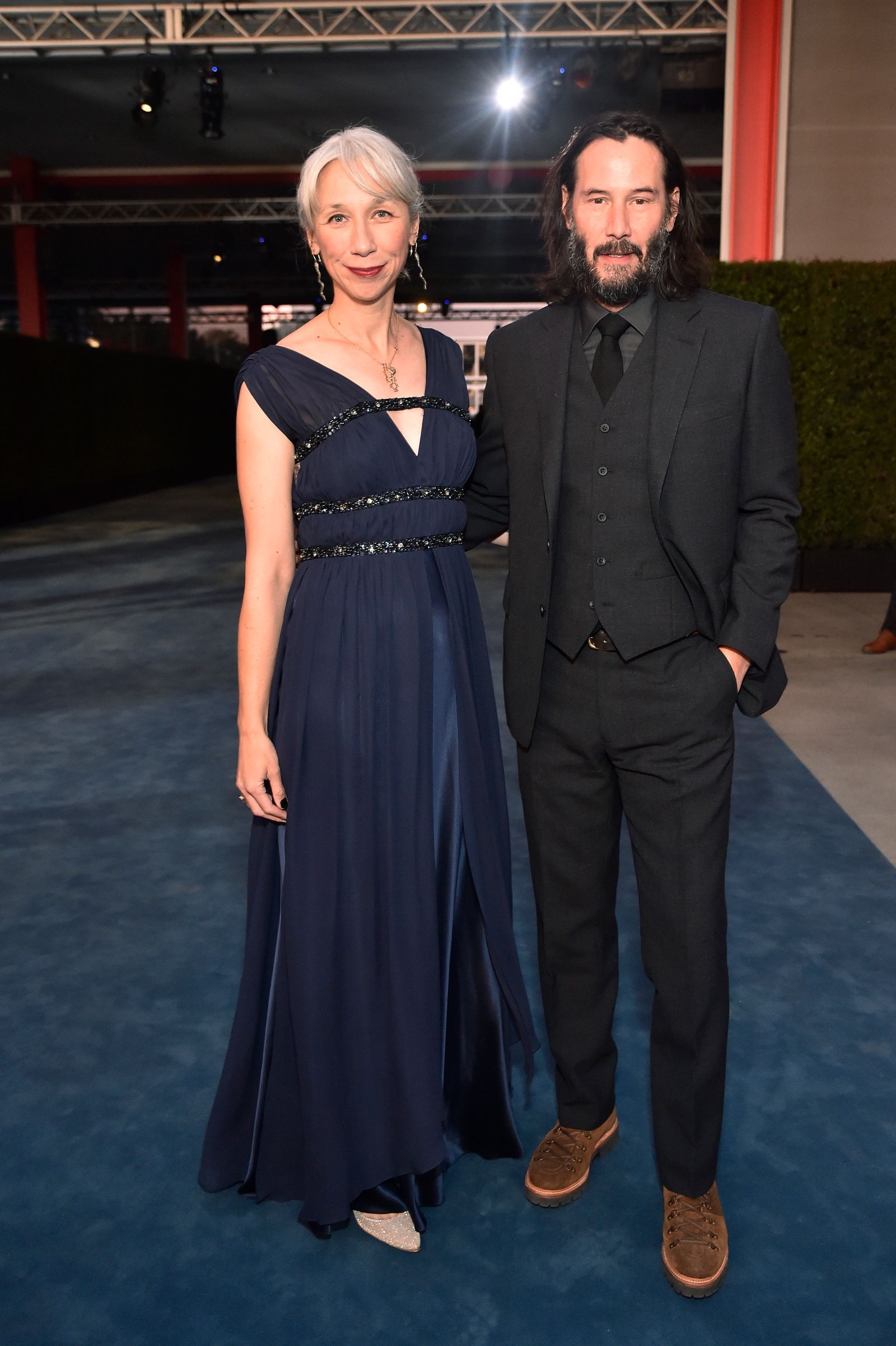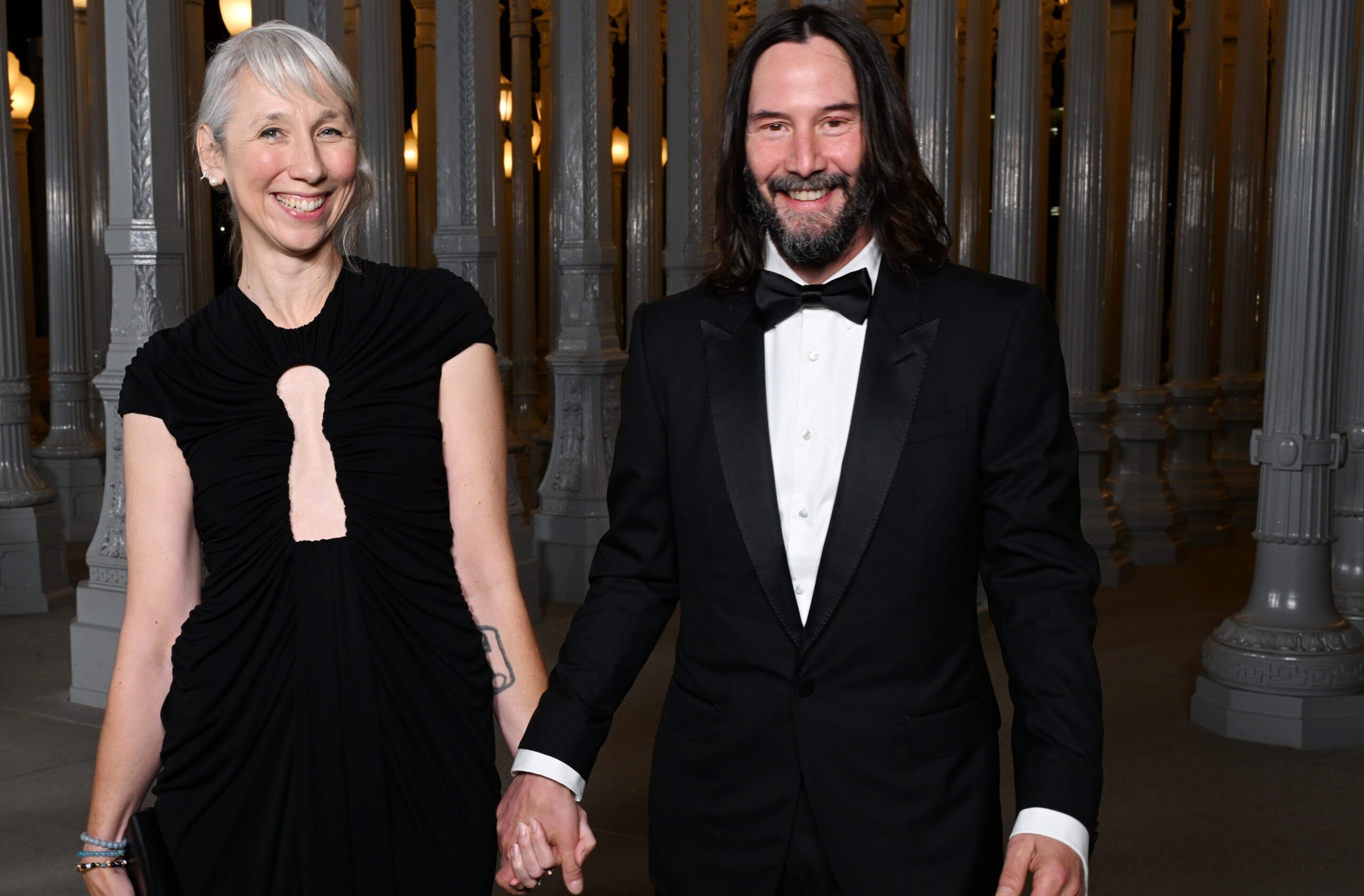
In the constellation of contemporary visual artists making waves in the 21st century, Alexandra Grant occupies a unique position - one where artistic merit intersects with public fascination. The Los Angeles-based artist has carved out a distinctive niche in the art world through her innovative text-based paintings and collaborative projects, but it’s her six-year relationship with Hollywood icon Keanu Reeves that has recently thrust her into the spotlight once again. Grant’s rare public comments about their partnership have captivated fans and media alike, offering glimpses into one of Hollywood’s most private and intriguing couples.
What makes Grant’s story particularly compelling is how she has maintained her artistic integrity and independent career while navigating the intense scrutiny that comes with dating one of the world’s most beloved actors. Far from being merely “Keanu’s girlfriend,” Grant has established herself as a formidable force in contemporary art, with exhibitions in prestigious galleries worldwide and a body of work that explores language, translation, and human connection. Her recent insights into what she cherishes about Reeves - after years of maintaining strict privacy about their relationship - have reminded the public that behind the headlines lies a sophisticated artist whose work deserves attention in its own right.
Quick Facts / At a Glance
| Full Name | Alexandra Grant |
| Date of Birth | April 4, 1973 |
| Place of Birth | Fairview Park, Ohio, USA |
| Nationality | American |
| Profession | Visual Artist, Philanthropist |
| Known For | Text-based paintings, collaborative art projects, relationship with Keanu Reeves |
| Net Worth (Estimated) | $500,000 - $1 million |
Early Life and Background
Alexandra Grant’s artistic sensibilities were shaped by a childhood marked by constant movement and cultural immersion. Born in Fairview Park, Ohio, in 1973, Grant experienced what many would consider an unconventional upbringing that would later inform her artistic practice. Her mother, a foreign language teacher, and her father, whose work required frequent relocation, provided Grant with a nomadic childhood that took her across continents and exposed her to diverse linguistic and cultural environments. This early exposure to different languages and ways of expressing meaning would become foundational to her later work as an artist exploring the boundaries between text and visual art.
The Grant family’s travels were extensive and formative, with significant periods spent in Mexico and various parts of Europe. During her childhood, Grant lived in countries where she was often surrounded by languages she didn’t initially understand, creating an early awareness of communication barriers and the visual nature of language itself. This experience of being linguistically displaced taught her to observe the aesthetic qualities of written words - their shapes, forms, and visual rhythms - even when their literal meanings remained elusive. These childhood observations would later evolve into sophisticated artistic explorations of how text functions as both communication tool and visual medium.
Grant’s educational journey reflected her family’s international lifestyle and her developing intellectual curiosity about language and art. She demonstrated academic excellence throughout her schooling, showing particular aptitude for languages and visual arts. Her multicultural upbringing instilled in her a deep appreciation for different forms of expression and communication, while her exposure to various educational systems broadened her perspective on learning and creativity. The combination of linguistic immersion and artistic exposure during her formative years created the foundation for what would become her signature approach to contemporary art.
Family influences played a crucial role in shaping Grant’s worldview and artistic sensibilities. Her mother’s profession as a language teacher provided direct insight into the mechanics of communication and the challenges of translation between cultures. This professional influence, combined with her father’s career that necessitated adaptability and cultural sensitivity, created a household environment where intellectual curiosity and cultural appreciation were highly valued. The family’s approach to embracing new environments and languages rather than resisting them taught Grant the value of openness and exploration - qualities that would later characterize both her artistic practice and her approach to collaboration with other artists and writers.
Career Beginnings
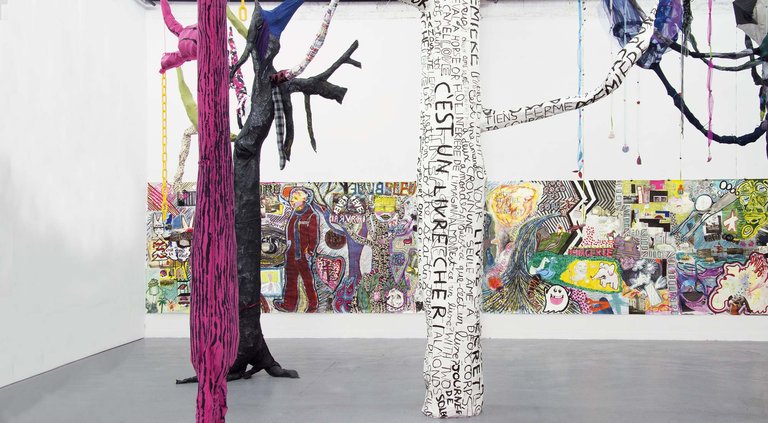
Grant’s formal entry into the art world began with her pursuit of higher education at institutions that would refine her artistic vision and provide her with the technical skills necessary to execute her conceptual ideas. She earned her Bachelor of Arts degree from Swarthmore College, a prestigious liberal arts institution known for its rigorous academic standards and emphasis on critical thinking. At Swarthmore, Grant was exposed to interdisciplinary approaches to learning that encouraged students to make connections between seemingly disparate fields of study. This educational philosophy aligned perfectly with Grant’s natural inclination to explore the intersections between language, visual art, and cultural communication.
Following her undergraduate studies, Grant continued her artistic education at the California College of the Arts in San Francisco, where she pursued her Master of Fine Arts degree. The program at CCA provided her with the advanced technical skills and theoretical framework necessary to develop her unique artistic voice. During her graduate studies, Grant began to seriously explore the visual qualities of text and language, experimenting with how written words could function as both carriers of meaning and aesthetic objects in their own right. Her professors and fellow students recognized her innovative approach to combining linguistic elements with traditional visual art techniques, and she began to develop the conceptual foundation that would define her mature artistic practice.
Grant’s early professional work focused heavily on the relationship between text and visual representation, drawing from her multilingual background and her academic training in fine arts. Her initial projects often involved collaborations with writers and poets, exploring how visual artists could interpret and respond to literary works through painting and mixed media. These early collaborative efforts taught her valuable lessons about the creative process and the benefits of working across disciplinary boundaries. She began to establish relationships within both the literary and visual arts communities, building a network of creative professionals who would support and inspire her work throughout her career.
The transition from graduate student to professional artist proved challenging but rewarding for Grant, as she worked to establish herself in the competitive contemporary art scene. Her early exhibitions were primarily in smaller galleries and alternative spaces, where she could experiment with unconventional approaches to displaying text-based work. These venues provided her with opportunities to refine her artistic vision and receive feedback from critics and collectors who were interested in innovative approaches to contemporary art. Grant’s willingness to take risks and push boundaries in her early career established her reputation as an artist committed to exploring new territories rather than following established trends.
Rise to Fame
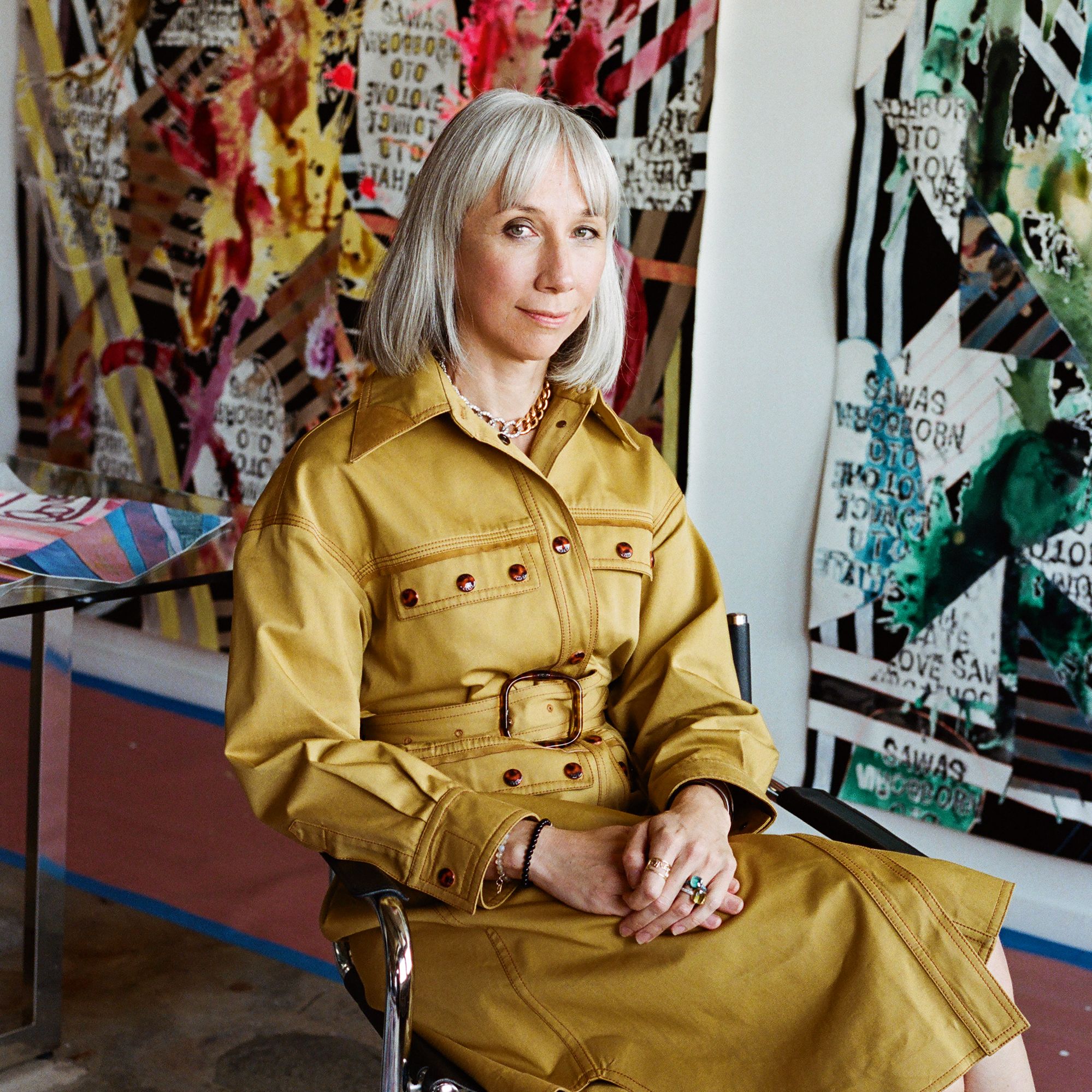
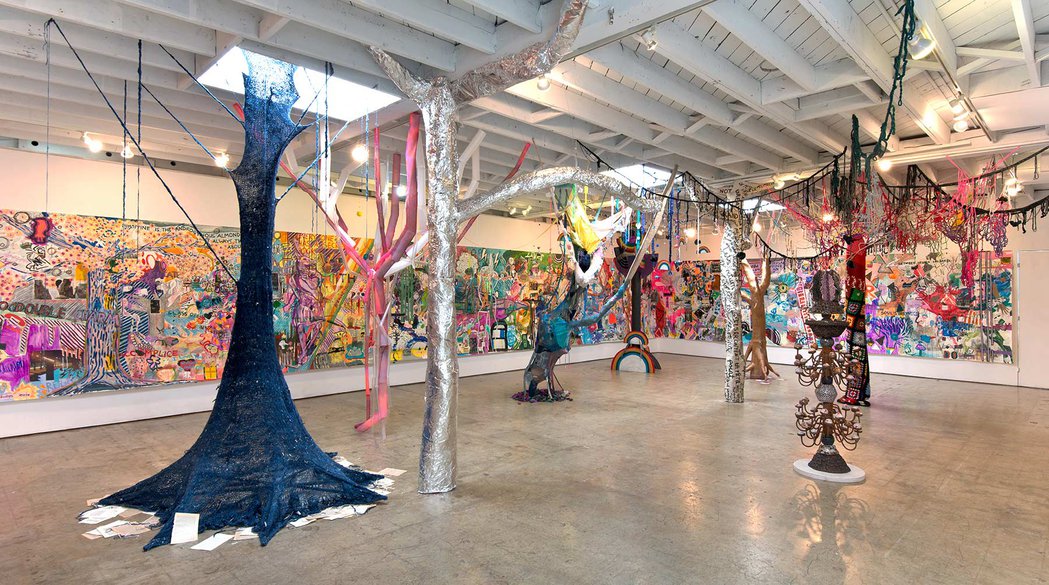
Alexandra Grant’s ascent in the contemporary art world gained significant momentum through her innovative text-based paintings that challenged traditional boundaries between visual and literary arts. Her breakthrough came as critics and collectors began to recognize the sophistication of her approach to language as a visual medium, particularly her ability to transform written words into compelling aesthetic experiences that retained their linguistic meaning while adding new layers of visual interpretation. Grant’s work began appearing in more prestigious galleries, and her unique artistic voice started attracting attention from major collectors and institutions interested in contemporary approaches to conceptual art.
The art world’s growing recognition of Grant’s talent coincided with her increasing involvement in collaborative projects that showcased her ability to work across artistic disciplines. Her partnerships with established poets and writers demonstrated her commitment to genuine artistic collaboration rather than mere illustration of existing texts. These projects often resulted in limited-edition artist books and gallery exhibitions that combined visual and literary elements in sophisticated ways, earning praise from critics who appreciated the seamless integration of different artistic mediums. Grant’s reputation as a collaborative artist opened doors to working with increasingly prominent figures in the literary world, expanding her influence beyond traditional visual arts circles.
Grant’s artistic practice evolved to encompass larger-scale works and more ambitious conceptual projects as her reputation grew within contemporary art circles. Her paintings began to explore more complex themes related to communication, translation, and the visual nature of language across different cultures, drawing from her multicultural background and extensive travels. Museums and major galleries started acquiring her work for their permanent collections, recognizing the significance of her contributions to contemporary discussions about language, meaning, and visual representation. The increasing institutional support for her work validated her artistic approach and provided her with resources to pursue even more ambitious projects.
The expansion of Grant’s artistic practice into philanthropy and arts education further elevated her profile within the broader cultural community. She became involved in initiatives that promoted arts education and supported emerging artists, demonstrating her commitment to giving back to the creative community that had supported her own development. Her involvement in charitable work and arts advocacy showcased her understanding that successful artists have responsibilities beyond their individual creative practice, and her efforts in these areas earned her respect from colleagues and institutions throughout the arts world.
While Grant’s relationship with Keanu Reeves would later bring her widespread public attention, her rise to prominence in the art world was well-established before their romantic partnership became public knowledge. Her collaborative projects with Reeves, including their work on artist books, initially developed from professional respect for each other’s creative abilities rather than personal romantic interest. This foundation of mutual artistic admiration has allowed their relationship to develop within a context of shared creative values and professional understanding, contributing to the depth and sustainability of their partnership both personally and professionally.