
The Afrobeats Producers Quietly Shaping the Biggest Western Albums
Afrobeats

The Afrobeats Producers Quietly Shaping the Biggest Western Albums

Jalen RossJalen Ross··10 min read
Ad SpaceArticle Top - 728x90
Advertisement

Listen to the top of the Billboard 200 with your eyes closed and a strange thing happens. The kick drums don’t sit where American kick drums used to sit. The hi-hats breathe instead of stutter. There’s a low woody thump that wasn’t on a Drake record five years ago, a shaker pattern that wasn’t in a Beyoncé bridge in 2018, a log-drum bounce that wasn’t anywhere near Kendrick Lamar’s productions until very recently. That sound has a postcode. It comes from a few square miles of Lagos. The producers stamping it onto Western pop are no longer crossover stories. They are the room.

Some of them have publishing deals with Universal and Sony. Some still upload beats from bedroom studios in Surulere. A few spend more of the year in Los Angeles and London studios than at home. None of them are household names in Atlanta or London the way Metro Boomin is. That’s the point of this piece. Quiet credits, loud consequences.

Sarz: The Quiet Architect Everyone Eventually Calls

Afrobeats producers shaping Western albums - Sarz

Osabuohien Osaretin, the man the world knows as Sarz, has been doing this longer than most of his peers have had email addresses. He was producing for Wizkid when “Beautiful Onyinye” still felt like a moment. He produced “Far Away,” which is arguably the most emotionally durable song Wizkid has ever released. His work with Skepta, including their joint project, was the first sustained proof that his drums travelled without a Nigerian vocalist on top of them.

That was the point at which Sarz stopped being a Nigerian producer who had done one international thing and became a name A&Rs outside Nigeria started keeping in their notes. Producers half his age describe him as the template: stay technical, stay quiet, let the drums talk. He has stayed based in Lagos rather than relocating, which younger producers read as a deliberate statement about where the sound is made. Anyone serious about the new sound goes through him eventually, even if they only stop in for a weekend. The result is that Sarz’s fingerprint, that particular Lagos snare with a slightly muted top end, has been showing up on Western records where you’d never expect to find it.

Pheelz: From “Finesse” To The Room Where Pop Decisions Are Made
The Afrobeats Producers Who Quietly - Pheelz: From

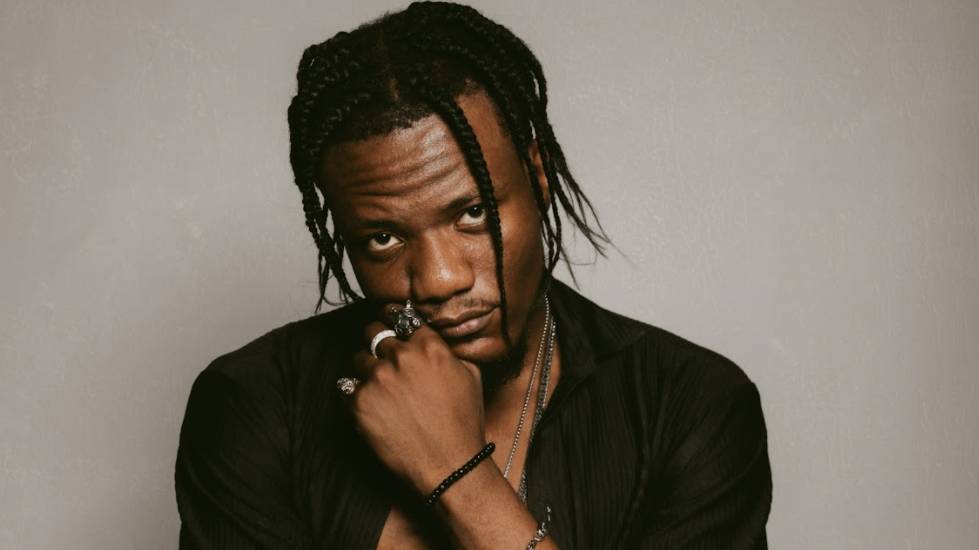
Pheelz had the kind of crossover moment in 2022 that most producers spend a career chasing. “Finesse,” the BNXN collaboration that he produced and sang on, sat inside the global Top 50 for months. It went to TikTok and to the lips of suburban teenagers who could not have placed Lagos on a map.

The thing about that moment was that Pheelz didn’t disappear into it. He moved to Los Angeles, set up properly, and started taking pop sessions on the American side of the industry. His ability to hop between behind-the-board and on-the-mic has made him unusually valuable. A&Rs love a producer who can also sing a hook draft.

Working producers at that level are usually cagey about unreleased work, and non-disclosure now routinely outlasts the release date, so the honest position on any given album is that the credits page settles it and nothing else does. What is visible is the pattern: a Lagos producer with one global hit converting that into a standing seat in American pop sessions rather than a one-off novelty booking.

Kel-P: The Producer Burna Boy Built A Grammy Around

The Afrobeats Producers Who Quietly - Kel-P: The Producer Burna Boy Built A Grammy Around

Kel-P Vibes carries production credits across Burna Boy’s “African Giant,” the album that reset what an Afrobeats record could be expected to do internationally and that put a Grammy nomination in front of a Nigerian artist working entirely on his own terms. That body of work, not a single crossover single, is what built his reputation.

His drum sequencing is among the most studied in Lagos. Younger producers reverse-engineer his kicks the way producers two decades ago reverse-engineered The Neptunes’ hi-hats. The appeal is legibility without dilution: the records are unmistakably Nigerian and still immediately readable to anyone with a radio, which is a much harder trick than it sounds and the reason his name keeps surfacing in international session conversations.

What sets him apart in the current wave is a refusal to pick a lane. He still produces hard Afrobeats records for Nigerian artists rather than treating them as the thing you graduate from. That is now the standard playbook for the generation behind him: keep the home catalogue live, take the foreign sessions as they come, and let the drums do the identifying.

P.Priime: Davido’s Secret Weapon, Now A Western Asset

The Afrobeats Producers Who Quietly - P.Priime: Davido's Secret Weapon, Now A Western Asset

P.Priime is the producer Davido leans on when he wants the bounce to feel new. Recent Davido records carry his fingerprints, particularly the ones that travelled best to Western audiences. That association does what it does for every producer in Davido’s orbit: it opens doors other producers have to kick.

The demand from major-label A&Rs is easy enough to describe. They want the Davido bounce attached to a non-African artist. What that request produces in practice is usually an uncredited or lightly credited contribution, with the producer of record listed as an American name and the Lagos input showing up only in publishing splits, if at all. That structure is worth naming plainly, because it is the main reason the influence keeps outrunning the credits.

The Davido machine has, in this way, become a feeder system for Western pop. Producers who prove themselves on a Davido album get vetted by global A&Rs within months.

Magicsticks And London: The Asake Sound Goes Worldwide

The Afrobeats Producers Who Quietly - Magicsticks And London: The Asake Sound Goes Worldwide

There is no Asake without Magicsticks. The log-drum-driven, choir-stacked, Amapiano-meets-Afrobeats fusion that defined Asake’s 2022 and 2023 albums was largely a Magicsticks construction. He’s the architect of a sound that other producers have spent three years trying to clone and rarely succeeding.

London sits next to Magicsticks in the Asake production credit list and has carved out his own lane. London produces with a slightly cleaner top end, a touch more space in the mix. He has been more active than Magicsticks in taking Western sessions.

That particular combination of log drum and gospel choir stacks has since leaked into American rap and pop records whose producers of record are almost always American. The palette is unmistakable even when the credit is not. Magicsticks has stayed largely Lagos-based and works remotely, and his rate has climbed steeply with the demand, which is the quiet economic story underneath the whole trend: the sound got expensive before the names got famous.

Don Jazzy: The Mavin Founder As Global Power Broker

The Afrobeats Producers Who Quietly - Don Jazzy: The Mavin Founder As Global Power Broker

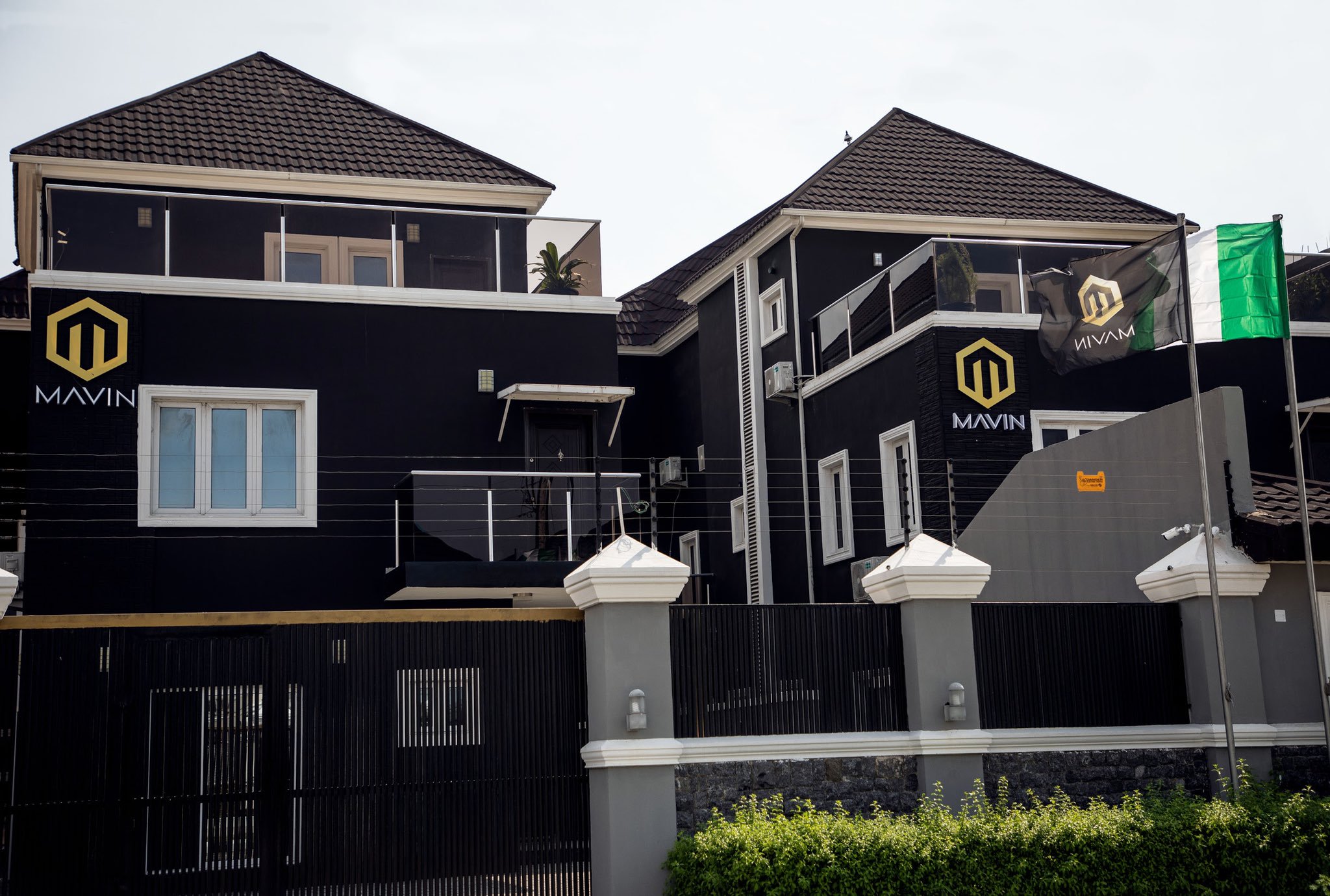
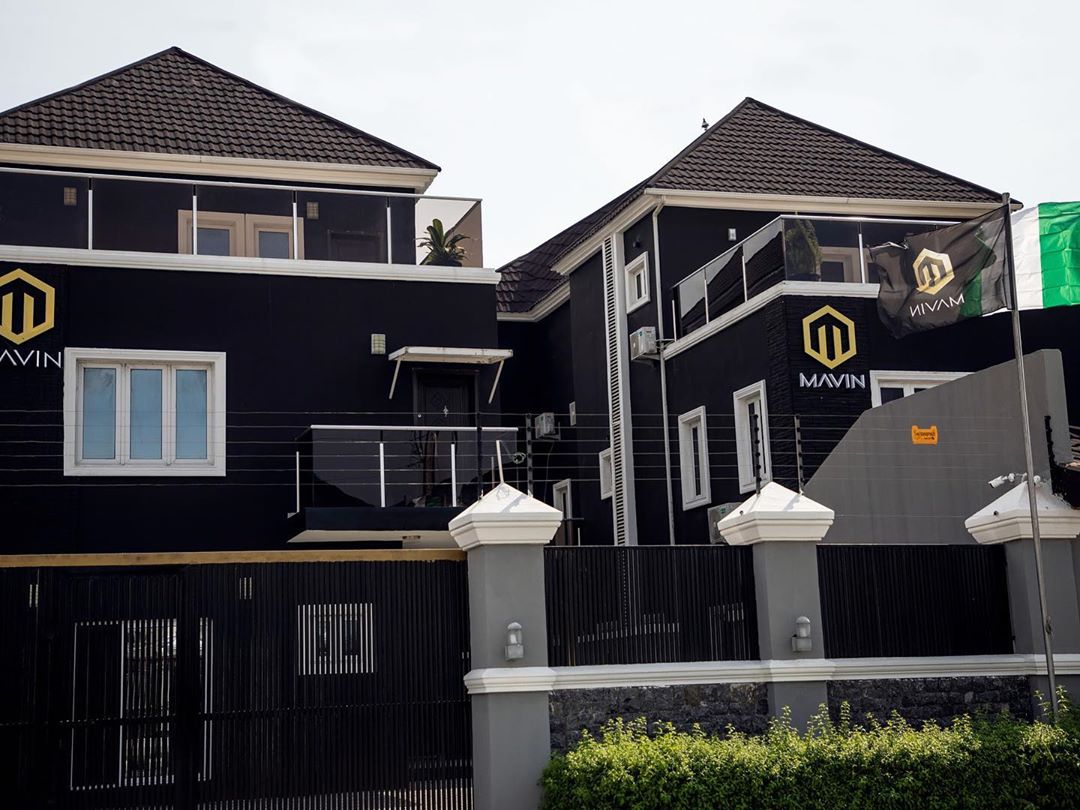
Don Jazzy doesn’t produce as much as he used to. The 2024 Mavin Records deal with Universal made him something else: a structural figure in how Lagos talent gets exported. The Reekado Banks era Don Jazzy productions that originally circulated in London clubs in 2015 and 2016 have aged into a kind of canonical text. DJs still drop “Easy” and “Katapot” and the room responds like they are new.

Ad SpaceIn-Article - 300x250
Advertisement

What Don Jazzy controls now is the pipeline. Mavin Records, post-Universal, is the most important talent factory in African music, and the producers who come up through Mavin’s system get exposed to Western A&Rs from day one. Ayra Starr’s success has been built on Mavin productions. Rema’s early career was Mavin. Crayon, Boy Spyce, and Magixx all sit inside that ecosystem.

The Universal partnership means that when a Mavin producer makes a beat, it doesn’t sit on a hard drive in Lagos for six months waiting to find a home. It can be in an American pop session within weeks. That speed matters. The Western pop machine moves on cycles that used to crush African producers who couldn’t keep up. Mavin solved that by becoming part of the machine.

Tems: A Songwriter Who Reshaped Western Pop Vocabulary

Calling Tems a producer is technically incorrect, though she is credited as a co-producer on several of her own records. Her real impact has been as a songwriter and topliner. The work she did on Beyoncé’s “Move” from Renaissance, on Future’s “Wait For U,” and on Rihanna’s “Lift Me Up” for Wakanda Forever in 2022 changed what Western pop felt it could do with a vocal.

The Oscar nomination for “Lift Me Up” in 2023 was the formal recognition. The real recognition has been the wave of Western artists trying to capture what Tems brings without quite knowing how to describe it. There is a particular vocal phrasing, slightly behind the beat, slightly nasal in the upper register, that Tems has made central to global pop. Listen across current American R&B and you will hear vocalists reaching for that phrasing. Most of them are doing it badly, because the thing they are copying is a timing instinct rather than a texture.

The producers and engineers who work closely with her have benefited from the same visibility. That is the pattern across this whole story: one artist clears a path and a support crew walks through it, usually without a headline.

CKay, Joeboy, And The “Love Nwantiti” Ecosystem

“Love Nwantiti” had one of the longest global chart runs any African record has managed, and the credits on it tell a story that is still playing out. CKay wrote and produced the original, and the versions that carried it furthest were remixes built on top of that original arrangement, with Joeboy among the artists attached to the most-played of them. The song became a licensing and publishing case study as much as a hit.

The ecosystem around it is where the durable money sits. Songwriting input on records an artist does not release has become a quiet revenue stream for a whole tier of Nigerian writers, and the “Love Nwantiti” effect has ultimately been bigger as an industry door-opener than as a single song.

Niphkeys And The Generation That Grew Up Online

Niphkeys is part of a younger wave of Lagos producers who never had to migrate. They built their reputations entirely on Twitter and TikTok and SoundCloud, and by the time Western A&Rs found them, they were already booked out for months. Niphkeys produces for Rema and a roster of younger Mavin and Chocolate City acts. His sound is harder, more electronic, more obviously synthetic than the previous generation of Afrobeats producers.

That synthetic edge is exactly what a chunk of Western pop is reaching for. The bedroom-pop and hyperpop-adjacent crowd works remotely by default, which suits a generation of Lagos producers who never needed to relocate to be reachable. The session is a file transfer now, and that has done more to move Lagos into Western records than any single crossover hit.

Studio Magic And The Emerging Crew

Behind the established names sits a cohort of younger Lagos producers, people like Blaisebeatz, Andre Vibez and the wave around them, producing for Nigerian artists during the day and taking remote sessions with American A&Rs in the evening. Several have credits on the recent Asake albums, which has become the closest thing the scene has to a calling card.

There is no clean public dataset that counts how many Western hits now carry a Lagos production credit, and anyone quoting a precise figure is guessing. What can be checked is the direction of travel on the credits pages themselves, where Nigerian names have gone from novelty to routine inside a handful of years.

The Splice Pipeline And The “Lagos In The Room” Trend

There is another channel of influence that’s harder to measure but probably more pervasive. Splice, the sample library that most Western producers use as a starting point for any session, has spent the past three years aggressively licensing what it calls “Afrobeats kits” from Lagos producers. A bedroom producer in Memphis pulling up a session today is often using log drums, shakers and percussion loops that were recorded in a Lagos studio and licensed into a sample pack.

The result is that Lagos is in the session even when no Lagos-based human is. The warmth and percussive complexity that used to require flying someone in is now a folder in a sample browser, which is both the democratising part of the story and the part that keeps the original players uncredited.

The producers who own those packs are building catalogues that can outperform album credits over time, because a sample pack keeps earning long after a single has stopped charting. That is a genuinely different income model from the one the previous generation of Nigerian producers had access to.

What The Credits Actually Look Like

The liner notes are where this stops being vibes and starts being verifiable. Names like Sarz, Kel-P, P.Priime, London and Niphkeys turn up as co-producers, as additional production, and often only in the publishing splits that almost nobody outside PRS and ASCAP paperwork ever reads. Anyone making claims about who shaped which Western album should be pointing at that page rather than at a rumour, and where the page is silent, the honest answer is that it is silent.

That is the texture of the influence. It is not a clean crossover narrative where a Lagos producer goes Hollywood and gets famous. It is a quieter, more structural integration, and the structure is what disguises it. The producers who shape the sound rarely get the magazine covers. The covers go to the artists.

Sit in a major studio in Atlanta, Los Angeles or London and somewhere in the session there is a sample kit recorded in Surulere, a co-producer on a video call from Lekki, or a beat that arrived in an inbox from someone whose Lagos session ran until dawn. The log drum thumps. The shaker breathes. The room sounds like Lagos. The credit might say Atlanta.

Ad SpaceIn-Article - 300x250
Advertisement
Share
Get the recap

Loved this story? Get more like it.

Join readers who get our weekly entertainment recap - the stories worth your time, delivered every Friday.

No spam. Unsubscribe anytime. By signing up you agree to our Privacy Policy.

The Afrobeats Producers Quietly... | Sidomex Entertainment