The AFRIMA Awards Explained: What They Are, Who Has Won and Why They Deserve More Attention
Jalen Ross··11 min read
Ad SpaceArticle Top - 728x90
Advertisement
Ask a casual music fan in Lagos or Accra to name the biggest African music awards and the answers will almost always cluster around the same two or three names. The Headies. The BET Awards’ international category. Maybe the Grammy nod that finally pulled Burna Boy into mainstream Western conversation. The All Africa Music Awards, more commonly known as AFRIMA, rarely lead that list, which is strange given that the AFRIMA trophy may be the only continental music prize that genuinely lives up to the word “African” in its name.
That gap between prestige and publicity is the most interesting thing about AFRIMA. The ceremony has the institutional backing most awards bodies on the continent can only dream of, a category structure that respects every region from Cape Town to Cairo, and a winners list studded with the artists who have actually shaped African pop over the past decade. Yet outside the industry itself, the show still struggles to break into the same conversation as smaller, more nationally focused events.
What AFRIMA Actually Is
AFRIMA stands for the All Africa Music Awards. The body was founded in 2013, conceived as a partnership between the International Committee of AFRIMA and the African Union Commission. The headquarters sits in Lagos, Nigeria, which makes sense given that Lagos is the commercial heart of the continent’s music industry, but the awards themselves are designed to look outward from Nigeria rather than inward.
That distinction matters. The Headies, for all their cultural weight, are a Nigerian awards show that occasionally recognizes work from neighboring countries. AFRIMA built its model the other way around. The competitive categories pull nominations from all five regions the African Union recognizes, which means North Africa, South Africa, East Africa, West Africa, and Central Africa each have a guaranteed seat at the table before the ceremony even begins.
The African Union Connection
The African Union Commission endorsement is not a decorative line on a press release. The AU’s Commissioner for Social Affairs typically attends the ceremony, and the partnership shapes how AFRIMA presents itself on the world stage. When the awards body talks about promoting African music as a tool for cultural diplomacy and intra-continental cohesion, the language is borrowed almost directly from AU framing.
That relationship gives AFRIMA a layer of legitimacy that purely commercial awards cannot replicate. It also creates a different set of pressures. The show has to be seen as fair to artists from regions that do not enjoy the same export pipelines as Nigerian or South African acts. A North African musician singing in Arabic and an East African Bongo Flava artist need to feel that the prize is genuinely open to them, not a Nigerian celebration with token nods to other countries.
The Founder Behind the Trophy
Mike Dada, usually credited as Mr. Mike Dada, founded AFRIMA and serves as its President and Executive Producer. His influence on the awards is impossible to overstate. The pan-African positioning, the AU partnership, the rotating host city model, and the insistence on covering 39 competitive categories all trace back to his original blueprint.
Dada built AFRIMA on the argument that African music deserved an awards body that did not have to apologize for its scope or borrow Western validation frameworks. The branding leans heavily on what AFRIMA calls “African Heritage,” a deliberate counterweight to the BET Awards’ diaspora-oriented framing and the Grammys’ patchy relationship with African genres.
How the Categories Are Built
The category sheet at AFRIMA is one of the largest in African music. With 39 competitive categories, the awards body covers ground that smaller shows simply cannot. There are the big-ticket prizes that draw the headlines, including Songwriter of the Year, Album of the Year, and Best Artist in African Pop, but the depth of the list is where AFRIMA earns its respect inside the industry.
Each region gets dedicated category sets. There are awards for Best Male Artist in African Inspirational Music, Best Artist in African Electro, Best Artist in African Reggae and Ragga, and Best African Group, alongside genre-specific recognition for hip hop, R&B, traditional music, and contemporary fusion sounds. A producer working in a niche Francophone genre has a realistic path to a nomination, which is not something that can be said of most continental awards.
Voting and Selection
Two streams feed the final results. A panel of music industry professionals, drawn from across the continent, handles the bulk of the adjudication. Online public voting layers on top of the expert assessment. The combination is meant to balance critical credibility against fan engagement, although the exact weighting has been a recurring topic of debate among artists and managers who track the process closely.
The nomination phase typically opens months before the ceremony, with a “Call for Entries” that any African artist or label can respond to. Songs and albums submitted have to fall within a defined eligibility window, similar to how the Grammys handle their submission calendar. The shortlisting panel then narrows the field, and the final nominees go to the combined vote.
The Winners Who Built the AFRIMA Story
A scan through past winners reads like a who’s who of African music over the last decade. Yemi Alade has multiple AFRIMA wins to her name, including in the Songwriter category, a recognition that pushed back against the lazy assumption that Afropop’s biggest female stars are primarily performers rather than writers. Her presence on the list also illustrates how AFRIMA tends to reward artists who tour the continent and engage with Francophone Africa, not just the Anglophone bloc.
2Face Idibia, the Nigerian legend now performing as 2Baba, has collected AFRIMA recognition befitting his status as one of the elder statesmen of Afropop. Wizkid, Davido, Burna Boy, and Tiwa Savage have all featured on winners lists, although their relationships with the show have varied year by year depending on touring schedules and ceremony attendance.
East and Southern Africa on the Scoreboard
The East African presence is anchored by names like Sauti Sol from Kenya and Diamond Platnumz from Tanzania. Sauti Sol’s wins, in particular, helped establish AFRIMA’s bona fides as a genuinely continental prize rather than a Nigerian-dominated one. When the Kenyan group lifted trophies in categories that could easily have gone to better-marketed West African acts, the message landed: the panel was actually listening to music from across the regions.
Diamond Platnumz brought Bongo Flava onto the AFRIMA stage in a way that few other awards bodies managed. His commercial dominance in East and Central Africa translated into recognition that mainstream Western coverage of African music routinely overlooks, and AFRIMA’s willingness to honor that work is part of why industry insiders take the show seriously even when general audiences do not.
Ghana, Francophone Africa, and the Continental Spread
Sarkodie’s relationship with AFRIMA reflects how Ghanaian hip hop fits into the continental story. The Sark Nation rapper has been a recurring nominee and winner, and his appearances on AFRIMA stages have helped normalize the idea that Ghana is not just a junior partner in West African music conversations.
Francophone Africa has produced a steady stream of AFRIMA winners as well, from Cameroonian and Ivorian artists who rarely get coverage in English-language Afropop media to North African acts whose work would be invisible to a Headies-focused fan. The category structure rewards that breadth deliberately. A Best Artist in African Pop trophy carries weight precisely because the field is not pre-filtered for Anglophone visibility.
Ad SpaceIn-Article - 300x250
Advertisement
Where the Ceremonies Have Happened
AFRIMA’s rotating host model is one of the show’s signature features. The ceremony has been held in Lagos, Accra, and Dakar, with the venue selection driving an entire week of programming in whichever city wins the bid. That movement reinforces the pan-African positioning. An awards show that always lands in Lagos starts to feel like a Nigerian event with a continental veneer. An awards show that lands in Dakar one year and Accra another genuinely behaves like a continental institution.
The 2018 edition was the one that took AFRIMA out of Nigeria for the first time, staged at the Accra International Conference Centre and used to reset relationships with the Ghanaian music industry. Ghana had been awarded hosting rights for several consecutive editions, but those rights were later withdrawn, and the 2019 ceremony returned to the Eko Convention Centre in Lagos. The Lagos editions that followed landed during the country’s Afrobeats wave, which gave them unusual international press attention.
The Dakar Edition
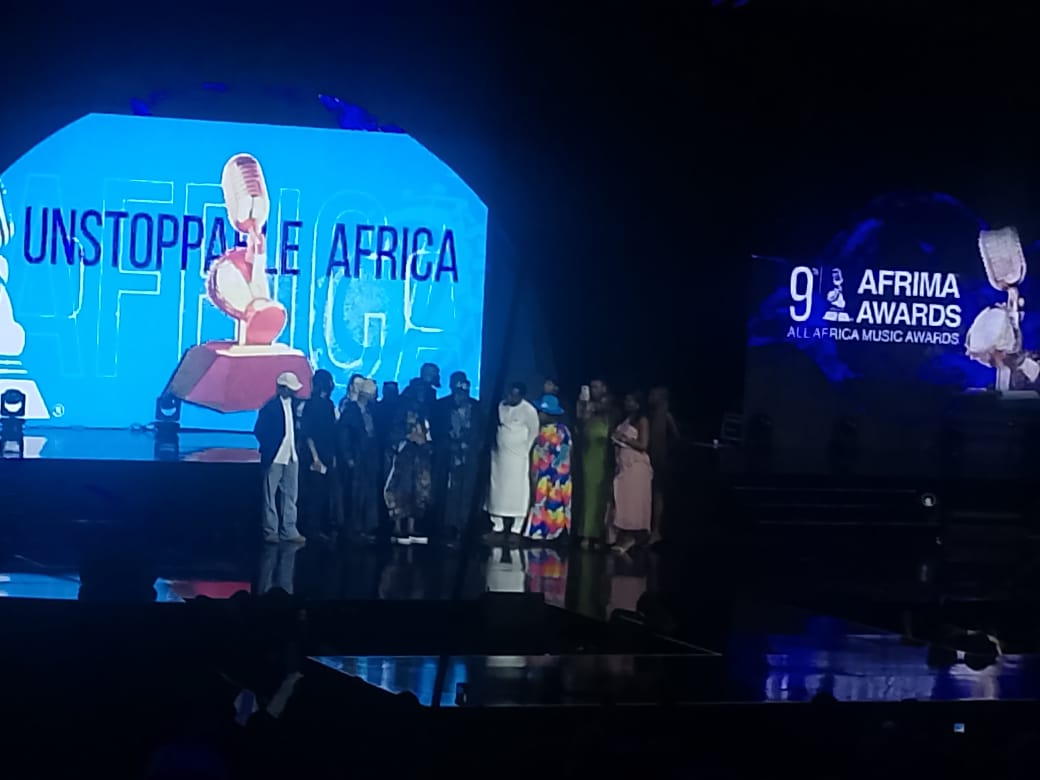
The eighth edition, staged at the Dakar Arena in Senegal and billed as the Teranga Edition, was a statement. Holding the ceremony there pushed AFRIMA deeper into Francophone West Africa and gave the show a chance to spotlight a music scene that most Afropop enthusiasts know only through a handful of crossover names. Burna Boy took Artist of the Year that year and Davido was the biggest winner on the night. The Dakar staging also tested AFRIMA’s logistical model. Moving an awards show with dozens of performers, hundreds of nominees and a continent-wide media operation into a new country requires institutional muscle that most African awards bodies simply do not have.
The AFRIMA Week Experience
The ceremony itself is only part of what AFRIMA delivers. The build-up has evolved into a full press tour, with an annual programme of events that includes a nominees’ welcome reception, a Music Village, an Africa Music Business Summit, and a host country tour for international media. Industry executives, journalists, and artists from across the continent converge for what amounts to a week-long convention.
That ecosystem is one of the underrated arguments for taking AFRIMA seriously. The conversations that happen on the sidelines, the deals brokered between artists from different regions, the introductions between Francophone managers and Anglophone label executives, all feed back into the broader African music economy. Few other continental awards generate that kind of secondary value.
Africa Magic and the Broadcast Footprint
The Africa Magic TV broadcast partnership extends the ceremony’s reach across MultiChoice’s footprint, which means viewers in dozens of African countries can watch the show live without needing access to local streaming services. That distribution matters in a market where television still drives a substantial share of music discovery, particularly outside the major urban centers. Africa Magic’s involvement also signals something about AFRIMA’s positioning, putting it in the same broadcast tradition as major continental sports and entertainment franchises.
Why AFRIMA Deserves More Attention
The case for AFRIMA’s underexposure is straightforward. The show is critically respected inside the industry, institutionally backed by the African Union, geographically representative in a way no competing body matches, and home to a winners list that doubles as a credible history of African music in the streaming era. Yet the press cycle around it remains thinner than the cycles around the Headies or any African artist’s BET nomination.
Part of the explanation is structural. The Headies have a focused Nigerian audience that drives a tightly coordinated media moment. BET Awards coverage benefits from the entire American entertainment press apparatus picking up the story. AFRIMA, by trying to serve the whole continent, ends up competing with national awards bodies in each country for editorial attention, and national outlets understandably prioritize their own.
The Comparison Problem
Headies versus AFRIMA is not really a fair comparison. The Headies are designed to crown the best of Nigerian music, with selected continental categories layered on top. AFRIMA is designed to crown the best of African music across all genres and regions, with Nigerian acts competing on an equal footing with Tanzanian, Senegalese, and Egyptian artists. The two shows are serving different mandates, and treating them as rivals undersells what AFRIMA is actually trying to do.
The Grammy Africa conversation is even more lopsided. The Recording Academy’s recent moves to recognize African genres are welcome, but they remain Western-validated frameworks. AFRIMA is the only major awards body that asks African industry voters to evaluate African music on its own terms, with African production realities and audience tastes shaping the criteria.
Notable Absences
Every awards body has its share of conspicuous absences, artists who somehow never make the list despite an obvious claim. AFRIMA is no different, and inside-the-industry debates about who has been overlooked or under-recognized are a regular feature of the post-ceremony conversation. Those debates, ironically, are themselves a sign of the show’s credibility. People only argue about snubs at awards they take seriously.
The Trophy and the Brand
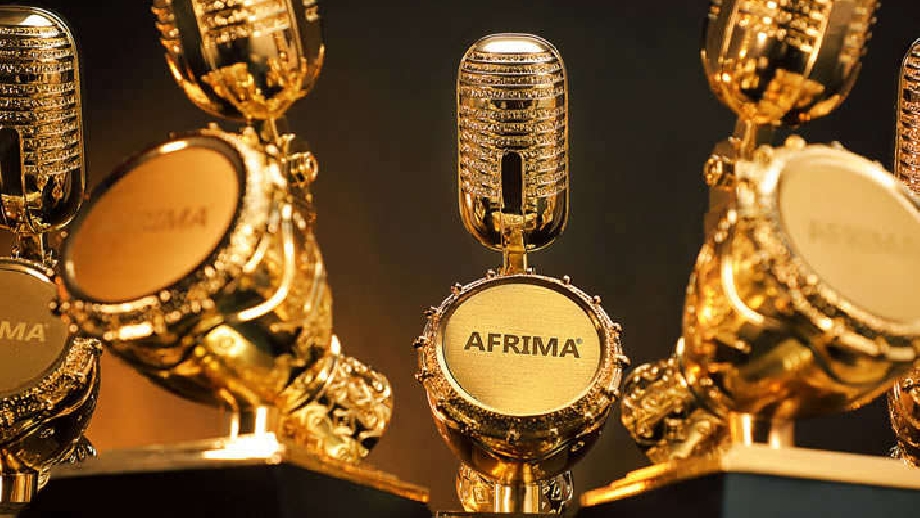
The AFRIMA trophy is one of the more distinctive prizes in African entertainment, designed around a stylized African figure that signals the awards body’s heritage positioning. The branding leans into traditional motifs in a way that BET and Grammy hardware does not. Whether a viewer thinks the design choice works as visual identity is a matter of taste, but it does the job of making an AFRIMA win look unmistakably African on a mantelpiece.
That visual identity matters more than it sounds. Awards trophies double as branding for the institution behind them, and the AFRIMA trophy carries the same “African Heritage” message that runs through the rest of the show’s positioning. Side by side with a generic gilded statuette, the difference is immediate.
Expansion and Where Things Stand Now
AFRIMA has been working on expansion across a few fronts, including deeper engagement with the African diaspora, more robust digital distribution of the ceremony, and tighter integration with the African Continental Free Trade Area framework. The mechanics of those plans evolve year to year, and the awards body’s announcements tend to be tied to its annual programming calendar rather than separate strategic communications.
What is observable is a show that has built a track record running back to 2013, retained the African Union endorsement that legitimised it from day one, and continued to attract nominees from every region the continent recognises. The trophy now sits on shelves in Lagos, Nairobi, Dar es Salaam, Accra, Dakar, Johannesburg and Cairo, carried home by artists whose work has shaped what African music sounds like to the rest of the world.
The Case AFRIMA Has Already Made
Strip away the publicity gap and what remains is a body that has done the unglamorous work. It moved its ceremony between Lagos, Accra and Dakar rather than defaulting to the largest market. It kept a category sheet wide enough that a Francophone producer or a North African vocalist has a real path to a nomination. It held an African Union relationship for over a decade without letting the show become a state pageant.
None of that generates the headlines a Grammy nomination does, and it never will. But the winners list is the argument. Read it end to end and it describes what African music actually sounded like across the streaming era, region by region, in a way no single-country ceremony and no Western academy has managed. That is what AFRIMA is, whatever the press cycle says about it.
Ad SpaceIn-Article - 300x250
Advertisement
Share
Get the recap
Loved this story? Get more like it.
Join readers who get our weekly entertainment recap - the stories worth your time, delivered every Friday.
No spam. Unsubscribe anytime. By signing up you agree to our Privacy Policy.