
For a long stretch of Grammy history, African artists existed in a corner of the broadcast that most viewers never saw. Wins were announced during the Premiere Ceremony, the pre-telecast event held hours before the cameras went live. Winners thanked their families on a small podium, took their statues home, and watched the main show on television like everyone else. That arrangement felt permanent. It is not permanent anymore.
The shift did not happen in one ceremony or with one artist. It happened across a stretch that began with Burna Boy losing Best World Music Album in 2020, continued through his win a year later, ran through Tems taking a rap Grammy in 2023, and crystallised when Tyla walked off with the first Best African Music Performance trophy in 2024. The question is no longer whether African artists belong at the Grammys. The question is which categories they move into next, and whether the Recording Academy’s structure can hold what is arriving.
The Category That Changed Everything
The Recording Academy announced the Best African Music Performance category in 2023, ahead of the 66th ceremony. The decision followed years of lobbying from African label executives, US-based managers with African rosters, and Academy members who had grown frustrated with Best Global Music Performance functioning as a catch-all for everything that was not American, European or Latin.
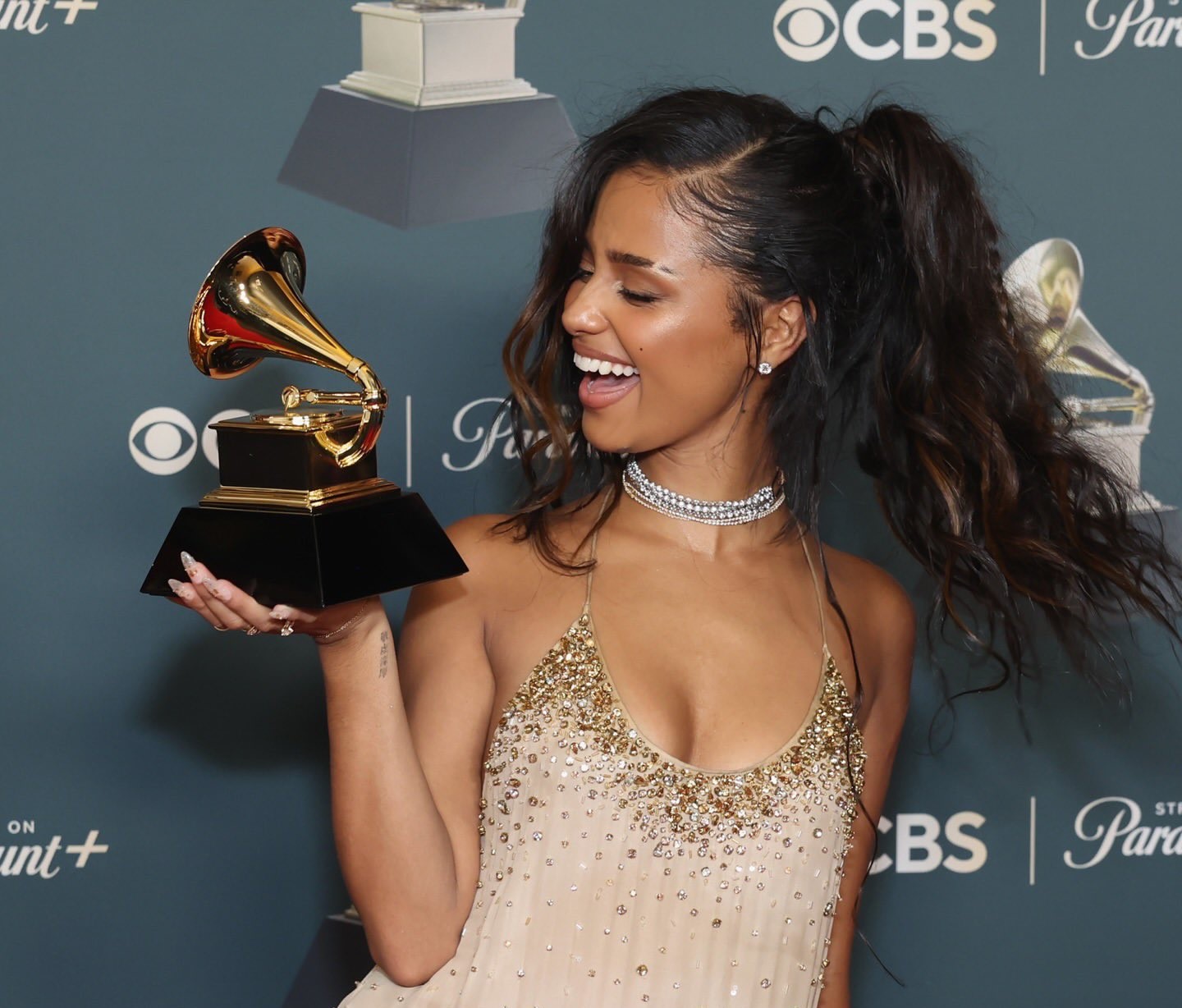
Tyla won the inaugural trophy on 4 February 2024 for Water. The South African singer was twenty-two. The song had been inside the Billboard Hot 100 for months by the time she stepped up, and she won a field that included Burna Boy, Davido with Musa Keys, Asake with Olamide, and Ayra Starr. The room understood what had happened. A category created to honour African music had, on its first night, crowned its first international pop star.
A year later Tems won the second Best African Music Performance Grammy for Love Me JeJe. The choice felt different from Tyla’s. Where Water was a crossover smash built for American radio, Love Me JeJe was a reworking of Seyi Sodimu’s 1997 original, a song older Nigerians know by heart and younger ones learned through their parents. The Academy was not only rewarding the biggest streaming numbers. It was acknowledging the cultural memory inside the music.
Why the Category Matters Beyond the Trophy

Creating Best African Music Performance did something the Recording Academy probably did not intend. It exposed how cramped the old world music framing had been. Best World Music Album was renamed Best Global Music Album for the 63rd ceremony, the same one where Burna Boy won it for Twice as Tall. The rename was a symbolic gesture. The structural change came three years later, when African music finally got its own door.
African artists now compete in two distinct lanes. They can chase Best African Music Performance against continental peers, and they can push into Best Global Music Album or any genre category they qualify for. The split made room for ambition. It also raised the floor on what counts as a serious Grammy campaign for an African artist, because a single well-placed single is no longer the whole strategy.
Burna Boy and the Inflection Point
Burna Boy’s win for Twice as Tall, at the 63rd ceremony in March 2021, is usually framed as the moment African music broke through. The framing is half right. The album won Best Global Music Album, a category that had been called Best World Music Album until months earlier. The win was real, but the platform was not the main stage, and the announcement came during the pre-telecast.
What mattered about that night was the body of work around the campaign. Twice as Tall was produced in part by Sean Combs. It featured Chris Martin, Stormzy, Youssou N’Dour and Naughty by Nature. Burna Boy had spent the previous cycle building an arena-level touring base across Europe and North America. The Grammy did not validate any of that. The Grammy caught up to it.
The lesson was absorbed quickly across Lagos, Johannesburg, Accra and Nairobi. A Grammy was no longer the ceiling. It was a marker on a longer path, and the path included festival headline slots, Madison Square Garden sellouts and chart positions on the Hot 100. Burna Boy did not just win a Grammy. He demonstrated that an African artist could build a career where the Grammy was one stop rather than the destination.
The Post-Burna Generation Reads the Map
Davido received three Grammy nominations at the 2024 ceremony, among the most any Nigerian artist has held in a single year. He was up for Best Global Music Album for Timeless, Best Global Music Performance for Feel, and Best African Music Performance for Unavailable with Musa Keys. He won none of them. The nominations still told the industry that his commercial dominance in Africa had translated into Academy recognition, which had not previously been true for him at any point in a decade of hits.
Tems is a different case. She won Best Melodic Rap Performance in 2023 for Wait for U with Future and Drake, becoming the first African woman to win in a rap field. She then won Best African Music Performance in 2025 for Love Me JeJe, with Born in the Wild also nominated for Best Global Music Album that year. Her Grammy record now spans a rap category, an African category and a global category, which is a wider spread than any of her continental peers hold.
The Quiet Revolution Inside the Recording Academy
A Grammy nomination is decided by Recording Academy members. The voting body numbers in the low thousands and is made up of producers, songwriters, engineers and performing artists who have been vetted through a peer-review process. For most of the Academy’s history, the African contingent inside that membership was small enough to count by hand.
That has changed. The Academy has run a public expansion programme aimed at Africa and the Middle East, recruiting members across the continent and the diaspora and publicising the effort through its own newsroom. The new members include Nigerian A&Rs, South African producers and East African label executives, and they vote in the genre fields where their expertise lives. Exact headcounts are not disclosed year by year, but the direction of travel is documented, and it is the practical reason Best African Music Performance has a credible voter pool rather than a nominal one.
The Black Coffee Parallel

Two years before Tyla’s win, the South African DJ and producer Black Coffee won Best Dance/Electronic Album in 2022 for Subconsciously. The win received less coverage than Burna Boy’s, but it was arguably more significant for what it proved. A South African house producer could win a Grammy in a category that had nothing to do with global, world or African music. He won it because enough Academy voters in the dance field thought it was the best dance album of the year.
Black Coffee’s win opened a door that Tyla, Tems and the next generation are now walking through. The doors that matter are the genre doors, not the geographic ones. The geographic categories function as a starting point. The destination is everywhere else on the ballot, and the record now shows African artists winning in country, dance, rap and global fields.