Why So Many African Teams Have Had Foreign Coaches - and Why the 2026 World Cup Is Changing That
Tristan Melo··10 min read
Ad SpaceArticle Top - 728x90
Advertisement
Count the men standing in the technical areas when Africa’s ten teams walk out at the 2026 World Cup, and the picture looks different from almost any tournament before it. Six of those head coaches were born on the continent they are leading. A seventh holds dual African heritage. For most of the modern history of the World Cup, that ratio ran the other way: African nations arrived at football’s biggest stage with a European in the dugout and a squad of African players in front of him. The sideline at this tournament tells the story of a shift that has been building for years and has finally tipped.
It is a shift worth understanding properly, because it touches questions bigger than tactics: who gets trusted to lead, why the trust was withheld for so long, and what changed. None of it is as simple as a slogan. But it starts with a rule that almost no one bothers to explain.
The simple rule almost no one explains
Football has two completely separate rulebooks running side by side, and the gap between them is the reason a Belgian can coach South Africa while every South African player on the pitch must be South African.
For players, FIFA’s eligibility rules are strict. A footballer can only represent a country he is a national of. There are pathways - birth, a parent or grandparent born there, residency over a set number of years - but at the end of all of them sits a passport and a genuine connection to the nation. A player cannot simply be hired by a federation because he is good. He has to belong to the country, in the legal and ancestral sense, before he can wear its shirt. That is why the debates over dual-national players who switch allegiance are so fierce and so technical.
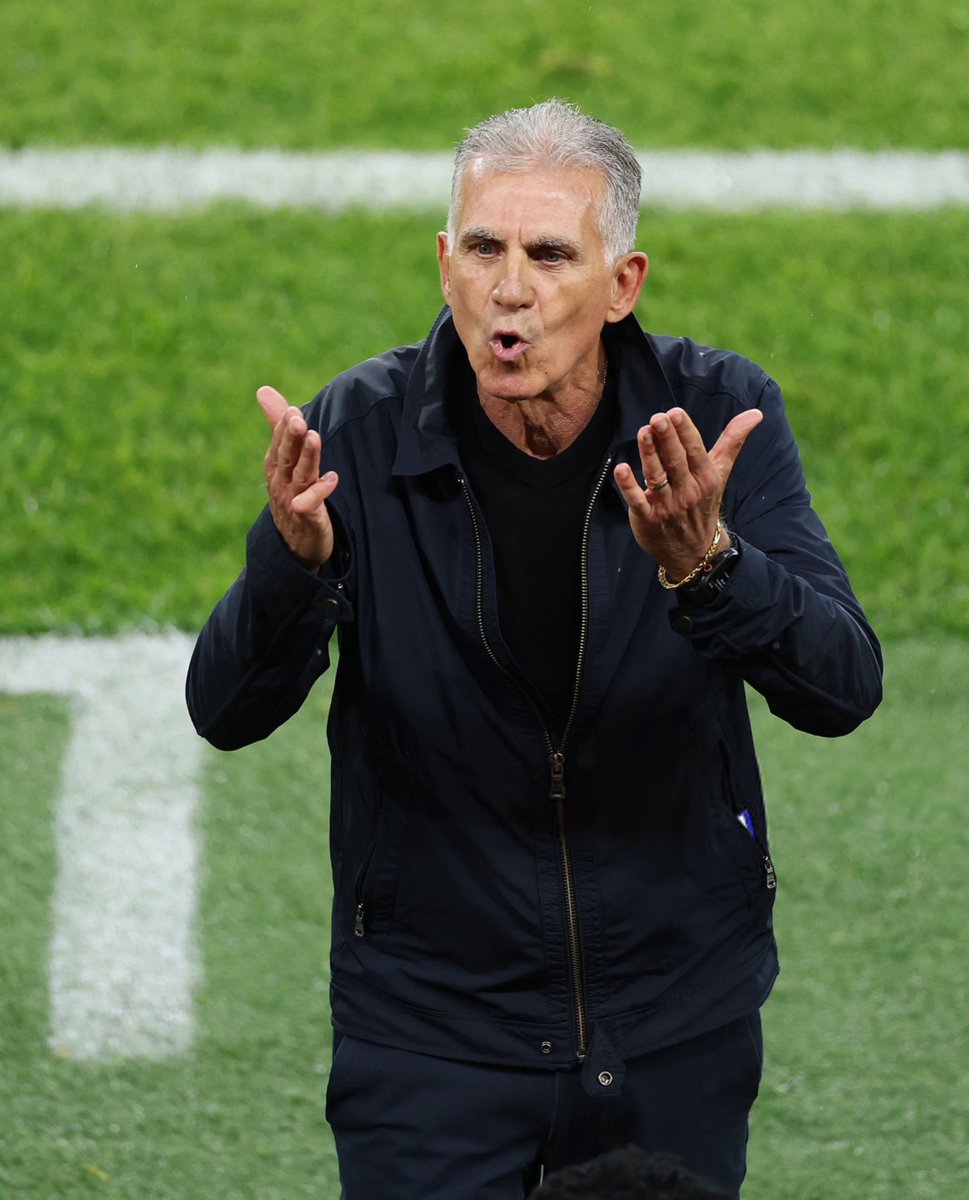
For coaches, there is no such rule at all. FIFA imposes no nationality requirement on a national-team manager. A coach is employed staff, not a citizen-representative of the nation. He signs a contract, draws a salary, and can be sacked like any other employee. He does not represent the country in the way a capped player does; he runs the team that does. So any federation, anywhere, can hire any coach of any nationality it likes, and managers routinely move from one country’s bench to another’s across a career. Carlos Queiroz, who leads Ghana into 2026, has coached Portugal, Iran, Colombia, Egypt and more. Nobody questions his right to do so, because the rules give him every right.
Hold those two facts next to each other and the whole phenomenon comes into focus. The players are, by law, the nation. The coach is, by law, hired help. That single asymmetry is what made decades of foreign coaching not only possible but ordinary.
How Africa ended up with so many foreign coaches
The pattern is old, and its roots run through the twentieth century. When African nations won independence and began building national football teams, the institutions of the game - coaching education, professional leagues, governing structures - were concentrated in Europe. So was the money. Federations that wanted experience and pedigree looked north, often to the very countries that had colonised them, because that is where the credentials and the contacts sat.
The colonial-era footballing ties did not vanish at independence; they simply changed shape. France, in particular, kept dense football connections with its former colonies across West and North Africa, a pipeline of coaches, scouts and club links that ran in both directions. Francophone African sides have leaned on French and French-trained managers for generations. The pattern repeated, federation after federation, until a foreign coach on an African bench was simply what the tournament looked like.
Some of the most celebrated chapters in African football history were written by imported managers. Cameroon’s run to the 1990 World Cup quarter-finals - the first time an African team reached that stage, powered by the 38-year-old Roger Milla - was overseen by Valeri Nepomniachi, a little-known coach from the Soviet Union who spoke neither English nor French and worked through a translator. It was a landmark moment for the continent, and it had a foreigner in the dugout. That image, repeated across decades, hardened into an assumption that the serious work of coaching belonged to outsiders.
The real reasons federations kept hiring Europeans
It would be too easy to file all of this under prejudice and move on. The arguments federations made for hiring foreign coaches were real, and several of them were genuinely pragmatic.
The first was pedigree. European coaches had managed at major tournaments, worked inside elite club structures, and held the top coaching qualifications - the UEFA Pro Licence chief among them - that were harder for African coaches to access. A federation chasing results wanted someone who had already operated at the level it was trying to reach.
The second was neutrality. African football, like football everywhere, is shot through with internal politics: regional rivalries, ethnic balancing, federation factions, the question of which local figure gets the most prestigious job in the country’s sport. A foreigner arrived above all of that. He owed nobody a favour and answered to no faction, which made him, in theory, freer to pick on merit alone. For a divided federation, an outsider could be the safest choice precisely because he was an outsider.
The third was optics and money. A big foreign name brought prestige, reassured sponsors, and signalled ambition. Some appointments were part-funded or encouraged by outside bodies and development arrangements, which tilted the incentives further toward importing talent rather than growing it at home.
Put together, these were not crazy reasons. They were the reasons a cautious federation, under pressure to deliver at a tournament, would reach for a European name. The problem was that the logic was self-reinforcing: as long as the top jobs went to foreigners, local coaches never accumulated the big-tournament record that would have made them obvious hires, so the next job went to a foreigner too.
Ad SpaceIn-Article - 300x250
Advertisement
The turning point
What broke the loop was results. A generation of African coaches finally got the chances, took them, and produced the kind of evidence that arguments alone never could.
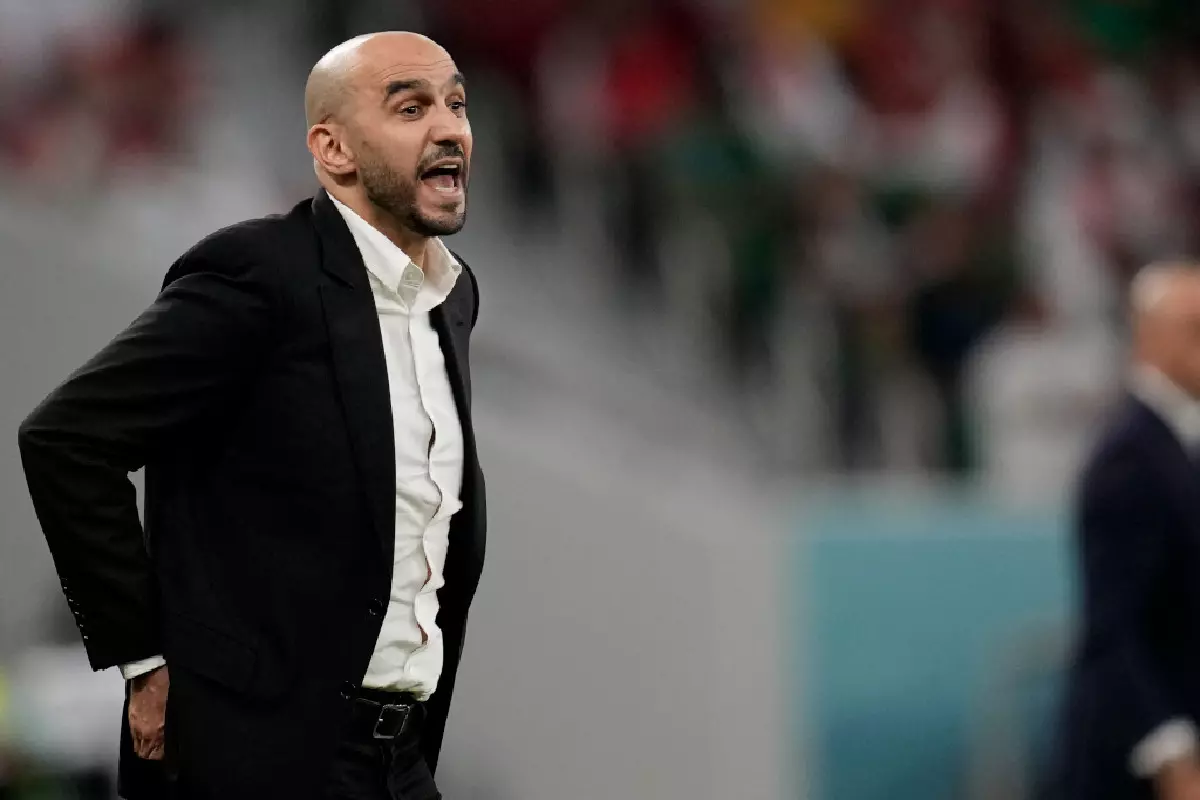
The loudest single moment came in Qatar. At the 2022 World Cup, Walid Regragui took over Morocco just weeks before the tournament and led them to the semi-finals, beating Spain and Portugal along the way. It was the first time any African nation, and any Arab nation, had reached the last four of a World Cup. A Moroccan coach, born in France to Moroccan parents and steeped in the country’s football, had taken an African side further than any European ever had. The achievement was impossible to argue with.
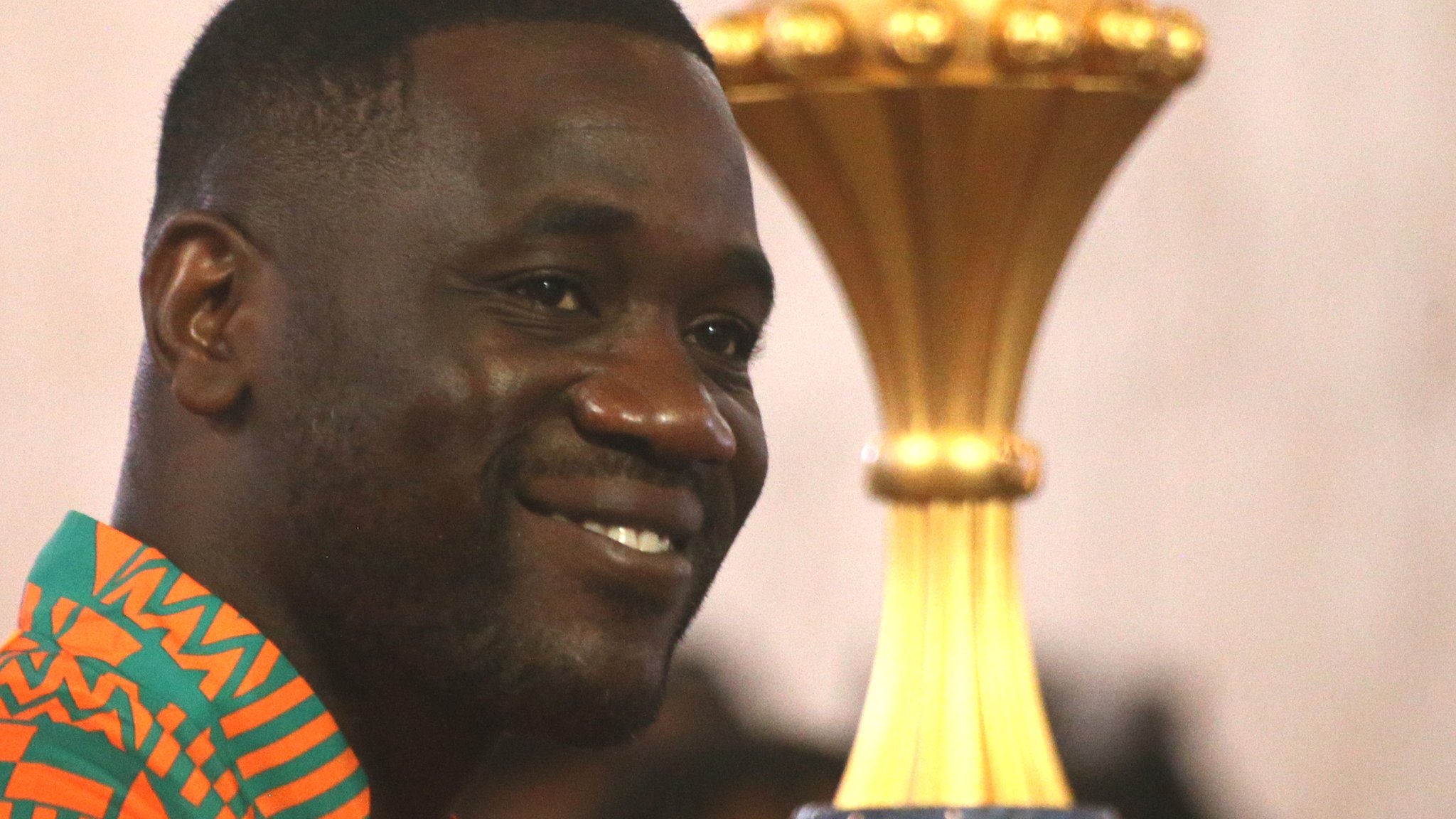
It was not a one-off. Aliou Cisse, who had captained Senegal to the 2002 final and missed the decisive penalty, returned as coach and in February 2022 won Senegal their first-ever Africa Cup of Nations, beating Egypt on penalties in Yaounde. Two years later, Ivory Coast won AFCON 2024 on home soil under Emerse Fae, who had been promoted from assistant to caretaker mid-tournament after the team nearly went out in the group stage, then steered them to the title. A local coach, handed the job in an emergency, delivered the continent’s biggest prize.
The momentum carried into the most recent Africa Cup of Nations, staged in Morocco and concluded in early 2026. All four semi-finalists - Egypt under former star striker Hossam Hassan, Senegal under Pape Thiaw, hosts Morocco, and Nigeria - reached the last four with African-born or African-raised men shaping them. The final itself, a chaotic affair in which Senegal beat Morocco on the pitch before the result was overturned on appeal and awarded to the hosts, was contested by two sides led from within the continent. The argument that African coaches could not handle the biggest occasions had run out of road.
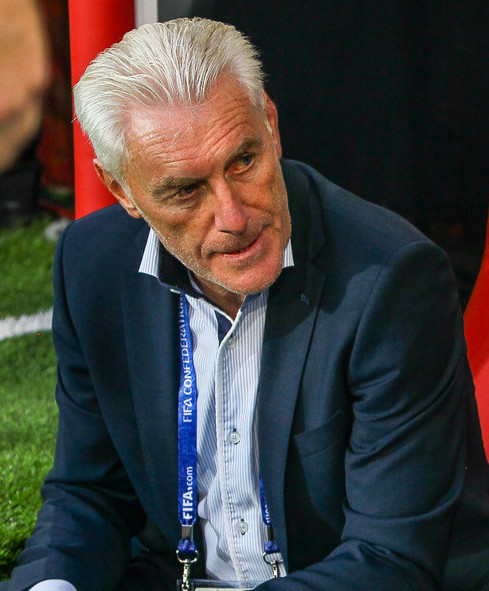
That is the backdrop to the 2026 roster. Of the ten African teams at the World Cup, Senegal (Pape Thiaw), Morocco (Mohamed Ouahbi, who took over after Regragui’s exit following AFCON), Ivory Coast (Emerse Fae), Egypt (Hossam Hassan), Cape Verde (the long-serving Bubista, Pedro Leitao Brito) and Tunisia (the French-Tunisian Sabri Lamouchi, whose dual heritage keeps his classification debated) are led by men of the continent. The clearly foreign appointments are Ghana (Portugal’s Queiroz), Algeria (the Bosnian-Swiss Vladimir Petkovic), South Africa (Belgium’s Hugo Broos) and DR Congo (France’s Sebastien Desabre). For the first time, the homegrown coaches are the majority, not the exception. Cape Verde’s presence sharpens the point: a nation of around half a million people qualified for a World Cup under a local coach who was named African coach of the year.
The case each side makes
It would be dishonest to present this as a settled question with a clear winner, because it is neither. There is a genuine, living debate, and both sides argue in good faith.
The case for foreign coaches has not evaporated just because local ones have won. Two of the four African coaches who made the AFCON 2024 semi-finals were European - Broos with South Africa and Desabre with DR Congo - and both have since delivered World Cup qualification, Broos ending South Africa’s 16-year absence and Desabre taking DR Congo back to the World Cup for the first time since 1974. Experience at the top level is real. The view that an outsider can rise above local politics is real. For some federations, in some moments, hiring a proven foreigner remains a defensible football decision rather than a failure of nerve.
The case for local coaches is equally substantive, and it is not only about pride. A coach who shares language, culture and football upbringing with his squad can manage people in ways an outsider cannot, reading the dressing room and the national mood without a translator or a cultural learning curve. Local coaches are usually cheaper, which matters for federations with thin budgets, and keeping the job at home builds the domestic coaching base instead of importing it season after season. There is also the harder argument, made plainly by many on the continent: that a reflexive reliance on European coaches reflected a colonial-era habit of valuing outside expertise over homegrown talent, and that ending it is a matter of dignity as much as strategy. None of that requires calling the old model racist, and the serious version of the argument does not. It simply asks why the assumption ran so deep for so long, and points out that the results no longer support it.
Both cases are true at once. The honest conclusion is not that foreign coaches were a mistake, but that the reasons to default to them have weakened as African coaching has matured.
The Nigeria question
For Nigerian readers the debate is not abstract, and it stings this time, because the Super Eagles are not at the 2026 World Cup at all. Nigeria finished behind in their qualifying group and went into the African play-offs, where they drew with DR Congo in Rabat in November 2025 and lost the penalty shootout. It is the second World Cup running that one of the continent’s giants has stayed home.
Nigeria’s history captures the whole foreign-versus-local tension in miniature. The Super Eagles have swung between the two for decades, hiring European names and then turning back to homegrown men, often after a fallout or a failure. The German Gernot Rohr ran the team for years before being replaced. The Portuguese Jose Peseiro took Nigeria to the AFCON 2024 final, losing to Ivory Coast, then departed. The former international Finidi George had a short, troubled spell in charge. The current head coach is Eric Chelle, the Malian-French former defender, whose play-off near-miss has sparked exactly the argument this article is about: keep faith with the project, or change direction again. Senior players, including Wilfred Ndidi, have publicly backed continuity. The federation’s instinct to reshuffle after disappointment is the same instinct that produced the merry-go-round in the first place.
Nigeria sits outside the 2026 story, but it is the clearest case study within it. The country has tried both models repeatedly, won AFCON titles under both, and is once again weighing whether stability or a fresh face is the answer. Its absence from the World Cup is a reminder that no coaching philosophy guarantees results, and that the foreign-versus-local question is only ever one part of a much larger problem of structure, planning and luck.
Where it stands now
The technical areas at the 2026 World Cup look the way they do because of a quiet accumulation of evidence: a Senegalese coach lifting a first AFCON, an Ivorian rescuing a tournament from the bench, a Moroccan reaching a World Cup semi-final no African had touched before. The FIFA rule that let federations hire anyone they wanted never changed. What changed is who they now believe is worth hiring.
That belief is not total, and it should not be. Four of the ten teams in this field still trust a foreign hand, and two of them needed exactly that to reach the tournament at all. The continent has not swapped one orthodoxy for another; it has, for the first time, a real choice between two credible options and a record of success under both. A coach from Praia and a coach from Porto stand on opposite touchlines, each with a passport that says something different from the players in front of him, and the rules treat them identically. The difference now is that the man from Praia is no longer the surprise. He is the majority, and he got there by winning.
Ad SpaceIn-Article - 300x250
Advertisement
Share
Get the recap
Loved this story? Get more like it.
Join readers who get our weekly entertainment recap - the stories worth your time, delivered every Friday.
No spam. Unsubscribe anytime. By signing up you agree to our Privacy Policy.