Shakira's Global Impact: How the Colombian Icon Shaped Latin Music Worldwide
Jalen Ross··9 min read
Ad SpaceArticle Top - 728x90
Advertisement
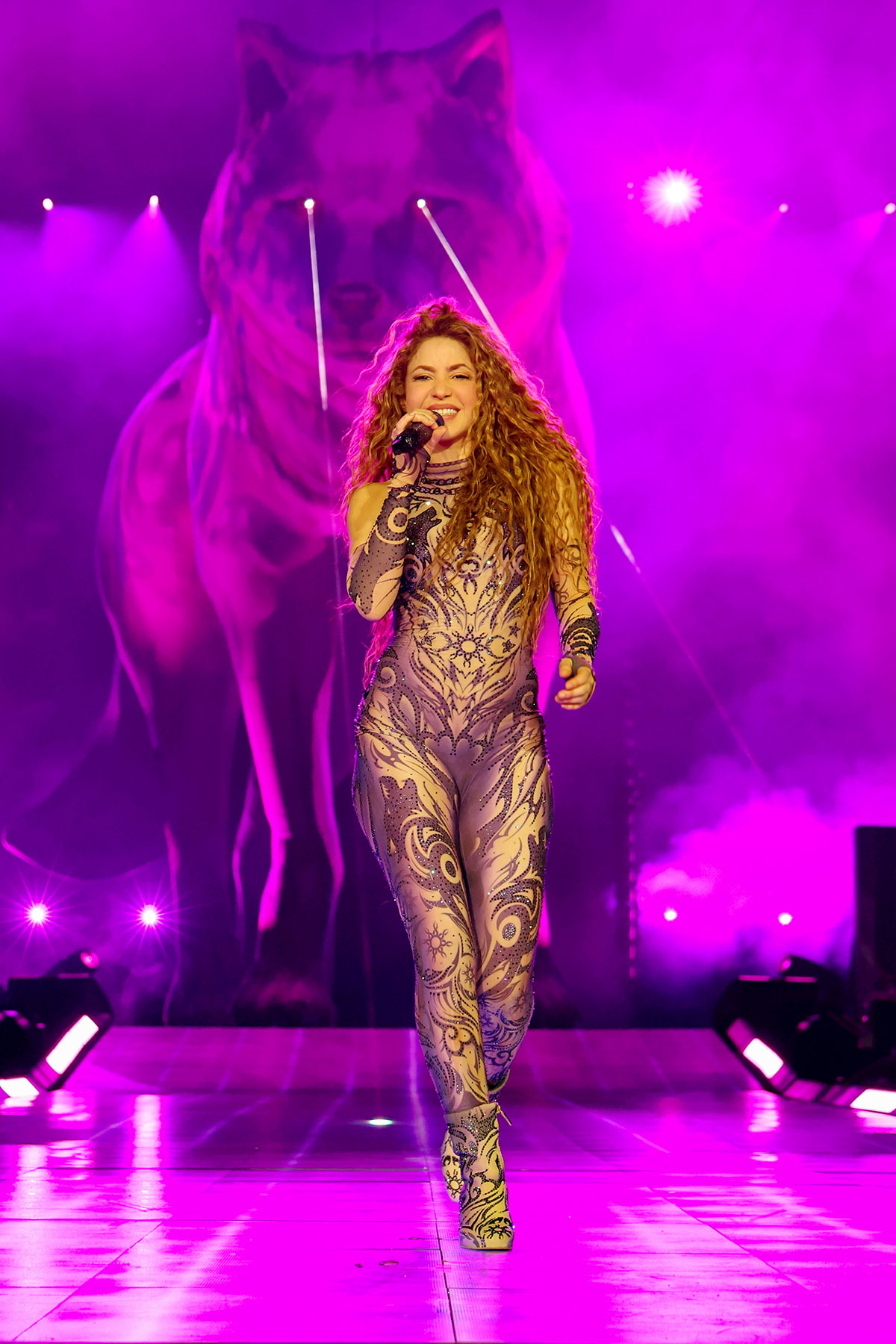
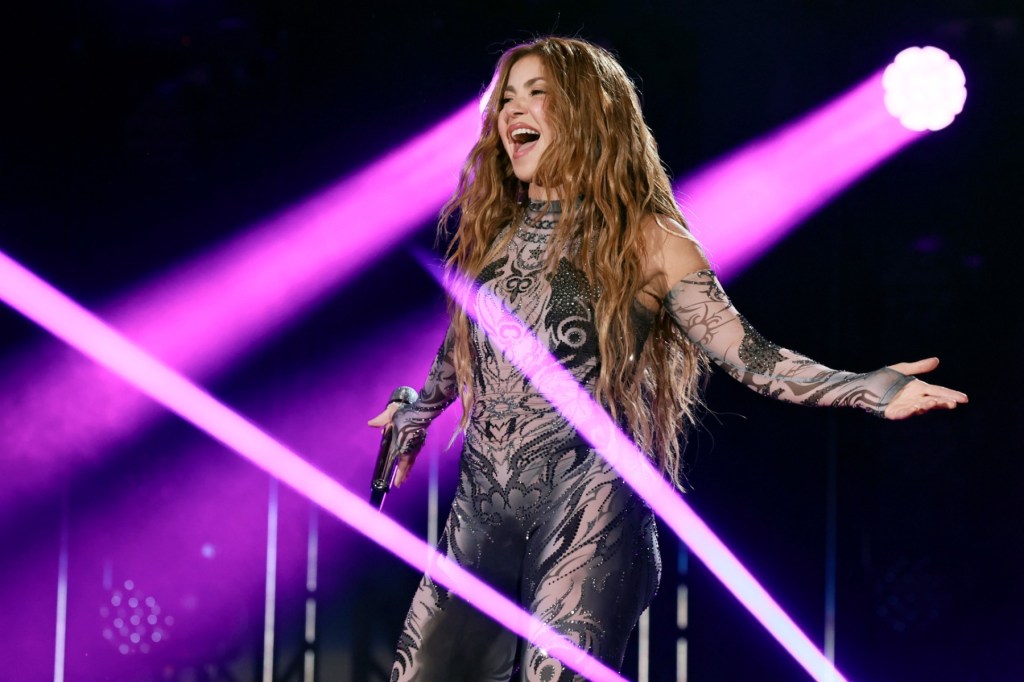
The lights drop over a packed stadium and a woman in a metallic costume rolls her hips in a way that seems to defy the joints they hang from, her bare feet planted on a stage that minutes earlier carried a full marching band. The crowd, a sea of phones and flags spanning a dozen nationalities, roars not at a translation but at a feeling. They do not all speak Spanish. They do not all speak English. What they share is the recognition of a body and a voice that have, over three decades, become a kind of universal currency. That is the trick Shakira has pulled off more completely than almost any artist of her generation: she made a sound born on Colombia’s Caribbean coast feel like it belonged everywhere at once.
For readers across Africa, Europe, the Americas and beyond, her name needs no introduction. Yet the scale of what she built is easy to take for granted precisely because it became so ordinary to hear her on the radio, in the stadium, on the World Cup broadcast. Pulling the story apart reveals something more deliberate than luck: a career engineered, song by song, to carry Latin music into rooms it had never reached.
The Barranquilla prodigy
Shakira Isabel Mebarak Ripoll was born on February 2, 1977, in Barranquilla, a port city on Colombia’s northern Caribbean coast. Her father, William Mebarak Chadid, was the son of Lebanese immigrants who had settled in New York before the family moved to Colombia, and her mother, Nidia Ripoll Torrado, carried Catalan and Colombian roots. That blend mattered to the music that came later. The belly-dance movement audiences would come to know as her signature was not a stage gimmick borrowed from elsewhere; it traced directly to the Lebanese side of her heritage, woven together with the Latin rhythms of the city around her.
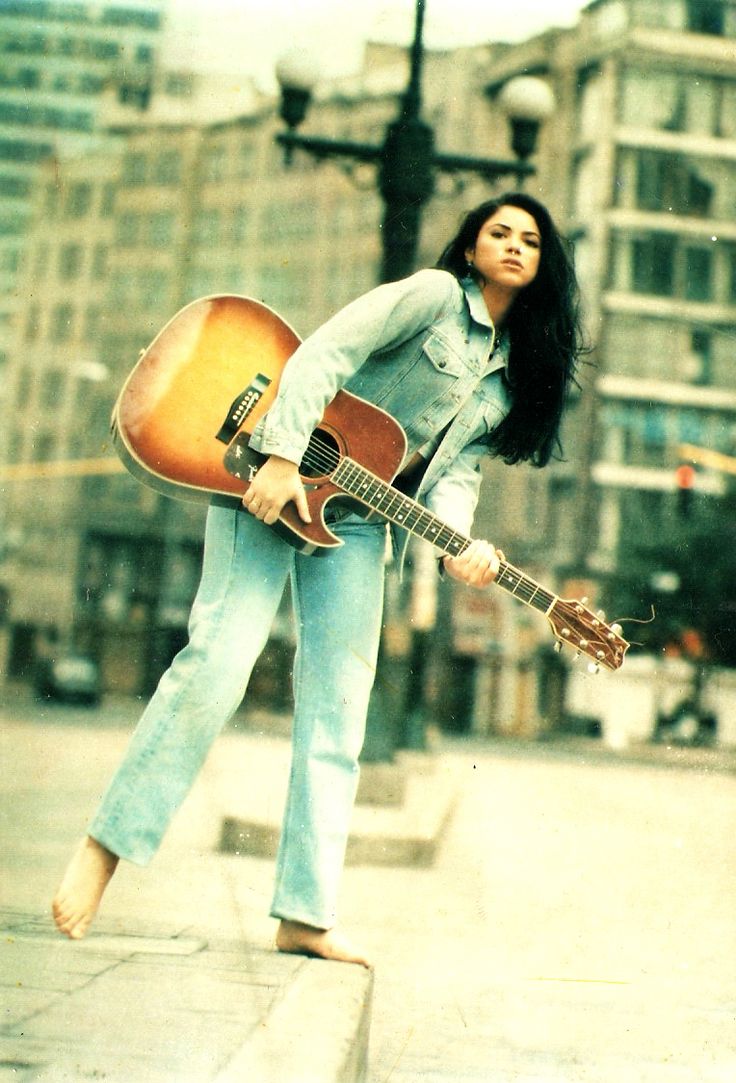
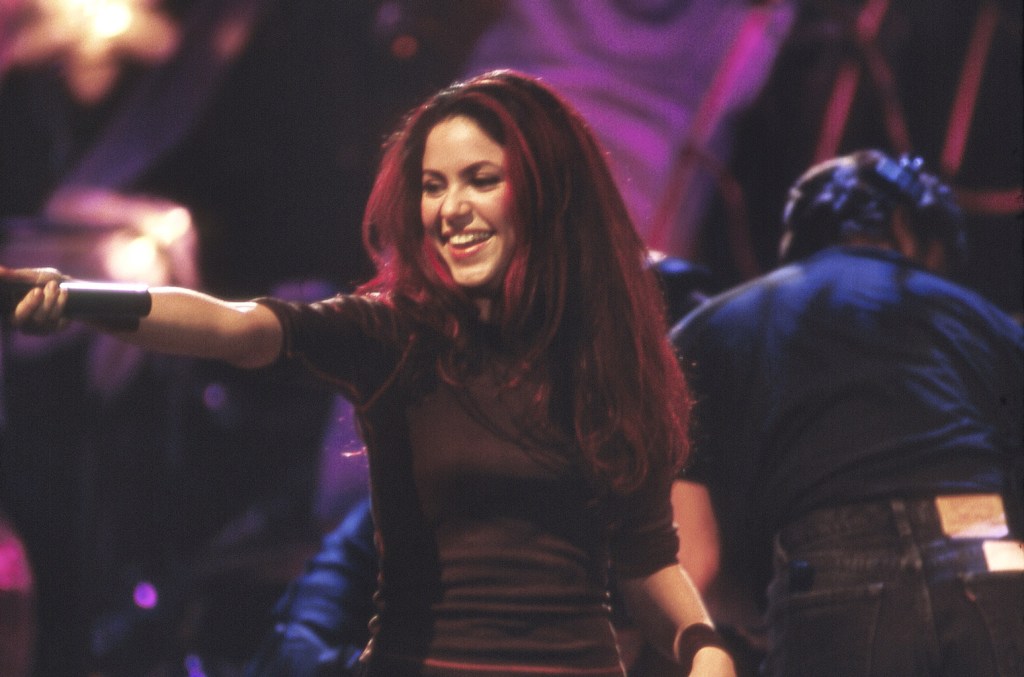
She was a child who wrote before she sang. By four she had composed her first poem, and the poetry hardened into lyrics as she grew. She signed her first recording contract young and released early albums as a teenager, but her real arrival came with “Pies Descalzos” (“Bare Feet”) in 1995. At eighteen, with creative control over her own material, she delivered a record of striking lyrical maturity that turned her into a star across Latin America and Spain. Three years later, “Donde Estan los Ladrones?” (1998) sharpened the formula, folding Latin rock together with pop and the Middle Eastern textures of her ancestry. By the close of the 1990s she was one of the most important young artists in the Spanish-language world, and she had done it without singing a word of English.
The Spanish-language foundation
It is worth sitting with that last point, because it shapes everything that follows. Plenty of Latin artists have crossed into the global mainstream by starting in English and reaching back. Shakira built the opposite way. Her foundation was laid entirely in Spanish, in front of audiences in Bogota, Buenos Aires, Madrid and Mexico City who claimed her as their own before the rest of the world had heard her name.
That sequence gave her a credibility that never eroded. When she later sang in English, no one in the Spanish-speaking world could accuse her of abandoning the language that made her, because she had already proven herself in it across two acclaimed albums. The Spanish foundation was not a phase she outgrew. It was the home base she kept returning to, decade after decade, and the reason her later reinventions landed as evolution rather than betrayal. It also meant her later collaborations with Spanish-language artists never read as a marketing pivot back toward a heritage audience. She had never left it. Across every wave of global pop she rode, the through line stayed constant: an artist who could top English-language charts on a Monday and headline a Spanish-language festival on a Friday without changing who she was.
“Laundry Service” and the English crossover
The pivot came in 2001. Encouraged by Gloria Estefan, who had walked a similar road a generation earlier and believed Shakira had the range to reach the English-language market, she recorded “Laundry Service,” released that November as her first English album. The risk was real. Crossing languages has sunk careers as often as it has launched them, and a misstep could have cost her the Latin audience without guaranteeing a new one.
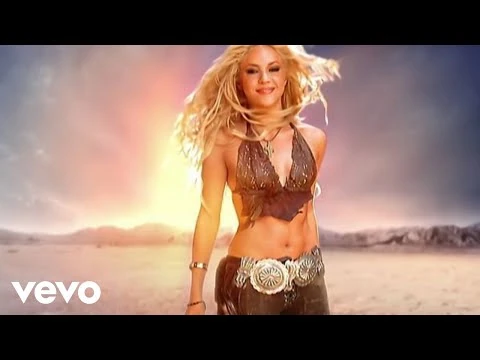
It did not misstep. The lead single, “Whenever, Wherever,” topped charts in country after country across Europe, Australia and Latin America, and gave Shakira her first entry on the United States Billboard Hot 100, where it reached number six. The album debuted at number three on the Billboard 200 and went on to sell in the region of 13 million copies worldwide, a figure that ranks it among the best-selling albums of the early twenty-first century and, by most accounts, the best-selling album by a female Latin artist. What made it work was that she did not erase herself to fit an English template. The accent stayed, the hips stayed, the Andean and Middle Eastern flavors stayed. She brought her whole identity through the door rather than checking it at the threshold, and audiences rewarded the honesty.
“Hips Don’t Lie” and global ubiquity
If “Laundry Service” opened the door, the song that walked the entire world through it arrived in 2006. “Hips Don’t Lie,” her collaboration with Wyclef Jean, became the kind of single that stops belonging to its artist and starts belonging to everyone. It reached number one in roughly 18 countries and gave Shakira her first and only chart-topper on the United States Hot 100. By the figures most often cited, it sold somewhere around 16 million copies globally, placing it among the best-selling singles in history, with hundreds of millions of streams accumulated in the United States alone in the years since.
For a stretch of the mid-2000s the song was simply unavoidable, a fixture at weddings, in clubs and on radio from Lagos to London to Lima. It is the rare hit that functions as cultural shorthand: hum the horn line anywhere on earth and a room fills in the rest. That ubiquity is the clearest measure of what Shakira had achieved. She was no longer a Latin artist who had crossed over. She was a global pop fixture whose Latin roots travelled with her into every market she entered.
Ad SpaceIn-Article - 300x250
Advertisement
“Waka Waka” and the African connection
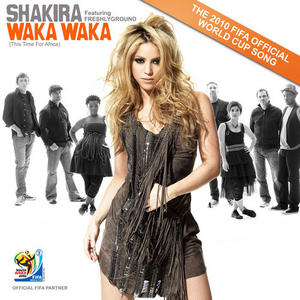
Four years later came the moment that matters most for audiences across Africa. For the 2010 World Cup in South Africa, the first ever staged on the continent, Shakira recorded “Waka Waka (This Time For Africa),” built around a melody drawn from a Cameroonian source and recorded with the South African group Freshlyground. It became the defining anthem of that tournament and one of the most-watched musical performances of its era through its tie to the world’s biggest sporting event.
The choice to anchor a World Cup anthem in African rhythm, performed by a Colombian star, was its own statement about where global pop was heading. “Waka Waka” enjoyed a long chart life across multiple territories and remains one of Shakira’s most recognized recordings, its title chant lodged in collective memory long after the final whistle. For a generation of African listeners, it was a point of pride: the continent’s first World Cup arriving with a soundtrack that put African voices and African rhythm on the largest stage on the planet, carried there by an artist who understood that her own music had always been a conversation between cultures rather than a single tradition. The collaboration with Freshlyground also mattered on its own terms, putting a South African band in front of a global television audience numbering in the hundreds of millions and treating African artistry as a creative partner rather than a backdrop. For listeners in Lagos, Accra, Nairobi and Johannesburg, the song did not feel like a foreign star visiting the continent so much as a recognition that African sound had a rightful place at the very top of the pop world. That message has aged well, arriving years before Afrobeats and amapiano would carry African music onto the same global charts Shakira had spent a decade conquering.
The Pique split and the reinvention era
By the 2010s Shakira had settled into a quieter chapter, partnered with the Spanish footballer Gerard Pique, with whom she had two sons, and balancing music with family. She returned to the global spotlight in a major way in February 2020, sharing the Super Bowl LIV halftime stage in Miami with Jennifer Lopez in a performance that doubled as a celebration of Latin culture before an American audience of more than a hundred million.
Then the personal ground shifted. She and Pique separated in 2022, and rather than retreat, Shakira turned the rupture into her most commercially explosive work in years. In January 2023 she released “Shakira: BZRP Music Sessions, Vol. 53,” a collaboration with the Argentine producer Bizarrap that reframed heartbreak as an anthem of self-possession. The reaction was staggering. The track reached number one in 16 countries and broke 14 Guinness World Records, among them the most-streamed Latin track on Spotify in 24 hours and the fastest Latin track to reach 100 million views on YouTube. What made it remarkable was less the personal subtext than the fact that a 46-year-old woman singing in Spanish could shatter global streaming records in an industry forever chasing the next teenager. She had turned a difficult season into proof that her audience had not aged out with her.
The tour and the late-career resurgence
The reinvention crystallized into an album. In March 2024 Shakira released “Las Mujeres Ya No Lloran” (“Women No Longer Cry”), her twelfth studio record, which became one of the year’s most-streamed releases on arrival and was certified multi-platinum. It later earned her a Grammy for Best Latin Pop Album in February 2025, her fourth career Grammy, adding to a haul that also includes 15 Latin Grammy Awards. Days before that win she returned to the Grammy stage for the first time in 18 years.
The accompanying Las Mujeres Ya No Lloran World Tour, announced from the Coachella stage in April 2024, turned into one of the defining live runs of her career. The first leg opened in Rio de Janeiro in February 2025 and closed in Cordoba, Argentina, in December 2025, with demand so heavy that arena dates were upgraded to stadiums. By early 2026 the tour had grossed well over 400 million US dollars across its opening stretch, setting a Guinness record as the highest-grossing Latin tour of all time, with Shakira also claiming the record for the most stadium dates by a female artist in a single city through a 12-show run in Mexico City. For an artist nearly three decades into her career, it was less a victory lap than a reassertion of dominance.
What her blueprint did for Latin music’s globalization
Step back from the individual milestones and a pattern emerges that outlasts any single song. Shakira proved, earlier and more completely than most, that a Spanish-language artist did not have to choose between cultural authenticity and global scale. She has sold somewhere in the region of 80 million to 100 million records by the most commonly cited estimates, figures that place her among the best-selling Latin artists of all time and among the best-selling female artists in any language. Reports estimate her personal fortune in the hundreds of millions of dollars, though such figures are approximations rather than audited fact.
The numbers, though, are downstream of the deeper achievement. When the current wave of Latin and Spanish-language music began saturating global charts, much of the path had already been cleared. An artist could sing in Spanish, draw on regional rhythm, refuse to flatten an accent for an English-speaking audience, and still headline stadiums on every continent. Shakira demonstrated that this was possible at the highest commercial level, and she did it without a permanent base in English-language pop to fall back on. She remained, at her core, a Barranquilla songwriter who happened to conquer the world on her own terms.
That is the through line from the teenager with “Pies Descalzos” to the record-breaking headliner of 2025. The hips, the heritage, the languages folding into one another, the World Cup anthem that handed Africa its moment, the breakup song that outstreamed artists half her age. Each was a chapter in a single long argument that Latin music belonged at the center of global culture, not on its margins. The woman planting her bare feet on that stadium stage was not asking permission. She had already won the case.
Ad SpaceIn-Article - 300x250
Advertisement
Share
Get the recap
Loved this story? Get more like it.
Join readers who get our weekly entertainment recap - the stories worth your time, delivered every Friday.
No spam. Unsubscribe anytime. By signing up you agree to our Privacy Policy.