Somewhere on a server farm in Singapore, a counter ticks past one million video creations for a 14-second snippet of an Afrobeats hook. The song trends on the For You Page. Brands start sliding into the artist’s manager’s DMs. A Lagos choreographer wakes up to her dance move being copied by teenagers in Manila. And somewhere in the middle of all this celebration, a payment ledger is being updated, but the line items on that ledger look almost nothing like what most people assume.
The fantasy version of a viral TikTok moment goes like this: song blows up, artist gets rich, dance creator gets a Mercedes, everyone wins. The actual version is messier, slower, and routed through more middlemen than a Lekki real estate deal. Understanding who actually gets paid when an Afrobeats track explodes on TikTok requires unpacking a payment system that was retrofitted onto a platform that was never designed to pay musicians in the first place.
How TikTok Actually Pays for Music
Forget per-stream royalties. That model belongs to Spotify and Apple Music, where each play triggers a tiny payment calculated against a pro-rata share of subscription revenue, and where an artist can at least reconcile a statement against a play count. TikTok does not work that way and never has. It operates on what insiders call the Sound Royalty Pool, a structure that decouples what an individual song earns from how many times an individual song was played. That single design decision explains almost every strange outcome in this article, including why a record can dominate a summer on the platform and generate a royalty statement its own manager is embarrassed to open.
Every quarter, TikTok negotiates a lump sum with the major labels and major publishers, then a separate set of lump sums with distributors and indie collectives. That pool reportedly exceeds one billion dollars annually across all rights holders globally, though TikTok has never published an audited figure. The money gets divided based on share-of-use, which is essentially how often a sound was used in videos during that period, weighted against the total use of all music on the platform.
So if a record like Asake’s “Lonely at the Top” accounted for three percent of all music-using videos created during a quarter, its rights holders would collectively claim something close to three percent of the music pool for that period. The math sounds clean when it is written in a sentence. It is not clean in practice, because the denominator is enormous and invisible, the numerator depends on TikTok’s own definition of a legitimate use, and neither number is disclosed to the people being paid from them. Rights holders receive an allocation and a summary. They do not receive the working.
The Per-Use Math Nobody Wants to Show You
Run the numbers on a viral Afrobeats track. A song racks up one million video creations on TikTok in a month. Sounds enormous. Now divide the music pool by total monthly uses across all songs on the platform. Distributors who reconcile these statements describe a per-use payout to rights holders somewhere between $0.00001 and $0.001, and the figure moves with the quarter and the territory. TikTok does not publish it, and no artist can audit it independently.
That is not a typo. The high end of that range puts one million creations at one thousand dollars. The low end puts it at ten dollars. Most viral Afrobeats moments land closer to the middle, generating a few hundred dollars in direct TikTok royalties before that money even reaches the artist.
The reason artists tolerate this is not the TikTok money. It is everything that happens after the TikTok money. A record that trends becomes a record that gets playlisted, a record that gets playlisted becomes a booking, a booking becomes a festival slot, and a festival slot becomes the leverage to negotiate the endorsement that actually pays for the year. Every one of those steps is worth more than the royalty statement, and every one of them depends on the royalty statement existing in the first place. Artists are not being paid for the virality. They are being paid for what the virality proves.
The Rights Holder Stack and Why You Are Probably Not One
When TikTok writes a check labeled “rights holder,” it is not addressing the artist personally. The rights holder ecosystem on a single Afrobeats record includes the label that owns the master recording, the publisher that controls the composition, the songwriter or songwriters credited on the publishing splits, the producer who often holds a piece of either side, and the distributor that handles the digital pipework.
For a typical Afrobeats release on a major label like Mavin or Empire, the master royalty payment from TikTok flows first to the label, which then takes its share before paying the artist. On a standard major-label deal, that artist share might be anywhere from fifteen to fifty percent of net receipts depending on whether the deal is a traditional contract or a newer profit-share arrangement.
The publishing side runs on a separate track. Performance rights organizations like ASCAP, BMI, and PRS handle the public-performance share of TikTok plays. After years of songwriters being almost entirely cut out of the TikTok economy, the post-2023 round of negotiations finally brought composition rights into the pool. The catch is that the songwriter’s share is typically much smaller than the master share, and on collaborative Afrobeats records with three to seven co-writers, that already-small slice gets carved into even smaller pieces.
Where Distributors Take Their Cut
Empire, Sony’s The Orchard, Believe, ONErpm, and UnitedMasters all act as the plumbing that moves Afrobeats music from artist hard drives to platforms like TikTok. Their cut is usually ten to fifteen percent of the artist’s share of digital revenue. That is on top of whatever the label takes if the artist is not independent.
An indie Afrobeats artist distributing through ONErpm might keep eighty-five percent of what TikTok pays out for their music. An artist signed to a major label distributing through The Orchard might see twelve percent. Same viral moment. Wildly different bank deposits.
The Choreographer Problem
TikTok pays rights holders. TikTok does not pay choreographers. This is the open wound at the centre of every Afrobeats dance challenge conversation, and it is structural rather than accidental. Copyright recognises a recording and a composition. It does not, in any practical sense, recognise the eight-count that made ten million people press record. A dance is extraordinarily difficult to protect and effectively impossible to track at platform scale, so the value it creates flows past the person who created it and lands on the sound they chose to use.
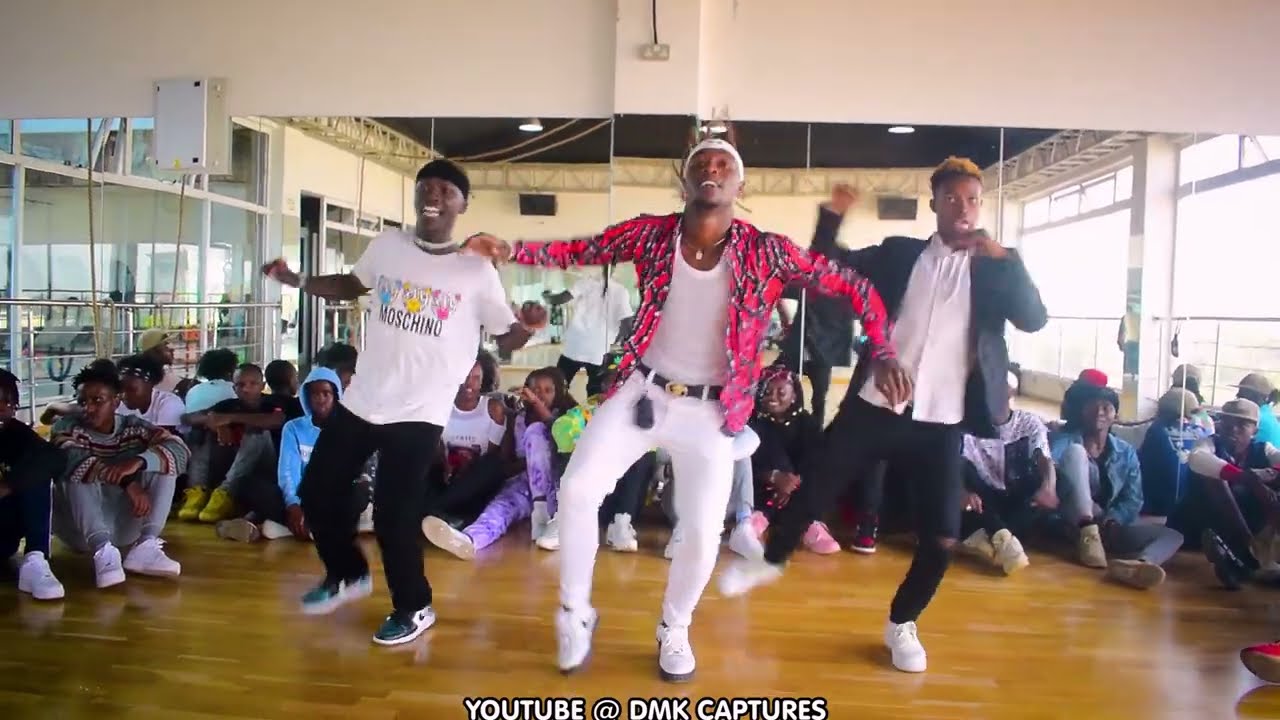
Pinkie Debbie is among the Nigerian choreographers whose routines have become the visual identity of an Afrobeats record’s viral run, and the platform itself paid nothing for that work. This is not an oversight in one case. TikTok has no mechanism at all to identify, credit, or compensate the originator of a dance move that drives millions of creations, because the sound is the only rights object the system recognises. What a choreographer in that position does earn comes entirely from adjacent monetisation: brand partnerships that arrive because the routine is recognisable, music video bookings from artists who want the same effect on their own record, masterclass demand from dancers trying to learn the move, and the kind of name recognition that lets her quote a proper rate for the next job instead of a favour rate.
This is the unofficial choreographer compensation model across Afrobeats, and every working dancer in Lagos understands it perfectly well. The viral moment is the loss leader. The income comes from what the viral moment makes possible, which means the smart operators in this lane treat a challenge less as a payday than as a portfolio piece, and move fast to convert attention into signed work before the trend cycles out from under them.
What the Rema Calm Down Trajectory Actually Looked Like
Rema’s “Calm Down” became a global TikTok phenomenon, with the dance routine pulling in creations across continents. The choreographers who originated and popularized the routine did not get a TikTok royalty stream. What they got was tour booking interest, paid appearances at international festivals where “Calm Down” was the closing number, and the kind of credibility that turns a dance video into a sustainable career.
The same pattern played out with CKay’s “Love Nwantiti.” The song’s TikTok ascent generated minimal direct royalty income in its early phase, partly because CKay’s original deal had not been structured for a global TikTok-driven hit. After his label renegotiated terms, the back-end finally started flowing more sensibly. By that point, however, the viral peak had already passed, and most of the real money was being made on Spotify and Apple Music, where the platform’s algorithmic recommendations had carried the song into recommendation playlists worldwide.
The Discovery-to-Stream Pipeline Where the Real Money Lives
Here is the line every Afrobeats manager has memorised: TikTok is the trailer, Spotify is the movie. It is a cliche because it is accurate. The money that eventually justifies the whole exercise does not sit on the platform where the moment happened, and a manager who spends the viral window celebrating rather than pushing listeners toward the full record has wasted the only asset the moment produced.
A reasonable industry estimate puts the conversion ratio at roughly one million TikTok creations driving five to ten million Spotify streams over the following weeks, assuming the song has the structural elements that translate beyond a 15-second hook. At the blended Spotify payout rate commonly cited across the industry, somewhere in the region of $0.003 to $0.005 per stream, that converts to a figure in the low tens of thousands of dollars in streaming royalties before any split is applied.
After the label takes its share, after the distributor takes its percentage, after publishing carves out its slice, the artist on a standard major deal might net somewhere between two thousand and ten thousand dollars from that conversion pipeline. The independent artist on a clean ONErpm or DistroKid setup might net twenty thousand or more from the same trajectory.