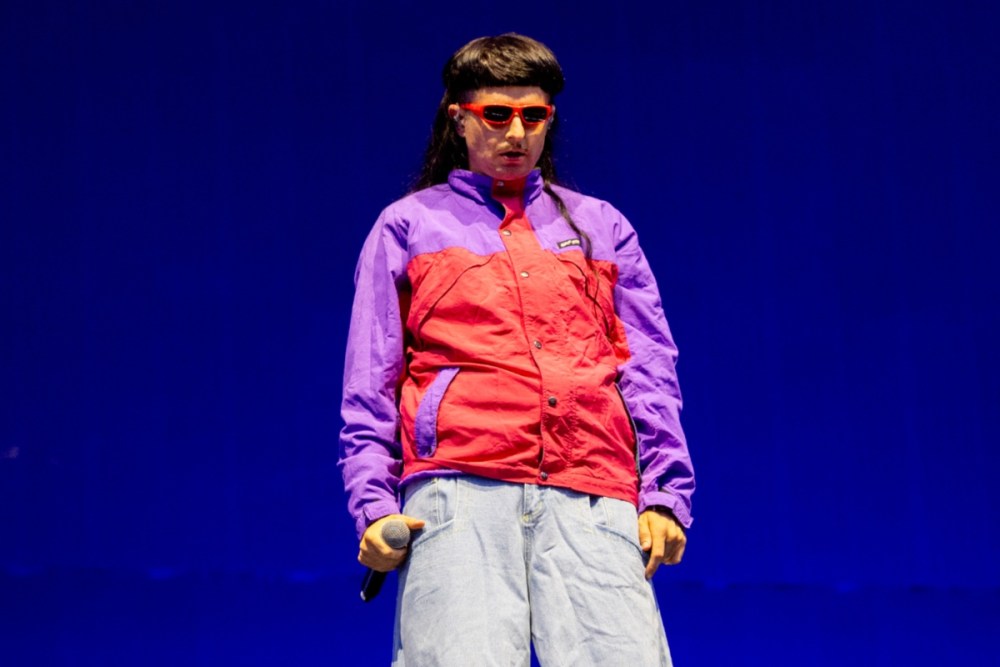

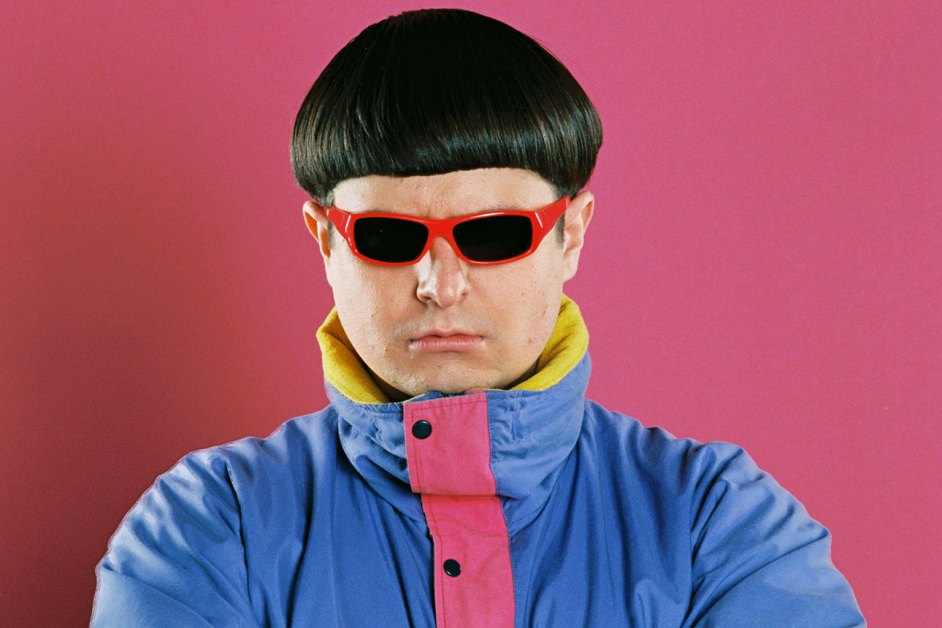
Few performers built a career out of looking foolish on purpose, and fewer still made it mean something. Oliver Tree did both. The bowl haircut sat on his head like a helmet he could not take off, the trousers ballooned three sizes too wide, and somewhere underneath the costume of the world’s least cool man was one of the sharpest satirists pop music produced in the last decade. He spent years convincing the internet he was a joke. The joke, it turned out, was on anyone who believed him.
Oliver Tree Nickell died on June 14, 2026, at the age of 32, in a midair collision between two helicopters over Rio de Janeiro, Brazil. The death was confirmed by Rio de Janeiro’s Civil Police and reported by the Washington Post, NBC News, Variety, The Hollywood Reporter, Deadline, Billboard and Rolling Stone among others. All six people across the two aircraft were killed. There is nothing ambiguous about this loss, no second act waiting in the wings, and the cruelty of that finality is not lost on anyone who followed a man who spent his career staging exits he never meant.
What happened in Rio
According to Rio de Janeiro’s Civil Police, two helicopters collided in mid-air on the morning of Sunday, June 14, 2026, over Recreio dos Bandeirantes, a beach community in the western zone of the city several miles from downtown. One aircraft was carrying five people, the other only its pilot. The collision sent at least one helicopter down into the parking lot of an electric vehicle dealership, where the impact triggered a fire that firefighters said engulfed around 20 cars.
The Civil Police identified the six victims as Oliver Tree, passengers Lucas Brito Chaves and Lucas Vignale, Argentine content creator Gaspar Prim, who was known online as Gaspi, and the two pilots, Alexandre Souza and Charles Marsillac. Prim was 23. Brazilian authorities opened an investigation into the cause of the collision, and as of the earliest reporting that inquiry was ongoing, with officials still working through identification and the sequence of events that put two helicopters in the same patch of sky at the same moment.
Tree was in Brazil as part of his touring schedule. The trek, billed as The World’s First World Tour, had opened in Mexico City on May 30 and passed through Sao Paulo on June 6. He died days after that show, far from the Santa Cruz coastline where the whole strange story began.
The kid from the circus
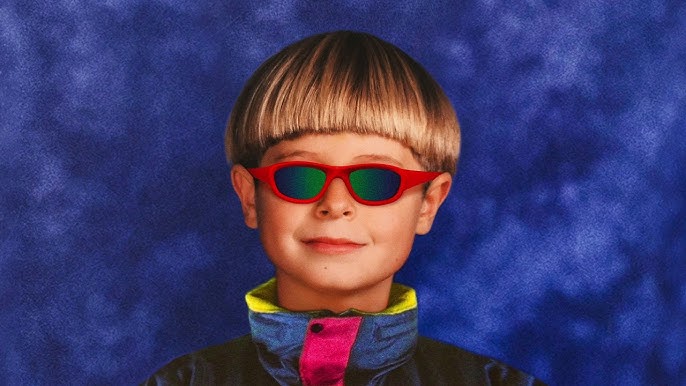
Oliver Tree Nickell was born on June 29, 1993, in Santa Cruz, California. The origin reads like something he might have invented for a music video, except it was true: both of his parents had worked in the circus before the family settled in Santa Cruz when he was around 12. A childhood adjacent to clowns, spectacle and physical comedy is a useful thing to know about a man who would later make a career out of looking ridiculous with total commitment.
He found his first real audience on Vine in 2016, the six-second video platform that minted a generation of absurdist internet comedians. His vehicle was an alter ego named Turbo, a character defined by oversized, garishly colorful 1980s outfits and that unmistakable bowl cut. Turbo was not a costume Tree wore so much as a thesis he performed. The styling was deliberately uncool in an era when everyone online was straining to look effortless and expensive. He went the other direction on purpose, and the contrast is what made people stop scrolling. Where most internet performers chased a single viral moment and then vanished, he treated the platform as a laboratory, testing how far a deliberately exaggerated character could be pushed before the audience stopped laughing and started paying attention to the songs.
That same year, the single “When I’m Down” gave the bit a soundtrack and proved the music could stand on its own. The traction it generated led to a deal with Atlantic Records the following year, and the man in the clown clothes suddenly had a major label betting on him.
The persona as the whole point

It would be easy to file Oliver Tree under novelty, and plenty of people did, which is precisely the misread he kept inviting and then puncturing. The bowl cut, the enormous trousers, the recurring bits involving scooters, the fictional alter egos, all of it functioned as a running commentary on internet culture and the machinery of music-industry hype. He was performing the absurdity of virality while being virally absurd. The packaging was the message.
The scooter became a signature. In May 2020 he set a Guinness World Record for the world’s largest kick scooter, a stunt that sat perfectly at the intersection of childlike glee and pointed satire about how online fame rewards the loud and the literal. He staged feuds and pseudo-rivalries, invented characters, and built elaborate narratives around his own supposed retirements, each one a small piece of theater about an industry that treats artists as content to be cycled and discarded.
His music videos carried the same sensibility. They were lavish, committed and frequently ridiculous, shot with the budget and ambition of someone making serious art and the sensibility of someone refusing to take the seriousness seriously. That tension, between real craft and constant self-mockery, is the thing that elevated him above the meme economy that birthed him. He understood exactly what he was doing. The persona was armor and argument at once.
The alter egos multiplied as the project grew, each one a different angle on the same satire. The bits were never just for shock value; they were a way of holding a mirror to an industry and an internet that reward spectacle over substance, then daring both to admit how absurd the whole arrangement had become. Audiences who came for the spectacle stayed because they slowly realized the man underneath the bowl cut was several steps ahead of the joke. He was not being laughed at. He was conducting the laughter.
The music underneath the costume

For all the noise around the character, the discography is the reason any of this lasted. Tree released four studio albums through Atlantic over six years, and they were restless in a way that mirrored his refusal to sit still visually. His debut, “Ugly Is Beautiful,” arrived on July 17, 2020, after one of the more theatrical release sagas in recent memory. Roughly a day before it was due, Tree announced the record was “officially canceled due to COVID-19,” a piece of misdirection so on-brand that fans could not be sure whether to believe him. The album came out anyway, its title doubling as a personal manifesto.