Nigeria FreeTV: What the New Platform Means for Nollywood Distribution and Viewers Across Africa
Movies

Nigeria FreeTV: What the New Platform Means for Nollywood Distribution and Viewers Across Africa

Tristan MeloTristan Melo··11 min read
Advertisement

More than seventeen years and roughly 80 billion naira went into Nigeria’s digital television transition before a single nationwide free platform existed, and even then the digital signal had reached only eight of the country’s thirty-six states. That gap between money spent and homes reached is the backdrop against which the Federal Government launched FreeTV on June 17, 2026, a free-to-air platform promising over 100 channels with no monthly subscription. For a country where Nollywood and Afrobeats command global attention while television lagged behind, the launch is less a gadget story than a question about who gets to watch, once the price of entry drops to zero.

The announcement matters for content owners, advertisers, and the tens of millions of households priced out of pay-TV. It also arrives wrapped in a dispute over whether what launched is even the digital switchover Nigeria committed to a decade ago. Both things can be true at once, and both shape where Nollywood content travels next.

The numbers behind Nigeria’s television gap
Nigeria FreeTV - The numbers behind Nigeria's television gap

Television access in Nigeria has long been a story of two markets. At the top sits pay-TV, dominated by MultiChoice’s DStv and its cheaper sibling GOtv. As of 2026, a DStv Premium package runs around 44,500 naira a month, Compact roughly 19,000 naira, and the entry Padi tier near 4,400 naira. GOtv spans 16,800 naira for Supa Plus down to 1,900 naira for the Smallie bouquet. In an economy squeezed by inflation, a weaker naira, and higher fuel costs, those figures have pushed households away from the screen rather than toward it.

The drift shows in the count. MultiChoice’s Nigerian base reportedly fell from roughly 23 million to about 19.3 million in under two years, tied to repeated price increases and worsened after France’s Canal+ completed its takeover of MultiChoice in 2025. Below that shrinking pay-TV layer sit millions of Nigerians with no formal television service at all, many now on YouTube, informal streaming links, and Telegram groups.

FreeTV targets that bottom layer and the households leaking out of the top one. The pitch is simple arithmetic: a one-time hardware cost for more than 100 channels, set against a pay-TV bill that recurs every month. Whether the real-world cost is as low as advertised is where the debate begins, but the headline number is what drives the trend.

What Nigeria FreeTV actually is
Nigeria FreeTV - What Nigeria FreeTV actually is

FreeTV is a free-to-air digital television platform managed by the National Broadcasting Commission (NBC) with Nigerian Communications Satellite Limited (NIGCOMSAT). The brand is not new: the NBC first introduced the FreeTV name during a 2017 pilot in Jos, Plateau State, a salvage effort after Nigeria missed its original digital deadline. What launched on June 17, 2026, is the nationwide rollout of that concept, built on a different delivery method than originally planned.

The platform carries national, regional, and state channels spanning news, sports, movies, music, children’s programming, and educational content, alongside dedicated channels broadcasting in Yoruba, Hausa, and Igbo. It is designed to be reached three ways: through satellite transmission, terrestrial broadcasting, and a dedicated FreeTV mobile application, a combination intended to cover urban centres, towns, and rural communities at once.

On hardware, the government says most viewers will not need a new television. Existing sets work through compatible DVB-T2 or DVB-S2 decoders, and households that already own compatible free-to-air decoders may need no extra equipment. Information Minister Mohammed Idris noted that earlier set-top boxes were encrypted and expensive, and that the government has removed those subscription costs to make the service free at the point of use. The phrase the NBC keeps returning to is “free-to-air”: once the box is in place and the signal reaches the home, the channels carry no recurring fee.

The backstory: a switchover two decades in the making
Nigeria FreeTV - The backstory: a switchover two decades in the making

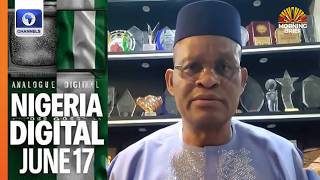
The frustration around FreeTV only makes sense against its history. Nigeria’s digital migration began roughly two decades ago. In 2006, the country joined other International Telecommunication Union member states in signing the GE06 Agreement, committing to phase out analogue broadcasting by June 17, 2015. A 2012 White Paper, approved and gazetted by the Federal Executive Council, set out a clear structure: independent signal distributors would handle transmission, local manufacturers would build the set-top boxes, and the NBC would regulate the system rather than run it.

Nigeria missed that 2015 ITU target amid funding shortfalls and infrastructure delays, trailing several neighbours that finished their transitions years earlier. The NBC’s Director-General, Charles Ebuebu, disclosed in April that around 80 billion naira had been spent across some 17 years, yet digital terrestrial signals had reached only eight states. Two decades of effort had produced patchy coverage and a deadline long gone.

The 2026 breakthrough came from changing the delivery method rather than pouring more money into the old one. Instead of relying solely on slow, costly digital terrestrial television towers, the NBC worked with NIGCOMSAT to adopt a satellite-first approach intended to blanket the country quickly. The full analogue switch-off, the moment old analogue signals are finally turned off, is now targeted for the end of 2028, specifically December 31, 2028.

What just launched, and the dispute it triggered
Nigeria FreeTV - What just launched, and the dispute it triggered

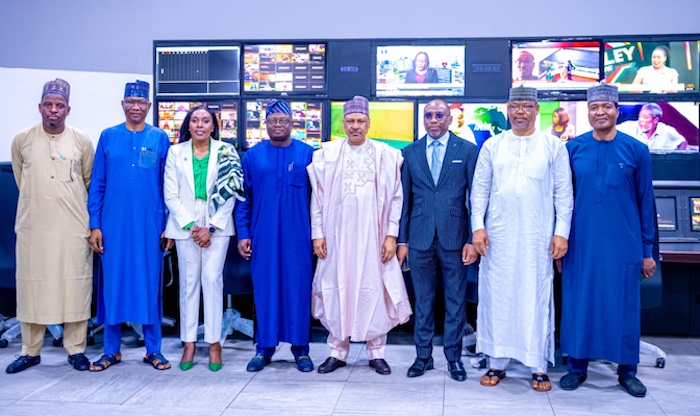
The June 17 launch took place in Abuja at NIGCOMSAT headquarters. Information Minister Mohammed Idris led the event, joined by Communications, Innovation and Digital Economy Minister Bosun Tijani, NBC Director-General Charles Ebuebu, and NIGCOMSAT chief executive Jane Egerton-Idehen. Idris called it a major milestone in Nigeria’s broadcasting history and stressed that the model is hybrid. “Digital terrestrial television remains an integral component of Nigeria’s digital broadcasting framework,” he said, adding that the approach combines DTT, direct-to-home satellite delivery, and app-based platforms rather than replacing terrestrial broadcasting.

Not everyone accepts that framing. Before the launch, the Broadcasting Organisations of Nigeria (BON), the umbrella body for the country’s public and private TV and radio stations, challenged the rollout. In a letter dated May 19, BON argued that what was launching is not a digital switchover by legal definition but a “direct-to-home satellite packaging business” that sidesteps the country’s gazetted roadmap. The Association of Licensed Set-Top Box Manufacturers of Nigeria raised parallel concerns, both groups calling the satellite pivot a “unilateral migration.”

The objection is partly technical, partly structural. The 2012 framework defined digital migration strictly as moving from analogue terrestrial to digital terrestrial television, and a key prize was the “digital dividend,” the premium 700MHz and 800MHz spectrum analogue TV occupies. Clearing those ground frequencies would let the government auction the spectrum to telecom operators for 4G and 5G. A satellite-based direct-to-home platform does not clear them, so that dividend is deferred. BON also contends that by bundling channels under its own branded platform, the NBC risks acting as a content aggregator, a commercial role separate from its job as regulator.

The NBC has pushed back, casting itself as a “market facilitator” like the UK’s Ofcom, which helped create Freeview, and France’s regulator, which backed the TNT network. “Insisting on DTT-only delivery in 2026, when 5G is rolling out, streaming is everywhere, and satellite dishes cost less than a smartphone, ignores current trends,” the Commission argued. For viewers, the takeaway is that the platform is live, even as the question of whether it satisfies the letter of the law stays contested.

The free model versus pay-TV
Nigeria FreeTV - The free model versus pay-TV

The promise that makes FreeTV a story is the absence of a recurring bill. Pay-TV’s economics rest on the monthly subscription; FreeTV’s rest on a one-time setup and ongoing free-to-air access. For a household weighing a 19,000 naira monthly Compact bill against a single hardware purchase, the long-run math is hard to ignore.
Advertisement

The catch is what “setup” involves. A satellite-delivered platform is not as cheap to install as a standard terrestrial box. Where an ordinary digital terrestrial setup works with a cheap indoor antenna, a direct-to-home satellite service typically requires a dish, a specific DTH decoder, and often a technician to mount and align it. Remi Ogunpitan, founder of IBST Media Limited, argued on LinkedIn that removing the monthly fee does not erase the other costs low-income families face: decoders, dishes, installation, electricity, and mobile data for the app. For homes with unreliable power or no spare cash for a decoder, “available” and “accessible” are not the same thing.

So the comparison is not free versus paid in the abstract. It is a recurring monthly cost versus a front-loaded hardware cost plus whatever power and connectivity a household can sustain. For many drifting away from DStv and GOtv, that trade still tilts decisively toward FreeTV. For the poorest and most remote, it may stay out of reach until decoder prices and power supply catch up.

What it means for Nollywood distribution

Nigeria FreeTV - What it means for Nollywood distribution

For Nollywood, distribution has always been the choke point. The industry produces prolifically, but the channels carrying its work to mass domestic audiences have historically sat behind a pay-TV paywall or scattered across informal markets and streaming platforms. A free-to-air platform reaching over 100 channels nationwide enlarges the addressable audience, and audience size is the currency content economics run on.

The NBC’s own leadership framed the launch in exactly these terms. “Nigeria has gotten to a place where Nollywood has hit a success story on its own, and our music has done the same,” Ebuebu said at the launch. “Television is lagging behind, and we have to solve the problem.” The implication is that FreeTV is meant to close the gap between Nigeria’s globally celebrated film and music output and a television distribution layer that never matched it.

To pull broadcasters and content onto the platform, the NBC is offering an 18-month free carriage window, letting stations migrate their programming to FreeTV without paying for distribution during that period. The structure also lowers the barrier to launching a channel: under a hybrid model, a station can focus on producing content and hand transmission to licensed signal distributors rather than build and maintain its own towers, which makes specialised channels, including movie and indigenous-language channels, far cheaper to stand up. Regional studio hubs are planned for Lagos, Abuja, Port Harcourt, Enugu, Kano, and Benin, spreading production beyond the Lagos-Abuja axis.

The realistic read is that FreeTV widens the pipe for Nollywood rather than guaranteeing the work flowing through it pays well. More channels and more homes mean more places for films and series to land. Whether content owners capture real value depends on how advertising revenue and licensing are shared once the free carriage window closes.

The advertiser and creator economics

The number doing the heavy lifting in the government’s case is 605.2 billion naira, the advertising market the NBC projects the digital switchover can unlock for broadcasters and content creators. The logic runs through reach and measurement.

On reach, a free platform spanning more than 100 channels and aimed at every household enlarges the pool of viewers advertisers can buy against. On measurement, it is built with integrated audience-measurement tools, the kind of viewership tracking Nigerian broadcast advertising has historically lacked. “Now science is at play. If you are viewing a station, we know who is watching what and how many people are watching,” Idris said at the launch. “Advertisers can now take informed decisions about what programming Nigerians want across all demographics.” For an ad market long forced to guess at audiences, verifiable data could justify higher spend.

For creators, the appeal is twofold. The cost of running a channel drops once transmission is handled by signal distributors, and the measurement layer lets independent producers prove their numbers to advertisers rather than rely on reputation alone. NIGCOMSAT’s Jane Egerton-Idehen framed the platform as creating “new opportunities for content creators, broadcasters, manufacturers, investors and technology providers,” and tied it to positioning Nigeria as Africa’s leading digital broadcasting ecosystem.

The caution worth keeping in view comes from the governance questions critics have raised but the NBC has not fully answered: who ultimately owns FreeTV, who controls the advertising revenue and the audience data the platform generates, and on what terms broadcasters keep their share once free carriage ends. Those answers will determine whether the 605.2 billion naira projection translates into income for creators or concentrates in the platform itself.

What it means for everyday viewers across Africa

For ordinary viewers, the headline benefit is straightforward: more than 100 channels without a monthly bill, in a year when monthly bills are exactly what households are cutting. News, sports, movies, music, children’s programming, and channels in Yoruba, Hausa, and Igbo arriving free is a meaningful shift for families who had drifted to YouTube and informal streams or had no television service at all.

The wider African resonance is in the model. Nigeria spent over a decade as a cautionary tale on digital migration, lagging neighbours that finished theirs years earlier. A working free-to-air platform repositions the continent’s largest media producer as a proof point rather than a laggard, and Nollywood’s reach across Anglophone Africa means content carried on FreeTV does not stay inside Nigeria’s borders. As one analysis put it, the platform’s success will be judged not by how it performs in Abuja and Lagos but by whether the signal reaches places like Maiduguri, Warri, Nnewi, and Makurdi, and whether decoders are affordable for the households it is meant to help.

Reactions on the ground have been split. Some Nigerians welcomed FreeTV as a genuine alternative; others, scarred by past unfulfilled promises, said they would wait to see it work first. “This is good, but like the Nigerian I have been made, I will rather wait for them to launch first,” ran one widely shared comment. That scepticism is itself a data point about the gap between launch-day announcements and lived experience.

What is next

The hard tests are ahead, not behind. Coverage has to extend beyond the eight states that ever received digital terrestrial signals and reach the rural and northern communities the platform names as its priority. Decoder and installation costs have to fall low enough that “free” is true for households without spare income or reliable power. The standoff with BON and set-top box manufacturers has to resolve, ideally through an updated framework settling whether a satellite-led model satisfies Nigeria’s switchover commitments. And the analogue signals are still scheduled to go dark on December 31, 2028, a deadline that will test whether the hybrid model can finish what two decades of effort could not.

Broader plans sit alongside it: the communications ministry has signalled intentions to deploy 90,000 kilometres of fibre-optic cable and launch additional satellites, part of a digital strategy pitched toward a one-trillion-dollar economy. For Nollywood, the most consequential milestone will be quieter, what happens when the 18-month free carriage window closes and revenue-sharing terms become real. A free platform that reaches every household is only worth what it returns to the people making the films and channels that fill it. The launch answered the question of access. The economics, the coverage, and the governance are the parts still being written.

Advertisement
Share
Get the recap

Loved this story? Get more like it.

Join readers who get our weekly entertainment recap - the stories worth your time, delivered every Friday.

No spam. Unsubscribe anytime. By signing up you agree to our Privacy Policy.

Nigeria FreeTV: What the New Pla... | Sidomex Entertainment