Nicolas Pepe and the Stars Who Represent African Football at the 2026 World Cup
Miki Anderson··10 min read
Ad SpaceArticle Top - 728x90
Advertisement
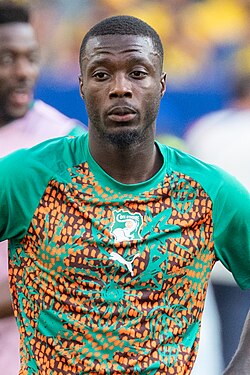
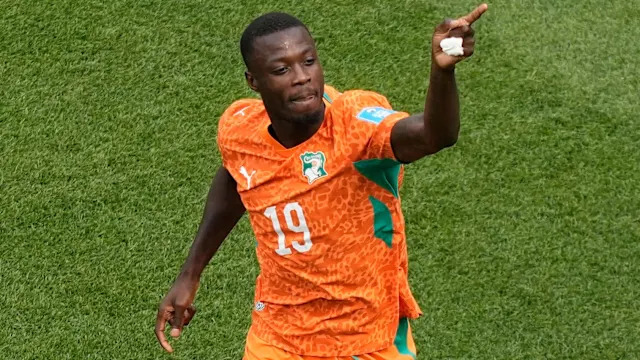
Seven minutes into a knockout decider in Philadelphia, an Ivorian winger who had been written off more than once curled the ball home and rewrote a record book. The goal on 26 June 2026 was the fastest his country had ever scored at a World Cup, and by the time he doubled the lead with a left-footed strike into the top corner, Ivory Coast had reached the last 32 of the tournament for the first time in their history. The man behind it was Nicolas Pepe, a player whose career has zigzagged from record transfer fee to relegation-zone exile and back to redemption. His story is, in many ways, the story of African football at this World Cup: unpredictable, resilient, and impossible to ignore.
The 2026 edition, hosted across the United States, Canada and Mexico, has put African talent on the largest stage the game has ever built. A record number of teams from the continent reached the finals, and the players carrying their flags are among the most recognisable names in world football. This is a look at the men representing the continent in 2026, starting with the Ivorian who stole a June night and widening out to the broader cast of stars whose club careers, estimated earnings and cultural pull stretch far beyond the pitch.
The Pepe Redemption Arc
Nicolas Pepe was born in Mantes-la-Jolie, France, to Ivorian parents, and like many players of the diaspora he chose to represent the nation of his heritage. His name became globally famous in 2019, when Arsenal paid a club-record fee to sign him from Lille after a blistering season in Ligue 1. The move never fully clicked. Flashes of the dribbling and shooting that made him a phenomenon in France came in bursts rather than a steady stream, and by the time he left the Premier League his reputation had cooled considerably.
What makes 2026 satisfying for his admirers is how thoroughly he has rebuilt. Pepe now plays in Spain for Villarreal, the La Liga club he joined in August 2024. Rather than fading into a quiet veteran role, he reignited. He opened the 2025-26 season in scorching form and was named La Liga Player of the Month for August after a run that included goals and an assist across Villarreal’s opening matches. At 31, he is playing some of the most consistent football of his career in one of Europe’s strongest leagues.
The World Cup has become the showcase. Pepe had been left out of Ivory Coast’s squad for the Africa Cup of Nations roughly seven months before the tournament, a snub that many assumed signalled the end of his international relevance. Instead he returned as the team’s talisman. His brace against Curacao did not just win a match; it carried a generation of Ivorian supporters past a barrier their celebrated 2006, 2010 and 2014 sides never cleared. For a player so often defined by what he failed to become at Arsenal, the redemption framing writes itself.
His game has aged well because it never depended on raw speed alone. Pepe is a two-footed wide forward who drifts inside off the right, a profile built on close control, a low centre of gravity and the kind of shooting that can change a match in a single touch. At Lille he was the engine of a side that finished near the top of Ligue 1, and that version of him, the fearless one-against-one threat, is the version Ivory Coast have rediscovered at exactly the right moment. The brace in Philadelphia was not a fluke from a fading name. It was a reminder of what made European clubs spend so heavily on him in the first place.
A Record Continent on the Biggest Stage
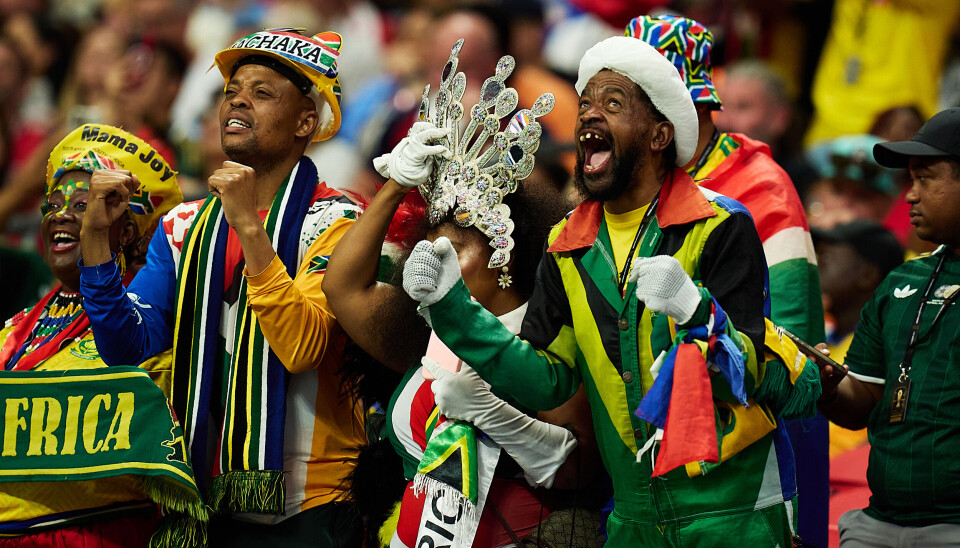
The expanded 2026 World Cup gave Africa more places than ever, and the continent filled them. Nine teams qualified directly through the CAF group stage: Senegal, Ivory Coast, Egypt, Cape Verde, Ghana, Morocco, Tunisia, Algeria and South Africa. A tenth, DR Congo, came through the intercontinental playoff, defeating New Zealand to complete the most successful African qualification campaign in the tournament’s history.
Two of those names carry their own weight as milestones. Cape Verde, one of the smallest nations by population to ever reach the finals, turned a footballing fairytale into reality. DR Congo, a sleeping giant of African football with a proud heritage, returned to the global stage through the drama of a playoff. The headline acts, though, were the established powers. Morocco arrived as the team that famously reached the semi-finals on home-continent expectations in recent memory, and Senegal came in as African champions of recent vintage with a squad stacked with Premier League and European pedigree.
This breadth matters because it reshapes how African football is consumed back home. A single qualified nation concentrates attention. Ten of them spread the tournament across the entire continent, turning living rooms in Dakar, Casablanca, Accra, Cairo, Tunis, Algiers, Abidjan, Praia, Kinshasa and Johannesburg into rival theatres of the same drama. For a network covering entertainment and culture, the World Cup is no longer just a sports event. It is the largest shared African media moment of the year.
It also blurs the old lines between continent and diaspora. Many of the players wearing African colours in 2026 were born and raised in Europe, the children of families who emigrated decades ago, and they have chosen to represent their parents’ nations rather than the countries of their birth. Pepe and Hakimi both fit that mould, as do scores of others across the ten squads. That choice carries weight far beyond football. It is a statement about identity and belonging, a public decision to tie one’s career to a homeland that exists as much in memory and family story as on a passport. For audiences across Africa, those choices are felt deeply, turning each player into a bridge between the continent and its scattered communities abroad.
Achraf Hakimi, the Modern Superstar
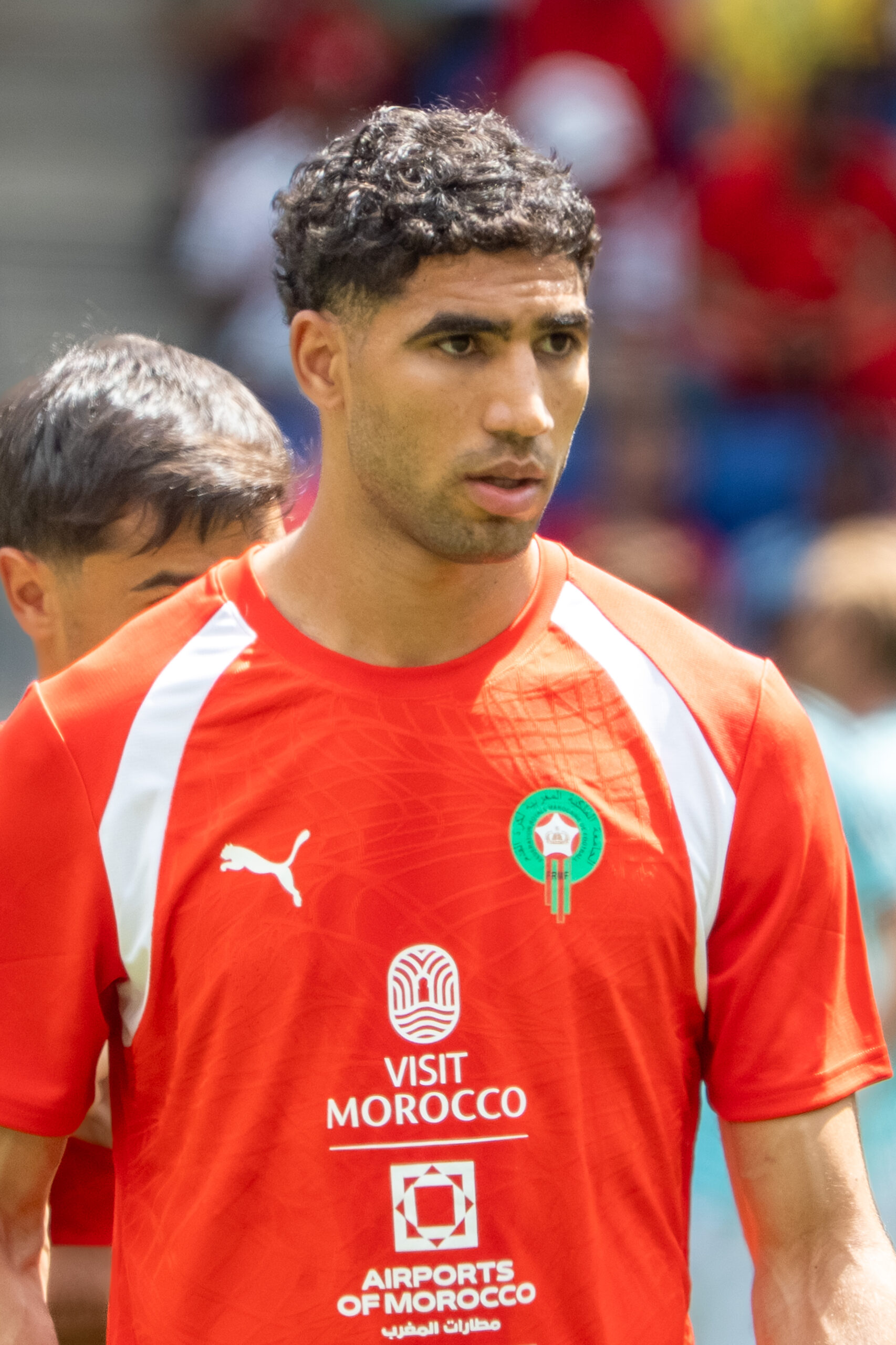
If Pepe represents the redemption story, Achraf Hakimi represents the peak. The Morocco right-back has spent the past several seasons as one of the most decorated players on the planet, and 2026 has only deepened that status. Born in Madrid to Moroccan parents, Hakimi rose through Real Madrid’s academy before building a career across Borussia Dortmund, Inter Milan and Paris Saint-Germain, where he has become a cornerstone of a dominant era.
Ad SpaceIn-Article - 300x250
Advertisement
With PSG, Hakimi has collected a stack of Ligue 1 titles and domestic cups, and he was integral to the club winning back-to-back UEFA Champions League titles in 2025 and 2026. He opened the scoring in the 2026 final, contributing to a commanding victory and becoming a Champions League final goalscorer at the very top of the club game. His individual recognition has followed: he finished sixth in the 2025 Ballon d’Or voting, a record placement for a Moroccan player and a marker of how far his stock has risen.
At the World Cup itself, Hakimi has been busy adding to a legacy that already towers over his peers. During Morocco’s group campaign he became the African player with the most appearances in World Cup history, surpassing long-standing records held by previous continental icons. As an estimated earner, Hakimi sits in the upper tier of African footballers, with his PSG salary and a portfolio of endorsements placing him among the highest-paid players from the continent. His cultural footprint in Morocco is enormous, the kind of figure whose every match becomes a national occasion.
Mohamed Salah and the Weight of Egypt
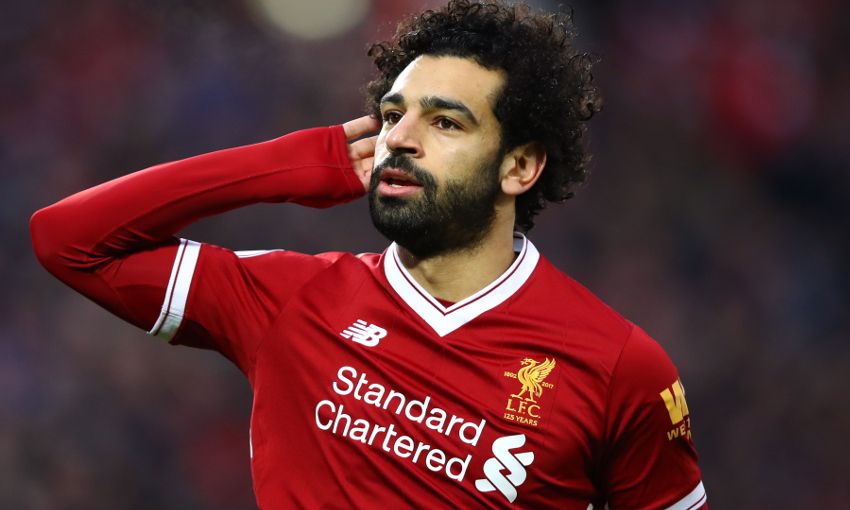
No survey of African football stars is complete without the Egyptian who has spent the better part of a decade as one of the Premier League’s defining forwards. Mohamed Salah, born in 1992 and 33 during this tournament, helped drag Egypt back to the World Cup with a qualifying campaign in which he scored seven goals across eight matches. He was named in the 26-man squad, marking his second appearance at the finals and arriving as the unquestioned face of his nation’s football.
Salah’s club situation has been one of the more closely watched stories of 2026. Reports about his future at Liverpool have been conflicting, with talk of a new deal sitting alongside reporting that he would leave at the end of the 2025-26 season. What is not in dispute is his standing: across his time in England he has been a perennial goalscoring machine, a multiple Golden Boot winner, and one of the most marketable athletes in the sport. His estimated earnings, blending his wages with global endorsement deals, have long placed him among the wealthiest footballers Africa has produced.
His cultural impact runs deeper than statistics. In Egypt he is treated as something close to a national institution, his image plastered across billboards and his goals capable of shifting the public mood. For a player who came up through modest beginnings before conquering Europe, the chance to lead Egypt at a World Cup carries a symbolic charge that no transfer fee can capture.
Victor Osimhen and the Forwards Who Travel
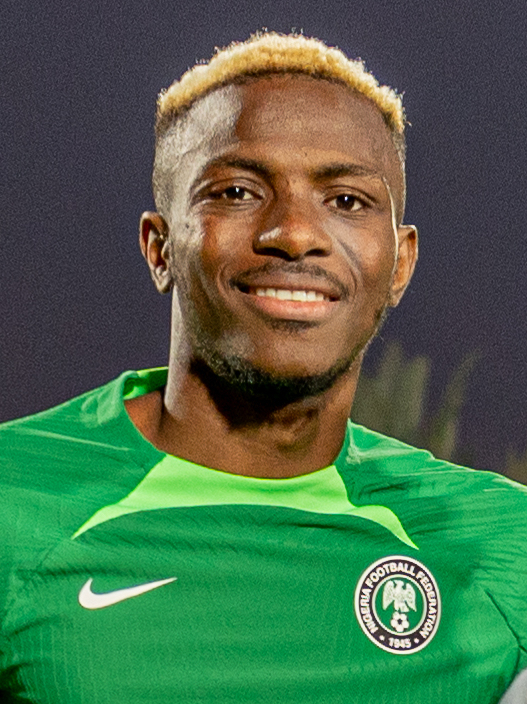
The continent’s striking talent in this era is staggering, and a few names define it even when their nations’ tournament fortunes differ. Victor Osimhen is the most explosive of them. The Nigerian centre-forward became a record-breaking signing when Galatasaray brought him to Turkey, and he has rewarded the club, becoming the fastest player in their history to reach 50 goals and serving as vice-captain of the Nigeria national team. His combination of pace, power and finishing makes him one of the most coveted forwards alive, and his estimated value and earnings reflect a player European giants have repeatedly chased. His cultural pull in Nigeria is immense, a homegrown superstar whose every transfer rumour becomes national news. European reporting has repeatedly linked him with the biggest clubs on the continent, and his club has just as repeatedly resisted, a tug-of-war that plays out across Nigerian and international media in real time. For a striker who battled serious injury early in his career and rebuilt himself into one of the most feared finishers in Europe, that level of demand is its own kind of vindication.
Serhou Guirassy tells a different and instructive story. The Guinea striker has been one of the most prolific forwards in European football at Borussia Dortmund, top-scoring in a single Champions League campaign and racking up goals in the Bundesliga. Yet Guinea did not make it to the 2026 finals, a reminder that individual brilliance does not guarantee a place at the World Cup. His absence from the tournament underlines how thin the margins are in African qualifying, and how cruel they can be to genuinely world-class players whose national teams fall short.
Then there is Simon Adingra, the Ivorian winger who has built a career across the Premier League and France and was named in Ivory Coast’s 26-man squad for 2026. Alongside Pepe, Adingra represents the depth of Ivorian attacking talent, a younger profile carrying the same flag onto the same stage. Together these forwards illustrate the spread of African talent across Europe’s biggest leagues, from Spain to Turkey to Germany to England, and the way club success and international fortune do not always move in step.
What the Money Says, and What It Cannot
Estimating footballer earnings is an inexact exercise, and the figures attached to these players should be read as approximations rather than ledger entries. What can be said with confidence is that the leading African stars of 2026 occupy the same financial tier as the global elite. Hakimi at PSG, Salah in England, Osimhen in Turkey and Pepe in Spain all command wages, bonuses and endorsement income that would have been unthinkable for African players a generation ago. The market has caught up to the talent. A decade ago, the very best African players were celebrated as exceptions. In 2026 they are the rule at the top of the European game, occupying captaincies, taking penalties in Champions League finals and topping scoring charts in leagues from England to Turkey to Spain.
The numbers, though, only tell part of the story. The deeper currency is influence. In Abidjan, a Pepe goal is replayed on phones and in barbershops for days. In Casablanca, Hakimi’s image sells everything from telecoms to sportswear. In Cairo, Salah’s form can lift or sink the national mood. In Lagos, an Osimhen move dominates conversation across radio and social feeds. These players are not only athletes; they are the most visible cultural exports their countries have, ambassadors who shape how the world sees the continent and how the continent sees itself.
That is what the 2026 World Cup has crystallised. Ten African nations reached the tournament, and the players carrying them are simultaneously club professionals, national symbols and pop-culture figures. Pepe’s brace in Philadelphia was the cleanest expression of it, one moment in which a redemption arc, a record, a nation’s first knockout berth and a continent’s growing footprint all converged. The football has spoken plainly this summer: African talent is not arriving at the top of the global game. It is already there.
Ad SpaceIn-Article - 300x250
Advertisement
Share
Get the recap
Loved this story? Get more like it.
Join readers who get our weekly entertainment recap - the stories worth your time, delivered every Friday.
No spam. Unsubscribe anytime. By signing up you agree to our Privacy Policy.