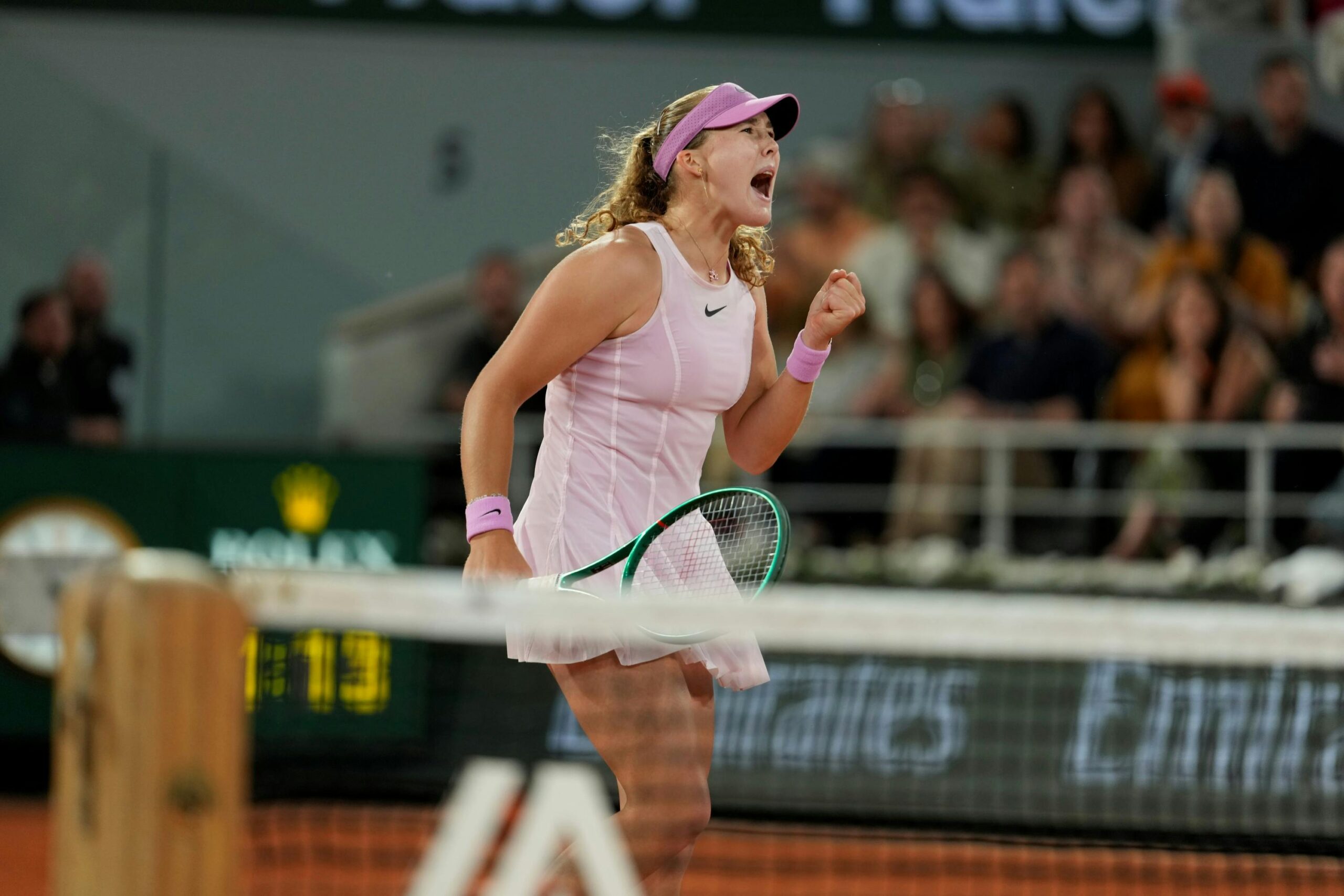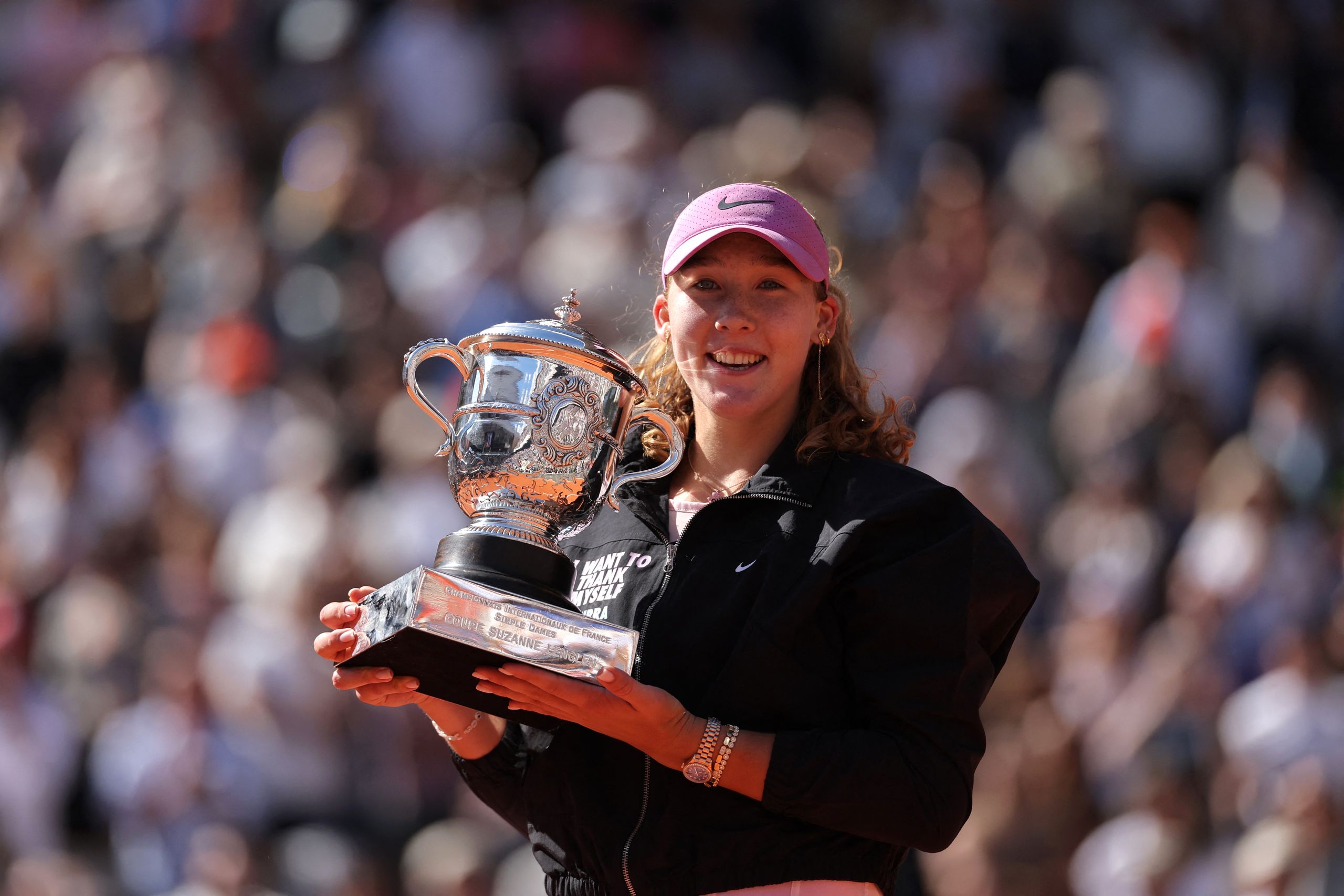

Halfway through Conchita Martinez’s press conference at Roland Garros on June 6, 2026, a question floated up from the back of the room, and it did not come from a journalist. “What is the best thing about working with Mirra Andreeva?” asked Mirra Andreeva herself, who had lifted the French Open trophy barely an hour earlier and had apparently decided that the best use of her new status as a Grand Slam champion was to ambush her own coach. Martinez, the 1994 Wimbledon champion and an International Tennis Hall of Famer, did not blink. “The best thing of working with Mirra Andreeva is we get to play UNO, and I am always winning,” she said. “So that’s the best thing, when I win, you know, against her in UNO.” The room broke into laughter. The new champion, unimpressed, fired back: “That’s it? Have fun.” Martinez shrugged. “I’m fired.”
The exchange, reported by the WTA, tells you nearly everything worth knowing about the 19-year-old who now owns one of the four biggest prizes in tennis. The mischief. The total refusal to be awed by her own moment. The easy warmth between a kid from Siberia and the Spanish legend who spent two years turning a brilliant, combustible talent into a major champion. Andreeva’s 6-3, 6-2 dismantling of Maja Chwalinska in that final made her the youngest Roland Garros women’s champion since Monica Seles in 1992, and the story of how she got there is one of the most instructive in modern sport.
Krasnoyarsk, Sochi, Moscow, Cannes: A Family Bet on Tennis
Mirra Andreeva was born on April 29, 2007, in Krasnoyarsk, a Siberian city of roughly a million people that is closer to Mongolia than to Moscow. Her path out of it was a family project from the start. Her older sister Erika, also now a professional on tour, was the first to take up the sport seriously, and the Andreev household gradually organised itself around two daughters and one game. The family moved to Sochi in search of better coaching, then to Moscow, and eventually to the Elite Tennis Academy in Cannes, France, the same training base where Daniil Medvedev once sharpened his game.
That migration is its own kind of wager. Families who uproot themselves across a continent for a child’s forehand are betting years of income and stability on an outcome with brutal odds. Most such bets fail quietly. This one produced two tour professionals, and in the younger sister, something rarer still. Like every Russian player on the professional tours, the Andreeva sisters compete without a flag or national designation, a neutral status that has applied across tennis since 2022. Mirra’s rise has therefore been a story told entirely through her tennis, which has suited the tennis just fine.
Madrid at Fifteen: The Arrival
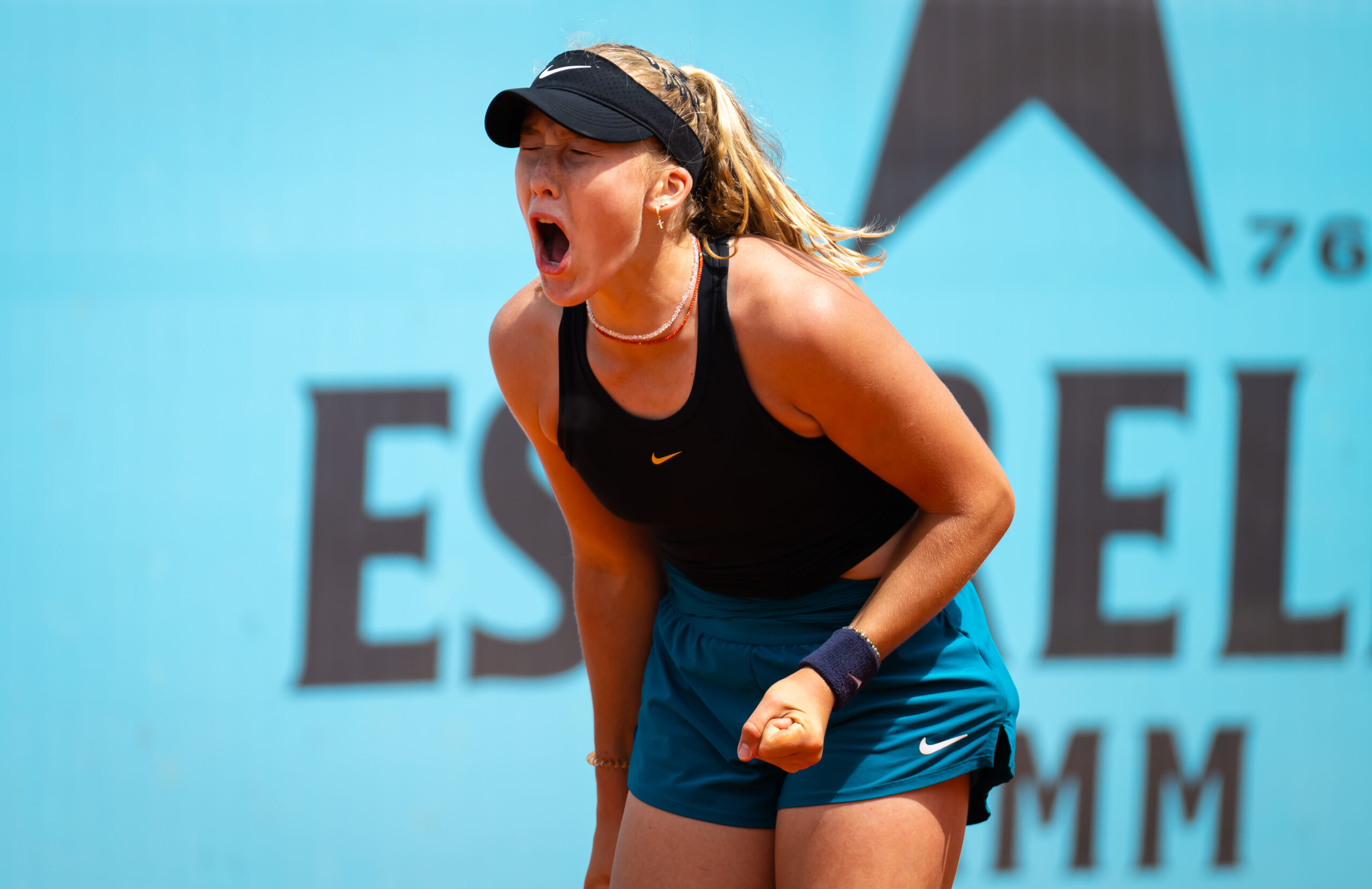
The wider sporting world met her in April 2023, when she turned up at the Madrid Open as a wild card ranked far outside the elite and started beating grown professionals. She became only the third 15-year-old ever to win a match at WTA 1000 level, celebrated her 16th birthday mid-tournament, and kept winning until she ran into Aryna Sabalenka, then one of the two best players on earth.
It was a breakout with all the classic prodigy markers: the impossibly clean ball-striking, the veteran’s court sense in a teenager’s body, and the press conferences that quickly became appointment viewing because nobody, including Andreeva, knew what she might say next. Within months she had cracked the top 100. Within a year, the question was no longer whether she would win big titles but how soon, and how many.
Paris 2024: The Semifinal That Announced Her
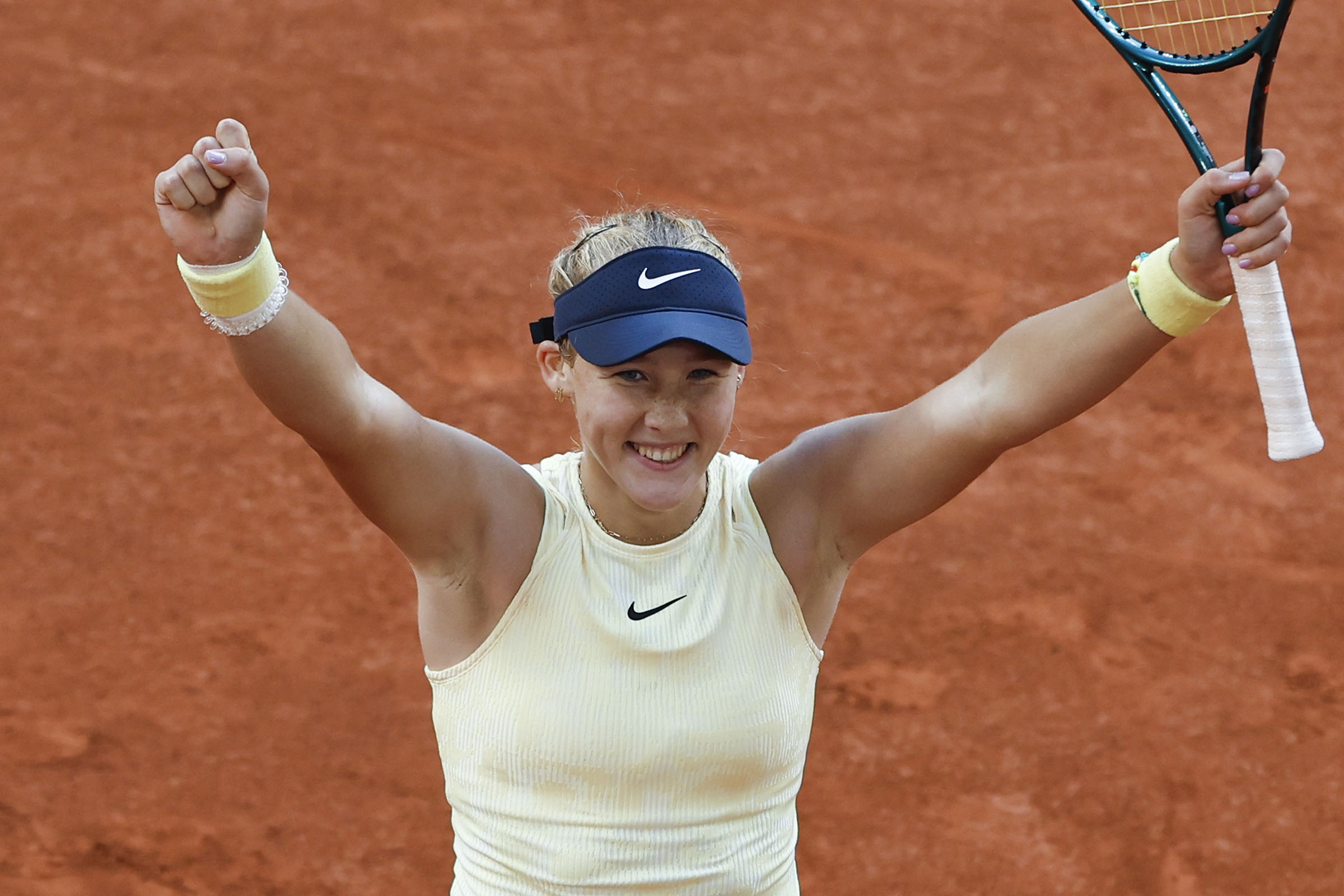
The first emphatic answer came at Roland Garros in 2024. Aged 17, Andreeva faced world No. 2 Sabalenka in the quarterfinals, the same player who had ended her Madrid run a year earlier, and beat her 6-7(5), 6-4, 6-4 in a match of remarkable nerve. The win made her the youngest Roland Garros semifinalist in 27 years. Jasmine Paolini stopped her one round later, but the point had been made: this was not a curiosity, it was a contender.
Weeks later, on the same Paris clay, she added an Olympic silver medal in women’s doubles alongside Diana Shnaider, with the pair losing the final to Italy’s Sara Errani and Paolini. The partnership with Shnaider became a fixture, later producing tour-level doubles titles in Brisbane and at the Miami Open. For a teenager, the doubles work doubled as a pressure valve, a place where tennis stayed a team game played with a friend.
The Conchita Effect
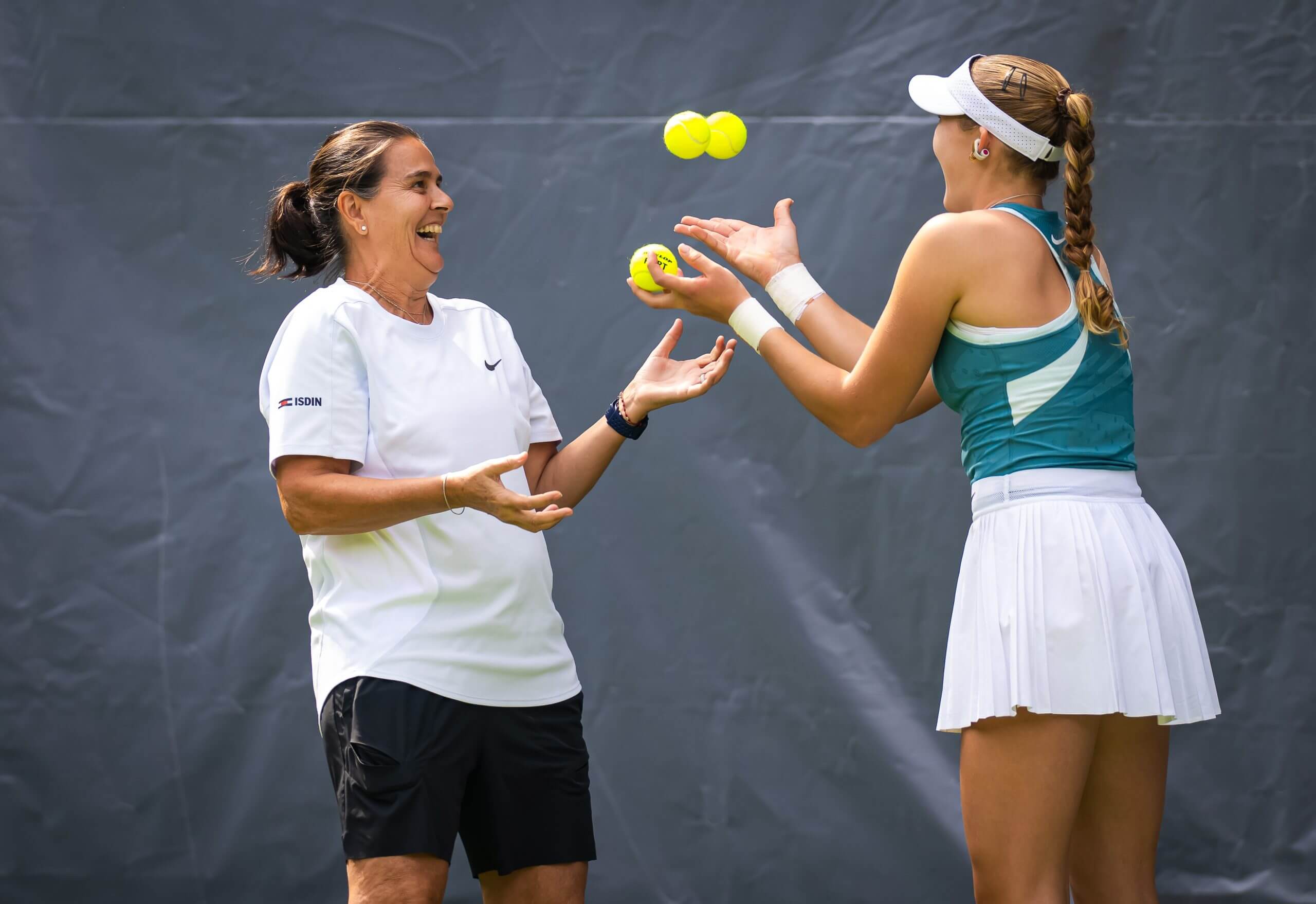
Behind the results sat a coaching appointment that now looks like one of the shrewdest in recent tennis history. In 2024, Conchita Martinez took charge of Andreeva’s career, bringing one of the sharpest tactical minds in the women’s game to a player whose raw materials were never in question but whose emotions sometimes were. Andreeva’s on-court self-scolding and visible frustration were part of the early package; Martinez has spoken openly about the “ups and downs” of the project and admitted there were moments when her young charge’s attitude could be “difficult.”
The work, by Martinez’s account, was as much psychological as technical: teaching a teenager to manage her emotions, embrace hard conversations and stay open to change while the whole sport watched. “When she works hard and when she listens and she does everything, you know, she has no limits,” Martinez said after the Paris final. “So sky is the limit.”
The relationship runs on more than drills. The two are famously competitive UNO opponents on the road, and Andreeva keeps a notebook in which she writes down quotes from athletes she identifies with, from tennis players to basketball and football figures; she reportedly carried a LeBron James line with her at Indian Wells. After the French Open final, Andreeva offered her own summary of what the partnership means: “She told me she’s very proud of me. To hear those words from her is very, very special to me.”
The Thousand-Level Season
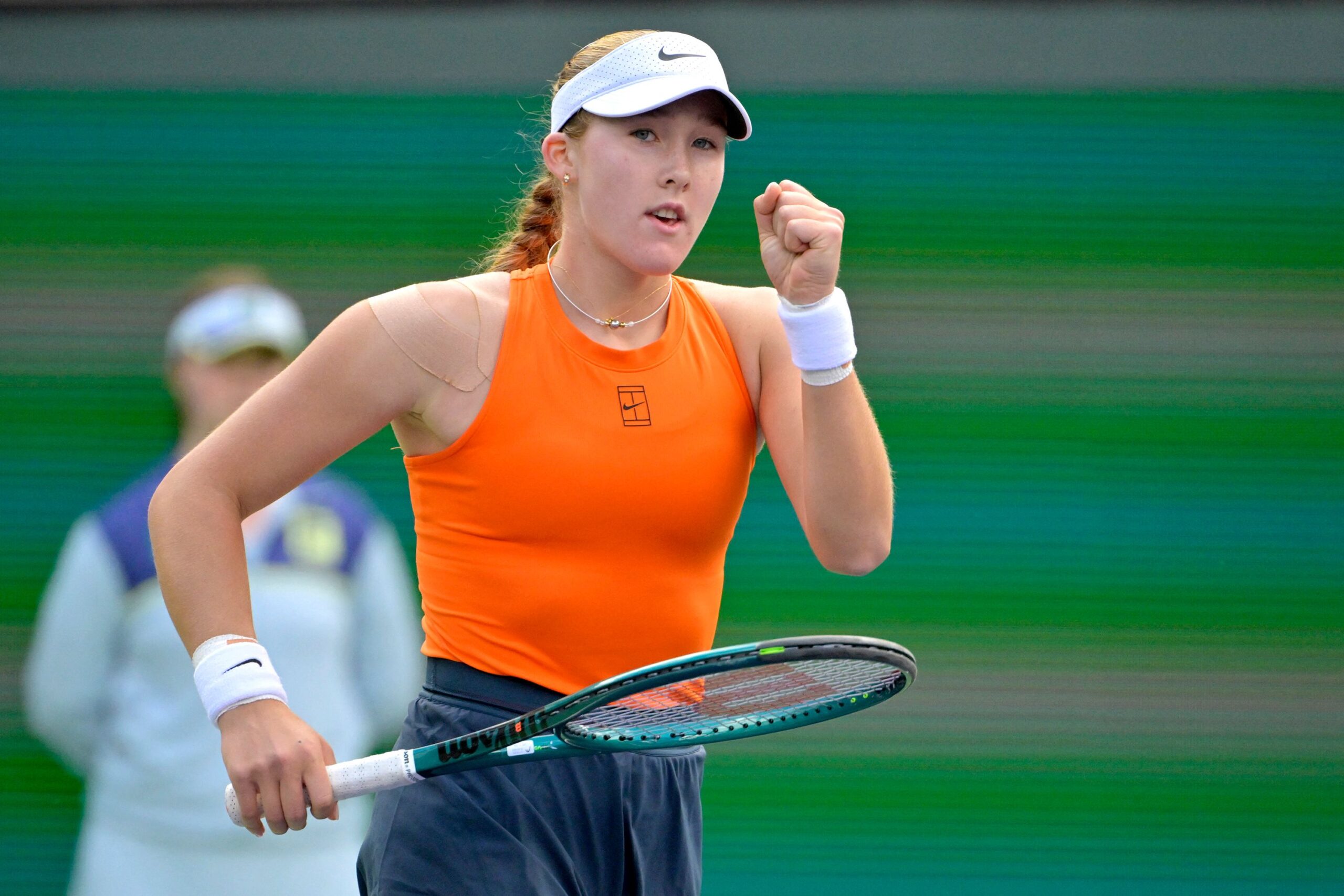
If 2024 announced her, 2025 confirmed her. In February of that year, at 17 years and 299 days, Andreeva won the Dubai title by beating Clara Tauson 7-6(1), 6-1, becoming the youngest champion at WTA 1000 level since the category was created in 2009. The win carried her into the top 10 for the first time. Weeks later at Indian Wells she went one better, recovering from a set down to beat world No. 1 Sabalenka 2-6, 6-4, 6-3 in the final. That made her the youngest Indian Wells champion since a 17-year-old Serena Williams in 1999, and the youngest player to win consecutive titles at that elite tier since Martina Hingis in 1997.