Jelly Roll: Net Worth, Career Rise and the Redemption Story Behind the Music
Jalen Ross··11 min read
Ad SpaceArticle Top - 728x90
Advertisement
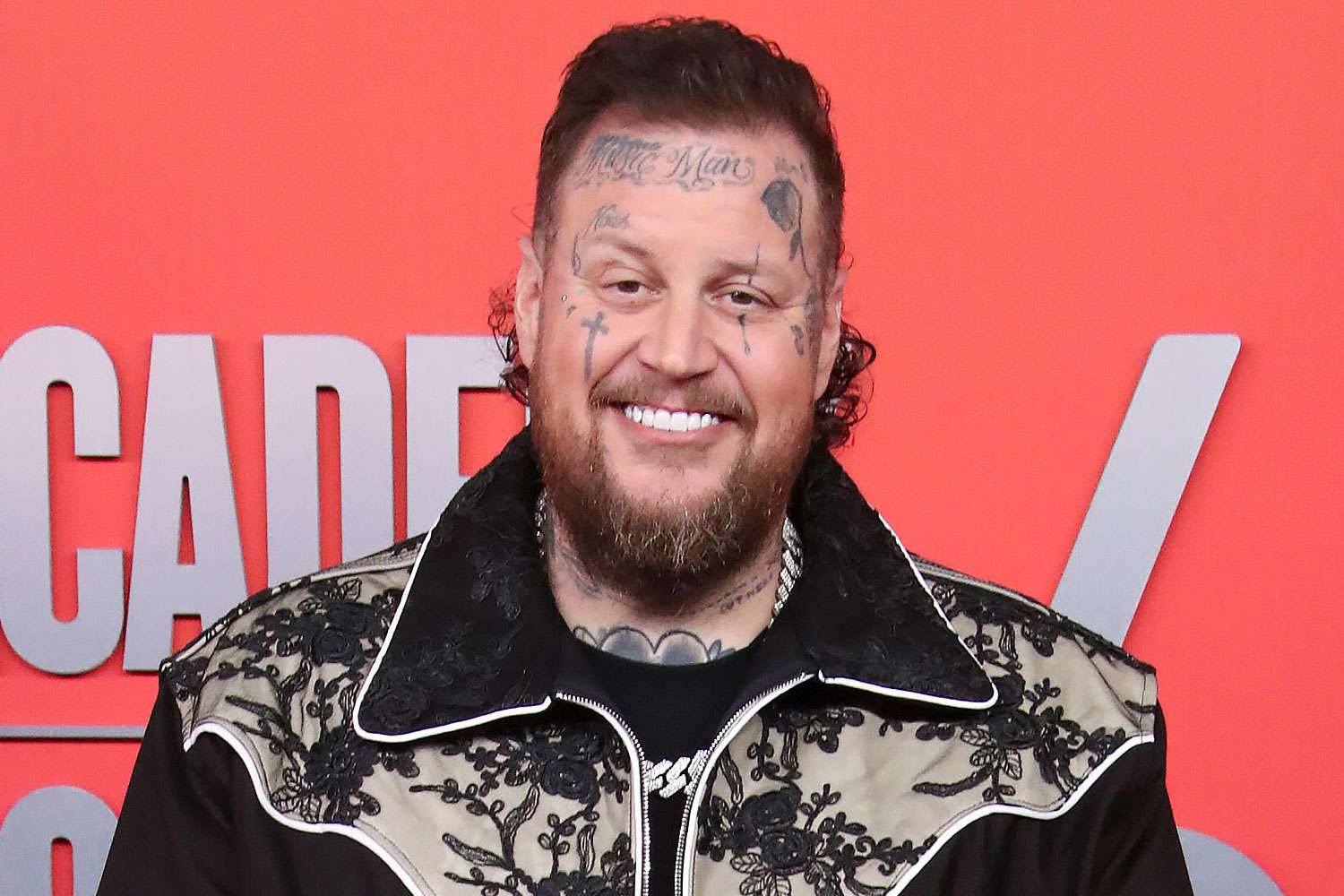
The trophy did not survive the night. Standing at the 2023 Country Music Association Awards, having just been named New Artist of the Year, a heavyset, heavily tattooed Nashville native named Jason DeFord lifted the glass award above his head in a rush of disbelief and brought it down so hard it shattered against the podium. He laughed it off, gathered the pieces, and kept talking. For most artists, a broken trophy would be an embarrassing footnote. For this one, it was almost perfect symbolism. Here was a man who had spent roughly a decade of his youth cycling in and out of jail cells, standing on country music’s biggest stage, holding something he had broken with his own hands and finding the moment funny rather than catastrophic. The cracks were always part of the story.
That man performs as Jelly Roll, and the distance he has traveled to those bright stages is one of the most documented redemption arcs in modern American music. The numbers tell part of it. The funerals he has attended tell another part. What follows is the full shape of the journey, from the back streets of one Nashville suburb to sold-out arenas, congressional hearing rooms, and a fortune built almost entirely on honesty about the worst years of his life.
The Antioch Kid and the Cycle of Incarceration
Jason Bradley DeFord was born on December 4, 1984, and raised in Antioch, a working-class suburb on the southeast edge of Nashville, Tennessee. His childhood carried hard edges from the start. His father worked partly as a meat salesman and partly as a bookie. His mother struggled for years with mental illness and addiction, a fact her son has spoken about openly and without bitterness in interviews and in his music.
By his own account, DeFord wrote his first rap around the age of nine or ten and was passing mixtapes around school by the eighth grade. The music ran parallel to a much darker path. He has described what he calls a roughly ten-year cycle of incarceration that began when he was a teenager, starting around the age of fourteen, and stretched into his twenties. The charges accumulated over those years included drug-related offenses such as possession with intent to distribute, and a serious felony for aggravated robbery committed when he was still a teenager.
He has never tried to soften or romanticize that record. In testimony years later he would describe himself plainly as having once been part of the problem. One detail he returns to often is that he earned his GED while incarcerated, at the age of twenty-three, a small marker of forward motion inside a system that swallows many young men permanently. Another detail reshaped everything: he became a father while behind bars. Learning he had a daughter, he has said, was the turning point that made him decide the cycle had to end. The transformation was not instant and it was not clean, but the direction changed, and he eventually got sober and stayed that way.
The Long Mixtape Grind
Redemption stories tend to compress the boring middle, and Jelly Roll’s middle was very long. There was no overnight discovery, no viral fluke that vaulted him from obscurity to fame. Instead there were years and years of independent grinding that most listeners who met him in 2023 never saw.
His earliest output was rooted in hip-hop. He distributed projects like “The Plain Shmear Tape” in 2003 and the “Gamblin’ on the White Boy” mixtape series across the years that followed. He self-released album after album, built a following on YouTube, and toured the kind of small rooms that pay in cash and goodwill. He collaborated with other underground artists, ran his own merchandise, and learned the business of music the way a street vendor learns retail, one transaction at a time. For more than a decade he was a known quantity to a devoted niche audience and almost invisible to the mainstream.
That grind matters because it explains why the eventual breakthrough did not break him. By the time the wider world arrived, Jelly Roll had already spent half a lifetime building an audience and figuring out exactly who he was as a performer. He was an overnight success who had been working at it for close to twenty years.
“Save Me” and the Breakthrough
The hinge of the whole story is a stripped-down confessional ballad called “Save Me.” A raw plea about addiction and self-loathing, it had circulated for a while before it caught full fire, and when it did it pulled Jelly Roll out of the underground and into country and rock radio at once. A later version recorded as a duet with country star Lainey Wilson sharpened its reach even further and would go on to earn major recognition.
The momentum compounded fast. “Son of a Sinner,” released in 2022, gave him his first No. 1 on the country airplay chart and announced that this tattooed former rapper was now a country act to be reckoned with. Then came “Need a Favor,” released in December 2022 as the lead single from the album that would define his arrival. The song did something almost no record had ever managed: it reached the top of Billboard’s Hot Rock and Alternative Songs chart and climbed to No. 1 on Country Airplay, while also making history as a track that cracked the top ten of both mainstream rock and country airplay charts at the same time. On the all-genre Hot 100 it peaked in the teens, but its true significance was that it refused to sit in a single lane.
The album behind those singles, “Whitsitt Chapel,” arrived in 2023. The title came from a real chapel he visited with his daughter, an experience that sparked the idea of writing worship music aimed squarely at sinners rather than saints. The record debuted strongly across multiple charts and cemented the formula that defined him: gospel-tinged honesty about wreckage, delivered with a rock singer’s force and a rapper’s cadence.
The Genre-Blender
Trying to file Jelly Roll under a single genre is a losing exercise, and that is the point. He came up in hip-hop, broke through on country radio, and topped rock charts, often inside the same song. His music borrows the storytelling tradition of country, the raw catharsis of rock, and the rhythmic directness of rap, then binds it all together with the language of redemption that runs through American gospel and blues.
That refusal to choose a lane is exactly why his audience is so wide. Country traditionalists, rock fans, hip-hop listeners, and people in recovery who barely follow music have all found something in him. He sings about prison, addiction, faith, failure, and the long climb back, subjects that belong to no single format. In an industry that rewards artists for staying in their box, he built a fortune by ignoring the box entirely.
The Awards Run
Once the mainstream caught up, the recognition came in waves. At the 2023 CMA Awards he was named New Artist of the Year, the night of the famously shattered trophy. He swept the CMT Music Awards, winning a night-leading three trophies in 2024, including Video of the Year, on the strength of “Need a Favor.”
Ad SpaceIn-Article - 300x250
Advertisement
The Grammy attention followed. He was nominated for Best New Artist and for a duo or group performance for “Save Me” with Lainey Wilson at the 2024 ceremony, and earned further nominations in the cycles that followed, building a multi-nomination Grammy resume in a remarkably short span. The breakthrough into a win came at the 2026 Grammy Awards in February, when he took home Best Contemporary Country Album for “Beautifully Broken,” his 2024 release that had already proven a commercial juggernaut. That album, paired with a tour of the same name, marked the moment he moved from acclaimed newcomer to established headliner.
The awards run has not been a clean sweep, and he has handled the gaps with notable grace. When the 2025 CMA nominations left him out of the major categories after a year of high-profile contention, including a previous Entertainer of the Year nod, his measured public response won over fans as much as any victory speech. A man who measures his life against prison cells does not rattle easily over a missing nomination.
The Advocacy and the Congress Testimony
The most striking chapter of Jelly Roll’s public life has nothing to do with charts. In January 2024 he sat before the United States Senate Banking, Housing, and Urban Affairs Committee and testified in support of anti-fentanyl legislation, a bill aimed at using financial sanctions to disrupt the flow of the drug into the country. He spoke not as a celebrity reading talking points but as someone who had lived inside the crisis from both sides.
“I was a part of the problem,” he told the senators, before adding that he now wanted to be part of the solution. One line from that day has followed him ever since: “I have attended more funerals than I care to share with y’all.” He urged lawmakers to be proactive rather than reactive, pointing out that the country had responded too late to crack and too late to opioids, and pressing them not to repeat the pattern with fentanyl.
The testimony was not a one-off stunt. Jelly Roll has spent years performing inside correctional facilities, carrying his music directly to the kind of audience he once belonged to. He has funded a recording studio for young people in juvenile detention in Nashville and advocated for mental health resources for incarcerated youth. The throughline is consistency: a man who tells the same story to a stadium crowd, a Senate committee, and a room full of inmates, without changing the message to suit the audience.
That body of advocacy paid an unexpected dividend in December 2025, when Tennessee Governor Bill Lee granted him a full pardon for his old robbery and drug felonies. The pardon, issued as part of the governor’s customary Christmas-season clemency decisions, formally closed the legal chapter on the convictions that had defined his youth. Civic leaders and friends had backed the application, citing his transformation, and Jelly Roll had noted that clearing his record would make international touring and missionary work far easier. For a man whose entire brand is the journey from incarceration to redemption, the state’s official acknowledgment of that journey carried a weight no trophy could match.
Bunnie XO and the Personal Life
For years the most visible relationship in Jelly Roll’s life was his marriage to Bunnie XO, the model and host of the popular “Dumb Blonde” podcast. The two married in Las Vegas in 2016, and Bunnie became a constant presence in his public story, a partner who shared the spotlight as his fame grew and who built a substantial platform of her own.
In 2026, that chapter shifted. Jelly Roll filed for divorce, with the filing citing irreconcilable differences after roughly a decade of marriage. The news, reported in mid-2026, drew wide attention precisely because the couple had been such a fixture of his redemption narrative. Both have spoken publicly over the years about the ups and downs of their relationship, including earlier periods of separation, and the divorce became one of the dominant storylines surrounding him as the year unfolded. Handled honestly and without spectacle, it became simply the next hard, human thing in a life that has never pretended to be easy.
Beyond the marriage, fatherhood remains central to who he is. The daughter whose birth helped pull him out of his old life has shaped his music and his choices repeatedly, from the chapel visit that inspired an album to the studio he built for kids in detention.
The Money
The financial side of the story is its own piece of evidence for how far he has come. As recently as 2019, Jelly Roll’s net worth was estimated at under a million dollars, the reasonable figure for a respected independent artist who had never broken through. By the mid-2020s, published estimates placed his net worth in a far higher bracket, with various outlets reporting figures ranging from roughly twelve million dollars to around twenty million dollars as of 2025 and into 2026. These are estimates from celebrity-finance publications rather than audited disclosures, and they vary by source, so they are best read as a range and a trajectory rather than a precise balance sheet.
The income behind those figures is diversified. Reporting has attributed several million dollars a year to a mix of touring, streaming, merchandise, brand partnerships, and his stake in a Nashville bar. Touring is the engine: his Beautifully Broken Tour sold more than 500,000 tickets by late 2024, and a stadium run alongside Post Malone extended his reach further still. For an artist who spent close to two decades being paid in small-room cash, the arrival of arena-level revenue represents a near-vertical climb. The divorce filing has put those multimillion-dollar assets under public scrutiny, since Tennessee law governs how marital property is divided.
What the Redemption Story Means to His Audience
Strip away the charts and the dollar figures and what remains is the reason Jelly Roll connects so deeply. He is living proof that the worst version of a life does not have to be the final version. People who have struggled with addiction, who have served time, who have buried friends and family to overdoses, who have been written off, hear their own stories in his. He does not preach from above the wreckage; he speaks from inside it, as someone who barely got out.
That is a rare and valuable thing in popular music. Most stars sell aspiration, an image of a life their fans will never quite reach. Jelly Roll sells survival, an image of a hole his fans may already be standing in, and a hand reaching down into it. The broken trophy, the Senate testimony, the prison performances, the governor’s pardon, even the public pain of a divorce all reinforce the same idea: that the cracks are not something to hide but the very thing that makes the recovery believable.
Jason DeFord built a fortune and a career out of refusing to lie about where he came from. In a culture that often rewards the polished and the perfect, he became one of the biggest crossover stars in America by being neither, and by reminding an enormous audience that a person is never only the sum of their worst years.
Ad SpaceIn-Article - 300x250
Advertisement
Share
Get the recap
Loved this story? Get more like it.
Join readers who get our weekly entertainment recap - the stories worth your time, delivered every Friday.
No spam. Unsubscribe anytime. By signing up you agree to our Privacy Policy.